
Understanding Ubiquitous Surveillance: An Intellectual Journey for Summer
Understanding Ubiquitous Surveillance: An Intellectual Journey for Summer

Quite differently from most of my MIP peers, I spent my first-year summer on academic research instead of a professional internship. As a Cyber specialization student, I have been intrigued by the rise of tech-driven surveillance states in the past decade, which is often characterized as the era of big data. A three-month period with minimum disturbance allowed me to expand on a few ideas I have long held in mind, which eventually crystallized into my central research questions: how have surveillance technologies, logics, and practices circulated across borders, and what are the pivotal mechanisms and moments enabling their diffusion? How can the state harness data as a driver of economic and geopolitical influence?
My summer “employer,” so to speak, was not a company but a project of my own design, supported by MIP summer funding and mentorship from Graham Webster, research scholar at FSI. Throughout the summer, I reviewed relevant literature, searched over internet archives for reports hidden in the corner of history, and spoke with scholars and lawyers. In addition, I spent a month embedded with a corporate data management and cybersecurity company in China, which allowed me to compare theory with practice and see how policy directives are translated, or fail to be translated, into operational routines. By the end of summer, I became much more well-versed in the former question—a truly broad question that I wish to continue exploring in the years to come—and completed a second draft of my data governance paper. On September 19, I presented a part of my summer research at the 53rd Research Conference on Communications, Information, and Internet Policy (TPRC53), a conference that brings together researchers from academia, industry, government, and nonprofit organizations.
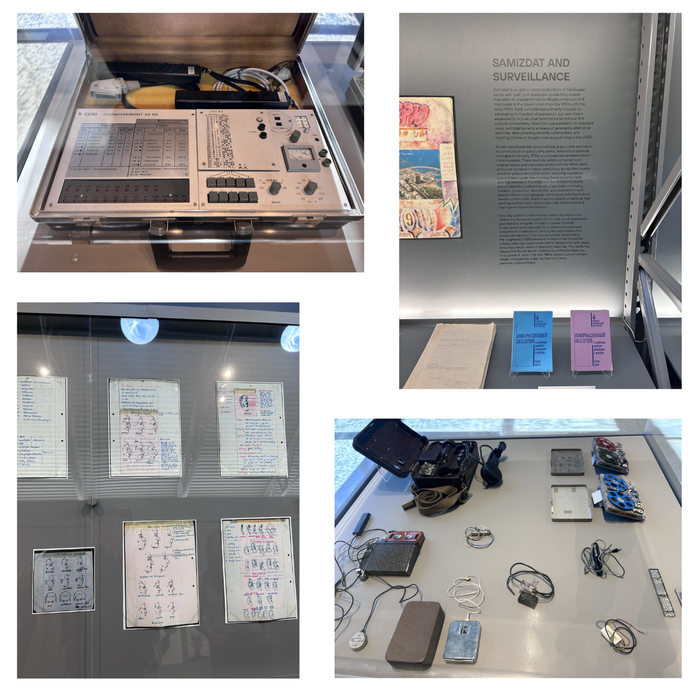
As an aspiring academic in STS or History of Science, I see this research as an integral part of my professional development. Three important fruits grew out of this project: 1) a rigorous academic paper for conference and my first publication on SSRN; 2) a writing sample (still in progress) for PhD application; and, 3) an opportunity to familiarize with my chosen field of research and grow my network in that space.
An important learning from this experience was how much the reality could deviate from regulatory frameworks: what governments regulate about surveillance and data governance often differs dramatically from what companies actually do. Additionally, the three-month research helped me find my perspective in the discipline—a transnational perspective to examine the historical evolution of surveillance techniques, not just within regimes but across them. I also learned the importance of interdisciplinary methods—drawing from law, economics, and sociology—to answer questions that require a combination of perspectives. Perhaps most importantly, I learned how to sustain an independent research agenda and keep myself motivated outside the structure of a formal workplace.
MIP summer funding not only provided a precious window to conduct the research I wanted, but also helped keep the joy with research work. In July, I spent several weeks in Eastern Europe, moving from the Baltic states to Poland, while continuing to work on my conference paper. The combination of research and travel helped me keep a fresh perspective on my work and enjoy the process rather than simply racing toward deadlines. Some of my best insights came while writing from cafés in Vilnius or Warsaw, far away from the familiar environment of Stanford.
In sum, my summer research experience was not only intellectually rewarding but also personally rejuvenating. It allowed me to bridge theory and practice, connect with leading scholars in my field, and take meaningful steps toward my goal of becoming a researcher.
