
Turning Data into Insights that Matter: My Summer at a D.C. Think-Tank
Turning Data into Insights that Matter: My Summer at a D.C. Think-Tank

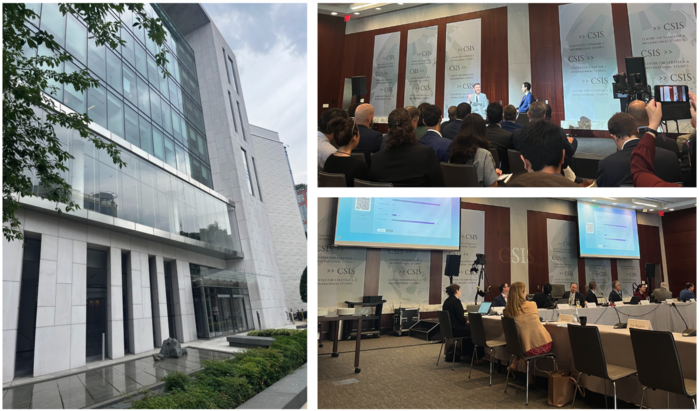
This summer, I had the opportunity to live and work in Washington, D.C. as a research intern at CSIS (Center for Strategic and International Studies) with the Trustee Chair in Chinese Business and Economics. For someone driven by two questions — ‘What should our relationship with China look like in the future?’ and ‘How can we benefit from economic ties whilst safeguarding against coercion?’ — it was the perfect place to be. I dove into new data, saw how China’s economic choices ripple through global supply chains, and carried my analysis into policy discussions. What I loved most about the D.C. think-tank world was seeing how precision in datasets and analysis can shape better policy — and being surrounded by people whose passion for research translates into real-world impact.

My work focused on using data to make sense of complex policy questions. One of our projects aimed to measure economic security and efficiency across China’s industrial sectors. For this purpose, I collected and analyzed data from sources such as China’s National Bureau of Statistics and CEIC to build indicators for profitability, import dependency, industrial policy, and more. The challenge (and the fun part) was figuring out what those numbers actually mean for strategy: how the Chinese and U.S. economies manage trade-offs between growth, stability, and control. I also contributed to a comparative project which assesses how major economies, though mainly China and the U.S., use industrial policy to innovate in technology spaces. We scoped out data from the OECD, World Economic Forum, and more to evaluate indicators such as R&D collaboration, patent filings, and workforce retraining.
There was also much to work on for my team’s focus on automotive supply chains and Chinese influence. I compiled and analyzed production and sales data from Indonesia and Mexico to South Africa and Vietnam. We mapped how Chinese companies, technologies, and investments underpin electrification, especially in developing countries. It was fascinating to see how EV manufacturing relies on global trade flows from batteries to knocked-down kits to assembly factories - and how many of them lead back to China.
A highlight for me was the China Pulse conference hosted by our team. It was awesome to see the questions I am most curious about come under discussion by experts from government, academia, and industry. As they debated how U.S. and Chinese economic, technological, and security interests interact, hearing from people who have lived and worked in China added a richness seldom captured by datasets. I also loved my team’s export control workshop, which revealed to me the messy realities of policy implementation: bureaucratic bottlenecks, political infighting, and diplomatic misunderstandings. Outside of work, I loved connecting with other MIP students, researchers, and professionals across D.C., and traveling to China for a Stanford-led seminar.
Looking back, my biggest takeaway was learning how to turn data into insights that matter: how to ask the right questions, where to start looking for data, and how it reveals previously undiscovered vulnerabilities.
Having met so many curious, collaborative, and passionate people has made me all the more excited to bridge research and policy in my own career. My insights from CSIS have given me the tools and extra motivation to keep building on my policy research at Stanford, where I am focusing on Chinese influence in critical mineral supply chains and how mining and refining firms make investment decisions in response.
I am deeply grateful to the Stanford Master’s in International Policy program for supporting this internship, and to Scott Kennedy, Ilaria Mazzocco, Ryan Featherston, and Isabella McCallum for their mentorship and generosity. They showed me that the best policy work is both analytical and human, and that sometimes, the most valuable insights come from reading between the numbers.
