
Technology, National Security, and Public Policy: My Summer as a Legislative Fellow
Technology, National Security, and Public Policy: My Summer as a Legislative Fellow

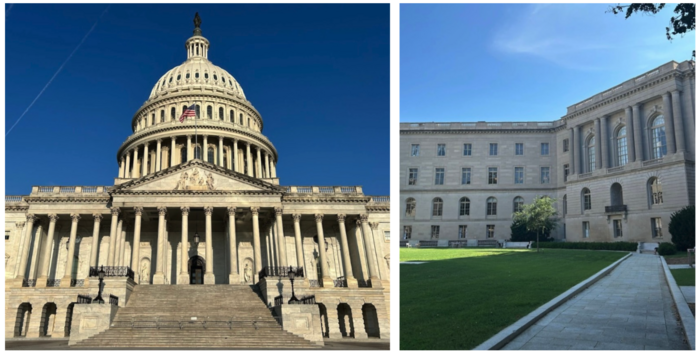
Over the summer, I served as a Legislative Fellow in the office of Senator John Hickenlooper, working at the intersection of technology, national security, and public policy. From Washington D.C., I had a front-row view of how Congress is grappling with urgent (and quickly evolving) questions about AI, cybersecurity, and digital governance. I also had insight into, more importantly, how those questions are translated into actual legislative actions.
In Senator Hickenlooper’s office, my portfolio revolved around AI, cybersecurity, technology, and national security. My responsibilities ranged from drafting policy memos on topics such as export controls or critical minerals, analyzing cybersecurity vulnerabilities and where we could step in with legislation, to briefing the Senator on issues ranging from the copyright implications of AI to the reauthorization of the Cybersecurity information Sharing Act (CISA) of 2015. I also sat in on Commerce, Science, and Technology committee hearings, where the abstract concerns of policy debates collided with the practical politics of legislating.
Some of my most memorable interactions were meetings with constituents, federal agencies, and major technology companies. These conversations, often centered on privacy issues, deepfake detection, content provenance, and mineral supply chains, offered not only technical insights but also a window into the different views government and industry bring to the same problems. For me, it was a reminder that policy is not simply about setting rules, but about translating polarizing perspectives into pragmatic solutions.
As the summer progressed, I found myself adapting to the rhythms of Senate work: tight timelines, three-minute briefings to the Senator, and the need to turn sprawling technical papers into concrete recommendations. Writing memos wasn’t just an exercise in research, it was about identifying levers for Senator Hickenlooper’s team (authorities, standards, budgets, timelines) that could move the policy needle.
An unexpected highlight was reconnecting with Stanford in the middle of my D.C. experience. While working on the reauthorization of CISA 2015, I spoke with a Stanford professor who had helped draft the original bill. That conversation drove home how engaged and valuable Stanford’s community really is: professors who are not only scholars but practitioners whose expertise directly shapes our political environment. Bringing those insights back into the legislative process underscored for me the power of collaboration between government, academia, and the broader policy ecosystem.
Three lessons in particular stayed with me:
- Policy is iterative. Even strong proposals move only when shaped by coalition-building, enduring relationships, and compromise.
- Constituents matter. Offices pay close attention to the number of letters, calls, and meetings, as well as the topics. Public input genuinely shifts priorities.
- Speed and clarity are critical. In an environment where staff absorb vast amounts of information daily, the ability to communicate crisply and quickly is indispensable.
If the summer left me with one lasting impression, it’s that legislation is rarely written as it was first drafted or imagined. It is shaped by constant negotiation, varying interests, shifting alliances, and the practical limits of implementation. Coming back to Stanford, I feel less certain about easy answers and more committed to the messy, necessary work of democratic governance.
