Gender

Stanford University
Encina Hall, Room E301
Stanford, CA 94305-6055

650.723.9741
0
Wang and Chen Senior Fellow in Taiwan Studies at the Freeman Spogli Institute for International Studies
pei-chia_lan.jpeg PhD

Pei-Chia Lan is the Wang and Chen Senior Fellow in Taiwan Studies at the Freeman Spogli Institute for International Studies and the director of the Taiwan Program at the Walter H. Shorenstein Asia-Pacific Research Center, effective September 1, 2026. As a qualitative sociologist, she studies the complexity of intersecting social inequalities in everyday life, shaped by macropower dynamics such as globalization and international migration. 

Before joining Stanford, Lan was a distinguished professor in the Department of Sociology at National Taiwan University, where she was the founding director of the Global Asia Research Center and recipient of five teaching awards. 

Her scholarly articles have been published in Ethnic and Racial Studies, International Migration Review, The Sociological Review, and Comparative Migration Studies, among others. She is also the author of several books in Chinese and English, the latter including Raising Global Families: Parenting, Immigration and Class in Taiwan and the US (Stanford University Press, 2018), which examines how ethnic Chinese parents in Taiwan and the United States negotiate cultural differences and class inequality to raise children in the contexts of globalization and immigration; and Global Cinderellas: Migrant Domestics and Newly Rich Employers in Taiwan (Duke University Press, 2006), which won a Distinguished Book Award from the Sex and Gender Section of the American Sociological Association and ICAS Book Prize: Best Study in Social Science from the International Convention of Asian Scholars.

Lan received her doctorate in sociology from Northwestern University, and her bachelor’s and master’s degrees in sociology from National Taiwan University. She was a 2024-2025 Stanford-Taiwan Social Science Fellow at the Center for Advanced Study in the Behavioral Sciences, Stanford University; a 2011-2012 Yenching-Radcliffe fellow at Harvard University; a 2026-2007 Fulbright scholar at New York University; and a 2000-2001 postdoctoral fellow at the Center for Working Families, University of California, Berkeley. She also held visiting positions at the Waseda Institute for Advanced Study, Kyoto University, Tubingen University, and IIAS at Leiden University.

She has actively engaged in international professional networks, serving as deputy editor of the journal Gender & Society and an editor or board member for other esteemed journals. Her research cultivates critical dialogue between academia and the public, and her expertise is sought by local government agencies and global organizations alike, as demonstrated by her role on the advisory board of UN Women.

Director, Taiwan Program at the Walter H. Shorenstein Asia-Pacific Research Center
CV
Date Label
Paragraphs
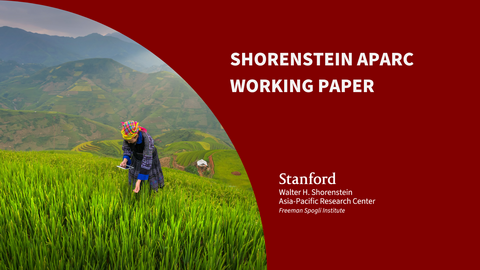
Banner for Shorenstein APARC working papers, showing a photo of a woman tending to plants in a terraced rice field in Vietnam.


Across Southeast Asia, millions of young people fall into a group researchers call "NEET," meaning they are neither working, studying, nor in training. Despite rapid growth in mobile internet access, high NEET rates persist across the region. This raises an important question: Is digital connectivity actually helping young people connect with economic opportunities?

This study examines data across 11 ASEAN countries over a decade (2014–2024) to analyze which aspects of mobile connectivity — infrastructure, affordability, digital skills, and available content — are most closely linked to youth NEET rates.

Key Findings:
 

  • Affordability matters. The cost of mobile data and devices is strongly associated with youth NEET rates, particularly for young women. Having access to a network is not enough if young people cannot afford to use it.
  • Digital skills help women enter the workforce. In countries where women have stronger foundational skills, female NEET rates tend to be lower.
  • Owning a phone does not equal opportunity. Mobile phone ownership was actually associated with higher NEET rates among young men. A likely explanation is that phones are primarily used for entertainment rather than for productive purposes.
  • Network coverage and connectivity speed showed no significant relationship with NEET rates. Infrastructure alone is not the answer.


The study concludes that governments and organizations need to move beyond building networks and focus on targeted interventions, like reducing costs, building skills, and developing locally relevant content, tailored where appropriate to gender-specific needs and local conditions.

All Publications button
1
Publication Type
Working Papers
Publication Date
Subtitle

Digital Inclusion as a Pathway for Youth Not in Employment, Education, or Training

Authors
Authors
Nensi Hayotsyan
News Type
News
Date
Paragraphs

In a CDDRL research seminar held on May 21, 2026, Alice Evans, a Senior Lecturer at the Stanford King Center for Global Development, presented her research exploring the causes of the global Islamic revival. To understand this transformation, she conducted qualitative research across nearly every world region, living with families and communities in countries including Indonesia, Morocco, Turkey, Uzbekistan, India, and across West Africa. 

Evans explores several competing theories for the global Islamic revival, beginning with past religious authoritarianism and Arab prestige bias. Past religious authoritarianism is the belief that historical Islamic empires consolidated political authority by empowering clerics and religious institutions, creating systems in which rulers derived legitimacy through religion. Similarly, Arab prestige bias argues that the religious prestige of places like Mecca and Medina drew Muslims across the world to follow religious practices associated with the Arab Islamic heartland.  However, Evans argues that these explanations alone cannot fully explain the global Islamic revival, as both Arab religious prestige and religious authoritarian traditions existed long before the revival began in the 1970s. 

The second major explanation discussed by scholars is historical contingencies, including geopolitical conflict and Saudi-funded Wahhabism. Geopolitical conflicts such as the 1967 Arab-Israeli War, the Soviet invasion of Afghanistan, and the post-9/11 War on Terror intensified a sense of global Muslim solidarity and reinforced an “us versus them” worldview. Similarly, Saudi-funded Wahhabism explains the revival through Saudi Arabia’s oil wealth, which allowed the kingdom to fund mosques, madrasas, scholarships, and religious education programs across the Muslim world. However, Evans argues that these explanations still cannot fully account for the revival because geopolitical conflict does not explain why the shift manifested specifically through religiosity, veiling, and gender segregation, while reformist Islamic movements also emerged independently outside of Saudi influence in places such as Egypt, India, and West Africa. 

Consequently, Evans argues that modernization played the most important role in the global spread of the Islamic revival. As highlighted throughout the seminar, technological advances such as steamships, print media, radio, television, and the internet enabled Muslims around the world to gain greater access to religious knowledge, leading to deeper engagement with Islamic scholarship and religious networks. This process was further strengthened through expanded mass schooling and increased state spending on religious education. 

This ultimately leads to Evans’ central theory, the “Prestige-Piety Feedback Loop,” which argues that modernization amplifies whichever moral systems command prestige within a society. In Muslim-majority societies, greater access to religious education and communication technologies leads to greater trust in religious authorities and increased social importance of visible piety, including practices such as veiling and gender segregation. Evans emphasizes that these practices are reinforced through community social pressure, particularly in large religious communities where individuals are constantly evaluated based on visible signs of piety. Consequently, modernization strengthened transnational Islamic identity and reinforced religious norms across the Muslim community. 

Read More

Michael Albertus presented his research in a CDDRL seminar on May 14, 2026.
News

Study Finds Polling Center Expansion in Venezuela Favored Regime Strongholds

Michael Albertus argues electoral infrastructure should be considered part of the broader “menu of manipulation” used by authoritarian regimes.
Study Finds Polling Center Expansion in Venezuela Favored Regime Strongholds
Katherine Case presented her research in a CDDRL seminar on May 7, 2026.
News

Can Voters Help Identify Better Political Candidates?

Katherine Casey’s research finds that while community nominations can surface strong entrants, barriers to candidacy remain.
Can Voters Help Identify Better Political Candidates?
Anna Grzymala-Busse presented her research in a CDDRL seminar on April 30, 2026.
News

What Counts as a State?

Anna Grzymala-Busse examines how conceptual choices shape conclusions about Europe’s political development and fragmentation.
What Counts as a State?
Hero Image
Alice Evans presented her research in a CDDRL seminar on May 21, 2026.
Alice Evans presented her research in a CDDRL seminar on May 21, 2026. | Nora Sulots
All News button
1
Subtitle

Visiting Associate Professor Alice Evans explores how modernization and expanded access to religious knowledge impact the global Islamic revival.

Date Label
In Brief
  • Alice Evans presented research examining the social, political, and technological forces behind the global Islamic revival since the 1970s.
  • Evans argued that modernization and expanded access to religious knowledge strengthened transnational Islamic identity and visible expressions of piety.
  • Her “Prestige-Piety Feedback Loop” theory suggests that communication technologies and mass education reinforced the social influence of religious norms and authorities.
Display Hero Image Wide (1320px)
No
Authors
News Type
News
Date
Hero Image
Hakeem2023Headshot
Rod Searcey
All News button
1
Subtitle

Hakeem Jefferson, assistant professor of political science at Stanford, is at work on a new project that interrogates exactly how “homosociality” operates and shapes men’s political attitudes and social behaviors.

Date Label
Display Hero Image Wide (1320px)
No
Paragraphs

This research evaluates methodologies to mitigate misreporting in intimate partner violence (IPV) data collection in a middle-income country. We conducted surveys in Russia involving three list experiments, a self-administered tablet questionnaire, a self-administered online survey, and conventional face-to-face interviews. Results show that list experiments yield lower disclosure rates for the complex IPV definitions suggested by the UN. The tablet-based self-administered questionnaire, conducted with an interviewer present, also did not increase IPV reporting. Conversely, the self-administered online survey increased lifetime IPV disclosures by 51% (physical) and 26% (psychological) compared to face-to-face interviews. Women showed greater sensitivity to the online survey mode. This increase is linked to the absence of interviewer bias, enhanced safety by minimizing potential perpetrators’ presence, and reduced cognitive burden. We argue that self-administered online surveys—using sampling bias mitigation—may thus be an optimal, low-cost method for surveying the general population in middle- and high-income countries.

All Publications button
1
Publication Type
Journal Articles
Publication Date
Journal Publisher
Sociological Methods & Research
Authors
Emil Kamalov
Ivetta Sergeeva
Number
https://doi.org/10.1177/00491241261436407
Paragraphs

This brief is part of the Democracy Action Lab's "The Case for Democracy" series, which curates academic scholarship on democracy’s impacts across various domains of governance and development. Drawing from an exhaustive review of the literature, this analysis presents selected works that encompass significant findings and illustrate how the academic conversation has unfolded.

Strong democracies directly foster women's rights and empowerment, yet authoritarian regimes increasingly adopt gender reforms for legitimacy without democratizing or adopting egalitarian attitudes. Democratic effects materialize primarily through accumulated democratic experience rather than regime transitions alone, as electoral accountability, open civic spaces, and dispersed power structures enable women's movements to mobilize effectively. Gender equality advances through coordinated efforts across legal, institutional, and societal domains, with democracy serving as a necessary but insufficient condition for sustained transformation in women's status.

All Publications button
1
Publication Type
Policy Briefs
Publication Date
Authors
Authors
Khushmita Dhabhai
News Type
News
Date
Paragraphs

On September 25, 2025, FSI Senior Fellow Claire Adida presented her team’s research at a CDDRL Research Seminar Series talk under the title, “Overcoming Barriers to Women’s Political Participation: Evidence from Nigeria.” The seminar addressed a central paradox in global politics: although women’s legal formal right to vote is nearly universal, deep gender gaps remain in informal forms of political participation, such as contacting a local government official or attending a community meeting. This lack of engagement means women’s voices are underrepresented in governance and policies are less likely to reflect their priorities. This is particularly salient in hybrid democracies, where informal political participation may matter more than casting a vote.

Adida situated the study in the context of Nigeria, a large and diverse democracy that remains heavily patriarchal. Surveys highlight these disparities starkly: nearly half of Nigerian men believe men make better leaders than women; two in five women report never discussing politics with friends or family; and women are consistently less likely than men to attend meetings or contact community leaders. Against this backdrop, the project tested interventions designed to reduce barriers that discourage women’s participation.

The research team identified three categories of constraints: resource-based (a lack of time, skills, or information), norms-based (social expectations that women should remain outside the public sphere), and psychological (feelings of disempowerment and doubt about one’s capacity to create change). The study focused on the last two. To explore these, the team partnered with ActionAid Nigeria to conduct a randomized control trial (RCT) across 450 rural wards in three southwestern states. Local leaders identified groups of economically active women, aged 21 to 50, who were permitted by their spouses to join.

All communities began with an informational session on local governance. Beyond that, two types of training were introduced. The first, targeted at women, consisted of five sessions over five months designed to build leadership, organizing, and advocacy skills. These emphasized group-based learning and aimed to foster collective efficacy — the belief that a group can act together to achieve change. The second, targeted at men, encouraged husbands to act as allies in supporting women’s participation. After the initial informational session, communities were randomly assigned to no longer receive further training, to receive the 5 sessions of women’s training, or to receive the 5 sessions of women’s training and the 5 sessions of men’s training.

The findings were striking. Women’s trainings had clear positive effects: participants were more likely to engage in politics, attend meetings, and contact local leaders. The quality of their participation also improved, suggesting greater confidence and effectiveness. There was also evidence that these women’s trainings activated collective and self-efficacy, lending credence to the Social Identity Model of Collective Action (SIMCA), a framework explaining how a sense of shared identity, group-based injustice, and group efficacy build political engagement. By contrast, men’s trainings produced modest results. They did not increase women’s participation beyond the women’s trainings and, in some cases, had small negative effects, such as on grant applications. Still, men’s trainings reduced opposition to women’s involvement, improved beliefs about women in leadership, and increased perceptions of more permissive community norms, even if they did not translate into an increase in women’s political participation.

Adida noted that these limited effects may reflect “ceiling effects” — many men in the sample were already relatively supportive compared to national averages, or lower attendance rates. It is also possible that changes in men’s attitudes take longer to manifest in behavior. The seminar concluded that advocacy trainings for women show strong promise in boosting participation, while efforts to reshape patriarchal norms among men may require longer-term strategies.

Read More

Natalia Forrat presented her research in a CDDRL seminar on May 29, 2025.
News

Unity, Division, and the Grassroots Architecture of Authoritarian Rule

Dr. Natalia Forrat, a comparative political sociologist and lecturer at the University of Michigan’s Center for Russian, East European, and Eurasian Studies, explores how authoritarian regimes are maintained not only through top-down coercion but also through everyday social dynamics at the grassroots level.
Unity, Division, and the Grassroots Architecture of Authoritarian Rule
Paul Pierson presented his research in a CDDRL seminar on May 22, 2025.
News

The Risks of U.S. Democratic Backsliding

University of California, Berkeley Distinguished Professor Paul Pierson explores the risks of democratic backsliding in the United States in the face of rising polarization and inequality.
The Risks of U.S. Democratic Backsliding
Clémence Tricaud presented her research in a CDDRL seminar on May 15, 2025.
News

Margins That Matter: Understanding the Changing Nature of U.S. Elections

In a CDDRL research seminar, Clémence Tricaud, Assistant Professor of Economics at the UCLA Anderson School of Management, shared her research on the evolving nature of electoral competition in the United States. She explored a question of growing political and public interest: Are U.S. elections truly getting closer—and if so, why does that matter?
Margins That Matter: Understanding the Changing Nature of U.S. Elections
Hero Image
Claire Adida
All News button
1
Subtitle

In Nigeria, women are far less likely than men to attend meetings or contact leaders. Claire Adida’s research reveals interventions that make a difference.

Date Label
Authors
News Type
News
Date
Paragraphs

When it comes to managing the administrative tasks that are required to run a home and raise a family, women bear the brunt of the responsibility. According to one study of women in the United States, mothers take on 7 out of 10 so-called mental load tasks, which range from planning meals to scheduling activities for children.

All that extra work takes a toll, including on society: Women who carry more mental load are less interested in national politics (men who carry more mental load also report less political interest, but fewer men are in that position).

Read the full story in the Stanford Report.

Hero Image
Women at Lake Tanganyika
Women at Lake Tanganyika | Yury Birukov
All News button
1
Subtitle

Political science professors Lisa Blaydes, Beatriz Magaloni, and James Fearon are among researchers at the King Center on Global Development addressing challenges such as gender-based violence and low labor participation, with the aim to inform supportive policy interventions.

Date Label
0
CDDRL Honors Student, 2025-26
zoya_fasihuddin.jpg

Major: Economics
Minor: Human Rights
Hometown: Karachi, Pakistan
Thesis Advisor: Mona Tajali

Tentative Thesis Title: From Dhabas to Mosques to Walls: A Cross Comparative Analysis of Women’s Campaigns for the Right to Public Spaces in Muslim-Majority Countries

Future aspirations post-Stanford: I’m interested in a variety of different fields, including policy research, strategy, law, and academia, and essentially want to work at the intersection of human rights, business, and international policy. Whether pursuing an MA in International Development or even doing a joint JD-MBA, I definitely want to keep learning and writing.

A fun fact about yourself: I went to 7 weddings this December!

Date Label
0
Korea Program Postdoctoral Fellow, 2025-2027
minyoung_an.jpg PhD

Minyoung An joins the Walter H. Shorenstein Asia-Pacific Research Center (APARC) as Korea Program Postdoctoral Fellow beginning July 2025 through 2027. She recently obtained her doctorate in Sociology from the University of Arizona. Her research lies at the intersection of gender, transnational migration, and knowledge production, combining statistical modeling, computational methods, and in-depth interviews.

Her dissertation analyzes gendered migration patterns in South Korea and among international PhD students in the U.S., revealing how gender inequality in countries of origin produces distinct selection effects and return migration dynamics. She also studies academic career trajectories and prestige hierarchies, exploring how gender and national origin affect integration into global academia.

At APARC, she will be involved with the Korea Program and the Stanford Next Asia Policy Lab (SNAPL) as she pursues two projects that extend this research agenda: one using computational analysis of social media data to examine gendered migration intent, and another investigating the academic trajectories and institutional reception of international scholars from East Asia. Through these projects, she aims to advance understanding of how transnational inequalities shape global mobility, opportunity, and inclusion.

Date Label
Subscribe to Gender