Authors
Beth Duff-Brown
News Type
News
Date
Paragraphs

A renowned panel of global health experts said their community has undergone a seismic shift in the last year with the dismantling of USAID, the U.S. withdrawal from the World Health Organization and sweeping cuts to foreign aid, research and development.

Yet they believe this momentous inflection point offers public health officials an opportunity to build better institutions, and they gave the next generation of global health leaders a constructive path forward.

“There’s been a bit of an earthquake over the last year, so now with the pieces that fall in front of us, the question is how they get restructured,” said Secretary Condoleezza Rice, PhD, the Tad and Dianne Taube Director of the Hoover Institution and the 66th U.S. secretary of state. “We are in uncharted territory about what comes next. We are leaving an 80-year-old system of security, of economics and trade, of global health, and the role the United States played. All of that is effectively now on the table—because people think that we should not go back there.” 

Rice was addressing the fifth annual Rosenkranz Global Health Policy Symposium sponsored by the Stanford Health Policy and the Freeman Spogli Institute for International Studies. The keynote conversation was between Rice and Jennifer Kates, senior vice president and director of the Global and Public Health Policy Program at KFF. 

The May 28 symposium was devoted to examining global health at this crossroads.

On his first day back in office, President Trump ordered a 90-day review of foreign aid, followed immediately by a stop-work order freezing all payments and services already underway. Two days later, the Department of Health and Human Services announced a full withdrawal from the WHO, citing its mishandling of COVID-19 and failure to operate independently of member-state influence. The administration then notified Congress that the U.S. Agency for International Development would be dissolved; a subsequent study in The Lancet projected the dismantling could result in 14 million additional deaths by 2030.

Rice and Kates told the symposium that USAID would likely never be re-established under its old model, often derided as bloated and too removed from those they set out to serve. They also said the WHO—criticized for bureaucratic inefficiencies, delayed emergency responses and lack of transparency—needs to be completely overhauled.

“This is not an indictment of the people in the health policy establishment or people who are delivering, but the World Health Organization needs to be rebuilt,” Rice said. “And I almost feel that at this point to get the kind of support that you're going to need from the United States, it’s going to have to be built from the ground up—because you can't do it without some kind of international coordinating mechanism.” 

Looking Back

Eran Bendavid, MD, professor of health policy and of medicine, moderated the keynote conversation. He started by asking Rice and Kates about the President’s Emergency Plan for AIDS Relief (PEPFAR), widely considered the most ambitious and transformative U.S. foreign aid program since the Marshall Plan helped rebuild Europe after World War II. Since its inception in 2003 under President George W. Bush, the program is credited with saving some 26 million lives and preventing millions of new infections. 

Both Rice and Kates were instrumental in its success; Rice as one of its primary architects and Kates as a leading independent analyst of the agency’s funding and results.

Rice advised Bush that his agenda in Africa would fail without addressing the AIDS pandemic, warning him that up to 100 million people could die on the continent if the crisis was not addressed. They worked with the faith-based community, AIDS advocates, U2 frontman Bono, the Congressional Black Caucus and others on Capitol Hill from both sides of the aisle—imploring them to keep the initiative a secret until he could unveil it in a way that would make it hard for Congress to turn down his whopping funding request.

Rice said Bono had worked closely with the Bush administration on the Millennium Challenge, a major bilateral foreign aid initiative announced in March 2002. But the musician really wanted the administration to focus on HIV/AIDS.

“I said, ‘Bono, you're going to have to trust us, we're going to do something about AIDS,’” Rice said. “Imagine getting an Irish rocker and a Texan together. I first had to tell President Bush that U2 actually was a band and not a reconnaissance plane. They met and I think Bono became a big part of our being able to do this.” Kates recalled watching Bush deliver his 2003 State of the Union Address—and the moment he announced that he would request $15 billion to fight HIV-AIDS in Africa, she knew something had shifted.

“The fact that the U.S. government under a Republican president was coming out and announcing this new initiative without it being known before was a dramatic, once-in-a-lifetime moment,” Kates said.

The program remained so successful, they said, due to strong oversight and a deep engagement on the part of African leaders, public health officials and local community programs across the continent.

Rosenkranz 2026 Symposium: Dean Lloyd Minor
Stanford Medicine Dean Lloyd Minor

Looking Forward

Despite its success, PEPFAR is in limbo, with its latest authorization having expired in March 2025. The administration’s 2026 fiscal budget request includes $2.9 billion for bilateral PEPFAR activities, a decrease of $1.9 billion from prior levels. 

Rice assumes PEPFAR won't be dismantled like USAID, but there likely will be changes to its funding.

“I just can’t emphasize enough how much the United States sometimes has to be a catalyst, the United States has to mobilize others, but at some point, those on the ground also have to be able to take up the mantle,” Rice said. “I’m hoping that it lasts another 23 years … but there probably will be some shifting of responsibility and some shifting of funding—maybe that’s just going to have to be the case.”

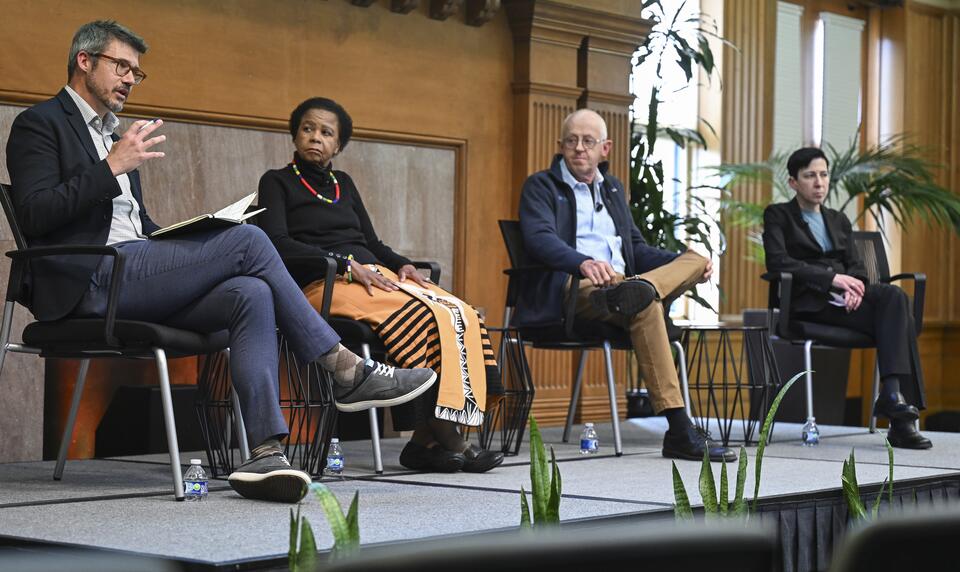
Michele Barry, MD, senior associate dean for global health and director of the Stanford Center for Innovation in Global Health, moderated a wider panel after the keynote conversation. She turned to the administration’s America First Global Health Strategy, asking Kates to give an overview of the new roadmap for global health.

Kates said the leading approach to foreign aid by the administration appears to be developing bilateral agreements with individual countries. There are now 32 signed Memorandums of Understanding (MOUs), with total funding of $20.3 billion over the next five years. The goal is to transition countries from U.S. assistance to self-sufficiency, requiring partner countries to increase their own domestic health spending as U.S. funding decreases. Each MOU includes benchmarks, strict timelines and consequences for nonperformance.

Critics note the agreements are being negotiated on tight timelines with limited transparency and minimal civil society engagement. Some countries say the administration is demanding patient data and mineral rights as part of the deals.

Joe Dieleman, PhD, professor of health metric sciences at the University of Washington, said there are reasons to be skeptical about this new bilateral agreement approach, but there are upsides as well. As someone who leads the resource tracking team at the Institute for Health Metrics & Evaluation, Dieleman acknowledged that at some point donor aid needs to be tapered off and it ultimately should be the recipient countries’ prerogative on how those resources are spent.

“I think in many ways the MOUs are a step in that direction,” he said. “The other positive thing that I’ll mention: We did a real quick assessment of the MOUs, which in many cases are from now through 2030, and looked at the total amount of development assistance that was supposed to be provided during that time from the U.S. government and compared that to the previous four years. And it’s a very similar amount.” 

2025 Rosenkranz Prize Panel
Panelists/Photo: Rod Searcey

Brain Drain

Barry asked the panel if they worried about American researchers and graduate students looking toward other countries that are offering them better packages and security.

Stefano Bertozzi, MD, PhD, professor of health policy and management at UC Berkeley, said he is more concerned about international students declining to come here.

“I’m much more worried about the tap being closed than the brain being drained—to mix metaphors brutally,” he said. “In other words, I'm most concerned about the fact that the students that we used to get are no longer coming and the young faculty that we used to get are no longer coming.”

Co-director of the Berkeley Public Health China Program, Bertozzi said that when he talks to international students who are considering coming to the States vs. the UK or Australia, China or Japan, the calculus has changed dramatically.

“We host a large group of Chinese students every summer,” he said. “Their parents are worried for the safety of their children coming to this country.” 

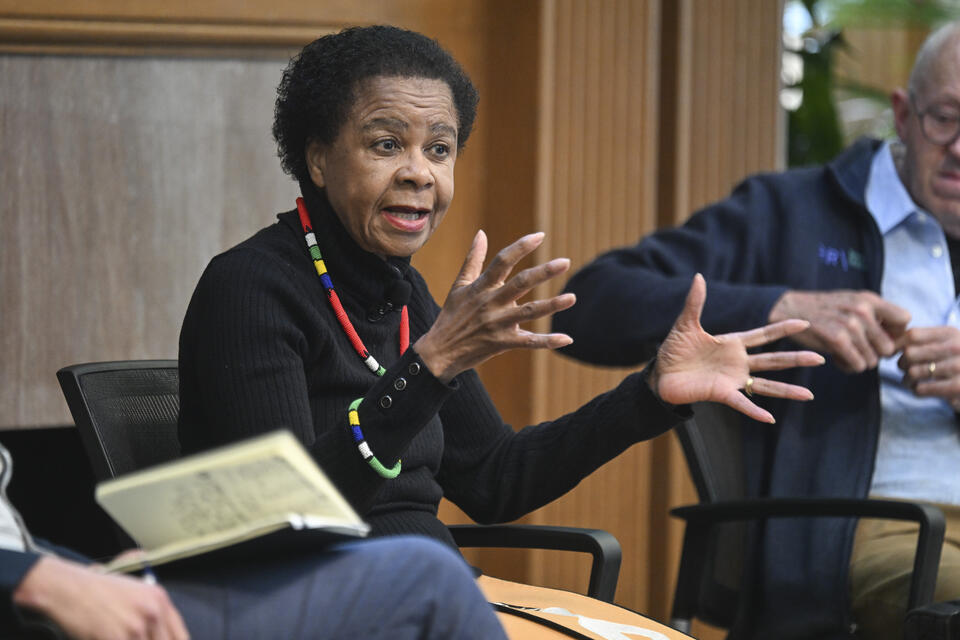
Mamphela Ramphele, PhD, Co-Founder and Advisor, ReimagineSA
Mamphela Ramphele/Photo: Rod Searcey

Mamphela Ramphele, PhD, co-founder and advisor for the South African nonprofit organization, ReimagineSA, said the shakeup should push Africans to take the reins.

“I think there is an opportunity being born,” she said. “And for my continent, it’s really an opportunity for the entire continent to stop talking about African unity—and actually make African unity work.” 

Ramphele said there are great public health institutions in Africa, such as the African Centers for Disease Control and Prevention, the public health agency of the African Union. And there are myriad opportunities for collaboration at the technical and research level.

But the median age in Africa is 19, she said, while the median age of their leaders is 53.

“You can’t have old men leading a young continent and expect to get different outcomes,” Ramphele said. “And so I believe this shock, this public health tsunami, is also waking up African young people because they too have been sleeping like Americans.”

She challenged the Stanford students in the audience to look outward—to lead not just at home, but to take their passions and skills abroad.

“It’s really important that you do not see yourselves as those who are just going to live here or do some work there, while some old people go off to Washington,” she said. “You must see yourselves as leaders.”

Jennifer Kates of KFF
Jennifer Kates/Photo by Rod Searcey

Rice and Kates also urged the Stanford students to remain focused on the public good.

“The challenge for all of you is to not get scared about what's changed but realize that there is an opportunity to build something really different,” Kates said. “We really need you to be thinking, ‘What is the future organization of this work? What should the role of the U.S. be?’ I think there's a real opportunity for the next generation to start to shape this.”

Rice also challenged students to take up public service, noting that the answers to the current upheaval will not come from career diplomats and academics like her.

“I would say that in public service you have the opportunity to be a part of a new president of creation … and the fact that somehow there is still left, I think in the American public in particular, a view that America should not let other people suffer,” Rice said. “So if you want to have a role in taking that value and having it be a part of our foreign policy, part of our global engagement, we need new ideas as to how to do that. And you will come with those new ideas.”

Read More

Nathan Lo accepts 2026 Rosenkranz Prize from Doug Owens
News

Rosenkranz Prize Winner Nathan Lo Develops New Methods to Tackle a Neglected Global Infectious Disease

Strongyloidiasis: a widely ignored yet dangerous tropical disease that can kill when immunity fails.
Rosenkranz Prize Winner Nathan Lo Develops New Methods to Tackle a Neglected Global Infectious Disease
Ami Bhatt and Peter Piot
News

Virus Hunter Peter Piot: How a Chance Encounter Sparked His Life Mission

Peter Piot tells annual Rosenkranz Global Health Policy Research Symposium that being a young researcher among the group of scientists who discovered Ebola led him to a life on the road tackling some of the world's deadliest viruses.
Virus Hunter Peter Piot: How a Chance Encounter Sparked His Life Mission
Mark Dybul-Eran Bendavid Rosenkranz 2024
News

Start Where You Can Start: Igniting the Next Global Health Turning Point

Rosenkranz Global Health Policy Research Symposium keynote speaker Mark Dybul talks about the great strides in international health systems over the last 25 years—but calls on next generation to disrupt a system that has become stagnant.
Start Where You Can Start: Igniting the Next Global Health Turning Point
Hero Image
2026 Rosenkranz Symposium keynote with Condoleezza Rice and Jennifer Kates
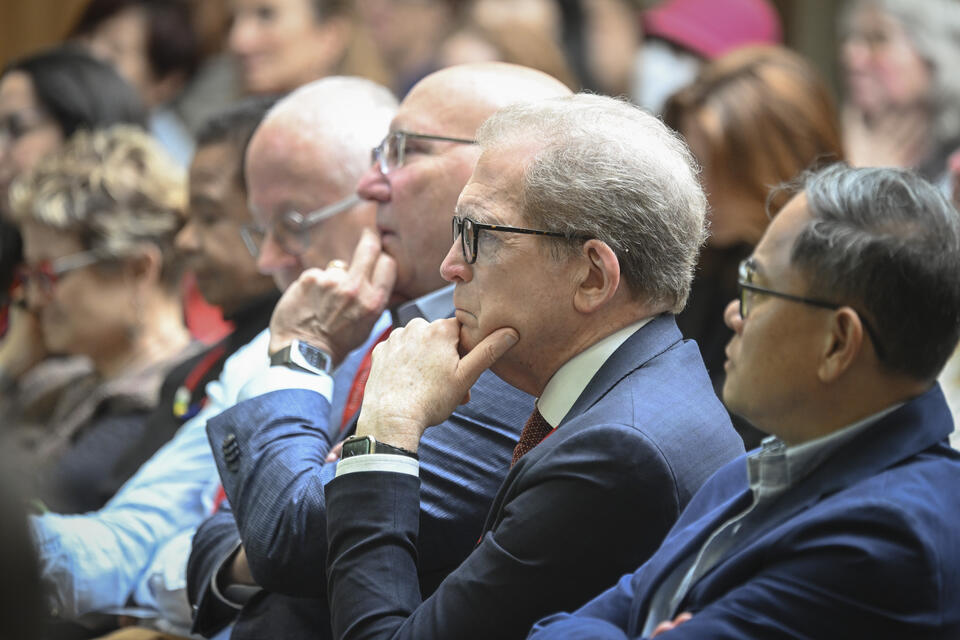
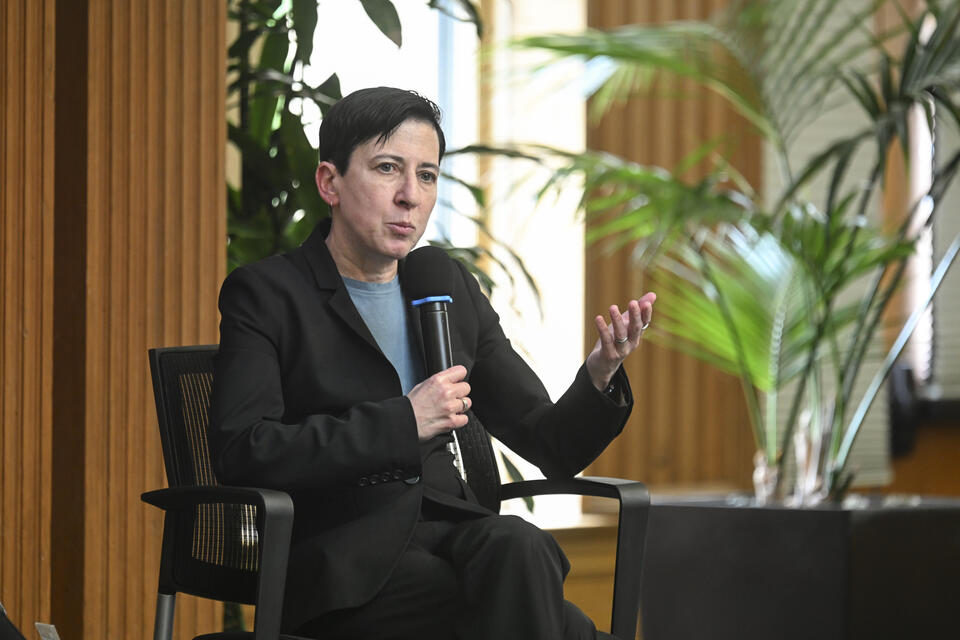
Secretary Condoleezza Rice addresses the 2026 Rosenkranz Global Health Policy Symposium. | Rod Searcey
All News button
1
Subtitle

The 2026 Rosenkranz Global Health Policy Symposium explores the current landscape and future directions for global health.

Image
In Keny, a doctor administers to an AIDs patient holding her child.
Caption Lab technician Martin Agunda tests a viral load sample from Ruth Gweyi, a mother living with HIV, in Kisumu, Kenya, where U.S. funding cuts to HIV programs strain local health services. | Photo credit Michel Lunanga/Getty Images
Date Label
Display Hero Image Wide (1320px)
Yes
Authors
Khushmita Dhabhai
News Type
News
Date
Paragraphs

On September 25, 2025, FSI Senior Fellow Claire Adida presented her team’s research at a CDDRL Research Seminar Series talk under the title, “Overcoming Barriers to Women’s Political Participation: Evidence from Nigeria.” The seminar addressed a central paradox in global politics: although women’s legal formal right to vote is nearly universal, deep gender gaps remain in informal forms of political participation, such as contacting a local government official or attending a community meeting. This lack of engagement means women’s voices are underrepresented in governance and policies are less likely to reflect their priorities. This is particularly salient in hybrid democracies, where informal political participation may matter more than casting a vote.

Adida situated the study in the context of Nigeria, a large and diverse democracy that remains heavily patriarchal. Surveys highlight these disparities starkly: nearly half of Nigerian men believe men make better leaders than women; two in five women report never discussing politics with friends or family; and women are consistently less likely than men to attend meetings or contact community leaders. Against this backdrop, the project tested interventions designed to reduce barriers that discourage women’s participation.

The research team identified three categories of constraints: resource-based (a lack of time, skills, or information), norms-based (social expectations that women should remain outside the public sphere), and psychological (feelings of disempowerment and doubt about one’s capacity to create change). The study focused on the last two. To explore these, the team partnered with ActionAid Nigeria to conduct a randomized control trial (RCT) across 450 rural wards in three southwestern states. Local leaders identified groups of economically active women, aged 21 to 50, who were permitted by their spouses to join.

All communities began with an informational session on local governance. Beyond that, two types of training were introduced. The first, targeted at women, consisted of five sessions over five months designed to build leadership, organizing, and advocacy skills. These emphasized group-based learning and aimed to foster collective efficacy — the belief that a group can act together to achieve change. The second, targeted at men, encouraged husbands to act as allies in supporting women’s participation. After the initial informational session, communities were randomly assigned to no longer receive further training, to receive the 5 sessions of women’s training, or to receive the 5 sessions of women’s training and the 5 sessions of men’s training.

The findings were striking. Women’s trainings had clear positive effects: participants were more likely to engage in politics, attend meetings, and contact local leaders. The quality of their participation also improved, suggesting greater confidence and effectiveness. There was also evidence that these women’s trainings activated collective and self-efficacy, lending credence to the Social Identity Model of Collective Action (SIMCA), a framework explaining how a sense of shared identity, group-based injustice, and group efficacy build political engagement. By contrast, men’s trainings produced modest results. They did not increase women’s participation beyond the women’s trainings and, in some cases, had small negative effects, such as on grant applications. Still, men’s trainings reduced opposition to women’s involvement, improved beliefs about women in leadership, and increased perceptions of more permissive community norms, even if they did not translate into an increase in women’s political participation.

Adida noted that these limited effects may reflect “ceiling effects” — many men in the sample were already relatively supportive compared to national averages, or lower attendance rates. It is also possible that changes in men’s attitudes take longer to manifest in behavior. The seminar concluded that advocacy trainings for women show strong promise in boosting participation, while efforts to reshape patriarchal norms among men may require longer-term strategies.

Read More

Natalia Forrat presented her research in a CDDRL seminar on May 29, 2025.
News

Unity, Division, and the Grassroots Architecture of Authoritarian Rule

Dr. Natalia Forrat, a comparative political sociologist and lecturer at the University of Michigan’s Center for Russian, East European, and Eurasian Studies, explores how authoritarian regimes are maintained not only through top-down coercion but also through everyday social dynamics at the grassroots level.
Unity, Division, and the Grassroots Architecture of Authoritarian Rule
Paul Pierson presented his research in a CDDRL seminar on May 22, 2025.
News

The Risks of U.S. Democratic Backsliding

University of California, Berkeley Distinguished Professor Paul Pierson explores the risks of democratic backsliding in the United States in the face of rising polarization and inequality.
The Risks of U.S. Democratic Backsliding
Clémence Tricaud presented her research in a CDDRL seminar on May 15, 2025.
News

Margins That Matter: Understanding the Changing Nature of U.S. Elections

In a CDDRL research seminar, Clémence Tricaud, Assistant Professor of Economics at the UCLA Anderson School of Management, shared her research on the evolving nature of electoral competition in the United States. She explored a question of growing political and public interest: Are U.S. elections truly getting closer—and if so, why does that matter?
Margins That Matter: Understanding the Changing Nature of U.S. Elections
Hero Image
Claire Adida
All News button
1
Subtitle

In Nigeria, women are far less likely than men to attend meetings or contact leaders. Claire Adida’s research reveals interventions that make a difference.

Image
3131 small Cameroon voters
Caption A Cameroonian women casts her vote | Photo credit L'Effort Camerounais.com
Date Label
Display Hero Image Wide (1320px)
No
Authors
News Type
Commentary
Date
Paragraphs

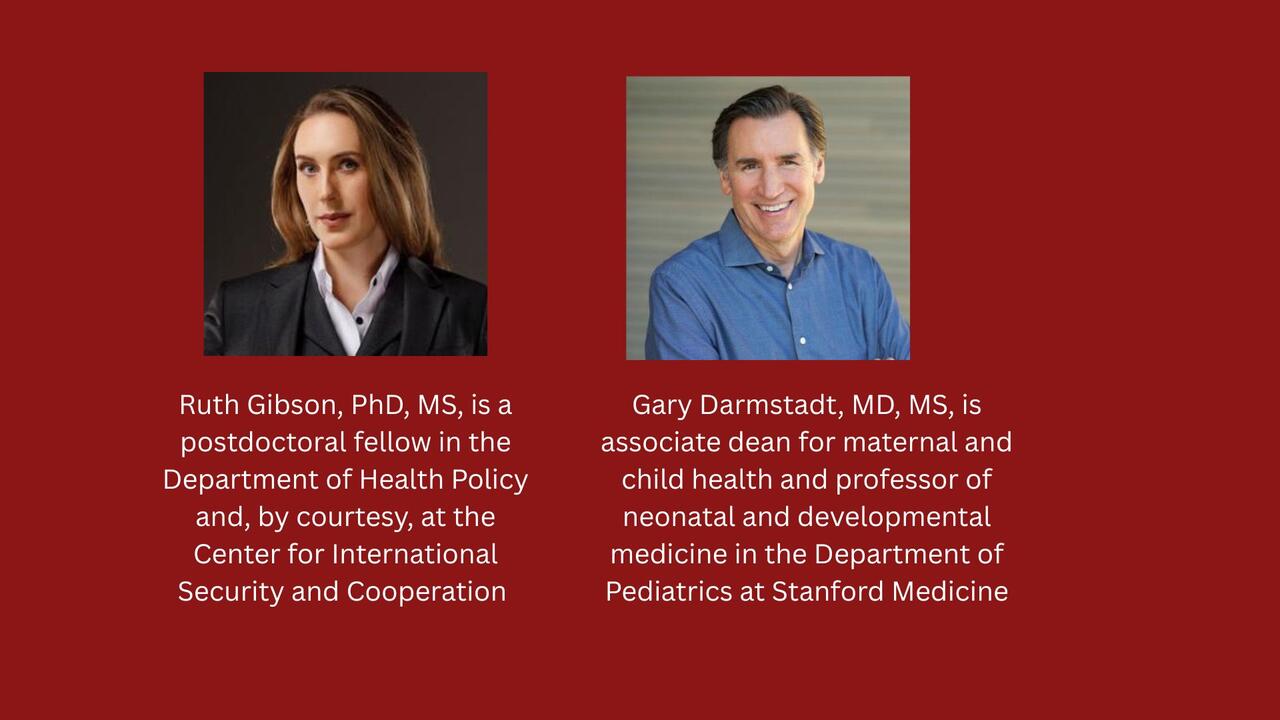
Academics have long debated whether sanctions achieve their intended goals as they inadvertently impact local populations. In this commentary in The Lancet Global Health, which accompanies a new study about the effect of sanctions on age-specific mortality, SHP’s Ruth Gibson and Stanford Medicine’s Gary Darmstadt argue that scholars who continue to advance the field of sanctions and humanitarian outcomes should include investigations into how sanctions affect the local population and outline proposed mechanisms of impact.

“In this way, we can move towards a future where scholars can inform policy debates and contribute to the design of effective sanctions, while minimizing human suffering, especially among the most vulnerable subsets of the population,” they write.

Read Full Commentary in The Lancet Global Health


Ruth Gibson and Gary Darmstadt 2

Read More

A man carries a sack of USAID food
News

Foreign Aid Sanctions Set Back Decades of Progress on Maternal, Child Mortality

Researchers analyzed three decades of sanctions on foreign aid to assess their impact on health. They hope the work can help government officials better understand and address how foreign policy decisions affect the well-being of local populations.
Foreign Aid Sanctions Set Back Decades of Progress on Maternal, Child Mortality
Ruth Gibson on World Class Podcast
Commentary

How Foreign Aid Sanctions Affect Global Health and Security

On the World Class Podcast, Ruth Gibson shares sobering new data with Michael McFaul about the adverse impact the cessation of foreign aid can have, especially on women and children.
How Foreign Aid Sanctions Affect Global Health and Security
Ukrainian child cancer patient getting treatment
News

Armed Conflict's Growing Impact on Child Cancer Patients

A new interdisciplinary study reveals regions experiencing armed conflict account for an increasing proportion of all global cancer cases and deaths among children.
Armed Conflict's Growing Impact on Child Cancer Patients
Hero Image
Foreign Sanctions Illustration
Getty Images
All News button
1
Subtitle

In this commentary, Ruth Gibson and Gary Darmstadt argue that academics can help shape sanctions policy by suggesting ways to reduce humanitarian harm.

Image
Foreign Sanctions Illustration
Photo credit Getty Images
Date Label
Display Hero Image Wide (1320px)
No
News Type
News
Date
Paragraphs

Reductions in official development assistance can lead to a significant increase in death among mothers, children, and infants, according to a new Stanford-led study that reviewed three decades of sanctions on foreign aid. The researchers estimate that aid sanctions to low-resource countries lasting five years or more can negate 64% of progress against maternal mortality, 29% of the progress for infants, and 26% for children under 5.

The study, which began in 2022, is the first of its kind to assess the global impact of aid sanctions on human health – particularly maternal and child health. The authors hope government officials can use the findings to better understand how foreign policy decisions impact the health of local populations, then take steps to minimize unintended humanitarian harm, including waivers for lifesaving programs.

“Foreign policy can be strategic in advancing national interests while also protecting the health of mothers and children,” said lead author Ruth Gibson, a postdoctoral fellow at Stanford Health Policy and, by courtesy, the Center for International Security and Cooperation. “We used cutting-edge analytic methods to assess the impact of this targeted geopolitical tool so we could make clear policy recommendations for governments considering foreign aid sanctions or cuts to foreign aid.”

The study published in The Lancet Global Health contributes to a growing foreign policy conversation about the use of foreign aid restrictions. The U.S. Congress has been considering ways to minimize the negative impacts of aid sanctions, while the shutdown of USAID has sparked additional debate on the removal of foreign aid and its impact on health.

Read the Full Story in Stanford Report

Read More

Illustration of a piggy bank and prescription drug
News

Extending Prescription Drug Inflationary Rebates to Commercial Health Plans

A new study by SHP's Marissa Reitsma and Michelle Mello finds that extending prescription drug rebates to commercial health plans could lead to big savings.
Extending Prescription Drug Inflationary Rebates to Commercial Health Plans
Uphill Battle Health Care Costs
News

Health Policy Forum: The Future of Health Care Financing

The Stanford Health Policy Forum is an ongoing series of discussions and presentations designed to inform public debate about major health policy issues.
Health Policy Forum: The Future of Health Care Financing
A man tries to climb U.S. southern border wall
Commentary

Security, Decency—and Broken Bodies at the Border

Paul Wise, a pediatrician devoted to conflict resolution for children around the world, writes in this commentary that the human limits of deterrent policies on our southern border lie in the boundaries of acceptance and decency of the American people.
Security, Decency—and Broken Bodies at the Border
Hero Image
A man carries a sack of USAID food
Getty Images
All News button
1
Subtitle

Researchers analyzed three decades of sanctions on foreign aid to assess their impact on health. They hope the work can help government officials better understand and address how foreign policy decisions affect the well-being of local populations.

Image
Man carries USAID sack of grain
Photo credit Getty Images
Date Label
Display Hero Image Wide (1320px)
No
Subscribe to Sub-Saharan Africa