Governance

FSI's research on the origins, character and consequences of government institutions spans continents and academic disciplines. The institute’s senior fellows and their colleagues across Stanford examine the principles of public administration and implementation. Their work focuses on how maternal health care is delivered in rural China, how public action can create wealth and eliminate poverty, and why U.S. immigration reform keeps stalling. 

FSI’s work includes comparative studies of how institutions help resolve policy and societal issues. Scholars aim to clearly define and make sense of the rule of law, examining how it is invoked and applied around the world. 

FSI researchers also investigate government services – trying to understand and measure how they work, whom they serve and how good they are. They assess energy services aimed at helping the poorest people around the world and explore public opinion on torture policies. The Children in Crisis project addresses how child health interventions interact with political reform. Specific research on governance, organizations and security capitalizes on FSI's longstanding interests and looks at how governance and organizational issues affect a nation’s ability to address security and international cooperation.

-

* Please note all CISAC events are scheduled using the Pacific Time Zone.


Seminar Recording:  https://youtu.be/t4xteN7N99U


About the Event: In The State from Below, we seek to understand democracy through ground-up knowledge of the state. We use a new technology and civic infrastructure, Portals, to initiate conversations about policing in communities where these forms of state action are concentrated.  Portals are virtual chambers where people in disparate communities can converse as if in the same room.  Based on over 850 recorded and transcribed conversations across fourteen neighborhoods in five cities – the most extensive collection of first-hand accounts of the police to date – we analyze patterns in political discourse.  We reveal four currents that challenge liberal-democratic framings of political life:  that an arrangement of distorted responsiveness characterizes the relationship between policed communities and the state; that the political desire of policed communities is not for greater engagement and responsiveness but for political recognition – to be known by the state; and that in contrast to prevailing wisdom about uninformed electorates, these citizens have too much knowledge of and too little power vis-à-vis state representatives.  Finally, we observe among policed communities an “ethics of aversion” in their political responses, a belief that power is best achieved by receding from state institutions in the short term and forging their own collective, community autonomy in the long term. At a broader level, we observe that it is not exclusion from democratic institutions that characterizes political inequality in our time, but inclusion in what we call racial authoritarianism, and the experience of misrecognition that results.


About the Speaker: Vesla Mae Weaver is the Bloomberg Distinguished Associate Professor of Political Science and Sociology at Johns Hopkins University and a 2016-17 Andrew Carnegie Fellow. 

She has contributed to scholarly debates around the persistence of racial inequality, colorism in the United States, the causes and consequences of the dramatic rise in prisons and police power for race-class subjugated communities. She is co-author with Amy Lerman of Arresting Citizenship: The Democratic Consequences of American Crime Control, the first large-scale empirical study of what the tectonic shifts in incarceration and policing meant for political and civic life in communities where it was concentrated. Weaver is also the co-author of Creating a New Racial Order: How Immigration, Multiracialism, Genomics, and the Young Can Remake Race in America (with J. Hochschild and T. Burch). She is at work on a new book, The State From Below, based on the largest archive of policing narratives using an innovative civic infrastructure called Portals (https://www.portalspolicingproject.com).

Virtual Seminar

Vesla Weaver Bloomberg Distinguished Associate Professor of Political Science and Sociology Johns Hopkins University
Seminars
Authors
News Type
News
Date
Paragraphs

Despite aquaculture’s potential to feed a growing world population while relieving pressure on badly depleted oceans, the industry has been plagued by questions about its environmental impacts.

But over the years, the diverse industry – which ranges from massive open-ocean salmon cages to family farm freshwater tilapia ponds – has made significant strides toward sustainability, according to a new Stanford-led analysis.

The study notes, however, that in order for the global aquaculture sector to deliver on its full promise, more effective oversight measures are needed to help ensure that its environmentally sound systems are economically viable.

The findings, published March 24 in Nature, could help shape how consumers think about the seafood they buy, and inform governance strategies critical to global food and nutrition security.


“As the demand for seafood around the world continues to expand, aquaculture will keep growing,” said study lead author Rosamond Naylor, the William Wrigley Professor of Earth System Science in Stanford’s School of Earth, Energy & Environmental Sciences (Stanford Earth). “If we don’t get it right, we risk the same environmental problems we’ve seen in land-based crop and livestock systems: nutrient pollution, excessive use of antibiotics and habitat change that threatens biodiversity.”

Twenty years ago, Naylor led a study that sparked controversy by saying farmed fish and shellfish in some cases added pressure to ocean fisheries – instead of relieving it – because carnivorous farm-raised species required large amounts of wild fish for feed. The paper, also published in Nature, prompted a spate of news stories and academic research questioning whether aquaculture was more of an environmental problem than a solution. Environmental groups applauded the study’s focus on aquaculture’s marine ecosystem impacts, while the industry pointed to hopeful developments that were largely ignored, such as ongoing improvements in fish nutrition.

Since then, the volume of global aquaculture production has tripled. In the new paper, aquaculture specialists and scientists from Asia, Europe, South America and the U.S. assessed the state of the industry by synthesizing hundreds of studies done over the past two decades on issues ranging from value chain developments in freshwater aquaculture to the use of wild fish in feeds to seaweed market challenges.

Their analysis considered key challenges and uncertainties, such as climate change’s impact on the industry, low-income producers’ adoption of sustainable seafood certification programs and shellfish and seaweed farmers’ ability to profit from providing ecosystem services, such as carbon capture.

Among the findings: freshwater aquaculture, comprised of nearly 150 species of fish, shellfish and plants, accounts for 75% of farmed aquatic food consumed directly by humans.

“Most aquaculture is about fish people can afford to eat – and most of the farming of aquatic animals happening in Asian countries stays in those countries,” said study co-author David Little, a professor in the University of Stirling Institute for Aquaculture, in the U.K. “It’s having an important impact on food security and rural livelihoods.”

Other regions, including Africa, are increasingly benefitting from the introduction of freshwater aquaculture. But while small freshwater farms are on the rise around the world, there is little oversight of their practices.

The researchers also found that the production of high-value shrimp, salmon and other marine fish rose rapidly, contributing to a significant rise in the share of global fishmeal and fish oil used by aquaculture. Yet, the ratio of wild fish input per fed fish output has dropped almost seven-fold since 1997.

“We have been successful in converting carnivorous fish, such as salmon and trout, largely into vegetarians,” said study co-author Ronald Hardy of the Aquaculture Research Institute at the University of Idaho.

In the study, the researchers call for better management of antimicrobial use in fish farming to limit the development of drug-resistant microbes that threaten both fish and human health, and regulation of marine farm sites. They also recommended incentives for sustainably designed systems to prevent cross-contamination between fish waste and surrounding waters, and a food systems approach to governance that considers nutrition, equity, justice and environmental outcomes and trade-offs across land and sea.

“When done well, aquaculture can play a sustaining role in global food systems by providing expanded food production and livelihood benefits with relatively minimal environmental harm,” said study co-author Dane Klinger, director of aquaculture at Conservation International and PhD graduate of Stanford’s Emmett Interdisciplinary Program in Environment and Resources. “This assessment will help industry, government and other stakeholders navigate the opportunities and obstacles that remain ahead.”

The researchers shared observations from their analysis in a related seminar. Watch it here.

Naylor is also Founding Director of Stanford’s Center on Food Security and the Environment; and a senior fellow in the Stanford Woods Institute for the Environment and the Freeman Spogli Institute for International Studies. Other co-authors of the study include Alejandro Buschmann of the Universidad de Los Lagos (Chile); Simon Bush of Wageningen University (Netherlands); Ling Cao of Shanghai Jiao Tong University (China); Jane Lubchenco of Oregon State University; Sandra Shumway of the University of Connecticut; and Max Troell of the Beijer Institute and Stockholm University (Sweden).

Funding for the research was provided by the Center on Food Security and the Environment.

Hero Image
Aerial photo of aquaculture in Luoyuan Bay, China
Aerial photo of aquaculture in Luoyuan Bay, China.
Image created by Overview with source imagery from Maxar Technologies
All News button
1
Subtitle

Twenty years ago, a Stanford-led analysis sparked controversy by highlighting fish farming’s damage to ocean fisheries. Now a follow-up study takes stock of the industry’s progress and points to opportunities for sustainable growth.

-


About this Event:  American political observers express increasing concern about affective polarization (i.e., partisans’ resentment toward political opponents). We advance debates about America’s partisan divisions by comparing affective polarization in the USA over the past twenty-five years with affective polarization in nineteen other Western publics. We conclude that American affective polarization is not extreme in comparative perspective, although Americans’ dislike of partisan opponents has increased more rapidly since the mid 1990s than in most other Western publics. We then show that affective polarization is more intense when unemployment and inequality are high; when political elites clash over cultural issues such as immigration and national identity; and in countries with majoritarian electoral institutions. Our findings situate American partisan resentment and hostility in comparative perspective and illuminate correlates of affective polarization that are difficult to detect when examining the American case in isolation.


About the Speaker: 

Image
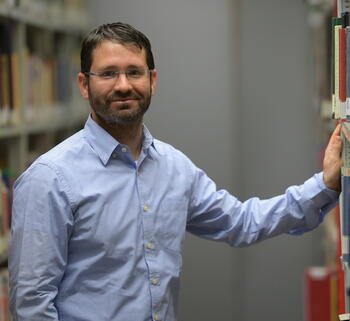
Noam Gidron
Noam Gidron is an assistant professor (lecturer) at the Department of Political Science and the Joint Program in Politics, Philosophy and Economics (PPE) at the Hebrew University of Jerusalem.  His research interests lie at the intersection of political behavior and political economy. 

Online, via Zoom:  REGISTER

Noam Gidron Assistant professor (lecturer) at the Department of Political Science and the Joint Program in Politics, Philosophy and Economics (PPE) at the Hebrew University of Jerusalem
Seminars
-

About this Event: There is no shortage of scholarship on the rise of strategic experts—campaign strategists, consultants, and the like—in Western politics. Some accounts treat the rise of the strategist as an effect of the functional demands of party competition, linked with technological change and the accumulation of political data; others see the rise of the strategist as a symptom of a larger process of party decline. In this seminar I'll present a different argument: the rise of the strategist was linked with a turn, especially on the left, toward prioritizing markets over constituents. This argument is built on an "inside-out" (or refraction) analysis that traces the rise and fall of dominant party experts, attending to the link between their social location and their conceptions of the economic world, democratic politics and experts' public roles.  I will conclude by outlining a new project that builds on this work, tentatively titled Strategy and Democracy.


Image
Stephanie Mudge
About the Speaker: Stephanie Mudge is Associate Professor of Sociology at the University of California, Davis and co-editor of a new book series, Cambridge Studies in Historical Sociology. Her recent book, Leftism Reinvented (2018, Harvard University Press), is a cross-national study of how Western parties of the mainstream left shifted from socialism, to Keynesianism, to neoliberalism over the course of the 20th Century. She has published on a range of topics including neoliberalism, the sociology of parties and European technocratic expertise in venues including the Socio-Economic Review, the American Journal of Sociology and the Annual Review of Sociology. She is presently developing projects on the trajectory of "independence" in the case of the European Central Bank and the rise of strategists in American politics.

Online, via Zoom: REGISTER

Stephanie Mudge Associate Professor of Sociology at the University of California, Davis
Seminars
-

About this Event: In this book project, we walk in the footsteps of the pioneers of the nonviolent approach to provide a reinterpretation of the histories of the great movements of the twentieth century from a game theoretic perspective, bringing to bear a host of new quantitative analyses to understand the challenges they faced, when they were successful at overcoming them and why. We develop a simple conceptual framework for understanding the strategies available to both the leaders and the followers of political movements, the media and outside audiences, as well as the regimes that they seek to influence, and how these decisions interact. We use this framework to highlight the presence of three key tensions that exist in many political movements.

These tensions include: those between the allure of violence and the seeming pedestrianism of nonviolence, between the need for numbers and the need for focus, and between organizations that depend on grassroots mobilization versus hierarchies and leadership. 

In light of the framework and new quantitative evidence, we then retrace and re-examine the decisions of the participants of the Indian Independence Movement in each of their three great nonviolent drives for change---the Non-Cooperation Movement of the 1920s, the Civil Disobedience Movement of the 1930s and the Quit India Movement of the 1940s---and how they succeeded or failed in addressing these tensions. At each step, we also discuss both grand strategy and the effectiveness of local tactics. We next compare the Indian experience with the movements that came after, including the Civil Rights Movement in the United States, the Arab Spring and recent protests around the world. Finally, we draw on what we have learned to suggest ideas for better implement nonviolent protests today.


About the Speaker:

Image
Saumitra Jha
Along with being a Senior Fellow at FSI, Saumitra Jha is an associate professor of political economy at Stanford’s Graduate School of Business, and, by courtesy, of economics and of political science, and convenes the Stanford Conflict and Polarization Lab. He is also a senior fellow at the Stanford Institute for Economic Policy Research. In 2020–21, he is a fellow at the Center for Advanced Study in the Behavioral Sciences.

Jha’s research has been published in leading journals in economics and political science, including Econometrica, the Quarterly Journal of Economics, the American Political Science Review and the Journal of Development Economics, and he serves on a number of editorial boards. His research on ethnic tolerance has been recognized with the Michael Wallerstein Award for best published article in Political Economy from the American Political Science Association in 2014 and his co-authored research on heroes with the Oliver Williamson Award for best paper by the Society for Institutional and Organizational Economics in 2020. Jha was honored to receive the Teacher of the Year Award, voted by the students of the Stanford MSx Program in 2020.


Online, via Zoom: REGISTER

Graduate School of Business 655 Knight Way Stanford, CA 94305
(650) 721 1298
0
Associate Professor of Political Economy, GSB
Associate Professor, by courtesy, of Economics and of Political Science
saumitra_jha.jpg

Along with being a Senior Fellow at the Freeman Spogli Institute for International Studies, Saumitra Jha is an associate professor of political economy at the Stanford Graduate School of Business, and convenes the Stanford Conflict and Polarization Lab. 

Jha’s research has been published in leading journals in economics and political science, including Econometrica, the Quarterly Journal of Economics, the American Political Science Review and the Journal of Development Economics, and he serves on a number of editorial boards. His research on ethnic tolerance has been recognized with the Michael Wallerstein Award for best published article in Political Economy from the American Political Science Association in 2014 and his co-authored research on heroes with the Oliver Williamson Award for best paper by the Society for Institutional and Organizational Economics in 2020. Jha was honored to receive the Teacher of the Year Award, voted by the students of the Stanford MSx Program in 2020.

Saum holds a BA from Williams College, master’s degrees in economics and mathematics from the University of Cambridge, and a PhD in economics from Stanford University. Prior to rejoining Stanford as a faculty member, he was an Academy Scholar at Harvard University. He has been a fellow of the Niehaus Center for Globalization and Governance and the Center for the Study of Democratic Politics at Princeton University, and at the Center for Advanced Study in the Behavioral Sciences at Stanford. Jha has consulted on economic and political risk issues for the United Nations/WTO, the World Bank, government agencies, and for private firms.


Senior Fellow at the Freeman Spogli Institute for International Studies
Dan C. Chung Faculty Scholar at the Freeman Spogli Institute for International Studies
Senior Fellow at the Stanford Institute for Economic Policy Research
Date Label
Senior Fellow, Center for Democracy, Development and the Rule of Law, FSI
Seminars
-

The United States has arguably seen more significant antitrust developments in the last few months than over the past twenty years. Last December the U.S. Federal Trade Commission and 46 states, the District of Columbia, and Guam filed parallel antitrust suits against Facebook, in part related to the acquisitions of WhatsApp and Instagram. In October, the Department of Justice and 11 states filed a complaint against Google for the alleged monopolization of mobile search and search advertising. Then in December, two multistate coalitions (one led by Texas, the other by Colorado) filed their own antitrust lawsuits against Google. Meanwhile in November, European Union officials also accused Amazon of breaking EU competition rules, and this January a class-action antitrust lawsuit was filed against Amazon here in the U.S. What are the bases of these suits, how have the platforms responded, and what can we expect to see next?

Join Kelly Born, affiliate at Stanford’s Cyber Policy Center and Director of the Cyber Initiative at the Hewlett Foundation in conversation with Dina Srinivasan from Yale Law School, Sandeep Vaheesan, legal director at the Open Markets Institute and former Regulations Counsel at the Consumer Financial Protection Bureau, and Mark Lemley of Stanford Law School on March 25 at 11 am Pacific Time.

-

The REDI Task Force invites you to the next event in our "Critical Conversations: Race in Global Affairs" series, featuring a panel moderated by Professor Gabrielle Hecht on inequality in nuclear regimes. This event will be recorded and uploaded to the REDI website.

The nuclear order is rife with inequalities. This panel will contextualize the state of the nuclear order as it stands today  with our ongoing conversation about race, diversity, and inclusion. The panelists will explore how non-proliferation, arms control, and disarmament, intersect and the exclusion that was/remains written into the system. The panel will discuss who in the nuclear world speaks about what, and more importantly, who in the nuclear world can speak about certain things and who cannot. By discussing debates about ‘haves and ‘have nots’ among nuclear states, the role of African-Americans in the disarmament movement, the disproportionate humanitarian impact of nuclear weapons, and inequal effect of the presence of nuclear weapons on marginalized communities, this panel will discuss whether it is even possible to have an equitable framework in a nuclear order that was built to structurally discriminate. There will be time for a Q&A following the discussion.

About the Speakers:

Gabrielle Hecht is the Frank Stanton Foundation Professor of Nuclear Security at CISAC, Senior Fellow at FSI, Professor of History, and REDI Task Force Chair. She is Vice-President/President-Elect of the Society for the History of Technology. Her current research explores radioactive residues, mine waste, air pollution, and the Anthropocene in Africa. Essays based on this research have appeared in Cultural Anthropology, Aeon, Somatosphere, the LA Review of Books, and e-fluxArchitecture. Hecht's graduate courses include colloquia on "Infrastructure and Power in the Global South," "Technopolitics," and "Materiality and Power." She teaches a community-engaged undergraduate research seminar on "Racial Justice in the Nuclear Age," in partnership with the Bayview Hunters Point Community Advocates (BVHPCA). She is currently working with BVHPCA and other partners to develop knowledge infrastructures to underpin community-driven public history that supports racial equity and environmental justice.

Vincent Intondi is a Professor of History and Director of the Institute for Race, Justice, and Civic Engagement at Montgomery College in Takoma Park, Maryland. From 2009-2017, Intondi was Director of Research for American University’s Nuclear Studies Institute in Washington, DC. Prior to teaching at Montgomery College, Intondi was an Associate Professor of History at Seminole State College in Sanford, Florida. Intondi regularly works with organizations exploring ways to include more diverse voices in the nuclear disarmament movement. His research focuses on the intersection of race and nuclear weapons. He is the author of the book, African Americans Against the Bomb: Nuclear Weapons, Colonialism, and the Black Freedom Movement with Stanford University Press.


Gabrielle Hecht Professor of History FSI Senior Fellow
Debak Das
Vincent Intondi Professor of History
Authors
Callista Wells
News Type
News
Date
Paragraphs

The China Program at Shorenstein APARC had the privilege of hosting Jude Blanchette, the Freeman Chair in China Studies at the Center for Strategic and International Studies (CSIS). The program, entitled "What’s ‘Communist’ about the Communist Party of China?," explored the goals and ideology of the Chinese Communist Party (CCP), as well as what they might mean for the future of China in the global community. Professor Jean Oi, William Haas Professor of Chinese Politics and director of the APARC China Program, moderated the event.

After the death of Mao Zedong in 1976, the goals of the CCP became less clear. As the country began to adopt market reforms in the 1980s and 1990s, CCP theorists were forced into contortions providing ideological justifications for policies that appeared overtly capitalist. Deng Xiaoping’s concept of “Socialism with Chinese characteristics” came to be seen as a theoretical fig leaf rather than a description of an egalitarian economic system, and by the 2000s, a consensus emerged that the CCP had completely abandoned any pretense of pursuing the Marxist vision it purported to hold. With the rise of Xi Jinping, however, the Party talks with renewed vigor about Marxism-Leninism and the goal of achieving actual, existing socialism. Has the CCP re-discovered communism?  In his talk, Blanchette discussed the abandoned and existing legacies of Mao Zedong, Marxism-Leninism, and the CCP’s vision of socialism. Watch now: 

Read More

Min Ye speaking
News

Domestic or International? The Belt and Road Initiative Is More Internally Focused Than We Think, Says Expert Min Ye

Domestic or International? The Belt and Road Initiative Is More Internally Focused Than We Think, Says Expert Min Ye
Banner of Hau L. Lee
News

The Pandemic, U.S.-China Tensions and Redesigning the Global Supply Chain

The Pandemic, U.S.-China Tensions and Redesigning the Global Supply Chain
American and Chinese flags
News

U.S.-China Relations in the Biden Era

Dr. Thomas Wright examines the recent history of US-China relations and what that might mean for the new administration.
U.S.-China Relations in the Biden Era
Hero Image
National Emblem of the People's Republic of China on the Great Hall of the People
All News button
1
Subtitle

Is the Chinese Communist Party really communist at all? Expert Jude Blanchette, Freeman Chair in China Studies at the Center for Strategic and International Studies, weighs in.

Authors
Noa Ronkin
News Type
News
Date
Paragraphs

China and the United States are usually cast as fierce rivals, but there are broad areas of society where the two nations share profound similarities. As they confront growing demands to provide their citizens with goods and services such as healthcare, education, housing, and transportation, both the Chinese and U.S. governments engage the private sector in the pursuit of public value, although they do so in different ways.

This type of engagement, in which the government calls on the private sector to meet public goals, is known as collaborative governance and it is becoming an increasing share of the economy in both China and the United States. A new book, The Dragon, the Eagle, and the Private Sector (Cambridge University Press), analyzes the application of collaborative governance in a wide range of policy arenas in China and the United States.

The book itself is the result of collaborative research by three co-authors: APARC Deputy Director Karen Eggleston, Harvard Kennedy School Raymond Vernon Senior Lecturer in Public Policy John Donahue, and Harvard Kennedy School’s Frank P. Ramsey Professor of Political Economy Richard Zeckhauser. On March 5, 2021, the three co-authors gathered for a virtual book launch, an event co-sponsored by Shorenstein APARC and the Mossavar-Rahmani Center for Business and Government at the Harvard Kennedy School.

[Sign up for APARC newsletters to receive the latest updates from our experts.]

Introducing the new book, Lawrence H. Summers, president emeritus of Harvard University and the Charles W. Eliot University Professor at the Kennedy School, called the co-authors’ analysis of collaborative governance “micro microeconomics” that shows how particular tasks and particular commitments of resources, once decided on, are going to be best accomplished. This work, Summers noted, sheds light on situations involving both cooperation and competition — aspects that affect almost any complex problem yet are rarely considered by economists.

A key element of collaborative governance, noted Zeckhauser, is the sharing of discretion. Rather than contracting at one pole and complete laissez-faire at the opposite pole, in a collaborative governance process, the two parties involved play a role in determining what is produced and how it is produced. It is a process that calls on the best capabilities of both the private and public sectors and that grants each of them an element of control. Sometimes that process results in triumphs, sometimes in tragedies, and other times in outcomes that are “in-between.” The book analyses cases of this entire gamut. “We hope that this volume provides guidance on how the triumphs can become more common, the tragedies more scarce, and the in-between outcomes improved,” said Zeckhauser.

This book provides a key to understanding how to achieve [...] quality-public-private collaboration, done right. Delving deep into two very different societies, the US and China, the authors provide lessons that illuminate and should inform scholars and policymakers alike.
Fareed Zakaria
Journalist and Author

Collaborative Governance in the Time of COVID-19

The unfolding of the COVID-19 pandemic provides dramatic current illustrations of collaborative governance. The urgent need for an effective vaccine created the conditions for a successful partnership between the U.S. government and the pharmaceutical sector, with the former offering both regulatory processes and significant financing, the latter its innovation. Consider the Moderna vaccine, which, based on evidence from clinical trials, is over 90% effective at preventing laboratory-confirmed COVID-19 illness. The vaccine was created within less than a year using a new approach, based on Messenger RNA technology, by a company that had never before produced a commercial product. “This is a triumph of collaborative governance,” said Zeckhauser.

The vaccine distribution process in the United States, however, has proved to be challenging and chaotic. Zeckhauser contrasted this experience with China’s activation of technology giant Tencent, which is using its ubiquitous WeChat application to allow individuals to easily find where the vaccine is distributed and sign up for vaccination appointments. “There is probably a lesson here in the way these two outcomes came about. We hope that individuals in both China and the United States will examine the lessons in this volume to see how they can achieve outcomes for their citizens that produce public benefits more effectively.”

A Spectrum of Policy Domains

The book details how China and the United States grapple with the complexity of producing the goods and services they need to meet a broad array of public goals. Eggleston surveyed the five broad policy domains she and her co-authors examine in the book through detailed historical legacies and case studies of the application of collaborative governance in both countries.

These domains include the railroads that build the nation historically in both countries and China’s high-speed rail network; real estate's intricate tangle of public and private partnerships; hosting the Olympic Games and the experience of the public and private sectors in that endeavor in both countries; education provision; and state and market in population health and health care in both countries. The book spotlights the different ways in which both countries produce public goods and services in these broad policy domains.

It is crucial for China to embrace the transparency imperative because the evil twin of collaborative governance is cronyism or corruption.
John Donahue
Harvard University

East and West

Professor Yijia Jing of Fudan University, an expert on privatization, governance, and collaborative service delivery, participated in the discussion with the book co-authors and shared insights on public-private relationships in China. Collaborative governance in the country, he said, has undergone a gradual process of institutionalization. He observed that Chinese local governments apply different strategies in collaborating with private companies. For example, local governments like Guangdong and Shanghai partner in different ways with digital giants Tencent and Alibaba to build up their digital capacities — collaborations through which they have been learning how to balance their multiple roles as partners, policymakers, and market regulators.

Jing noted that China uses collaborative governance not only in domestic arenas but also in areas of international development, through entities such as the BRICS Development Bank and the Asian Infrastructure Investment Bank. China is also promoting collaborative governance as part of its Belt and Road initiative.

A Call for Transparency

The Dragon, the Eagle, and the Private Sector helps decision-makers apply the principles of collaborative governance to effectively serve the public. The book's overarching conclusion is that transparency is the key to the legitimate growth of collaborative governance. In the United States, said Donahue, the principle of governmental transparency is widely accepted as a broad-spectrum accountability device. He recognized that he and his co-authors do not expect China to adopt the U.S. approach to transparency, but expressed their hope to see more transparency “with Chinese characteristics.” “It is crucial for China to embrace the transparency imperative because the evil twin of collaborative governance is cronyism or corruption,” Donahue argued.

In many countries and policy arenas, collaborative governance could effectively increase innovation but is not available because the populace is convinced that any interaction between the public and private sectors amounts to corruption on the part of elites against the public interest. The potential in China to create public value through interaction between its public and private sectors is enormous, concluded Donahue. ”It would be a shame to squander that.”

Read More

Demographics and Innovation in the Asia-Pacific
News

New Book Explores the Intersection of Demographic Shifts and Innovation, Offering Lessons from Asian Nations

Contributing authors to the new volume 'Demographics and Innovation in the Asia-Pacific' convened for a virtual book launch and discussion of the challenges facing aging societies in East Asia and the roles technology and innovation may play in rebalancing them.
New Book Explores the Intersection of Demographic Shifts and Innovation, Offering Lessons from Asian Nations
A Japanese robot prototype lifts a dummy patient
News

Robot Adoption Brings Benefits to Japan’s Aging Society

In one of the first studies of service sector robotics, APARC scholars examine the impacts of robots on nursing homes in Japan. They find that robot adoption may not be detrimental to labor and may help address the challenges of rapidly aging societies.
Robot Adoption Brings Benefits to Japan’s Aging Society
Hero Image
3D mockup of the book 'The Dragon, the Eagle, and the Private Sector'
All News button
1
Subtitle

In their new book, APARC Deputy Director Karen Eggleston and co-authors John Donahue and Richard Zeckhauser of Harvard University seek to empower decision-makers to more wisely engage the private sector in the pursuit of public value by analyzing how China and the United States use collaborative governance strategies to meet growing demands for public services.

-

* Please note all CISAC events are scheduled using the Pacific Time Zone.


Seminar Recording:  https://youtu.be/-hERfg-DCYw


About the Event: 

This presentation explores two topics at the nexus of technology and international security: interstate influence operations and technological revolutions.

After Russian interference in the 2016 U.S. election, influence operations have become a central focus among American policymakers, foreign policy pundits, and publics alike. Yet, Goldstein argues that they remain under-explored and under-theorized in international security studies, with disagreement over how to define the phenomenon implicit in the existing literature. Goldstein will introduce a conceptual framework for foreign influence operations and argue that security studies scholars should pay greater attention to the subject for two reasons. First, they are policy-relevant and likely to remain so; they are cost effective, propagandists are prone to inflate their impact, and they are difficult to deter. Second, studying influence operations can contribute to the academic discipline of security studies by helping to expand restrictive notions of state power and challenge dominant models of foreign policy decision-making.

How do emerging technologies affect the rise and fall of great powers? Scholars have long observed that rounds of technological revolution disrupt the economic balance of power, bringing about a power transition in the international system. However, there has been limited investigation of how this process occurs. The standard explanation emphasizes a country’s ability to dominate innovation in leading sectors, seizing monopoly profits in new, fast-growing industries centered around major technological breakthroughs. Investigating historical cases of industrial revolutions followed by economic power transitions, Ding will present an alternative mechanism based on the diffusion of general-purpose technologies. The findings have direct implications for how recent breakthroughs in artificial intelligence could affect the U.S.-China power balance.


About the Speakers: 

Jeffrey Ding is a Ph.D. candidate in the Department of Politics and International Relations at the University of Oxford. Jeffrey’s current research is centered on how technological change affects the rise and fall of great powers. Through investigating historical cases of industrial revolutions, Jeffrey traces causal mechanisms that connect significant technical breakthroughs and economic power transitions — with an eye toward the implications of advances in AI for a possible U.S.-China power transition. Jeffrey’s previous research covered related topics, including China's development of AI, identifying strategic goods and technologies, and technical standards as a vehicle of AI governance.


Josh A. Goldstein is a PhD Candidate and Clarendon Scholar in the Department of Politics and International Relations at the University of Oxford. For the 2020-2021 year, he is a pre-doctoral fellow with the Stanford Internet Observatory and part of the inaugural class of non-resident Hans J. Morgenthau Fellows at the Notre Dame International Security Center. Josh’s 3-paper doctoral dissertation takes a multi-method approach to studying the challenges that democracies face from influence operations. His broader research interests lie in international security, political psychology, and foreign policy-decision making.


Virtual Seminar

0
Postdoctoral Fellow, Stanford Internet Observatory (2021-2022)
Predoctoral Fellow, Stanford Internet Observatory (2020-2021)
Josh-Goldstein.jpeg

Josh A. Goldstein is a past postdoctoral scholar at the Stanford Internet Observatory. He received his PhD in International Relations from the University of Oxford, where he studied as a Clarendon Scholar. At the Stanford Internet Observatory, Dr. Goldstein investigated covert influence operations on social media platforms, studied the effects of foreign interference on democratic societies, and explored how emerging technologies will impact the future of propaganda campaigns. He has given briefings to the Department of Defense, the State Department, and senior technology journalists based on this work, and published in outlets including Brookings, Lawfare, and Foreign Policy.

Prior to joining SIO, Dr. Goldstein received an MPhil in International Relations at Oxford with distinction and a BA in Government from Harvard College, summa cum laude. He also assisted with research and writing related to international security at the Belfer Center, Brookings Institution, House Foreign Affairs Committee, and Department of Defense.

0
ding.png

Jeff is an Assistant Professor of Political Science at George Washington University. Previously, he was a postdoctoral fellow at Stanford's Center for International Security and Cooperation, sponsored by Stanford's Institute for Human-Centered Artificial Intelligence. His research agenda centers on technological change and international politics. His book project investigates how past technological revolutions influenced the rise and fall of great powers, with implications for U.S.-China competition in emerging technologies like AI. Other research papers tackle how states should identify strategic technologies, assessments of national scientific and technological capabilities, and interstate cooperation on nuclear safety and security technologies. Jeff's work has been published in Foreign Affairs, Security Studies, The Washington Post, and other outlets. Jeff received his PhD in 2021 from the University of Oxford, where he studied as a Rhodes Scholar. He has also worked as a researcher for Georgetown's Center for Security and Emerging Technology and the Centre for the Governance of AI at the University of Oxford.

Affilate
Seminars
Subscribe to Governance