Governance

FSI's research on the origins, character and consequences of government institutions spans continents and academic disciplines. The institute’s senior fellows and their colleagues across Stanford examine the principles of public administration and implementation. Their work focuses on how maternal health care is delivered in rural China, how public action can create wealth and eliminate poverty, and why U.S. immigration reform keeps stalling. 

FSI’s work includes comparative studies of how institutions help resolve policy and societal issues. Scholars aim to clearly define and make sense of the rule of law, examining how it is invoked and applied around the world. 

FSI researchers also investigate government services – trying to understand and measure how they work, whom they serve and how good they are. They assess energy services aimed at helping the poorest people around the world and explore public opinion on torture policies. The Children in Crisis project addresses how child health interventions interact with political reform. Specific research on governance, organizations and security capitalizes on FSI's longstanding interests and looks at how governance and organizational issues affect a nation’s ability to address security and international cooperation.

-

About the Event: 

Political violence is rising in the United States, alarming citizens and leaders alike. How many Americans endorse partisan violence and other forms of extreme hostility? What are its deep social, political, historical, and psychological roots? What can be done about it? And what does it mean for democracy? 

In this talk, Drs. Mason and Kalmoe make sense of our contentious politics with a groundbreaking study of radicalism among ordinary American partisans. Their individual-level studies utilize more than a dozen new nationally representative surveys and experiments to trace recent trends since 2017, reactions to elections and violent events, broader conditions that spur support for violence, links from violence attitudes to aggressive behavior, and the role of leaders in enflaming or pacifying their followers.

The results reshape the study of modern American political behavior by showing that ordinary partisanship is far more volatile than scholars have recognized in the past century of study.  


About the Speaker(s)

Image
Nathan Kalmoe
Dr. Nathan P. Kalmoe is an associate professor of political communication at Louisiana State University in the Manship School of Mass Communication and Department of Political Science. He is the author of With Ballots & Bullets: Partisanship & Violence in the American Civil War and co-author of Neither Liberal nor Conservative: Ideological Innocence in the American Public. He has also written essays for The Washington Post and Politico, and his work has been featured in The New York Times, The Atlantic, and Vox, among other popular outlets.


Image
Lillilana Mason
Lilliana Mason is associate professor of Government and Politics at the University of Maryland, College Park, and author of Uncivil Agreement: How Politics Became Our Identity (University of Chicago Press). Her research on partisan identity, partisan bias, social sorting, and American social polarization has been published in journals such as American Political Science Review, American Journal of Political Science, Public Opinion Quarterly, and Political Behavior, and featured in media outlets including the New York Times, the Washington Post, CNN, and National Public Radio.


Online, via Zoom:  REGISTER

Dr. Nathan P. Kalmoe Associate Professor of Political Communication, Louisiana State University
Lilliana Mason Associate professor of Government and Politics at the University of Maryland, College Park
Seminars
Authors
Callista Wells
News Type
News
Date
Paragraphs

On February 24, 2021, the China Program at Shorenstein APARC hosted Dr. Thomas Wright, director of the Center on the United States and Europe and a senior fellow in the Project on International Order and Strategy at the Brookings Institution. Professor Jean Oi, William Haas Professor of Chinese Politics and director of the APARC China Program, moderated the event.

The program, entitled "U.S.-China Relations in the Biden Era," explored the future of US-China relations based on experience from past administrations. Under former President Trump, U.S. relations with China evolved into outright rivalry. In his talk, Dr. Wright discussed whether this rivalry will continue and evolve during a Biden administration by analyzing the roots of strategic competition between the two countries and various strands of thinking within the Biden team. According to Wright, the most likely outcome is that the competition between the two countries will evolve into a clash of governance systems and the emergence of two interdependent blocs where ideological differences become a significant driver of geopolitics. Cooperation is possible but it will be significantly shaped by conditions of rivalry. Watch now:

Read More

Min Ye speaking
News

Domestic or International? The Belt and Road Initiative Is More Internally Focused Than We Think, Says Expert Min Ye

Domestic or International? The Belt and Road Initiative Is More Internally Focused Than We Think, Says Expert Min Ye
Banner of Hau L. Lee
News

The Pandemic, U.S.-China Tensions and Redesigning the Global Supply Chain

The Pandemic, U.S.-China Tensions and Redesigning the Global Supply Chain
Photograph of Xi Jinping and Vladmir Putin walking in front of two lines of armed Chinese soldiers
News

Military Competition with China: Harder to Win Than During the Cold War?

On February 10th, the APARC China Program hosted Professor Oriana Mastro to discuss military relations between the US and China, and why deterrence might be even more difficult than during the Cold War.
Military Competition with China: Harder to Win Than During the Cold War?
Hero Image
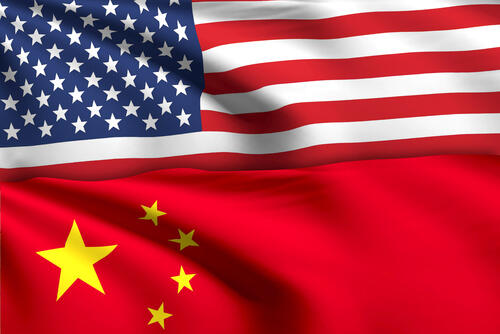
American and Chinese flags
All News button
1
Subtitle

Dr. Thomas Wright examines the recent history of US-China relations and what that might mean for the new administration.

Authors
News Type
News
Date
Paragraphs

Across the world, societies are experiencing unprecedented demographic shifts as migration and aging reshape population landscapes. At the forefront of this global transformation is the Asia-Pacific region, particularly the countries of East Asia. Demographics and Innovation in the Asia-Pacific — a new book edited by APARC Director Gi-Wook Shin, Deputy Director Karen Eggleston, and Joon-Shik Park, a professor in the Department of Sociology at Hallym University in Chuncheon, Korea — provides a multidisciplinary examination of the demographic challenges facing East Asian nations and possible solutions.

At a virtual book launch held on March 2, 2021, contributing chapter authors James FeyrerJoon-Shik Park, and Kenji Kushida joined Karen Eggleston to discuss their findings.

[Subscribe to our newsletters to get updates on our experts' latest research.]

Published in APARC’s in-house series, the book is the second volume resulting from APARC’s Stanford Asia-Pacific Research Innovation project. It collects the research findings of participants at the project’s third conference that was held in South Korea in June 2019.

James Liang, a research professor of economics at Peking University and a leading scholar of demographics and social studies, opened the event by situating the discussion about population structure in the context of the U.S.-China technology race. China is quickly catching up with the United States in the quality of its talent pool and the number of its labor resources. It will continue to outpace and surpass the United States in talent and innovation power in the next 10-20 years, Liang says.

China, however, is on a demographic cliff, facing severe population aging and low fertility rates. Its population of young workers aged 25-44 year-olds is projected to decline much faster and sooner than its overall population, leveling out against the labor and innovation gains the United States makes through the inflow of international talent into U.S. universities and entrepreneurial ventures. To sustain its long-term growth in labor quality and innovation, China will need higher birth rates and additional talent gains through migration, argues Liang.

James Feyrer’s book chapter examines the macroeconomic relationship between workforce demographics and aggregate productivity in Asia. Feyrer confirms that the high-income Asian nations like Japan and Korea, and even some middle-income countries of the region, will no longer enjoy a “demographic dividend” boosting aggregate productivity. However, he finds that the negative consequences of shifting to an older population structure may be less severe than previously projected, and even weakening with time. Feyrer believes this may be a result of improved food security and better overall health experienced by old cohorts in childhood, reinforcing the long-reaching impacts of healthcare on societal well-being.

Joon-Shik Park focused on the specific challenges facing Korean society, where birth rates have dropped severely. These historic declines continue to contribute to rising social and political unevenness across Korean society today. Initially seen most visibly in rural areas and smaller villages, Park’s now sees this unevenness affecting the dynamics of medium-sized towns and more urban areas as well. Korea and other aging societies must find viable solutions to address these issues if they are to prevent demographic divides from hobbling development and innovation, Park says.

Closing the book launch event, APARC Research scholar Kenji Kushida offers perspectives from rapidly aging Japan. where the challenges of shrinking and aging populations, rural-to-urban population distribution, and labor shortages spur advances in technology and innovation. Kushida documents this trend across multiple sectors.

He shows that drone technology has increased the productivity of short-staffed surveying firms, while AI-assisted industrial machines allow a broader range of laborers to work in manufacturing. Even in traditionally human-dominated environments like nursing homes, staff increasingly use robots to help improve the physical and mental well-being of elderly patients. Rather than strictly retarding growth, Kushida makes the case that demographic challenges serve as a catalyst for the development and implementation of new technologies.

As the research collected in Demographics and Innovation in the Asia-Pacific demonstrates, the challenges facing aging Asian societies are complex, but there is reason to look to the future with optimism. As the editors of the volume state in their introduction to the book, “Few concepts are as critical for sustained improvement in living standards as innovation.” New technologies and solutions will be foundational to addressing the challenges of the new demographic frontiers many societies are now approaching.

Read More

A Japanese robot prototype lifts a dummy patient
News

Robot Adoption Brings Benefits to Japan’s Aging Society

In one of the first studies of service sector robotics, APARC scholars examine the impacts of robots on nursing homes in Japan. They find that robot adoption may not be detrimental to labor and may help address the challenges of rapidly aging societies.
Robot Adoption Brings Benefits to Japan’s Aging Society
Shifting Gears in Innovation Policy: Strategies from Asia
News

New Book Outlines the Role of Innovation and Entrepreneurship for Future Economic Growth in East Asia

Yong Suk Lee explains in the new volume, Shifting Gears in Innovation Policy, that while ‘catch-up’ strategies have been effective in promoting traditional economic growth in Asia, innovative policy tools that foster entrepreneurship will be needed to maintain competitiveness in the future.
New Book Outlines the Role of Innovation and Entrepreneurship for Future Economic Growth in East Asia
Stanford students participate in class.
News

University Entrepreneurship Programs May Not Increase Entrepreneurship Rates, Stanford Researchers Find

A study by Yong Suk Lee, the deputy director of APARC’s Korea Program, and Management Science and Engineering professor Charles Eesley investigates the efficacy of two major Stanford entrepreneurship education initiatives, suggesting they may not increase entrepreneurial activity.
University Entrepreneurship Programs May Not Increase Entrepreneurship Rates, Stanford Researchers Find
Hero Image
Demographics and Innovation in the Asia-Pacific
"Demographics and Innovation in the Asia-Pacific" examines the impacts of Asia's demographic challenges on the development of new technology and innovation.
All News button
1
Subtitle

Contributing authors to the new volume 'Demographics and Innovation in the Asia-Pacific' convened for a virtual book launch and discussion of the challenges facing aging societies in East Asia and the roles technology and innovation may play in rebalancing them.

-


In many countries around the world, women's enfranchisement marked the single largest expansion in the eligible electorate. In Belgium, Canada, Switzerland, and Germany, the electorate more than doubled once women could vote, while in countries that rolled out women's suffrage gradually, such as the UK and Norway, even the second smaller reforms saw the electorate grow by more than a third. The sheer size of the expansion had the potential to transform electoral politics, a prospect that provoked optimism and fear alike: for those who fought for women’s suffrage, the victory brought legitimacy and new beginnings; yet for those who fought against, the reform heralded instability. Did women's suffrage transform electoral politics for good or for bad? Did it increase electoral instability? Did women favor particular parties?

Prominent theories of post-suffrage politics suggest either that women would vote conservatively, or that women's voting power would be vitiated by their reluctance to turn out. Leveraging fine grained municipal level data from Sweden, which includes turnout figures separated by sex, to examine the impact of women's suffrage on electoral politics, we argue that the geography of the gender gap, both in terms of turnout and vote choice, jointly determine the impact of women's votes. Using three methods to estimate the gender vote gap, we find that in cities, women were slightly more likely to vote for the left than men. Although women turned out at lower rates than men overall, their concentration in cities produced a national gender vote gap for the left. These findings, which highlight how diversity among women and electoral geography produce electoral outcomes, complicate longstanding theories about the "traditional" gender voting gap.

Image
Dawn Teele

Dr. Dawn Teele holds a B.A. in Economics from Reed College, and a Ph.D. in Political Science from Yale University. Prior to joining the faculty at Penn she was a Research Fellow at the London School of Economics. Dr. Teele's research has been published in a variety of outlets in political science, including the American Political Science Review, the Journal of Politics, and Politics & Society. She is editor of a volume on social science methodology, Field Experiments and Their Critics  (Yale University Press 2014), and co-editor of Good Reasons to Run: Women and Political Candidacy (Temple University Press 2020). In 2018, Princeton University Press published her book Forging the Franchise: The Political Origins of the Women’s Vote which won the Luebbert Prize for the best book in Comparative Politics from the American Political Science Association.

Online via Zoom

Dawn Langan Teele University of Pennsylvania
-

About the Speaker:

Image
Stephen Krasner
Stephen Krasner is the Graham H. Stuart Professor of International Relations. A former director of CDDRL, Krasner is also an FSI senior fellow, and a fellow of the Hoover Institution.

From February 2005 to April 2007 he served as the Director of Policy Planning at the US State Department. While at the State Department, Krasner was a driving force behind foreign assistance reform designed to more effectively target American foreign aid. He was also involved in activities related to the promotion of good governance and democratic institutions around the world.

At CDDRL, Krasner was the coordinator of the Program on Sovereignty. His work has dealt primarily with sovereignty, American foreign policy, and the political determinants of international economic relations. Before coming to Stanford in 1981 he taught at Harvard University and UCLA. At Stanford, he was chair of the political science department from 1984 to 1991, and he served as the editor of International Organization from 1986 to 1992.

He has been a fellow at the Center for Advanced Studies in the Behavioral Sciences (1987-88) and at the Wissenschaftskolleg zu Berlin (2000-2001). In 2002 he served as director for governance and development at the National Security Council. He is a fellow of the American Academy of Arts and Sciences and a member of the Council on Foreign Relations.

Online, via Zoom:  REGISTER

CDDRL
Stanford University
Encina Hall
Stanford, CA 94305-6055

(650) 723-0676 (650) 724-2996
0
Senior Fellow at the Freeman Spogli Institute for International Studies, Emeritus
Graham H. Stuart Professor of International Relations
Senior Fellow at the Hoover Institution, Emeritus
krasner.jpg MA, PhD

Stephen Krasner is the Graham H. Stuart Professor of International Relations. A former director of CDDRL, Krasner is also an FSI senior fellow, and a fellow of the Hoover Institution.

From February 2005 to April 2007 he served as the Director of Policy Planning at the US State Department. While at the State Department, Krasner was a driving force behind foreign assistance reform designed to more effectively target American foreign aid. He was also involved in activities related to the promotion of good governance and democratic institutions around the world.

At CDDRL, Krasner was the coordinator of the Program on Sovereignty. His work has dealt primarily with sovereignty, American foreign policy, and the political determinants of international economic relations. Before coming to Stanford in 1981 he taught at Harvard University and UCLA. At Stanford, he was chair of the political science department from 1984 to 1991, and he served as the editor of International Organization from 1986 to 1992.

He has been a fellow at the Center for Advanced Studies in the Behavioral Sciences (1987-88) and at the Wissenschaftskolleg zu Berlin (2000-2001). In 2002 he served as director for governance and development at the National Security Council. He is a fellow of the American Academy of Arts and Sciences and a member of the Council on Foreign Relations.

His major publications include Defending the National Interest: Raw Materials Investment and American Foreign Policy (1978), Structural Conflict: The Third World Against Global Liberalism (1985), Sovereignty: Organized Hypocrisy (1999), and How to Make Love to a Despot (2020). Publications he has edited include International Regimes (1983), Exploration and Contestation in the Study of World Politics (co-editor, 1999),  Problematic Sovereignty: Contested Rules and Political Possibilities (2001), and Power, the State, and Sovereignty: Essays on International Relations (2009). He received a BA in history from Cornell University, an MA in international affairs from Columbia University and a PhD in political science from Harvard.

CV
The Graham H. Stuart Professor of International Relations. A former director of CDDRL, Krasner is also an FSI senior fellow, and a fellow of the Hoover Institution
Seminars
-

About the Event:  Decentralization and community-driven development programs have become increasingly common policies to attempt to improve the distribution of public goods across low- and middle-income countries. We study a series of reforms in the city of Delhi that decentralized the administration of discretionary school-level budgets to elected bodies of parents. We find that parents have preferences for representatives that are substantially more educated than them and discriminate against Muslims. Parents act on these preferences when given the opportunity to elect SMC members. They elect parents that are wealthier and more educated and are also of higher status. The paper provides empirical evidence to the question of under what conditions decentralization leads to elite capture. When bureaucrats have a stronger say in the selection of representatives, budgets are captured to reflect the preferences of state representatives, rather than constituents.


Image
Emmerich Davies
About the Speaker:  Emmerich Davies is an Assistant Professor of Education at the Harvard Graduate School of Education, a Faculty Associate at the Weatherhead Center for International Affairs and Center for International Development, and a co-convener of the Brown-Harvard-M.I.T. Joint Seminar on South Asian Politics. He studies the political economy of education with a regional focus on South Asia. His work has been published in Comparative Political Studies and Governance. He received his Ph.D. and M.A. in political science from the University of Pennsylvania, and his B.A. in political science and economics from Stanford University.

Online, via Zoom:  REGISTER

Emmerich Davies Assistant Professor of Education at the Harvard Graduate School of Education
Seminars
-

* Please note all CISAC events are scheduled using the Pacific Time Zone.


Seminar Recording:  https://youtu.be/Mwjn39S48rE


About the Event: NATO Secretary General Stoltenberg will speak about how the transatlantic alliance is adapting to change in this turbulent period.  President Biden has clearly signaled that he is resolved to reach out to the NATO allies, working to repair the trans-Atlantic bond. To strengthen the bond between America and Europe and prepare the alliance for the future, the Secretary General has launched the NATO 2030 initiative.  This includes proposals on how NATO can better harness technology and innovation, tackle the security implications of climate change, and help make our societies more resilient. While NATO must continue to deter and defend against Russia, it is also keeping channels open to Moscow. The rise of China presents both challenges and opportunities that NATO has started to address. And missions in Afghanistan and Iraq are on the cusp of change, with decisions underway about what role NATO will play in the future. All in all, an exciting time to hear from NATO’s Secretary General.

This event is co-sponsored with The Europe Center.


About the Speaker: 

Jens Stoltenberg became NATO Secretary General in October 2014, following a distinguished international and domestic career. As a former Prime Minister of Norway and UN Special Envoy, Mr. Stoltenberg has been a strong supporter of greater global and transatlantic cooperation. Mr. Stoltenberg’s mandate as NATO Secretary General has been extended until the end of September 2022.

Under Mr. Stoltenberg’s leadership, NATO has responded to a more challenging security environment by implementing the biggest reinforcement of its collective defence since the Cold War, increasing the readiness of its forces and deploying combat troops in the eastern part of the Alliance. He believes in credible deterrence and defence while maintaining dialogue with Russia. He has also advocated for increased defence spending and better burden sharing within the Alliance, and a greater focus on innovation. NATO has also stepped up its efforts in the fight against terrorism. He strongly supports a partnership approach, with cooperation between NATO and the European Union reaching unprecedented levels.

Before coming to NATO, he was the UN Special Envoy on Climate Change from 2013 to 2014. He has also chaired UN High-level Panels on climate financing and the coherence between development, humanitarian assistance and environmental policies.

As Prime Minister of Norway, Mr. Stoltenberg increased the defence spending and transformed the Norwegian armed forces with new high-end capabilities and investments. He also signed an agreement with Russia on establishing maritime borders in the Barents and Polar Sea, ending a 30-years dispute.

Mr. Stoltenberg was also Prime Minister during the deadly terrorist attacks, which killed 77 people in Oslo and Utøya on 22 July 2011, urging in response, “more democracy, more openness, and more humanity, but never naïvete”.

Mr Stoltenberg holds a postgraduate degree in Economics from the University of Oslo. After graduating in 1987, he held a research post at the National Statistical Institute of Norway, before embarking on a career in Norwegian politics.

  • 2005-2013: Prime Minister of Norway
  • 2002-2014: Leader of the Norwegian Labor Party
  • 2000-2001: Prime Minister of Norway
  • 1996-1997: Minister of Finance
  • 1993-1996: Minister of Industry and Energy
  • 1991-2014: Member of Parliament
  • 1990-1991: State Secretary at the Ministry of the Environment
  • 1985-1989: Leader of the Norwegian Labour Youth

Jens Stoltenberg was born in Oslo on 16 March 1959. He is married to Ingrid Schulerud. They have two grown-up children.


Virtual Seminar

Jens Stoltenberg Secretary General NATO
Seminars
-

About the Event:   The number of Americans arrested, brought to court, and incarcerated has skyrocketed in recent decades. Criminal defendants come from all races and economic walks of life, but they experience punishment in vastly different ways. How and why is the court process unequal? This talk draws on findings from my book Privilege and Punishment: How Race and Class Matter in Criminal Court (Princeton University Press, November 2020). Drawing on fieldwork and interviews in the Boston court system, I show that lawyers and judges often silence, coerce, and punish disadvantaged defendants when they try to learn their legal rights and advocate for themselves. These dynamics reveal how unwritten institutional norms devalue the exercise of legal rights among the disadvantaged, and that ensuring effective legal representation is no guarantee of justice. Drawing on other research and activism on the courts as a tool of racialized social control, I conclude with reflections on the democratic potential and possibilities of criminal court abolition.  


Image
Matthew Clair
About the Speaker:  Dr. Matthew Clair is Assistant Professor in the Department of Sociology and (by courtesy) the Law School. His research examines the law, culture, and inequality. Dr. Clair's research has been published in Criminology, Law & Social Inquiry, Social Science & Medicine, and Social Forces and has been supported by the National Science Foundation and the American Society of Criminology. He has received awards from the American Sociological Association, the American Society of Criminology, the Law & Society Association, and the Society for the Study of Social Problems. His first book Privilege and Punishment: How Race and Class Matter in Criminal Court was published by Princeton University Press in November 2020.


Online, via Zoom:  REGISTER

Matthew Clair Assistant Professor in the Department of Sociology and (by courtesy) at Stanford Law School
Seminars
Authors
Oriana Skylar Mastro
News Type
Commentary
Date
Paragraphs

This article by Oriana Skylar Mastro was originally published in The Interpreter, a publication by the Lowy Institute.

When China began three days of military exercises in the South China Sea’s Gulf of Tonkin back in January, some observers speculated that Beijing was testing the new Biden administration. Harsh words from Beijing accompanied the exercises, with China’s foreign ministry spokesperson Wang Wenbin declaring the drills were “necessary measures to resolutely safeguard national sovereignty and security”.

Even against this backdrop, China’s official position is that it remains committed to a peaceful resolution of the South China Sea issue. And the rhetoric China employs at different times does make for a fascinating contrast. For example, China’s Foreign Ministry asserted in July 2020 that “China is not seeking to become a maritime empire” and that it “treats its neighboring nations on an equal basis and exercises the greatest restraint.”

[Subscribe to our newsletters to get the latest from our researchers.]

How then should we make sense of the mixed messages coming from Beijing? Most China experts find discourse to be informative – if not about China’s intentions, then at least about its aspirations. But which statements are indicative of China’s true position?

I argued recently in research for the Wilson Center that scholars need to evaluate the content and specificity of Chinese national discourse in addition to the position of the author or speaker involved. To that end, I analyzed all public speeches made by members of the Politburo of the Chinese Communist Party from 2013 to 2018. Xi Jinping led both of the Politburos I studied, and each had 25 members. Since some members served in both, this yields speeches by 39 unique individuals.

The speeches related to the South China Sea could be separated into those that mentioned cooperative themes and those with competitive themes. Cooperative themes have two subcategories, cooperation, and political solutions. Competitive themes have five subcategories: sovereignty, military, freedom, tension, and non-regional countries/the United States.

In what might appear good news for regional stability, China’s leaders used more cooperative discourse in public statements about the South China Sea than competitive themes. This might be taken to indicate a willingness to compromise with other claimants – a feature that is especially evident during the first year of each new Party Congress, namely 2013 and 2018.

However, one of the tenets of deriving intentions from discourse is that not all leadership statements are created equal. We need to consider personal power, accountability, and reputation for honesty. This means that statements by Xi, who is described as having “more power and more personal authority than any post-Mao leader”, take precedent.

Ambiguity suggests the leadership wants to have maximum flexibility and avoid being boxed in by its aggressive rhetoric.
Oriana Skylar Mastro
FSI Center Fellow

So here is the bad news. My analysis showed that Xi’s statements accounted for 42.7% of the competitive themes mentioned, even though he is only one of 39 leaders during this period.

There are additional reasons to discount Xi’s cooperative statements: his reputation for dishonesty.

In September 2015, Xi made a public statement at the White House promising not to “militarise” the artificial islands China had been building in the South China Sea. Xi stated that “relevant construction activities that China is undertaking … do not target or impact any country, and China does not intend to pursue militarisation”. While the language at the time was deemed “new”, the pledge remained unclear. Then and subsequently, Xi did not promise to freeze dredging, island-building or activities in the region, nor did he offer any clarity about what “militarisation” meant. In May 2019, then–Chairman of the Joint Chiefs of Staff General Joseph Dunford said that China had “clearly … walked away from that commitment” given the “10,000-foot runways, ammunition storage facilities, routine deployment of missile defence capabilities, aviation capabilities and so forth” on the islands. My analysis in a previous Interpreter article shows that China has indeed militarised these islands to establish control over the islands and the surrounding waters.

Interestingly, China’s foreign ministry also makes more competitive statements than cooperative statements, contrary to what might be the expectation that professional diplomats would lean towards negotiations and reassurance. If soothing language was supposed to mask China’s intentions, ministry statements would be the most likely source. But instead, China seems to prioritise articulating its position on sovereignty and issuing threats to those who violate it over reassurance.

None of this means China will use force in the South China Sea. Xi’s statements calling for a tough stance to protect China’s perceived sovereignty in the South China sea lack specificity – there are no allusions to a timeline or preferred methods. Such ambiguity suggests the leadership wants to have maximum flexibility and avoid being boxed in by its aggressive rhetoric, even if it is popular with the Chinese public. And the Chinese leadership undoubtedly prefers to use diplomatic, legal and economic tools to establish sovereignty over these waters.

But my analysis suggests that China will be unlikely to make the compromises necessary on its expansive territorial claims in these waters to facilitate a viable diplomatic resolution. Instead, China’s leaders hope that political, economic and military power will convince other countries to accommodate China’s position without a fight. And if the other claimants concede to Beijing, it will be harder for the United States or Australia to push back on China’s position.

Read More

Oriana Skylar Mastro testifies to the U.S.-China Economic and Security Review Commission on Taiwan deterrence.
News

Oriana Skylar Mastro Testifies on Deterring PRC Aggression Toward Taiwan to Congressional Review Commission

China may now be able to prevail in cross-strait contingencies even if the United States intervenes in Taiwan’s defense, Chinese security expert Oriana Skylar Mastro tells the U.S.-China Economic and Security Review Commission. Changes must be made to U.S. military capabilities, not U.S. policy, she argues.
Oriana Skylar Mastro Testifies on Deterring PRC Aggression Toward Taiwan to Congressional Review Commission
Aircraft assigned to the Theodore Roosevelt Carrier Strike Group fly over the South China Sea
Commentary

How China is Bending the Rules in the South China Sea

Beijing’s misapplication of international law in the disputed waters is more complex than it seems on the surface.
How China is Bending the Rules in the South China Sea
Photograph of Xi Jinping and Vladmir Putin walking in front of two lines of armed Chinese soldiers
News

Military Competition with China: Harder to Win Than During the Cold War?

On February 10th, the APARC China Program hosted Professor Oriana Mastro to discuss military relations between the US and China, and why deterrence might be even more difficult than during the Cold War.
Military Competition with China: Harder to Win Than During the Cold War?
Hero Image
A naval ship in the South China Sea in the background fo two officers.
China’s leaders are using cooperative discourse in public statements about the South China Sea than competitive themes, but signalling more competitive actions.
Getty Images
All News button
1
Subtitle

The rhetoric weaves between cooperative and competitive, leaving the question of what – and who – to believe.

-

This is a virtual event. Please click here to register and generate a link to the talk. 
The link will be unique to you; please save it and do not share with others.


This event is co-sponsored by the Center on Democracy, Development, and the Rule of Law.

How does autocratic lobbying affect political outcomes and media coverage in democracies? This talk focuses on a dataset drawn from the public records of the US Foreign Agents Registration Act. It includes over 10,000 lobbying activities undertaken by the Chinese government between 2005 and 2019. The evidence suggests that Chinese government lobbying makes legislators at least twice as likely to sponsor legislation that is favorable to Chinese interests. Moreover, US media outlets that participated in Chinese-government sponsored trips subsequently covered China as less threatening. Coverage pivoted away from US-China military rivalry and the CCP’s persecution of religious minorities and toward US-China economic cooperation. These results suggest that autocratic lobbying poses an important challenge to democratic integrity.


Portrait of Erin Baggott CarterErin Baggott Carter is an Assistant Professor at the Department of Political Science and International Relations at the University of Southern California. There, she is also a Co-PI at the Lab on Non-Democratic Politics. She received a Ph.D. in Government from Harvard University, is currently a visiting scholar at the Stanford Center on Democracy, Development and the Rule of Law, and was previously a Fellow at the Stanford Center for International Security and Cooperation.
Dr. Carter's research focuses on Chinese politics and propaganda. She recently completed a book on autocratic propaganda based on an original dataset of eight million articles in Arabic, Chinese, English, French, Russian, and Spanish drawn from state-run newspapers in nearly 70 countries. She is currently working on a book on how domestic politics influence US-China relations. Her other work has appeared or is forthcoming in the British Journal of Political ScienceJournal of Conflict Resolution, and International Interactions. Her work has been featured by the New York Times, the Brookings Institution, and the Washington Post Monkeycage Blog.


Image
American and Chinese flags
This event is part of the 2021 Winter/Spring Colloquia series, Biden’s America, Xi’s China: What’s Now & What’s Next?, sponsored by APARC's China Program.


Via Zoom Webinar. Register at: https://bit.ly/3beG7Qz

Erin Baggott Carter Assistant Professor, Department of Political Science and International Relations, University of Southern California; Visiting Scholar, Center on Democracy, Development and the Rule of Law, Stanford University
Seminars
Subscribe to Governance