Governance

FSI's research on the origins, character and consequences of government institutions spans continents and academic disciplines. The institute’s senior fellows and their colleagues across Stanford examine the principles of public administration and implementation. Their work focuses on how maternal health care is delivered in rural China, how public action can create wealth and eliminate poverty, and why U.S. immigration reform keeps stalling. 

FSI’s work includes comparative studies of how institutions help resolve policy and societal issues. Scholars aim to clearly define and make sense of the rule of law, examining how it is invoked and applied around the world. 

FSI researchers also investigate government services – trying to understand and measure how they work, whom they serve and how good they are. They assess energy services aimed at helping the poorest people around the world and explore public opinion on torture policies. The Children in Crisis project addresses how child health interventions interact with political reform. Specific research on governance, organizations and security capitalizes on FSI's longstanding interests and looks at how governance and organizational issues affect a nation’s ability to address security and international cooperation.

-


After the collapse of the Soviet Union, the newly gained dominance of liberal democracy as a political regime was accompanied by a new dominance of liberal democracy as a descriptive language. Concepts of political science, sociology, and economics which had been developed for the analysis of Western-type polities were applied to the various phenomena in the newly liberated countries. Bálint Magyar and Bálint Madlovics from Central European University (CEU DI) argue that the language of liberal democracies blurs the understanding of the current state of post-communism as it leads to conceptual stretching and brings in a host of hidden presumptions.

Magyar and Madlovics present at Stanford their most recent book, The Anatomy of Post-Communist Regimes (CEU Press, 2020). It is a comprehensive attempt to break with the traditional analysis, proposing a systematic renewal of our descriptive vocabulary. The authors have created categories as well as a whole new grammar for the region’s political, economic, and social phenomena. Focusing on Central Europe, the post-Soviet countries, and China, their study provides concepts and theories to analyze the actors, institutions, and dynamics of post-communist democracies, autocracies, and dictatorships.

Image
Bálint Magyar

Bálint Magyar is a Research Fellow at CEU Democracy Institute (since 2020), holding University Doctoral degree in Political Economy (1980) from Eötvös Loránd University in Budapest. He has published and edited numerous books on post-communist mafia states since 2013. He was an Open Society Fellow for carrying out comparative studies in this field (2015-2016), Hans Speier Visiting Professor at New School (2017), Senior Fellow at CEU Institute for Advanced Study (2018-2019), and Research Fellow at Financial Research Institute (2010-2020). Formerly, he was an activist of the Hungarian anti-communist dissident movement, founder of the liberal party of Hungary (SZDSZ, 1988), Member of Hungarian Parliament (1990-2010), and Minister of Education (1996-1998, 2002-2006).

Image
Bálint Madlovics

Bálint Madlovics is a political scientist, economist, and sociologist, currently working as a Research Assistant at CEU Democracy Institute (since 2020). He holds an MA in Political Science (2018) from Central European University in Budapest, a BA in Applied Economics (2016) from Corvinus University of Budapest, and a BA in Sociology (2021) from Eötvös Loránd University in Budapest. He contributed a chapter to one of Bálint Magyar’s volumes on the post-communist mafia state of Hungary, and has co-authored past and upcoming publications since 2015. He was a Research fellow of Financial Research Institute in Budapest (2018-2019).

Online via Zoom

Bálint Magyar CEU Democracy Institute
Bálint Madlovics CEU Democracy Institute
-


During the past decade, many parliamentary democracies have experienced bargaining delays when forming governments. For example, after the Swedish parliamentary election in 2018, it took 134 days to install a new government, which is especially surprising since all previous Swedish governments since the 1930s have formed within four weeks. The previous literature has attributed protracted government formation processes to a high degree of preference uncertainty among the political parties and a high level of bargaining complexity (resulting, for example, from a high degree of party-system fragmentation). We draw on such theories, but we also highlight a feature that hasn’t received much attention in the previous literature on bargaining duration: “pre-electoral commitments.” We consider such commitments both in terms of positive statements made by parties about alliances with other parties and in terms of negative statements about parties that are considered “pariahs.” Pre-electoral commitments can reduce complexity in a bargaining situation by ruling out certain potential governments as viable alternatives, but they can also increase complexity in cases where the outcome of the election is different from what the parties expected: parties then have to worry about the electoral and intra-party costs that are associated with breaking commitments made before the election. We evaluate our hypotheses using a nested research design, combining a large-n study of approximately 400 government-formation processes in 17 West European parliamentary democracies (1945-2018) with an in-depth case study that is based on 37 interviews with leading Swedish politicians concerning the government-formation process in 2018–2019. This allows us to analyze the effects of pre-electoral commitments on bargaining duration and the causal mechanisms that explain these effects.


Jan TeorellJan Teorell, Professor of Political Science and holder of the Lars Johan Hierta professorial chair, received his PhD in 1998 from the Department of Government, Uppsala University, on a dissertation on intra-party democracy. In 2004-2006, he served as Project Coordinator at the Quality of Government Institute, Göteborg University, responsible for creating the Quality of Government Dataset (www.qog.pol.gu.se), which won the Lijphart, Przeworski, Verba Award for Best Dataset by the APSA Comparative Politics Section at the 2009 Annual Meetings (together with Bo Rothstein and Sören Holmberg), and the Varieties of Democracy dataset (www.v-dem.net), which won the same award in 2016 (together with a large international research team). His research interests include political methodology, history, Swedish and comparative politics, comparative democratization, corruption, and state making.

Online via Zoom

Jan Teorell Stockholm University
-
 
This is a virtual event. Please click here to register and generate a link to the talk. 
The link will be unique to you; please save it and do not share with others.
 
ABSTRACT:
Despite major international conferences and milestones fast approaching, the peace process in Afghanistan is unlikely to end soon. Referring to the many interdependent and intractable issues to negotiate, the lead U.S. negotiator conceded that “nothing is agreed until everything is agreed.” Even if ongoing diplomatic efforts yield agreements, such deals – like the February 2020 U.S.-Taliban agreement – will likely be difficult to implement, verify, and enforce. Underlying core concerns, like the presence of transnational terrorist networks and Kabul’s weak institutional capacity, will persist regardless of the diplomatic process. This event will explore the status and prospects of the current peace process and its implications for U.S. policy. It will consider the long-term political competition between the Taliban and the Kabul government, the role of U.S. forces, and the constructive and disruptive roles that regional actors may play.

SPEAKERS:
Image
Asfandyar Mir
Dr. Asfandyar Mir is a postdoctoral fellow at the Center for International Security and Cooperation at Stanford University. His research is on the international security of South Asia, US counterterrorism policy, and al-Qaeda, with a regional focus on Afghanistan, Pakistan, and India. Some of his research has appeared in peer-reviewed journals, such as International Security, International Studies Quarterly, and Security Studies, and his commentary has appeared in Foreign Affairs, Foreign Policy, H-Diplo, Lawfare, and the Washington Post Monkey Cage. He holds a Ph.D. in Political Science from the University of Chicago and a BA and MA from Stanford University.
Image
Dipali Mukhopadhyav
Dr. Dipali Mukhopadhyay is an associate professor at the Humphrey School of Public Affairs at the University of Minnesota. Her research focuses on the relationships between political violence, state building, and governance during and after war. She is currently serving as senior expert on the Afghanistan peace process for the U.S. Institute of Peace. She is the author of Good Rebel Governance: Revolutionary Politics and Western Intervention in Syria (Cambridge University Press, forthcoming) with Kimberly Howe, and Warlords, Strongman Governors and State Building in Afghanistan(Cambridge University Press, 2014). Prior to joining the Humphrey School, Mukhopadhyay was on the faculty at Columbia University's School of International and Public Affairs from 2012 to 2020. She holds a PhD from Tufts University and a BA from Yale University.
 
MODERATOR:
Image
Arzan Tarapore
Dr. Arzan Tarapore is the South Asia research scholar at the Shorenstein Asia-Pacific Research Center at Stanford University, where he leads the newly-restarted South Asia research initiative. He is also a senior nonresident fellow at the National Bureau of Asian Research. His research focuses on Indian military strategy and contemporary Indo-Pacific security issues. He previously held research positions at the RAND Corporation, the Observer Research Foundation, and the East-West Center in Washington. Prior to his scholarly career, he served as an analyst in the Australian Defence Department, which included an operational deployments to Afghanistan. Arzan holds a PhD in war studies from King’s College London.

This event is co-sponsored by: The Center for South Asia
Via Zoom webinar. Please register at:  https://bit.ly/3cOcabZ
Seminars
-

* Please note all CISAC events are scheduled using the Pacific Time Zone.


Seminar Recording:  https://youtu.be/L04_-G6N7Go


About the Event: What can wargames tell us about the ethics of decision-making under the threat of nuclear escalation? The “Cold War Game” (CWG) that took place from 1954-1956 at the RAND Corporation offers insights into the origins of deterrence and the dilemmas of contemplating the possible futures of war with rare events or little empirical data through the method of gaming. Based on extensive archival research at RAND Corporation in Santa Monica, CA, this project identifies the methodological and epistemological issues faced by early systems analysts and social scientists in attempting to link political and economic issues to traditional military wargaming in the nuclear era. The CWG sought to both quantify the non-rational or social dimensions of nuclear decision-making as well as develop psychological insights, to recognize the ways that propaganda and psychology were used as techniques of warfare alongside the quantitative and rational analytics of game theory. I argue that discussions of the ethics of nuclear weapons were sidelined throughout the Cold War for nuclear strategists and my questions examine how ethics functioned even it its absence of explicit discourse. Nevertheless, a kind of ethical restraint became implicit throughout the CWG that tempered even the most bellicose players through the process of physical play by forcing strategists to face the weight of their decisions. Differing epistemological approaches to the game from the social science division and the mathematics/economics division at RAND offers a unique empirical test to compare qualitative and quantitative approaches to wargaming operating within the same context of uncertainty in the early Cold War period. The conclusions of this study offers insights for contemporary dilemmas of AI and wargaming the future of war today. Ultimately, the project offers both an in-depth look at the origins of the political-military wargames and interjects with the larger questions of how abstraction and technostrategic language enables and constrains the acceptable discourse for decision-making in the face of nuclear brinksmanship.


About the Speaker: John R. Emery is a Stanton Nuclear Security Fellow at Stanford University’s Center for International Security and Cooperation. He received his Ph.D. in political science from the University of California, Irvine and then became a Tobis Fellow at the Interdisciplinary Center for the Scientific Study of Ethics and Morality at UC Irvine. His research agenda is at the intersection of security studies, ethics of war, and science and technology studies. His previous work on drones, ethics, AI, and counter-terrorism has been published in Law & Policy, Critical Military Studies, Ethics & International Affairs, and Peace Review. His current research agenda explores issues of human-machine interaction in the U.S. national security context analyzing both historical and contemporary cases.

Virtual Seminar

0
emery.jpg

John R. Emery is an Assistant Professor of International Security at the University of Oklahoma in the Department of International and Area Studies. He holds a Ph.D. in Political Science from the University of California, Irvine. His research focuses broadly on the intersection of ethics of war, security studies and technology. His work on 1950s nuclear wargaming at the RAND Corporation and the impact of wargames on ethical intuition has been published in Texas National Security Review. Previous work on drones, ethics, counter-terrorism, and just war is published in Critical Military Studies, Ethics & International Affairs, and Peace Review. In 2017-2018 he was awarded the NSF-funded Technology, Law and Society Fellowship to undertake an interdisciplinary study of the impact of AI, Big Data, and blockchain on law and society scholarship.

Affiliate
Seminars
-

This is a virtual event. Please click here to register and generate a link to the talk. 
The link will be unique to you; please save it and do not share with others.


Corrupt countries are usually poor, yet China is an exception. President Xi Jinping acknowledges that corruption in the country has reached crisis proportions. If this is true, why has China nevertheless sustained 40 years of economic growth and deep transformation?

In this talk, Professor Yuen Yuen Ang will analyze how different types of corruption exert different effects on the economy.  Reminiscent of America’s Gilded Age during the 19th century, reform-era China has steadily evolved toward a particular type of corruption: access money (elite exchanges of power and wealth).  Starting in the 2000s, the central government effectively curbed directly growth-damaging types of corruption such as embezzlement and bureaucratic extortion. But access money fueled commerce by rewarding politicians for aggressively promoting growth and connected capitalists for taking on increasingly risky ventures. Such corruption has also produced systemic risks, distortions, and inequality, however—problems that define China's Gilded Age under Xi Jinping’s leadership. As a result, China today is a high-growth but risky and imbalanced economy. 

Despite popular perceptions that China and the United States are two polar opposites, therefore, contemporary China and 19th century America share some striking commonalities.


Image
Portrait of Yuen Yuen Ang
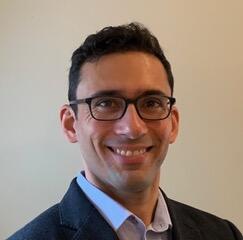
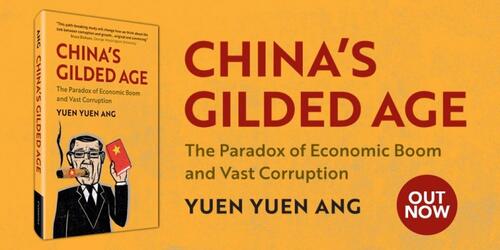
Yuen Yuen Ang is a PhD graduate of Stanford University, where she studied comparative political economy with a focus on China. She is the inaugural recipient of the Theda Skocpol Prize, awarded by the American Political Science Association for “impactful empirical, theoretical and/or methodological contributions to the study of comparative politics.” She was also named an Andrew Carnegie Fellow for “high-caliber scholarship that applies fresh perspectives to the most pressing issues of our times.” Her first, award-winning book, How China Escaped the Poverty Trap (2016), is acclaimed as “game changing” and “field shifting.” It received the Peter Katzenstein Prize in Political Economy, the Viviana Zelizer Prize in Economic Sociology, and was named “Best of Books 2017″ by Foreign Affairs. The sequel to this book, China’s Gilded Age: the Paradox of Economic Boom & Vast Corruption, is released in 2020. It was featured in The DiplomatThe Economist, and The Wire China. She is an associate professor in political science at the University of Michigan and previously a faculty member at Columbia University SIPA.

Image
Cover of "China's Gilded Age" by Yuen Yuen Ang


Image
American and Chinese flags
This event is part of the 2021 Winter/Spring Colloquia series, Biden’s America, Xi’s China: What’s Now & What’s Next?, sponsored by APARC's China Program.


Via Zoom Webinar. Register at: https://bit.ly/3cEtX5f

Yuen Yuen Ang Associate Professor of Political Science, University of Michigan
Seminars
News Type
News
Date
Paragraphs

Indonesia is the largest nation in Southeast Asia, but it is still dwarfed by the outsized influence China has in the region. Like many Southeast Asian nations, Indonesia desires strategic autonomy over its foreign policy and statecraft. But as the antagonism between the United States and China grows, there is increasing pressure for Indonesia and the rest of the region to choose sides in the great power competition.

Donald K. Emmerson, director of the Southeast Asia Program, joins Gita Wirjawan on the podcast Endgame to discuss the challenges Indonesia faces as it tries to chart a course of policies that balance its domestic needs and desire for autonomy with the international geopolitical sparrings occurring in its backyard in the South China Sea. The full podcast episode is available below.

[Subscribe to our newsletters to stay up to date on our scholars' research.]

Emmerson draws from his recent book, The Deer and the Dragon: Southeast Asia and China in the 21st Century, to frame the struggle Indonesia faces. Internally, Indonesia faces challenges to its democracy and in managing political and cultural diversity. Externally, there is the challenge of trying to simultaneously work within the often-fractured and disunified structure of ASEAN while still rebutting pressures from China.

In this sense, Indonesia must behave as the mousedeer in local folklore and nimbly navigate around its larger rivals with clever politics and policies. But the realities of the situation are much more complicated. Emmerson and Wirjawan take a deep dive into Indonesia's history, culture, politics, and position in the region and how those factors may affect the country's trajectory towards an endgame. Below is the video version of their conversation.

Get a Copy of The Deer and the Dragon

Read More

Protesters in Myanmar stand on a picture of General Min Aung Hlaing
Commentary

Democracy Challenged: Donald Trump, Min Aung Hlaing, and Indonesia

Southeast Asia Program Director Donald K. Emmerson compares responses across Southeast Asia to the February coup in Myanmar and reflects on the parallels and differences between the state of democracy there and in the United States.
Democracy Challenged: Donald Trump, Min Aung Hlaing, and Indonesia
Hero Image
[Left] Gita Wirjawan and the Endgame logo; [Right] Donald K. Emmerson Endgame
All News button
1
Subtitle

On the Endgame podcast, Southeast Asia Program Director Donald K. Emmerson discusses the history and politics that have shaped Indonesia in the past and how that context now affects the country's position in the intensifying rivalry between China and the United States.

-

This is a virtual event. Please click here to register and generate a link to the talk. 
The link will be unique to you; please save it and do not share with others.


Presented by the Stanford China Program and the Stanford Center at Peking University.

Tuesday, April 27 
6:00 pm – 7:15 pm (PST) 
Wednesday, April 28 
9:00 am – 10:15 am (China) 

A large amount of ink has been spilled in the last few years--and even more so since COVID-19--in the U.S. regarding American perceptions of the P.R.C.  Relatively little, however, has been conveyed regarding how China might view the U.S. today.  In this talk, we bring together two eminent professors, Professor Jia Qingguo and Professor Wang Dong, from the School of International Studies, Peking University, to examine how policymakers, professionals, and average citizens in China might perceive the United States and what that might imply for the U.S.-China bilateral relationship.  Dr. Thomas Fingar, Shorenstein APARC Fellow, will moderate the conversation.

This event is part of Shorenstein APARC's spring webinar series.


Image
Portrait of Thomas Fingar
Thomas Fingar is a Shorenstein APARC Fellow in the Freeman Spogli Institute for International Studies at Stanford University. He was the inaugural Oksenberg-Rohlen Distinguished Fellow from 2010 through 2015 and the Payne Distinguished Lecturer at Stanford in 2009. From 2005 through 2008, he served as the first deputy director of national intelligence for analysis and, concurrently, as chairman of the National Intelligence Council. Fingar served previously as assistant secretary of the State Department’s Bureau of Intelligence and Research (2000-01 and 2004-05), principal deputy assistant secretary (2001-03), deputy assistant secretary for analysis (1994-2000), director of the Office of Analysis for East Asia and the Pacific (1989-94), and chief of the China Division (1986-89). Between 1975 and 1986 he held a number of positions at Stanford University, including senior research associate in the Center for International Security and Arms Control. Fingar's most recent books are Fateful Decisions: Choices that will Shape China’s Future, co-edited with Jean Oi (Stanford, 2020), and From Mandate to Blueprint: Lessons from Intelligence Reform (Stanford University Press, 2021).
 

Image
Portrait of Jia Qingguo
Jia Qingguo acquired his PhD at the Department of Government, Cornell University. He has been a member of the Standing Committee of the 11th, 12th and 13th National Committees of the Chinese People’s Political Consultative Conference (CPPCC), and was elected in March 2013 as a member of the Committee of Foreign Affairs of the 13th CPPCC. He is a professor and doctoral supervisor, and the former Dean of the School of International Studies at Peking University. He is a member of the Standing Committee of the Central Committee of the China Democratic League and the Director of its Education Committee. He is the Vice Chairman of the Beijing Municipal Committee, Director of the Research Center for International Economic Strategy of China, a member of the Academic Evaluation Committee of the China Foundation for International and Strategic Studies, a member of the Academic Committee of Quarterly Journal of International Politics of Tsinghua University, as well as an adjunct professor at Nankai University and Tongji University. Jia is also a senior researcher of the Hong Kong and Macao Research Institute under the Development Research Center of the State Council. His research mainly focuses on international politics, China-U.S. relations, China’s diplomacy, Cross-Strait relations, China’s rise, and the adjustment of China’s diplomacy. His major publications include: China’s Diplomacy in the 21st Century; Unrealized Reconciliation: China-U.S. Relations in the Early Cold War; and Intractable Cooperation: Sino-U.S. Relations After the Cold War.
 

Image
Portrait of Wang Dong
Wang Dong obtained his PhD in Politics at the University of California, Los Angeles (UCLA). He is now a full professor and doctoral supervisor at the School of International Studies, Executive Director of the Institute for Global Cooperation and Understanding, Vice President of the Office of Humanities and Social Sciences, and Deputy Secretary-General of the American Studies Center (National and Regional Research Base of the Ministry of Education) of Peking University. In addition, he is also the Secretary-General of the Academic Committee of the Pangoal Institution, member of the Steering Committee of the East Asia Security Forum of Western Returned Scholars Association, a member of the Advisory Committee of the Global Times and The Carter Center “Forum for Young Chinese and American Scholars” and a researcher of the Peace in East Asia Program of the Department of Peace and Conflict Research at Uppsala University, Sweden. Wang has led major programs of the National Social Science Fund of China, undertaken major projects of the Ministry of Education, Ministry of Foreign Affairs, and Ministry of Science and Technology, and been funded by the National Social Science Fund of China many times. He was shortlisted for “Munich Young Leader” in 2016 and Beijing “Outstanding Young Scientist” in 2018. He is interested in research on international relations theory, the Cold War, US diplomacy, China-US relations, etc.

Via Zoom Webinar. Register at: https://bit.ly/3rAcwXC

Thomas Fingar <br>Shorenstein APARC Fellow, Stanford University<br><br>
Jia Qingguo (贾庆国) <br>Former Dean and Professor, School of International Studies, Peking University<br><br>
Wang Dong (王栋) <br>Professor, School of International Studies, Peking University; Executive Director, Institute for Global Cooperation and Understanding (iGCU), Peking University<br><br>
Seminars
-

* Please note all CISAC events are scheduled using the Pacific Time Zone.


Seminar Recording: https://youtu.be/sFsmjTf9xUg


About the Event: Contemporary global politics are marked by a renewed debate over the significance and limits of state sovereignty. In the eyes of many, the COVID-19 pandemic has reasserted the importance of territorial sovereignty as well as of national identity and citizenship. Populations have become more acutely conscious of their rights and responsibilities as members of a particular political community, and their ultimate reliance upon their governments to protect them from the virus. Well before the outbreak of this pandemic, however, many scholars, policy-analysts, and state officials had already been highlighting the ‘return’ of sovereignty, often in juxtaposition to either the transnational economic forces of globalization or liberal international norms. Powerful economic and political trends (including protectionism and populism) were casting doubt on the reach and impact of liberal ideals such as free movement and economic interdependence. In part, these trends reflected a structural shift in international order in which the relative position of the United States was declining, and the standing of non-Western powers with attachment to what is loosely referred to as “Westphalian” sovereignty was increasing. Although some IR scholars have argued that today’s great powers (Russia, China and the US) are espousing and practicing a new form of “extra-legal sovereignty” (Paris 2020), the former two states - in order to garner wider support for their respective world views - regularly appeal to an understanding of sovereignty that underscores long-standing principles of territorial integrity and political independence.

This book project takes a step back, to more critically analyse the period preceding our current debate. Before we can address the question of whether and how Westphalian sovereignty has returned to shape contemporary global order, we should examine more deeply why sovereignty was alleged to have been transformed in the first place. In other words, what was the nature and reach of the post-Westphalian order that was proclaimed by so many in the first decades of the post-Cold War period?  While analysts and commentators have pointed to several manifestations of this changed understanding of sovereignty, I focus on the liberal idea of ‘sovereignty as responsibility’, which, inter alia, seemingly underpinned the articulation in 2005 of the principle of the ‘responsibility to protect’. According to this liberal understanding, sovereignty can no longer be conceived as unrivalled control over a delimited territory and the population residing within it – ‘sovereignty as authority’ – but rather as a status and set of rights which are conditional upon certain behaviours and capacities of states. Sovereignty is thus not solely the right of the state to be “undisturbed from without” but the responsibility to perform certain roles and tasks within its frontiers.

The central aim of this study is to examine the rise, contestation, and potential fate of what some have called this “revolutionary” understanding of sovereignty.  I ask three more specific questions. The first is conceptual and draws upon the history of ideas relating to sovereignty. Was the post-Cold War articulation of ‘sovereignty as responsibility’ really so novel? Or was it juxtaposing itself to a very particular historical period, during which non-intervention was championed by newly decolonized states? The second set of issues is empirical. How has sovereignty been understood in the post-Cold War period, particularly through practices of intervention and state recognition? Have the key actors in international society spoken and acted in ways consistent with the liberal understanding of ‘sovereignty as responsibility’? And the final set of questions is normative. Is it desirable to understand sovereignty in this way? What are the benefits and limitations of viewing sovereignty as deeply connected with responsibility?

While the book project is organized around these three central themes, my presentation will focus in, for purposes of illustration, on the ‘responsibility to protect’ (RtoP). This chapter assesses the degree to which ‘sovereignty as responsibility’ has been widely accepted and practiced by states in their interpretation and implementation of this principle and, in so doing, seeks to both account for and analyse the nature and impact of the contestation that surrounds RtoP.  The chapter’s findings suggest that a conditional understanding of sovereignty was not necessarily shared or practiced across international society, even during the height of liberal internationalist ‘moment’ of the post-Cold War period - thereby posing a challenge not just to the proponents of ‘sovereignty as responsibility’, but also to some of its fiercest critics, who overstate its negative effects on international politics.

I begin by arguing that while the 2005 Summit Outcome Document (SOD) was a significant intergovernmental agreement that provided greater precision about the source, scope, and bearer of the responsibility to protect, its particular formulation indicates that the logic of ‘sovereignty as responsibility’ was not fully embraced.  Instead, the text reflected a horizontal logic, associated with respect for sovereign equality and positive international law, rather than a vertical logic that places the international community in a position of authority over states. While the notions of sovereignty and responsibility did come together, they did so in a way that did not override or replace sovereignty in situations of humanitarian emergency, but rather aimed to reinforce sovereignty and support states in protecting their populations.

In a second step, the chapter analyses the types of contestation that have accompanied RtoP’s development, which relate both to procedural matters (such as the appropriate intergovernmental body that should ‘own’ RtoP’s development) and to substantive elements of the principle – including, most notably, the relationship between national and international responsibility. I suggest that RtoP is particularly susceptible to contestation, given its complex structure and inherently indeterminate nature. I also argue that, far from establishing an independent international authority that specifies and enforces state responsibility, the most that RtoP creates within its so-called third pillar is a responsibility to consider a real or imminent crisis involving atrocity crimes - what in legal literature is sometimes called a ‘duty of conduct’.

In the final section of the chapter, I contend that the contestation surrounding RtoP can be better understood by giving greater attention to the normative underpinnings of contemporary critiques of the principle, most notably those which stress the importance of sovereignty equality. Given that RtoP has continued to be associated – rightly or wrongly – with the use of military force, it has frequently generated sharp debate among states about the meaning of sovereignty, and efforts to assert the continuing power of the principle of non-intervention. The result of this contestation, and the reshaping of RtoP by non-Western states such as China, has been a dampening of the original cosmopolitan roots of the principle and an increased focus on maintaining strong and capable states. In short, while RtoP has created a linkage in international discourse and practice between sovereignty and responsibility, it has not given effect to the liberal understanding of sovereignty as responsibility.


About the Speaker: Jennifer M. Welsh is the Canada 150 Research Chair in Global Governance and Security at McGill University. She was previously Professor and Chair in International Relations at the European University Institute and Professor in International Relations at the University of Oxford, where she co-founded the Oxford Institute for Ethics, Law and Armed Conflict. From 2013-2016, she served as the Special Adviser to the UN Secretary General, Ban Ki-moon, on the Responsibility to Protect.

Professor Welsh is the author, co-author, and editor of several books and articles on humanitarian intervention, the evolution of the notion of the ‘responsibility to protect’ in international society, the UN Security Council, norm conflict and contestation, and Canadian foreign policy.

Virtual Seminar

Jennifer Welsh Research Chair in Global Governance and Security McGill University
Seminars
-

* Please note all CISAC events are scheduled using the Pacific Time Zone.


Register in advance for this webinar: https://stanford.zoom.us/webinar/register/5616166186207/WN_Zdzl0PrwR7CXSPoASOs5Xg


About the Event: Conventional wisdom on proxy warfare exclusively focuses on explaining governments’ provision of military, logistical, and financial support to rebel groups involved in conflict abroad. In reality, foreign militant groups play a much larger role in these partnerships than recognized: foreign militants often provide government partners with intelligence, logistical support, access to their military infrastructure, and send elite units to train and supplement their state partner’s troops. Because armed non-state actors are smaller and face greater difficulties accessing resources, the fact that they provide any type of support – let alone deploying their forces to conduct joint combat operations with state armed forces abroad – is puzzling. In this presentation, I provide insights into the strategic benefits that foreign militants receive from supporting states, identify factors that influence the types of support foreign militants provide to government partners once the decision to provide support has been made, and highlight how foreign militants can constrain and influence their government partners’ future behavior. To do so, I conduct an in-depth examination of the overtime trends in the various types of support that Shia paramilitary groups from Lebanon, Iraq, Afghanistan, and Pakistan provided to the Syrian regime and Russian forces throughout the course of the decade-long Syrian conflict.


About the Speaker: Melissa Carlson is currently a Postdoctoral Fellow in the Center for International Security and Cooperation’s Middle East Initiative. She received her PhD in Political Science from UC Berkeley. Her research examines cooperation between states and non-state actors in conflict, and her book manuscript explains variations in the types of support that governments and foreign militants provide to each other. Previously, Melissa has worked with the International Organization of Migration’s Missions in Jordan and Iraq to examine relations between refugees, host governments, and aid organizations.

Virtual Seminar

0
rsd19_072_0235a.jpg

Dr. Melissa Carlson is currently working with the Defense Security Cooperation Agency's Assessment, Monitoring, and Evaluation unit, where she promotes rigorous standards of measuring the effectiveness of the U.S.'s security cooperation and assistance programming. During her tenure at CISAC, she was a postdoctoral research and teaching fellow. She received her PhD in Political Science from the University of California, Berkeley, specializing in international relations, comparative politics, and methodology. Dr. Carlson's primary research examines the factors that influence the variation and intensity of partnerships between governments and foreign militant groups with a focus on the recent conflicts in Iraq and Syria. Her book-style dissertation project finds that, when foreign militant groups and state armed forces share similar organizational characteristics, they are more likely to deploy forces to conduct joint combat operations and provide each other with advanced weapons systems. In other research, Dr. Carlson examines the factors that influence informal and secret security cooperation between states and how misinformation and rumors influence refugees' relationships with host governments, service providers, and smugglers. Her research has been published in the American Political Science Review, the Review of International Organizations, and International Studies Quarterly, among other outlets. Outside of academia, Dr. Carlson has worked as a consultant for the International Organization for Migration's Iraq and Jordan Missions.

Affiliate
CISAC Postdoctoral Fellow Stanford University
Seminars
Subscribe to Governance