Security

FSI scholars produce research aimed at creating a safer world and examing the consequences of security policies on institutions and society. They look at longstanding issues including nuclear nonproliferation and the conflicts between countries like North and South Korea. But their research also examines new and emerging areas that transcend traditional borders – the drug war in Mexico and expanding terrorism networks. FSI researchers look at the changing methods of warfare with a focus on biosecurity and nuclear risk. They tackle cybersecurity with an eye toward privacy concerns and explore the implications of new actors like hackers.

Along with the changing face of conflict, terrorism and crime, FSI researchers study food security. They tackle the global problems of hunger, poverty and environmental degradation by generating knowledge and policy-relevant solutions. 

-

* Please note all CISAC events are scheduled using the Pacific Time Zone.


Attend Webinar: https://stanford.zoom.us/j/93236889762?pwd=eVFtbVJDME95MU9wNU1scFNWTDUxdz09


About the Event: Synthetic Biology (SB) is one of the most promising fields of research for the 21st century. SB offers powerful new ways to improve human health, build the global economy, manufacture sustainable materials, and address climate change. However, current access to SBenabled breakthroughs is unequal, largely due to bottlenecks in infrastructure and education. Here, I describe our efforts to re-think the way we engineer biology using cell-free systems to address these bottlenecks. We show how the ability to readily store, distribute, and activate low-cost, freeze-dried cell-free systems by simply adding water has opened new opportunities for on-demand biomanufacturing of vaccines for global health, point-of-care diagnostics for environmental safety, and education for SB literacy and citizenship. By integrating cell-free systems with AI, we also show the ability to accelerate the production of carbon-negative platform chemicals. Looking forward, advances in engineering tools and new knowledge underpinning the fundamental science of living matter will ensure that SB helps solve humanity’s most pressing challenges.


About the Speaker: Michael Jewett is the Charles Deering McCormick Professor of Teaching Excellence, the Walter P. Murphy Professor of Chemical and Biological Engineering, and Director of the Center for Synthetic Biology at Northwestern University. Dr. Jewett received his PhD in 2005 at Stanford University, completed postdoctoral studies at the Center for Microbial Biotechnology in Denmark and the Harvard Medical School, and was a guest professor at the Swiss Federal Institute of Technology (ETH Zurich). He is the recipient of the NIH Pathway to Independence Award, David and Lucile Packard Fellowship in Science and Engineering, Camille-Dreyfus Teacher-Scholar Award, and a Finalist for the Blavatnik National Awards for Young Scientists, among others. He is the co-founder of SwiftScale Biologics, Stemloop, Inc., Pearl Bio, Induro Therapeutics, and Design Pharmaceuticals. Jewett is a Fellow of AIMBE, AAAS, and NAI.


For more information please contact Drew Endy (endy@stanford.edu) or Paul McIntyre (pcm1@slac.stanford.edu).

Virtual Seminar

Michael Jewett Professor Northwestern University
Seminars
Authors
Callista Wells
News Type
News
Date
Paragraphs

On January 27, 2021, the China Program at Shorenstein APARC hosted Professor Hau L. Lee, The Thoma Professor of Operations, Information & Technology at the Stanford Graduate School of Business for the virtual program “The Pandemic, U.S-China Tensions and Redesigning the Global Supply Chain.” Professor Jean Oi, William Haas Professor of Chinese Politics and director of the APARC China Program, moderated the event.

Professor Lee focused on an important question that has only become more pressing due to the COVID-19 pandemic: How, if at all, should businesses redesign their supply chains? Since the beginning of the pandemic, explains Lee, there has been an increase in calls for “redundancy” in supply chains in order to protect them from the problems they faced early in the pandemic, when China was first hit by shut downs and slowed productivity. Advice has been varied, ranging from the “China Plus One” strategy in which businesses simply add a secondary production location, to completely domesticating supply chains.

Lee warns, however, of the perils of overreaction. There are numerous risks that come along with a fully domestic supply chain, not least the danger of “having all of your eggs in one basket.” Instead, says Lee, businesses should move cautiously and, instead of fully divesting from China, should use the country intelligently. 

Professor Lee’s “In and Out Design” encourages businesses to work from the inside out, securing and strengthening their supply chains by starting at home. Companies must first build “internal supply chain excellence,” after which they can move on to making sure their strategic partners are equally strong and can work to their advantage. Eventually, companies can move on to strengthening the extended value chain and, ultimately, their entire ecosystem. Using strategies like dual response, leveraging “lubricants,” and bolstering capacity-building capabilities, businesses can create a more stable future. 

The session concluded with a fruitful Q&A between Professor Lee and the audience, moderated by Professor Oi.

A video recording of this program is available upon request. Please contact Callista Wells, China Program Coordinator at cvwells@stanford.edu with any inquiries.

Read More

Min Ye speaking
News

Domestic or International? The Belt and Road Initiative Is More Internally Focused Than We Think, Says Expert Min Ye

Domestic or International? The Belt and Road Initiative Is More Internally Focused Than We Think, Says Expert Min Ye
Photograph of the UN building in Geneva, Switzerland
News

Rebuilding International Institutions Will be Tough but Necessary, Say Stanford Experts Thomas Fingar and Stephen Stedman

Fingar and Stedman spoke as part of the APARC program “Rebuilding International Institutions,” which examined the future of international institutions such as the United Nations (UN), World Trade Organization (WTO), and World Health Organization (WHO) in our evolving global political landscape.
Rebuilding International Institutions Will be Tough but Necessary, Say Stanford Experts Thomas Fingar and Stephen Stedman
Hero Image
Banner of Hau L. Lee
All News button
1
Authors
News Type
Q&As
Date
Paragraphs

This article was originally written by Melissa De Witte on behalf of Stanford News.

As Monday’s coup in Myanmar demonstrates, democracy is often fragile and subject to setbacks, says former U.S. ambassador to Myanmar and Stanford visiting scholar, Scot Marciel.

Here, Marciel discusses how in a country like Myanmar (formerly Burma), which was under military rule from 1962 to 2011, establishing a democracy takes time. Despite democratic reforms over the past decade, the military in Myanmar has held onto a considerable amount of power, said Marciel, noting that it is difficult to build not only a representative parliament but other democratic institutions including an independent judicial system, a fair police force and a free press.

While Monday’s coup is a major setback in Myanmar’s fight for democracy, Marciel said that there are many people in the country who will do what they can to restore their elected government and build the foundations of democracy.

Marciel is a visiting scholar at the Walter H. Shorenstein Asia-Pacific Research Center (APARC), Stanford’s hub for interdisciplinary research, education and engagement on contemporary Asia that is run under the auspices of the Freeman Spogli Institute for International Studies. Marciel served as U.S. Ambassador to Myanmar from March 2016 through May 2020. From 2010 to 2013, Scot Marciel served as U.S. Ambassador to Indonesia.

[Subscribe to APARC's newsletters to get the latest updates from our scholars.]


What do people who have not spent extensive time studying or living in Myanmar need to know about its history to better understand Monday’s coup?

A couple of things. First, as historian Thant Myint-U has written, Myanmar is an unfinished nation, in the sense that the diverse communities that make up the country have never truly solidified as a unified nation. The country has been in near-constant conflict, mostly between the majority Bamar ethnic group and the many ethnic minority communities that inhabit much of Myanmar’s border areas. Second, the military staged a coup in 1962 and ran the country for nearly 50 years before allowing some movement toward representative democracy beginning in 2011-2012. So the military has long been a dominant force in the country, and – even after the reforms of the past decade – retained substantial power.

Is there anything that is often misunderstood about its history and its people?

In the West, many people have tended to view Myanmar mostly through the prism of a struggle for democracy between the military and the civilian opposition, led by Aung San Suu Kyi. That is a critically important part of the story, for sure. Perhaps equally important, however, has been the struggle of the many ethnic minority communities for equality, a degree of autonomy, and respect for their own histories, cultures and languages. This struggle has produced widespread conflict, significant human rights abuses, and large numbers of refugees and displaced people for decades.

What are some of the difficulties in establishing, and maintaining, democratic rule in a country like Myanmar?

First, persuading the military to give up power, depart from politics, and play a more appropriate role in the country. Second, it is very difficult to build the institutions of democracy, including not only parliament, but also a strong, independent judicial system, an effective and fair police force, and respect for the critical role of civil society and the independent media. In Myanmar, another essential aspect is to shift from historically centralized rule to a federal structure that would allow the various communities across the country to have more of a say in how they are governed.

As ambassador to Myanmar, what was it like working with not only the country’s policymakers but also its people? What did you learn from them about how democracy is established? And how did those experiences shape your perspective?

In Myanmar, I met so many people, all over the country, from many different walks of life, who had sacrificed and continued to sacrifice to try to build democracy and respect for human rights. Some operated at the national level, others at the local level. It was a good reminder that democracy isn’t just imposed from the top; it requires careful building at the community and state level, with intensive involvement by the various communities. It also takes time and, as we have seen this week, is often fragile and subject to setbacks. In other words, it is a long-term effort that requires persistence, courage, and participation by large numbers of people. Establishing a democracy is a lengthy, painstaking effort that can be upended, particularly if the armed forces are politicized and pursue their own agenda.

Is there anything else you would like to add? 

This week’s military takeover constitutes a major setback, but the story of Myanmar’s struggle for democracy is not over. Many people there will continue to do what they can to restore elected government and build, brick by brick, the foundations of democracy.

Read More

Portrait of Paul Schuler and the cover of his book, 'United Front'
Q&As

A Balance of Power: The Role of Vietnam’s Electoral and Legislative Institutions

As the 13th National Congress of Vietnam's Communist Party is selecting a new leadership team that will set the country’s course for the next five years, Vietnamese politics expert Paul Schuler discusses his new book on the state’s single-party legislature.
A Balance of Power: The Role of Vietnam’s Electoral and Legislative Institutions
President Biden walks past a row of Chinese and American flags.
News

APARC Experts on the Outlook for U.S.-Asia Policy Under the Biden Administration

Ahead of President-elect Biden’s inauguration and on the heels of the attack on the U.S. Capitol by a pro-Trump mob that has left America shaken, an APARC-wide expert panel provides a region-by-region analysis of what’s next for U.S. policy towards Asia and recommendations for the new administration.
APARC Experts on the Outlook for U.S.-Asia Policy Under the Biden Administration
Stanford campus, main quad with cloudy sky
News

APARC Offers Fellowship and Funding Opportunities to Support, Diversify Stanford Student Participation in Contemporary Asia Research

The Center has launched a suite of offerings including a predoctoral fellowship, a diversity grant, and research assistant internships to support Stanford students interested in the area of contemporary Asia.
APARC Offers Fellowship and Funding Opportunities to Support, Diversify Stanford Student Participation in Contemporary Asia Research
Hero Image
Protesters opposing the February 1 coup in Myanmar
People protest the February 1 coup in Myanmar outside the Myanmar embassy in Bangkok, Thailand.
Lauren DeCicca, Getty
All News button
1
Subtitle

According to Scot Marciel, former U.S. ambassador to Myanmar and Stanford visiting scholar at APARC, building a democracy is a difficult process that can be upended, particularly when the military is politicized and has its own agenda.

Paragraphs

A new four-paper series in The Lancet exposes the far-reaching effects of modern warfare on women’s and children’s health.

All Publications button
1
Publication Type
Journal Articles
Publication Date
Authors
Paul H. Wise
Eran Bendavid
Stephen J. Stedman
-

This is a virtual event. Please click here to register and generate a link to the talk. 
The link will be unique to you; please save it and do not share with others.


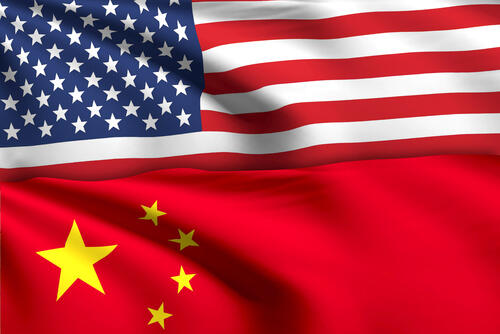
U.S. relations with China evolved into outright rivalry during the Trump administration. In this talk, Thomas Wright will look at whether this rivalry will continue and evolve during a Biden administration. To answer this question, he will look at the roots of strategic competition between the two countries and various strands of thinking within the Biden team. The most likely outcome is that the competition will evolve into a clash of governance systems and the emergence of two interdependent blocs where ideological differences become a significant driver of geopolitics. Cooperation is possible but it will be significantly shaped by conditions of rivalry.


Image
Portrait of Thomas Wright
Thomas Wright is the director of the Center on the United States and Europe and a senior fellow in the Project on International Order and Strategy at the Brookings Institution. He is also a contributing writer for The Atlantic and a nonresident fellow at the Lowy Institute for International Policy. He is the author of “All Measures Short of War: The Contest For the 21st Century and the Future of American Power” which was published by Yale University Press in May 2017. His second book "Aftershocks: Pandemic Politics and the End of the Old International Order" will be published by St Martin's Press in 2021. Wright also works on U.S. foreign policy, great power competition, the European Union, Brexit, and economic interdependence.

Wright has a doctorate from Georgetown University, a Master of Philosophy from Cambridge University, and a bachelor's and master's from University College Dublin. He has also held a pre-doctoral fellowship at Harvard University's Belfer Center for Science and International Affairs and a post-doctoral fellowship at Princeton University. He was previously executive director of studies at the Chicago Council on Global Affairs and a lecturer at the University of Chicago's Harris School for Public Policy.


Image
American and Chinese flags
This event is part of the 2021 Winter/Spring Colloquia series, Biden’s America, Xi’s China: What’s Now & What’s Next?, sponsored by APARC's China Program.


Via Zoom Webinar. Register at: https://bit.ly/3r1glp7

Thomas Wright Director, Center on the United States and Europe, Brookings Institution; Senior Fellow, Foreign Policy, Project on International Order and Strategy, Brookings Institution
Seminars
Paragraphs

Volume 5, Issue 2

Authors: Steven Pifer, Min Byung Chae, Natasha Lock, Iris H-Y Chiu, Andreas Kokkinis, Andrea Miglionico, Saraphin Dhanani, and Samuel P. LeRoy.

The Stanford International Policy Review (SIPR) is a biannual student-run international affairs and public policy journal housed in the Ford Dorsey Master's in International Policy. SIPR publishes two issues per year, in the winter and in the spring. Each issue will feature articles, commentary, and book reviews on international policy topics. SIPR's purpose is twofold: to provide timely and compelling analysis on pressing policy issues, and to provide a formative educational experience to student editors.

All Publications button
1
Publication Type
Reports
Publication Date
-

A new administration and Congress provide a key opportunity to improve US cybersecurity and the governance of digital technologies. Yet the challenges appear daunting: viral disinformation, widespread privacy violations, algorithms biased by race, class and gender, ransomware running rampant, and unprecedented tech company scale and market dominance. Additionally, the US faces a persistent deficit in skilled cybersecurity workers, a lack of diversity in the field, and a public with wildly unequal broadband internet access.  Meanwhile, competition among governance regimes, specifically between the United States, Europe and China, has raised the stakes over whether democracies or authoritarian governments will set the rules for the internet. The policy choices made by the new administration will play a pivotal role in shaping our global future. On February 24 at 10am PST, join Kelly Born and Marietje Schaake of Stanford’s Cyber Policy Center, Michael Daniel of the Aspen Institute’s Cyber Group, and Karen Kornbluh for the German Marshall Fund to discuss cyber policy priorities for the new administration.


0
marietje.schaake

Marietje Schaake is a non-resident Fellow at Stanford’s Cyber Policy Center and at the Institute for Human-Centered AI. She is a columnist for the Financial Times and serves on a number of not-for-profit Boards as well as the UN's High Level Advisory Body on AI. Between 2009-2019 she served as a Member of European Parliament where she worked on trade-, foreign- and tech policy. She is the author of The Tech Coup.


Non-Resident Fellow, Cyber Policy Center
Fellow, Institute for Human-Centered Artificial Intelligence
Date Label
Karen Kornbluh
Michael Daniel
Seminars
Authors
Noa Ronkin
News Type
News
Date
Paragraphs

The Walter H. Shorenstein Asia-Pacific Research Center (APARC) has broadened its fellowship and funding opportunities to support Stanford students working in the area of contemporary Asia. The Center introduced these expanded offerings in response to the harsh impacts of the COVID-19 pandemic on student’s academic careers and their access to future jobs and valuable work experience, and in recognition of the critical need to make the field of Asian Studies more diverse and inclusive.

APARC’s diversity grant aims to encourage Stanford students from underrepresented minorities (URM) to engage in the study and research of topics related to contemporary Asia and U.S.-Asia relations, including economic, health, foreign policy, social, political, and security issues. The grant, which was first announced in June 2020, is now an ongoing offering. APARC will award a maximum of $10,000 per grant. Current  Stanford undergraduate and graduate students in the URM category from any major or discipline are eligible and encourage to apply.

APARC also invites Stanford Ph.D. candidates specializing in topics related to contemporary Asia to apply for its 2021-22 predoctoral fellowship. Up to three fellowships are available and the application deadline is May 1, 2021.

In addition, APARC continues to offer an expanded array of research assistant internships. The Center is currently seeking highly motivated Stanford undergraduate- and graduate-level students to join our team as paid research assistant interns for the spring and summer quarters of 2021. Applications for spring 2021 research assistant assignments are due on February 22, for summer 2021 assignments on March 8.

Read More

President Biden walks past a row of Chinese and American flags.
News

APARC Experts on the Outlook for U.S.-Asia Policy Under the Biden Administration

Ahead of President-elect Biden’s inauguration and on the heels of the attack on the U.S. Capitol by a pro-Trump mob that has left America shaken, an APARC-wide expert panel provides a region-by-region analysis of what’s next for U.S. policy towards Asia and recommendations for the new administration.
APARC Experts on the Outlook for U.S.-Asia Policy Under the Biden Administration
View of building roof in the Forbidden City complex and the Beijing skyline in the background
News

New Fellowship on China Policy Seeks to Strengthen U.S.-China Relations

Stanford University’s Shorenstein Asia-Pacific Center invites applications for the inaugural 2021-22 China Policy Fellowship from experts with research experience on issues vital to the U.S. China policy agenda and influence in the policymaking process.
New Fellowship on China Policy Seeks to Strengthen U.S.-China Relations
National Guard at the US Capitol
Commentary

The Soft War That America Is Losing

The US depends far more on its soft power than authoritarian China does. Once it is lost, it is hard to get back.
The Soft War That America Is Losing
Hero Image
Stanford campus, main quad with cloudy sky
All News button
1
Subtitle

The Center has launched a suite of offerings including a predoctoral fellowship, a diversity grant, and research assistant internships to support Stanford students interested in the area of contemporary Asia.

0
Matt Masterson

Matt Masterson is a former non-resident policy fellow with the Stanford Internet Observatory. He served as Senior Cybersecurity Advisor at the Department of Homeland Security, where he focused on election security issues. He previously served as a Commissioner at the Election Assistance Commission from December 2014 until March 2018, including serving as the Commission’s Chairman in 2017-2018. Prior to that, he held staff positions with the Ohio Secretary of State’s office, where he oversaw voting-system certification efforts and helped develop an online voter registration system. Matt holds a law degree from the University of Dayton School of Law and BS and BA degrees from Miami University in Oxford, Ohio.

As part of his Stanford Internet Observatory fellowship, Matt compiled and published an oral history of the 2020 election, "The Guardians of Democracy."

Former Non-Resident Fellow, Stanford Internet Observatory
-

* Please note all CISAC events are scheduled using the Pacific Time Zone.


Seminar Recording:  https://youtu.be/rOmLa_XcaJc


About the Event: The Trump Presidency has changed transatlantic security relations permanently and fundamentally.  Former UK Ambassador to NATO Sir Adam Thomson, currently Director of the European Leadership Network, will look at the implications for relations between NATO and the European Union at the start of President Biden’s term.  Although some progress on NATO-EU cooperation has been made in the past few years, it was in the shadow of the challenges that Trump posed to both organizations.  Washington and America’s European allies and partners will need to repair the damage to the transatlantic relationship and take a new approach to working together. 


About the Speaker: Sir Adam Thomson has been the Director of the European Leadership Network since 2016. The ELN is an independent, non-partisan, network of leaders from all across the continent dedicated to a safer Europe.

Adam had a 38 year diplomatic career in the British Diplomatic Service. His final posting was as the UK Ambassador to NATO 2014 - 2016. From 2010 Adam served as British High Commissioner to Pakistan and between 2002 and 2006 he was British Ambassador and Deputy Permanent Representative to the United Nations in New York.  Other postings included Moscow (1981-3), NATO (1983-6) and Washington DC (1991-5). He headed the Foreign Office’s Security Policy Department 1998 – 2002.

Virtual Seminar

Adam Thomson Director The European Leadership Network
Seminars
Subscribe to Security