Security

FSI scholars produce research aimed at creating a safer world and examing the consequences of security policies on institutions and society. They look at longstanding issues including nuclear nonproliferation and the conflicts between countries like North and South Korea. But their research also examines new and emerging areas that transcend traditional borders – the drug war in Mexico and expanding terrorism networks. FSI researchers look at the changing methods of warfare with a focus on biosecurity and nuclear risk. They tackle cybersecurity with an eye toward privacy concerns and explore the implications of new actors like hackers.

Along with the changing face of conflict, terrorism and crime, FSI researchers study food security. They tackle the global problems of hunger, poverty and environmental degradation by generating knowledge and policy-relevant solutions. 

-

* Please note all CISAC events are scheduled using the Pacific Time Zone.


Seminar Recording:  https://youtu.be/Mwjn39S48rE


About the Event: NATO Secretary General Stoltenberg will speak about how the transatlantic alliance is adapting to change in this turbulent period.  President Biden has clearly signaled that he is resolved to reach out to the NATO allies, working to repair the trans-Atlantic bond. To strengthen the bond between America and Europe and prepare the alliance for the future, the Secretary General has launched the NATO 2030 initiative.  This includes proposals on how NATO can better harness technology and innovation, tackle the security implications of climate change, and help make our societies more resilient. While NATO must continue to deter and defend against Russia, it is also keeping channels open to Moscow. The rise of China presents both challenges and opportunities that NATO has started to address. And missions in Afghanistan and Iraq are on the cusp of change, with decisions underway about what role NATO will play in the future. All in all, an exciting time to hear from NATO’s Secretary General.

This event is co-sponsored with The Europe Center.


About the Speaker: 

Jens Stoltenberg became NATO Secretary General in October 2014, following a distinguished international and domestic career. As a former Prime Minister of Norway and UN Special Envoy, Mr. Stoltenberg has been a strong supporter of greater global and transatlantic cooperation. Mr. Stoltenberg’s mandate as NATO Secretary General has been extended until the end of September 2022.

Under Mr. Stoltenberg’s leadership, NATO has responded to a more challenging security environment by implementing the biggest reinforcement of its collective defence since the Cold War, increasing the readiness of its forces and deploying combat troops in the eastern part of the Alliance. He believes in credible deterrence and defence while maintaining dialogue with Russia. He has also advocated for increased defence spending and better burden sharing within the Alliance, and a greater focus on innovation. NATO has also stepped up its efforts in the fight against terrorism. He strongly supports a partnership approach, with cooperation between NATO and the European Union reaching unprecedented levels.

Before coming to NATO, he was the UN Special Envoy on Climate Change from 2013 to 2014. He has also chaired UN High-level Panels on climate financing and the coherence between development, humanitarian assistance and environmental policies.

As Prime Minister of Norway, Mr. Stoltenberg increased the defence spending and transformed the Norwegian armed forces with new high-end capabilities and investments. He also signed an agreement with Russia on establishing maritime borders in the Barents and Polar Sea, ending a 30-years dispute.

Mr. Stoltenberg was also Prime Minister during the deadly terrorist attacks, which killed 77 people in Oslo and Utøya on 22 July 2011, urging in response, “more democracy, more openness, and more humanity, but never naïvete”.

Mr Stoltenberg holds a postgraduate degree in Economics from the University of Oslo. After graduating in 1987, he held a research post at the National Statistical Institute of Norway, before embarking on a career in Norwegian politics.

  • 2005-2013: Prime Minister of Norway
  • 2002-2014: Leader of the Norwegian Labor Party
  • 2000-2001: Prime Minister of Norway
  • 1996-1997: Minister of Finance
  • 1993-1996: Minister of Industry and Energy
  • 1991-2014: Member of Parliament
  • 1990-1991: State Secretary at the Ministry of the Environment
  • 1985-1989: Leader of the Norwegian Labour Youth

Jens Stoltenberg was born in Oslo on 16 March 1959. He is married to Ingrid Schulerud. They have two grown-up children.

Virtual Seminar

Jens Stoltenberg Secretary General NATO
Seminars
-

About the Event:   The number of Americans arrested, brought to court, and incarcerated has skyrocketed in recent decades. Criminal defendants come from all races and economic walks of life, but they experience punishment in vastly different ways. How and why is the court process unequal? This talk draws on findings from my book Privilege and Punishment: How Race and Class Matter in Criminal Court (Princeton University Press, November 2020). Drawing on fieldwork and interviews in the Boston court system, I show that lawyers and judges often silence, coerce, and punish disadvantaged defendants when they try to learn their legal rights and advocate for themselves. These dynamics reveal how unwritten institutional norms devalue the exercise of legal rights among the disadvantaged, and that ensuring effective legal representation is no guarantee of justice. Drawing on other research and activism on the courts as a tool of racialized social control, I conclude with reflections on the democratic potential and possibilities of criminal court abolition.  


Image
Matthew Clair
About the Speaker:  Dr. Matthew Clair is Assistant Professor in the Department of Sociology and (by courtesy) the Law School. His research examines the law, culture, and inequality. Dr. Clair's research has been published in Criminology, Law & Social Inquiry, Social Science & Medicine, and Social Forces and has been supported by the National Science Foundation and the American Society of Criminology. He has received awards from the American Sociological Association, the American Society of Criminology, the Law & Society Association, and the Society for the Study of Social Problems. His first book Privilege and Punishment: How Race and Class Matter in Criminal Court was published by Princeton University Press in November 2020.


Online, via Zoom:  REGISTER

Matthew Clair Assistant Professor in the Department of Sociology and (by courtesy) at Stanford Law School
Seminars
-

This is a virtual event. Please click here to register and generate a link to the talk. 
The link will be unique to you; please save it and do not share with others.


This event is co-sponsored by the Center on Democracy, Development, and the Rule of Law.

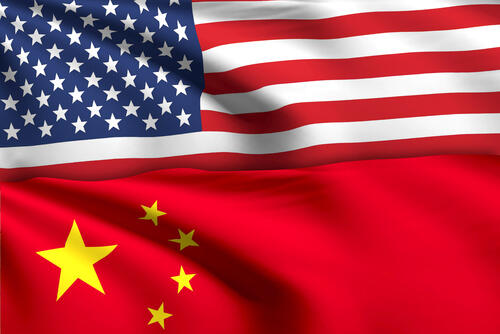
How does autocratic lobbying affect political outcomes and media coverage in democracies? This talk focuses on a dataset drawn from the public records of the US Foreign Agents Registration Act. It includes over 10,000 lobbying activities undertaken by the Chinese government between 2005 and 2019. The evidence suggests that Chinese government lobbying makes legislators at least twice as likely to sponsor legislation that is favorable to Chinese interests. Moreover, US media outlets that participated in Chinese-government sponsored trips subsequently covered China as less threatening. Coverage pivoted away from US-China military rivalry and the CCP’s persecution of religious minorities and toward US-China economic cooperation. These results suggest that autocratic lobbying poses an important challenge to democratic integrity.


Portrait of Erin Baggott CarterErin Baggott Carter is an Assistant Professor at the Department of Political Science and International Relations at the University of Southern California. There, she is also a Co-PI at the Lab on Non-Democratic Politics. She received a Ph.D. in Government from Harvard University, is currently a visiting scholar at the Stanford Center on Democracy, Development and the Rule of Law, and was previously a Fellow at the Stanford Center for International Security and Cooperation.

Dr. Carter's research focuses on Chinese politics and propaganda. She recently completed a book on autocratic propaganda based on an original dataset of eight million articles in Arabic, Chinese, English, French, Russian, and Spanish drawn from state-run newspapers in nearly 70 countries. She is currently working on a book on how domestic politics influence US-China relations. Her other work has appeared or is forthcoming in the British Journal of Political ScienceJournal of Conflict Resolution, and International Interactions. Her work has been featured by the New York Times, the Brookings Institution, and the Washington Post Monkeycage Blog.


Image
American and Chinese flags
This event is part of the 2021 Winter/Spring Colloquia series, Biden’s America, Xi’s China: What’s Now & What’s Next?, sponsored by APARC's China Program.


Via Zoom Webinar. Register at: https://bit.ly/3beG7Qz

Erin Baggott Carter Assistant Professor, Department of Political Science and International Relations, University of Southern California; Visiting Scholar, Center on Democracy, Development and the Rule of Law, Stanford University
Seminars
Authors
Oriana Skylar Mastro
News Type
Commentary
Date
Paragraphs

This article by Oriana Skylar Mastro was originally published by the Lowy Institute.

Chinese exercises in the South China Sea last month, and the strong US response, show these disputed waters will not soon be calm. While the focus has largely been on military maneuvers, competition in legal positions has also been heating up. Last year, both the United States and Australia risked China’s wrath by officially stating that China’s claims in the South China Sea are unlawful. Other claimants were pleased by this change of policy, but none voiced it prominently.

The issue, however, is not that China flagrantly violates international law – it is that it does so while simultaneously creating a veneer of legal legitimacy for its position.

The conventional wisdom is that China claims sovereignty over “virtually all South China Sea islands and their adjacent waters.” Its claims are “sweeping” and more expansive than those of any other rival claimant. In 2009, Dai Bingguo, then a top Chinese official, first referred to the South China Sea as a “core interest”, a term often used for Taiwan, Xinjiang, and Tibet. While China has not been specific about the extent of its claims, it uses a “nine-dash line” which “swoops down past Vietnam and the Philippines, and towards Indonesia, encompassing virtually all of the South China Sea”, to delineate its claims.

[Subscribe to APARC's newsletters to stay current on our scholars' research.]

On the surface, it appears that Chinese leaders are relying on a historical argument to buttress their claims – China traces its interaction with the South China Sea back to the Western Han Dynasty. Thus, Beijing’s narrative about its claims begins as early as the 2nd century BCE, when Chinese people sailed in the South China Sea and discovered some of the region’s land features.

Scholars have meticulously cataloged the dubious nature of this history. And besides, the UN Convention for the Law of the Sea (UNCLOS) does not grant signatories the right make claims based on historical legacy, and the concept of “historic claims” lacks a clear basis in international law.

But this is not actually how China lays claim to 90% of the South China Sea. China’s abuse and misapplication of international law is a bit more complex. There are four levels that build on one another.

First, China claims it has the same rights as archipelagic states, those countries mainly made up of islands. One of the benefits of archipelagic status is that the waters between islands are considered internal waters, like rivers inside a country. Other countries have no right to transit these waters without permission. This archipelagic status is conferred through the UN, and only 22 nations claim it.

Spoiler alert: China is not one of them.

China is undeniably a continental country, but nevertheless, it drew straight baselines around the Paracel Islands and claimed the waters between the islands to be internal waters. Beijing has not done this explicitly for the Spratly islands area, but its reaction to the activities of other countries suggests that is its interpretation. My discussions with Chinese strategists reveal that China will likely explicitly draw baselines to claim internal waters between the Spratly Islands once it has the military capabilities in place to enforce it. (This is not an easy task, as the Spratlys’ sea zone is 12 times that of the Paracels, covering 160,000 to 180,000 square kilometers of water.)

While international law may support the position of the US and Australia on legal behavior within the EEZs, countries need to work harder to solidify this norm more broadly.
Oriana Skylar Mastro
FSI Center Fellow

China then claims a 12 nautical mile (nm) territorial sea from the Paracel baseline, not from the individual islands, and in the Spratlys from many features that under international law are not awarded this right, such as artificial islands. Moreover, China’s interpretation of the territorial sea is that the state has the exclusive right to make, apply and execute its own laws in that space without foreign interference. But according to UNCLOS, all ships, civilian or military, enjoy the right of innocent passage through other states’ territorial seas. Moreover, the contiguous zone is considered part of international waters, and states do not have the right to limit navigation or exercise any control for security purposes.

Lastly, China claims 200 nm from the end of the territorial sea as its exclusive economic zone (EEZ), where it claims to have the right to regulate military activity. The US insists that freedom of navigation of military vessels is a universally established and accepted practice enshrined in international law – in other words, states do not have the right to limit navigation or exercise any control for security purposes in EEZs. Australia shares this view, but not all countries accept this interpretation. Argentina, Brazil, India, Indonesia, Iran, Malaysia, the Maldives, Oman, and Vietnam agree with China that warships have no automatic right of innocent passage in their territorial seas. Twenty other developing countries (including Brazil, India, Malaysia, and Vietnam) insist that military activities such as close-in surveillance and reconnaissance by a country in another country’s EEZ infringe on coastal states’ security interests and therefore are not protected under freedom of navigation.

In other words, while international law may support the position of the US and Australia on legal behavior within the EEZs, countries need to work harder to solidify this norm more broadly.

Through these three positions alone on internal waters, territorial seas and EEZs, China lays claim to approximately 80% of the South China Sea. Then China uses the nine-dash line to cover the remaining territory and provide redundancy by claiming “historic waters” – i.e., that China has historically controlled this maritime environment – again, a view that has no basis in international law.

Image
Table comparing the practices of China in the South China Sea verus the norms of international laws

The US has taken steps to challenge the false legal basis of China’s claims. This is the main purpose behind freedom-of-navigation operations, or FONOPS – to demonstrate through action that the US does not accept China’s position that areas are not international waters but internal or territorial waters. In other instances, the US is signaling that it does not accept an area to be in China’s EEZ, although China would not have the right to regulate military activity there anyway.

But undermining China’s false legal claims will take more than military operations and harsh statements. In 2016, the Hague Tribunal ruled that China’s claims of historic rights in the South China Sea lacked legal foundation, China’s actions in the region infringed on the rights of the Philippines, and features in the Spratlys are not entitled to EEZs or territorial zones. Yet Washington’s ongoing refusal itself to ratify UNCLOS undermines the general effectiveness of pushing back against Beijing with legal tools of statecraft. Additionally, Washington squandered an opportunity to support the Philippines in enforcing the international legal tribunal’s 2016 ruling in its favor, further reducing the attractiveness for other claimants to challenge Beijing on legal grounds.

The US should not make the same mistake twice. It should support other claimants that may want to pursue legal action against China (Vietnam is currently considering this course of action). Then, when the tribunal rules once more against China, the US should lead the charge to enforce the ruling.

China is using all the tools of statecraft at its disposal to gain control over this vital strategic waterway. The US and its allies should do the same.

Read More

Photograph of Xi Jinping and Vladmir Putin walking in front of two lines of armed Chinese soldiers
News

Military Competition with China: Harder to Win Than During the Cold War?

On February 10th, the APARC China Program hosted Professor Oriana Mastro to discuss military relations between the US and China, and why deterrence might be even more difficult than during the Cold War.
Military Competition with China: Harder to Win Than During the Cold War?
A warship sailing in the South China Sea and a photo of three soldiers standing guard in front of a Chinese traditional building
News

China’s South China Sea Strategy Prioritizes Deterrence Against the US, Says Stanford Expert

Analysis by FSI Center Fellow Oriana Skylar Mastro reveals that the Chinese military has taken a more active role in China’s South China Sea strategy, but not necessarily a more aggressive one.
China’s South China Sea Strategy Prioritizes Deterrence Against the US, Says Stanford Expert
Battleships patrolling in the open ocean.
Commentary

Beijing’s Line on the South China Sea: “Nothing to See Here”

China’s official denials of growing military capability in the region look a lot like gaslighting.
Beijing’s Line on the South China Sea: “Nothing to See Here”
Hero Image
Aircraft assigned to the Theodore Roosevelt Carrier Strike Group fly over the South China Sea
Aircraft assigned to the Theodore Roosevelt Carrier Strike Group fly over the South China Sea.
U.S. Indo-Pacific Command, Flickr
All News button
1
Subtitle

Beijing’s misapplication of international law in the disputed waters is more complex than it seems on the surface.

-

Image
from-mandate-to-blueprint-graphic_web.jpg
REGISTER HERE

All new appointees to the federal government begin their assignments with enthusiasm and a mandate to achieve both ambitious and specific objectives but quickly discover the challenges of doing so.  As the first deputy director of national intelligence for analysis, Tom Fingar had a mandate to implement legislation intended to integrate and improve the performance of 16 intelligence agencies.  This talk will use examples from his experience translating that mandate into concrete plans and policies to illustrate the challenges facing officials across the U.S. government who must rebuild after President Trump.

Thomas Fingar is a Shorenstein APARC Fellow in the Freeman Spogli Institute for International Studies at Stanford University. He was the inaugural Oksenberg-Rohlen Distinguished Fellow from 2010 through 2015 and the Payne Distinguished Lecturer at Stanford in 2009.

From 2005 through 2008, he served as the first deputy director of national intelligence for analysis and, concurrently, as chairman of the National Intelligence Council. Fingar served previously as assistant secretary of the State Department’s Bureau of Intelligence and Research (2000-01 and 2004-05), principal deputy assistant secretary (2001-03), deputy assistant secretary for analysis (1994-2000), director of the Office of Analysis for East Asia and the Pacific (1989-94), and chief of the China Division (1986-89). Between 1975 and 1986 he held a number of positions at Stanford University, including senior research associate in the Center for International Security and Arms Control.

Fingar is a graduate of Cornell University (A.B. in Government and History, 1968), and Stanford University (M.A., 1969 and Ph.D., 1977 both in political science). His most recent books are "Reducing Uncertainty:  Intelligence Analysis and National Security" (Stanford University Press, 2011), "The New Great Game: China and South and Central Asia in the Era of Reform," editor (Stanford, 2016), "Uneasy Partnerships: China and Japan, the Koreas, and Russia in the Era of Reform" (Stanford, 2017), and "Fateful Decisions: Choices that will Shape China’s Future," co-edited with Jean Oi (Stanford, 2020). 

Zoom

Freeman Spogli Institute for International Studies
Stanford University
Encina Hall, C-327
Stanford, CA 94305-6055

(650) 723-9149 (650) 723-6530
0
Shorenstein APARC Fellow
Affiliated Scholar at the Stanford Center on China's Economy and Institutions
tom_fingar_vert.jpg PhD

Thomas Fingar is a Shorenstein APARC Fellow in the Freeman Spogli Institute for International Studies at Stanford University. He was the inaugural Oksenberg-Rohlen Distinguished Fellow from 2010 through 2015 and the Payne Distinguished Lecturer at Stanford in 2009.

From 2005 through 2008, he served as the first deputy director of national intelligence for analysis and, concurrently, as chairman of the National Intelligence Council. Fingar served previously as assistant secretary of the State Department’s Bureau of Intelligence and Research (2000-01 and 2004-05), principal deputy assistant secretary (2001-03), deputy assistant secretary for analysis (1994-2000), director of the Office of Analysis for East Asia and the Pacific (1989-94), and chief of the China Division (1986-89). Between 1975 and 1986 he held a number of positions at Stanford University, including senior research associate in the Center for International Security and Arms Control.

Fingar is a graduate of Cornell University (A.B. in Government and History, 1968), and Stanford University (M.A., 1969 and Ph.D., 1977 both in political science). His most recent books are From Mandate to Blueprint: Lessons from Intelligence Reform (Stanford University Press, 2021), Reducing Uncertainty: Intelligence Analysis and National Security (Stanford University Press, 2011), The New Great Game: China and South and Central Asia in the Era of Reform, editor (Stanford University Press, 2016), Uneasy Partnerships: China and Japan, the Koreas, and Russia in the Era of Reform (Stanford, 2017), and Fateful Decisions: Choices that will Shape China’s Future, co-edited with Jean Oi (Stanford, 2020). His most recent article is, "The Role of Intelligence in Countering Illicit Nuclear-Related Procurement,” in Matthew Bunn, Martin B. Malin, William C. Potter, and Leonard S Spector, eds., Preventing Black Market Trade in Nuclear Technology (Cambridge, 2018)."

Selected Multimedia

CV
Date Label
<i>Shorenstein APARC Fellow, Asia-Pacific Research Center, Stanford Univerity</i>

Encina Hall
616 Jane Stanford Way
Stanford, CA 94305-6055

0
Senior Fellow, Freeman Spogli Institute for International Studies
Ken Olivier and Angela Nomellini Professor of International Studies, Department of Political Science
Peter and Helen Bing Senior Fellow, Hoover Institution
mcfaul_headshot_2025.jpg PhD

Michael McFaul is the Ken Olivier and Angela Nomellini Professor of International Studies in Political Science, Senior Fellow at the Freeman Spogli Institute for International Studies, and the Peter and Helen Bing Senior Fellow at the Hoover Institution, all at Stanford University. He joined the Stanford faculty in 1995 and served as FSI Director from 2015 to 2025. He is also an international affairs analyst for MSNOW.

McFaul served for five years in the Obama administration, first as Special Assistant to the President and Senior Director for Russian and Eurasian Affairs at the National Security Council at the White House (2009-2012), and then as U.S. Ambassador to the Russian Federation (2012-2014).

McFaul has authored ten books and edited several others, including, most recently, Autocrats vs. Democrats: China, Russia, America, and the New Global Disorder, as well as From Cold War to Hot Peace: An American Ambassador in Putin’s Russia, (a New York Times bestseller) Advancing Democracy Abroad: Why We Should, How We Can; and Russia’s Unfinished Revolution: Political Change from Gorbachev to Putin.

He is a recipient of numerous awards, including an honorary PhD from Montana State University; the Order for Merits to Lithuania from President Gitanas Nausea of Lithuania; Order of Merit of Third Degree from President Volodymyr Zelenskyy of Ukraine, and the Dean’s Award for Distinguished Teaching at Stanford University. In 2015, he was the Distinguished Mingde Faculty Fellow at the Stanford Center at Peking University.

McFaul was born and raised in Montana. He received his B.A. in International Relations and Slavic Languages and his M.A. in Soviet and East European Studies from Stanford University in 1986. As a Rhodes Scholar, he completed his D. Phil. in International Relations at Oxford University in 1991. 

CV
Date Label
Moderator <i>Director, FSI and Professor, Political Science, Stanford University</i>
Seminars
-

To watch the recording of the event, click here.

The Biden administration has yet to announce its North Korea policy, and it remains unclear whether it will try to forge a new path in U.S. dealings with North Korea or retread the steps of previous administrations. In this webinar, four experts with extensive experience with North Korea will assess the current situation on the Korean Peninsula and provide recommendations to the new administration.

Gi-Wook Shin, director of the Shorenstein Asia-Pacific Research Center and Korea Program, will moderate the conversation with panelists Robert Carlin, a visiting scholar at the Center for International Security and Cooperation, Victor Cha, professor of government at Georgetown University and Korea Chair at the Center for Strategic and International Studies, Siegfried Hecker, senior fellow emeritus at FSI and professor emeritus in the Department of Management Science and Engineering, and Oriana Mastro, an FSI Center Fellow.

Via Zoom: Register at https://bit.ly/3tPcfml

Panel Discussions
Authors
Callista Wells
News Type
News
Date
Paragraphs

On February 10, 2021, the China Program at Shorenstein APARC hosted Professor Oriana Skylar Mastro, Center Fellow at the Freeman Spogli Institute for International Studies​ for the virtual program "Military Competition with China: Harder to Win Than During the Cold War?" Professor Jean Oi, William Haas Professor of Chinese Politics and director of the APARC China Program, moderated the event.

As US-China competition intensifies, experts debate the degree to which the current strategic environment resembles that of the Cold War. Those that argue against the analogy often highlight how China is deeply integrated into the US-led world order. They also point out that, while tense, US-China relations have not turned overtly adversarial. But there is another, less optimistic reason the comparison is unhelpful: deterring and defeating Chinese aggression is harder now than it was against the Soviet Union. In her talk, Dr. Mastro analyzed how technology, geography, relative resources and the alliance system complicate U.S. efforts to enhance the credibility of its deterrence posture and, in a crisis, form any sort of coalition. Mastro and Oi's thought-provoking discussion ranged from the topic of why even US allies are hesitant to take a strong stance against China to whether or not Taiwan could be a catalyst for military conflict. Watch now: 

Read More

Min Ye speaking
News

Domestic or International? The Belt and Road Initiative Is More Internally Focused Than We Think, Says Expert Min Ye

Domestic or International? The Belt and Road Initiative Is More Internally Focused Than We Think, Says Expert Min Ye
Banner of Hau L. Lee
News

The Pandemic, U.S.-China Tensions and Redesigning the Global Supply Chain

The Pandemic, U.S.-China Tensions and Redesigning the Global Supply Chain
Hero Image
Photograph of Xi Jinping and Vladmir Putin walking in front of two lines of armed Chinese soldiers Getty Images
All News button
1
Subtitle

On February 10th, the APARC China Program hosted Professor Oriana Mastro to discuss military relations between the US and China, and why deterrence might be even more difficult than during the Cold War.

Authors
News Type
Commentary
Date
Paragraphs

Since November 2020, the world has watched the presidential transition in the United States with unease. After a violent mob of Trump supporters stormed the U.S. Capitol on Jan. 6 in an effort to overturn Joe Biden’s election, headlines around the world questioned, for the first time, whether a democratic transfer of power would occur as expected. These reports also included the well-documented risks of violence that might occur at President Biden’s inauguration. 

Read the rest at Lawfare Blog

Hero Image
The Kremlin Pavel Kazackhov, https://tinyurl.com/1e0l0kjp; CC BY 2.0, https://creativecommons.org/licenses/by/2.0/deed.en
All News button
1
Subtitle

Since November 2020, the world has watched the presidential transition in the United States with unease. After a violent mob of Trump supporters stormed the U.S. Capitol on Jan. 6 in an effort to overturn Joe Biden’s election, headlines around the world questioned, for the first time, whether a democratic transfer of power would occur as expected.

Authors
Arzan Tarapore
News Type
Commentary
Date
Paragraphs

This piece was originally published by the Lowy Institute's The Interpreter

To break the border stand-off between India and China in the Himalayas, some Indian analysts have advocated going on the offensive against China in the Indian Ocean. But that would be vague, illogical and imprudent, with little chance of success and significant risk of blowback. Instead, India and its partners should prioritize a more effective denial strategy in the Indian Ocean, to deter and counter any potential future coercion there.

Strategies of denial seek to reinforce defensive bulwarks so that potential aggressors are dissuaded from launching an attack – or, failing that, thwarted from succeeding. They are generally considered more effective and reliable than strategies of punishment, which rely instead on the threat of retaliation after the aggressor launches its attack. Punishment was the cornerstone of nuclear deterrence during the Cold War and since, but that strategy is considerably less reliable in the conventional and sub-conventional conflicts which India now faces.

[Subscribe to APARC's newsletters to get the latest commentary and analysis by our scholars.]

The False Promise of Punishment

Since May 2020, Indian and Chinese troops have been locked in a tense – and, at timesviolent – stand-off in the Himalayas, after Chinese incursions into the Indian-controlled territory of Ladakh. This scenario looks likely to last for months, if not years, to come. Some Indian analyses have called for bold action hundreds of kilometers away, in the Indian Ocean. They argue that horizontal escalation would broaden the Himalayas confrontation to an arena where India enjoys clear strategic advantages, allowing it to counter Chinese coercion more effectively.

The idea of taking the fight to the oceans has superficial appeal. India sits astride some of the world’s most vital sea lines of communication in the northern Indian Ocean – on which China, like all of East Asia, depends critically for trade and energy flows. India’s Navy dominates the Indian Ocean and could, the argument goes, apply excruciating pressure on the Chinese economy. This leverage could be applied in times of crisis, such as the ongoing border stand-off, or even in peacetime as a deterrent against Chinese coercion. Surely this would be less bloody than a war between the two largest armies in the world.

Rather than using its advantages to start a war it would lose, a denial strategy would be mindful of India’s limitations and focus on erecting political and military obstacles to Chinese coercion in the region.
Arzan Tarapore

But the concept is unclear. It is often framed as a vague statement of Indian power, without elucidating exactly how force should be used. Should India impose a blockade of all oil tankers bound for East Asia? Board and inspect some Chinese trading vessels? Intimidate a Chinese survey ship in the Bay of Bengal, or sink a Chinese navy ship conducting anti-piracy patrols? Some of these moves would be seen as acts of war – and most would be dramatically escalatory, especially for an Indian government that has been at pains to downplay the current crisis.

More fundamentally, such moves would have no “theory of success”. How would such pressure create the desired political effect in countering Chinese coercion? A blockade would be tantamount to an act of war – but a painfully slow war that would likely require months of stringent application and be unlikely to decisively strangle the Chinese economy. Short of a long blockade, in any realistic contingency, incremental Indian pressure in the Indian Ocean is unlikely to compel a Chinese regime that has staked its legitimacy on national rejuvenation and regional hegemony.

On the other hand, history suggests that even minor Indian naval offensives against China would invite an escalating retaliation. China would not only unleash its rapidly expanding surface and sub-surface fleet against India’s navy, but it could also impose pain elsewhere. China’s options against the Indian homeland – from long-range missile strikes to cyberattacks to more land grabs on the border – would be militarily feasible and politically devastating to New Delhi. Going on the offensive in the Indian Ocean, therefore, is likely to backfire, probably very badly.

Building “Strategic Leverage” in the Indian Ocean

While the Indian Ocean may not offer a magic bullet to resolve the border crisis, it is intrinsically important for India-China competition. China’s military expansion into the Indian Ocean poses multiple risks for India and its partners such as Australia and the United States. These like-minded partners should build their strategic leverage – political relationships and military capability – to manage these risks.

India enjoys unique advantages in the Indian Ocean, due to its geography and informal networks across the region. But rather than using its advantages to start a war it would lose, a denial strategy would be mindful of India’s limitations and focus on erecting political and military obstacles to Chinese coercion in the region.

India could focus on more actively binding itself to smaller regional states – as it already does by sharing maritime domain awareness and space-based surveillance data. Building strategic interdependence would cultivate smaller states’ desire for continued cooperation with India, and institutional resistance to Chinese attempts to coerce or bribe their political leadership.

India could also enhance its sea denial capabilities. Improving its anti-submarine warfare capabilities and expanding its stock of long-range precision missiles, for example, would help to deter the prospect of Chinese direct military intervention. This could be done at a fraction of the cost of building a small number of large capital ships. The Indian Navy is doctrinally committed to pursuing sea control, which like-minded partners such as Australia should welcome. But rapidly expanding its capabilities for sea denial would serve as a stopgap and hedge against China’s ballooning naval power, which will soon be able to contest India’s dominance in the ocean.

A denial strategy in the Indian Ocean will not resolve the current border crisis in Ladakh. But it would offer a realistic roadmap for building political influence and military power in the region. It would provide the strategic leverage necessary to deter or counter future acts of coercion in the Indian Ocean.

Read More

U.S. Navy and Indian Navy ships steam in formation in the Indian Ocean.
News

How to Mitigate the Risks of Chinese Military Expansion in the Indian Ocean Region

China’s expanding military capacity in the Indian Ocean region poses risks for the United States and its partners, writes South Asia Research Scholar Arzan Tarapore in 'The Washington Quarterly,' offering a framework by which the Quad and others can build strategic leverage to curtail China’s capacity to coerce small states or posture for war.
How to Mitigate the Risks of Chinese Military Expansion in the Indian Ocean Region
National Guard at the US Capitol
Commentary

The Soft War That America Is Losing

The US depends far more on its soft power than authoritarian China does. Once it is lost, it is hard to get back.
The Soft War That America Is Losing
Protesters in Myanmar stand on a picture of General Min Aung Hlaing
Commentary

Democracy Challenged: Donald Trump, Min Aung Hlaing, and Indonesia

Southeast Asia Program Director Donald K. Emmerson compares responses across Southeast Asia to the February coup in Myanmar and reflects on the parallels and differences between the state of democracy there and in the United States.
Democracy Challenged: Donald Trump, Min Aung Hlaing, and Indonesia
Hero Image
Two destroyer navy ships sail alongside each other
The Indian Navy destroyer INS Kolkata alongside guided-missile destroyer USS Street during Exercise Malabar, November 2020.
US Pacific Fleet/ Flickr
All News button
1
Subtitle

The stand-off with China in the Himalayas has raised a broader debate about India’s strategic outlook.

-

* Please note all CISAC events are scheduled using the Pacific Time Zone.


Seminar Recording: https://youtu.be/aK8_FjQtlKc


About the Event: The US administration has pivoted 180°. So, what does that mean for Europe?

The last four years have shaped the way European media relate to world powers, security and Europe’s increasing push for sovereignty and strategic autonomy. We will discuss European and national media in Europe, as well as how media differ in Western and Eastern Europe. We will also look at how the narrative will change now that the US is once again striving for global leadership and transatlantic cooperation.

A key issue is how US-based media coverage is influencing the narrative. Increasing media output from Washington about the rest of the world is also shaping the narrative. Big Tech and digital media investments are pushing into national markets and will shape the way that news is made and consumed. Finally, we will dive into the role that media will play in rebalancing the power players in international security, and most importantly, fostering cooperation.


About the Speaker: Shéhérazade Semsar-de Boisséson is CEO of POLITICO in Europe, a joint venture between POLITICO and Axel Springer.

Shéhérazade was previously owner and publisher of European Voice, the leading media in Brussels covering EU policy, which she acquired from the Economist Group in 2013. In December 2014, POLITICO and Axel Springer jointly acquired European Voice and Paris-based Development Institute International (Dii), France’s leading event promoter in the public affairs space, a business Shéhérazade co-founded in 1993.

A native of Tehran, Iran and a French national, Shéhérazade graduated from the School of Foreign Service, Georgetown University in 1990 with a B.A. and a M.S. in International Finance.

Shéhérazade served as a member of the Board of Directors of Georgetown University, Washington D.C. from 2013 to 2019. She is currently serving on the Advisory Board of Georgetown’s School of Foreign Service and on the Board of Directors of the French-American Foundation.

From 2008 to 2010, Shéhérazade served on the Board of Directors of Femmes Forums, a leading women’s club in Paris, France. She represents DII at the French think tank: Institut Montaigne.

Shéhérazade lives in Brussels with her husband Laurent de Boisséson and their three children: Inès, Louise and Cyrus.

Virtual Seminar

Sheherazade Semsar-de Boisséson CEO POLITICO Europe
Seminars
Subscribe to Security