Security

FSI scholars produce research aimed at creating a safer world and examing the consequences of security policies on institutions and society. They look at longstanding issues including nuclear nonproliferation and the conflicts between countries like North and South Korea. But their research also examines new and emerging areas that transcend traditional borders – the drug war in Mexico and expanding terrorism networks. FSI researchers look at the changing methods of warfare with a focus on biosecurity and nuclear risk. They tackle cybersecurity with an eye toward privacy concerns and explore the implications of new actors like hackers.

Along with the changing face of conflict, terrorism and crime, FSI researchers study food security. They tackle the global problems of hunger, poverty and environmental degradation by generating knowledge and policy-relevant solutions. 

-

Image
this is how they tell me the world ends event at cyber policy center

On Wednesday, May 26 at 10 am pacific time, please join Andrew Grotto, Director of Stanford’s Program on Geopolitics, Technology and Governance, for a conversation with Nicole Perlroth, New York Times Cybersecurity Reporter, about the underground market for cyber-attack capabilities.

In her book This Is How They Tell Me the World Ends: The Cyberweapons Arms Race,” Perlroth argues that the United States government became the world's dominant hoarder of one of the most coveted tools in a spy's arsenal, the zero-day vulnerability. After briefly cornering the market, in her account, the United States then lost control of its hoard and the market.

Perlroth and Grotto, a former Senior Director for Cybersecurity Policy at the White House in both the Obama and Trump Administrations, will talk about the development and evolution of this market, and what it portends about the future of conflict in cyberspace and beyond.

This event is co-sponsored by the Freeman Spogli Institute for International Studies and the Cyber Policy Center.

Praise for “This Is How They Tell Me the World Ends”: “Perlroth's terrifying revelation of how vulnerable American institutions and individuals are to clandestine cyberattacks by malicious hackers is possibly the most important book of the year . . . Perlroth's precise, lucid, and compelling presentation of mind-blowing disclosures about the underground arms race a must-read exposé.” —Booklist, starred review

CISAC
Stanford University
Encina Hall, C428

Stanford, CA 94305-6165

(650) 723-9866
0
Andrew Grotto

Andrew J. Grotto is a research scholar at the Center for International Security and Cooperation at Stanford University.

Grotto’s research interests center on the national security and international economic dimensions of America’s global leadership in information technology innovation, and its growing reliance on this innovation for its economic and social life. He is particularly interested in the allocation of responsibility between the government and the private sector for defending against cyber threats, especially as it pertains to critical infrastructure; cyber-enabled information operations as both a threat to, and a tool of statecraft for, liberal democracies; opportunities and constraints facing offensive cyber operations as a tool of statecraft, especially those relating to norms of sovereignty in a digitally connected world; and governance of global trade in information technologies.

Before coming to Stanford, Grotto was the Senior Director for Cybersecurity Policy at the White House in both the Obama and Trump Administrations. His portfolio spanned a range of cyber policy issues, including defense of the financial services, energy, communications, transportation, health care, electoral infrastructure, and other vital critical infrastructure sectors; cybersecurity risk management policies for federal networks; consumer cybersecurity; and cyber incident response policy and incident management. He also coordinated development and execution of technology policy topics with a nexus to cyber policy, such as encryption, surveillance, privacy, and the national security dimensions of artificial intelligence and machine learning. 

At the White House, he played a key role in shaping President Obama’s Cybersecurity National Action Plan and driving its implementation. He was also the principal architect of President Trump’s cybersecurity executive order, “Strengthening the Cybersecurity of Federal Networks and Critical Infrastructure.”

Grotto joined the White House after serving as Senior Advisor for Technology Policy to Commerce Secretary Penny Pritzker, advising Pritzker on all aspects of technology policy, including Internet of Things, net neutrality, privacy, national security reviews of foreign investment in the U.S. technology sector, and international developments affecting the competitiveness of the U.S. technology sector.

Grotto worked on Capitol Hill prior to the Executive Branch, as a member of the professional staff of the Senate Select Committee on Intelligence. He served as then-Chairman Dianne Feinstein’s lead staff overseeing cyber-related activities of the intelligence community and all aspects of NSA’s mission. He led the negotiation and drafting of the information sharing title of the Cybersecurity Act of 2012, which later served as the foundation for the Cybersecurity Information Sharing Act that President Obama signed in 2015. He also served as committee designee first for Senator Sheldon Whitehouse and later for Senator Kent Conrad, advising the senators on oversight of the intelligence community, including of covert action programs, and was a contributing author of the “Committee Study of the Central Intelligence Agency’s Detention and Interrogation Program.”

Before his time on Capitol Hill, Grotto was a Senior National Security Analyst at the Center for American Progress, where his research and writing focused on U.S. policy towards nuclear weapons - how to prevent their spread, and their role in U.S. national security strategy.

Grotto received his JD from the University of California at Berkeley, his MPA from Harvard University, and his BA from the University of Kentucky.

Research Scholar, Center for International Security and Cooperation
Director, Program on Geopolitics, Technology, and Governance
Date Label
Nicole Perlroth
-

Co-sponsored by the Southeast Asia Program, Shorenstein Asia Pacific Research Center, Stanford University, with the Center for Southeast Asian Studies, University of Michigan

Shocking events obliterate context.  The coup in Myanmar on 1 February 2021 is a case in point.  Who could imagine the cruelty of the Burmese generals who on February 1st 2021 grabbed power and proceeded to retain it by arresting thousands and murdering hundreds of its local opponents?  Who expected that on February 2nd the country’s youth would launch a nonviolent Civil Disobedience Movement (CDM) and keep it going and growing against such massively intimidating odds?  In this webinar, two experts will provide the essential but all too often missing contexts—current and historical, domestic and foreign, political and socioeconomic—within which the crisis can be understood, its future projected, and its implications assessed.  To those ends, the on-the-ground knowledge, personal experience, and close observer’s insights of Burmese scholar Moe Thuzar will interact with the insights of American professor David Steinberg based on his Burmese experiences and scholarship dating back into the 20th century.

The webinar will consider in particular what the coup and its aftermath may imply for Southeast Asia and its relations with China.  Relevant in that regard is the involvement of all four panel members in a recent collection, The Deer and the Dragon: Southeast Asia and China in the 21st Century—Steinberg and Ciorciari as authors, Emmerson as editor, and ­­Thuzar as an analyst who is using the book in her own research. 

Image
David I Steinberg 4X4
David I. Steinberg is Distinguished Professor of Asian Studies Emeritus, Georgetown University, where he directed its Asian studies program (1997-2007). Other positions he has held include the presidency of the Mansfield Center for Pacific Affairs and Southeast Asia-related US foreign-policy posts as a member of the Senior Foreign Service. He has also represented The Asia Foundation in South Korea, Burma, Hong Kong, and Washington, D.C.  His 15 books and monographs include one translation, more than 150 articles, and several hundred op-eds.. Among these books are: Myanmar: The Dynamics of an Evolving Polity (ed., 2015); Burma/Myanmar: What Everyone Needs to Know (2013, 2nd edition); Modern China-Myanmar Relations: Dilemmas of Mutual Dependence (with Fan Hongwei, 2012); Turmoil in Burma: Contested Legitimacies in Myanmar (2006); Burma: The State of Myanmar (2001); and Burma’s Road to Development (1981). His expertise includes the two Koreas, about which he has written widely. Professor Steinberg was educated at the University of London’s School of Oriental and African Studies, Harvard University, Darmouth College, and Lingnan University in Canton (now Guangzhou), China.

Image
Moe Thuzar 4X4
Moe Thuzar joined the Institute of Southeast Asian Studies in Singapore in 2008. Her responsibilities there have included managing or co-managing its Myanmar Studies Programme, serving as a lead researcher in its ASEAN Studies Centre, and helping the Centre engage with Myanmar regarding its turn to chair ASEAN in 2014. She spent the 2019-2020 academic year as a Fox International Fellow at Yale University's MacMillan Center researching the socio-cultural underpinnings of Burma’s Cold War foreign policy for her National University of Singapore PhD. Earlier she worked for a decade at the ASEAN Secretariat, where she headed its Human Development Unit. Her many publications include, as co-author, the 2020 and 2019 editions of ISEAS’s widely read State of Southeast Asia: Survey Report. Other recent writing includes chapters and articles in ASEAN-EU Partnerships: The Untold Story (ed., 2020); the Journal of Southeast Asian Economies (2019); Southeast Asian Affairs (ed., 2019); Human Security Norms in East Asia (ed., 2019); and, as co-author, ASEAN’s Myanmar Dilemma (with Lex Rieffel, 2018). Earlier works include Myanmar: Life After Nargis (with Pavin Chachavalpongpun, 2009).

Co-moderated by John Ciorciari, Director, Weiser Diplomacy Center, University of Michigan, and Donald K. Emmerson, Director, Southeast Asia Program, Stanford University

Via Zoom Webinar
Register: https://bit.ly/3mdiwEY

David I. Steinberg Distinguished Professor of Asian Studies Emeritus, Georgetown University, Washington, DC
Moe Thuzar Fellow and Co-coordinator, Myanmar Studies Programme, ISEAS-Yusof Ishak Institute, Singapore
John Ciorciari Moderator Director, Weiser Diplomacy Center, University of Michigan
0
Senior Fellow Emeritus at the Freeman Spogli Institute for International Studies
Affiliated Faculty, CDDRL
Affiliated Scholar, Abbasi Program in Islamic Studies
aparc_dke.jpg PhD

At Stanford, in addition to his work for the Southeast Asia Program and his affiliations with CDDRL and the Abbasi Program in Islamic Studies, Donald Emmerson has taught courses on Southeast Asia in East Asian Studies, International Policy Studies, and Political Science. He is active as an analyst of current policy issues involving Asia. In 2010 the National Bureau of Asian Research and the Woodrow Wilson International Center for Scholars awarded him a two-year Research Associateship given to “top scholars from across the United States” who “have successfully bridged the gap between the academy and policy.”

Emmerson’s research interests include Southeast Asia-China-US relations, the South China Sea, and the future of ASEAN. His publications, authored or edited, span more than a dozen books and monographs and some 200 articles, chapters, and shorter pieces.  Recent writings include The Deer and the Dragon: Southeast Asia and China in the 21st Century (ed., 2020); “‘No Sole Control’ in the South China Sea,” in Asia Policy  (2019); ASEAN @ 50, Southeast Asia @ Risk: What Should Be Done? (ed., 2018); “Singapore and Goliath?,” in Journal of Democracy (2018); “Mapping ASEAN’s Futures,” in Contemporary Southeast Asia (2017); and “ASEAN Between China and America: Is It Time to Try Horsing the Cow?,” in Trans-Regional and –National Studies of Southeast Asia (2017).

Earlier work includes “Sunnylands or Rancho Mirage? ASEAN and the South China Sea,” in YaleGlobal (2016); “The Spectrum of Comparisons: A Discussion,” in Pacific Affairs (2014); “Facts, Minds, and Formats: Scholarship and Political Change in Indonesia” in Indonesian Studies: The State of the Field (2013); “Is Indonesia Rising? It Depends” in Indonesia Rising (2012); “Southeast Asia: Minding the Gap between Democracy and Governance,” in Journal of Democracy (April 2012); “The Problem and Promise of Focality in World Affairs,” in Strategic Review (August 2011); An American Place at an Asian Table? Regionalism and Its Reasons (2011); Asian Regionalism and US Policy: The Case for Creative Adaptation (2010); “The Useful Diversity of ‘Islamism’” and “Islamism: Pros, Cons, and Contexts” in Islamism: Conflicting Perspectives on Political Islam (2009); “Crisis and Consensus: America and ASEAN in a New Global Context” in Refreshing U.S.-Thai Relations (2009); and Hard Choices: Security, Democracy, and Regionalism in Southeast Asia (edited, 2008).

Prior to moving to Stanford in 1999, Emmerson was a professor of political science at the University of Wisconsin-Madison, where he won a campus-wide teaching award. That same year he helped monitor voting in Indonesia and East Timor for the National Democratic Institute and the Carter Center. In the course of his career, he has taken part in numerous policy-related working groups focused on topics related to Southeast Asia; has testified before House and Senate committees on Asian affairs; and been a regular at gatherings such as the Asia Pacific Roundtable (Kuala Lumpur), the Bali Democracy Forum (Nusa Dua), and the Shangri-La Dialogue (Singapore). Places where he has held various visiting fellowships, including the Institute for Advanced Study and the Woodrow Wilson International Center for Scholars. 


Emmerson has a Ph.D. in political science from Yale and a BA in international affairs from Princeton. He is fluent in Indonesian, was fluent in French, and has lectured and written in both languages. He has lesser competence in Dutch, Javanese, and Russian. A former slam poet in English, he enjoys the spoken word and reads occasionally under a nom de plume with the Not Yet Dead Poets Society in Redwood City, CA. He and his wife Carolyn met in high school in Lebanon. They have two children. He was born in Tokyo, the son of U.S. Foreign Service Officer John K. Emmerson, who wrote the Japanese Thread among other books.

Selected Multimedia

Date Label
Moderator Director, Southeast Asia Program, Stanford University
Seminars
-

* Please note all CISAC events are scheduled using the Pacific Time Zone.


Seminar Recording: https://youtu.be/sFsmjTf9xUg


About the Event: Contemporary global politics are marked by a renewed debate over the significance and limits of state sovereignty. In the eyes of many, the COVID-19 pandemic has reasserted the importance of territorial sovereignty as well as of national identity and citizenship. Populations have become more acutely conscious of their rights and responsibilities as members of a particular political community, and their ultimate reliance upon their governments to protect them from the virus. Well before the outbreak of this pandemic, however, many scholars, policy-analysts, and state officials had already been highlighting the ‘return’ of sovereignty, often in juxtaposition to either the transnational economic forces of globalization or liberal international norms. Powerful economic and political trends (including protectionism and populism) were casting doubt on the reach and impact of liberal ideals such as free movement and economic interdependence. In part, these trends reflected a structural shift in international order in which the relative position of the United States was declining, and the standing of non-Western powers with attachment to what is loosely referred to as “Westphalian” sovereignty was increasing. Although some IR scholars have argued that today’s great powers (Russia, China and the US) are espousing and practicing a new form of “extra-legal sovereignty” (Paris 2020), the former two states - in order to garner wider support for their respective world views - regularly appeal to an understanding of sovereignty that underscores long-standing principles of territorial integrity and political independence.

This book project takes a step back, to more critically analyse the period preceding our current debate. Before we can address the question of whether and how Westphalian sovereignty has returned to shape contemporary global order, we should examine more deeply why sovereignty was alleged to have been transformed in the first place. In other words, what was the nature and reach of the post-Westphalian order that was proclaimed by so many in the first decades of the post-Cold War period?  While analysts and commentators have pointed to several manifestations of this changed understanding of sovereignty, I focus on the liberal idea of ‘sovereignty as responsibility’, which, inter alia, seemingly underpinned the articulation in 2005 of the principle of the ‘responsibility to protect’. According to this liberal understanding, sovereignty can no longer be conceived as unrivalled control over a delimited territory and the population residing within it – ‘sovereignty as authority’ – but rather as a status and set of rights which are conditional upon certain behaviours and capacities of states. Sovereignty is thus not solely the right of the state to be “undisturbed from without” but the responsibility to perform certain roles and tasks within its frontiers.

The central aim of this study is to examine the rise, contestation, and potential fate of what some have called this “revolutionary” understanding of sovereignty.  I ask three more specific questions. The first is conceptual and draws upon the history of ideas relating to sovereignty. Was the post-Cold War articulation of ‘sovereignty as responsibility’ really so novel? Or was it juxtaposing itself to a very particular historical period, during which non-intervention was championed by newly decolonized states? The second set of issues is empirical. How has sovereignty been understood in the post-Cold War period, particularly through practices of intervention and state recognition? Have the key actors in international society spoken and acted in ways consistent with the liberal understanding of ‘sovereignty as responsibility’? And the final set of questions is normative. Is it desirable to understand sovereignty in this way? What are the benefits and limitations of viewing sovereignty as deeply connected with responsibility?

While the book project is organized around these three central themes, my presentation will focus in, for purposes of illustration, on the ‘responsibility to protect’ (RtoP). This chapter assesses the degree to which ‘sovereignty as responsibility’ has been widely accepted and practiced by states in their interpretation and implementation of this principle and, in so doing, seeks to both account for and analyse the nature and impact of the contestation that surrounds RtoP.  The chapter’s findings suggest that a conditional understanding of sovereignty was not necessarily shared or practiced across international society, even during the height of liberal internationalist ‘moment’ of the post-Cold War period - thereby posing a challenge not just to the proponents of ‘sovereignty as responsibility’, but also to some of its fiercest critics, who overstate its negative effects on international politics.

I begin by arguing that while the 2005 Summit Outcome Document (SOD) was a significant intergovernmental agreement that provided greater precision about the source, scope, and bearer of the responsibility to protect, its particular formulation indicates that the logic of ‘sovereignty as responsibility’ was not fully embraced.  Instead, the text reflected a horizontal logic, associated with respect for sovereign equality and positive international law, rather than a vertical logic that places the international community in a position of authority over states. While the notions of sovereignty and responsibility did come together, they did so in a way that did not override or replace sovereignty in situations of humanitarian emergency, but rather aimed to reinforce sovereignty and support states in protecting their populations.

In a second step, the chapter analyses the types of contestation that have accompanied RtoP’s development, which relate both to procedural matters (such as the appropriate intergovernmental body that should ‘own’ RtoP’s development) and to substantive elements of the principle – including, most notably, the relationship between national and international responsibility. I suggest that RtoP is particularly susceptible to contestation, given its complex structure and inherently indeterminate nature. I also argue that, far from establishing an independent international authority that specifies and enforces state responsibility, the most that RtoP creates within its so-called third pillar is a responsibility to consider a real or imminent crisis involving atrocity crimes - what in legal literature is sometimes called a ‘duty of conduct’.

In the final section of the chapter, I contend that the contestation surrounding RtoP can be better understood by giving greater attention to the normative underpinnings of contemporary critiques of the principle, most notably those which stress the importance of sovereignty equality. Given that RtoP has continued to be associated – rightly or wrongly – with the use of military force, it has frequently generated sharp debate among states about the meaning of sovereignty, and efforts to assert the continuing power of the principle of non-intervention. The result of this contestation, and the reshaping of RtoP by non-Western states such as China, has been a dampening of the original cosmopolitan roots of the principle and an increased focus on maintaining strong and capable states. In short, while RtoP has created a linkage in international discourse and practice between sovereignty and responsibility, it has not given effect to the liberal understanding of sovereignty as responsibility.


About the Speaker: Jennifer M. Welsh is the Canada 150 Research Chair in Global Governance and Security at McGill University. She was previously Professor and Chair in International Relations at the European University Institute and Professor in International Relations at the University of Oxford, where she co-founded the Oxford Institute for Ethics, Law and Armed Conflict. From 2013-2016, she served as the Special Adviser to the UN Secretary General, Ban Ki-moon, on the Responsibility to Protect.

Professor Welsh is the author, co-author, and editor of several books and articles on humanitarian intervention, the evolution of the notion of the ‘responsibility to protect’ in international society, the UN Security Council, norm conflict and contestation, and Canadian foreign policy.

Virtual Seminar

Jennifer Welsh Research Chair in Global Governance and Security McGill University
Seminars
-

* Please note all CISAC events are scheduled using the Pacific Time Zone.


Register in advance for this webinar: https://stanford.zoom.us/webinar/register/5616166186207/WN_Zdzl0PrwR7CXSPoASOs5Xg


About the Event: Conventional wisdom on proxy warfare exclusively focuses on explaining governments’ provision of military, logistical, and financial support to rebel groups involved in conflict abroad. In reality, foreign militant groups play a much larger role in these partnerships than recognized: foreign militants often provide government partners with intelligence, logistical support, access to their military infrastructure, and send elite units to train and supplement their state partner’s troops. Because armed non-state actors are smaller and face greater difficulties accessing resources, the fact that they provide any type of support – let alone deploying their forces to conduct joint combat operations with state armed forces abroad – is puzzling. In this presentation, I provide insights into the strategic benefits that foreign militants receive from supporting states, identify factors that influence the types of support foreign militants provide to government partners once the decision to provide support has been made, and highlight how foreign militants can constrain and influence their government partners’ future behavior. To do so, I conduct an in-depth examination of the overtime trends in the various types of support that Shia paramilitary groups from Lebanon, Iraq, Afghanistan, and Pakistan provided to the Syrian regime and Russian forces throughout the course of the decade-long Syrian conflict.


About the Speaker: Melissa Carlson is currently a Postdoctoral Fellow in the Center for International Security and Cooperation’s Middle East Initiative. She received her PhD in Political Science from UC Berkeley. Her research examines cooperation between states and non-state actors in conflict, and her book manuscript explains variations in the types of support that governments and foreign militants provide to each other. Previously, Melissa has worked with the International Organization of Migration’s Missions in Jordan and Iraq to examine relations between refugees, host governments, and aid organizations.

Virtual Seminar

0
rsd19_072_0235a.jpg

Dr. Melissa Carlson is currently working with the Defense Security Cooperation Agency's Assessment, Monitoring, and Evaluation unit, where she promotes rigorous standards of measuring the effectiveness of the U.S.'s security cooperation and assistance programming. During her tenure at CISAC, she was a postdoctoral research and teaching fellow. She received her PhD in Political Science from the University of California, Berkeley, specializing in international relations, comparative politics, and methodology. Dr. Carlson's primary research examines the factors that influence the variation and intensity of partnerships between governments and foreign militant groups with a focus on the recent conflicts in Iraq and Syria. Her book-style dissertation project finds that, when foreign militant groups and state armed forces share similar organizational characteristics, they are more likely to deploy forces to conduct joint combat operations and provide each other with advanced weapons systems. In other research, Dr. Carlson examines the factors that influence informal and secret security cooperation between states and how misinformation and rumors influence refugees' relationships with host governments, service providers, and smugglers. Her research has been published in the American Political Science Review, the Review of International Organizations, and International Studies Quarterly, among other outlets. Outside of academia, Dr. Carlson has worked as a consultant for the International Organization for Migration's Iraq and Jordan Missions.

Affiliate
CISAC Postdoctoral Fellow Stanford University
Seminars
-

* Please note all CISAC events are scheduled using the Pacific Time Zone.


Seminar Recording:  https://youtu.be/t4xteN7N99U


About the Event: In The State from Below, we seek to understand democracy through ground-up knowledge of the state. We use a new technology and civic infrastructure, Portals, to initiate conversations about policing in communities where these forms of state action are concentrated.  Portals are virtual chambers where people in disparate communities can converse as if in the same room.  Based on over 850 recorded and transcribed conversations across fourteen neighborhoods in five cities – the most extensive collection of first-hand accounts of the police to date – we analyze patterns in political discourse.  We reveal four currents that challenge liberal-democratic framings of political life:  that an arrangement of distorted responsiveness characterizes the relationship between policed communities and the state; that the political desire of policed communities is not for greater engagement and responsiveness but for political recognition – to be known by the state; and that in contrast to prevailing wisdom about uninformed electorates, these citizens have too much knowledge of and too little power vis-à-vis state representatives.  Finally, we observe among policed communities an “ethics of aversion” in their political responses, a belief that power is best achieved by receding from state institutions in the short term and forging their own collective, community autonomy in the long term. At a broader level, we observe that it is not exclusion from democratic institutions that characterizes political inequality in our time, but inclusion in what we call racial authoritarianism, and the experience of misrecognition that results.


About the Speaker: Vesla Mae Weaver is the Bloomberg Distinguished Associate Professor of Political Science and Sociology at Johns Hopkins University and a 2016-17 Andrew Carnegie Fellow. 

She has contributed to scholarly debates around the persistence of racial inequality, colorism in the United States, the causes and consequences of the dramatic rise in prisons and police power for race-class subjugated communities. She is co-author with Amy Lerman of Arresting Citizenship: The Democratic Consequences of American Crime Control, the first large-scale empirical study of what the tectonic shifts in incarceration and policing meant for political and civic life in communities where it was concentrated. Weaver is also the co-author of Creating a New Racial Order: How Immigration, Multiracialism, Genomics, and the Young Can Remake Race in America (with J. Hochschild and T. Burch). She is at work on a new book, The State From Below, based on the largest archive of policing narratives using an innovative civic infrastructure called Portals (https://www.portalspolicingproject.com).

Virtual Seminar

Vesla Weaver Bloomberg Distinguished Associate Professor of Political Science and Sociology Johns Hopkins University
Seminars
-

The REDI Task Force invites you to the next event in our "Critical Conversations: Race in Global Affairs" series, featuring a panel moderated by Professor Gabrielle Hecht on inequality in nuclear regimes. This event will be recorded and uploaded to the REDI website.

The nuclear order is rife with inequalities. This panel will contextualize the state of the nuclear order as it stands today  with our ongoing conversation about race, diversity, and inclusion. The panelists will explore how non-proliferation, arms control, and disarmament, intersect and the exclusion that was/remains written into the system. The panel will discuss who in the nuclear world speaks about what, and more importantly, who in the nuclear world can speak about certain things and who cannot. By discussing debates about ‘haves and ‘have nots’ among nuclear states, the role of African-Americans in the disarmament movement, the disproportionate humanitarian impact of nuclear weapons, and inequal effect of the presence of nuclear weapons on marginalized communities, this panel will discuss whether it is even possible to have an equitable framework in a nuclear order that was built to structurally discriminate. There will be time for a Q&A following the discussion.

About the Speakers:

Gabrielle Hecht is the Frank Stanton Foundation Professor of Nuclear Security at CISAC, Senior Fellow at FSI, Professor of History, and REDI Task Force Chair. She is Vice-President/President-Elect of the Society for the History of Technology. Her current research explores radioactive residues, mine waste, air pollution, and the Anthropocene in Africa. Essays based on this research have appeared in Cultural Anthropology, Aeon, Somatosphere, the LA Review of Books, and e-fluxArchitecture. Hecht's graduate courses include colloquia on "Infrastructure and Power in the Global South," "Technopolitics," and "Materiality and Power." She teaches a community-engaged undergraduate research seminar on "Racial Justice in the Nuclear Age," in partnership with the Bayview Hunters Point Community Advocates (BVHPCA). She is currently working with BVHPCA and other partners to develop knowledge infrastructures to underpin community-driven public history that supports racial equity and environmental justice.

Vincent Intondi is a Professor of History and Director of the Institute for Race, Justice, and Civic Engagement at Montgomery College in Takoma Park, Maryland. From 2009-2017, Intondi was Director of Research for American University’s Nuclear Studies Institute in Washington, DC. Prior to teaching at Montgomery College, Intondi was an Associate Professor of History at Seminole State College in Sanford, Florida. Intondi regularly works with organizations exploring ways to include more diverse voices in the nuclear disarmament movement. His research focuses on the intersection of race and nuclear weapons. He is the author of the book, African Americans Against the Bomb: Nuclear Weapons, Colonialism, and the Black Freedom Movement with Stanford University Press.


Gabrielle Hecht Professor of History FSI Senior Fellow
Debak Das
Vincent Intondi Professor of History
Authors
Callista Wells
News Type
News
Date
Paragraphs

The China Program at Shorenstein APARC had the privilege of hosting Jude Blanchette, the Freeman Chair in China Studies at the Center for Strategic and International Studies (CSIS). The program, entitled "What’s ‘Communist’ about the Communist Party of China?," explored the goals and ideology of the Chinese Communist Party (CCP), as well as what they might mean for the future of China in the global community. Professor Jean Oi, William Haas Professor of Chinese Politics and director of the APARC China Program, moderated the event.

After the death of Mao Zedong in 1976, the goals of the CCP became less clear. As the country began to adopt market reforms in the 1980s and 1990s, CCP theorists were forced into contortions providing ideological justifications for policies that appeared overtly capitalist. Deng Xiaoping’s concept of “Socialism with Chinese characteristics” came to be seen as a theoretical fig leaf rather than a description of an egalitarian economic system, and by the 2000s, a consensus emerged that the CCP had completely abandoned any pretense of pursuing the Marxist vision it purported to hold. With the rise of Xi Jinping, however, the Party talks with renewed vigor about Marxism-Leninism and the goal of achieving actual, existing socialism. Has the CCP re-discovered communism?  In his talk, Blanchette discussed the abandoned and existing legacies of Mao Zedong, Marxism-Leninism, and the CCP’s vision of socialism. Watch now: 

Read More

Min Ye speaking
News

Domestic or International? The Belt and Road Initiative Is More Internally Focused Than We Think, Says Expert Min Ye

Domestic or International? The Belt and Road Initiative Is More Internally Focused Than We Think, Says Expert Min Ye
Banner of Hau L. Lee
News

The Pandemic, U.S.-China Tensions and Redesigning the Global Supply Chain

The Pandemic, U.S.-China Tensions and Redesigning the Global Supply Chain
American and Chinese flags
News

U.S.-China Relations in the Biden Era

Dr. Thomas Wright examines the recent history of US-China relations and what that might mean for the new administration.
U.S.-China Relations in the Biden Era
Hero Image
National Emblem of the People's Republic of China on the Great Hall of the People
All News button
1
Subtitle

Is the Chinese Communist Party really communist at all? Expert Jude Blanchette, Freeman Chair in China Studies at the Center for Strategic and International Studies, weighs in.

-

* Please note all CISAC events are scheduled using the Pacific Time Zone.


Seminar Recording:  https://youtu.be/-hERfg-DCYw


About the Event: 

This presentation explores two topics at the nexus of technology and international security: interstate influence operations and technological revolutions.

After Russian interference in the 2016 U.S. election, influence operations have become a central focus among American policymakers, foreign policy pundits, and publics alike. Yet, Goldstein argues that they remain under-explored and under-theorized in international security studies, with disagreement over how to define the phenomenon implicit in the existing literature. Goldstein will introduce a conceptual framework for foreign influence operations and argue that security studies scholars should pay greater attention to the subject for two reasons. First, they are policy-relevant and likely to remain so; they are cost effective, propagandists are prone to inflate their impact, and they are difficult to deter. Second, studying influence operations can contribute to the academic discipline of security studies by helping to expand restrictive notions of state power and challenge dominant models of foreign policy decision-making.

How do emerging technologies affect the rise and fall of great powers? Scholars have long observed that rounds of technological revolution disrupt the economic balance of power, bringing about a power transition in the international system. However, there has been limited investigation of how this process occurs. The standard explanation emphasizes a country’s ability to dominate innovation in leading sectors, seizing monopoly profits in new, fast-growing industries centered around major technological breakthroughs. Investigating historical cases of industrial revolutions followed by economic power transitions, Ding will present an alternative mechanism based on the diffusion of general-purpose technologies. The findings have direct implications for how recent breakthroughs in artificial intelligence could affect the U.S.-China power balance.


About the Speakers: 

Jeffrey Ding is a Ph.D. candidate in the Department of Politics and International Relations at the University of Oxford. Jeffrey’s current research is centered on how technological change affects the rise and fall of great powers. Through investigating historical cases of industrial revolutions, Jeffrey traces causal mechanisms that connect significant technical breakthroughs and economic power transitions — with an eye toward the implications of advances in AI for a possible U.S.-China power transition. Jeffrey’s previous research covered related topics, including China's development of AI, identifying strategic goods and technologies, and technical standards as a vehicle of AI governance.


Josh A. Goldstein is a PhD Candidate and Clarendon Scholar in the Department of Politics and International Relations at the University of Oxford. For the 2020-2021 year, he is a pre-doctoral fellow with the Stanford Internet Observatory and part of the inaugural class of non-resident Hans J. Morgenthau Fellows at the Notre Dame International Security Center. Josh’s 3-paper doctoral dissertation takes a multi-method approach to studying the challenges that democracies face from influence operations. His broader research interests lie in international security, political psychology, and foreign policy-decision making.


Virtual Seminar

0
Postdoctoral Fellow, Stanford Internet Observatory (2021-2022)
Predoctoral Fellow, Stanford Internet Observatory (2020-2021)
Josh-Goldstein.jpeg

Josh A. Goldstein is a past postdoctoral scholar at the Stanford Internet Observatory. He received his PhD in International Relations from the University of Oxford, where he studied as a Clarendon Scholar. At the Stanford Internet Observatory, Dr. Goldstein investigated covert influence operations on social media platforms, studied the effects of foreign interference on democratic societies, and explored how emerging technologies will impact the future of propaganda campaigns. He has given briefings to the Department of Defense, the State Department, and senior technology journalists based on this work, and published in outlets including Brookings, Lawfare, and Foreign Policy.

Prior to joining SIO, Dr. Goldstein received an MPhil in International Relations at Oxford with distinction and a BA in Government from Harvard College, summa cum laude. He also assisted with research and writing related to international security at the Belfer Center, Brookings Institution, House Foreign Affairs Committee, and Department of Defense.

0
ding.png

Jeff is an Assistant Professor of Political Science at George Washington University. Previously, he was a postdoctoral fellow at Stanford's Center for International Security and Cooperation, sponsored by Stanford's Institute for Human-Centered Artificial Intelligence. His research agenda centers on technological change and international politics. His book project investigates how past technological revolutions influenced the rise and fall of great powers, with implications for U.S.-China competition in emerging technologies like AI. Other research papers tackle how states should identify strategic technologies, assessments of national scientific and technological capabilities, and interstate cooperation on nuclear safety and security technologies. Jeff's work has been published in Foreign Affairs, Security Studies, The Washington Post, and other outlets. Jeff received his PhD in 2021 from the University of Oxford, where he studied as a Rhodes Scholar. He has also worked as a researcher for Georgetown's Center for Security and Emerging Technology and the Centre for the Governance of AI at the University of Oxford.

Affilate
Seminars
Authors
Callista Wells
News Type
News
Date
Paragraphs

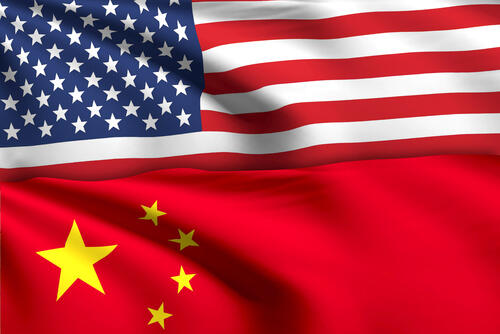
On February 24, 2021, the China Program at Shorenstein APARC hosted Dr. Thomas Wright, director of the Center on the United States and Europe and a senior fellow in the Project on International Order and Strategy at the Brookings Institution. Professor Jean Oi, William Haas Professor of Chinese Politics and director of the APARC China Program, moderated the event.

The program, entitled "U.S.-China Relations in the Biden Era," explored the future of US-China relations based on experience from past administrations. Under former President Trump, U.S. relations with China evolved into outright rivalry. In his talk, Dr. Wright discussed whether this rivalry will continue and evolve during a Biden administration by analyzing the roots of strategic competition between the two countries and various strands of thinking within the Biden team. According to Wright, the most likely outcome is that the competition between the two countries will evolve into a clash of governance systems and the emergence of two interdependent blocs where ideological differences become a significant driver of geopolitics. Cooperation is possible but it will be significantly shaped by conditions of rivalry. Watch now:

Read More

Min Ye speaking
News

Domestic or International? The Belt and Road Initiative Is More Internally Focused Than We Think, Says Expert Min Ye

Domestic or International? The Belt and Road Initiative Is More Internally Focused Than We Think, Says Expert Min Ye
Banner of Hau L. Lee
News

The Pandemic, U.S.-China Tensions and Redesigning the Global Supply Chain

The Pandemic, U.S.-China Tensions and Redesigning the Global Supply Chain
Photograph of Xi Jinping and Vladmir Putin walking in front of two lines of armed Chinese soldiers
News

Military Competition with China: Harder to Win Than During the Cold War?

On February 10th, the APARC China Program hosted Professor Oriana Mastro to discuss military relations between the US and China, and why deterrence might be even more difficult than during the Cold War.
Military Competition with China: Harder to Win Than During the Cold War?
Hero Image
American and Chinese flags
All News button
1
Subtitle

Dr. Thomas Wright examines the recent history of US-China relations and what that might mean for the new administration.

Division of Infectious Disease and Geographic Med

300 Pasteur Drive, L134, MC 5107

Stanford, CA 94305

650-723-6661
0
Professor of Medicine
dw_iba_highres.jpg MD

Dean Winslow, MD is Professor of Medicine with appointments in the Divisions of Hospital Medicine and Infectious Diseases and is a Senior Fellow (courtesy) at CISAC/Freeman Spogli Institute. He has served on the Stanford faculty since 1998 and served from 2003-2008 as Co-Director of Stanford's Infectious Diseases Fellowship Training Program. He was in private practice in Wilmington, Delaware where he started the state’s first multidisciplinary clinic for HIV patients in 1985. In 1988 he joined the DuPont Company where he worked both as a bench scientist on HIV drug resistance then later designed the clinical trials supporting FDA approval of efavirenz. In 1999 he became Vice President of Regulatory Affairs at Visible Genetics Inc. and led the FDA clearance of the TRUGENE HIV-1 drug resistance test. Dr. Winslow joined the staff at Santa Clara Valley Medical Center in 2003, where he served as Chief of the Division of AIDS Medicine and later as Chair of the Department of Medicine. In 2015 he was appointed Academic Physician-In-Chief at Stanford/ValleyCare and Vice Chair of the Department of Medicine. He was a Resident Fellow in Robinson House 2013-2017 and was visiting faculty at Oxford University in 2017. He was Lead Physician for the US Antarctic Program of the National Science Foundation 2019-2020 based at McMurdo Station, Antarctica. In 2021 he took leave from Stanford to lead the US COVID-19 Testing and Diagnostic Working Group. He served as CDC Senior Advisor to Operation ALLIES WELCOME and Chief Medical Officer for the Southwest Border Migrant Health Task Force before returning to Stanford in July 2022.

Dr. Winslow is a Master of the American College of Physicians, Fellow of the Royal College of Physicians, the Infectious Diseases Society of America, and the Pediatric Infectious Diseases Society. He is the author of 87 papers. He is,a member of the IDSA Sepsis Task Force, and previously served as Chair of the Standards and Practice Guidelines Committee.

Colonel Winslow entered the Air National Guard in 1980 and was a Distinguished Graduate of the USAF School of Aerospace Medicine. He served as Commander of the 159th Medical Group 1992-1995 and was State Air Surgeon, Delaware Air National Guard 1995-2011. He served as ANG Assistant to the Commander, 59th Medical Wing, Joint Base San Antonio 2011-2014. Colonel Winslow deployed to the Middle East six times from 2003-2011 as a flight surgeon supporting combat operations in Iraq and Afghanistan. From Jan-April 2003 Colonel Winslow was the flight surgeon responsible for combat rescue operations from Tikrit to northern Iraq. In 2005 he coordinated military public health in Louisiana in the aftermath of Hurricane Katrina. In 2006 Colonel Winslow served as an ER physician at the United States Air Force 447th EMEDS (combat hospital) in Baghdad and in 2008 he served as hospital commander during the Iraq surge. He is a 2007 graduate of Air War College. He served as an infectious disease consultant to the USAF Surgeon General. In 2017 Dr. Winslow was nominated by the President to serve as Assistant Secretary of Defense for Health Affairs. He has 1150 military flying hours including 431 combat hours and 263 combat sorties. He has extensive operational experience in fighter, tactical airlift, and combat rescue missions. He holds an FAA Airline Transport Pilot license.

Since 2006 Dr. Winslow has arranged medical care in the U.S. for 28 Iraqi children who have complicated medical conditions for which care is not available in Iraq. In 2015, Dr. Winslow and his wife, Dr. Julie Parsonnet, created The Eagle Fund of the Silicon Valley Community Foundation, which provides aid to middle eastern and central American refugees. In 2018 he co-founded Scrubs Addressing the Firearms Epidemic (SAFE), which unites health care professionals to address gun violence in the US as a public health issue and to advocate for education, research, and evidence-backed policy to reduce gun violenc

CV
Subscribe to Security