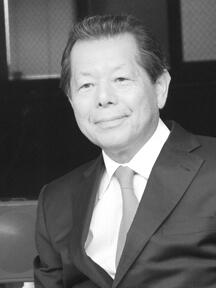
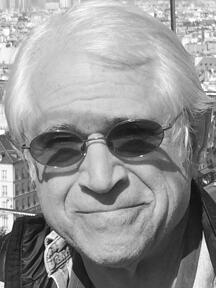
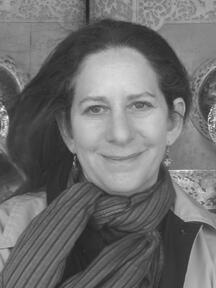
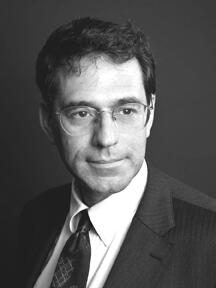
Media
News Type
News
Date
Paragraphs

Image
Elaine Treharne
Elaine Treharne earned her PhD from the University of Manchester, with a year as a Procter Graduate Fellow at Princeton University. She came to Stanford in 2012, after five years at Florida State, and fifteen years at the University of Leicester, where she had been Chair of the English Department, and interim Dean of the Faculty of Arts. She is a Fellow of the Society of Antiquaries, of the Royal Historical Society, and of the English Association; and has won grants from the Arts and Humanities Research Council, the British Academy, the NEH, the American Philosophical Society, and the Cyber Initiative. At Stanford, she is the Director of the Center for Spatial and Textual Analysis (CESTA) and Director of Stanford Text Technologies. She is a Fellow of the STS Interdisciplinary Program, and a Stanford Fellow 2017-2019.

Elaine’s research is focused on medieval British manuscripts from c.600CE to 1450CE. Numerous publications—including The Old English Life of St Nicholas and Wiley-Blackwell’s Old and Middle English: An Anthology (which is about to be published in its fourth edition)—present edited and translated texts, ranging from sermons and religious poetry to extracts from Beowulf and Chaucer’s Canterbury Tales. Other books and articles concern the prestige of the vernacular and the transmission of works in English from the late Anglo-Saxon period into the thirteenth century. This research has overturned previous scholarly opinion that held there to be little or nothing of value written in English between the Norman Conquest and the thirteenth century. In Living Through Conquest: The Politics of Early English, Elaine discussed the significant corpus of manuscripts that survive from this period, and highlighted the contemporaneity and political functionalism of many of the works copied by English scribes.

Image
Elaine Treharne book image
Her very recent work is focused on a History of Text Technologies (with Claude Willan for Stanford University Press), which traces trends in the production and consumption of all forms of human communication from 30000BCE to the present day. And in The Phenomenal Book, Elaine is focused on the interpretation of the handwritten book as an embodied whole (even where the only evidence is fragments and parts of books), which represents the traces and experiences of users and readers through time. It includes a chapter on ‘invisible things’, highlighting the sensual and emotional qualities of book production and use. She has also just completed the CyberText Technologies Project in CESTA—using historical patterns of textual facture and consumption to predict future text technologies; and she is just beginning a new digital project, Stanford Ordinary People’s Extraordinary Stories (SOPES), which recuperates the lives of otherwise unknown people whose ephemera (like letter collections, scrapbooks, notebooks, autograph albums, postcards, receipts, and photo albums) can be acquired from Ebay and bric-a-brac shops. Preliminary research shows that the amazing stories of people’s lives emerge from their written remnants.

Elaine’s teaching focuses on Text Technologies, Medieval English Literature, and the study of the Handwritten Book.

Hero Image
Elaine Treharne
All News button
1
-

Headquartered in Riga, Latvia, Meduza.io is the world’s number one independent source for professional reporting on Russia. The site also operates an ambitious translation project, making its content available to the global community at Meduza.io/en. Meduza launched in October 2014 and by August 2017 the monthly readership of Meduza exceeded 7.5 million unique visitors, with more than 700,000 app downloads and more than 2,000,000 followers on social media. Meduza and Buzzfeed recently announced an editorial partnership focused on joint investigative reports. Ilya Krasilshchik, Meduza’s publisher, will explain what it takes to mount such a project in an environment flooded by the Kremlin’s propaganda, and Anna Veduta, Meduza’s global outreach director, will discuss Meduza’s English-language edition.


Meduza is an online newspaper and news aggregator covering Russia and the Eurasian region, headed by Galina Timchenko, the former chief editor of the news website Lenta.ru, which during her tenure became the most popular news outlet on the Russian Internet. Meduza is run by a team of Russian journalists who resigned from their jobs at Lenta.ru, following Timchenko’s unexpected removal from her post by Alexander Mamut, the Putin-connected oligarch who owns the website.

Not long before the annexation of Crimea, Mamut fired Timchenko and replaced her with Alexey Goreslavsky, who had previously managed the pro-Kremlin website Vzglyad and later was a high-level official at the state-run news agency Interfax. The reason given for Timchenko’s dismissal was an official warning issued to Lenta.ru by Russia’s state censor because one of Lenta’s stories (an interview with a Ukrainian nationalist leader) contained a hyperlink to materials deemed extremist. More than 80 editors and reporters – nearly Lenta’s entire newsroom – quit in protest, publishing an open letter calling Timchenko’s ouster “an act of censorship” and a violation of Russia’s media laws. Timchenko and most of the staff who resigned with her went on to found Meduza. Explaining the decision to base Meduza in Latvia and register it outside the .RU domain zone, Timchenko told Forbes: “Right now, establishing an independent Russian-language news outlet in Latvia is possible, while in Russia it is not.”


Image
Ilia Krasilshchik image

Ilya Krasilshchik is Meduza’s publisher. In 2008, after leaving college at 21, Ilya became the chief editor of Afisha, then Moscow’s most influential entertainment and city life magazine. In his five years at Afisha, the magazine published more the 100 issues, including an issue dedicated to “Coming Out” stories (a response to Russia’s criminalization of so-called “gay propaganda”), as well as several special editions, including issues on “the oral history of the Russian media” and “the oral history of the Russian Internet.” In October 2014, he left Afisha and joined two partners to launch Meduza, a groundbreaking Russian-language news outlet based in Riga, Latvia. As of July 2017, Meduza’s monthly readership exceeded 7 million unique visitors, with 750,000 app downloads, and a reach of more than 15,000,000 people on social media. Seventy percent of Meduza’s audience is based in Russia.


Anna Veduta image


Anna Veduta is Meduza’s global outreach director, and also heads Meduza in English in Washington, D.C. Prior to Meduza, Anna served as Press Secretary to Alexey Navalny, Russia’s leading opposition politician and 2018 presidential hopeful. Anna headed Navalny's press office during his Moscow mayoral campaign in 2013, when he leveraged social media channels to break a blockage by Russia’s traditional media, nearly forcing a runoff vote. Anna holds degrees in political science and international relations from Moscow State University and Columbia University’s School of International Public Affairs.


This event is cosponsored by the Center for Russian, East European and Eurasian Studies.

Ilya Krasilshchik Meduza.io
Anna Veduta Meduza.io
Lectures
616 Serra StreetEncina Hall E301Stanford, CA94305-6055
0
hye_sung_kim

Hye Sung Kim joins the Walter H. Shorenstein Asia-Pacific Research Center (Shorenstein APARC) during the 2017–18 academic year from MBC (Munhwa Broadcasting Corporation), one of the leading South Korean TV and radio network companies. During her career as a reporter at MBC, she reported from Baghdad in 2004 on the war in Iraq, and also covered North Korean issues in a weekly news magazine program Unification Observatory in 2013-14.

Kim's research interests focus mainly on inter-Korean relations and the interactions between the powerful nations surrounding the Korean peninsula. During her research period at Shorenstein APARC, Kim will study this subject with a view as a journalist.

Kim received a BA in Aesthetics with minor in International Relations from the Seoul National University.

2017-18 Visiting Scholar
0
Adjunct Lecturer, Ford Dorsey Master's in International Policy
Adjunct Lecturer, Department of Computer Science
Former Research Affiliate
jerry_kaplan_headshot_7.jpeg

Jerry Kaplan is widely known as an Artificial Intelligence expert, serial entrepreneur, technical innovator, educator, bestselling author, and futurist. He invented several ground-breaking technologies including handheld tablet computers, online auctions, and electronic keyboard musical instruments.

A renowned Silicon Valley veteran, Jerry Kaplan founded several storied technology companies over his 35-year career, two of which became public companies. Kaplan may be best known for his key role in defining the tablet computer industry as the founding CEO of GO Corporation in 1987. Prior to GO, Kaplan co-founded Teknowledge, Inc., one of the first Artificial Intelligence companies to commercialize Expert Systems, which went public in 1986. In 1994, Kaplan co-founded Onsale, Inc., the world's first Internet auction website, which went public in 1997. In 2004, he pioneered the emerging market for social games by starting Winster.com, where he served as CEO for eight years.

Jerry Kaplan is an Adjunct Lecturer in Computer Science and the Ford Dorsey Master's in International Policy program at the Freeman Spogli Institute for International Studies at Stanford University. His research and teaching focusses on the social and economic Impact of Artificial Intelligence. He is an inventor on more than a dozen patents, and has published over twenty refereed papers in academic journals and conference proceedings. Kaplan holds a PhD in Computer and Information Science from the University of Pennsylvania, and a BA in History and Philosophy of Science from the University of Chicago.

Kaplan is the author of four books, including the best-selling classic "Startup: A Silicon Valley Adventure" (Houghton-Mifflin).  Selected by Business Week as one of the top ten business books of 1995, Startup was optioned to Sony Pictures.  "Humans Need Not Apply: A Guide to Wealth and Work in the Age of Artificial Intelligence” (Yale University Press) was honored by The Economist as one of the top ten science and technology books of 2015. His books "Artificial Intelligence: What Everyone Needs to Know" (Oxford University Press, 2016) and “Generative Artificial Intelligence: What Everyone Needs to Know” (Oxford University Press, 2024) were both Amazon new release #1 best sellers in Artificial Intelligence.

He is a frequent public speaker and commentary contributor to major newspapers and magazines. His opinion pieces have been published in the New York Times, Wall Street Journal, and Washington Post, among other publications. He has been profiled in The New York Times, The Wall Street Journal, Forbes, Business Week, Red Herring, and Upside. He received the 1998 Ernst & Young Emerging Entrepreneur of the Year Award, Northern California; served on the Governor's Electronic Commerce Advisory Council Member under Pete Wilson, Governor of California (1999); and received an Honorary Doctorate of Business Administration from California International Business University, San Diego, California (2004). 

Date Label

Encina Hall
616 Serra Street
Stanford, CA  94305

0
Visiting Scholar at The Europe Center, 2016-2017
sergey_parkhomenko.jpg

Sergey Parkhomenko is Russian journalist, publisher, and founder of several projects aimed at developing civic activism and promoting liberal values in Russia.

Parkhomenko is a former political reporter, commentator and editorialist at popular daily newspapers; founder and first editor-in-chief (1995-2001) of 'Itogi', Russia's first current affairs weekly, published in cooperation with Newsweek; editor-in-chief of several publishing houses producing translated fiction and non-fiction literature; editor-in-chief of 'Vokrug Sveta', Russia's oldest monthly magazine.

Since August 2003 Parkhomenko has been presenting 'Sut' Sobytyi' ('Crux of the Matter') on Radio Echo of Moscow, a weekly programme making sense of the events of the past week.

Parkhomenko was instrumental in organizing mass rallies in Moscow in Winter 2011 – Spring 2012. He organized the 'Vse v sud!' ('Go to court!') a civic campaign helping people to file lawsuits against widespread election rigging. He is one of the founders of 'Dissernet' ('DissertationWeb'), a network community dedicated to exposure of dissertation plagiarism, and 'Posledny Adres' ('Last Address') civil campaign helping people to create a collective memorial dedicated to the victims of political repression in the Soviet Union and Russia. He is also one of the founders of 'Redkollegia' program, an independent award supporting free professional journalism in Russia.

Parkhomenko is a Public Policy fellow with the Kennan Institute at the Woodrow Wilson International Center for Scholars (Washington, DC), since September 2016 and a Visiting Scholar at The Europe Center of Freeman Spogli Institute for International Studies since March 2017.

News Type
News
Date
Paragraphs

Protecting freedom of expression is essential to vibrant democracies and to meet the needs of people now and into the future, Indian historian Ramachandra Guha said at a Stanford event seeking to draw people together for policy-relevant discussions about India’s growth following 25 years of reforms.

Guha’s remarks were part of a colloquium titled “Eight Threats to Freedom of Expression in India,” and one in a series, co-hosted by the Shorenstein Asia-Pacific Research Center (APARC) and Center for South Asia.

The colloquia, which continue this spring, are motivated by an opportunity to garner reflections and expertise from Kathleen Stephens, the William J. Perry Fellow in the Freeman Spogli Institute, who served as chargé d'affaires at the U.S. Embassy New Delhi in 2014.

“As I was preparing to go to India, I read Ram’s extraordinary book India after Gandhi, which provided much-needed historical, cultural and political context,” Stephens said. “When I visited Bangalore, we met and instantly clicked as we talked about U.S.-India relations. It’s a pleasure to welcome him back to Stanford.”

Guha, a renowned author and scholar, has written numerous critically acclaimed books about India’s history and culture as well as social ecology, and is a frequent commentary contributor to publications such as The Telegraph and Hindustan Times. In 2000, Guha was a visiting professor at Stanford, where he taught courses on the politics and culture of South Asia and cross-cultural perspectives on the global environmental debate.

India is often referred to as the world’s largest democracy for its population size of 1.3 billion and system of governance since partition and independence in 1947. Guha said that, while India is “solidly and certifiably democratic,” there are serious flaws, including growing threats to freedom of expression of Indian artists, filmmakers and writers.

Indian society, Guha said, has become too sensitive to criticism, wherein “somebody will take objection” to any message. This kind of environment has encouraged newspaper editors to self-censor, for example, and led public figures to, at times, neglect to protect artists, filmmakers and writers.

In total, Guha detailed eight threats to freedom of expression in contemporary India: 1) archaic colonial laws affecting the first amendment, 2) imperfections in the judicial system, 3) rising importance of identity politics, 4) complicity of the police force, 5) pusillanimity of politicians, 6) dependence of media on government-sponsored advertisements, 7) dependence of media on commercially-sponsored advertisements and 8) ideologically–driven writers.

Would an absence of those threats imply freedom of expression? Responding to the question from the audience, Guha lamented that the answer wasn’t simple. His task was to offer a diagnosis of the challenges, he said, and not provide instruction on how to solve them, but in general, focused efforts bear change.

“Building democracies is about quiet persistent work,” Guha said of next steps in the process to extinguish threats to freedom of expression. “I think quiet persistent work in repairing our institutions, modernizing our laws and improving civil society institutions can still mitigate some of the threats.”

Guha expressed optimism about India’s civil society, noting an expansion in the supply of non-governmental organizations working on social issues and private philanthropists funding projects in that sector. But he tempered: “we could do more.”

Stephens ended the event by thanking Guha for leading the discussion, and referenced America’s first president George Washington, who at the end of his term in office, called upon citizens to be “‘anxious, jealous guardians of our democracy.’”

“And, I see that today in Ram and in the many people here – very jealous, anxious and passionate guardians of our democracy – who we can learn a lot from,” she said.

Listen to an audio recording of the colloquium.

Hero Image
guha news headline
Indian historian Ramachandra Guha speaks to an audience of nearly 100 faculty, students and community members about freedom of expression in contemporary India, Oksenberg Conference Room, April 5, 2017. | Debbie Warren
All News button
1
News Type
News
Date
Paragraphs

Emerging technologies, stemming from the heart of Silicon Valley and extending to Asia and beyond, have pushed the bounds of how stories are told by journalists and the way in which readers interact with them. The Shorenstein Journalism Award, an annual prize given by the Shorenstein Asia-Pacific Research Center (APARC), celebrates 15 years of recognizing distinguished journalists for their innovative and responsible journalism amid social and technological change.

The prize began with “the idea of a media award for a person who has the most significant impact on the relationship with Asia-Pacific nations in the United States,” according to Walter H. Shorenstein, who spoke about his twin interests of Asia and the press in a 2010 oral history project interview and was the benefactor after whom the center is named.

Shorenstein APARC and Harvard’s Shorenstein Center on Media, Politics and Public Policy jointly presented the award for six years. Shorenstein APARC has continued the initiative, and each year, brings the award winner to Stanford to talk with the broader campus community, and since 2011, has alternated between a recipient from the West, who has mainly addressed an American audience, and a recipient from Asia.

The prize seeks to inspire the next generation of U.S. journalists focused on Asia, as well as Asian journalists, who pave the way for press freedom in their countries.

Award winners have explored a multitude of topics over the years, from human rights in North Korea to the rise of democracy in Indonesia and from the U.S.-Japan alliance to gender equality in India. And this year adds an additional view on China; veteran journalist Ian Johnson will address religion and value systems in a panel discussion on May 1 with Xueguang Zhou, Stanford professor of sociology, and Orville Schell, director of the Asia Society's Center on U.S.-China Relations, moderated by Daniel C. Sneider, Shorenstein APARC associate director for research.

To mark the award’s tenure, Shorenstein APARC asked award alumni to answer the question, “What do you think the future holds for journalism in/about Asia?” Their responses are below.


Image
crossette 3x4 bw
Asia is big, with 60 percent of the world's people and a third of its land. The conditions in which journalists work go to the extremes, from the longstanding establishment press of Japan or India to the blanket repression of it in Laos or China. But if there is one word to describe Asian journalism of the future, it is Youth. Creative, energetic young people, armed with connectivity, pack Internet cafes and journalism classes, where they can find them. Their interests are broad, they are open-minded and well informed. Western reporters will benefit from their guidance as colleagues.

Barbara Crossette is the U.N. correspondent for The Nation and a columnist for India Abroad. She received the Shorenstein Journalism Award in 2010.


Image
funabashi 3x4 bw

Journalism in Asia has had a long history of covering revolutions and wars. However, peace has reigned over Asia for near on 40 years. Yet, the peace and stability in Asia looks increasingly precarious. Asia too is not immune to populist nationalism. In this climate, Asia could yet again become the battleground for dislocation, revolution and war. Journalism, on top of reacting to potential crises, will be critical for proactively finding ways to prevent and defuse crises in the region.

Yoichi Funabashi is the chairman of the Rebuild Japan Initiative Foundation. He received the Shorenstein Journalism Award in 2015.


Image
buruma 3x4 bw
The scope for independent journalism, checking the powers that be, is shrinking everywhere, not least in Asia. China's rise as a major political and commercial power will be a growing challenge to the freedom of the press. The best thing journalists writing about Asian affairs can do, especially those who are lucky enough to work for free and independent media, is to continue to write as honestly as they can, without bowing to political or commercial pressures. This very much includes pressures at home, in countries that still have liberal democratic institutions. Good journalism on Asia, or anywhere else, will continue to be produced as long as the critical spirit remains undaunted.

Ian Buruma is a writer and the Paul W. Williams Professor of Democracy, Human Rights, and Journalism at Bard College. He received the Shorenstein Journalism Award in 2008.


Image
mydans 3x4 bw
The frontier in the battle for press freedom in Southeast Asia has moved into cyberspace, where independent voices have presented a new challenge to government control of information. In Vietnam, Malaysia, Thailand, Singapore, Indonesia and newly open Myanmar, upstart websites and blogs have proliferated. But it hasn't taken long for those in charge to gain the upper hand, and following the example of China, all have found ways to bring these open forums under varying degrees of control, from censorship to harassment to prison terms. The flamboyant Philippines remains the exception, and the future there too has become uncertain.

Seth Mydans is a contributing writer for the New York Times. He received the Shorenstein Journalism Award in 2009.


Image
demick 3x4 bw
The United States tends to export its best and worst fashions elsewhere in the world. An example of the latter is President Trump’s tendency to denounce any media coverage he dislikes as “fake news.” The Chinese Communist Party has picked up on that trick, earlier this month using the “fake news” defense to deny a story that a human rights lawyer was tortured, a practice all too common in China. The implications are chilling for the Chinese domestic press and for foreign correspondents covering China. While our own president is denouncing us as “enemies of the people,” we can hardly expect the U.S. government to stand up for us when the intolerant regime in Beijing tries to muzzle our reporting.

Barbara Demick is the Los Angeles Times’ bureau chief in New York and was formerly bureau chief in Beijing and in Seoul. She is the author of Nothing to Envy: Ordinary Lives in North Korea and Logavina Street: Life and death in a Sarajevo Neighborhood. She received the Shorenstein Journalism Award in 2012.


Image
zaw 3x4 bw
In some parts of Asia, the space for freedom of expression has shrunk immensely and there are challenges for all of us covering sensitive issues in countries where journalists increasingly face the Computer Crime Act, censorship, tight space, intimidation and threats – moreover, they also continue to face authoritarian rulers’ unjustified clampdown and high-handed attitudes. Asia is complex – in some corners of our region, many diverse ethnic minorities live in conflict zones and in war without peace – for decades journalists travel there to report stories. But it is our job – isn’t it? Journalists here ought to tell stories and unearth many untold news to readers across Asia. While facing prison walls, threats and lawsuits, journalists also face media tycoons and cronies who want them to be a mouthpiece of commercial conglomerates – they must resist them. Commercial media kills independent journalism. Long before journalists in Asia realized that objectivity alone doesn’t work in Asia but courage, independent reporting and searching the truth are more important than ever before. Last but not least, Asia has the fastest growing economies in the world thus an independent media is needed to keep voices from Asia alive.

Aung Zaw is the founder and editor-in-chief of The Irrawaddy. He received the Shorenstein Journalism Award in 2013.


Image
schlesinger 3x4 bw
Donald Trump is challenging many long-held, American consensus policies – including those toward Asia. Trade, diplomacy and security relationships between the United States and Asia – and among Asian nations – are now all in flux. The challenge for journalists on both sides of the Pacific will be sorting out the noise, understanding the concrete actions and reactions, and explaining the implications for a global audience. That mission will be made more difficult – and more vital – by the growing hostility toward journalism from many of the leaders unleashing this transformation.

Jacob Schlesinger is a senior Washington correspondent for the Wall Street Journal. He received the Shorenstein Journalism Award in 2014.


Image
schell 3x4 bw
I am very pessimistic about the ability of thoughtful and informative journalism to survive anywhere in the world given the gale force winds of state propaganda, commercial market pressure and "fake news" that now buffet it. And no where is such reporting more urgently needed than in regard to Asia where China's different value and political pose a stark challenge. To keep a well-informed public, we may well have to finally recognize here in the United States that good and independent reporting cannot be entirely a purely commercial process any more than are our great universities.

Orville Schell is the Arthur Ross Director of the Center on U.S.-China Relations at the Asia Society in New York, and former dean of the School of Journalism at the University of California, Berkeley. He received the Shorenstein Journalism Award in 2003.


Image
pomfret 3x4
I am very optimistic about the future of journalism in Asia because I am optimistic about the future of Asia writ large. I am especially optimistic about the future of journalism in China. Despite the dark days that my Chinese colleagues face today, there is no shortage of well-trained, hungry reporters in China who will ultimately help push China in a more positive direction. I think this is, to use the Chinese Communist Party's verbiage, "the historical trend." Just think about the scoops to be had when China begins to open the vast archives of the Chinese Communist Party? Obviously, this won't happen tomorrow, but I am confident that this day is less far off than it sometimes seems.

John Pomfret was a foreign correspondent with the Washington Post for many years. He is the author of The Beautiful Country and the Middle Kingdom: America and China from 1776 to the Present. He received the Shorenstein Journalism Award in 2007.


Hero Image
journalism award headline
A pair of people read newspapers outside in Seoul, South Korea. | Chung Sung-Jun/Getty Images
All News button
1
-

Image
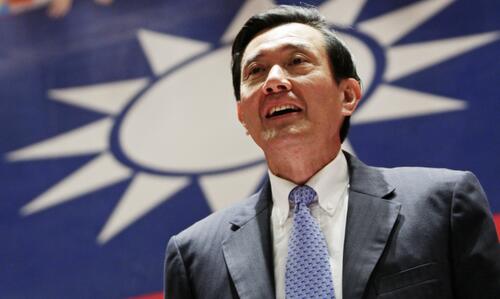
Ma Ying-jeou KMT

The eight-year presidency of Ma Ying-jeou (2008-2016) in Taiwan left a complex legacy of political achievements, confrontations, and disappointments that defies easy characterization. It began with President Ma and the Kuomintang’s (KMT) commanding electoral victories in the 2008 elections, and ended with the KMT’s overwhelming loss to the resurgent Democratic Progressive Party (DPP) and its leader Tsai Ing-wen in 2016.

It featured rapid conclusions to a broad set of agreements on cross-Strait cooperation with the People’s Republic of China (PRC). But worries about closer ties with the PRC also triggered a popular backlash against growing mainland Chinese influence in Taiwan’s economy and culminated in a student-led occupation of the Legislative Yuan.

It coincided with contradictory trends in public opinion, including both the consolidation of a separate Taiwanese identity and support for the status quo in cross-Strait relations, as well as the increasing salience of divisions over social and environmental issues such as same-sex marriage and green energy at the same time as rising concerns about economic inequality.

It also marked a return to unified government after the acrimonious partisan fights of the Chen Shui-bian years, but long-standing intra-KMT divisions and the decentralized organization of the legislature continued to frustrate the administration, especially in President Ma’s second term.        

Finally, the Ma era produced no consensus about how to move beyond Taiwan’s developmental state legacies. Plans for domestic economic liberalization and greater integration into the global economy were only partially carried out, and the Ma administration ignored or struggled to address rising inequality, stagnant wages, increasing economic dependence on the PRC market, and a skewed tax system favoring investors and corporations over salaried workers.


Conference Agenda

The 11th Annual Conference on Taiwan Democracy will bring together scholars from Taiwan, the US, and Europe to consider these political achievements, confrontations, and disappointments in depth, and to assess the strengths and weaknesses of Taiwan’s democracy at the end of the Ma Ying-jeou’s presidency. Conference participants will discuss trends in public opinion, party politics and elections, cross-Strait relations, governance and media, and the performance of political institutions. The conference papers will be revised and included in an edited volume covering democratic practice during the Ma Ying-jeou era in Taiwan.

The conference is free and open to the public. Those interested in attending are requested to RSVP at the link above. This event is organized by the Taiwan Democracy Project in the Center on Democracy, Development, and the Rule of Law.


Thursday, March 9

9:15-10:45. Panel I. Public Opinion and Elections

  • Min-hua Huang, "Why Young Voters Abandoned the KMT"
  • Ching-hsin Yu, "Trends in National Identity, Partisanship, and Attitudes toward Cross-Strait Relations"
  • Yun-han Chu, discussant

11:00-12:45. Panel II. Party Politics

  • Austin Wang, "Tsai Ing-wen and the DPP: The Path Out of the Political Wilderness"
  • Nathan Batto, "The KMT as a Presidentialized Party: Party Leaders and Shifts in China Discourse"
  • Kharis Templeman, "The Disruption that Wasn't: How 2016 Changed the Taiwanese Party System"
  • Ching-hsin Yu, discussant

12:45-1:45. Lunch

1:45-3:30. Panel III. Economics, Security, and Cross-Strait Relations

  • Szu-yin Ho, "Ma Ying-jeou's Cross-Strait Policy: Ambitions, Constraints, Results" 
  • Lang Kao, "Cross-Strait Agreements and Taiwan's Executive-Legislative Relationship, 2008-2016"
  • Dean Chen, "In the Shadow of Great Power Rivalry: The KMT Administration's Relations with America, China, and Japan, 2008-2016"
  • Larry Diamond, discussant


Friday, March 10

9:15-10:45. Panel IV. Governance, Media, and Civil Society

  • Eric Yu, "The Changing Media Environment and Public Opinion"
  • Yun-han Chu and Yu-tzung Chang, "The Challenge of Governability in Taiwan"
  • Kharis Templeman, discussant

11:00-12:30. Panel V. Political Institutions

  • Shih-hao Huang, w/ Shing-yuan Sheng, "Decentralized Legislative Organization and Its Consequences for Policy-making in the Ma Ying-jeou Era"
  • Christian Goebel, "Special Prosecutors, Courts, and Other Accountability Institutions under Ma YIng-jeou"
  • TJ Pempel, discussant

12:30-1:30. Lunch


Oksenberg Room, 3rd Floor, Encina Hall Central

CDDRL
Stanford University
Encina Hall, C147
616 Jane Stanford Way
Stanford, CA 94305-6055

(650) 724-6448 (650) 723-1928
0
Mosbacher Senior Fellow in Global Democracy at the Freeman Spogli Institute for International Studies
William L. Clayton Senior Fellow at the Hoover Institution
Professor, by courtesy, of Political Science and Sociology
diamond_encina_hall.png MA, PhD

Larry Diamond is the William L. Clayton Senior Fellow at the Hoover Institution, the Mosbacher Senior Fellow in Global Democracy at the Freeman Spogli Institute for International Studies (FSI), and a Bass University Fellow in Undergraduate Education at Stanford University. He is also professor by courtesy of Political Science and Sociology at Stanford, where he lectures and teaches courses on democracy (including an online course on EdX). At the Hoover Institution, he co-leads the Project on Taiwan in the Indo-Pacific Region and participates in the Project on the U.S., China, and the World. At FSI, he is among the core faculty of the Center on Democracy, Development and the Rule of Law, which he directed for six and a half years. He leads FSI’s Israel Studies Program and is a member of the Program on Arab Reform and Development. He also co-leads the Global Digital Policy Incubator, based at FSI’s Cyber Policy Center. He served for 32 years as founding co-editor of the Journal of Democracy.

Diamond’s research focuses on global trends affecting freedom and democracy and on U.S. and international policies to defend and advance democracy. His book, Ill Winds: Saving Democracy from Russian Rage, Chinese Ambition, and American Complacency, analyzes the challenges confronting liberal democracy in the United States and around the world at this potential “hinge in history,” and offers an agenda for strengthening and defending democracy at home and abroad.  A paperback edition with a new preface was released by Penguin in April 2020. His other books include: In Search of Democracy (2016), The Spirit of Democracy (2008), Developing Democracy: Toward Consolidation (1999), Promoting Democracy in the 1990s (1995), and Class, Ethnicity, and Democracy in Nigeria (1989). He has edited or coedited more than fifty books, including China’s Influence and American Interests (2019, with Orville Schell), Silicon Triangle: The United States, China, Taiwan the Global Semiconductor Security (2023, with James O. Ellis Jr. and Orville Schell), and The Troubling State of India’s Democracy (2024, with Sumit Ganguly and Dinsha Mistree).

During 2002–03, Diamond served as a consultant to the US Agency for International Development (USAID) and was a contributing author of its report, Foreign Aid in the National Interest. He has advised and lectured to universities and think tanks around the world, and to the World Bank, the United Nations, the State Department, and other organizations dealing with governance and development. During the first three months of 2004, Diamond served as a senior adviser on governance to the Coalition Provisional Authority in Baghdad. His 2005 book, Squandered Victory: The American Occupation and the Bungled Effort to Bring Democracy to Iraq, was one of the first books to critically analyze America's postwar engagement in Iraq.

Among Diamond’s other edited books are Democracy in Decline?; Democratization and Authoritarianism in the Arab World; Will China Democratize?; and Liberation Technology: Social Media and the Struggle for Democracy, all edited with Marc F. Plattner; and Politics and Culture in Contemporary Iran, with Abbas Milani. With Juan J. Linz and Seymour Martin Lipset, he edited the series, Democracy in Developing Countries, which helped to shape a new generation of comparative study of democratic development.

Download full-resolution headshot; photo credit: Rod Searcey.

Former Director of the Center on Democracy, Development and the Rule of Law
Faculty Chair, Jan Koum Israel Studies Program
Date Label
Conferences
Authors
News Type
News
Date
Paragraphs

Ian Johnson, a veteran journalist with a focus on Chinese society, religion and history, is the 2016 recipient of the Shorenstein Journalism Award. The award, given annually by the Walter H. Shorenstein Asia-Pacific Research Center, is conferred to a journalist who produces outstanding reporting on Asia and has contributed to greater understanding of the complexities of Asia. He will deliver a keynote speech and participate in a panel discussion on May 1, 2017, at Stanford.

“Ian Johnson is one of those rare writers who has not only watched China’s evolution over the long haul, but who is also deeply steeped in the culture and politic of both Europe and the United States as well,” said Orville Schell, the Arthur Ross Director at the Asia Society of New York’s Center on U.S.-China Relations and jury member for the award. “This cross-cultural grounding has imbued his work on China with a humanistic core that, because it is always implicit rather than explicit, is all the more persuasive.”

Ian Buruma, the Paul W. Williams Professor of Democracy, Human Rights, and Journalism at Bard College and jury member for the award, added further praise, “Ian Johnson is one of the finest journalists in the English language. He writes about China with extraordinary insight, deep historical knowledge and a critical spirit tempered by rare human sympathy. His work on China is further enriched by wider interests, such as the problems of Islamist extremism in the West, specifically Germany, where he lives when he is not writing from China.”

The Shorenstein award, now in its 15th year, originally in partnership with the Shorenstein Center on Press, Politics and Public Policy at Harvard, was created to honor American journalists who through their writing have helped Americans better understand Asia. In 2011, the award was broadened to encompass Asian journalists who pave the way for press freedom, and have aided in the growth of mutual understanding across the Pacific. Recent recipients of the award include Yoichi Funabashi, former editor-in-chief of the Asahi Shimbun; Jacob Schlesinger of the Wall Street Journal; and Aung Zaw, founder of the Irrawaddy, a Burmese publication.

Johnson has spent over half of the past 30 years in the Greater China region, first as a student in Beijing from 1984-85, and then in Taipei from 1986-88. He later worked as a newspaper correspondent in China, from 1994-96 with Baltimore's The Sun, and then from 1997-2001 with the Wall Street Journal, covering macroeconomics, China’s social issues and World Trade Organization accession.

Johnson returned to China in 2009, where he now lives and writes for the New York Times and freelances for the New York Review of Books, the New Yorker and National Geographic. He also teaches and leads a fellowship program at the Beijing Center for Chinese Studies.

Johnson has also worked in Germany, serving as the Wall Street Journal’s Germany bureau chief and senior writer. Early on in his career, he covered the fall of the Berlin Wall and German unification, and later returned to head coverage on areas including the introduction of the euro and Islamist terrorism.

Johnson has been twice nominated for the Pulitzer Prize and won in 2001 for his coverage of the Chinese government’s suppression of the Falun Gong spiritual movement and its implications of that campaign for the future. He is also the author of two books, Wild Grass (Pantheon, 2004) which examines China’s civil society and grassroots protest, and A Mosque in Munich (Houghton Mifflin Harcourt, 2010). His next book, The Souls of China: The Return of Religion after Mao (Pantheon, April 2017) explores the resurgence of religion and value systems in China.

Additional details about the panel discussion and the award are listed below.


About the Panel Discussion and Award Ceremony

A keynote speech will be delivered by Shorenstein Journalism Award winner Ian Johnson, followed by a panel discussion with Orville Schell, the Arthur Ross Director at the Asia Society of New York’s Center on U.S.-China Relations, and Xueguang Zhou, professor of sociology at Stanford; moderated by Daniel C. Sneider, associate director for research at Shorenstein APARC.

May 1, 2017, from 12:00 – 1:30 p.m. (PDT)

Bechtel Conference Center, Encina Hall, 616 Serra Street, Stanford, CA 94305

The keynote speech and panel discussion are open to the public. The award ceremony will take place in the evening for a private audience.

To RSVP for the panel discussion, please visit this page.


About the Shorenstein Journalism Award

The Shorenstein Journalism Award honors a journalist not only for excellence in their field of reporting on Asia, but also for their promotion of a free, vibrant media and for the future of relations between Asia and the United States. Originally created to identify American and Western journalists for their work in and on Asia, the award now also recognizes Asian journalists who have contributed significantly to the development of independent media in Asia. The award is presented annually and includes a prize of $10,000.

The award is named after Walter H. Shorenstein, the philanthropist, activist and businessman who endowed two institutions that are focused respectively on Asia and the press - the Walter H. Shorenstein Asia-Pacific Research Center at Stanford and the Joan Shorenstein Center on Press, Politics and Public Policy in the Kennedy School of Government at Harvard.

Past recipients of the award include: Yoichi Funabashi, formerly of the Asahi Shimbun (2015); Jacob Schlesinger of the Wall Street Journal (2014), Aung Zaw of the Irrawaddy (2013), Barbara Demick of the Los Angeles Times (2012), Caixin Media of China (2011), Barbara Crossette of the New York Times (2010), Seth Mydans of the New York Times (2009), Ian Buruma (2008), John Pomfret of the Washington Post (2007), Melinda Liu of Newsweek (2006), Nayan Chanda of the Far Eastern Economic Review (2005), Don Oberdofer of the Washington Post (2004), Orville Schell (2003), and Stanley Karnow (2002).

A jury selects the award winner. The 2016 jury comprised of:

Ian Buruma, the Paul W. Williams Professor of Democracy, Human Rights, and Journalism at Bard College, is a noted Asia expert who frequently contributes to publications including the New York Times, the New York Review of Books and the New Yorker. He is a recipient of the Shorenstein Journalism Award and the international Erasmus Prize (both in 2008).

Nayan Chanda is the director of publications and the editor of YaleGlobal Online Magazine at the Yale Center for the Study of Globalization. For nearly thirty years, Chanda was at the Hong Kong-based magazine, Far Eastern Economic Review. He writes the ‘Bound Together’ column in India’s Business World and is the author of Bound Together: How Traders, Preachers, Adventurers and Warrior Shaped Globalization. Chanda received the Shorenstein Journalism Award in 2005.

Susan Chira is a senior correspondent and editor on gender issues and former deputy executive editor and foreign editor at the New York Times. Chira has extensive experience in Asia, including serving as Japan correspondent for the Times in the 1980s. During her tenure as foreign editor, the Times won the Pulitzer Prize four times for international reporting on Afghanistan, Russia, Africa and China.

Donald K. Emmerson is a well-respected Indonesia scholar and director of Shorenstein APARC’s Southeast Asia Program and a research fellow for the National Asia Research Program. Frequently cited in international media, Emmerson also contributes to leading publications, such as Asia Times and International Business Times.

Orville Schell is the Arthur Ross Director at the Asia Society of New York’s Center on U.S.-China Relations and former jury member for the Pulitzer Prize for international reporting. Schell has written extensively on China and was awarded the 1997 George Peabody Award for producing the groundbreaking documentary The Gate of Heavenly Peace. He received the Shorenstein Journalism Award in 2003.

Daniel C. Sneider is the associate director for research at Shorenstein APARC, writing on Asian security issues, wartime historical memory and U.S policy in Asia. He also frequently contributes to publications such as Foreign Policy, Asia Policy and Slate. Sneider had three decades of experience as a foreign correspondent serving in India, Japan and Russia for the Christian Science Monitor and as the national and foreign editor of the San Jose Mercury News and a syndicated columnist on foreign affairs for Knight-Ridder.

For more information about the award, please visit this page.

Hero Image
ij 2
Courtesy of Ian Johnson
All News button
1
Subscribe to Media