Democracy
-

Abstract:

Authoritarian ruling parties are expected to resist democratization, often times at all costs. And yet some of the strongest authoritarian parties in the world have not resisted democratization, but have instead embraced it. This is because their raison d’etre is to continue ruling, though not necessarily to remain authoritarian. Put another way, democratization requires ruling parties hold free and fair elections, but not that they lose them. Authoritarian ruling parties can thus be incentivized to concede democratization from a position of exceptional strength. This alternative pathway to democracy is illustrated with Asian cases – notably Taiwan – in which ruling parties democratized from positions of considerable strength, and not weakness. The conceding-to-thrive argument has clear implications with respect to “candidate cases” in developmental Asia, where ruling parties have not yet conceded democratization despite being well-positioned to thrive were they to do so, such as the world’s most populous dictatorship, China.


Bio:

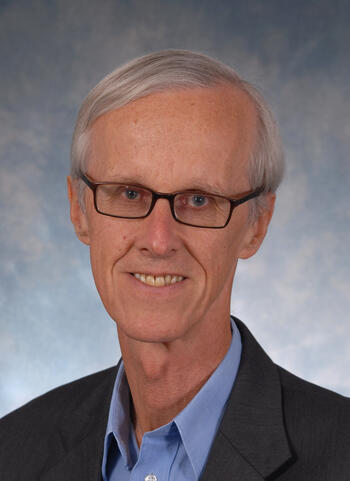
Joseph Wong is the Ralph and Roz Halbert Professor of Innovation at the Munk School of Global Affairs, University of Toronto, and Professor of Political Science and Canada Research Chair in Democratization, Health and Development. Professor Wong was the Director of the Asian Institute at the Munk School from 2005 to 2014. In addition to academic articles and book chapters, Professor Wong has published four books: Healthy Democracies: Welfare Politics in Taiwan and South Korea (2004) and Betting on Biotech: Innovation and the Limits of Asia’s Developmental State (2011), both published by Cornell University Press, as well as Political Transitions in Dominant Party Systems: Learning to Lose, co-edited with Edward Friedman (Routledge, 2008), and Innovating for the Global South: Towards a New Innovation Agenda, co-edited with Dilip Soman and Janice Stein (University of Toronto Press, 2014). He is currently working on a book monograph with Dan Slater (University of Chicago) on Asia’s development and democracy, which is currently under contract with Princeton University Press. Professor Wong earned his Hons. B.A from McGill University (1995) and Ph.D. from the University of Wisconsin-Madison (2001). 

Philippines Conference Room, 3rd Floor, Encina Hall

616 Serra St., Stanford, CA

Joe Wong Professor and Canada Research Chair in Political Science University of Toronto
Seminars
-

Is communication technology conducive to collective violence? Recent studies have provided conflicting answers to the same question. While some see the introduction of cellular communication as a contributing factor to civil conflict in Africa (Pierskalla and Hollenbach APSR 2013), others ascribe an opposite effect to mobile communications in Iraq (Shapiro and Weidmann IO forthcoming). During the talk, I will further explore the logic behind "Why the revolution will not be tweeted", and argue that the answer lies in contagion processes of collective action at the periphery, not the hierarchical schemes of central coordination as was argued before. To provide evidence, I will draw on historical accounts of social revolutions, a GIS study of the Syrian Civil War, a convenience survey sample from the 2011 Egyptian Revolution, as well as network experiments of collective risk-taking in a controlled setting.

Speaker Bio

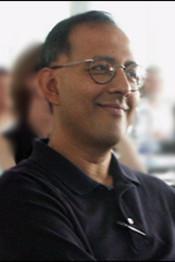
photo 26 Navid Hassanpour
Navid Hassanpour (Ph.D.s in Political Science from Yale'14, and Electrical Engineering from Stanford'06) studies political contestation, in its contentious and electoral forms. Following an inquiry into collective and relational dimensions of contentious politics, currently he is working on a project that examines the history, emergence, and the dynamics of representative democracy outside the Western World. This year he is a Niehaus postdoctoral fellow at Princeton's Woodrow Wilson School of public and International Affairs. His work has appeared in Political Communication as well as IEEE Transactions on Information Theory. His book project, Leading from the Periphery, is under consideration at Cambridge University Press' Structural Analysis in the Social Sciences Series.

This event is part of the Liberation Technology Seminar Series

NEW LOCATION

School of Education 

Room 128

Navid Hassanpour Postdoctoral Research Associate, Niehaus Center for Globalization and Governance (NCGG)
Seminars
-

ABSTRACT

While a growing number of women are becoming cabinet ministers in African governments, there is considerable cross-national variation in the extent to which women exercise influence across policy domains. We argue that this variation is the result of enduring cross-national differences in women’s economic rights. Where women are legally subject to male authority in accessing economic resources, they are less able to build the political capital needed to negotiate over leadership positions in largely clientelistic political systems. Using an original dataset on the allocation of ministerial portfolios in 34 African countries, we show that women ministers have less diversified policy portfolios and are less likely to be appointed to high prestige portfolios where women have unequal marriage property rights or are unable to serve as head of household. Our results are robust to controlling for relevant factors such as female labor force participation, legislative quotas, and customary law.

SPEAKER BIO

Image
leonardo arriola
Leonardo R. Arriola is Associate Professor of Political Science at the University of California, Berkeley. His research focuses on the political economy of democracy and political violence in developing countries. He is author of Multiethnic Coalitions in Africa: Business Financing of Opposition Election Campaigns (Cambridge University Press), which received the 2013 best book award from the African Politics Conference Group and an honorable mention for the 2014 Luebbert best book award from the Comparative Politics Section of the American Political Science Association. His research has appeared in journals such as the American Journal of Political Science, Comparative Political Studies, Comparative Politics, and World Politics. He has conducted fieldwork in Cameroon, Ethiopia, Kenya, Madagascar, and Senegal. He has a PhD in political science from Stanford University.

Leonardo Arriola Associate Professor Associate Professor University of California, Berkeley
Seminars
-

ABSTRACT

When defined in terms of social identity and evaluations of in and out groups, the polarization of the American electorate has clearly increased. We elaborate on the question of affective polarization by developing and validating a measure of implicit or subconscious partisan affect. Using this measure, we demonstrate not only that hostility for the out party is ingrained or automatic in voters’ psyches, but also that partisan affect exceeds affect based on race and other social cleavages. After documenting the extent of affective party polarization, we demonstrate that party cues exert powerful effects on non-political judgments and behaviors. Partisans discriminate against out partisans, and do so to a degree that exceeds discrimination based on race. In concluding, we note that heightened partisan affect and the intrusion of partisan bias into non-political domains means that partisan affiliation in America now approximates the model of the “mass membership” party.


SPEAKER BIO

Image
shanto iyengar
Shanto Iyengar holds a joint appointment as the Harry and Norman Chandler Chair in Communication and Professor of Political Science at Stanford University. Iyengar is also a senior fellow (by courtesy) at the Hoover Institution. Iyengar currently serves as the editor of Political Communication (Taylor and Francis), an inter-disciplinary journal sponsored by the American Political Science Association and the International Communication Association. According to the 2012 Thomson-Reuters Journal Citation Reports, Political Communication is the top-ranked journal in the field of Communication, and fourth (out of 170) in the field of Political Science. Iyengar's teaching and research addresses the role of the news media and mass communication in contemporary politics. He is the author of several books including Media Politics: A Citizen's Guide (W. W. Norton, 2007), Going Negative: How Political Advertisements Shrink and Polarize the Electorate (Free Press, 1995), Explorations in Political Psychology (Duke University Press, 1993), and News That Matters: Television and American Opinion (University of Chicago Press, 1987). Iyengar's research has been published by leading journals in political science and communication. He is also a regular contributor to Washingtonpost.com. His scholarly awards include the Murray Edelman Career Achievement Award for research in political communication, the Philip Converse Award for the best book in the field of public opinion (for News That Matters), the Goldsmith Book Prize (for Going Negative), and the Distinguished Alumni Achievement Award from the University of Iowa.


[[{"fid":"217340","view_mode":"crop_870xauto","fields":{"format":"crop_870xauto","field_file_image_description[und][0][value]":"Iyengar Flyer","field_file_image_alt_text[und][0][value]":"","field_file_image_title_text[und][0][value]":"","field_credit[und][0][value]":"","field_caption[und][0][value]":"Iyengar Flyer","field_related_image_aspect[und][0][value]":"","thumbnails":"crop_870xauto","pp_lightbox":false,"pp_description":false},"type":"media","attributes":{"height":"910","width":"870","class":"media-element file-crop-870xauto"}}]]

Shanto Iyengar Director, Political Communication Lab Stanford University
Seminars
-

Abstract

Civil society is under siege in many parts of the world.  Governments have arrested human rights activists, closed humanitarian NGOs, and banned peaceful protests. Simply stated, governments are criminalizing dissent and confining civic space.  Join Doug Rutzen for a discussion of the global backlash against civil society and ongoing efforts to protect the freedoms of association and assembly around the world.

Speaker Bio

douglas rutzen photo Douglas Rutzen

Doug Rutzen is President and CEO of the International Center for Not-for-Profit Law, which has worked on the legal framework for civil society in 100 countries.  Doug also teaches “global revolutions, social change, and NGOs” at Georgetown law school.  On the margins of the 2013 UN General Assembly, Doug joined President Obama on a panel discussing civil society.  Under Doug’s leadership, ICNL received a MacArthur Award for Creative and Effective Institutions, the organizational analogue to MacArthur's "genius award" for individuals.  Earlier this year, the Nonprofit Times named Doug as one of the most influential nonprofit leaders in the United States.


[[{"fid":"217338","view_mode":"crop_870xauto","fields":{"format":"crop_870xauto","field_file_image_description[und][0][value]":"PHR Rutzen Flyer","field_file_image_alt_text[und][0][value]":"","field_file_image_title_text[und][0][value]":"","field_credit[und][0][value]":"","field_caption[und][0][value]":"PHR Rutzen Flyer","field_related_image_aspect[und][0][value]":"","thumbnails":"crop_870xauto","pp_lightbox":false,"pp_description":false},"type":"media","attributes":{"height":960,"width":870,"class":"media-element file-crop-870xauto"}}]]

Encina Hall, 616 Serra Street, Stanford, CA 94305

Commentator Director, Program on Human Rights, Commentator
Doug Rutzen President and CEO Speaker International Center for Not-for-Profit Law, Washington, DC, Speaker
Seminars
-

ABSTRACT

Humanitarian aid for the victims of conflict may seem like a simple moral imperative – we should do whatever we can to help. But our good intentions can have unanticipated and unintended consequences. In order to understand the impact of humanitarian aid, we have to examine the context in which each operation takes place and the constraints which limit what can be achieved.

The seminar will look at the legal, financial, organisational, cultural and political context and constraints within which humanitarian aid is provided. It will suggest that states and international organisations are “blind” to ways in which aid could be delivered more effectively.

Finally, the seminar will explore what might be achieved at the World Humanitarian Summit in 2016.


SPEAKER BIO

Image
dsc 0100 2
Martin Barber was a senior UN official and has extensive experience in humanitarian affairs and peace operations – both at UN Headquarters and in the field. He served as Director of the United Nations Mine Action Service (UNMAS) at UN Headquarters in New York from 2000 until his retirement from the UN in 2005. Previously, he was Chief of Policy Development and Advocacy in the UN Office for Coordination of Humanitarian Affairs (OCHA). From 1996 to 1998, he was Deputy Special Representative of the UN Secretary-General in the UN Mission in Bosnia and Herzegovina (UNMIBH), Sarajevo. From 1989 to 1996, he worked with the UN Office for Coordination of Humanitarian Assistance to Afghanistan (UNOCHA) in Islamabad, Pakistan, serving as UN Humanitarian Coordinator for Afghanistan in 1995-96. From 1975 to 1982 he served with the UN High Commissioner for Refugees (UNHCR) in Laos and Thailand. Between 1982 and 1989, he was Director of the British Refugee Council, London. From 2010 to 2013, he served as Senior Adviser in the Office for the Coordination of Foreign Aid in the Government of the United Arab Emirates. Barber is now a consultant and analyst working on humanitarian issues. He holds a doctorate in South-East Asian Sociology from the University of Hull and is an Honorary Fellow of the University of Edinburgh. In 2006, he was made an OBE “for services to de-mining”.

Blinded by Humanity: What next for humanitarian aid?
Download pdf
Martin Barber Former Director, United Nations Mine Action Service (UNMAS) UN Headquarters, New York
Seminars
-

Abstract:

Arab workers participated prominently in the popular uprisings of 2011.  They shared the outrage of many of their compatriots over daily abuse by internal security forces, widespread corruption, and foreign policies subservient to U.S. interests. Their participation in those uprisings was also informed by struggles against the neoliberal economic restructuring of the region since the 1970s, which resulted in an indecent chasm between rich and poor, deteriorating working conditions and public social services, and high youth unemployment.

Egypt experienced a strike wave of unprecedented magnitude in the 2000s. Tunisia, with one exception, experienced less intense contestation by workers and others. Egyptian workers’ have had very limited influence on national politics in the post-Mubarak era.  Democratic development seems unlikely in the near future.  The Tunisian national trade union federation and its affiliates were the central force in installing procedural democracy. The nature of workers’ social movements in the 2000s partially explains these divergent outcomes.

Speaker Bio:

Image
Joel Beinin

Joel Beinin is the Donald J. McLachlan Professor of History and Professor of Middle East History. He received his A.B. from Princeton University in 1970, his M.A. from Harvard University in 1974, and his A.M.L.S. and Ph.D. from the University of Michigan in 1978 and 1982. He also studied at the American University of Cairo and and the Hebrew University of Jerusalem. He lived in Egypt in 1969, 1980-81, 1985, 1986, 1994, 2004-05, and 2006-08 and in Israel in 1965-66, 1970-73, 1987, 1988, 1993, and 1993. He has taught Middle East history at Stanford University since 1983. From 2006 to 2008 he served as Director of Middle East Studies and Professor of History at the American University in Cairo. His research and writing focuses on workers, peasants, and minorities in the modern Middle East and on Israel, Palestine, and the Arab-Israeli conflict.


Beinin has written or edited nine books, most recently Social Movements, Mobilization, and Contestation in the Middle East and North Africa; co-edited with Frédéric Vairel (Stanford University Press, 2011) and The Struggle for Worker Rights in Egypt (Solidarity Center, 2010). His articles have been published in leading scholarly journals as well as The Nation, Middle East Report, The Los Angeles Times, The San Francisco Chronicle, Le Monde Diplomatique, and others. He has appeared on Al-Jazeera TV, BBC radio, National Public Radio, and many other TV and radio programs throughout North America, and in France, Egypt, Singapore, and Australia, and has given frequent interviews to the global media. In 2002 he served as President of the Middle East Studies Association of North America.

This event is co-sponsored by the Arab Studies Institute.


[[{"fid":"217426","view_mode":"crop_870xauto","fields":{"format":"crop_870xauto","field_file_image_description[und][0][value]":"Beinin Flyer","field_file_image_alt_text[und][0][value]":"","field_file_image_title_text[und][0][value]":"","field_credit[und][0][value]":"","field_caption[und][0][value]":"Beinin Flyer","field_related_image_aspect[und][0][value]":"","thumbnails":"crop_870xauto","pp_lightbox":false,"pp_description":false},"type":"media","attributes":{"height":655,"width":870,"class":"media-element file-crop-870xauto"}}]]

Goldman Conference Room
4th Floor East Wing E409
Encina Hall
616 Serra Street
Stanford, California 94305

Joel Beinin Donald J. McLachlan Professor of History Stanford University
Seminars
-

Democracies do not legally bind parties to their policy promises. Thus winning the power to set policy through elections requires making credible commitments to pivotal voters. This paper analyzes theoretically and empirically how the commitment problem affects partisan conflict over redistribution. A theoretical model shows that under majoritarian electoral rules parties' efforts to achieve endogenous commitment using citizen candidates to policies preferred by the middle class leads to different behavior and outcomes than suggested by existing theories that assume commitment or rule out endogenous commitment. Left parties may respond to rising inequality by moving to the right in majoritarian systems but not under proportional representation. The theory also unbundles the anti-left bias attributed to majoritarian systems. The empirical analysis finds evidence for key implications of this logic using panel data on party positions and by analyzing devolution in Britain as a natural experiment to compare candidates under alternative electoral rules.

This talk is part of The Europe Center's "European Governance Seminar Series."

Image
Michael Becher, Assistant Professor for Political Economy at the University of Konstanz in Germany

Michael Becher
is assistant professor for Political Economy at the University of Konstanz in Germany. He received his PhD (2013) in Politics from Princeton University. His research focuses on comparative politics and political economy, with a special emphasis on redistributive conflict, political institutions, and democratic representation. Professor Becher's work has appeared or is forthcoming in academic journals such as American Journal of Political Science, Journal of Politics, and Comparative Political Studies.

Michael Becher Assistant Professor for Political Economy Speaker Graduate School of Decision Sciences and the Department of Politics and Public Administration at the University of Konstanz
Seminars
News Type
Q&As
Date
Paragraphs

For 14 years, Mariano-Florentino Cuéllar has been a tireless Stanford professor who has strengthened the fabric of university’s interdisciplinary nature. Joining the faculty at Stanford Law School in 2001, Cuéllar soon found a second home for himself at the Freeman Spogli for International Studies. He held various leadership roles throughout the institute for several years – including serving as co-director of the Center for International Security and Cooperation. He took the helm of FSI as the institute’s director in 2013, and oversaw a tremendous expansion of faculty, research activity and student engagement. 

An expert in administrative law, criminal law, international law, and executive power and legislation, Cuéllar is now taking on a new role. He leaves Stanford this month to serve as justice of the California Supreme Court and will be succeeded at FSI by Michael McFaul on Jan. 5.

 As the academic quarter comes to a close, Cuéllar took some time to discuss his achievements at FSI and the institute’s role on campus. And his 2014 Annual Letter and Report can be read here.

You’ve had an active 20 months as FSI’s director. But what do you feel are your major accomplishments? 

We started with a superb faculty and made it even stronger. We hired six new faculty members in areas ranging from health and drug policy to nuclear security to governance. We also strengthened our capacity to generate rigorous research on key global issues, including nuclear security, global poverty, cybersecurity, and health policy. Second, we developed our focus on teaching and education. Our new International Policy Implementation Lab brings faculty and students together to work on applied projects, like reducing air pollution in Bangladesh, and improving opportunities for rural schoolchildren in China.  We renewed FSI's focus on the Ford Dorsey Program in International Policy Studies, adding faculty and fellowships, and launched a new Stanford Global Student Fellows program to give Stanford students global experiences through research opportunities.   Third, we bolstered FSI's core infrastructure to support research and education, by improving the Institute's financial position and moving forward with plans to enhance the Encina complex that houses FSI.

Finally, we forged strong partnerships with critical allies across campus. The Graduate School of Business is our partner on a campus-wide Global Development and Poverty Initiative supporting new research to mitigate global poverty.  We've also worked with the Law School and the School of Engineering to help launch the new Stanford Cyber Initiative with $15 million in funding from the Hewlett Foundation. We are engaging more faculty with new health policy working groups launched with the School of Medicine and an international and comparative education venture with the Graduate School of Education. 

Those partnerships speak very strongly to the interdisciplinary nature of Stanford and FSI. How do these relationships reflect FSI's goals?

The genius of Stanford has been its investment in interdisciplinary institutions. FSI is one of the largest. We should be judged not only by what we do within our four walls, but by what activity we catalyze and support across campus. With the business school, we've launched the initiative to support research on global poverty across the university. This is a part of the SEED initiative of the business school and it is very complementary to our priorities on researching and understanding global poverty and how to alleviate. It's brought together researchers from the business school, from FSI, from the medical school, and from the economics department.  

Another example would be our health policy working groups with the School of Medicine. Here, we're leveraging FSI’s Center for Health Policy, which is a great joint venture and allows us to convene people who are interested in the implementation of healthcare reforms and compare the perspective and on why lifesaving interventions are not implemented in developing countries and how we can better manage biosecurity risks. These working groups are a forum for people to understand each other's research agendas, to collaborate on seeking funding and to engage students. 

I could tell a similar story about our Mexico Initiative.  We organize these groups so that they cut across generations of scholars so that they engage people who are experienced researchers but also new fellows, who are developing their own agenda for their careers. Sometimes it takes resources, sometimes it takes the engagement of people, but often what we've found at FSI is that by working together with some of our partners across the university, we have a more lasting impact.

Looking at a growing spectrum of global challenges, where would you like to see FSI increase its attention? 

FSI's faculty, students, staff, and space represent a unique resource to engage Stanford in taking on challenges like global hunger, infectious disease, forced migration, and weak institutions.  The  key breakthrough for FSI has been growing from its roots in international relations, geopolitics, and security to focusing on shared global challenges, of which four are at the core of our work: security, governance, international development, and  health. 

These issues cross borders. They are not the concern of any one country. 

Geopolitics remain important to the institute, and some critical and important work is going on at the Center for International Security and Cooperation to help us manage the threat of nuclear proliferation, for example. But even nuclear proliferation is an example of how the transnational issues cut across the international divide. Norms about law, the capacity of transnational criminal networks, smuggling rings, the use of information technology, cybersecurity threats – all of these factors can affect even a traditional geopolitical issue like nuclear proliferation. 

So I can see a research and education agenda focused on evolving transnational pressures that will affect humanity in years to come. How a child fares when she is growing up in Africa will depend at least as much on these shared global challenges involving hunger and poverty, health, security, the role of information technology and humanity as they will on traditional relations between governments, for instance. 

What are some concrete achievements that demonstrate how FSI has helped create an environment for policy decisions to be better understood and implemented?

We forged a productive collaboration with the U.N. High Commissioner for Refugees through a project on refugee settlements that convened architects, Stanford researchers, students and experienced humanitarian responders to improve the design of settlements that house refugees and are supposed to meet their human needs. That is now an ongoing effort at the UN Refugee Agency, which has also benefited from collaboration with us on data visualization and internship for Stanford students. 

Our faculty and fellows continue the Institute's longstanding research to improve security and educate policymakers. We sometimes play a role in Track II diplomacy on sensitive issues involving global security – including in South Asia and Northeast Asia.  Together with Hoover, We convened a first-ever cyber bootcamp to help legislative staff understand the Internet and its vulnerabilities. We have researchers who are in regular contact with policymakers working on understanding how governance failures can affect the world's ability to meet pressing health challenges, including infectious diseases, such as Ebola.

On issues of economic policy and development, our faculty convened a summit of Japanese prefectural officials work with the private sector to understand strategies to develop the Japanese economy.  

And we continued educating the next generation of leaders on global issues through the Draper Hills summer fellows program and our honors programs in security and in democracy and the rule of law. 

How do you see FSI’s role as one of Stanford’s independent laboratories?

It's important to recognize that FSI's growth comes at particularly interesting time in the history of higher education – where universities are under pressure, where the question of how best to advance human knowledge is a very hotly debated question, where universities are diverging from each other in some ways and where we all have to ask ourselves how best to be faithful to our mission but to innovate. And in that respect, FSI is a laboratory. It is an experimental venture that can help us to understand how a university like Stanford can organize itself to advance the mission of many units, that's the partnership point, but to do so in a somewhat different way with a deep engagement to practicality and to the current challenges facing the world without abandoning a similarly deep commitment to theory, empirical investigation, and rigorous scholarship.

What have you learned from your time at Stanford and as director of FSI that will inform and influence how you approach your role on the state’s highest court?

Universities play an essential role in human wellbeing because they help us advance knowledge and prepare leaders for a difficult world. To do this, universities need to be islands of integrity, they need to be engaged enough with the outside world to understand it but removed enough from it to keep to the special rules that are necessary to advance the university's mission. 

Some of these challenges are also reflected in the role of courts. They also need to be islands of integrity in a tumultuous world, and they require fidelity to high standards to protect the rights of the public and to implement laws fairly and equally.  

This takes constant vigilance, commitment to principle, and a practical understanding of how the world works. It takes a combination of humility and determination. It requires listening carefully, it requires being decisive and it requires understanding that when it's part of a journey that allows for discovery but also requires deep understanding of the past.

Hero Image
tino mug
All News button
1
Subscribe to Democracy