
Democracy
-

Abstract

In 2010-2011, the "Arab Spring" brought unexpected revolutions to many Middle Eastern and North African countries. Why did these seemingly invincible regimes fall, while China remained durably authoritarian? Many observers credited global media for the political transformations. While the hopes of Arab Spring democracy have proven to be fragile or short-lived, we can effectively explore the relationship between political communication and regime stability by turning our attention to Taiwan’s remarkable democratization, which remains under-appreciated by the international community.

This talk considers political communication in Taiwan from the martial law era to the heady days of democratic activism beginning in the late 1970s and lasting till the 1990s. Professor Esarey argues that the Chiang Ching-kuo administration’s diminishing capacity to control a small but influential opposition (dangwai) media, and even mainstream newspapers, gradually permitted reformers to reframe debates, reset the political agenda, and challenge state narratives and legitimacy claims. 

When viewed in comparative perspective, Taiwan’s successful democratization suggests that seeking regime change is impracticable, and even perilous, without considerable and sustainable media freedom as well as opportunities for the public to advocate, evaluate, and internalize alternative political views. A balance of “communication power” between state and societal actors facilitates a negotiated and peaceful transition from authoritarianism.


Bio

Professor Ashley Esarey received his PhD in Political Science from Columbia University and was awarded the An Wang Postdoctoral Fellowship by Harvard University. He has held academic appointments at Middlebury College, Whitman College, and the University of Alberta, where he is an instructor in the departments of East Asian Studies and Political Science and a research associate of the China Institute. Esarey has written on democratization and authoritarian resilience, digital media and politics, and information control and propaganda. His recent publications include My Fight for a New Taiwan: One Woman’s Journey from Prison to Power (with Lu Hsiu-lien) and The Internet in China: Cultural, Political, and Social Dimensions (with Randolph Kluver).
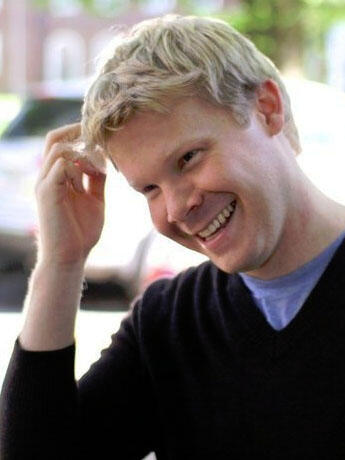
 

Communication Power and Taiwan's Democratization
Download pdf
Ashley Esarey Research Associate, China Institute University of Alberta
Seminars
-

Abstract

Cross-Strait relations play an important role in electoral politics in Taiwan. Increasing economic exchange together with warming political engagements make today’s cross-Strait relations a very unique case in the study of public opinion in Taiwan. Because of the economic prosperity of China, people in Taiwan might consider the expansion of trade and other forms of cross-Strait exchanges beneficial to the prosperity of Taiwan. However, growing trade ties also mean that Taiwan’s economic reliance on the mainland increases day by day, and it could eventually result in political unification—an outcome that the majority of people in Taiwan do not want. The long-standing antagonism across the Strait, especially visible in their different governing systems and ideological attitudes, has produced something close to two separate countries and contrasting national identities.  Dr. Chen was former Director of Election Study Center of National Chengchi University in Taiwan, and he will present long-term polling tracks to demonstrate how cross-Strait relations have affected electoral politics in Taiwan.


Bio

Lu-huei Chen is Distinguished Research Fellow at the Election Study Center and Professor of Political Science at National Chengchi University in Taiwan.  He is currently a visiting scholar of Top University Strategic Alliance (TUSA) at MIT. Professor Chen received his Ph. D. in political science from Michigan State University. His research focuses on political behavior, political socialization, research methods, and cross-Strait relations.  He has published articles in Issues and Studies, Journal of Electoral Studies (in Chinese), Social Science Quarterly, and Taiwan Political Science Review (in Chinese). He is the editor of Continuity and Change in Taiwan's 2012 Presidential and Legislative Election (in Chinese, 2013), Public Opinion Polls (in Chinese, 2013), and co-edited The 2008 Presidential Election: A Critical Election on Second Turnover (in Chinese, with Chi Huang and Ching-hsin Yu, 2009).

Electoral Politics and Cross-Strait Relations
Lu-huei "Jack" Chen Professor of Political Science National Cheng Chi University, Taiwan
Seminars
-

Abstract:

Scholars increasingly find that autocrats secure their survival by building formal political institutions: either single parties or national parliaments. These insights, however, do little to illuminate autocratic politics in post-Cold War Africa, where international creditors have forced autocrats to abide the nominally democratic institutions constructed during the Third Wave of Democracy. My book manuscript measures the threats to autocratic survival posed by democratic institutions and explains how the continent's autocrats are learning to survive them. During this presentation I will focus on the dynamics of popular protest in an age of regular elections. After presenting evidence that dependence on Western aid constrains African autocrats' recourse to repression -- and that, anticipating these constraints, African citizens are far more likely to protest when their rulers depend on Western aid -- I will show how Africa's autocrats suppress popular unrest without violence. Drawing on micro-level data from the Republic of Congo, I will focus on three classes of autocratic survival strategies: electoral alliances with opposition parties, electoral competition among regime loyalists, and the ethnic construction of the internal security apparatus.


Speaker Bio:

Image
carter
Brett Carter is a Post-Doctoral Fellow at the Center on Democracy, Development, and the Rule of Law at Stanford University. He employs a range of research methods -- formal, qualitative, and quantitative -- to understand how modern African autocrats retain power in the face of nominally democratic institutions. He received a Ph.D. in Government from Harvard University in 2014, where he was also a Graduate Fellow at the Harvard Academy for International and Area Studies. Brett received an A.M. from Harvard University, an A.M. from the University of Chicago, and a B.A. from the Virginia Military Institute. He was a Fulbright scholar in Senegal, taught at the University of Malawi, worked for a humanitarian NGO in northern Ethiopia, and has consulted for the United States Agency for International Development, World Bank, and United Nations Development Program. His research has been supported by the National Science Foundation, United States Institute of Peace, Social Science Research Council, and Smith Richardson Foundation, among others.

0
brett_carter_2025.jpg

Brett Carter is an Associate Professor in the Department of Political Science and International Relations at the University of Southern California, a Hoover Fellow at Stanford University's Hoover Institution, and a Faculty Affiliate at Stanford's Center on Democracy, Development and the Rule of Law. He received a Ph.D. from Harvard University, where he was a fellow at the Harvard Academy for International and Area Studies.

Carter studies politics in the world's autocracies. His first book, Propaganda in Autocracies: Institutions, Information, and the Politics of Belief (Cambridge University Press), draws on the largest archive of state propaganda ever assembled — encompassing over eight million newspaper articles in six languages from nearly 60 countries around the world — to show how political institutions shape the propaganda strategies of repressive governments. It received the William Riker Prize for the Best Book in Political Economy, the International Journal of Press/Politics Hazel Gaudet-Erskine Best Book Award, Honorable Mention for the Gregory Luebbert Award for the Best Book in Comparative Politics, and Honorable Mention for the APSA Democracy & Autocracy Section's Best Book Award.

His second book, in progress, shows how politics in Africa’s autocracies changed after the fall of the Berlin Wall and how a new era of geopolitical competition — marked by the rise of China and the resurgence of Russia — is changing them again.

Carter’s other work has appeared in the Journal of Politics, British Journal of Political Science, Perspectives on Politics, Journal of Conflict Resolution, Security Studies, China Quarterly, Journal of Democracy, and Foreign Affairs, among others. His work has been featured by The New York Times, The Economist, The National Interest, and NPR’s Radiolab.

Hoover Fellow
CDDRL Affiliated Scholar
CDDRL Visiting Scholar, 2020-2021
Date Label
Seminars
-

Abstract

Paul Amar will discuss his book The Security Archipelago, winner of the 2014 Charles Taylor Book Award of the American Political Science Association. The book provides an alternative historical and theoretical framing of the refashioning of free-market states and the rise of humanitarian security regimes in the Global South by examining the pivotal, trendsetting cases of Brazil and Egypt. Addressing gaps in the study of neoliberalism and biopolitics, Amar describes how coercive security operations and cultural rescue campaigns confronting waves of resistance have appropriated progressive, antimarket discourses around morality, sexuality, and labor. Homing in on Cairo and Rio de Janeiro, Amar reveals the innovative resistances and unexpected alliances that have coalesced in new polities emerging from the Arab Spring and South America's Pink Tide. These have generated a shared modern governance model that he terms the "human-security state."


Speaker Bio

Image
paul amar 1

Paul Amar, Associate Professor in the Global & International Studies Program, is a political scientist with affiliate appointments in Feminist Studies, Sociology, Comparative Literature, Middle East Studies, and Latin American & Iberian Studies. At UCSB he currently serves as Chair of Middle East Studies, Coordinator of the Campus Cluster on Security Studies, and member of the Graduate Studies Council. In addition, he serves as coordinator of scholarly  projects for the Arab Council of the Social Sciences, based in Beirut. Before he began his academic career, he worked as a journalist in Egypt, a police reformer in Brazil, and as a conflict-resolution and economic development specialist at the United Nations. His books include:  Cairo Cosmopolitan (2006); New Racial Missions of Policing (2010); Global South to the Rescue (2011); Dispatches from the Arab Spring (2013); The Middle East and Brazil (2014), and The Security Archipelago: Human-Security States, Sexuality Politics and the End of Neoliberalism. This most recent book was awarded the Charles Taylor Award for "Best Book of the Year" in 2014 by the Interpretive Methods Section of the American Political Science Association.


*This event is co-sponsored with CDDRL's Program on Arab Reform and Democracy and the Mediterranean Studies Program.*


[[{"fid":"217928","view_mode":"crop_870xauto","fields":{"format":"crop_870xauto","field_file_image_description[und][0][value]":"Paul Amar Flyer","field_file_image_alt_text[und][0][value]":"","field_file_image_title_text[und][0][value]":"","field_credit[und][0][value]":"","field_caption[und][0][value]":"","field_related_image_aspect[und][0][value]":"","thumbnails":"crop_870xauto","pp_lightbox":false,"pp_description":false},"type":"media","attributes":{"width":"870","class":"media-element file-crop-870xauto"}}]]


Reuben Hills Conference Room
2nd Floor East Wing E207
Encina Hall
616 Serra Street
Stanford, California 94305

Paul Amar Associate Professor, Global and International Studies Program University of California, Santa Barbara
Seminars
-

Abstract

Two former congressmen present the keys to fixing a broken Congress in

“A smart book that asks the right questions and offers some intriguing solutions.”— President Bill Clinton

Premiere/FastPencil (a publishing imprint distributed by Dover Publications) announces the release of The Partisan Divide: Congress in Crisis, a powerful and important new work by two former congressional leaders, one Democratic and one Republican. According to Mr. Frost and Mr. Davis, Congress is incapable of reforming itself without a good kick in the seat from the American public. Frost and Davis, with great insight and skill, along with a wealth of entertaining anecdotes and photos, dissect the causes of legislative gridlock and offer a common sense, bipartisan plan for making our Congress function again.

The perfect tonic for these turbulent times, The Partisan Divide: Congress in Crisis is a fascinating must-read for the historically and politically curious.


Speaker Bios

Image
tomdavis
Tom Davis served in Congress from 1994 to 2008 representing Virginia's 11th district. During that time, he served as House GOP campaign chairman for two cycles (2000 and 2002), and chairman of the House Committee on Government Reform and Oversight before retiring, undefeated in 2008. He is a graduate of Amherst College and the University of Virginia Law School. Mr. Davis currently serves as a Director at Deloitte LLP and resides in Vienna, Virginia. He is also a co-founder of "No Labels."


Image
Martin Frost served 26 years in Congress representing the Dallas–Ft. Worth area in North Texas. During that time he served four years as chair of the Democratic Congressional Campaign Committee and four years as Chair of the House Democratic Caucus. He has undergraduate degrees in journalism and history from the University of Missouri and a law degree from the Georgetown University Law Center. Mr. Frost is a senior partner in the Washington office of the Polsinelli law firm and resides in Alexandria, Virginia.


*This event is co-sponsored with CDDRL's Program on American Democracy in Comparative Perspective and Stanford in Government.*


[[{"fid":"217935","view_mode":"crop_870xauto","fields":{"format":"crop_870xauto","field_file_image_description[und][0][value]":"","field_file_image_alt_text[und][0][value]":"","field_file_image_title_text[und][0][value]":"","field_credit[und][0][value]":"","field_caption[und][0][value]":"","field_related_image_aspect[und][0][value]":"","thumbnails":"crop_870xauto","pp_lightbox":true,"pp_description":false},"type":"media","attributes":{"height":"1113","width":"870","class":"media-element file-crop-870xauto"}}]]


State of Politics in 2014
Download pdf
Martin Frost Former Democratic Representative to the U.S. House of Representatives Texas's 24th Congressional District, 1979-2005
Tom Davis Former Republican Representative to the U.S. House of Representatives Virginia's 11th District, 1995-2008
Seminars
-

*This event is co-sponsored with CDDRL's Program on Arab Reform and Democracy and The Sohaib and Sara Abbasi Program in Islamic Studies.*

Abstract

European and US-based scholars and practitioners have debated the purposes and sometimes the (limited) macro-effects of programs designed to promote transitions from authoritarianism to democracy in Middle East countries. Yet this discussion often lacks analysis of on-the-ground experiences or ignores the cumulative wisdom of local counterparts and intermediaries. This seminar is based on Carapico’s ground-breaking study Political Aid and Arab Activism: Democracy Promotion, Justice, and Representation (Cambridge University Press, 2013) which explores two decades’ worth of projects sponsored by American, European, and other transnational agencies in four key sub-fields: the rule of law, electoral design and monitoring, female empowerment, and civil society. Specifically in the seminar Carapico will discuss controversies and contradictions surrounding projects in Egypt, Palestine, and Iraq (the three main cases) and Jordan, Morocco, Yemen, Algeria, Tunisia, and Lebanon (where democracy brokers also work) to help explain why so many feminists and other advocates for justice, free elections, and civic agency concluded that foreign funding is inherently political and paradoxical.

Speaker Bio

sheila carapico color Sheila Carapico

Sheila Carapico, Professor of Political Science and International Studies at the University of Richmond, has been exploring Arab activism since studying in Cairo and traveling around the region in 1971/72. She lived in Sana’a from 1977 through 1980, mainly researching community development initiatives and foreign aid interventions. Subsequently she worked as a consultant for the International Fund for Agricultural Development, the Netherlands Embassy, Human Rights Watch, and several other agencies in Yemen, Egypt, and Lebanon. She was a Fulbright research scholar and visiting fellow at the Sana’a University Women’s Studies and Social Research Center for two years during the ‘democratic opening’ in Yemen in the early 1990s. She served as Visiting Chairperson in the Department of Political Science at the American University in Cairo for all of 2010 and the ‘Arab spring’ semester of 2011, and returned to AUC as a visiting faculty member in the spring of 2013. In addition to Political Aid she is the author of Civil Society in Yemen: A Political Economy of Activism in Modern Arabia (Cambridge University Press, 1998) and other works on the comparative and international politics of the Arabian Peninsula and the Arab world. She is a contributing editor of Middle East Report.      


[[{"fid":"217801","view_mode":"crop_870xauto","fields":{"format":"crop_870xauto","field_file_image_description[und][0][value]":"Sheila Carapico flyer","field_file_image_alt_text[und][0][value]":"","field_file_image_title_text[und][0][value]":"","field_credit[und][0][value]":"","field_caption[und][0][value]":"","field_related_image_aspect[und][0][value]":"","thumbnails":"crop_870xauto","pp_lightbox":false,"pp_description":false},"type":"media","attributes":{"width":"870","class":"media-element file-crop-870xauto"}}]]


Sheila Carapico Professor of Political Science Department of Political Science, University of Richmond
Seminars
-

Abstract:

The uprisings that spread across the Middle East in 2011 created new hope for democratic change in the Arab world.  Four years later, the euphoria that greeted the Arab uprisings has given way to a far more somber mood, a recognition of the limits of mass protests to bring about political change, and acknowledgement that the region's entrenched authoritarian regimes are more resilient than many protesters imagined. Yet in responding to the challenge of mass politics, authoritarian regimes in the Middle East have not simply shown their resilience. In adapting to new challenges they have also changed, giving rise to new and more troubling forms of authoritarian rule, suggesting that the turmoil of recent years may be only the beginning of an extended period of political instability, violence, and repression in many parts of the Middle East.

Speaker Bio:

heydemann photo Steven Heydemann

Steven Heydemann serves as the vice president of Applied Research on Conflict at United States Institute of Peace. Heydemann is a political scientist who specializes in the comparative politics and the political economy of the Middle East, with a particular focus on Syria. His interests include authoritarian governance, economic development, social policy, political and economic reform and civil society. From 2003 to 2007, Heydemann directed the Center for Democracy and Civil Society at Georgetown University. From 1997 to 2001, he was an associate professor in the department of political science at Columbia University. Earlier, from 1990-1997, he directed the Social Science Research Council’s Program on International Peace and Security and Program on the Near and Middle East. Heydemann is the author of Authoritarianism in Syria: Institutions and Social Conflict, 1946-1970 (Cornell University Press, 1999), and editor of Networks of Privilege in the Middle East: The Politics of Economic Reform Revisited, (Palgrave Press, 2004), and War, Institutions and Social Change in the Middle East (University of California Press, 2000).

This event is co-sponsored by the Arab Studies Institute


[[{"fid":"217528","view_mode":"crop_870xauto","fields":{"format":"crop_870xauto","field_file_image_description[und][0][value]":"Steven Heydemann talk flyer","field_file_image_alt_text[und][0][value]":"","field_file_image_title_text[und][0][value]":"","field_credit[und][0][value]":"","field_caption[und][0][value]":"","field_related_image_aspect[und][0][value]":"","thumbnails":"crop_870xauto","pp_lightbox":false,"pp_description":false},"type":"media","attributes":{"height":506,"width":870,"class":"media-element file-crop-870xauto"}}]]

Goldman Conference Room
4th Floor East Wing E409
Encina Hall
616 Serra Street
Stanford, California 94305

Steven Heydemann Vice President, Applied Research on Conflict USIP
Seminars
-

This event has been cancelled. We will update our website once the new date has been determined.

Encina Hall, C148
616 Jane Stanford Way
Stanford, CA 94305

0
Olivier Nomellini Senior Fellow at the Freeman Spogli Institute for International Studies
Director of the Ford Dorsey Master's in International Policy
Research Affiliate at The Europe Center
Professor by Courtesy, Department of Political Science
yff-2021-14290_6500x4500_square.jpg

Francis Fukuyama is the Olivier Nomellini Senior Fellow at Stanford University's Freeman Spogli Institute for International Studies (FSI), and a faculty member of FSI's Center on Democracy, Development and the Rule of Law (CDDRL). He is also Director of Stanford's Ford Dorsey Master's in International Policy, and a professor (by courtesy) of Political Science.

Dr. Fukuyama has written widely on issues in development and international politics. His 1992 book, The End of History and the Last Man, has appeared in over twenty foreign editions. His book In the Realm of the Last Man: A Memoir will be published in fall 2026.

Francis Fukuyama received his B.A. from Cornell University in classics, and his Ph.D. from Harvard in Political Science. He was a member of the Political Science Department of the RAND Corporation, and of the Policy Planning Staff of the US Department of State. From 1996-2000 he was Omer L. and Nancy Hirst Professor of Public Policy at the School of Public Policy at George Mason University, and from 2001-2010 he was Bernard L. Schwartz Professor of International Political Economy at the Paul H. Nitze School of Advanced International Studies, Johns Hopkins University. He served as a member of the President’s Council on Bioethics from 2001-2004. He is editor-in-chief of American Purpose, an online journal.

Dr. Fukuyama holds honorary doctorates from Connecticut College, Doane College, Doshisha University (Japan), Kansai University (Japan), Aarhus University (Denmark), the Pardee Rand Graduate School, and Adam Mickiewicz University (Poland). He is a non-resident fellow at the Carnegie Endowment for International Peace. He is a member of the Board of Trustees of the Rand Corporation, the Board of Trustees of Freedom House, and the Board of the Volcker Alliance. He is a fellow of the National Academy for Public Administration, a member of the American Political Science Association, and of the Council on Foreign Relations. He is married to Laura Holmgren and has three children.

(October 2025)

CV
Date Label
Olivier Nomellini Senior Fellow at the Freeman Spogli Institute for International Studies (FSI); Resident in FSI's Center on Democracy, Development, and the Rule of Law; Professor, by courtesy, of Political Science Speaker Stanford University
Seminars
-

Many ethnically divided societies are ridden with inter-ethnic conflicts which inhibit their economic development. Many scholars have advocated the adoption of “consensual” political institutions to facilitate the peaceful resolutions of ethnic conflicts in relatively mature democracies. In this paper, we argue instead that achieving social peace may require, in weakly institutional political environments, the transfer of de facto political power to opposition groups, for example, through their co-optation into the military. If the military is divided (i.e. formed by a plurality of ethnic groups) rather than unified (i.e. comprised by the same ethnic group that controls the government), the state can credibly commit to implement fiscal policies in line with the interests of a broad spectrum of social groups. This is because the groups whose interests are not served, but who have some de facto power generated by being part of the army, can pose a credible coup threat to the government. This credible threat induces the government to implement consensual policies, and therefore allows to smooth the underlying ethnic conflicts, preventing not only ethnic coups but also secessions and civil wars. Nevertheless, the strategy of ethnic balancing of the army is potentially risky, since it may induce the soldiers to attempt a preemptive coup in order to block the reform, as a reorganization of the military will reduce the rents of incumbent soldiers. One important message of our paper is that there may not be silver-bullet solutions to the problems caused by ethnic conflicts in weakly politicized societies, as it may prove difficult to reconcile the goal of preventing civil wars and secessions with the goal of preventing coups.

Image
Andrea Vindigni, Professor of Economics at IMT, Lucca Institute for Advanced Studies
Andrea Vindigni is a Professor of Economics at IMT, Lucca Institute for Advanced Studies. He was previously an Assistant Professor of Economics at the Institute of International Economic (IIES) at Stockholm University and Assistant Professor of Politics at Princeton University. He holds a Ph.D. in Economics from Toulouse School of Economics (TSE), and was a post-doctoral fellow at MIT, where he is a regular visitor.

Professor Vindigni's research interests focus on the political economy of a broad class of institutions. In particular, he has written on the political determinants of job protection legislation, the political economy of democratic constitutional choice, the effects of wars on political institutions and democratic transitions, and more recently on the political and economic origins of state power, military dictatorships and of religious beliefs and ideologies, in both analytic and comparative-historical perspective.


This talk is part of the Comparative Politics Workshop series, co-sponsored by The Europe Center.

Encina Hall West, Room 400 (Graham Stuart Lounge)

Andrea Vindigni Professor of Economics Speaker IMT, Lucca Institute for Advanced Studies
Workshops
-

Is Europe "elderly and haggard", and could France become "the crucible of  Europe" (Jan. 10, 2015 NYTimes op-ed)?

On the one hand, Europe is warned by the US about an Asian "pivot", and is perceived here as less relevant and effective. Significantly, certainly as a wake up call, Pope Francis recently compared Europe to  a "grandmother, no longer fertile and vibrant, increasingly a bystander in a world that has apparently become less and less Eurocentric”. France had been previously presented here as an eminent representative of an "Old Europe".

On the other hand,  the US has been constantly, during the last decade, advocating for a stronger Europe  and stressing a special French role in this endeavour. A few days ago, after the terrorist attacks in Paris, President Obama publicly stated that "France was the US oldest Ally". 

At a time when we have to face common challenges in the Middle East and in Africa, to adapt to new emerged actors and a more assertive Russia, to deal with direct threats including in the field of proliferation and the cyber space, to define a multipolar world and organize our economic relation (TTIP), what can be the EU contribution? What can also be a special intellectual and diplomatic French input to this global realignment?

Co-sponsored by The Europe Center, the Center for International Security and Cooperation and the France-Stanford Center.

Image
Ambassador Eric Lebédel of France


Ambassador Eric Lebédel is a French diplomat, former ambassador to the OSCE and to Finland, with a deep experience in Transatlantic relationship (twice as Minister's advisor;  in the French embassy in Washington DC) and in European affairs. He is also involved in crisis management (PMs office), international security (embassy in Moscow, consul general in Istanbul) and multilateral diplomacy ( NATO's Director for crisis management, OSCE). Presently working on Strategic Partnerships for the French MFA and interested in e.diplomacy, he also regularly lectures  at Sciences-po and ENA (Ecole Nationale d'Administration) on crisis management and Europe.


Ambassador Eric Lebédel French Diplomat Speaker
Seminars
Subscribe to Democracy