Health and Medicine

FSI’s researchers assess health and medicine through the lenses of economics, nutrition and politics. They’re studying and influencing public health policies of local and national governments and the roles that corporations and nongovernmental organizations play in providing health care around the world. Scholars look at how governance affects citizens’ health, how children’s health care access affects the aging process and how to improve children’s health in Guatemala and rural China. They want to know what it will take for people to cook more safely and breathe more easily in developing countries.

FSI professors investigate how lifestyles affect health. What good does gardening do for older Americans? What are the benefits of eating organic food or growing genetically modified rice in China? They study cost-effectiveness by examining programs like those aimed at preventing the spread of tuberculosis in Russian prisons. Policies that impact obesity and undernutrition are examined; as are the public health implications of limiting salt in processed foods and the role of smoking among men who work in Chinese factories. FSI health research looks at sweeping domestic policies like the Affordable Care Act and the role of foreign aid in affecting the price of HIV drugs in Africa.

-

Two days after the midterm elections, join a panel of Stanford experts to discuss the election outcomes. What do they mean for Congress, for the Republican and Democratic parties, and for Trump? How many Americans voted, who were they, and what issues mattered to their votes? The panel will contextualize the election results within broader trends in American democracy. Watch here.


Traitel Bldg. Hauck Auditorium


Stanford Law School Neukom Building, Room N230 Stanford, CA 94305
650-725-9875
0
James B. McClatchy Professor of Law at Stanford Law School
Senior Fellow, Freeman Spogli Institute
Professor, by courtesy, Political Science
Professor, by courtesy, Communication
headshot_3.jpg

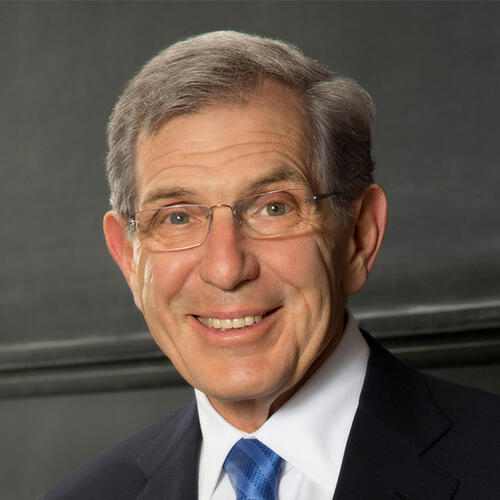
Nathaniel Persily is the James B. McClatchy Professor of Law at Stanford Law School, with appointments in the departments of Political Science, Communication, and FSI.  Prior to joining Stanford, Professor Persily taught at Columbia and the University of Pennsylvania Law School, and as a visiting professor at Harvard, NYU, Princeton, the University of Amsterdam, and the University of Melbourne. Professor Persily’s scholarship and legal practice focus on American election law or what is sometimes called the “law of democracy,” which addresses issues such as voting rights, political parties, campaign finance, redistricting, and election administration. He has served as a special master or court-appointed expert to craft congressional or legislative districting plans for Georgia, Maryland, Connecticut, New York, North Carolina, and Pennsylvania.  He also served as the Senior Research Director for the Presidential Commission on Election Administration. In addition to dozens of articles (many of which have been cited by the Supreme Court) on the legal regulation of political parties, issues surrounding the census and redistricting process, voting rights, and campaign finance reform, Professor Persily is coauthor of the leading election law casebook, The Law of Democracy (Foundation Press, 5th ed., 2016), with Samuel Issacharoff, Pamela Karlan, and Richard Pildes. His current work, for which he has been honored as a Guggenheim Fellow, Andrew Carnegie Fellow, and a Fellow at the Center for Advanced Study in the Behavioral Sciences, examines the impact of changing technology on political communication, campaigns, and election administration.  He is codirector of the Stanford Program on Democracy and the Internet, and Social Science One, a project to make available to the world’s research community privacy-protected Facebook data to study the impact of social media on democracy.  He is also a member of the American Academy of Arts and Sciences, and a commissioner on the Kofi Annan Commission on Elections and Democracy in the Digital Age.  Along with Professor Charles Stewart III, he recently founded HealthyElections.Org (the Stanford-MIT Healthy Elections Project) which aims to support local election officials in taking the necessary steps during the COVID-19 pandemic to provide safe voting options for the 2020 election. He received a B.A. and M.A. in political science from Yale (1992); a J.D. from Stanford (1998) where he was President of the Stanford Law Review, and a Ph.D. in political science from U.C. Berkeley in 2002.   

CV
Date Label
Professor of Law at Stanford Law School
Doug Rivers Senior fellow at the Hoover Institution and a professor of political science at Stanford University
Morris Fiorina Wendt Family Professor and Senior Fellow at the Hoover Institution

Encina Hall, C148
616 Jane Stanford Way
Stanford, CA 94305

0
Olivier Nomellini Senior Fellow at the Freeman Spogli Institute for International Studies
Director of the Ford Dorsey Master's in International Policy
Research Affiliate at The Europe Center
Professor by Courtesy, Department of Political Science
yff-2021-14290_6500x4500_square.jpg

Francis Fukuyama is the Olivier Nomellini Senior Fellow at Stanford University's Freeman Spogli Institute for International Studies (FSI), and a faculty member of FSI's Center on Democracy, Development and the Rule of Law (CDDRL). He is also Director of Stanford's Ford Dorsey Master's in International Policy, and a professor (by courtesy) of Political Science.

Dr. Fukuyama has written widely on issues in development and international politics. His 1992 book, The End of History and the Last Man, has appeared in over twenty foreign editions. His book In the Realm of the Last Man: A Memoir will be published in fall 2026.

Francis Fukuyama received his B.A. from Cornell University in classics, and his Ph.D. from Harvard in Political Science. He was a member of the Political Science Department of the RAND Corporation, and of the Policy Planning Staff of the US Department of State. From 1996-2000 he was Omer L. and Nancy Hirst Professor of Public Policy at the School of Public Policy at George Mason University, and from 2001-2010 he was Bernard L. Schwartz Professor of International Political Economy at the Paul H. Nitze School of Advanced International Studies, Johns Hopkins University. He served as a member of the President’s Council on Bioethics from 2001-2004. He is editor-in-chief of American Purpose, an online journal.

Dr. Fukuyama holds honorary doctorates from Connecticut College, Doane College, Doshisha University (Japan), Kansai University (Japan), Aarhus University (Denmark), the Pardee Rand Graduate School, and Adam Mickiewicz University (Poland). He is a non-resident fellow at the Carnegie Endowment for International Peace. He is a member of the Board of Trustees of the Rand Corporation, the Board of Trustees of Freedom House, and the Board of the Volcker Alliance. He is a fellow of the National Academy for Public Administration, a member of the American Political Science Association, and of the Council on Foreign Relations. He is married to Laura Holmgren and has three children.

(October 2025)

CV
Date Label
Moderator

Encina Hall, C150
616 Jane Stanford Way
Stanford, CA 94305

0
Center Fellow, Freeman Spogli Institute for International Studies
didi_kuo_2023.jpg

Didi Kuo is a Center Fellow at the Freeman Spogli Institute for International Studies (FSI) at Stanford University. She is a scholar of comparative politics with a focus on democratization, corruption and clientelism, political parties and institutions, and political reform. She is the author of The Great Retreat: How Political Parties Should Behave and Why They Don’t (Oxford University Press) and Clientelism, Capitalism, and Democracy: the rise of programmatic politics in the United States and Britain (Cambridge University Press, 2018).

She has been at Stanford since 2013 as the manager of the Program on American Democracy in Comparative Perspective and is co-director of the Fisher Family Honors Program at CDDRL. She was an Eric and Wendy Schmidt Fellow at New America and is a non-resident fellow with the Carnegie Endowment for International Peace. She received a PhD in political science from Harvard University, an MSc in Economic and Social History from Oxford University, where she studied as a Marshall Scholar, and a BA from Emory University.


Date Label
Academic Research & Program Manager, Program on American Democracy in Comparative Perspective
Panel Discussions
-

China and the United States both have public needs that far outstrip the abilities of their governments alone to deliver.  Zeckhauser and Donahue will discuss their book (joint with Karen Eggleston) exploring an important, and perhaps surprising, shared feature of efforts by policymakers in China and the United States to forge prosperous, stable futures for their citizens:  public-private collaboration to accomplish some of each society’s most vital collective purposes. Collaborative governance entails private engagement in public tasks on terms of shared discretion. Zeckhauser and Donahue will discuss the two countries’ collaborative approaches to health policy and elder care, comparing and contrasting with approaches to other activities ranging from education and infrastructure to hosting the Olympics.

Image
zeckhauser richard

Richard Zeckhauser is the Frank P. Ramsey Professor of Political Economy, Kennedy School, Harvard University. He graduated from Harvard College (summa cum laude) and received his Ph.D. there. He is an elected fellow of the Econometric Society, the Institute of Medicine (National Academy of Sciences), and the American Academy of Arts and Sciences. In 2014, he was named a Distinguished Fellow of the American Economic Association. His contributions to decision theory and behavioral economics include the concepts of quality-adjusted life years (QALYs), status quo bias, betrayal aversion, and ignorance (states of the world unknown) as a complement to the categories of risk and uncertainty. Many of his policy investigations explore ways to promote the health of human beings, to help markets work more effectively, and to foster informed and appropriate choices by individuals and government agencies. Zeckhauser has published over 300 articles and several books.

Image
faculty donahue jack ms18 800x800

John D. Donahue is the Raymond Vernon Senior Lecturer in Public Policy, Kennedy School, Harvard University. He is also Faculty Chair of the Master in Public Policy (MPP) Program and the SLATE Curriculum Initiative Co-Chair for Cases and Curriculum. His teaching, writing, and research mostly deal with public sector reform and with the distribution of public responsibilities across levels of government and sectors of the economy, including extensive work with the HKS-HBS joint degree program. He has written or edited twelve books, most recently Collaborative Governance (with Richard J. Zeckhauser, 2011) and Ports in a Storm (with Mark H. Moore, 2012). He served in the first Clinton Administration as an Assistant Secretary and then as Counselor to the Secretary of Labor. Donahue has consulted for business and governmental organizations, including the National Economic Council, the World Bank, and the RAND Corporation, and serves as a trustee or advisor to several nonprofits. A native of Indiana, he holds a BA from Indiana University and an MPP and PhD from Harvard.

Philippines Conference Room Encina Hall, 3rd Floor 616 Serra Mall, Stanford, CA 94305
Richard Zeckhauser Frank Plumpton Ramsey Professor of Political Economy, Kennedy School, Harvard University
John Donahue Raymond Vernon Senior Lecturer in Public Policy, Kennedy School, Harvard University
Seminars
-

The event has reached the maximum capacity of the room. We are no longer accepting RSVPs.

The world is aging rapidly, and China’s older population is growing faster than in any other country. This demographic transition is a defining issue of our time, and it poses unprecedented challenges for China due to increasing demand for health care, long-term care and other social services.

The health system has not yet adapted to the shift in the disease burden and health care needs driven by the aging population. Although the government has introduced three public health insurance programs since 1998, the benefit packages provide limited coverage for outpatient management and care of NCDs and chronic conditions. In addition, there has been a lack of investment in training geriatric medicine professionals and incorporating geriatric principles into clinical practice.

The higher burden of total cost of health and long-term care is inevitable. How do we tackle these challenges? We will need more innovative approaches to develop multi-sector and integrated solutions to issues concerning the aging population. While the system-level efforts, such as social protection system and universal health coverage, continue to be led by the government, Public-Private Partnerships (PPP) will play a catalytic role in adding capacity to ensure the sustainability of such systems through advancement of technology, human resources and innovation. There will be an increasing need for defining the conditions and application of PPPs that are compatible with adjustments to healthcare, pension and retirement policies and  labor and capital markets. More importantly, political and public will is key to successful implementation of PPPs.

This workshop will feature PPP Initiative Ltd.’s recent efforts to develop PPP solutions for the aging population, followed by a discussion with experts from Beijing and participants on how to move from awareness to action in China. 

Agenda

5:00 - 5:30 Keynote speech by Alan M. Trager

5:30 - 5:40 Discussion with two experts from Beijing

Dr. Gordon Liu, PKU Yangtze River Scholar Professor of Economics, Peking University National School of Development (NSD) &  Director, PKU China Center for Health Economic Research (CCHER)

Dr. Linlin Hu, Associate Professor, Executive Chair, Department of Health Policy and Management, School of Public Health, Peking Union Medical College

5:40 - 6:00 Question & Answers moderated by Alan M. Trager


<!-- /* Font Definitions */ @font-face {font-family:Times; panose-1:2 0 5 0 0 0 0 0 0 0; mso-font-charset:0; mso-generic-font-family:auto; mso-font-pitch:variable; mso-font-signature:3 0 0 0 1 0;} @font-face {font-family:"MS 明朝"; mso-font-charset:78; mso-generic-font-family:auto; mso-font-pitch:variable; mso-font-signature:-536870145 1791491579 18 0 131231 0;} @font-face {font-family:"Cambria Math"; panose-1:2 4 5 3 5 4 6 3 2 4; mso-font-charset:0; mso-generic-font-family:auto; mso-font-pitch:variable; mso-font-signature:-536870145 1107305727 0 0 415 0;} @font-face {font-family:Cambria; panose-1:2 4 5 3 5 4 6 3 2 4; mso-font-charset:0; mso-generic-font-family:auto; mso-font-pitch:variable; mso-font-signature:-536870145 1073743103 0 0 415 0;} /* Style Definitions */ p.MsoNormal, li.MsoNormal, div.MsoNormal {mso-style-unhide:no; mso-style-qformat:yes; mso-style-parent:""; margin:0in; margin-bottom:.0001pt; mso-pagination:widow-orphan; font-size:12.0pt; font-family:Cambria; mso-ascii-font-family:Cambria; mso-ascii-theme-font:minor-latin; mso-fareast-font-family:"MS 明朝"; mso-fareast-theme-font:minor-fareast; mso-hansi-font-family:Cambria; mso-hansi-theme-font:minor-latin; mso-bidi-font-family:"Times New Roman"; mso-bidi-theme-font:minor-bidi; mso-fareast-language:JA;} p {mso-style-noshow:yes; mso-style-priority:99; mso-margin-top-alt:auto; margin-right:0in; mso-margin-bottom-alt:auto; margin-left:0in; mso-pagination:widow-orphan; font-size:10.0pt; font-family:Times; mso-fareast-font-family:"MS 明朝"; mso-fareast-theme-font:minor-fareast; mso-bidi-font-family:"Times New Roman";} .MsoChpDefault {mso-style-type:export-only; mso-default-props:yes; font-size:10.0pt; mso-ansi-font-size:10.0pt; mso-bidi-font-size:10.0pt; font-family:Cambria; mso-ascii-font-family:Cambria; mso-ascii-theme-font:minor-latin; mso-fareast-font-family:"MS 明朝"; mso-fareast-theme-font:minor-fareast; mso-hansi-font-family:Cambria; mso-hansi-theme-font:minor-latin; mso-bidi-font-family:"Times New Roman"; mso-bidi-theme-font:minor-bidi; mso-fareast-language:JA;} @page WordSection1 {size:8.5in 11.0in; margin:1.0in 1.25in 1.0in 1.25in; mso-header-margin:.5in; mso-footer-margin:.5in; mso-paper-source:0;} div.WordSection1 {page:WordSection1;} -->  <!-- /* Font Definitions */ @font-face {font-family:Times; panose-1:2 0 5 0 0 0 0 0 0 0; mso-font-charset:0; mso-generic-font-family:auto; mso-font-pitch:variable; mso-font-signature:3 0 0 0 1 0;} @font-face {font-family:"MS 明朝"; mso-font-charset:78; mso-generic-font-family:auto; mso-font-pitch:variable; mso-font-signature:-536870145 1791491579 18 0 131231 0;} @font-face {font-family:"Cambria Math"; panose-1:2 4 5 3 5 4 6 3 2 4; mso-font-charset:0; mso-generic-font-family:auto; mso-font-pitch:variable; mso-font-signature:-536870145 1107305727 0 0 415 0;} @font-face {font-family:Cambria; panose-1:2 4 5 3 5 4 6 3 2 4; mso-font-charset:0; mso-generic-font-family:auto; mso-font-pitch:variable; mso-font-signature:-536870145 1073743103 0 0 415 0;} /* Style Definitions */ p.MsoNormal, li.MsoNormal, div.MsoNormal {mso-style-unhide:no; mso-style-qformat:yes; mso-style-parent:""; margin:0in; margin-bottom:.0001pt; mso-pagination:widow-orphan; font-size:12.0pt; font-family:Cambria; mso-ascii-font-family:Cambria; mso-ascii-theme-font:minor-latin; mso-fareast-font-family:"MS 明朝"; mso-fareast-theme-font:minor-fareast; mso-hansi-font-family:Cambria; mso-hansi-theme-font:minor-latin; mso-bidi-font-family:"Times New Roman"; mso-bidi-theme-font:minor-bidi; mso-fareast-language:JA;} p {mso-style-noshow:yes; mso-style-priority:99; mso-margin-top-alt:auto; margin-right:0in; mso-margin-bottom-alt:auto; margin-left:0in; mso-pagination:widow-orphan; font-size:10.0pt; font-family:Times; mso-fareast-font-family:"MS 明朝"; mso-fareast-theme-font:minor-fareast; mso-bidi-font-family:"Times New Roman";} .MsoChpDefault {mso-style-type:export-only; mso-default-props:yes; font-size:10.0pt; mso-ansi-font-size:10.0pt; mso-bidi-font-size:10.0pt; font-family:Cambria; mso-ascii-font-family:Cambria; mso-ascii-theme-font:minor-latin; mso-fareast-font-family:"MS 明朝"; mso-fareast-theme-font:minor-fareast; mso-hansi-font-family:Cambria; mso-hansi-theme-font:minor-latin; mso-bidi-font-family:"Times New Roman"; mso-bidi-theme-font:minor-bidi; mso-fareast-language:JA;} @page WordSection1 {size:8.5in 11.0in; margin:1.0in 1.25in 1.0in 1.25in; mso-header-margin:.5in; mso-footer-margin:.5in; mso-paper-source:0;} div.WordSection1 {page:WordSection1;} --> 

Image
alantrager

Alan M. Trager is the Founder and President of the PPP Initiative Ltd. (pppinitiative.org), where he leads an institutional collaborative effort using public-private partnerships to address healthcare issues in Asia.  He is also the Principal Researcher of the PPP Healthcare Case Study Program, an independent research project managed by PPP Initiative Ltd., with financial support from Amgen Inc; Technical Expert, WHO Independent High-level Commission on NCDs; and Global Expert, Global Initiative on Health and the Economy, USCC.

Mr. Trager serves as Chief Specialist, International, at the Tsinghua University Center for PPP Research (TUPPP) in Beijing. Trager is the only foreign Chief Specialist at Tsinghua University.  He was a Senior Research Professor and Director, PPP Initiative, John Hopkins SAIS before forming the PPP Initiative.


Presentation
Download pdf

Highly Immersive Classroom

Stanford Graduate School of Business

Knight Management Center 
655 Knight Way, Basement 
Stanford, CA 94305-7298

Alan M. Trager Founder and President of the PPP Initiative Ltd
Workshops

Visit the Symposium Page

Due to the COVID-19 pandemic, we have indefinitely postponed the April 22 Symposium.

Image
getty images malaria


Advisory on Novel Coronavirus (COVID-19)

In accordance with university guidelines, if you (or a spouse/housemate) have returned from travel to mainland China and/or South Korea in the last 14 days, we ask that you DO NOT come to campus until 14 days have passed since your return date and you remain symptom-free. For more information and updates, please refer to the Stanford Environmental Health & Safety website: https://ehs.stanford.edu/news/novel-coronavirus-covid-19

Rosenkranz Symposium Agenda
Symposiums
Authors
Beth Duff-Brown
News Type
News
Date
Paragraphs

More children die from the indirect impact of armed conflict in Africa than those killed in the crossfire and on the battlefields, according to a new study by Stanford researchers. 

The study is the first comprehensive analysis of the large and lingering effects of armed conflicts — civil wars, rebellions and interstate conflicts — on the health of noncombatants.

The numbers are sobering: 3.1 to 3.5 million infants born within 30 miles of armed conflict died from indirect consequences of battle zones between 1995 and 2005. That number jumps to 5 million deaths of children under 5 in those same conflict zones.

“The indirect effects on children are so much greater than the direct deaths from conflict,” said Stanford Health Policy's Eran Bendavid, senior author of the study published today in The Lancet.

The authors also found evidence of increased mortality risk from armed conflict as far as 60 miles away and for eight years after conflicts. Being born in the same year as a nearby armed conflict is riskiest for young infants, the authors found, with the lingering effects raising the risk of death for infants by over 30 percent.

On the entire continent, the authors wrote, the number of infant deaths related to conflict from 1995 to 2015 were more than three times the number of direct deaths from armed conflict. Further, they demonstrated a strong and stable increase of 7.7 percent in the risk of dying before age 1 among babies born within 30 miles of an armed conflict.

The authors recognize it is not surprising that African children are vulnerable to nearby armed conflict. But they show that this burden is substantially higher than previously indicated. 

“We wanted to understands the effects of war and conflict, and discovered that this was surprisingly poorly understood,” said Bendavid, an associate professor of medicine at Stanford Medicine.  “The most authoritative source, the Global Burden of Disease, only counts the direct deaths from conflict, and those estimates suggest that conflicts are a minuscule cause of death.”

Paul Wise, a professor of pediatrics at Stanford Medicine and a senior fellow at the Freeman Spogli Institute for International Studies, has long argued that lack of health care, vaccines, food, water and shelter kills more civilians than combatants from bombs and bullets. 

This study has now put data behind the theory when it comes to children.

“We hope to redefine what conflict means for civilian populations by showing how enduring and how far-reaching the destructive effects of conflict have on child health,” said Bendavid, an infectious disease physician whose co-authors include Marshall Burke, PhD, an assistant professor of earth systems science and fellow at the Center on Food Security and the Environment.

“Lack of access to key health services or to adequate nutrition are the standard explanations for stubbornly high infant mortality rates in parts of Africa,” said Burke. “But our data suggest that conflict can itself be a key driver of these outcomes, affecting health services and nutritional outcomes hundreds of kilometers away and for nearly a decade after the conflict event”. 

The results suggest efforts to reduce conflict could lead to large health benefits for children.

The Data

The authors matched data on 15,441 armed-conflict events with data on 1.99 million births and subsequent child survival across 35 African countries. Their primary conflict data came from the Uppsala Conflict Data Program Georeferenced Events Dataset, which includes detailed information about the time, location, type and intensity of conflict events from 1946 to 2016. 

The researchers also used all available data from the Demographic and Health Surveys conducted in 35 African countries from 1995 to 2015 as the primary data sources on child mortality in their analysis.

The data, they said, shows that the indirect toll of armed conflict among children is three-to-five times greater than the estimated number of direct casualties in conflict. The indirect toll is likely even higher when considering the effects on women and other vulnerable populations.

Zachary Wagner, a health economist at RAND Corporation and first author of the study, said he knows few are surprised that conflict is bad for child health.

“However, this work shows that the relationship between conflict and child mortality is stronger than previously thought and children in conflict zones remain at risk for many years after the conflict ends.” 

He notes that nearly 7 percent of child deaths in Africa are related to conflict and reiterated the grim fact that child deaths greatly outnumber direct combatant deaths.

“We hope our findings lead to enhanced efforts to reach children in conflict zones with humanitarian interventions,” Wagner said. “But we need more research that studies the reasons for why children in conflict zones have worse outcomes in order to effectively intervene.” 

Another author, Sam Heft-Neal, PhD, is a research fellow at the Center for Food Security and the Environment and in the Department of Earth Systems Science. He, Burke and Bendavid have been working together to identify the impacts of extreme climate events on infant mortality in Africa.

Hero Image
gettyimages sick baby
KYANGWALI, UGANDA - APRIL 06: A baby girl from Uganda suffering with cholera lies in a ward in the Kasonga Cholera Treatment Unit in the Kyangwali Refugee Settlement on April 6, 2018 in Kyangwali, Uganda. According to the UNHCR almost 70,000 people have arrived in Uganda from the Democratic Republic of Congo since the beginning of 2018 as they escape violence in the Ituri province. (Photo by Jack Taylor/Getty Images)
Getty Images
All News button
1
-

User-Generated Ratings in Healthcare-Evidence from Yelp

Yiwei Chen

Advisor: Kate Bundorf

Abstract: It is controversial whether user-generated physician ratings from online sources improve healthcare efficiency. Using the universe of Yelp physician ratings matched with Medicare claims, I examine what information on physician quality Yelp ratings reveal, whether they affect patients' physician choices, and how they change physician behaviors. Through text and correlational analysis, I show that although Yelp reviews primarily describe physicians’ interpersonal skills, Yelp ratings are also positively correlated with various measures of clinical quality. Instrumenting physicians’ average ratings with reviewers' “harshness” in rating other businesses, I discover that physicians’ average ratings increase their revenue and patient volume by 1-2% per star. Using a difference-in-differences strategy, I find that after their physicians are rated on Yelp, patients do not receive different amounts of opioid prescriptions or show different health outcomes, although they have slightly more lab and imaging tests which are possibly wasteful. Overall, Yelp ratings seem to help patients—they convey both physicians' interpersonal skills and clinical abilities, bring patients into higher-rated physicians, and do not induce physicians to hurt patients’ health via ordering harmful substances.

William J. Perry Conference Room

Encina Hall

2nd Floor

616 Serra Mall (Address changed due to construction)

Stanford, CA 94305

Seminars
Authors
News Type
Q&As
Date
Paragraphs

The Freeman Spogli Institute for International Studies (FSI) at Stanford University is pleased to announce that former U.S. Ambassador and World Food Programme (WFP) Executive Director Ertharin Cousin will return for a second year at Stanford. Cousin will serve as the Frank E. and Arthur W. Payne Distinguished Lecturer at FSI and Distinguished Fellow at the Center on Food Security and the Environment and the Center on Democracy, Development and the Rule of Law.

Cousin brings over 30 years of experience addressing hunger and food security strategies on both a national and international scale. As U.S. Ambassador to the United Nations Agencies for Food and Agriculture, she focused on advocating for longer-term solutions to food insecurity and hunger, and at WFP she addressed the challenges of food insecurity in conflict situations.

We caught up with Cousin to ask about her plans for this upcoming school year.

If you had to pick out one thing that most concerns you in the realm of food security, what would it be?

Water access, particularly in terms of smallholder farmer centered irrigation and water management. The development community spent much of the past 10 years working to improve farmers’ access to the right seeds and tools – recognizing the need to increase the quality and quantity of their yields. A significant amount of work has also been performed related to improving private sector investment and to the development of markets including access for smallholder farmers.

Today there are approximately 500 million smallholder farmers in the world. The most vulnerable live and work in places where climate change creates ever more erratic rainy seasons. Particularly, in sub-Saharan Africa where 97 percent of all agriculture remains rain-fed. Too often the short rains don’t come, and the long rains produce insufficient precipitation. Inadequate policy management of diminishing water resources represents a significant problem which we must overcome to make agriculture productive and sustainable for the most vulnerable.

And what work have you been doing to address this issue?

I am working on a number of policy research and development projects. For example, I am co-chairing the Chicago Council on Global Affairs (CCGA) 2019 Global Food Security Symposium’s report exploring the linkages between water management and food security particularly as it relates to nutrition security. The report release will occur March 21, 2019 at the CCGA Food Security Symposium.

Over the past year, you also have been working on a project to encourage the private sector to create sustainable food systems. How is that going?

My work identifying and addressing policy-related challenges impacting private sector partnership and investment in global food system solutions continues. Globally, there is growing recognition that we cannot fix the broken global food system if we do not work to create collaborative efforts between public and private sector, academia, government, non-profits and larger society.

Governments, particularly those in developing countries, often lack both the financial resources and technical capacity required to perform the work and the investment necessary to fix our global food system. Governments and civil society must include private sector as an equal and desired partner. Government policies at the global, state and local level should support and encourage private sector participation.

Using my role here at Stanford as a platform to broker research and information both to private sector as well as to government, has proven quite successful over the past year. In very simple terms, helping global governments understand generating profit does not make the private sector a bad partner.

What successes have you had so far?

I was just in Amsterdam to meet with Royal DSM, a nutrition products manufacturer, with whom I developed a relationship during my tenure at the World Food Programme. In Kigali in Rwanda, DSM and several other partners - including the national government - have developed and are now operating the Africa Improved Foods company, the first European-type baby food manufacturing facility. European-type baby food differs from American products in terms of their lack of sweeteners and conservative use of food preservatives, lack of detectable pesticides (due to farming practices), and their stage-approach: they produce different products for the various stages of baby growth (from birth to 4 years) that cater to the specific nutritional needs of the child. Several farming cooperatives, representing approximately 10,000 Rwandan small farmers, form the sole supply chain for this baby food factory.

WFP serves as a catalyst market for the plant, purchasing the supplemental nutrition product distributed through the region’s targeted nutrition improvement program. The sustainability of the factory is directly related to the partners ability to grow (in addition to WFP) an institutional and a commercial consumer market for this easy-access, nutrient-rich food that is specifically made for children. I am assisting DSM and the government of Rwanda by helping to identify the policy changes required to ensure the sustainability of this public-private partnership. As a proof-of-concept, the success of AIF, will result in new public-private development opportunities. This initiative offers a case study demonstrating how collaboration between the private sector and government actually provides positive benefits for both farmers and nutritious food for consumers.

Why Stanford? How has being here helped your work?

Serving here at Stanford represents my first opportunity to work in academia on a full-time basis. I am a lawyer with over 30 years of experience of working on complicated domestic and global humanitarian and development issues; particularly, hunger related issues. I believe my experience adds value to any academic community. But in many institutions, the value of experience is not readily embraced, particularly because I don't have a PhD and haven’t spent 20 years in a classroom. At Stanford, I discovered collegial faculty, brilliant students and a recognition as well as a respect for my experience-based knowledge. I have received a welcoming response across the campus, collaborating with the law school, colleagues in the medical school, earth system sciences and the business school. The only limit to my participation and partnership with the amazing academic leaders here at Stanford has been time. I am quite looking forward to the opportunities for engagement provided by my additional time on campus.

___________________________________________________________­

The Payne Distinguished Lectureship is awarded to scholars with international reputations as leaders, with an emphasis on visionary thinking, practical problem solving, and the capacity to clearly articulate an important perspective on the global political and social situation. Past Payne Lecturers include Bill Gates, Nobel Laureate Mohamed El Baradei, UNAIDS Executive Director Peter Piot, and novelist Ian McEwan.

The Center on Food Security and the Environment (FSE) addresses critical global issues of hunger, poverty and environmental degradation and is a joint effort of the Freeman Spogli Institute for International Studies and the Stanford Woods Institute for the Environment.

The Center on Democracy, Development and the Rule of Law is an interdisciplinary center for research on development in all of its dimensions:  political, economic, social and legal, and the ways in which these different dimensions interact with one another.

Hero Image
rsd18 058 0054a Rod Searcey
All News button
1
-

Does Diversity Matter for Health? Experimental Evidence from Oakland

Abstract:

We study the effect of diversity in the physician workforce on the demand for preventive care among African-American men. Black men have the lowest life expectancy of any major demographic group in the U.S., and much of the disadvantage is due to chronic diseases which are amenable to primary and secondary prevention. In a field experiment in Oakland, California, we randomize black men to black or non-black male medical doctors and to incentives for one of the five offered preventives - the flu vaccine. We use a two-stage design, measuring decisions about cardiovascular screening and the flu vaccine before (ex ante) and after (ex post) meeting their assigned doctor. Black men select a similar number of preventives in the ex-ante stage but are much more likely to select every preventive service, particularly invasive services, once meeting with a doctor who is of the same race. The effects are most pronounced for men who mistrust the medical system and for those who experienced greater hassle costs associated with their visit. Subjects are more likely to talk with a black doctor about their health problems and black doctors are more likely to write additional notes about the subjects. The results are more consistent with better patient-doctor communication during the encounter rather than the differential quality of doctors or discrimination. our finding suggests black doctors could help reduce cardiovascular mortality by 16 deaths per 100,000 per year - leading to a 19% reduction in the black-white male gap in cardiovascular mortality.


Marcella Alsan, MD, MPH, PhD

Associate Professor of Medicine and Core Faculty Member at the Center for Health Policy and Primary Care and Outcomes Research, Stanford University

Marcella Alsan, MD, MPH, PhD, is an Associate Professor of Medicine at the Stanford School of Medicine and a Core Faculty Member at the Center for Health Policy / Primary Care and Outcomes Research. Alsan received a BA from Harvard University, a master’s in international public health from Harvard School of Public Health, a MD from Loyola University, and a PhD in Economics from Harvard University. Alsan trained at Brigham and Women’s Hospital - in the Hiatt Global Health Equity Residency Fellowship - then combined the PhD with an Infectious Disease Fellowship at Massachusetts General Hospital. Alsan attends in infectious disease at the Veterans Affairs Hospital.

William J. Perry Conference Room

2nd Floor, Encina Hall

616 Serra Mall (Address changed due to construction)

Stanford, CA 94305

Seminars
News Type
News
Date
Paragraphs

The Trump administration's immigration crackdown may be leading to an unintended consequence: a drop-off in benefits enrollment among legal Hispanic immigrants, according to new research by Stanford Health Policy's Marcella Alsan.

This CBS News story about her work notes that an immigration program called Secure Communities, which was rolled out during the Obama administration, is linked to a lower take-up of benefits such as food stamps and health care enrollment.

In a new paper published by the National Bureau of Economic Research, Alsan and Crystal Yang of Harvard Law School found Hispanic households were particularly hard-hit, even those with legal immigration status.

"We find evidence that our results may be driven by deportation fear rather than lack of benefit information or stigma," the researchers wrote.  "Though not at personal risk of deportation, Hispanic citizens may fear their participation could expose non-citizens in their network to immigration authorities. We find significant declines in SNAP and ACA enrollment, particularly among mixed-citizenship status households and in areas where deportation fear is highest."

Read the CBS News story.

Hero Image
getty images hispanic immigrants
All News button
1
0
Global Affiliate Visiting Scholar, 2018-20
SanJohn Capital Limited
alex.jpeg MBA

Lizhong (Alex) Chen is a global affiliate visiting scholar at the Walter H. Shorenstein Asia-Pacific Research Center (Shorenstein APARC) for 2018-19 and 2019-20.  Chen brings nearly 20 years of experience in the investment industry including brokerage firms, asset management, fund management and private equity funds.  Prior to joining Shorenstein APARC, Chen was the founder of SanJohn Capital Limited in Hong Kong where he continues to manage a long-term portfolio of stocks traded on the Hong Kong, China and U.S. stock markets.  He received his MBA from the Hong Kong University of Science and Technology.

Subscribe to Health and Medicine