Health and Medicine

FSI’s researchers assess health and medicine through the lenses of economics, nutrition and politics. They’re studying and influencing public health policies of local and national governments and the roles that corporations and nongovernmental organizations play in providing health care around the world. Scholars look at how governance affects citizens’ health, how children’s health care access affects the aging process and how to improve children’s health in Guatemala and rural China. They want to know what it will take for people to cook more safely and breathe more easily in developing countries.

FSI professors investigate how lifestyles affect health. What good does gardening do for older Americans? What are the benefits of eating organic food or growing genetically modified rice in China? They study cost-effectiveness by examining programs like those aimed at preventing the spread of tuberculosis in Russian prisons. Policies that impact obesity and undernutrition are examined; as are the public health implications of limiting salt in processed foods and the role of smoking among men who work in Chinese factories. FSI health research looks at sweeping domestic policies like the Affordable Care Act and the role of foreign aid in affecting the price of HIV drugs in Africa.

Authors
News Type
News
Date
Paragraphs

A matrix with m rows and n columns looks like a rectangle filled with tiny boxes: m times n boxes, to be exact. But after visiting the Stanford Center at Peking University (SCPKU) for three months, my mental matrix of the world looked more like a weird trapezoid. New acquaintances added rows and their unique perspectives added columns. My brain drew lines from geography to economics to politics, but the lines were on crumpled paper. Ah and don't forget history. So multiply the rectangle by time t and out comes a 3D trapezoid.

How do we mentally travel through odd shapes with any sense and efficiency? China Studies in Beijing classes at the SCPKU sharpened our tools for the endeavor. On day one, Thomas Fingar emphasized that the goal of a foreign policy class is not to remember a list of facts, but to build a personal matrix of relations and to learn tricks for traversing the matrix. Jean Oi demonstrated how people's ideals can constrain the goals of business and political leaders. Scott Rozelle showed how economic developments in China changed real lives. Clarity reduces the dimensions we care about. Sometimes we need to melt and reshape the whole matrix. Other times we just need to prune a few rows and columns. We have the algorithms, technologies, "intelligences." Our tools, both natural and artificial, can be useful for navigating political spheres and leading to action.

But tools are not all we have. Other people's matrices sometimes slam into our own. Warping it, filling it. At Peking University (PKU), I met students with different stories and missions. One student transfers industrial expertise from China to Southeast Asia. Another connects Stanford and PKU students to openly discuss US-China relations. I also collaborated with PKU researchers. The scientists are fast learners and deeply curious. The clinicians are hard working and harder feeling. They all faithfully give their time and spirit. Despite the different bases of our matrices, language in particular, we could cooperate and together build a fuller model of the world.

What was the visiting graduate student's place in all of this? As a psychologist, I study humans and their brains. The brain itself is a messy matrix. Figuratively, a life history of data to curate; literally, cells that code spacetime. Maybe the psychology and geometry of every other brain is not so foreign from each of our own. Our science can keep digging deeper and tilling truer in search of common ground. We can build an empirical basis for humans to flourish together.

Sometimes, after long times, a complex matrix can instead be depicted as a fractal. Like flakes of snow. Each one is unique, starting with the same properties of H2O but morphing through many phases. Maybe with study and reflection we will look back at both China studies and brain studies and, rather than see a messy matrix, find a fractal. Hopefully such a model can also be useful to guide our way forward.

About the author Josiah Leong: Awarded a SCPKU Predoctoral fellowship for research from August to November 2018. He is a doctoral candidate in psychology and his research is about how brain creates emotions and makes decisions. During his visit, he started a neuroimaging study with the Peking psychology department and taught neuroimaging data analyses to addiction researchers at the Peking Sixth Hospital. He also engaged with researchers in anthropology, history, and political science, and he audited courses from the China Studies in Beijing overseas program. These experiences clarified his vision for how psychological science can guide the policies that govern everyday life. He has seen how scientific collaboration builds communities across borders, and he remains optimistic that the practice of science can lead people to question their assumptions and reshape their matrices, so to speak.


Hero Image
neuropopband
All News button
1
-

After a successful launch of the first “Essential Interpersonal Dynamics” (EID) China program in July 2018, we are pleased to announce that the 3rd session will take place in December 27-30, 2018, at the Stanford Center at Peking University. The program aims to help increase our ability to forge strong relationships with others, to improve emotional intelligence and leadership through better communications with self and others. The program is adapted from Interpersonal Dynamics, one of most acclaimed and long-running programs at the Stanford Graduate School of Business, known to many as “Touchy Feely”. 

The program is being launched following a 2-year pilot overseen by Interpersonal Dynamics faculty member Leslie Chin in which the program design was adapted to Chinese culture and context. Participants will be awarded a certificate issued jointly by Dr. David Bradford, Stanford Graduate School of Business Eugene O’Kelly II Senior Lecturer Emeritus in Leadership and Co-founder of the Interpersonal Dynamics Program, and Leslie Chin, Interpersonal Dynamics faculty member and lecturer in Management. 

Program dates:  December 27 – 30, 2018

Venue:               Stanford Center at Peking University, Beijing

Language:          English

Program fee:      RMB 18,600

Deadline for registration: November 30, 2018

______________________________________________

Schedule:

Dec 27              17:00 – 22:00 (dinner included, from 17:00 – 17:30)

Dec 28              9:00 – 21:00 (lunch & dinner included)

Dec 29              9:00 – 21:00 (lunch & dinner included)

Dec 30.             9:00 – 16:00 (lunch included)

______________________________________________

Given the small group size and interactive nature of the program, successful applicants must commit to staying throughout the program. Interviews are required for admission. For more information, please contact lapli@stanford.edu

To register, please fill in the form by November 30th:

http://web.stanford.edu/~lapli/EIDP2018Dec.fb


Stanford Center at Peking University
The Lee Jung Sen Building
Langrun Yuan
Peking University
No.5 Yiheyuan Road
Haidian District
Beijing, P.R.China 100871


Workshops
-

Joshua Salomon, PhD
Professor of Medicine
Stanford University

Joshua Salomon is a Professor of Medicine and a core faculty member in the Center for Health Policy and the Center for Primary Care and Outcomes Research. His research focuses on priority-setting in global health, within three main substantive areas: (1) measurement and valuation of health outcomes; (2) modeling patterns and trends in major causes of global mortality and disease burden; and (3) evaluation of health interventions and policies.

Dr. Salomon is an investigator on projects funded by the Centers for Disease Control, National Institutes of Health and the Bill & Melinda Gates Foundation, relating to modeling of infectious and chronic diseases and associated intervention strategies; methods for economic evaluation of public health programs; measurement of the global burden of disease; and assessment of the potential impact and cost effectiveness of new health technologies.

He is Director of the Prevention Policy Modeling Lab, which is a multi-institution research consortium that conducts health and economic modeling relating to infectious disease. Prior to joining the Stanford faculty, Dr. Salomon was Professor of Global Health at Harvard T.H. Chan School of Public Health.

Lunch provided to those who RSVP.

Authors
Noa Ronkin
News Type
News
Date
Paragraphs

In Beijing’s bustling Chaoyang District stands a multi-story building known as the Gonghe Senior Apartments: a 400-bed nursing home for middle-income seniors who are disabled or suffer from dementia. Why is Gonghe unique and why is it worth considering? Because Gonghe is a public-private partnership (PPP), a collaborative organizational structure supported by the District Civil Affairs Bureau Welfare Division that donated the land and building and the nonprofit Yuecheng Senior Living that operates the facility. And because PPPs like Gonghe might just be the right model to address the challenges surrounding elderly care in China as well as in other nations that face a looming burden of population aging.

This was a core message shared by Alan Trager, founder and president of the PPP Initiative Ltd., who spoke at a special workshop organized by Shorenstein APARC’s Asia Health Policy Program (AHPP). Focused on PPPs in health and long-term care in China, the workshop was part of a two-day convening related to the Innovation for Healthy Aging project, a collaborative research project led by APARC Deputy Director and AHPP Director Karen Eggleston that identifies and analyzes productive public-private partnerships advancing healthy aging solutions in East Asia and other regions.

The Innovation for Healthy Aging project is driven by the imperative to respond to a world that is aging rapidly. This demographic transition, reminded Trager at the opening of his talk, is a defining issue of our time, as aging is a multisectoral issue that increases the demand for health care, long-term care, and a large number of other social services. The aging challenge is exacerbated by its convergence with the rising prevalence of non-communicable diseases (NCDs), also known as chronic diseases. For while NCDs affect all age groups, they account for the highest burden among the elderly.

China: Ground Zero for Global Aging

Alan Trager in Highly Immersive Classroom Alan Trager discusses health and long-term care in China in the GSB's Highly Immersive Classroom
Alan Trager discusses health and long-term care in China in the GSB's Highly Immersive Classroom (Photo: Noa Ronkin)


The need to advance healthy aging and NCD prevention is a matter of grave concern in China, whose older population is larger than in any other country. Moreover, the aging challenge in China is interwoven with unique social trends. In particular, filial piety—which, for thousands of years, has been a fundamental family value and a mainstay of health and elder care—is under pressure, as young people strive to balance the demands of careers, fewer children per family, and migrating to cities for school and work, without affordable housing or long-term care financing support for their parents and other elderly relatives, who often stay in rural areas.

China’s health system is yet to adapt to the shift in the disease burden and health care needs driven by the aging population. Its existing health insurance programs are insufficient for outpatient management and care of chronic conditions, and as Trager emphasized, there is a lack of investment in training geriatric medicine professionals and incorporating geriatric principles into clinical practice.

How can China meet the high demand for elder care, increase workforce capacity, and promote healthy aging?

The answer, claims Trager, lies in developing multisector, integrated solutions to the challenges posed by population aging. While system-level efforts, such as building the social protection system and sustaining universal health coverage, continue to be led by the government, PPPs can play a major role in capacity building to ensure the sustainability of such systems through the advancement of technology, human resources, and innovation. Trager shared PPP Initiative Ltd.’s recent efforts to develop PPP solutions for aging populations in China and elsewhere. The workshop was held on October 10 at the Stanford GSB’s Highly Immersive Classroom, which is equipped with advanced video conferencing technology that allows participants in Palo Alto and at the Stanford Center at Peking University to collaborate in real-time. Experts from Beijing joined the discussion and followed Trager’s presentation with comments on how to move from awareness to action.

Private Efforts, Public Value

Image
John Donahue, Karen Eggleston, and Richard Zeckhauser in conversation at the entrance to Encina Hall, Stanford.

From left to right: John Donahue, Karen Eggleston, Richard Zeckhauser. (Photo: Thom Holme)

Public-private collaborations—or rather collaborative governance–in China as well as in the United States is the subject of an upcoming volume co-authored by Eggleston with Harvard scholars Richard Zeckhauser and John Donahue. Both Zeckhauser and Donahue joined Eggleston the following day, October 11, at an AHPP-hosted seminar to discuss this upcoming publication, titled Private Roles for Public Goals in China and the United States: Contracting, Collaboration, and Delegation.

Eggleston, Donahue, and Zeckhauser define collaborative governance as private engagement in public tasks on terms of shared discretion, where each partner bears responsibilities for certain areas. Their upcoming book explores public-private collaborations in China and the United States, two countries where public needs require solutions that far outstrip the capacities of their governments alone. Beyond considering merely health and elderly care, the book features research into public and private roles in the governance of multiple other sectors, including education, transport infrastructure, affordable housing, social services, and civil society.

At the seminar, the three scholars reviewed different models of private efforts providing public value, outlined the justifications for collaborative governance, and explained some of the conditions that make such collaborative partnerships productive and valuable. They emphasized the need to account for the unique contexts in China and the United States and to steer clear of one-size-fits-all solutions.

Imperative for the Young Generation

One thing, they all agree, applies to both countries: government collaboration with private entities is inevitable if China and the United States are to achieve their articulated goals and meet rapidly increasing demand for high-end public services.

This sentiment echoed a claim Trager made the preceding day: a tidal wave of noncommunicable diseases in an aging world is approaching us quickly and governments cannot handle it alone. Young people must care about advancing creative solutions to this pressing problem because they will be the ones who will pay for the consequences if we get it wrong.

Hero Image
Four elderly Chinese people sitting outdoors.
Senior citizens relax on the Duolun Road in Shanghai, China.
China Photos/ Getty Images
All News button
1
Authors
Beth Duff-Brown
News Type
News
Date
Paragraphs

U.S. social insurance programs traditionally have been paid out to beneficiaries directly by the federal government. But the last two decades have seen an accelerated effort to subsidize private health insurance plans to provide Medicare and Medicaid benefits.

The United States has a large private health insurance sector — accounting for more than $1.1 trillion of health-care spending in 2016. Yet the taxpayer-funded Medicare and Medicaid (including special insurance for children ) account for even more than that, about $1.2 trillion, or some 40 percent of overall health-care spending in this country.

In Medicaid, which provides health care to low-income Americans, as many as 80 percent of beneficiaries are enrolled in publicly-funded, but privately-run managed care plans. That figure for Medicare, which covers the elderly and disabled, stands at more than 30 percent for their medical coverage, and many more for their drug coverage.

Over the past decade, the share of subsidization of privately run insurance plans as opposed to direct reimbursement of providers in public spending on Medicare and Medicaid has almost doubled, increasing from 22 percent to 40 percent.

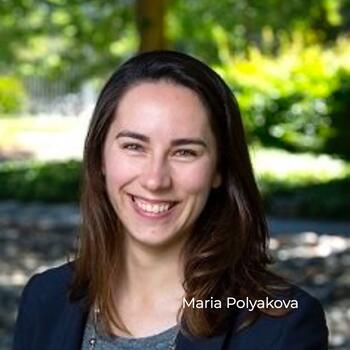
“These changes raise very different policy questions, as this moves us from thinking about how, for example, Medicare should reimburse health-care providers, to how it should pay private insurers,” said Stanford Health Policy health economist, Maria Polyakova.

With the growing overlap between the public and private sources of health insurance, Polyakova worries that there is too much room for costly mistakes, or outright shenanigans.

“There’s a lot of confusion among Medicare beneficiaries about who pays how much for their benefits, as subsidies to private insurers are complex and not transparent,” said Polyakova, an assistant professor of Health Research and Policy at the School of Medicine and faculty fellow at the Stanford Institute for Economic Policy Research.

“Similarly, for policymakers, figuring out how to pay insurers rather than health-care providers raises complicated policy design questions,” Polyakova said. “We have to set up subsidies in a way that benefits patients and a competitive market, but also be aware that the private firms operating in these markets are very sophisticated and will take any advantage of any design loopholes.”

Polyakova and colleagues set out to find a formula that could benefit all sides. To do so, they focused on the private provision of prescription drug benefit in Medicare Part D. Their findings were recently released in a working paper by the National Bureau of Economic Research. 

More than 50 million individuals benefit from Medicare, which accounts for $500 billion in annual budgetary outlays by the federal government. Once enrolled in Medicare, consumers have a choice of more than a dozen Prescription Drug Plans (PDP) under what is known as the Medicare Part D program. This drug program launched in 2006 is a rapidly growing market that accounts for about a fifth of overall federal spending in Medicare, about $100 billion.

Image
pablo 40

“Beyond its sheer economic size, this market further plays an important role in policymaking, as it has become the role model for private provision of publicly funded social insurance,” wrote Polyakova and her co-authors.

Consumers of Part D bear only a small portion of the program’s cost. A consumer pays on average a $40 monthly premium, although premiums vary widely. For each consumer, the government is sending on average an additional $55 to the plan in which the consumer is enrolled, with much higher subsidies for consumers with greater health problems. The government pays the full premium for low-income beneficiaries.

The independent insurance firms are quite satisfied with the 50-percent-or-higher subsidy that comes from Washington and attracts more consumers into the market.

But is that the best use of our tax dollars?

Polyakova and her colleagues used a dataset that contains detailed information about plan prices and characteristics for all Part D plans in all markets from 2007 to 2010. The data also includes information on individual enrollment in prescription drug plans and records of drug purchases that consumers make after enrolling in a plan

They created a model that focused on two things: 

  1. They first developed and estimated a model of supply and demand for drug plans. With the model, they could compute how much of government dollars benefit consumers and how much ends up being captured by insurers.
  2. With this supply-and-demand model, they could simulate whatever market structure they wanted, imagining what would happen if the government gave each Medicare Part D consumer a voucher of, for example, $700 to pay for their prescription medications.

What they found is that, at least for Part D, the current mechanisms do a surprisingly good job at keeping costs low.

“On the supply-side, we find, perhaps surprisingly, that the current structure of the program mutes insurers’ ability to strategically raise subsidies, and hence positively affects total program efficiency,” they wrote.

At the same time, they also find that taxpayer dollars could be spent even more efficiently. 

Currently, the subsidy is found through a formula that uses prices set by insurers. Their simulation suggests that setting a fixed voucher-like subsidy would encourage insurers to lower prices for their plans even more. If insurers knew the fixed subsidy level in advance, then they would have a strong incentive to price as close as possible to this subsidy. Any difference between the subsidy and the premium would have to be paid by consumers, so costlier insurers may lose customers. 

Under the current system, the ultimate subsidy is linked to insurer prices and is not known in advance of insurers submitting their price bids, which makes the incentives to reduce prices slightly less strong. Great caution is required when setting such voucher-like subsidies, however. If they are set too low, insurers may be forced to quit the market or provide poor quality products.

Even more return on the taxpayer’s dollar could be achieved by setting higher vouchers for more economically efficient (but not lower quality) plans and lower vouchers for plans that have higher operating costs. Improving the return on the dollar could allow the government to spend less and still allow the same number of consumers to purchase coverage. 

“Most of our government health-care dollars are increasingly spent through this indirect mechanism of giving money to private firms and simply hoping that things will somehow work out,” Polyakova said. “But the way we design these mechanisms are hugely important: You may be wasting billions of dollars if these are not set up properly — and there are not that many people working on this, as these rules are incredibly involved.”

Hero Image
generic pharmacy Getty Images
All News button
1
News Type
News
Date
Paragraphs

Marshall Burke, assitant professor of Earth system science and deptuy director at the Center on Food Security and the Enviroment shares his insights on how climate change is already impacting human behavior and what interventions are cost effective when it comes to combating the global change in climate.

Hero Image
dm6s9l7x4aajfea
All News button
1
-

This event is jointly sponsored by the Asia Health Policy Program and the Japan Program at the Walter H. Shorenstein Asia-Pacific Research Center (APARC).

Using unique individual-level panel data, we investigate whether preventive care triggered by health checkups is worth the cost. We exploit the fact that the health of individuals just below and above a clinical threshold is similar, whereas treatments differ according to the checkup signals they receive. For the general population, although people respond to health signals about diabetes by increasing utilization, we find no evidence that health outcomes improve after the index checkup. However, if we focus on high-risk individuals, physical measures to improve, and cost-per-life saved is comparable to conventional estimates of the value of a statistical life. This suggests that targeting programs to high-risk groups is essential.

Image
iizuka
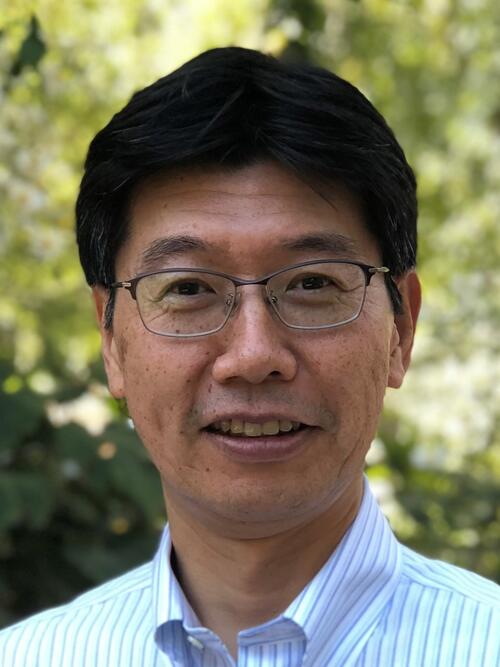
Toshiaki Iizuka is Professor at Graduate School of Economics and Graduate School of Public Policy, the University of Tokyo. His research interests are in the field of health economics and industrial organization. He has written a number of articles on incentive and information in the health care markets, which appeared in leading economics journals, including American Economic Review, RAND Journal of Economics, and Journal of Health Economics. Dr. Iizuka served as Dean of Graduate School of Public Policy, the University of Tokyo, between 2016 and 2018. He also serves as Associate Editor for Journal of Health Economics (2019-), and is a recipient of Abe Fellowship (2018-2019). He holds a PhD in Economics from the University of California, Los Angeles, an MIA from Columbia University, and an ME and BE from the University of Tokyo.


RSVP required by 5PM on Tuesday, October 23, 2018

Philippines Conference Room Encina Hall, 3rd Floor 616 Serra Mall, Stanford, CA 94305
616 Serra StreetEncina Hall E301Stanford, CA94305-6055
0
toshiaki_iizuka.jpg Ph.D.

Toshiaki Iizuka is Professor at Graduate School of Public Policy and Graduate School of Economics, the University of Tokyo. Before joining the University of Tokyo in 2010, he taught at Vanderbilt University (2001-2005), Aoyama Gakuin University (2005-2009), and Keio University (2009-2010). He served as Dean of Graduate School of Public Policy, the University of Tokyo, between 2016 and 2018. He is a recipient of Abe Fellowship (2018-2019). 

His research interests are in the field of health economics and health policy. He has written a number of articles on incentive and information in the health care markets. His research articles have appeared in leading professional journals, including American Economic Review, RAND Journal of Economics, Journal of Health Economics, and Health Affairs, among others. Dr. Iizuka holds a PhD in Economics from the University of California, Los Angeles, an MIA from Columbia University, and an ME and BE from the University of Tokyo.
Visiting Scholar, Asia Health Policy Program at APARC
2018-2019 Visiting Scholar, APARC, Stanford University
Seminars
616 Serra StreetEncina Hall E301Stanford, CA94305-6055
0
toshiaki_iizuka.jpg Ph.D.

Toshiaki Iizuka is Professor at Graduate School of Public Policy and Graduate School of Economics, the University of Tokyo. Before joining the University of Tokyo in 2010, he taught at Vanderbilt University (2001-2005), Aoyama Gakuin University (2005-2009), and Keio University (2009-2010). He served as Dean of Graduate School of Public Policy, the University of Tokyo, between 2016 and 2018. He is a recipient of Abe Fellowship (2018-2019). 

His research interests are in the field of health economics and health policy. He has written a number of articles on incentive and information in the health care markets. His research articles have appeared in leading professional journals, including American Economic Review, RAND Journal of Economics, Journal of Health Economics, and Health Affairs, among others. Dr. Iizuka holds a PhD in Economics from the University of California, Los Angeles, an MIA from Columbia University, and an ME and BE from the University of Tokyo.
Visiting Scholar, Asia Health Policy Program at APARC
Subscribe to Health and Medicine