Governance

FSI's research on the origins, character and consequences of government institutions spans continents and academic disciplines. The institute’s senior fellows and their colleagues across Stanford examine the principles of public administration and implementation. Their work focuses on how maternal health care is delivered in rural China, how public action can create wealth and eliminate poverty, and why U.S. immigration reform keeps stalling. 

FSI’s work includes comparative studies of how institutions help resolve policy and societal issues. Scholars aim to clearly define and make sense of the rule of law, examining how it is invoked and applied around the world. 

FSI researchers also investigate government services – trying to understand and measure how they work, whom they serve and how good they are. They assess energy services aimed at helping the poorest people around the world and explore public opinion on torture policies. The Children in Crisis project addresses how child health interventions interact with political reform. Specific research on governance, organizations and security capitalizes on FSI's longstanding interests and looks at how governance and organizational issues affect a nation’s ability to address security and international cooperation.

-

* Please note all CISAC events are scheduled using the Pacific Time Zone.


Seminar Recording: https://youtu.be/VJgMJyNz3F4


About the Event: Join David Sanger, National Security Correspondent for the New York Times, Amy Zegart, Senior Fellow at the Freeman Spogli Institute of International Studies, Monica M. Ruiz, Program Fellow for the Cyber Initiative and Special Projects at the William and Flora Hewlett Foundation, Alex Stamos, Adjunct Professor at the Freeman Spogli Institute of International Studies, Michael McFaul, Director at the Freeman Spogli Institute for International Studies, and Herb Lin, Senior Research Scholar at the Center for International Security and Cooperation, for a panel discussion of The Perfect Weapon, an HBO documentary special based on the best-selling book by New York Times national security correspondent David E. Sanger, which is now available to stream on HBO Max. Directed by John Maggio, the film explores the rise of cyber conflict as a primary way in which nations now compete with and sabotage one another. Cheap, invisible and devastatingly effective, cyber weapons are the present and future of geopolitical conflict – a short-of-war pathway to exercising power. The Perfect Weapon draws on interviews with top military, intelligence and political officials for a comprehensive view of a world of new vulnerabilities, particularly as fear mounts over how cyberattacks and influence operations may affect the 2020 U.S. election, vulnerable power grids, America’s nuclear weapons arsenal, and the global networks that are the backbone of private enterprise. The film also explores how the U.S. government is struggling to defend itself from cyberattacks while simultaneously stockpiling and using the world's most powerful offensive cyber arsenal.

Watch the film trailer HERE.


About the Speakers: 

Dr. Herb Lin is senior research scholar for cyber policy and security at the Center for International Security and Cooperation and Hank J. Holland Fellow in Cyber Policy and Security at the Hoover Institution, both at Stanford University.  His research interests relate broadly to policy-related dimensions of cybersecurity and cyberspace, and he is particularly interested in the use of offensive operations in cyberspace as instruments of national policy and in the security dimensions of information warfare and influence operations on national security.  In addition to his positions at Stanford University, he is Chief Scientist, Emeritus for the Computer Science and Telecommunications Board, National Research Council (NRC) of the National Academies, where he served from 1990 through 2014 as study director of major projects on public policy and information technology, and Adjunct Senior Research Scholar and Senior Fellow in Cybersecurity (not in residence) at the Saltzman Institute for War and Peace Studies in the School for International and Public Affairs at Columbia University; and a member of the Science and Security Board of the Bulletin of Atomic Scientists. In 2016, he served on President Obama’s Commission on Enhancing National Cybersecurity.  Prior to his NRC service, he was a professional staff member and staff scientist for the House Armed Services Committee (1986-1990), where his portfolio included defense policy and arms control issues. He received his doctorate in physics from MIT.


Dr. Michael McFaul is Director at the Freeman Spogli Institute for International Studies, the Ken Olivier and Angela Nomellini Professor of International Studies in the Department of Political Science, and the Peter and Helen Bing Senior Fellow at the Hoover Institution. He joined the Stanford faculty in 1995.

Dr. McFaul also is as an International Affairs Analyst for NBC News and a columnist for The Washington Post. He served for five years in the Obama administration, first as Special Assistant to the President and Senior Director for Russian and Eurasian Affairs at the National Security Council at the White House (2009-2012), and then as U.S. Ambassador to the Russian Federation (2012-2014). Continue Reading >>>


Monica M. Ruiz is the Program Fellow for the Cyber Initiative and Special Projects at the William and Flora Hewlett Foundation. In her work on the Cyber Initiative, she supports efforts to build a more robust cybersecurity field and improve policy-making. She also manages the foundation’s portfolio of Special Projects grants, part of a pool of flexible funds that allow the foundation to respond to unanticipated opportunities, explore potential initiatives, collaborate with other funders and facilitate cross-pollinating work across the foundation’s programs.

Prior to joining the foundation, Monica was the first recipient of the Boren Fellowship to travel to Estonia, where her research focused on cybersecurity issues and she studied the Russian language. Earlier in her career, she worked at U.S. Southern Command in the J9 Partnering Directorate, where she served as the military education coordinator between the Command and partners in the region.

Born in Ecuador and raised in Miami, she holds a bachelor’s degree from Florida International University and a master’s degree from The Fletcher School of Law and Diplomacy at Tufts University.


David E. Sanger is a national security correspondent and  senior writer for the New York Times, a contributor to CNN and an adjunct lecturer at the Kennedy School of Government. In a 38-year reporting career for The Times, he has been on three teams that have won Pulitzer Prizes, most recently in 2017 for international reporting. His latest book, “The Perfect Weapon: War, Sabotage and Fear in the Cyber Age,’’ published in 2018, examined the emergence of cyberconflict as the primary way large and small states are competing and undercutting each other, changing the nature of global power. An HBO documentary based on the book will air in the Fall of 2020.

He is also the author of two Times best sellers on foreign policy and national security: “The Inheritance: The World Obama Confronts and the Challenges to American Power,” published in 2009, and “Confront and Conceal: Obama’s Secret Wars and Surprising Use of American Power,” published in 2012. For The Times, Mr. Sanger has served as Tokyo bureau chief, Washington economic correspondent, White House correspondent during the Clinton and Bush administrations, and chief Washington correspondent. He co-teaches “Central Challenges in American National Security, Strategy and the Press” at Harvard.


Alex Stamos is a cybersecurity expert, business leader and entrepreneur working to improve the security and safety of the Internet through his teaching and research at Stanford University. Stamos is an Adjunct Professor at Stanford’s Freeman-Spogli Institute and a visiting scholar at the Hoover Institution.

Prior to joining Stanford, Alex served as the Chief Security Officer of Facebook. In this role, Stamos led a team of engineers, researchers, investigators and analysts charged with understanding and mitigating information security risks to the company and safety risks to the 2.5 billion people on Facebook, Instagram and WhatsApp. During his time at Facebook, he led the company’s investigation into manipulation of the 2016 US election and helped pioneer several successful protections against these new classes of abuse. As a senior executive, Alex represented Facebook and Silicon Valley to regulators, lawmakers and civil society on six continents, and has served as a bridge between the interests of the Internet policy community and the complicated reality of platforms operating at billion-user scale. In April 2017, he co-authored “Information Operations and Facebook”, a highly cited examination of the influence campaign against the US election, which still stands as the most thorough description of the issue by a major technology company. Continue Reading >>>


Dr. Amy Zegart is a senior fellow at the Freeman Spogli Institute of International Studies (FSI), professor of political science (by courtesy) at Stanford University, and a contributing editor to The Atlantic. She is also the Davies Family Senior Fellow at the Hoover Institution, where she directs the Robert and Marion Oster National Security Affairs Fellows program. From 2013 to 2018, she served as co-director of the Freeman Spogli Institute’s Center for International Security and Cooperation (CISAC) and founder and co-director of the Stanford Cyber Policy Program. She previously served as the chief academic officer of the Hoover Institution.

Her areas of expertise include cybersecurity, US intelligence and foreign policy, drone warfare, and political risk. An award-winning author, she has written four books. These include Bytes, Bombs, and Spies: The Strategic Dimensions of Offensive Cyber Operations (2019) coeditor with Herb Lin; Political Risk: How Businesses and Organizations Can Anticipate Global Insecurity (2018) with Condoleezza Rice; Spying Blind: The CIA, the FBI, and Origins of 9/11 (2007), which won the National Academy of Public Administration’s Brownlow Book Award; Flawed by Design: The Evolution of the CIA, JCS, and NSC (1999); and Eyes on Spies: Congress and the US Intelligence Community (Hoover Institution Press, 2011). She has also published in leading academic journals, including International Security, the Journal of Strategic Studies, and Political Science Quarterly. Continue Reading >>>

Virtual Seminar

Herb Lin, Michael McFaul, Monica M. Ruiz, David Sanger, Alex Stamos, and Amy Zegart
Panel Discussions
Authors
Gary Mukai
News Type
Blogs
Date
Paragraphs

For several years, I had been anticipating September 2, 2020—the 75th anniversary of the end of World War II—to be a momentous day. And, with the approach of the 75th anniversary of the permanent closing on November 28, 1945 of the Poston Relocation Center, the concentration camp that detained my family during World War II, I also anticipated that 2020 would be a time of reflection on the question, “What does it mean to be an American?”

In 1942, approximately 120,000 people of Japanese descent—approximately two-thirds of whom were U.S. citizens—primarily along the West Coast were incarcerated by their country, the United States. My grandparents and parents were among them. They were sharecroppers in Salinas, California, prior to the Pearl Harbor attack and following Executive Order 9066, which was signed by President Franklin D. Roosevelt on February 19, 1942, they were forced to leave their homes and move to the Salinas Assembly Center, which was hastily built on the Salinas fairgrounds and racetracks. A few months later on the Fourth of July, they were sent to the Poston Relocation Center, Arizona, one of the ten permanent concentration camps for Japanese Americans.

cemetary Hachiro Mukai grave, Epinal American Cemetery, Dinozé, France; courtesy Virginie Benoit-Erhard, Epinal American Cemetery
From behind barbed wire and guard towers, hundreds volunteered or were drafted to serve in the U.S. Army. Several of my relatives served in the U.S. Army’s segregated 442nd Infantry Regiment, which was composed almost entirely of second-generation Japanese Americans. “Go For Broke”—risk everything in an all-out effort—was its motto. One of them, Hachiro Mukai, was killed in action on October 22, 1944. Because his family was incarcerated and could not have a proper burial at their family gravesite in California, they decided to have him buried in the Epinal American Cemetery, France. Another relative, Shinichi Mukai, survived and shared searing stories with me about the irony of being drafted out of a concentration camp, training in Mississippi and not knowing if he should enter “White” or “Colored” entrances, and fighting bigotry in Europe.


This month, in addition to reading about solemn ceremonies marking the 75th anniversary of the end of World War II, I read “Trump: Americans Who Died in War Are ‘Losers’ and ‘Suckers’,” in The Atlantic, September 3, 2020, with difficulty as I thought about Hachiro and others who had given the ultimate sacrifice and their Gold Star Families. Through Shinichi, I know that Hachiro and the other Japanese American soldiers wanted to prove that they were every bit as American as anyone else. As a high school student from 1968 to 1972, I struggled with accepting what my family had endured during World War II in part because my high school U.S. history textbook mentioned nothing of their experience, as my family was not part of the “master narrative” of U.S. history.

I had anticipated that the 75th anniversary of the end of the war would prompt unity and reflections on how far we have come as a nation in terms of embracing diversity. Instead, I will remember 2020 as one of the most divisive years in my lifetime. My hope is that the free educational web-based curriculum toolkit—“What Does It Mean to Be an American?”—will help us in a modest way to move toward “a more perfect Union.” Authored by SPICE’s Rylan Sekiguchi for use at the high school and college levels, the curriculum examines what it means to be American. The website was developed by the Mineta Legacy Project’s Dianne Fukami, Debra Nakatomi, and Amy Watanabe in partnership with SPICE. Inspired by the life and career of Secretary Norman Y. Mineta, the six themed lessons are: Immigration, Civil Liberties & Equity, Civic Engagement, Justice & Reconciliation, Leadership, and U.S.–Japan Relations. Mineta, as a 10-year-old boy, was incarcerated with his family at the Heart Mountain Relocation Center, Wyoming, one of the ten permanent concentration camps. In the video “Bridging Two Countries: Norman Y. Mineta,” Mineta notes the following when asked why he wears an American flag pin on his lapel.

I still get treated like a foreigner and feel that… Am I really being fully accepted as an American citizen?… and so I want to make sure everyone knows I am one.
Secretary Norman Y. Mineta

The six standards-aligned lessons use primary source materials, interactive exercises, and personal videos that connect to students’ lives and showcase a diverse range of American voices—from young adults to former U.S. Presidents Bill Clinton and George W. Bush whose replies to “What does it mean to be an American?” are highlighted here.

Well, we’re debating that now again. It’s almost like right after the Civil War. We’re debating, “Should we restrict the franchise or expand it?”
President Bill Clinton
It means that we value and cherish the right for people to express their will in the public square without recrimination. It means that we believe in freedom.
President George W. Bush

The curriculum is designed to encourage critical thinking through class activities and discussions and introduce new voices and perspectives on issues that are as relevant today as they have been for much of America’s past. One of the most compelling videos focuses on “What Does It Mean to Be a Young Black Man in America?,” which prompted me to reflect on Shinichi’s encounter in Europe with the segregated 92nd Infantry Division, composed of African Americans, who along with the 442nd helped to break through the Gothic Line, the final main German defensive line in northern Italy. My hope is that young students today—when considering civil liberties-related issues—will also remember the sacrifices of those before them.

There are three objectives of the curriculum. The first is to empower educators to foster student inquiry around the question “What does it mean to be an American?” The second is to help educators discover how best to leverage the resource for their own classrooms. We hope that teachers will reflect on the toolkit vis-à-vis specific curricular needs and assess its optimal integration into their existing practice. The third is to have students consider the importance of the six themes in their lives and to know that they too have important voices in the shaping of what it means to be an American.

I wish that my high school U.S. history teacher had introduced curriculum like this to me. To learn, for example, that the 442nd Infantry Regiment had become the most decorated unit in U.S. military history for its size and length of service—including 21 Medals of Honor and eight Presidential Unit Citations—would have given Hachiro a voice in the curriculum. Many Americans like Hachiro remain buried in Europe. Each year, French people, whose towns were liberated by the 442nd, kindly pay their respects at Hachiro’s grave. I hope that future U.S. presidents will visit cemeteries like the Epinal American Cemetery as well.

Read More

SPICE and the Mineta Legacy Project at the 2019 NCSS Conference
News

SPICE’s Rylan Sekiguchi and Jonas Edman Share Stage with Secretary Norman Mineta

SPICE’s Rylan Sekiguchi and Jonas Edman Share Stage with Secretary Norman Mineta
Norman Mineta and Rylan Sekiguchi with Mineta Legacy Project staff at the Reagan Library
News

Secretary Norman Mineta and SPICE’s Rylan Sekiguchi speak at the Ronald Reagan Library

Secretary Norman Mineta and SPICE’s Rylan Sekiguchi speak at the Ronald Reagan Library
mlp team with bush manual rotate 360
News

Presidents Bill Clinton and George W. Bush interviewed for the Mineta Legacy Project

Presidents Bill Clinton and George W. Bush interviewed for the Mineta Legacy Project
Hero Image
Banner
What Does It Mean to Be an American?; image courtesy Mineta Legacy Project
All News button
1
Subtitle

“What Does It Mean to Be an American?” is a free educational web-based curriculum toolkit for high school and college students that examines what it means to be an American developed by the Mineta Legacy Project and Stanford’s SPICE program.

-

* Please note all CISAC events are scheduled using the Pacific Time Zone.


Seminar Recording: https://youtu.be/UOHyKJR5d1w


About the Event: 

In 2017, former diplomat Elizabeth Shackelford wrote a pointed resignation letter to her then boss, Secretary of State Rex Tillerson. She had watched as the State Department was gutted, and now she urged him to stem the bleeding by showing leadership and commitment to his diplomats and the country. If he couldn’t do that, she said, “I humbly recommend that you follow me out the door.” In The Dissent Channel, Shackelford chronicles how the challenges facing the State Department under the current administration, while extreme, are not new. In this live-streamed conversation, Shackelford will discuss the costs of a government unwilling to face mistakes or correct its course. She will also discuss how to build a more accountable foreign policy, through greater public engagement, more effective congressional oversight, and a State Department culture more open to dissent. In her book, The Dissent Channel: American Diplomacy in a Dishonest Age, she shares her personal experience as a diplomat trying to push back against the status quo and offers insight into the State Department’s long history of overlooking others who have tried to do the same. 

Moderating the discussion will be Rose Gottemoeller, Frank E. and Arthur W. Payne Distinguished Lecturer at Stanford University's Freeman Spogli Institute for International Studies and CISAC. Gottemoeller served as Deputy Secretary General of NATO from 2016 to 2019 and prior to that as Under Secretary for Arms Control and International Security at the U.S. Department of State for nearly five years. While Assistant Secretary of State for Arms Control, Verification and Compliance in 2009 and 2010, she was the chief U.S. negotiator of the New Strategic Arms Reduction Treaty (New START) with the Russian Federation.

Book Purchase: https://www.amazon.com/Dissent-Channel-American-Diplomacy-Dishonest/dp/1541724488


About the Speakers: 

Elizabeth Shackelford was a career diplomat in the U.S. State Department until December 2017, when she resigned in protest of the Trump administration. During her tenure with the Foreign Service, Shackelford served in the U.S. embassies in Warsaw, Poland, and Juba, South Sudan; the U.S. Mission to Somalia; and Washington, D.C. For her work in South Sudan during the outbreak of civil war, Shackelford received the Barbara Watson Award for Consular Excellence, the State Department's highest honor for consular work. Shackelford is a non-resident fellow with the Quincy Institute for Responsible Statecraft.


Moderated by: Rose Gottemoeller is the Frank E. and Arthur W. Payne Distinguished Lecturer at Stanford University's Freeman Spogli Institute for International Studies and its Center for International Security and Cooperation. Gottemoeller was Deputy Secretary General of NATO from 2016 to 2019. Prior to NATO, she served for nearly five years as Under Secretary for Arms Control and International Security at the Department of State, advising the Secretary of State on arms control, nonproliferation and political-military affairs. Gottemoeller was also the chief U.S. negotiator of the New Strategic Arms Reduction Treaty (New START) with the Russian Federation in 2009 and 2010.


Virtual Seminar

Elizabeth Shackelford
Seminars
-

* Please note all CISAC events are scheduled using the Pacific Time Zone.


Seminar Recording: https://youtu.be/ryBtzvLI0QQ


About the Event: Despite the importance of understanding how refugee crises end, we know little about when and why refugees, who were forced to emigrate, return home. We study the drivers of refugees’ decision-making using original observational and experimental survey data from a representative sample of approximately 3,000 Syrian refugees in Lebanon. We find that conditions in a refugee’s home country are much more important than the situation in the host country in shaping return intentions. Specifically, our findings suggest that refugees’ decisions are influenced primarily by safety and security in their place of origin, their economic prospects, the availability of public services, and their personal networks. Confidence in information is also important: we find that several drivers of return---safety, services, and networks---only impact intentions among people who have high confidence in their information. By contrast, the conditions in hosting countries–so-called “push'” factors–play a negligible role in the process of refugee return. Even in the face of outright hostility and poor living conditions, refugees are unlikely to return unless the situation at home improves significantly.


About the Speakers: 

Ala’ Alrababa’h is a Ph.D. candidate in political science at Stanford University, a graduate fellow at the Immigration Policy Lab, and a junior scholar at the International Policy Scholars Consortium and Network. His research combines fieldwork, machine learning, and experimental methods to study issues related to authoritarian media, political violence, and migration and refugees. His research has been published in Comparative Political Studies, Political Science Research and Methods, and International Studies Quarterly. Prior to arriving at Stanford University, Ala’ was a Junior Fellow at the Carnegie Endowment for International Peace.


Jeremy Weinstein is Professor of Political Science, Fisher Family Director of Stanford Global Studies, and Senior Fellow at the Freeman Spogli Institute for International Studies and the Stanford Institute for Economic Policy Research at Stanford University. He also is faculty co-director of the Immigration Policy Lab and the Data for Development Initiative. In addition, he is a non-resident fellow at the Center for Global Development in Washington, D.C.

His research focuses on civil wars and political violence; ethnic politics; the political economy of development; democracy and accountability; and migration. He is the author of Inside Rebellion: The Politics of Insurgent Violence (Cambridge University Press), which received the William Riker Prize for the best book on political economy. He is also the co-author of Coethnicity: Diversity and the Dilemmas of Collective Action (Russell Sage Foundation), which received the Gregory Luebbert Award for the best book in comparative politics.

Virtual Seminar

Ala' Alrababa'h
Seminars
Paragraphs

In a recent perspective published by the New England Journal of Medicine(NEJM), Stanford Law student Alexandra Daniels analyzed a growing body of federal litigation brought by prisoners with the hepatitis C virus (HCV) who are seeking access to treatment for their condition. With co-author and mentor, Law Professor David Studdert — also a professor of medicine at Stanford Health Policy — Daniels documented the dire public health problem of HCV in prisons.

All Publications button
1
Publication Type
Journal Articles
Publication Date
Journal Publisher
New England Journal of Medicine
Authors
David Studdert
Number
2020
-

This is a virtual event. Please click here to register and generate a link to the talk. 
The link will be unique to you; please save it and do not share with others.

Most people attribute the Belt and Road Initiative (BRI) to Beijing’s imperialist ambitions. In her talk, Professor Min Ye will go beyond top-level rhetoric, however, and investigate BRI’s origins, its implementation, and its on-the-ground effects inside China. She will unpack different local governments' approaches to the BRI by discussing how subnational entities have leveraged Beijing’s grand strategy and how the implementation of projects and programs related to the BRI facilitate local economic agendas. China’s local developmentalism, which has undergirded not only the BRI but also other national-level strategies (like the Western Development Program and China Goes Global policy), has propelled the Chinese economy from a middle power in 1998 to a superpower in 2018. The talk will conclude with a discussion of COVID-19’s impact on China’s BRI as well as preliminary findings from Professor Ye’s current research into other state-mobilized development initiatives in China.
 

Image
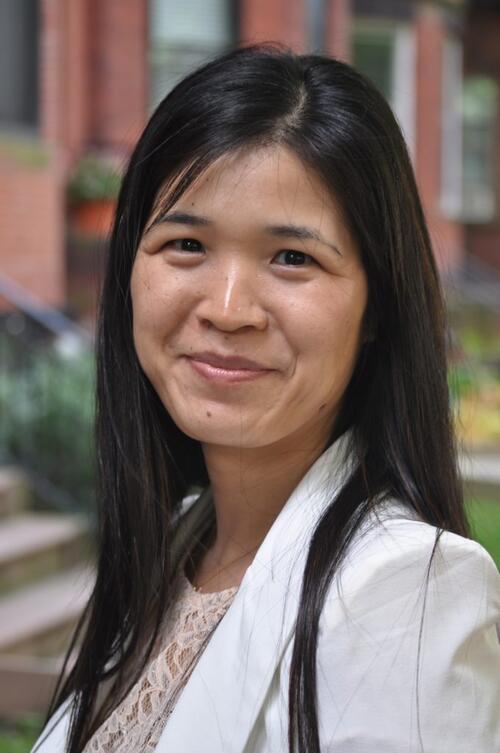
Portrait of Professor Min Ye
Min Ye is an Associate Professor at the Pardee School of Global Studies, Boston University. Her research lies in the nexus between domestic and global politics and economics and security, focusing on China, India, and regional relations. Her publications include The Belt, Road, and Beyond: State-Mobilized Globalization in China 1998 -- 2018 (Cambridge University Press, 2020), Diasporas and Foreign Direct Investment in China and India (Cambridge University Press, 2014), and The Making of Northeast Asia (with Kent Calder, Stanford University Press, 2010). She has received a Smith Richardson Foundation grant (2016-2018), the East Asia Peace, Prosperity, and Governance Fellowship (2013), Princeton-Harvard China and the World Program post-doctoral fellowship (2009-2010), and Millennium Education Scholarship in Japan (2006). In 2014-2016, Min Ye was an NCUSCR Public Intellectual Program fellow. Ye is currently the 2020 Rosenberg Scholar of East Asian Studies at Suffolk University.

Via Zoom Webinar. Register at: https://bit.ly/3kJlhM9

Min Ye Associate Professor, Pardee School of Global Studies, Boston University
Seminars
-

This event will take place on Zoom. Register here: https://stanford.zoom.us/webinar/register/WN_uKMb2jpmR7S6-LlLXQibLA

From Peter Baker (The New York Times) and Susan Glasser (The New Yorker), two of America’s most revered political journalists, comes the definitive biography of legendary White House chief of staff and secretary of state James A. Baker III, the man who ran Washington when Washington ran the world.

For a quarter-century, from the end of Watergate to the aftermath of the Cold War, no Republican won the presidency without his help or ran the White House without his advice. James Addison Baker III was the indispensable man for four presidents because he understood better than anyone how to make Washington work at a time when America was shaping events around the world. The Man Who Ran Washington is a page-turning portrait of a power broker who influenced America’s destiny for generations.

FSI Director Michael McFaul will moderate a discussion with the authors, followed by a question and answer session with the audience.

Panel Discussions
Authors
Kiyoteru Tsutsui
News Type
Commentary
Date
Paragraphs

This article by Kiyoteru Tsutsui and Charles Crabtree was originally published in The Hill.


On Sept. 16, Yoshihide Suga was elected as Japan’s 99th prime minister, following the country’s longest-serving prime minister, Shinzo Abe. Suga was Abe’s right-hand man, serving as the chief cabinet secretary and achieving the longest tenure in Japanese history for this position. Now as prime minister, Suga is widely expected to continue many of Abe’s policies and has publicly vowed to do so. 

True to his words, his cabinet appointments include many holdovers, and his policy pronouncements so far demonstrate few deviations from Abe’s agenda, which Suga helped shape. Suga will first focus on measures to address health and economic setbacks caused by the coronavirus pandemic, and then will pursue other goals such as regulatory reform, digitalization to improve efficiency in government agencies, and the reorganization of small firms and local banks to increase their productivity. 

None of these is a radically new idea and, at least initially, Suga is unlikely to steer Japan away from the direction that Abe set over the past seven years and eight months. However, there are some key differences between the two men that could produce different electoral and policy outcomes for Suga’s administration.

Continue reading this article in The Hill >>

[Sign up for our newsletters to get the latest from APARC's scholars.]

Read More

Japan's outing Prime Minister Shinzo Abe and incoming Prime Minister Yoshihide Suga hold a flower bouquet
Commentary

Suga Is Fit to Lead, But Are Voters Ready to Like Him?

Japan's next prime minister is a deeply pragmatic, self-made man.
Suga Is Fit to Lead, But Are Voters Ready to Like Him?
Japanese Prime Minister Shinzo Abe speaks at a podium with audience seen at the front
Commentary

Three Hits and Three Misses: What is Prime Minister Abe’s Legacy?

Despite this long period as prime minister, it is not entirely clear that Abe accomplished major policy goals.
Three Hits and Three Misses: What is Prime Minister Abe’s Legacy?
Hero Image
Suga Yoshihide at a press conference at the Liberal Democratic Party (LDP) headquarters.
Suga Yoshihide at a press conference at the Liberal Democratic Party (LDP) headquarters in Tokyo, Japan.
Getty Images
All News button
1
Subtitle

Yoshihide Suga has promised to continue many of Shinzo Abe's policies and goals, but APARC's Japan Program Director Kiyoteru Tsutsui explains how Suga's background, experience, and political vision differ from the previous administration.

Authors
Noa Ronkin
News Type
News
Date
Paragraphs

The Walter H. Shorenstein Asia-Pacific Research Center (APARC) invites applications for three types of postdoctoral fellowship in contemporary Asia studies for the 2021-22 academic year. Appointments for all three fellowship offerings are for one year beginning in fall quarter 2021.

APARC is committed to supporting junior scholars in the field of Asia studies to the greatest extent possible and that has become even more important during COVID-19, as graduate students are especially vulnerable to the adverse impacts of the pandemic, facing the loss of funding opportunities and access to field research.

The Center offers postdoctoral fellowships that promote multidisciplinary research on contemporary Japan, contemporary Korea, and contemporary Asia broadly defined. Learn more about each fellowship and its eligibility and specific application requirements:

Postdoctoral Fellowship on Contemporary Japan

The fellowship supports multidisciplinary research on contemporary Japan in a broad range of disciplines including political science, economics, sociology, law, policy studies, and international relations. The application deadline is January 4, 2021.

Korea Foundation-APARC Korea Program Postdoctoral Fellowship

The fellowship supports rising Korea scholars in the humanities and social sciences. The application deadline is January 20, 2021.

Shorenstein Postdoctoral Fellowship on Contemporary Asia

APARC offers two postdoctoral fellowship positions to junior scholars for research and writing on contemporary Asia. The primary research areas focus on political, economic, or social change in the Asia-Pacific region (including Northeast, Southeast, and South Asia), or international relations and international political economy in the region. The application deadline is January 4, 2021.

Read More

A young men sitting at a desk in front of computer monitors
News

Student Documentary Celebrates Transnational Brain Linkages

‘Brain Bridges,’ a documentary produced by senior Dexter Sterling Simpson, illustrates the positive gains of global talent flows.
Student Documentary Celebrates Transnational Brain Linkages
(Left) Yuen Yuen Ang; (Right) Congratulations Yuen Yuen Ang, Winner of the Theda Skocpol Prize from the American Political Science Association
News

Dr. Yuen Yuen Ang Awarded Theda Skocpol Prize for Emerging Scholars

Former China Program postdoc and Stanford Ph.D alumna Yuen Yuen Ang has received the Theda Skocpol Prize for Emerging Scholars from the American Political Science Association for her scholarship on China’s transformation into a global superpower.
Dr. Yuen Yuen Ang Awarded Theda Skocpol Prize for Emerging Scholars
Portrait of Oriana Skylar Mastro and a 3D cover of her book, 'The Costs of Conversation: Obstacles to Peace Talks in Wartime'
News

FSI Center Fellow Wins Best Book in Security Studies Award

The American Political Science Association recognizes Oriana Skylar Mastro for her work on military strategy and mediation.
FSI Center Fellow Wins Best Book in Security Studies Award
Hero Image
Encina Hall
All News button
1
Subtitle

The Center’s commitment to supporting young Asia scholars remains strong during the COVID-19 crisis.

Subscribe to Governance