
Governance

FSI's research on the origins, character and consequences of government institutions spans continents and academic disciplines. The institute’s senior fellows and their colleagues across Stanford examine the principles of public administration and implementation. Their work focuses on how maternal health care is delivered in rural China, how public action can create wealth and eliminate poverty, and why U.S. immigration reform keeps stalling. 

FSI’s work includes comparative studies of how institutions help resolve policy and societal issues. Scholars aim to clearly define and make sense of the rule of law, examining how it is invoked and applied around the world. 

FSI researchers also investigate government services – trying to understand and measure how they work, whom they serve and how good they are. They assess energy services aimed at helping the poorest people around the world and explore public opinion on torture policies. The Children in Crisis project addresses how child health interventions interact with political reform. Specific research on governance, organizations and security capitalizes on FSI's longstanding interests and looks at how governance and organizational issues affect a nation’s ability to address security and international cooperation.

-

Image
riot at capital

Social media and digital technologies have come under fire for their contribution to the development of the groups that ultimately stormed the U.S. Capitol on January 6. Following the insurrection attempt, Facebook, Twitter, Google and other major platforms have banned or suspended President Trump’s accounts. Google and Apple removed Parler from their app stores, while Amazon removed the site from its cloud hosting service, putting an indefinite end to Parler’s reach. This panel will discuss the role of social media during the Trump presidency, including the role of platform policies in fomenting or responding to the recent violence, the benefits and risks posed by steps subsequently taken, and what this means for the future of speech online.

Panelists include:

  • Nate Persily, faculty co-director of the Stanford Cyber Policy Center, director of the Center’s Program on Democracy and the Internet, and Professor at Stanford Law School
  • Daphne Keller, Director of the Cyber Policy Center’s Program on Platform Regulation
  • Alex Stamos, Director of the Cyber Policy Center’s Internet Observatory
  • Renee DiResta, Research Manager at the Cyber Policy Center’s Internet Observatory
  • Moderated by Kelly Born, Executive Director of the Cyber Policy Center


0
renee-diresta.jpg

Renée DiResta is the former Research Manager at the Stanford Internet Observatory. She investigates the spread of malign narratives across social networks, and assists policymakers in understanding and responding to the problem. She has advised Congress, the State Department, and other academic, civic, and business organizations, and has studied disinformation and computational propaganda in the context of pseudoscience conspiracies, terrorism, and state-sponsored information warfare.

You can see a full list of Renée's writing and speeches on her website: www.reneediresta.com or follow her @noupside.


Former Research Manager, Stanford Internet Observatory
0
top_pick_rsd25_070_0254a.jpg

Daphne Keller is the Director of Platform Regulation at the Stanford Program in Law, Science, & Technology. Her academic, policy, and popular press writing focuses on platform regulation and Internet users'; rights in the U.S., EU, and around the world. Her recent work has focused on platform transparency, data collection for artificial intelligence, interoperability models, and “must-carry” obligations. She has testified before legislatures, courts, and regulatory bodies around the world on topics ranging from the practical realities of content moderation to copyright and data protection. She was previously Associate General Counsel for Google, where she had responsibility for the company’s web search products. She is a graduate of Yale Law School, Brown University, and Head Start.

SHORT PIECES


ACADEMIC PUBLICATIONS


POLICY PUBLICATIONS


FILINGS

  • U.S. Supreme Court amicus brief on behalf of Francis Fukuyama, NetChoice v. Moody (2024)
  • U.S. Supreme Court amicus brief with ACLU, Gonzalez v. Google (2023)
  • Comment to European Commission on data access under EU Digital Services Act
  • U.S. Senate testimony on platform transparency


PUBLICATIONS LIST

Director of Platform Regulation, Stanford Program in Law, Science & Technology (LST)
Social Science Research Scholar
Date Label
Stanford Law School Neukom Building, Room N230 Stanford, CA 94305
650-725-9875
0
James B. McClatchy Professor of Law at Stanford Law School
Senior Fellow, Freeman Spogli Institute
Professor, by courtesy, Political Science
Professor, by courtesy, Communication
headshot_3.jpg

Nathaniel Persily is the James B. McClatchy Professor of Law at Stanford Law School, with appointments in the departments of Political Science, Communication, and FSI.  Prior to joining Stanford, Professor Persily taught at Columbia and the University of Pennsylvania Law School, and as a visiting professor at Harvard, NYU, Princeton, the University of Amsterdam, and the University of Melbourne. Professor Persily’s scholarship and legal practice focus on American election law or what is sometimes called the “law of democracy,” which addresses issues such as voting rights, political parties, campaign finance, redistricting, and election administration. He has served as a special master or court-appointed expert to craft congressional or legislative districting plans for Georgia, Maryland, Connecticut, New York, North Carolina, and Pennsylvania.  He also served as the Senior Research Director for the Presidential Commission on Election Administration. In addition to dozens of articles (many of which have been cited by the Supreme Court) on the legal regulation of political parties, issues surrounding the census and redistricting process, voting rights, and campaign finance reform, Professor Persily is coauthor of the leading election law casebook, The Law of Democracy (Foundation Press, 5th ed., 2016), with Samuel Issacharoff, Pamela Karlan, and Richard Pildes. His current work, for which he has been honored as a Guggenheim Fellow, Andrew Carnegie Fellow, and a Fellow at the Center for Advanced Study in the Behavioral Sciences, examines the impact of changing technology on political communication, campaigns, and election administration.  He is codirector of the Stanford Program on Democracy and the Internet, and Social Science One, a project to make available to the world’s research community privacy-protected Facebook data to study the impact of social media on democracy.  He is also a member of the American Academy of Arts and Sciences, and a commissioner on the Kofi Annan Commission on Elections and Democracy in the Digital Age.  Along with Professor Charles Stewart III, he recently founded HealthyElections.Org (the Stanford-MIT Healthy Elections Project) which aims to support local election officials in taking the necessary steps during the COVID-19 pandemic to provide safe voting options for the 2020 election. He received a B.A. and M.A. in political science from Yale (1992); a J.D. from Stanford (1998) where he was President of the Stanford Law Review, and a Ph.D. in political science from U.C. Berkeley in 2002.   

CV
Date Label
Seminars
-

This is a virtual event. Please click here to register and generate a link to the talk. 
The link will be unique to you; please save it and do not share with others.

As US-China competition intensifies, experts debate the degree to which the current strategic environment resembles that of the Cold War. Those that argue against the analogy often highlight how China is deeply integrated into the US-led world order. They also point out that, while tense, US-China relations have not turned overtly adversarial. But there is another, less optimistic reason the comparison is unhelpful: deterring and defeating Chinese aggression is harder now than it was against the Soviet Union. In this talk, Dr. Mastro analyzes how technology, geography, relative resources and the alliance system complicate U.S. efforts to enhance the credibility of its deterrence posture and, in a crisis, form any sort of coalition.


Photo of Oriana MastroOriana Skylar Mastro is a Center Fellow at Stanford University’s Freeman Spogli Institute for International Studies (FSI). Within FSI, she works primarily in the Shorenstein Asia-Pacific Research Center (APARC) and the Center for International Security and Cooperation (CISAC) as well. She is also a fellow in Foreign and Defense Policy Studies at the American Enterprise Institute and an inaugural Wilson Center China Fellow.
Mastro is an international security expert with a focus on Chinese military and security policy issues, Asia-Pacific security issues, war termination, and coercive diplomacy. Her research addresses critical questions at the intersection of interstate conflict, great power relations, and the challenge of rising powers. She has published widely, including in Foreign Affairs, International Security, International Studies Review, Journal of Strategic Studies, The Washington Quarterly, The National Interest, Survival, and Asian Security, and is the author of The Costs of Conversation: Obstacles to Peace Talks in Wartime (Cornell University Press, 2019).

She also continues to serve in the United States Air Force Reserve, for which she works as a Strategic Planner at INDOPACOM. Prior to her appointment at Stanford in August 2020, Mastro was an assistant professor of security studies at the Edmund A. Walsh School of Foreign Service at Georgetown University. She holds a B.A. in East Asian Studies from Stanford University and an M.A. and Ph.D. in Politics from Princeton University.


Image
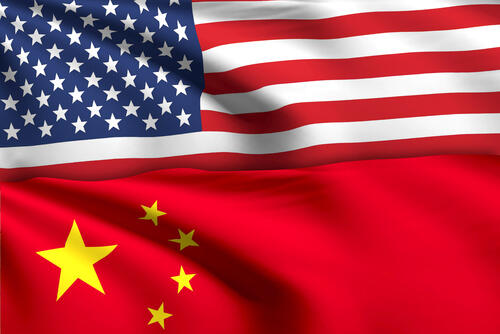
American and Chinese flags
This event is part of the 2021 Winter/Spring Colloquia series, Biden’s America, Xi’s China: What’s Now & What’s Next?, sponsored by APARC's China Program.


Via Zoom Webinar. Register at: bit.ly/2MYJAdw

Oriana Skylar Mastro Center Fellow at the Freeman Spogli Institute for International Studies
Seminars
-

* Please note all CISAC events are scheduled using the Pacific Time Zone.


Seminar Recording: https://youtu.be/JqN4Ga4DVss


About the Event: 

Much of the imagery and remote sensing analysis in the Open Source Community pertains to North Korea’s nuclear weapons pathway and military capability. However, many questions remain regarding economic and agricultural health in a nation known for denial of access to outside observation. But by applying emerging analytical and processing technology of satellite imagery and data, we can address the challenge of examining economic and environmental patterns in the North.

Machine Learning technology has been used to analyze rudimentary objects like roads or buildings on satellite imagery for years, but has yet to be successfully employed to better understand nuanced patterns of life. In our partnership with the analytics company Orbital Insight, we have undertaken a project of counting thousands of objects in satellite images taken over the past five years to uncover North Korea’s trade relationship with China.

This project includes counting number of trucks at each side of the Sino-Korean Friendship Bridge as a measure of trade activity between North Korea and China. By applying artificial intelligence to more than 300 satellite images, we observed fluctuations of truck counts, which peak during the month of November. A significant drop in the truck counts during the year of 2020 is noticed as a result of restricted traffic from the global pandemic, although as much as 30 trucks were observed in the month of June on both sides of the border. The project demonstrates the utilities of machine learning in analyzing emerging datasets. Careful monitoring of trade between the two states can aid in better understanding the China-North Korea economic relationship and how it evolves over time.

CISAC is also partnering with international organizations and geospatial systems specialists to apply data derived from public space mapping systems to better understand macro-environmental, agricultural, and water security trends over the past twenty years in North Korea. For decades, scientists of every discipline have been analyzing remotely-sensed images and data sets to extract otherwise-imperceptible insight pertaining to broad aspects of environmental health including coastal erosion, deforestation, land subsidence, and global thermal changes. But because of a post-war technology vacuum and broadly-applied sanctions against space-derived information, North Korea has never had access to this data or the advanced software and data storage architecture necessary to support it. The potential for direct collaboration with the North on environmental analysis may enhance North Korea’s ability to mitigate its own agricultural risk and potentially facilitate informal international collaboration.


About the Speaker: Allison Puccioni has been an imagery analyst for over 25 years, working within the military, tech, media, and academic communities. After honorably serving in the US Army as an Imagery Analyst from 1991 - 1997, Allison continued the tradecraft as a civilian augmentee to US and NATO operations in the Kosovo airstrike campaign, and as a Senior Analyst and Mission Planner for Naval Special Warfare Group One. After earning her Master’s Degree in International Policy, Allison established the commercial satellite imagery analysis capability for the British publication company Jane's. In 2015, Allison joined Google to assist with the establishment of applications for its commercial small-satellites. Today, Allison is the Principal and Founder of Armillary Services, providing insight on commercial imaging satellites and associated analytics to the governments, nongovernmental organizations, and the commercial sector. Concurrently, Allison manages the multi-sensor imagery analysis team at Stanford University's Center for International Security and Cooperation.

Virtual Seminar

Not in residence

0
Affiliate
AllisonPuccioni_rsd16_073_0340a.jpg

Allison Puccioni has been an imagery analyst for over 25 years, working within the military, tech, defense, media, and academic communities. After honorably serving in the US Army as an Imagery Analyst from 1991 - 1997, Allison continued the tradecraft within the Defense Industry: augmenting US and NATO operations in the Kosovo airstrike campaign, and as a Senior Analyst and Mission Planner for Naval Special Warfare Group One. After earning her Masters Degree in International Policy, Allison established the commercial satellite imagery analysis capability for the British publication Jane's, publishing Open Source imagery analysis for six years. In 2015, Allison joined Google to assist with the establishment of applications for its commercial small-satellites. Today, Allison is the Principal and Founder of Armillary Services, providing insight on commercial imaging satellites and associated analytics to the governments, nongovernmental organizations, and the commercial sector. Concurrently, Allison manages the multi-sensor imagery analysis team at Stanford University's Center for International Security and Cooperation.

CV
Allison Puccioni Principal and Founder Armillary Services
Seminars
-

* Please note all CISAC events are scheduled using the Pacific Time Zone.


Seminar Recording: https://youtu.be/TV8ye_OVdzY


About the Event: Proof that France had become the world’s fourth nuclear power exploded above the Algerian Sahara in February 1960, during the Algerian War for Independence (1954–62). Sixteen more blasts would take place before France abandoned its Saharan test sites in 1966, which had continued to host French explosions underground during the first years of Algerian Independence. Well before the first airborne detonation, and even after French testing went below ground, the likelihood that radioactive debris (known as fallout) would contaminate the desert environment and its human inhabitants animated an international controversy. Saharan fallout loomed at once as a new threat to Algerian and African sovereignty and to Cold War negotiations that promised to limit weapons testing, revealing historical intersections between African decolonization and the nuclear arms race.


About the Speaker: Austin Cooper is a Predoctoral Researcher at Stanford University’s Center for International Security and Cooperation and a PhD Candidate in History and Sociology of Science at the University of Pennsylvania.

Virtual Seminar

0
cooper.jpg

Austin R. Cooper is a Stanton Nuclear Security Fellow in the Security Studies Program at the Massachusetts Institute of Technology. He completed his PhD in History and Sociology of Science at the University of Pennsylvania. He has held fellowships at Stanford University’s Center for International Security and Cooperation and SciencesPo’s Nuclear Knowledges Program.

Affiliate
Austin Cooper Predoctoral Researcher Stanford University
Seminars
Authors
Gary Mukai
News Type
Blogs
Date
Paragraphs

On December 10, 2020, 44 educators from across the United States joined a webinar titled “Global Human Rights and Minority Social Movements in Japan.” The webinar was offered on Human Rights Day, 72 years after the Universal Declaration of Human Rights (UDHR) was adopted. The featured speaker was Dr. Kiyoteru Tsutsui, who is the Henri H. and Tomoye Takahashi Professor and Senior Fellow in Japanese Studies at the Shorenstein APARC at Stanford University. He is also Director of the Japan Program, a Senior Fellow of FSI, and a Professor of Sociology.

The webinar can be viewed below:

Tsutsui has written extensively about human rights, including his latest book Rights Make Might: Global Human Rights and Minority Social Movements in Japan. In his talk, Tsutsui introduced the three most salient minority groups in Japan—the Ainu, an indigenous people in the northern part of Japan whose numbers range from 25,000 to 30,000; resident Koreans (Zainichi), a colonial legacy whose numbers have hovered around a half million; and the Burakumin, a former outcaste group whose numbers are approximately three million.

Tsutsui set the context for his talk by providing an overview of the global expansion of human rights dating from the UDHR in 1948 to the International Covenant on Civil and Political Rights and the International Covenant on Economic, Social, and Cultural Rights—both adopted by the UN General Assembly in 1966 and came into force from 1976. Human rights are now established as one of the key principles in the international community. He noted that despite the wide recognition of human rights as an important international norm, whether the institutionalization of human rights in international society has done what it was intended to do still remains debatable.

Concerning the era of global human rights in Japan, Japan ratified the two International Covenants noted above in 1979 and has been a member of the UN Commission on Human Rights since 1982 and the UN Sub-Commission on the Promotion and Protection of Human Rights since 1984. These as well as participation in other forums have impacted ethnic minorities in Japan.

Tsutsui shared the historical backgrounds and key issues concerning the Ainu and resident Koreans. Concerning the Ainu, he underscored their lack of ethnic/indigenous pride—much less political activism—prior to the 1970s. This was largely because of their dependence on government welfare and strong pressure for assimilation. He then highlighted how Ainus’ self-perception changed after the 1970s as a result of their exposure to the Global Indigenous Rights Movement, which led to a reawakening of indigenous pride and the rise of Ainu activism.

Concerning resident Koreans, Tsutsui introduced their history prior to the 1970s as Japanese colonial era immigrants and their descendants who came to Japan or were brought to Japan by increasingly forceful means towards the end of World War II. He discussed issues concerning their loss of Japanese citizenship after World War II, resulting practices such as the fingerprinting of resident Koreans, and hurdles to mobilize for civil and human rights due to their non-citizen status and divided identities. Like the Ainu, things began to change from the 1970s with the beginning of the human rights era in Japan. For example, from the 1980s, encouraged by universal human rights principles, some resident Koreans refused to be fingerprinted, a practice they had previously resented but reluctantly complied with, and by 1985, over 10,000 resident Koreans joined in refusal. Resident Koreans made appeals to the UN Commission on Human Rights and other international forums to pressure the Japanese government. Amid mounting pressure domestically and internationally, the government terminated the fingerprinting practice for permanent residents in Japan (largely resident Koreans) in 1993, and for all alien residents by 2000.

Tsutsui summarized his talk by noting that global human rights galvanized minority social movements in Japan in four ways: (1) they empowered local actors with a new understanding about rights; (2) they provided political opportunities at the global level; (3) they increased international flows of mobilization resources; and (4) they provided vocabulary to frame their causes effectively. He closed his talk with a question, “Should we have hope or despair in terms of the future of human rights in the world?” and noted that the empowering capacity of global human rights is often overlooked, that reform takes time, that it is important to identify conditions conducive to improvement, and that contemporary backlash poses serious challenges.

In reflecting on the webinar with the educators, Tsutsui noted, “I was honored to present my work to the educators who can teach students in their formative years how important it is to continuously work to support human rights and how these efforts in the local context can change human rights practices not just locally but globally. This is a particularly important moment in the United States and in the world to reinforce the importance of human rights and democracy, as fundamental principles of democratic governance are challenged and protection of basic rights is in jeopardy. In these challenging times, I’d like to emphasize the importance of continuing grassroots-level work to support the principles of human rights and democracy. Ideas matter, and education shapes the future of our world.”

Teachers might consider some of the following as essential questions to raise with their students after viewing the lecture by Professor Tsutsui:

  • How does the Ainu experience compare to the experience of Native Americans?
  • How do textbooks in Japan cover ethnic minorities, and how is this similar and different to how ethnic minorities in the United States are covered in textbooks?
  • How was ethnic minority participation in the Japanese military during World War II similar and different to ethnic minority participation in the U.S. military during World War II?
  • What role can museums that focus on ethnic minorities play in educating the public, e.g., National Ainu Museum, National Museum of African American History and Culture?
  • How is the backlash against ethnic minorities in Japan, e.g., being perceived as receiving special benefits, similar or different to that of ethnic minorities in the United States?
  • Why is it important for young students to understand the significance of universal human rights?

The webinar was made possible through the support of the Freeman Foundation’s National Consortium for Teaching about Asia initiative. The webinar was a joint collaboration between SPICE and Stanford’s Center for East Asian Studies, and the Shorenstein Asia-Pacific Research Center. Special thanks to Dr. Dafna Zur, CEAS Director, and John Groschwitz, CEAS Associate Director, for their support; to Dr. Gi-Wook Shin, APARC Director, and Dr. Karen Eggleston, APARC Deputy Director, for their support; and to SPICE’s Naomi Funahashi for facilitating the webinar and Sabrina Ishimatsu for planning the webinar.

Hero Image
Tokyo’s Shin Okubo neighborhood, known for its Korea Town
Tokyo’s Shin Okubo neighborhood, known for its Korea Town; photo courtesy Dr. Kiyoteru Tsutsui
All News button
1
Subtitle

Tsutsui introduced the audience to three minority groups in Japan—the Ainu, resident Koreans (Zainichi), and the Burakumin—and illustrated how human rights have galvanized minority social movements there.

-

* Please note all CISAC events are scheduled using the Pacific Time Zone.


Seminar Recording:  https://youtu.be/trpJJ0-nJzE


About the Event: In the middle of the twentieth century, geophysical science and new technologies pried open three of Earth's most remote and inhospitable regions: Antarctica, the ocean floor, and the exosphere—that is, outer space. As human activity in these frigid zones increased, so too did their status as “global commons,” domains belonging to all, and therefore none. This presentation examines how one issue in particular, nuclear weapons, galvanized the politics of the global commons from the 1950s to the 1970s and sheds light on how the United States navigated the new spaces as part of its Cold War foreign policy.


About the Speakers: 

Stephen Buono is a postdoctoral fellow at CISAC. He earned his PhD in History from Indiana University. At Stanford, he is at work on his first book, The Province of All Mankind, a history of how outer space became a realm of American foreign policy and international law in 1950s and 1960s. Before arriving at CISAC, Stephen was an editor for the journal Diplomatic History and an Aerospace History Fellow with the American Historical Association and the National Aeronautical and Space Administration.


Ryan A. Musto is a MacArthur Nuclear Security Fellow at CISAC. He holds a PhD in history from The George Washington University and master’s degrees in international and world history from Columbia University and the London School of Economics. Prior to joining CISAC, Ryan served as a Stanton Nuclear Security Fellow at MIT. His work has been published in Diplomatic HistoryDiplomacy & StatecraftPolar RecordBulletin of the Atomic Scientists, and Americas Quarterly, amongst other outlets. Ryan is currently writing a book manuscript on the international history of regional denuclearization.

Virtual Seminar

Stephen Buono and Ryan Musto Stanford University
Seminars

The United States just experienced a historic election, electing Joseph R. Biden as its 46th president. At the same time, Xi Jinping continues to solidify his control over the Communist Party of China. With escalating tensions between the two countries, many wonder: How will the US presidential election affect the relationship between these two major powers?

-

About the Event:   In partnership with The Hoover Project on China's Global Sharp Power, Jonathan Hillman from the Center for Strategic & International Studies, Min Ye from Boston University, and Glenn Tiffert from Stanford's Hoover Institution discuss the current status of China's Belt and Road Initiative (BRI), which stands to be the largest bilateral infrastructure development program of the century. The event will discuss Hillman's new book, The Emperor's New Road: China and the Project of the Century and Ye’s new book, The Belt, Road and Beyond: State-Mobilized Globalization in China 1998-2018 and review the impacts of BRI on global trade and geopolitics.


About the Speakers:

Image
Jonathan Hillman
Jonathan E. Hillman is a senior fellow with the CSIS Economics Program and director of the Reconnecting Asia Project, one of the most extensive open-source databases tracking China's Belt and Road Initiative (BRI). Previously, Hillman served as a policy advisor and chief speechwriter at the Office of the U.S. Trade Representative. His first book is The Emperor's New Road: China and the Project of the Century.


Image
Min Ye
Min Ye is the author of The Belt, Road and Beyond: State-Mobilized Globalization in China 1998-2018 (Cambridge University Press 2020), Diasporas and Foreign Direct Investment in China and India (Cambridge University Press 2014), and the Making of Northeast Asia (with Kent Calder, Stanford University Press, 2020). Her articles, “Fragmentation and Mobilization: Domestic Politics of China’s Belt and Road”, “Competing Cooperation in Asia Pacific: TPP, RCEP, and the New Silk Road”, and “Conditions and Utility of Diffusion by Diasporas” have appeared in Journal of Contemporary China, Journal of Asian Security, and Journal of East Asian Studies.


Image
Glenn Tiffert
Glenn Tiffert is a research fellow at the Hoover Institution, where he manages its project on China’s Global Sharp Power. A historian of modern China, his research focuses on the PRC’s political and legal systems. He also works closely with government and civil society partners in the United States and elsewhere around the world to document and build resilience against authoritarian interference with democratic institutions. He currently serves on the executive committee of the Academic Security and Counter-Exploitation Program, an association of US universities established to help heighten security awareness in academia.  


Image
Michael Bennon
Michael Bennon is a Research Scholar at CDDRL for the Global Infrastructure Policy Research Initiative. Michael's research interests include infrastructure policy, project finance, public-private partnerships and institutional design in the infrastructure sector. Michael also teaches Global Project Finance to graduate students at Stanford. Prior to Stanford, Michael served as a Captain in the US Army and US Army Corps of Engineers for five years, leading Engineer units, managing projects, and planning for infrastructure development in the United States, Iraq, Afghanistan and Thailand. 

Online, via Zoom: REGISTER

Jonathan Hillman Senior fellow for Strategic and International Studies (CSIS) Stanford
Min Ye Associate Professor of International Relations, Boston University
Glenn Tiffert Research fellow at the Hoover Institution, Stanford University

Encina Hall
616 Jane Stanford Way
Stanford, CA 94305-6055

0
Research Scholar
mike_bennon_2022.jpg

Michael Bennon is a Research Scholar at CDDRL for the Global Infrastructure Policy Research Initiative. Michael's research interests include infrastructure policy, project finance, public-private partnerships and institutional design in the infrastructure sector. Michael also teaches Global Project Finance to graduate students at Stanford. Prior to Stanford, Michael served as a Captain in the US Army and US Army Corps of Engineers for five years, leading Engineer units, managing projects, and planning for infrastructure development in the United States, Iraq, Afghanistan and Thailand. 

Program Manager, Global Infrastructure Policy Research Initiative
Panelist Research Scholar at Center on Democracy, Development and the Rule of Law (CDDRL)
Seminars
-

* Please note all CISAC events are scheduled using the Pacific Time Zone.


Seminar Recording:  https://youtu.be/zrDq0xRWnhk


About the Event: Determination and verification of the nuclear activities of the Democratic People’s Republic of Korea (DPRK) are critical to ongoing disarmament and nonproliferation efforts. This study assesses the complete nuclear fuel cycle of the DPRK, from its capacity to produce fissile material precursors at mining and milling facilities in Pyongsan, to activity at the main Nuclear Scientific Research Center in Yongbyon. An interdisciplinary approach is used to analyze the different stages of the DRPK’s nuclear fuel cycle. In investigating the uranium ore grade and ore production capacity at the mining and milling facilities, we combine analysis of archival geological maps, geological field survey reports, and first-hand collection and geochemical analysis of comparable rock samples from the Korean Peninsula. In analyzing the ongoing activities at fissile material production facilities, we integrate satellite imagery analysis with machine learning algorithms, allowing for automated analysis of large image sets.


About the Speaker: Sulgiye Park is a Stanton Nuclear Security Fellow at CISAC, Stanford University, where she focuses primarily on investigating the front-end of uranium pathway in North Korea. She looks at the uranium mining and milling processes for disarmament and nonproliferation efforts. Prior to joining CISAC, Sulgiye was a postdoctoral scholar at Stanford Geological Sciences and Stanford Institute for Materials and Energy Sciences, where Sulgiye studied materials' behaviors at extreme environments.

Virtual Seminar

Sulgiye Park Stanton Postdoctoral Fellow Stanford University
Seminars
-

**Please note all CDDRL events are scheduled using the Pacific Time Zone

About the Event: The paradox of analyzing politics in Myanmar is never knowing whether or not events should surprise us. What Myanmar’s traumatic political history tells us is likely to happen is often diametrically opposed to what comparative and theoretical perspectives tell us is likely to happen. This presentation will consider Myanmar’s past decade of experimenting with reversible political reforms – which at least for now seems to have culminated in the military coup of February 1st – from both of these divergent perspectives. It will then draw upon those perspectives to offer several optimistic scenarios, before puzzling over how to assess the relative likelihood of the main optimistic and pessimistic scenarios coming to pass.


Image
Dan Slater
About the Speaker:  Dan Slater is the Ronald and Eileen Weiser Professor of Emerging Democracies in the Department of Political Science and Director of the Weiser Center for Emerging Democracies (WCED) at the University of Michigan. He specializes in the politics and history of democracy and authoritarianism, with a regional focus on Southeast Asia. His most recent articles can be found in the Annual Review of Political Science, British Journal of Political Science, Comparative Politics, Democratization, Government and Opposition, Journal of East Asian Studies, Perspectives on Politics, and Social Science History.   

Online, via Zoom: REGISTER

Dan Slater Ronald and Eileen Weiser Professor of Emerging Democracies in the Department of Political Science and Director of the Weiser Center for Emerging Democracies (WCED) at the University of Michigan
Seminars
Subscribe to Governance