Governance

FSI's research on the origins, character and consequences of government institutions spans continents and academic disciplines. The institute’s senior fellows and their colleagues across Stanford examine the principles of public administration and implementation. Their work focuses on how maternal health care is delivered in rural China, how public action can create wealth and eliminate poverty, and why U.S. immigration reform keeps stalling. 

FSI’s work includes comparative studies of how institutions help resolve policy and societal issues. Scholars aim to clearly define and make sense of the rule of law, examining how it is invoked and applied around the world. 

FSI researchers also investigate government services – trying to understand and measure how they work, whom they serve and how good they are. They assess energy services aimed at helping the poorest people around the world and explore public opinion on torture policies. The Children in Crisis project addresses how child health interventions interact with political reform. Specific research on governance, organizations and security capitalizes on FSI's longstanding interests and looks at how governance and organizational issues affect a nation’s ability to address security and international cooperation.

Shorenstein APARC
Stanford University
Encina Hall, Room E301
Stanford, CA 94305-6055

(650) 736-0656 (650) 723-6530
0
mike_breger.jpg

Michael (Mike) Breger joined APARC in 2021 and serves as the Center's communications manager. He collaborates with the Center's leadership to share the work and expertise of APARC faculty and researchers with a broad audience of academics, policymakers, and industry leaders across the globe. 

Michael started his career at Stanford working at Green Library, and later at the Center for Russian, East European and Eurasian Studies, serving as the event and communications coordinator. He has also worked in a variety of sales and marketing roles in Silicon Valley.

Michael holds a master's in liberal arts from Stanford University and a bachelor's in history and astronomy from the University of Virginia. A history buff and avid follower of international current events, Michael loves learning about different cultures, languages, and literatures. When he is not at work, Michael enjoys reading, painting, music, and the outdoors.

Communications Manager
Date Label
-

The Freeman Spogli Institute for International Studies (FSI) is honored to host the President of Ukraine, Volodymyr Zelensky, for an address on U.S.-Ukrainian relations. President Zelensky's visit to Stanford follows his August 31 meeting with United States President Joe Biden, and is the first visit to California by a Ukrainian president.

This event is publically available via Zoom. Please register in advance.

Lectures
-

*For fall quarter 2021, CISAC will be hosting hybrid events. Many events will offer limited-capacity in-person attendance for Stanford faculty, staff, fellows, visiting scholars, and students in accordance with Stanford’s health and safety guidelines, and be open to the public online via Zoom. All CISAC events are scheduled using the Pacific Time Zone.


REGISTRATION


Seminar Recording

About the Event: According to the Theory of the Nuclear Revolution (TNR), nuclear weapons have stabilized relations between great powers, making deterrence easier than compellence. This view is currently under attack. Recent work has documented Washington’s competitive approach to arms control agreements and the fragility of the nuclear stalemate. However, these critiques have not explained how policymakers could hope to extract coercive benefits from nuclear weapons. This paper revisits this question using a game-theoretic model. It shows that if the compellent state is able to bolster the credibility of its threat through standard techniques, i.e. burning bridges, probabilistic threats, or the rationality of irrationality, then compellence may succeed. However, greater military capabilities bolster coercion by increasing the risk of disaster, with first-strike capabilities being especially destabilizing. TNR was correct to warn about the risks of nuclear competition.

View paper


About the Speaker: 

Alexandre Debs is Associate Professor of Political Science at Yale University. 

His research focuses on the causes of war, nuclear proliferation, and democratization, and it has appeared in top journals such as the American Political Science Review, the American Journal of Political Science, the Journal of PoliticsInternational Organization, and International Security. He wrote with Nuno Monteiro the book Nuclear Politics: The Strategic Causes of Proliferation (2017, Cambridge University Press).

Alexandre received a Ph.d. in Economics from M.I.T., an M.Phil. in Economic and Social History from the University of Oxford as a Rhodes scholar, and a B.Sc. in Economics and Mathematics from Universite de Montreal.

Virtual Only. This event will not be held in person.

​Alexandre Debs Associate Professor Yale University
Seminars
-

About the Session: How do gangs compete for extortion? Using detailed data on individual extortion payments to gangs and sales from a leading wholesale distributor of consumer goods and pharmaceuticals in El Salvador, we document evidence on the determinants of extortion payments, firm responses to extortion, and effects on consumers. We exploit a 2016 non-aggression pact between gangs to examine how collusion affects extortion in areas where gangs previously competed. While the non-aggression pact led to a large reduction in violence, we find that it increased extortion by 15% to 20%. Much of the increase in extortion was passed-through to retailers and consumers: we find a large increase in prices for pharmaceutical drugs and a corresponding increase in hospital visits for chronic illnesses. The results shed light on how extortion rates are set and point to an unintended consequence of policies that reduce competition between criminal organizations.


About the Speaker: Carlos Schmidt-Padilla received his PhD in Political Science from the University of California, Berkeley, where he was also a Research Associate at the Center on the Politics of Development. Since September 2021, Carlos has been a Postdoctoral Fellow at Stanford Impact Labs (SIL), affiliated with PovGov at CDDRL. Broadly, his research interests encompass the political economy of development of Latin America and of sub-Saharan Africa. In particular, he studies questions concerning crime, human capital, immigration, and policing in developing countries. Carlos is from San Salvador, El Salvador.

Image
Carlos Schmidt-Padilla

Online, via Zoom

Postdoctoral Fellow at Stanford Impact Labs (SIL), affiliated with PovGov at CDDRL
Seminars
-

Image
Book cover of Accomplishment by Sir Michael Barber
There is no secret formula for success. But what if there were a pattern you could follow? A way of mapping the route and navigating the obstacles that arise?

Michael Barber has spent many years advising governments, businesses and major sporting teams around the world on how to achieve ambitious goals on time. In this book, he applies the wisdom he has gained from dealing with large, complex organizations and elite athletes to help anyone tackle their most challenging goals.

Drawing on the stories of historic visionaries and modern heroes – from Galileo to Rosa Parks, Gareth Southgate to Justin Trudeau – Accomplishment blends personal anecdote and proven strategy to trace a blueprint that can be applied to any area of life.

At the book’s core is the need to remember the ethical basis for what you have set out to do. Doing the right thing for the right reason is the reward that will see you through the criticism and setbacks. So whatever it is that you aspire to do – run a marathon, transform a school or run a public service for millions – this book will inspire you to get going and to bridge the gap between vision and reality.

Click here to purchase the book.


Image
Sir Michael Barber
About the Author: Sir Michael Barber is a global expert on the implementation of ambitious change in large, complicated systems. He has advised governments on every continent and worked with major private sector organizations, schools and universities in Britain and the US. In addition, Barber has advised Team Sky, the elite cycling team and, since 2016, he has been a member of the Football Association's Technical Advisory Board, which helps the FA prepare England's teams, both men and women, for major tournaments.


Online, via Zoom.

Sir Michael Barber Chairman and Founder, Delivery Associates
Seminars
-

About the Seminar: US response to 9/11 included a major focus on peace building through democracy promotion. The seminar examines the rationale and milestones for American engagement in distant lands. How will such an approach work in future foreign policy implementation is also discussed with some conclusions about future engagement.


For Fall Quarter 2021, we will be hosting a hybrid weekly Research Seminar Series. All events will be open to the public online via Zoom, and a limited-capacity in-person element for Stanford affiliates may be added in accordance with the County's health and safety guidelines.


Image
Shirin Tahir-Kheli
About the Speaker: Dr. Shirin Tahir-Kheli is a Senior Fellow and Founding Director of the South Asia Program at the Foreign Policy Institute of the Johns Hopkins University School of Advanced International Studies (SAIS). In 2011, Tahir-Kheli was named by Newsweek as one of the "150 Women Who Shake the World." She specializes in South Asia, nuclear non-proliferation, United Nations and U.S. foreign policy, and women's empowerment.

She is the author and editor of several monographs, including Pakistan Today: The Case for U.S.-Pakistan Relations (with Shahid Javed Burki, Foreign Policy Institute, 2017); Manipulating Religion for Political Gain in Pakistan: Consequences for the U.S. and the Region (Foreign Policy Institute, 2015); and India, Pakistan and the United States: Breaking with the Past (Council on Foreign Relations, 1997).

Democracy Promotion in U.S. Foreign Policy: Looking Back, Looking Forward
Download pdf

Online, via Zoom

Shirin Tahir-Kheli Ambassador & Senior Fellow, Foreign Policy Institute, Johns Hopkins School of Advanced International Studies, Washington DC Organization
Seminars
-

Image
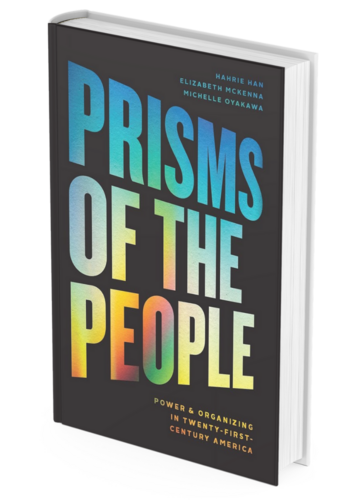
Book cover of Prisms of the People by Hahrie Han
About the Seminar: As democracy hangs in the balance around the globe, people all over the world are pouring into the streets. Yet, the overwhelming response is stasis. Can people-powered movements make change possible? Prisms of the People: Power and Organizing in 21st c. America is a new book that looks systematically at the outliers to identify the characteristics that successful movement organizations share. Drawing on six cases in the United States, the book shows how these movements won not by doing things we all know--registering voters, canvassing neighborhoods and so on--but instead by negotiating for power in ways that rejected the false choice between idealism and pragmatism, between working inside the system and outside the system, between articulating a bold vision and making political compromises. Through careful analysis and vivid storytelling, the story turns conventional stereotypes of activists on their head.


Image
Hahrie Han
About the Speaker: Hahrie Han is the Inaugural Director of the SNF Agora Institute, the Stavros Niarchos Foundation Professor of Political Science, and Faculty Director of the P3 Research Lab at Johns Hopkins University. She specializes in the study of organizing, movements, civic engagement, and democracy. She has published four books and numerous articles in the American Political Science Review, American Sociological Review, American Journal of Sociology, Journal of the American Medical Association (JAMA), and numerous other outlets, including the New York Times, Washington Post, and elsewhere. She is currently working on a fifth book, to be published with Knopf (an imprint of Penguin Random House), about faith and race in America, with a particular focus on evangelical megachurches.

This seminar is presented in partnership with the Stanford Center on Philanthropy and Civil Society.

Image
CDDRL and PACS logos

Online, via Zoom

Hahrie Han Stavros Niarchos Foundation Professor of Political Science and Director, SNF Agora Institute | Johns Hopkins University
Seminars
-

* Please note all CISAC events are scheduled using the Pacific Time Zone.

This event is hosted by the Hoover Institution and co-sponsored by CISAC.

Registration required to attend in person.

Event and Registration Link: https://www.hoover.org/events/spies-lies-and-algorithms

About the Event: Spying has never been more ubiquitous―or less understood. The world is drowning in spy movies, TV shows, and novels, but universities offer more courses on rock and roll than on the CIA and there are more congressional experts on powdered milk than espionage. This crisis in intelligence education is distorting public opinion, fueling conspiracy theories, and hurting intelligence policy. In Spies, Lies, and Algorithms, Amy Zegart separates fact from fiction as she offers an engaging and enlightening account of the past, present, and future of American espionage as it faces a revolution driven by digital technology.

Drawing on decades of research and hundreds of interviews with intelligence officials, Zegart provides a history of U.S. espionage, from George Washington’s Revolutionary War spies to today’s spy satellites; examines how fictional spies are influencing real officials; gives an overview of intelligence basics and life inside America’s intelligence agencies; explains the deadly cognitive biases that can mislead analysts; and explores the vexed issues of traitors, covert action, and congressional oversight. Most of all, Zegart describes how technology is empowering new enemies and opportunities, and creating powerful new players, such as private citizens who are successfully tracking nuclear threats using little more than Google Earth. And she shows why cyberspace is, in many ways, the ultimate cloak-and-dagger battleground, where nefarious actors employ deception, subterfuge, and advanced technology for theft, espionage, and information warfare.

Order Now


About the Speaker: 

Amy Zegart is the Morris Arnold and Nona Jean Cox Senior Fellow at the Hoover Institution and Professor of Political Science (by courtesy) at Stanford University. She is also a Senior Fellow at Stanford’s Freeman Spogli Institute for International Studies, Chair of Stanford’s Artificial Intelligence and International Security Steering Committee, and a contributing writer at The Atlantic. She specializes in U.S. intelligence, emerging technologies and national security, grand strategy, and global political risk management.

In person at Hauck Auditorium Hoover Institution and Livestreamed at https://www.hoover.org/events/spies-lies-and-algorithms

Hoover Institution
Stanford University
Stanford, CA 94305-6010

0
Senior Fellow, by courtesy, at the Freeman Spogli Institute for International Studies
Professor of Political Economy in the Graduate School of Business
Professor of Political Science
Thomas and Barbara Stephenson Senior Fellow on Public Policy at the Hoover Institution
crice_headshot_2026.jpg.jpeg PhD

Condoleezza Rice is the Tad and Dianne Taube Director of the Hoover Institution and a Senior Fellow on Public Policy. She is the Denning Professor in Global Business and the Economy at the Stanford Graduate School of Business. In addition, she is a founding partner of Rice, Hadley, Gates & Manuel LLC, an international strategic consulting firm.

From January 2005 to January 2009, Rice served as the 66th Secretary of State of the United States, the second woman and first black woman to hold the post. Rice also served as President George W. Bush’s Assistant to the President for National Security Affairs (National Security Advisor) from January 2001 to January 2005, the first woman to hold the position.

Rice served as Stanford University’s provost from 1993 to 1999, during which time she was the institution’s chief budget and academic officer. As Professor of Political Science, she has been on the Stanford faculty since 1981 and has won two of the university’s highest teaching honors.

From February 1989 through March 1991, Rice served on President George H.W. Bush’s National Security Council staff. She served as Director, then Senior Director, of Soviet and East European Affairs, as well as Special Assistant to the President for National Security. In 1986, while an International Affairs Fellow of the Council on Foreign Relations, Rice also served as Special Assistant to the Director of the Joint Chiefs of Staff.

She has authored and co-authored numerous books, most recently To Build a Better World: Choices to End the Cold War and Create a Global Commonwealth (2019), co-authored with Philip Zelikow. Among her other volumes are three bestsellers, Democracy: Stories from the Long Road to Freedom (2017); No Higher Honor: A Memoir of My Years in Washington (2011); and Extraordinary, Ordinary People: A Memoir of Family (2010). She also wrote Political Risk: How Businesses and Organizations Can Anticipate Global Insecurity (2018) with Amy B. Zegart; Germany Unified and Europe Transformed: A Study in Statecraft (1995) with Philip Zelikow; edited The Gorbachev Era (1986) with Alexander Dallin; and penned The Soviet Union and the Czechoslovak Army; 1948-1983: Uncertain Allegiance (1984).

In 1991, Rice co-founded the Center for a New Generation (CNG), an innovative, after-school academic enrichment program for students in East Palo Alto and East Menlo Park, California. In 1996, CNG merged with the Boys & Girls Club of the Peninsula, an affiliate club of the Boys & Girls Clubs of America (BCGA). CNG has since expanded to local BGCA chapters in Birmingham, Atlanta, and Dallas. Rice remains an active proponent of an extended learning day through after-school programs.

Since 2009, Rice has served as a founding partner at Rice, Hadley, Gates, & Manuel LLC, an international strategic consulting firm based in Silicon Valley and Washington, D.C. The firm works with senior executives of major companies to implement strategic plans and expand in emerging markets. Other partners include former National Security Advisor Stephen J. Hadley, former Secretary of Defense Robert M. Gates, and former diplomat, author, and advisor on emerging markets, Anja Manuel.

In 2022, Rice became a part-owner of the Denver Broncos as a part of the Walton-Penner Family Ownership Group. In 2013, Rice was appointed to the College Football Playoff Selection Committee, formerly the Bowl Championship Series. She served on the committee until 2017.

Rice currently serves on the boards of C3.ai, an AI software company; and Makena Capital Management, a private endowment firm. In addition, she is Vice Chair of the Board of Governors of the Boys & Girls Clubs of America and a trustee of the Aspen Institute. Previously, Rice served on various boards, including Dropbox; the George W. Bush Institute; the Commonwealth Club; KiOR, Inc.; the Chevron Corporation; the Charles Schwab Corporation; the Transamerica Corporation; the Hewlett-Packard Company; the University of Notre Dame; the Foundation of Excellence in Education; the John F. Kennedy Center for the Performing Arts; and the San Francisco Symphony.

Born in Birmingham, Alabama, Rice earned her bachelor’s degree in political science, cum laude and Phi Beta Kappa, from the University of Denver; her master’s in the same subject from the University of Notre Dame; and her Ph.D., likewise in political science, from the Graduate School of International Studies at the University of Denver.

Rice is a Fellow of the American Academy of Arts and Sciences and has been awarded over fifteen honorary doctorates.

Date Label
Seminars
Authors
News Type
Q&As
Date
Paragraphs

This Q&A with Allen S. Weiner was originally published on the Stanford Law School website.

As the Taliban’s forces closed in on Kabul on Sunday, August 15, 2021, the Afghan President Ashraf Ghani left his country, the acting U.S. ambassador was evacuated, the American flag on the embassy in the country’s capital lowered—and the Biden administration’s plans for an orderly withdrawal of troops, diplomats, and Afghan aids and translators by the anniversary of 9/11 dashed as a scramble for the door becomes more chaotic. After twenty years, 2 trillion dollars, and the lives of almost 2,500 American personnel lost, President Biden said it was time to let the Afghan government and military stand on its own. Here, Stanford Law national security law expert Allen Weiner, who is a research affiliate at FSI’s Center for Democracy, Development and the Rule of Law, and the Center for International Security and Cooperation, discusses the U.S. mission to Afghanistan, its withdrawal, and potential consequences.

What was the American/NATO objective when we invaded Afghanistan almost twenty years ago?

The immediate United States objective at the time of the 2001 invasion was to destroy Al Qaeda’s base of operations in Afghanistan and to kill or capture senior Al Qaeda leaders there.  As those of us who are old enough to remember will recall, the invasion (“Operation Enduring Freedom”) was the U.S.-led response to the 9/11 attacks against World Trade Center twin towers and the Pentagon that were carried out by Al Qaeda. Because the Taliban regime in Afghanistan had a symbiotic relationship with—and provided a safe haven to—Al Qaeda on Afghanistan’s territory, the U.S. and its NATO allies also sought to drive the Taliban from power. At the time, the Taliban was fighting a civil war in Afghanistan and by October 2001 had achieved effective control over most of the country. President Bush and others quickly began to emphasize an additional objective for overthrowing the Taliban— to liberate the Afghan people from the regime’s repressive practices. We sought to promote basic human rights and to end the Taliban’s oppression of women.

Were those objectives met?

The U.S. and its NATO allies largely met those initial goals. Al Qaeda’s training camps in Afghanistan were destroyed, many of its leaders were killed and captured (although some, including Osama bin Laden, managed to escape at least initially), and its ability to plan, finance, and execute major global terrorist operations was severely diminished. U.S. and NATO forces drove the Taliban from power, and after a transitional period, a new government led by Hamid Karzai was established. Women and girls resumed participation in public life in Afghanistan, including education.

But those successes were fleeting?

As we know, the successes did not last. Although Al Qaeda never resumed significant operations in Afghanistan, the organization metastasized, and lethal variants of the organization arose in Yemen, Iraq and Syria, and the Maghreb, among other places. Other terrorist groups, such as the Islamic State and al Shabaab, either grew out of or have affiliations of varying degrees of intensity with Al Qaeda. We have also seen attacks carried out by homegrown terrorist organizations with only loose affiliations to Al Qaeda, sometimes only ideological affinities. So, while Operation Enduring Freedom significantly disrupted terrorist operations originating from Afghanistan, it cannot be said to have eliminated the threat of transnational terrorism.

And the Taliban continued to be a simmering problem in Afghanistan, didn’t it?

The goal of eradicating the Taliban, obviously, also was unmet. Although then Secretary of Defense Donald Rumsfeld declared an end to major combat operations against Al Qaeda and the Taliban in May 2003, a revitalized Taliban renewed an intense civil war in the summer of  2006. That civil war against the Afghanistan government—which appears now to have been won by the Taliban—continued with varying degrees of intensity until the past few days. And if another of the goals of the invasion was to improve the protection of human rights in Afghanistan, we must recognize that civilians suffered terribly during the civil war.

Are there any (hopefully) enduring successes from the twenty-year investment by the U.S. and NATO?

Afghanistan did make significant progress in terms of economic development and the realization of at least some civil and political rights. Per capita GDP rose dramatically in the decades after the U.S. invasion. The status of women and girls improved along many dimensions, including health, life expectancy, education levels, and participation in government institutions. The Taliban’s victory clearly imperils these gains.

The Trump Administration negotiated an agreement with Taliban in 2020 providing for the withdrawal of U.S. Forces from Afghanistan by May 2021, as part of which the Taliban promised not to deliberatively attack U.S. troops during the withdrawal period.  Since then, the Taliban has been steadily gaining control over provinces in the county, and civilian casualties have been rising. Was it pure fantasy that the US was maintaining the peace?

The Trump Administration’s February 2020 agreement with Taliban, in which the U.S. promised to withdraw its forces from Afghanistan in a little over a year, even though the Taliban did not agree to even a ceasefire, much less reach any political agreements with the government about ending the civil war, was the beginning of the end. It clearly signaled to both the Taliban and the government that the U.S. was now concerned only with the security of its own forces, and that the Afghan government was on its own. Given that the Taliban was making progress in gaining territory, at least in the countryside, even with U.S. troops present, many analysts—including the U.S. intelligence community—forecast the eventual overthrow of the Afghan government. It is only the shocking speed with which that happened that is a real surprise.

The fall of the Afghan government has taken many, including apparently some in the Biden administration, by surprise. Why did the collapse of the Afghan military happen so swiftly?  And what role did the Afghan police force and corruption play?

Many commentators who have been critical of the U.S. effort to build up the Afghan military have long expressed doubts about the effectiveness of the Afghanistan National Defense and Security Forces (ANDSF), and many analysts predicted that the Taliban would ultimately prevail against the government after the U.S. and its NATO allies withdrew from Afghanistan. That said, I don’t think anyone predicted it would happen as swiftly as it did.

Multiple factors have been cited to explain how the Taliban—a force estimated to comprise some 75,000 fighters—defeated the 300,000-member strong ANDSF. First, despite the seeming superiority of the government forces, conditions for ANDSF soldiers were quite abysmal. Many reportedly went months without being paid. They lacked ammunition and even food. There are reports of incompetent leadership within the armed forces, leaving Afghan soldiers exposed in the middle of pitch battles, without reinforcements.

A second factor is the pervasive and corrosive corruption among Afghan government actors.  This helps explain why—despite the U.S. infusion of billions of dollars in military assistance— Afghan soldiers went without pay and lacked adequate ammunition.  It also explains why in some cases, after Afghan forces fighting alongside U.S. forces succeeded in clearing territory of Taliban insurgents, the Afghan government would fail to hold it. The notoriously corrupt and unprofessional Afghanistan police forces—who were in charge of security after territory had been cleared of Taliban fighters by the ANDSF—reportedly engaged in predatory practices targeting the local community or could be bought off by the insurgency to cede ground back.

Third, some critics of the U.S. effort to modernize the Afghan army have long argued that the ANDSF lacked resolve to aggressively engage the Taliban insurgency in the absence of active support from U.S. soldiers. Although there are many stories of Afghan soldiers fighting fiercely, there are anecdotal accounts of Afghan armed forces engaging in “mini non-aggression deals” with Taliban fighters in their area of responsibility in an effort to avoid armed engagement.

Fourth, the lack of motivation of Afghan armed forces was exacerbated in recent years by the unpopularity and perceived fecklessness of the Afghan government led by President Ashraf Ghani. Re-elected in 2019 after an election with sharply disputed results, in which voter turnout was less than 20 percent, the Ghani government was widely seen as ineffective in addressing corruption, effectively managing the country, or confronting the growing security threat posed by the Taliban. It became a common refrain among Afghan soldiers that the Ghani government was not one worth fighting for.

Fifth, it appears that in at least some provinces in Afghanistan, the Taliban, in essence, offered government forces negotiated settlements to cede control of territory. In some cases, this involved offering payments to government soldiers to switch sides—a particularly attractive offer for soldiers who had not been paid in months. It is likely that the Taliban offered broader commitments, e.g., not to engage in retribution against government soldiers who abandoned the fight, although I have not yet seen reports of such deals.

Sixth, there a seasonal calendar to armed conflict in Afghanistan, and the Taliban has typically engaged in its major military operations during the spring and summer.  Delaying the U.S. withdrawal by six months, so that U.S. forces did not leave during the height of what is known in Afghanistan as “fighting season,” might have given the ANDSF more time to prepare to defend Afghanistan’s cities. Although given how swiftly Afghan government forces were swept aside, this now seems doubtful to me.

Finally, from an operational standpoint, the U.S. has invested billions of dollars in Afghanistan to attempt to build up a military that functions in ways that resemble how a NATO army operates, with air power and advanced weaponry. Such a military depends on extremely complex behind-the-scenes logistics arrangements. In Afghanistan, these logistics systems depended heavily on U.S. contractors, who also began withdrawing from the country after President Biden announced the U.S. withdrawal. Many of the aircraft in Afghanistan’s air force, for instance, were grounded because they lacked parts needed for repairs or routine servicing. One of the lessons of the defeat of the ANDSF is that building a foreign country’s military also requires developing indigenous logistics capacity.

Troops had been drawn down to about 3,000 and negotiations that excluded the Afghan gov’t were conducted with the Taliban during the Trump administration. Could Biden, realistically, have rewound the clock–bringing more troops back? Was Biden pushed into a tough corner?

Although the withdrawal agreement the Trump Administration concluded with the Taliban in February 2020 may not have initiated the death spiral for the Afghanistan government and military, it certainly catalyzed it, as I noted above. It did put the Biden Administration in a tough position; the only option would have been to renege on the agreement, leave U.S. troops in Afghanistan, and to seek to renegotiate the agreement. That said, although that may have been a tough position, it was not an impossible one, as evidenced by the fact that the Biden Administration unilaterally changed the agreed upon date by which U.S. forces would withdraw from Afghanistan from May to August.

I’m not a military strategist, so I can’t say whether maintaining a force of 3,000 U.S. troops in Afghanistan would have changed the military situation on the ground. But I think if the U.S. had said that it would not withdraw the U.S. military presence until there was a ceasefire and the Taliban and the Afghan government have negotiated a power sharing agreement/end to the civil war, that might have changed the Taliban’s political assessment about how to proceed. I stress that this only “might” have changed the Taliban’s thinking. The fact that the Taliban has been fighting for twenty years suggests that the group was very determined to regain control of Afghanistan and re-establish its vision of life for the Afghan people.

I understand that Russia and other countries have negotiated agreements to ensure the safety of their embassies and diplomatic staff so that they can continue operations in Kabul. Have the Americans done the same? If not, how significant will that be for the future safety of the U.S and the threat of terrorism? Will we have “eyes on the ground” and intelligence sources?

The United States is currently withdrawing all of its diplomatic personnel from Afghanistan and will presumably once again shutter its embassy in Kabul. The U.S. will face a difficult question about whether to recognize the new Taliban regime that will be installed in Afghanistan, and if so, whether to resume diplomatic relations and re-open its embassy. If the Taliban regime pursues the policies that characterized its period of rule in the late 1990s, particularly the severe repression of women and girls, I doubt the U.S. will re-establish relations. Even if the U.S. did re-establish diplomatic relations, it is inconceivable that the Taliban would permit the United States to maintain the large intelligence and security presence we have had in Afghanistan over the past two decades. So, we will not have the ability gather intelligence on the ground or to conduct military operations against any terrorist threats that emerge in Afghanistan.

The Taliban has pledged that it will not allow Afghanistan’s territory to be used by terrorist groups that seek to conduct hostile operations against foreign countries. Although the Taliban learned in 2001 about the potential costs to it of harboring such groups on Afghanistan’s territory—namely, being overthrown by the U.S. and its NATO allies—there are obviously reasons to question the Taliban’s promise.

Is there anything Biden can do now to minimize the damage?

The Biden administration does not have much leverage at this point. The administration will presumably signal to the Taliban that it will closely monitor its conduct with respect to preventing its territory from being used by terrorist groups and its performance on human rights issues, including the treatment of women and girls. Should the Taliban perform poorly on these issues, the U.S. could try to secure sanctions against the Taliban regime through the Security Council; after all, the Council had imposed sanctions on the Taliban in the 1990s in response to its providing a safe haven to Osama bin Laden and its violation of human rights, particularly discrimination against women and girls. Today, however, it is unclear whether Russia and China, which are likely to seek stable relations with the Taliban government, would support such sanctions. That means the U.S. would probably be limited to unilateral sanctions as a way of signaling disapproval of, and seeking to change the behavior of, a prospective Taliban government.

Allen S. Weiner

Allen S. Weiner

Affiliate at CDDRL and CISAC
FULL PROFILE

Read More

Helicopter crew members in Afghanistan.
Commentary

Biden's Afghanistan Decision

President Biden has inherited America’s longest war—the war in Afghanistan—at a critical moment. Under the Trump administration’s deal with the Taliban, the US government is supposed to withdraw forces from the country by May 2021. But the Taliban hasn’t taken the steps required in the deal against international terrorists, like Al Qaeda.
Biden's Afghanistan Decision
picture of man with American flag in the background
Q&As

There's no reason' for Trump's move to pull troops from Afghanistan

Brett McGurk, former presidential envoy for the global coalition to defeat ISIS, joins Andrea Mitchell to discuss the last minute foreign policy moves, including the decision to draw down the number of troops in Afghanistan, that President Trump is saddling the incoming Biden administration with.
There's no reason' for Trump's move to pull troops from Afghanistan
chayes
News

Sarah Chayes discusses life in Taliban-resurgent Afghanistan

Sarah Chayes discusses life in Taliban-resurgent Afghanistan
Hero Image
Displaced Afghans are seen at a makeshift IDP camp in Kabul. Getty Images
All News button
1
Subtitle

National security law expert Allen Weiner, a research affiliate at CDDRL and CISAC, discusses the U.S. mission to Afghanistan, its withdrawal and consequences moving forward.

-

SEMINAR RECORDING


All CISAC events are scheduled using the Pacific Time Zone. This event is part of the year-long initiative on “Ethics & Political Violence” jointly organized by the Center for International Security and Cooperation (CISAC) and The McCoy Family Center for Ethics in Society. This event is hosted by CISAC and is co-sponsored by Society for International Affairs at Stanford, McCoy Family Center for Ethics in Society, Center for South Asia.


About the Event: The dramatic scenes the world witnessed during the fall of Kabul in 2021 following the withdrawal of US and allied forces from Afghanistan nearly coincided with the twentieth anniversary of the 9/11 attacks by Al Qaeda and the subsequent US and allied invasion of Afghanistan. The United States committed trillions of dollars, dispatched soldiers, diplomats and spies across the globe, and made dramatic alterations to domestic and international law to combat terrorism. The material, humanitarian and normative consequences of two decades of war have been significant, both globally and in Afghanistan specifically. In this panel, Dr. Felter, Dr. Mir and Professor Zegart will assess U.S. responses during the global war on terror, identify unexpected outcomes and lessons learned, and ultimately weigh the costs and benefits of this two-decade struggle against terrorism.


About the Speakers: 

Joe Felter is a William J. Perry Fellow at the Center for International Security and Cooperation and research fellow at the Hoover Institution.  From 2017 to 2019, Felter served as US deputy assistant secretary of defense for South Asia, Southeast Asia, and Oceania. There he was the principal advisor for all policy matters pertaining to development and implementation of defense strategies and plans in the region and responsible for managing bilateral security relationships and guiding Department of Defense (DoD) engagement with multilateral institutions.  


Asfandyar Mir is a senior expert in the Asia Center at USIP. Previously, heheld various fellowships at the Center for International Security and Cooperation at Stanford University. His research interests include the international relations of South Asia, U.S. counterterrorism policy and political violence — with a regional focus on Afghanistan and Pakistan. Asfandyar Mir’s research has appeared in peer-reviewed journals, such as International Security, International Studies Quarterly and Security Studies. He received his doctorate in political science from the University of Chicago and a master’s and bachelor’s from Stanford University.


Amy Zegart is the Morris Arnold and Nona Jean Cox Senior Fellow at the Hoover Institution and Professor of Political Science (by courtesy) at Stanford University. She is also a Senior Fellow at Stanford’s Freeman Spogli Institute for International Studies, Chair of Stanford’s Artificial Intelligence and International Security Steering Committee, and a contributing writer at The Atlantic. She specializes in U.S. intelligence, emerging technologies and national security, grand strategy, and global political risk management.

Virtual to Public. Only those with an active Stanford ID with access to William J Perry Conference Room in Encina Hall may attend in person. 

0
rsd19_072_0386a.jpg

Asfandyar Mir is an affiliate with the Center for International Security and Cooperation, Stanford University. Previously he has held predoctoral and postdoctoral fellowships at the center. His research interests are in the international relations of South Asia, US counterterrorism policy, and political violence, with a regional focus on Afghanistan and Pakistan. His research has appeared in peer-reviewed journals of International Relations, such as International Security, International Studies Quarterly and Security Studies, and his commentary has appeared in Foreign Affairs, Foreign Policy, H-Diplo, Lawfare, Modern War Institute, Political Violence at a Glance, Politico, and the Washington Post.

Asfandyar received his PhD in political science from the University of Chicago and a masters and bachelors from Stanford University.

Affiliate

CISAC
Stanford University
Encina Hall, E216
Stanford, CA 94305-6165

(650) 725-9754 (650) 723-0089
0
Senior Fellow at the Freeman Spogli Institute for International Studies
Morris Arnold and Nona Jean Cox Senior Fellow at the Hoover Institution
Senior Fellow at the Stanford Institute for Human-Centered AI
Professor, by courtesy, of Political Science
amyzegart-9.jpg PhD

Dr. Amy Zegart is the Morris Arnold and Nona Jean Cox Senior Fellow at the Hoover Institution. The author of five books, she specializes in U.S. intelligence, emerging technologies, and national security. At Hoover, she leads the Technology Policy Accelerator and the Oster National Security Affairs Fellows Program. She also is an associate director and senior fellow at the Stanford Institute for Human-Centered AI; a senior fellow at the Freeman Spogli Institute; and professor of political science by courtesy, teaching 100 students each year about how emerging technologies are transforming espionage.

Her award-winning research includes the leading academic study of intelligence failures before 9/11: Spying Blind: The CIA, the FBI, and the Origins of 9/11 (Princeton, 2007) and the bestseller Spies, Lies, and Algorithms: The History and Future of American Intelligence (Princeton, 2022), which was nominated by Princeton University Press for the Pulitzer Prize. She also coauthored Political Risk: How Businesses and Organizations Can Anticipate Global Insecurity, with Condoleezza Rice (Twelve, 2018). Her op-eds and essays have appeared in Foreign Affairs, Politico, the New York Times, the Washington Post, and the Wall Street Journal.

Zegart has advised senior officials about intelligence and foreign policy for more than two decades. She served on the National Security Council staff and as a presidential campaign foreign policy advisor and has testified before numerous congressional committees. Before her academic career, she spent several years as a McKinsey & Company consultant.

Zegart received an AB in East Asian studies from Harvard and an MA and a PhD in political science from Stanford. She serves on the boards of the Council on Foreign Relations, Kratos Defense & Security Solutions, and the American Funds/Capital Group.

Date Label
Seminars
Subscribe to Governance