Governance

FSI's research on the origins, character and consequences of government institutions spans continents and academic disciplines. The institute’s senior fellows and their colleagues across Stanford examine the principles of public administration and implementation. Their work focuses on how maternal health care is delivered in rural China, how public action can create wealth and eliminate poverty, and why U.S. immigration reform keeps stalling. 

FSI’s work includes comparative studies of how institutions help resolve policy and societal issues. Scholars aim to clearly define and make sense of the rule of law, examining how it is invoked and applied around the world. 

FSI researchers also investigate government services – trying to understand and measure how they work, whom they serve and how good they are. They assess energy services aimed at helping the poorest people around the world and explore public opinion on torture policies. The Children in Crisis project addresses how child health interventions interact with political reform. Specific research on governance, organizations and security capitalizes on FSI's longstanding interests and looks at how governance and organizational issues affect a nation’s ability to address security and international cooperation.

-

SCCEI Fall Seminar Series 


Tuesday, November 15, 2022      11:00 am -12:15 pm Pacific Time

Goldman Room E401, Encina Hall, 616 Jane Stanford Way | Zoom Meeting 


Inequality by Design: China’s Distinctive Political Economy

With modest income differences and virtually no private wealth four decades ago, China’s inequalities of income and wealth are now almost as extreme as in the United States and Russia. This development is more puzzling than commonly recognized, and analyses of the determinants of household income do not address its institutional origins. Widening inequality is a byproduct of China’s highly distinctive political economy, which is designed to preserve communist party control and enforce the priorities of the central state. These include an enduringly large capital-intensive state sector supported by a financial system unusually reliant on state-owned banks; a tax base highly dependent on business volume rather than profits; a distorted fiscal system that drives local governments into property development; and political constraints on documenting and taxing private assets. These structures create large concentrations of capital and favor those with access to it, transferring incomes from households to corporations while crippling the state’s capacity to remediate resulting inequalities.


About the Speaker 
 

Image
Andrew G. Walder

Andrew Walder is the Denise O'Leary and Kent Thiry Professor at Stanford University, where he is also a senior fellow in the Freeman Spogli Institute. Previously, he served as chair of the department of sociology, and as director of the Walter H. Shorenstein Asia-Pacific Research Center and of the Division of International, Comparative and Area Studies.

A political sociologist, Walder has long specialized on the sources of conflict, stability, and change in communist regimes and their successor states. His publications on China have ranged from the political and economic organization of the Mao era to changing patterns of stratification, social mobility, and political conflict in the post-Mao era. His current research focuses on popular political mobilization in late-1960s China and the subsequent collapse and rebuilding of the Chinese party-state. He holds an AB from Johns Hopkins University and a PhD from the University of Michigan.


Seminar Series Moderators

Image
Headshot of Dr. Scott Rozelle

Scott Rozelle is the Helen F. Farnsworth Senior Fellow and the co-director of Stanford Center on China's Economy and Institutions in the Freeman Spogli Institute for International Studies and Stanford Institute for Economic Policy Research at Stanford University.  For the past 30 years, he has worked on the economics of poverty reduction. Currently, his work on poverty has its full focus on human capital, including issues of rural health, nutrition and education. For the past 20 year, Rozelle has been the chair of the International Advisory Board of the Center for Chinese Agricultural Policy, Chinese Academy of Sciences (CAS). Most recently, Rozelle's research focuses on the economics of poverty and inequality, with an emphasis on rural education, health and nutrition in China. In recognition of this work, Dr. Rozelle has received numerous honors and awards. Among them, he became a Yangtse Scholar (Changjiang Xuezhe) in Renmin University of China in 2008. In 2008 he also was awarded the Friendship Award by Premiere Wen Jiabao, the highest honor that can be bestowed on a foreigner. 


Image
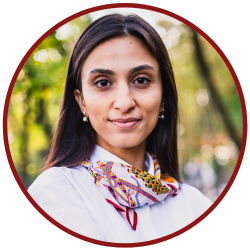
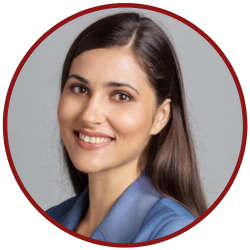
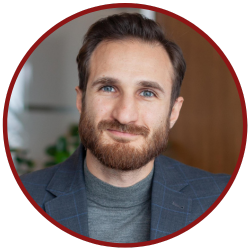
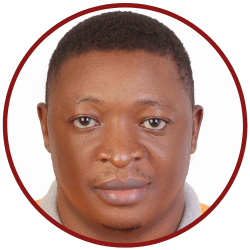
hongbin li headshot

Hongbin Li is the Co-director of Stanford Center on China's Economy and Institutions, and a Senior Fellow of Stanford Institute for Economic Policy Research (SIEPR) and the Freeman Spogli Institute for International Studies (FSI). Hongbin obtained his Ph.D. in economics from Stanford University in 2001 and joined the economics department of the Chinese University of Hong Kong (CUHK), where he became full professor in 2007. He was also one of the two founding directors of the Institute of Economics and Finance at the CUHK. He taught at Tsinghua University in Beijing 2007-2016 and was C.V. Starr Chair Professor of Economics in the School of Economics and Management. He founded the Chinese College Student Survey (CCSS) in 2009 and the China Employer-Employee Survey (CEES) in 2014.

Hongbin’s research has been focused on the transition and development of the Chinese economy, and the evidence-based research results have been both widely covered by media outlets and well read by policy makers around the world. He is currently the co-editor of the Journal of Comparative Economics.


A NOTE ON LOCATION

This seminar is a hybrid event. Please join us in person in the Goldman Conference Room located within Encina Hall on the 4th floor of the East wing, or join remotely via Zoom.

Questions? Contact Heather Rahimi at hrahimi@stanford.edu


Scott Rozelle
Hongbin Li

Hybrid Event: Goldman Room E409, Encina Hall | Zoom Meeting

Shorenstein APARC
Stanford University
Encina Hall E301
Stanford, CA 94305-6055

(650) 723-4560 (650) 723-6530
0
Senior Fellow at the Freeman Spogli Institute for International Studies
Denise O'Leary and Kent Thiry Professor
walder_2019_2.jpg PhD

Andrew G. Walder is the Denise O'Leary and Kent Thiry Professor at Stanford University, where he is also a senior fellow in the Freeman Spogli Institute for International Studies. Previously, he served as Chair of the Department of Sociology, Director of the Walter H. Shorenstein Asia-Pacific Research Center, and Head of the Division of International, Comparative and Area Studies in the School of Humanities and Sciences.

Walder has long specialized in the sources of conflict, stability, and change in communist regimes and their successor states. His publications on Mao-era China have ranged from the social and economic organization of that early period to the popular political mobilization of the late 1960s and the subsequent collapse and rebuilding of the Chinese party-state. His publications on post-Mao China have focused on the evolving pattern of stratification, social mobility, and inequality, with an emphasis on variation in the trajectories of post-state socialist systems. His current research is on the growth and evolution of China’s large modern corporations, both state and private, after the shift away from the Soviet-inspired command economy.

Walder joined the Stanford faculty in 1997. He received his Ph.D. in sociology at the University of Michigan in 1981 and taught at Columbia University before moving to Harvard in 1987. From 1995 to 1997, he headed the Division of Social Sciences at the Hong Kong University of Science and Technology.

Walder has received fellowships and grants from the Guggenheim Foundation, the National Science Foundation, the National Academy of Sciences, the Henry Luce Foundation, the Ford Foundation, the Social Science Research Council, and the Center for Advanced Study in the Behavioral Sciences. His books and articles have won awards from the American Sociological Association, the Association for Asian Studies, and the Social Science History Association. He is an elected member of the American Academy of Arts and Sciences.

His recent and forthcoming books include  Fractured Rebellion: The Beijing Red Guard Movement  (Harvard University Press, 2009);  China Under Mao: A Revolution Derailed  (Harvard University Press, 2015);  Agents of Disorder: Inside China’s Cultural Revolution  (Harvard University Press, 2019); and  A Decade of Upheaval: The Cultural Revolution in Feng County  (Princeton University Press, 2021) (with Dong Guoqiang); and Civil War in Guangxi: The Cultural Revolution on China’s Southern Periphery (Stanford University Press, 2023).  

His recent articles include “After State Socialism: Political Origins of Transitional Recessions.” American Sociological Review  80, 2 (April 2015) (with Andrew Isaacson and Qinglian Lu); “The Dynamics of Collapse in an Authoritarian Regime: China in 1967.”  American Journal of Sociology  122, 4 (January 2017) (with Qinglian Lu); “The Impact of Class Labels on Life Chances in China,”  American Journal of Sociology  124, 4 (January 2019) (with Donald J. Treiman); and “Generating a Violent Insurgency: China’s Factional Warfare of 1967-1968.” American Journal of Sociology 126, 1 (July 2020) (with James Chu).

Director Emeritus of the Shorenstein Asia-Pacific Research Center
Director Emeritus of the Division of International, Comparative and Area Studies
Faculty Affiliate at the Stanford Center on China's Economy and Institutions
Faculty Fellow at the Stanford Center at Peking University, July to November of 2013
Graduate Seminar Instructor at the Stanford Center at Peking University, August to September of 2017
Seminars
Date Label
Kopstein event image

The past decade has witnessed a resurgence of patrimonial rule not only in the developing world but also, more surprisingly, in the developed West. This resurgence carries potentially dire consequences for responding to a range of pressing problems. Understanding the sources of contemporary patrimonialism is hindered by assimilating the phenomenon into the familiar democracy/autocracy typology or by assuming that it is a function of failed modernization.

This paper, co-authored with Stephen E. Hanson, identifies the patrimonial phenomenon and explores the contemporary global diffusion of patrimonial rule from its origins in postcommunist Russia, which in the 1990s faced precisely the same social challenges—shrinking “blue collar” industries, sharply increasing economic inequality, and weak, unresponsive democratic institutions—that would bedevil developed countries around the world in the 21st century.  From Russia, patrimonialism spread westward to the “near abroad,” the new EU member states, Israel, and ultimately to the erstwhile heartland of the rule of law: the UK and the US. Some signs indicate that reestablishing bureaucratic predictability and expertise may be much harder than demolishing it. In some respects, the task may be more daunting than the salvation of democracy itself.


Jeffrey Kopstein

Jeffrey Kopstein is Professor of Political Science at the University of California, Irvine. In his research, Professor Kopstein focuses on interethnic violence, voting patterns of minority groups, and anti-liberal tendencies in civil society, paying special attention to cases within European and Russian Jewish history.  These interests are central topics in his co-authored book, Intimate Violence: Anti-Jewish Pogroms on the Eve of the Holocaust (Cornell University Press, 2018) and his forthcoming edited volume: "Politics, Memory, Violence: The New Social Science of the Holocaust" (Cornell University Press 2023). His current book project is "The Good Deep State: How the Global Patrimonial Wave Endangers our Future."

*If you need any disability-related accommodation, please contact Shannon Johnson at sj1874@stanford.edu. Requests should be made by November 3, 2022.


REDS: RETHINKING EUROPEAN DEVELOPMENT AND SECURITY

The REDS Seminar Series aims to deepen the research agenda on the new challenges facing Europe, especially on its eastern flank, and to build intellectual and institutional bridges across Stanford University, fostering interdisciplinary approaches to current global challenges.

REDS is organized by The Europe Center and the Center on Democracy, Development and the Rule of Law, and co-sponsored by the Hoover Institution.


Image
TEC logo
    
Image
Hoover logo
    
Image
CDDRL logo

This event is co-sponsored by  

Image
CREEES logo

Anna Grzymała-Busse
Jeffrey Kopstein, University of California, Irvine
Seminars
Lucan Way

Over the last decade, responses to the crisis of democracy have been hampered by the fact that challenges to liberalism have often been subtle and ambiguous. All this changed on 24 February 2022. Two factors made Russia’s invasion a watershed moment in Europe’s battle for democracy: the stark moral clarity of Ukraine’s cause and the existential security threat presented by a newly aggressive Russia.  As a result, the West has responded in a far more unified manner than anyone expected.


Image
Lucan Way
Way’s research focuses on global patterns of democracy and dictatorship.  His most recent book (with Steven Levitsky), Revolution and Dictatorship: The Violent Origins of Durable Authoritarianism (forthcoming Princeton University Press) provides a comparative historical explanation for the extraordinary durability of autocracies (China, Cuba, USSR) born of violent social revolution. Way’s solo-authored book, Pluralism by Default: Weak Autocrats and the Rise of Competitive Politics (Johns Hopkins, 2015), examines the sources of political competition in the former Soviet Union.  Way argues that pluralism in the developing world often emerges out of authoritarian weakness: governments are too fragmented and states too weak to monopolize political control.  His first book, Competitive Authoritarianism: Hybrid Regimes after the Cold War (with Steven Levitsky), was published in 2010 by Cambridge University Press. Way’s work on competitive authoritarianism has been cited thousands of times and helped stimulate new and wide-ranging research into the dynamics of hybrid democratic-authoritarian rule.

Way also has published articles in the American Journal of Political Science, Comparative Politics, Journal of Democracy, Perspectives on Politics, Politics & Society, Slavic Review, Studies in Comparative and International Development, World Politics, as well as in a number of area studies journals and edited volumes. His 2005 article in World Politics was awarded the Best Article Award in the “Comparative Democratization” section of the American Political Science Association in 2006. He is Co-Director of the Petro Jacyk Program for the Study of Ukraine and is Co-Chair of the Editorial Board of The Journal of Democracy. He has held fellowships at Harvard University (Harvard Academy and Davis Center for Russian and Eurasian Studies), and the University of Notre Dame (Kellogg Fellowship).

*If you need any disability-related accommodation, please contact Shannon Johnson at sj1874@stanford.edu. Requests should be made by October 27, 2022.


REDS: RETHINKING EUROPEAN DEVELOPMENT AND SECURITY

The REDS Seminar Series aims to deepen the research agenda on the new challenges facing Europe, especially on its eastern flank, and to build intellectual and institutional bridges across Stanford University, fostering interdisciplinary approaches to current global challenges.

REDS is organized by The Europe Center and the Center on Democracy, Development and the Rule of Law, and co-sponsored by the Hoover Institution.


Image
TEC logo
    
Image
Hoover logo
    
Image
CDDRL logo

This event is co-sponsored by  

Image
CREEES logo

Anna Grzymała-Busse
Lucan Way, University of Toronto
Seminars
-
Adam Liu Poster

The Henan bank protest, the Evergrande crisis, and the ongoing local government debt issue in China all point to one thing: there’s something wrong with the country’s banking system. Beijing needs to better regulate the numerous small banks that are now intimately intertwined with much of China's economic challenges. 

They’re working on it, but there’s no easy solution.

Adam Y. Liu will tell us the origins of the dilemma, the increasing role of small banks in China and local development, and what tradeoffs China will likely have to make to prevent a run-away banking crisis.

Speaker

Image
Adam Liu Headshot
Adam Y. Liu is assistant professor at the Lee Kuan Yew School of Public Policy, National University of Singapore. His main research interests include Chinese politics and political economy. He is currently working on a book project that explores how central-local politics drove the formation, expansion, and operation of what he calls a "state-owned market" in China's banking sector. The project is based on his dissertation, which won the 2020 BRICS Economic Research Award. He received his Ph.D. in political science from Stanford University and was a postdoctoral associate with the Leitner Program in International and Comparative Political Economy at Yale University. 

Jean C. Oi

Virtual event via Zoom

Adam Y. Liu
Seminars
-
Portraits of Myung Hwan Yu and Gi-Wook Shin with text about Oct 18 webinar on the implications of US-China competition for South Korea

This event is part of APARC’s 2022 Fall webinar seriesAsian Perspectives on the US-China Competition.

With rising Sino-U.S. tensions, South Korea has increasingly been in a difficult position to choose policy decisions that may tilt it towards one hegemon or the other. The new Yoon Administration signaled its strengthened alliance with the U.S. by attending the NATO summit and joining the Indo-Pacific Economic Framework (IPEF), but there are concerns that such actions run the risks of potential economic backlash from China. With increasing tensions between the U.S. and China, what diplomatic and economic options are left for South Korea? How does the domestic political environment such as the rise of anti-China sentiments and the return of pro-alliance conservatives back to power influence South Korea’s outlook on international affairs? Former South Korean Foreign Minister Yu Myung Hwan, in conversation with Professor Gi-Wook Shin, will discuss the South Korean perspective on the rising U.S.-China rivalry.

Image
Myung Hwan Yu, former foreign minister of South Korea

 Myung Hwan Yu, former Minister of Foreign Affairs and Trade of South Korea, also served as Ambassador to Israel, Japan and Philippines, and as Minister of the Permanent Mission to UN. His experience extends across a broad range of issues in international relations including trade, security and nuclear negotiations with North Korea. After his retirement from the foreign ministry, Ambassador Yu was board chairman of the Sejong University in Seoul, visiting scholar in the Korea Program at APARC; and he is currently a senior advisor at Kim & Chang Law Office.

This event is made possible by generous support from the Korea Foundation and other friends of the Korea Program.

Gi-Wook Shin

Via Zoom: Register at https://bit.ly/3LjfeMW

Myung Hwan Yu <i>former Minister of Foreign Affairs and Trade of South Korea</i>
Seminars
-

SCCEI Fall Seminar Series 


Tuesday, October 18, 2022      11:00 am -12:15 pm Pacific Time

Goldman Room E401, Encina Hall, 616 Jane Stanford Way | Zoom Meeting 


Sovereign-Biopolitics and Tobacco’s Annihilation of China's Male State

This talk takes up a historical and theoretical puzzle: how has it come to be that nation states, which are run by men, are reputedly biopolitical in design yet facilitate their male citizens' exposure to the greatest cause of preventable death today. The analytical answer offered centers around a phenomenon long ago dubbed the pharmakon, something that simultaneously heals and poisons. The story told here is a smoky one, wafting across territorial boundaries, epochs, big business plays, and an uncanny cast of characters. 


About the Speaker

Image
Matthew Kohrman photo from Zoom.

 Matthew Kohrman is an Associate Professor of Anthropology and a SCCEI Faculty Affiliate. His research and writing bring anthropological methods to bear on the ways health, culture, and politics are interrelated. Focusing on the People's Republic of China, he engages various intellectual terrains such as governmentality, gender theory, political economy, critical science studies, narrativity, and embodiment. His first monograph, Bodies of Difference: Experiences of Disability and Institutional Advocacy in the Making of Modern China, raises questions about how embodied aspects of human existence, such as our gender, such as our ability to propel ourselves through space as walkers, cyclists and workers, become founts for the building of new state apparatuses of social provision, in particular, disability-advocacy organizations. Over the last decade, Prof. Kohrman has been involved in research aimed at analyzing and intervening in the biopolitics of cigarette smoking among Chinese citizens. This work, as seen in his recently edited volume--Poisonous Pandas: Chinese Cigarette Manufacturing in Critical Historical Perspectives--expands upon heuristic themes of his earlier disability research and engages in novel ways techniques of public health, political philosophy, and spatial history. More recently, he has begun projects linking ongoing interests at the intersection of phenomenology and political economy with questions regarding environmental attunement and the arts.


Seminar Series Moderators

Image
Headshot of Dr. Scott Rozelle

Scott Rozelle is the Helen F. Farnsworth Senior Fellow and the co-director of Stanford Center on China's Economy and Institutions in the Freeman Spogli Institute for International Studies and Stanford Institute for Economic Policy Research at Stanford University.  For the past 30 years, he has worked on the economics of poverty reduction. Currently, his work on poverty has its full focus on human capital, including issues of rural health, nutrition and education. For the past 20 year, Rozelle has been the chair of the International Advisory Board of the Center for Chinese Agricultural Policy, Chinese Academy of Sciences (CAS). Most recently, Rozelle's research focuses on the economics of poverty and inequality, with an emphasis on rural education, health and nutrition in China. In recognition of this work, Dr. Rozelle has received numerous honors and awards. Among them, he became a Yangtse Scholar (Changjiang Xuezhe) in Renmin University of China in 2008. In 2008 he also was awarded the Friendship Award by Premiere Wen Jiabao, the highest honor that can be bestowed on a foreigner. 


Image
hongbin li headshot

Hongbin Li is the Co-director of Stanford Center on China's Economy and Institutions, and a Senior Fellow of Stanford Institute for Economic Policy Research (SIEPR) and the Freeman Spogli Institute for International Studies (FSI). Hongbin obtained his Ph.D. in economics from Stanford University in 2001 and joined the economics department of the Chinese University of Hong Kong (CUHK), where he became full professor in 2007. He was also one of the two founding directors of the Institute of Economics and Finance at the CUHK. He taught at Tsinghua University in Beijing 2007-2016 and was C.V. Starr Chair Professor of Economics in the School of Economics and Management. He founded the Chinese College Student Survey (CCSS) in 2009 and the China Employer-Employee Survey (CEES) in 2014.

Hongbin’s research has been focused on the transition and development of the Chinese economy, and the evidence-based research results have been both widely covered by media outlets and well read by policy makers around the world. He is currently the co-editor of the Journal of Comparative Economics.


A NOTE ON LOCATION

This seminar is a hybrid event. Please join us in person in the Goldman Conference Room located within Encina Hall on the 4th floor of the East wing, or join remotely via Zoom.

Questions? Contact Heather Rahimi at hrahimi@stanford.edu


Scott Rozelle
Hongbin Li

Hybrid Event: Goldman Room E409, Encina Hall | Zoom Meeting

Stanford University
Department of Anthropology
Building 50, Central Quad
Stanford, California 94305-2034

(650) 723-3421 (650) 725-0605
0
Associate Professor of Anthropology
Senior Fellow, by courtesy, at the Freeman Spogli Institute for International Studies
Faculty Affiliate at the Walter H. Shorenstein Asia-Pacific Research Center
Faculty Affiliate at the Stanford Center on China's Economy and Institutions
matthewkohrman-vert.jpeg

Matthew Kohrman joined Stanford’s faculty in 1999. His research and writing bring multiple methods to bear on the ways health, culture, and politics are interrelated. Focusing on the People's Republic of China, he engages various intellectual terrains such as governmentality, gender theory, political economy, critical science studies, and embodiment. His first monograph, Bodies of Difference: Experiences of Disability and Institutional Advocacy in the Making of Modern China, examines links between the emergence of a state-sponsored disability-advocacy organization and the lives of Chinese men who have trouble walking. In recent years, Kohrman has been conducting research projects aimed at analyzing and intervening in the biopolitics of cigarette smoking and production. These projects expand upon analytical themes of Kohrman’s disability research and engage in novel ways techniques of public health.

Date Label
Seminars
Authors
Gi-Wook Shin
News Type
Commentary
Date
Paragraphs

This essay originally appeared in Korean on June 16 in Sindonga (New East Asia), Korea’s oldest monthly magazine (established 1931), as the third in a monthly column, "Shin’s Reflections on Korea." Translated by Raymond Ha. A PDF version of this essay is also available to download.


“I voted for Yoon Suk-Yeol because I just couldn’t vote for Lee Jae-Myung. Do you think Yoon will be a good president?”

“Well, it’s only been a month since he entered office. We should wait at least a year to see how he does.”

When I visited Korea this June, I had this exchange while speaking with friends. Like these friends, there are many Koreans who cast their ballots for Yoon to oust the Democratic Party of Korea (DPK) from power, even though they did not necessarily approve of Yoon. They achieved their goal, and the conservatives regained the presidency. However, these voters looked upon the Yoon administration with a mixture of hope and trepidation.

Their fears were realized only a month later, in late July. The ruling People Power Party (PPP) became paralyzed by an internal power struggle. A mere two months after entering office, Yoon’s approval ratings plummeted below 30%. Some polls even indicate that over half of voters would choose Lee Jae-Myung if the election were to be held again.

There is an uncanny resemblance to the early days of the Biden administration. The conversations I had with my Korean friends in June are reminiscent of those I had with friends in the United States soon after Biden entered the White House. They confessed that they voted for Biden because they could not support Trump, and they were both worried and hopeful about the new administration. Their concerns began to materialize during Biden’s first year in office. Despite a slight rebound in the past two months, Biden’s approval rating remains in the 40s. Those in Democratic circles openly voice their fears about losing both the House and the Senate in November’s midterms.

 
Biden and Yoon could not be more different in terms of ideological orientation or political experience. Nonetheless, they find themselves in a similar political predicament.
Gi-Wook Shin

Just as in Korea, there have been polls in the United States that show that more Americans would vote for Trump than Biden if the election were to be held today. The former president is poised to make another run for the White House in 2024, as the FBI continues its investigation into his potential mishandling of classified documents.

Biden and Yoon could not be more different in terms of ideological orientation or political experience. Nonetheless, they find themselves in a similar political predicament. How can we explain this state of affairs? Some would emphasize the effect of catastrophic events beyond any leader’s control, like the COVID-19 pandemic. Others stress the role of structural factors, including political polarization. Critics in Korea and the United States point to policy failures and shortcomings of political leadership, while both Biden and Yoon insist that their respective predecessors left behind daunting challenges. This essay examines each of these factors as it explores the path ahead for President Yoon Suk-Yeol, who recently marked his 100th day in office.

Is Yoon Korea’s Trump?

Before comparing Yoon with Biden, however, it is necessary to first address another frequently mentioned comparison—that of Yoon with Trump. In the months leading up to Korea’s presidential election this March, foreign journalists and observers often asked if Yoon could be understood as a Trump-like figure in Korean politics. To be sure, there is an overlap: a lack of political experience, strong anti-China rhetoric, and anti-feminist attitudes. Yoon’s unwillingness to foster diversity calls to mind Trump’s white supremacist rhetoric.[1] Both are perceived as “strongmen” who forcefully achieve their goals by any means, not skilled politicians who foster compromise through negotiation. Moreover, both are known for their blunt manner of speaking and their anti-pluralist rhetoric.[2]

However, the differences between the two are arguably more salient. Trump’s doctrine of “America First” rejected an international order built on multilateral cooperation. He showed no hesitation in openly pressuring longstanding allies like Japan and Korea. In contrast, Yoon has voiced support for the liberal international order and has emphasized the importance of the U.S.-Korea alliance. Furthermore, Trump has shown little regard for the rule of law. Instead of condemning those who attacked the Capitol on January 6, 2021, Trump still claims that the election was fraudulent. Yoon, who was trained as a lawyer, has consistently emphasized the rule of law.

Trump was rejected by the Republican establishment as a political maverick. Yoon, on the other hand, is the embodiment of Korea’s elite. He graduated from the Department of Law at Seoul National University, which is regarded as Korea’s most prestigious university. He then became a prosecutor and rose to the position of prosecutor general, overseeing one of Korea’s most powerful institutions. If anything, Yoon brings to mind a different Republican president: George W. Bush.

Yoon and George W. Bush: Striking Similarities

Bush and Yoon both grew up in upper-middle-class households and graduated from prestigious universities. Bush’s father served as president from 1988 to 1992, while Yoon’s father taught at Yonsei University as a professor of applied statistics.[3] Despite their affluent backgrounds, both faced troubles during their youth. Bush struggled with alcohol and was once arrested for a dui violation. He also suffered defeat in his first attempt to run for Congress in 1978. Yoon failed the state bar exam eight times and succeeded on his ninth attempt, only to be relegated to less important positions multiple times in his prosecutorial career for his uncompromising stance in politically sensitive investigations.[4] Bush and Yoon have both overcome difficulties, and they also cultivated down-to-earth, approachable personas as politicians.

The similarities do not end there. As president, Bush and Yoon both relied heavily on well-established figures in the conservative mainstream when making appointments to key positions. Bush chose Dick Cheney, who served as secretary of defense during his father’s administration, to be his running mate. Donald Rumsfeld, who led the Pentagon under President Ford, was once again appointed to the same position. Key figures from the Republican national security establishment, including Condoleezza Rice, played a significant role in shaping the Bush administration’s foreign policy.

The Bush administration followed the traditional Republican stance of emphasizing alliances in foreign policy. It pursued market-friendly policies at home and abroad, lowering taxes and entering into free trade agreements with Korea and other countries. Moreover, it pushed ahead with the invasion of Afghanistan and Iraq and labeled North Korea as part of the “axis of evil,” along with Iraq and Iran. In doing so, the Bush administration raised political tensions by pursuing a so-called ABC policy (“anything but Clinton”), seeking to overturn its predecessor’s legacy.

There are striking similarities in the composition and policy orientation of the Yoon administration. Consider its foreign policy team, for instance. Park Jin, a legislator with extensive foreign policy credentials, was appointed as foreign minister. Kwon Young-Se, a former National Assembly member who was the Park Geun-Hye administration’s first ambassador to Beijing, now leads the Ministry of Unification. Kim Sung-Han, a professor at Korea University who was a vice foreign minister during the conservative Lee Myung-Bak administration, is Yoon’s national security advisor. Kim Tae-Hyo, who played a key role in shaping Lee Myung-Bak’s national security policy and subsequently taught political science at Sungkyunkwan University, has returned to government as Yoon’s deputy national security advisor.

 
The Yoon administration is expected to stress the U.S.-Korea alliance and adopt a hardline stance against Pyongyang. Some expect Yoon to pursue a policy of “anything but Moon,” just as Bush proceeded with “anything but Clinton.”
Gi-Wook Shin

Some observers have noted that this team bears a resemblance to the neoconservatives of the Bush administration. The Yoon administration is expected to stress the U.S.-Korea alliance and adopt a hardline stance against Pyongyang. Some expect Yoon to pursue a policy of “anything but Moon,” just as Bush proceeded with “anything but Clinton.”

In assembling his economic team, Yoon has drawn from well-established career civil servants. His prime minister, Han Duck-Soo, entered the civil service in 1970 and later served as minister of finance and prime minister under President Roh Moo-Hyun. Choo Kyung-Ho, who serves as deputy prime minister and the minister of economy and finance, has nearly three decades of experience in economic and financial policy. The Yoon administration has rolled out a package of market-friendly economic policies focused on eliminating red tape, stimulating innovation, and lowering corporate taxes.

There is more than a passing similarity between the composition and policy objectives of the Yoon and George W. Bush administrations. That said, the political trajectory of Yoon’s presidency seems likely to follow that of Biden, not Bush. Unlike Biden, whose approval ratings have steadily declined after entering office, Bush’s ratings soared to 90% following 9/11 and stayed relatively high during the early days of the War on Terror. Bush was re-elected in 2004, but it remains to be seen whether Biden can do the same.

Yoon faces many of the same challenges as Biden: the COVID-19 pandemic, the war in Ukraine, high inflation, and a society riven by ever-worsening political and economic polarization. Both leaders also have to contend with a ruling party that is far from cohesive. Examining the path that the Biden administration has taken over the past 18 months can thus yield important lessons for the political future of the Yoon administration.

An Early Loss of Support

During Trump’s presidency in the United States and Moon Jae-In’s presidency in Korea, commentators often spoke about a crisis of democracy. The conversation has now shifted to focusing on a crisis of political leadership. Those in the United States and in Korea have sought to understand why Biden and Yoon, who each entered office after a hard-won electoral victory, faced difficulties early on in their terms.

As I noted in a previous essay, both presidents won narrow victories in bruising election campaigns marked by unprecedented levels of mudslinging.[5] In both countries, the ruling parties won important victories shortly after the presidential election. Raphael Warnock won a Senate seat in Georgia for the Democratic Party in January 2021, while the PPP swept Korea’s local elections in June 2022. However, those in the United States and Korea who hoped that the new president would overcome the crisis of democracy and return the country to normalcy have so far been disappointed.

Let us first look at the United States. According to a RealClearPolitics average of multiple polls conducted in July and August, nearly 70% of respondents believe that the country is going in the wrong direction. Only 23.2% stated that the country is headed in the right direction.[6] In its own analysis, FiveThirtyEight notes that Biden had the lowest approval rating (38.6%) of any president 18 months after entering office. (By comparison, Trump recorded 42.1% at the same point in his term.) Biden’s ratings have fallen even among African Americans and Latino Americans, who traditionally make up the Democratic Party’s base. Among youth, who overwhelmingly voted for Biden in 2020 (over 60%), the level of support has fallen by half.[7]

A similar trend is now evident in Korea. In terms of the speed and magnitude of the decline, Yoon has fared much worse than Biden. According to a poll of 1,000 respondents conducted by Gallup Korea from July 26 to 28, only 28% expressed support for Yoon’s job performance. In terms of age groups, those in their 30s and 40s showed the lowest level of support at 17%. Even among respondents in the city of Daegu and North Gyeongsang Province, which are conservative strongholds, negative responses exceeded positive responses by 7 percentage points.[8] If there was a difference between Biden and Yoon in this regard, it was in the main reason for the loss in support. Economic troubles created difficulties for Biden, whereas Yoon went against prevailing public opinion by appointing controversial individuals to key posts.

How might we understand the causes of Biden’s political troubles? In the July 20 New Statesman, Adam Tooze writes that “a combination of bad luck, ineptitude, internal divisions, the structures of U.S. politics and the ruthlessness of their enemies has put not only the future of the Biden administration but the republic itself in danger.”[9] One could reasonably classify the pandemic and high inflation as “bad luck.” Beyond this, Tooze largely points to two causes. Political polarization and “the ruthlessness of. . . enemies” are structural factors. On the other hand, “ineptitude” and “internal divisions” pertain to questions of political leadership. It is debatable whether Biden has already “failed,” as Tooze concludes. However, his frame of analysis provides a useful lens for diagnosing the current political situation in Korea.

Extreme Political Polarization

Structural factors have played an important role in the United States. Trump was skilled in using “divide and conquer” to his political advantage. Political polarization in the United States reached unprecedented levels during Trump’s term in office. The 2020 election came down to the wire, with Arizona, Wisconsin, and Pennsylvania playing a decisive role in the electoral college vote. Trump, along with certain segments of the Republican Party, still refuses to concede defeat.

In such a polarized environment, it is difficult for even the most skilled politician to obtain an approval rating exceeding 50%. Major initiatives that require a broad national consensus, such as FDR’s New Deal and Lyndon Johnson’s Great Society, have become virtually impossible. Biden initially pitched “Build Back Better” as a New Deal for the 21st century, but it encountered significant opposition in Congress. Conflicts over the so-called culture war issues, including abortion rights, have further intensified. Edward Luce, the U.S. national editor of the Financial Times, recently warned that “America is two nations barely on speaking terms.”[10]

Second, critics have raised doubts about the effectiveness of Biden’s political leadership at home. While Biden successfully led the Democratic Party to victory in its battle against Trump in 2020, voters did not necessarily see him as the most attractive candidate at the outset. Even though they did not secure the nomination, candidates such as Sanders and Warren, who openly advocated for progressive policies, drew a great deal of support during the primaries. Once Trump had been defeated, the intra-party alliance loosened. It became a daunting challenge to bring together different factions of the Democratic Party into a cohesive whole. I also raised this point in an interview with the Korean press, noting that Biden could face a lame duck period much sooner than expected. In perhaps the most well-known example, the Build Back Better initiative failed to pass Congress not only because of opposition from Republicans, but also because of pushback from Democratic senators Manchin and Sinema.

Although the recently passed Inflation Reduction Act takes meaningful steps related to climate change, many progressive Democrats were deeply unhappy with Biden for failing to keep his promise to act on the issue. Biden’s loss of support among young voters is partly due to economic difficulties, but it is also related to his reluctance to wholeheartedly adopt key elements of the progressive agenda. On the other side, centrist and conservative-leaning figures in the Democratic establishment, including Larry Summers, are criticizing Biden’s economic policies as being too far to the left. Moreover, Biden met with Mohammed bin Salman in July, despite his strong condemnation of the Saudi prince’s human rights record. This meeting was ostensibly for the purpose of persuading Saudi Arabia to increase its oil production. Biden received criticism from both sides of the aisle after failing to achieve this goal.

The United States is experiencing its worst inflation since the 1980s, with persistent concerns about an impending recession. Furthermore, the chaotic withdrawal from Afghanistan and the ongoing war in Ukraine have raised doubts about the effectiveness of U.S. leadership on the world stage. Biden’s response to Speaker Nancy Pelosi’s visit to Taiwan also raised doubts in some quarters. All of these events have led to growing dismay and disappointment among the American public. It is certainly too early to pronounce Biden as a failed president, as Tooze claims in the New Statesman. If anything, the Dobbs decision and the passage of the Inflation Reduction Act appear to have created momentum among core supporters of the Democratic Party ahead of this year’s midterms.

However, the Democratic Party still faces an uphill battle in its bid to retain the White House. The outcome of several ongoing criminal investigations involving the former president remains an open question, but Trump is all but certain to run again in 2024. If Biden fails, then Trump may well return—with profound consequences for America and the international community.

Tooze’s analysis of Biden’s first 18 months has significant implications for Korea. Both the United States and Korea are exposed to external shocks, including the pandemic and high inflation. The two countries also share structural problems, including political polarization and the lack of toleration and compromise among political actors.[11] Far from steering Korea’s democracy out of troubled waters, Yoon is in danger of losing political momentum altogether due to intra-party strife and incompetence.

Is There a Way Out for Yoon?

Just as Biden has to contend with Trump’s legacy, Yoon also has to deal with everything that Moon Jae-In has left behind. Missteps and complications in economic and foreign policy have surely created a challenge for Yoon, but one cannot keep blaming the Moon administration for ongoing difficulties. The people rendered their judgment when they voted the DPK out of power. Yoon will be judged on his own merits.

 
Biden can rely on a team of trusted aides and advisors. His party also controls both houses of Congress. Yoon, however, is still a newcomer to politics, and the opposition party commands a powerful majority in the National Assembly.
Gi-Wook Shin

In several respects, Yoon finds himself in a much more difficult situation than Biden. With decades of political experience, Biden can rely on a team of trusted aides and advisors with whom he has worked since at least the Obama administration. His party also controls both houses of Congress. Yoon, however, is still a newcomer to politics, and the opposition party commands a powerful majority in the National Assembly. The PPP and the DPK only recently agreed on the division of standing committee chairs, which is required to proceed with a session of the National Assembly.[12] This delay has cost the Yoon administration, which urgently needs support for its legislative priorities.

An approval rating in the 20s only two months into office is a serious warning sign. Every country in the world is being battered by external shocks, but smaller countries like Korea sway more violently when struck by the same wave. President Yoon has rightly said that policies should not waver with every fluctuation in public opinion, but a democratically elected leader must heed the people’s warning. Popular support is a sine qua non for any president.

To find a way out of the current crisis, Yoon must demonstrate leadership as a politician, not as a lawyer or a prosecutor. He must make it a priority to defuse internal strife within the PPP. Like Biden, Yoon was elected as the best candidate to achieve a transfer of power. He was seen, first and foremost, as a leader of disparate political forces who opposed Lee Jae-Myung. There are multiple factions within the PPP that seek to protect their own interests. Yoon’s supporters were united in their opposition to Lee, but it was unclear what they stood in favor of, with no clear goal to coalesce around once the election was over.

The ongoing struggle between Lee Jun-Seok, the suspended chairman of the PPP, and pro-Yoon politicians has taken no one by surprise. President Yoon could have fostered dialogue and compromise, but instead left this conflict to fester. His actions have sometimes exacerbated the situation. One journalist wrote that “Yoon is his own worst enemy.” Yoon must honestly reflect on his role in the ruling party’s crisis and show himself to be a responsible leader with integrity.

Yoon became a politician with a vow to restore fairness and common sense to politics. He also repeatedly emphasized the importance of freedom in his inaugural address. However, it still remains unclear to the Korean people what this means in practice. How does he intend to apply fairness and common sense to his administration’s policies? What concrete steps is he taking to restore and defend liberal democracy in Korea? Even if Yoon and his aides already have something in mind, the Korean people are still waiting for the answers to these questions.

In particular, polls repeatedly indicate that controversial personnel appointments are the main reason behind unfavorable views of Yoon. Put differently, the public believes that Yoon is violating his pledge to apply fairness and common sense when choosing individuals to appoint to key government positions. In the same vein, only criticizing the failures of the Moon administration is not enough to restore and renew Korea’s damaged democracy. The Korean people still await the Yoon administration’s vision for the country, one which would be based on fairness, common sense, and freedom.

How Yoon Can Rebuild Popular Support

Another way out of the current crisis would be to pursue policies that align with the political center. Due to political polarization, no president can hope for approval ratings in the 70s or 80s anymore. For simplicity, let us assume that roughly one-third of Korea’s electorate leans left, a third consists of moderates, and the remaining third is conservative. The most feasible strategy to regain popular support would be to attract around two-thirds of the moderates (22%) in addition to his conservative base (33%), which would yield an approval rating in the mid-50s.

Political polarization is a structural problem that cannot be resolved overnight. Nonetheless, certain steps can be taken to bolster support among moderates. The Yoon administration would do well to keep this in mind as it seeks to implement reforms in education, pensions, and labor policy. The experiences of past governments are instructive in this respect. Kim Dae-Jung entered office in 1998 with a legislative minority, but he joined forces with Kim Jong-Pil’s United Liberal Democrats to build political momentum.[13] Lee Myung-Bak faced a domestic political crisis early on in office, but he was able to regain support by enacting centrist policies that addressed the needs of ordinary citizens.

 
Faulty policies must, of course, be corrected. However, it is excessive and unnecessary to punish those who made a good faith effort to formulate reasonable policies based on the information that was available at the time.
Gi-Wook Shin

Yoon must resist the temptation to pursue “anything but Moon.” The Moon administration openly vowed to “eradicate deep-rooted evils,” rejecting and punishing the policies of its predecessor. Faulty policies must, of course, be corrected. Those who were involved in corrupt or illegal activities should be held to account. However, it is excessive and unnecessary to punish those who made a good faith effort to formulate reasonable policies based on the information that was available at the time. Doing so would make civil servants even more reluctant to do their jobs.

The Moon administration created a task force within every key government agency to pursue its “eradication” agenda. While using the judicial apparatus, it was a politically motivated act to punish those who were involved in the previous conservative administrations’ policy decisions. Yoon must avoid repeating this mistake. He would know better than anyone the pitfalls of going down such a path. Although Yoon was initially part of this effort as a prosecutor, he later became the target of such a political campaign during his time as prosecutor general.

Having a strong base of popular support is critical in conducting foreign policy, an area in which Korea will face formidable challenges. Yoon’s attendance at the NATO summit in Madrid in June demonstrated his resolve to strengthen the U.S.-Korea alliance and uphold the liberal international order. The overarching orientation of Yoon’s foreign policy is commendable. However, managing relations with China will be a demanding task. Yoon’s foreign policy team will soon be put to the test. Pyongyang could engage in a major provocation. Beijing will continue to pressure Seoul to uphold the “three noes” with respect to the THAAD missile defense system.[14] A military clash between China and the United States in the Taiwan Strait is by no means an unlikely possibility. Popular support is critical in responding to any foreign policy crisis. A leader who is weak at home is also constrained abroad.

Finally, Yoon must refrain from turning to the rule of law as the solution to every problem. Respect for laws and principles is a necessary condition for democracy, but it is not a sufficient condition. We have seen all too clearly how the Moon administration weakened Korea’s democracy under the guise of rule of law. Without respect for democratic norms and values and the resolve to defend them, liberal democracy cannot be sustained. To defend freedom, which President Yoon emphasized during his inaugural address, it is vital to show toleration for the other side and forbearance in the exercise of power. He must engage in a sustained dialogue to persuade the people, including the opposition.

In late July, Park Soon-Ae, the education minister, faced intense public opposition after abruptly announcing that the age of entry into elementary school would be lowered from six years to five. She resigned only ten days later. Before pursuing major policy reforms, sufficient time must first be taken to gather a wide range of views through public debate and dialogue. The Yoon administration not only faces a large opposition party, but also must contend with progressive elements of Korea’s civil society. The administration must skillfully conduct negotiations, reconcile opposing views, and foster compromise. The ability to exercise political leadership will be crucial.

In doing so, the administration must acknowledge differences while pursuing shared goals and interests. It is only natural for there to be opposing views in a pluralistic, democratic society. The government must listen to a variety of voices and appoint a diverse group of individuals to key positions. As I noted in a previous essay, ensuring diversity is critical to innovation and organizational effectiveness.[15] Relying heavily on former prosecutors and career civil servants, as the Yoon administration has done, makes it much more difficult for diverse voices and experiences from the full breadth of Korean society to inform policymaking on important issues.

A Global Crisis of Leadership: The Path Ahead for Yoon

We are now experiencing a global crisis of leadership, perhaps as serious as the global crisis of democracy. Trump and Moon are no longer in office, but their respective successors are struggling to unite and lead their countries. In the United Kingdom, the Conservative Party experienced a prolonged leadership vacuum before choosing Liz Truss as the new prime minister. Merkel’s absence is keenly felt in Germany. Macron was re-elected after a difficult election campaign in France, but the ruling party’s approval rating is stalled in the mid-30s. Firm leadership and cohesion among democratic powers—including the United States, the United Kingdom, France, Germany, and Japan—are critical in defending the liberal international order from challenges by authoritarian powers like China or Russia. The current state of affairs is far from encouraging.

Korea is no exception. Its own crisis of leadership is unfolding much more rapidly than those in other major democracies, with serious repercussions. There are structural problems, both domestic and external, that President Yoon cannot immediately resolve. However, it is critical for him to deeply reflect on his effectiveness as a leader so far. If he honestly confronts and learns from his shortcomings and mistakes, the present political crisis could become a turning point. Amidst a global crisis of leadership, Yoon could elevate Korea as a staunch defender of democracy. The choice is his to make.


[1] See, for example, the discussion about the composition of Yoon’s Cabinet in Gi-Wook Shin, “Beyond Representation: How Diversity Can Unleash Korea’s Innovation,” Shorenstein APARC, June 30, 2022. https://aparc.fsi.stanford.edu/news/beyond-representation-how-diversity-can-unleash-korea%E2%80%99s-innovation.
 

[2] This section and the following section expand on a previous discussion of this comparison in Gi-Wook Shin and Kelsi Caywood, “Which Yoon Should Biden Expect at the Upcoming South Korea-US Summit?,” The Diplomat, May 17, 2022. https://thediplomat.com/2022/05/which-yoon-should-biden-expect-at-the-upcoming-south-korea-us-summit/.
 

[3] Together with Seoul National University and Korea University, Yonsei University is widely regarded as one of the most prestigious universities in Korea.
 

[4] The state bar exam was abolished in 2017, as Korea transitioned to a U.S.-style system of law schools. Before 2017, individuals underwent training at the Judicial Research & Training Institute (JRTI) upon passing the bar exam. Only those with the highest grades during this training process could become judges or prosecutors. Although Korean culture stresses seniority by age, the Prosecutors’ Office has an organizational culture that emphasizes the year in which a prosecutor entered the JRTI. Having failed the bar exam eight times, Yoon essentially fell eight years behind his peers and entered the JRTI with individuals who were much younger than him. He also worked under prosecutors who were younger than him. His subsequent demotions set him back even further, until the Moon Jae-In administration appointed him as the head of the Seoul Central District Prosecutors’ Office in 2017 and then as prosecutor general in 2019. The latter appointment was highly unusual, as it skipped five classes at once. Yoon belonged to the JRTI’s 23rd class, while his predecessor as prosecutor general belonged to the 18th class.
 

[5] Gi-Wook Shin, “In Troubled Waters: South Korea’s Democracy in Crisis,” Shorenstein APARC, May 3, 2022. https://aparc.fsi.stanford.edu/news/troubled-waters-south-korea%E2%80%99s-democracy-crisis.
 

[6] “Direction of Country,” RealClearPolitics, accessed September 2, 2022. https://www.realclearpolitics.com/epolls/other/direction_of_country-902.html.
 

[7] Geoffrey Skelley, “What’s Behind Biden’s Record-Low Approval Rating?,” FiveThirtyEight, July 14, 2022. https://fivethirtyeight.com/features/whats-behind-bidens-record-low-approval-rating/.
 

[8] “Daily Opinion no. 505 (4th Week of July 2022)” [in Korean], Gallup Korea, July 28, 2022. https://www.gallup.co.kr/gallupdb/reportContent.asp?seqNo=1314.
 

[9] Adam Tooze, “Why Joe Biden failed,” New Statesman, July 20, 2022, https://www.newstatesman.com/world/americas/north-america/2022/07/adam-tooze-why-joe-biden-failed.
 

[10] Edward Luce, “America is Two Nations Barely on Speaking Terms,” Financial Times, June 8, 2022. https://www.ft.com/content/aa1fe12c-d5a2-4a1a-b6df-70b38894c4fd.
 

[11] See Shin, “In Troubled Waters.”
 

[12] In Korea’s National Assembly, the ruling party and the main opposition party typically divide the appointment of standing committee chairs. For instance, under the agreement between the PPP and the DPK in late July, the ppp appointed the chair of seven standing committees, while the DPK appointed 11.
 

[13] Born in 1926, Kim Jong-Pil graduated from the Korea Military Academy and played a key role in Park Chung-Hee’s coup in May 1961. Kim established the Democratic Republican Party, which was Park’s political base of power during his time as president, and also served as the founding leader of the Korea Central Intelligence Agency. After Korea transitioned to democracy, Kim joined forces with Kim Dae-Jung in 1998 and served as prime minister. This coalition is sometimes referred to as the “DJP alliance,” based on the initials of the two leaders (DJ/Dae-Jung and JP/Jong-Pil). Kim Jong-Pil died in 2018.
 

[14] This refers to China’s three demands: to refrain from deploying additional THAAD batteries, to not participate in the U.S. missile defense system, and to not participate in a trilateral military alliance with Japan and the United States.
 

[15] Gi-Wook Shin, “Beyond Representation: How Diversity Can Unleash Korea’s Innovation,” Shorenstein APARC, June 30, 2022. https://aparc.fsi.stanford.edu/news/beyond-representation-how-diversity-can-unleash-korea%E2%80%99s-innovation.

Download a PDF version of this essay

Read More

South Korean President Yoon Suk-yeol speaks on the government supplementary budget at the National Assembly on May 16, 2022 in Seoul.
Commentary

Beyond Representation: How Diversity Can Unleash Korea’s Innovation

A social and corporate culture that values and enforces conformity surely cannot be a wellspring of creativity and innovation. Korean society must find a new source of vitality. Enhancing diversity to stimulate innovation and change could be the answer.
Beyond Representation: How Diversity Can Unleash Korea’s Innovation
Members of K-pop band BTS speak at a press briefing at the White House.
Commentary

Will Hallyu Swell to a Tidal Wave? Korea's Future as a Cultural Superpower

The Korean Wave, which has unique characteristics and continues to evolve in intriguing directions, could become a first mover on the global cultural scene.
Will Hallyu Swell to a Tidal Wave? Korea's Future as a Cultural Superpower
Stanford campus archway and text about call for applications for APARC 2023-24 fellowships
News

APARC Invites Fall 2023 Asia Studies Fellowship Applications

The Center offers a suite of fellowships for Asia researchers to begin fall quarter 2023. These include postdoctoral fellowships on contemporary Japan and the Asia-Pacific region, inaugural postdoctoral fellowships and visiting scholar positions with the newly launched Stanford Next Asia Policy Lab, and fellowships for experts on Southeast Asia.
APARC Invites Fall 2023 Asia Studies Fellowship Applications
Hero Image
 South Korean President Yoon Suk Yeol waves a national flag during the celebration of the 77th National Liberation Day at Presidential House on August 15, 2022 in Seoul, South Korea.
South Korean President Yoon Suk-Yeol waves a national flag during the celebration of the 77th National Liberation Day at Presidential House on August 15, 2022 in Seoul.
Ahn Young-Joon - Pool/ Getty Images
All News button
1
Subtitle

How Korea’s New President Can Recover from His First 100 Days of Struggles.

Authors
Nora Sulots
News Type
Blogs
Date
Paragraphs

Every September, rising seniors in the Fisher Family Honors Program travel to the nation's capitol for CDRRL's Honors College. During this week-long program, students visit a wide variety of policy-related institutions in Washington, D.C., and gain firsthand exposure to how these organizations, the federal government, and think tanks work to advance democracy and development around the world.

Throughout the week, students will have the opportunity to learn about the government's vision for democracy at the National Security Council, explore an academic view of development from scholars at the World Bank, and dive into the challenges and advantages of empowering local democratic activists — particularly in countries hostile to democracy — with speakers at the National Endowment for Democracy, among other exciting site visits. They are also encouraged to use this time to connect with experts related to their thesis question. The culminating event of the trip will bring current honors students together with alumni from across the greater D.C. area for a networking happy hour.

CDDRL’s Fisher Family Honors Program brings together undergraduates from diverse fields and methodologies who are united by their passion for understanding democracy, development, and rule of law (DDRL). The aim of the program is for students to carry out original, policy-relevant research on DDRL and produce a coherent, eloquently argued, well-written honors thesis.

This year's Honors College begins on Sunday, September 18, and will be led by Didi Kuo and Stephen Stedman, who jointly direct the honors program, alongside Mosbacher Senior Fellow in Global Democracy Larry Diamond.

Check back throughout the week for photos and updates from our students.

Read More

CDDRL honors class of 2022 with Steve Stedman, Sako Fisher, and Didi Kuo
News

Graduating CDDRL Honors Students Recognized for Outstanding Theses

Adrian Scheibler ('22) is a recipient of the 2022 Firestone Medal and Michal Skreta ('22) has won the CDDRL Outstanding Thesis Award.
Graduating CDDRL Honors Students Recognized for Outstanding Theses
Phi Beta Kappa
News

CDDRL Congratulates Newly Elected Phi Beta Kappa Members

Sylvie Ashford (honors class of 2021) and Carolyn Chun (honors class of 2022) are among the newest members of this prestigious academic honors society.
CDDRL Congratulates Newly Elected Phi Beta Kappa Members
Hero Image
Washington Monument, Washington, United States Jacob Creswick via Unsplash
All News button
1
Subtitle

From September 18 through 24, the Fisher Family Honors Program class of 2023 will attend CDDRL's annual Honors College, gaining firsthand exposure to how the federal government, policy organizations, and think tanks work to advance democracy and development around the world.

-

Traditionally, definitions of security emphasized military defenses and alliances against potential adversaries. Over the last few decades, of course, everything from financial flows and technology transfer, water and energy supplies, trade relationships, to information security and social media disinformation have demanded increasing attention, alongside or instead of hard power. Nowhere have notions of security been more multidimensional, and less militaristic, than in Europe.

Has Russia's fullscale war in Ukraine forced an enduring correction back to traditional notions? Or are some changes predating the war destined to persist? Can geopolitics return if it never went away? What is the future of the fiscal-military state? Is the modern state fit for purpose any more? What is technology actually doing to governance, if anything? How might security depend on new or reinvented institutions? Is China an even bigger game-changer than Russia for European security? Is there, could there be, a pivot to Asia, or is that a nonsense? So many questions -- how do we begin to sift them, and order them, to establish a workable framework with which to build notions of security that could last?

Anna Grzymała-Busse

Shorenstein APARC
Stanford University
Encina Hall
Stanford,  CA  94305-6055

0
Senior Fellow at the Freeman Spogli Institute for International Studies
Kleinheinz Senior Fellow at the Hoover Institution
steve_kotkin_2023.jpg

Stephen Kotkin is a senior fellow at Stanford’s Freeman Spogli Institute for International Studies (FSI) and the Kleinheinz Senior Fellow at the Hoover Institution. Within FSI, Kotkin is based at the Shorenstein Asia-Pacific Research Center (APARC) and is affiliated with the Center on Democracy, Development and the Rule of Law (CDDRL) and The Europe Center. He is also the Birkelund Professor in History and International Affairs emeritus at the Princeton School of Public and International Affairs (formerly the Woodrow Wilson School), where he taught for 33 years. He earned his PhD at the University of California, Berkeley and has been conducting research in the Hoover Library & Archives for more than three decades.

Kotkin’s research encompasses geopolitics and authoritarian regimes in history and in the present. His publications include Stalin: Waiting for Hitler, 1929–1941 (Penguin, 2017) and Stalin: Paradoxes of Power, 1878–1928 (Penguin, 2014), two parts of a planned three-volume history of Russian power in the world and of Stalin’s power in Russia. He has also written a history of the Stalin system’s rise from a street-level perspective, Magnetic Mountain: Stalinism as a Civilization (University of California 1995); and a trilogy analyzing Communism’s demise, of which two volumes have appeared thus far: Armageddon Averted: The Soviet Collapse 1970–2000 (Oxford, 2001; rev. ed. 2008) and Uncivil Society: 1989 and the Implosion of the Communist Establishment, with a contribution by Jan T. Gross (Modern Library, 2009). The third volume will be on the Soviet Union in the third world and Afghanistan. Kotkin’s publications and public lectures also often focus on Communist China.

Kotkin has participated in numerous events of the National Intelligence Council, among other government bodies, and is a consultant in geopolitical risk to Conexus Financial and Mizuho Americas. He served as the lead book reviewer for the New York Times Sunday Business Section for a number of years and continues to write reviews and essays for Foreign Affairsthe Times Literary Supplement, and the Wall Street Journal, among other venues. He has been an American Council of Learned Societies Fellow, a National Endowment for the Humanities Fellow, and a Guggenheim Fellow.

Subscribe to Governance