Governance

FSI's research on the origins, character and consequences of government institutions spans continents and academic disciplines. The institute’s senior fellows and their colleagues across Stanford examine the principles of public administration and implementation. Their work focuses on how maternal health care is delivered in rural China, how public action can create wealth and eliminate poverty, and why U.S. immigration reform keeps stalling. 

FSI’s work includes comparative studies of how institutions help resolve policy and societal issues. Scholars aim to clearly define and make sense of the rule of law, examining how it is invoked and applied around the world. 

FSI researchers also investigate government services – trying to understand and measure how they work, whom they serve and how good they are. They assess energy services aimed at helping the poorest people around the world and explore public opinion on torture policies. The Children in Crisis project addresses how child health interventions interact with political reform. Specific research on governance, organizations and security capitalizes on FSI's longstanding interests and looks at how governance and organizational issues affect a nation’s ability to address security and international cooperation.

-
CP_Nov2_Bill Kirby

America’s preeminence in higher education is relatively new, and there is no reason to assume that U.S. schools will continue to lead the world a century from now. Will China challenge its position in the twenty-first? The modern university was born in Germany. In the twentieth century, the United States leapfrogged Germany to become the global leader in higher education. Today, American institutions dominate nearly every major ranking of global universities. However, America’s supremacy in higher education is under great stress, particularly at its public universities. At the same time Chinese universities are on the ascent. Thirty years ago, Chinese institutions were reopening after the catastrophe of the Cultural Revolution; today they are some of the most innovative educational centers in the world. Will China threaten American primacy?

Please join us for the China Program’s Author Series.

The book is available for purchase here

Speaker

Image
William Kirby.jpg
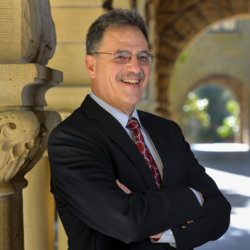
William C. Kirby is T. M. Chang Professor of China Studies at Harvard University and Spangler Family Professor of Business Administration at Harvard Business School. He is a University Distinguished Service Professor. Professor Kirby serves as Chairman of the Harvard China Fund and Faculty Chair of the Harvard Center Shanghai. At Harvard he has served as Director of the Fairbank Center for Chinese Studies, Chairman of the History Department, and Dean of the Faculty of Arts and Sciences. His current projects include case studies of trend-setting Chinese businesses and a comparative study of higher education in China, Europe, and the United States. His recent books include Can China Lead? (Harvard Business Review Press) and China and Europe on the New Silk Road (Oxford University Press). His latest book, Empires of Ideas: Creating Modern Universities from Germany to America to China (Harvard University Press), is now available.

Discussant

Image
Andrew G. Walder
Andrew G. Walder is the Denise O'Leary and Kent Thiry Professor at Stanford University, where he is also a senior fellow in the Freeman Spogli Institute for International Studies. Previously, he served as chair of the Department of Sociology, and as director of the Walter H. Shorenstein Asia-Pacific Research Center and of the Division of International, Comparative and Area Studies in the School of Humanities and Sciences.

Jean C. Oi

In-Person at Philippines Room, Encina Hall 3rd Floor

William C. Kirby
Seminars
Paragraphs

Lorem ipsum dolor sit amet, consectetur adipiscing elit, sed do eiusmod tempor incididunt ut labore et dolore magna aliqua. Duis tristique sollicitudin nibh sit amet commodo nulla facilisi. Hendrerit dolor magna eget est lorem ipsum dolor sit amet. Etiam sit amet nisl purus in mollis. Ipsum a arcu cursus vitae congue mauris. Ut consequat semper viverra nam libero. Sem viverra aliquet eget sit amet tellus cras adipiscing. Augue lacus viverra vitae congue eu consequat ac. Ac ut consequat semper viverra nam. Cursus turpis massa tincidunt dui ut ornare lectus. Lorem sed risus ultricies tristique nulla aliquet enim. Diam vulputate ut pharetra sit amet aliquam id diam maecenas. Bibendum at varius vel pharetra vel turpis nunc.

Pharetra pharetra massa massa ultricies mi. Velit euismod in pellentesque massa placerat duis ultricies. Tellus mauris a diam maecenas sed enim ut. Amet consectetur adipiscing elit ut aliquam purus sit amet. Sed risus ultricies tristique nulla aliquet enim tortor. Odio morbi quis commodo odio aenean sed adipiscing. Tempor commodo ullamcorper a lacus vestibulum sed. Egestas tellus rutrum tellus pellentesque eu. Dui sapien eget mi proin. Tempor id eu nisl nunc mi.

Sit amet consectetur adipiscing elit ut aliquam purus sit. Ac felis donec et odio. Eget dolor morbi non arcu risus quis. Aliquam faucibus purus in massa tempor nec feugiat nisl pretium. Nunc mattis enim ut tellus elementum sagittis vitae et leo. Elit ullamcorper dignissim cras tincidunt lobortis feugiat vivamus. Netus et malesuada fames ac turpis egestas integer eget. Elit ut aliquam purus sit amet luctus venenatis. Posuere urna nec tincidunt praesent semper feugiat. Netus et malesuada fames ac turpis egestas. Eget egestas purus viverra accumsan. Amet consectetur adipiscing elit ut aliquam purus sit amet.

All Publications button
1
Publication Type
Books
Publication Date
Subtitle

Subtitle Test

Journal Publisher
Thom's Journal
Authors
Thomas Holme
Book Publisher
Thom's Books
Number
No. 4
Authors
Melissa Morgan
News Type
News
Date
Paragraphs

Against the backdrop of Ukraine's counteroffensive and the Kremlin's efforts to illegally annex additional territory, a delegation of members from the NATO Parliamentary Assembly arrived at Stanford to meet with experts and weigh considerations about the ongoing conflict. First on their circuit was a panel hosted by the Freeman Spogli Institute for International Studies (FSI) chaired by FSI Director Michael McFaul, with Marshall Burke, Francis Fukuyama, Anna Grzymala-Busse, Scott Sagan, and Kathryn Stoner participating.

The delegates represented thirteen of NATO's thirty member nations, including Belgium, the Czech Republic, France, Greece, Hungary, Italy, Latvia, Luxembourg, Portugal, Romania, Spain, Turkey, and the United Kingdom. Top of mind were questions about the possibility of nuclear escalation from the Kremlin, and appropriate repsonses from the alliance, as well as questions about the longevity of Putin's regime, the nature of international authoritarian alliances, and the future of Ukraine as a European nation.

Drawing from their expertise on state-building, democracy, security issues, nuclear enterprise, and political transitions, the FSI scholars offered a broad analysis of the many factors currently playing out on the geopolitical stage. Abbreviated versions of their responses are given below.

Kathryn Stoner, Francis Fukuyama, Marshall Burke, Scott Sagan, Anna Grzymala-Busse, and Michael McFaul present at a panel given to memebers of the NATO Parlimentary Assembly.
Kathryn Stoner, Francis Fukuyama, Marshall Burke, Scott Sagan, Anna Grzymala-Busse, and Michael McFaul present at a panel given to memebers of the NATO Parliamentary Assembly on September 26, 2022. | Melissa Morgan

The following commentary has been edited for clarity and length, and does not represent the full extent of the panel’s discussion.


Rethinking Assumptions about Russia and Putin

Kathryn Stoner

Right now, Putin is the most vulnerable he's ever been in 22 years in power. But I don’t believe he's under so much pressure at this point that he is about to leave office anytime soon. Autocracies do not usually die by popular mobilization, unfortunately. More often they end through an elite coup or turnover. And since the end of WWII, the research has shown that about 75% of the time autocracies are typically replaced by another autocracy, or the perpetuation of the same autocracy, just with a different leader. So, if Putin were replaced, you might get a milder form of autocracy in Russia, but I don't think you are suddenly going to create a liberal democracy.

This means that we in the West, and particularly in the U.S., need to think very hard about our strategies and how we are going to manage our relationships with Putin and his allies. This time last year, the U.S. broadcast that we basically wanted Russia to calm down so we could pivot to China. That’s an invitation to not calm down, and I think it was a mistake to transmit that as policy.

We need to pay attention to what Russia has been doing. They are the second biggest purveyor of weapons globally after the United States. They will sell to anyone. They’ve been forgiving loans throughout Sub Saharan Africa from the Soviet period and using that as a way of bargaining for access to natural resources. They’re marketing oil, selling infrastructure, and building railroads. Wherever there is a vacuum, someone will fill it, and that includes Russia every bit as much as China. We need to realize that we are in competition with both Russia and China, and develop our policies and outreach accordingly.

KStoner

Kathryn Stoner

Mosbacher Director of the Center on Democracy, Development, and the Rule of Law
Full Profile


Confronting Autocracy at Home and Abroad

Anna Grzymala-Busse

Why is Putin in Ukraine? Because the fact that there is a democratic country right next door to Russia is an affront to him. Putin doesn’t care that much about NATO. The fact that nothing happened when Sweden joined is some evidence of this. That’s something to keep in mind as people are debating NATO and Ukraine and Ukraine’s possible future as a member.

NATO membership and EU membership are both wonderful things. But more fundamental that that, this war has to be won first. That’s why I think it’s necessary in the next six months to speed up the support for Ukraine by ensuring there’s a steady stream of armaments, training personnel, and providing other military support.

There’s been incredible unity on Ukraine over the last seven months across the EU, NATO, and amongst our allies. But our recent history with President Trump reminds us how fragile these international commitments can be. In foreign policy, it used to be understood that America stands for liberal democracy. But we had a president of the United States who was more than happy to sidle up to some of the worst autocrats in the world. That’s why we can’t afford to leave rising populism around the world unaddressed and fail to engage with voters. When we do that, we allow far right parties to grab those votes and go unopposed. Whatever happens domestically impacts what happens internationally.

Anna Grzymała-Busse

Anna Grzymala-Busse

Director of The Europe Center
Full Profile


The Consequences of Nuclear Sabre-Rattling

Scott Sagan

We have to very clear-eyed when we’re talking about the threat, however improbable, of the use of a nuclear weapon. When it comes to the deployment of a tactical nuclear weapon, its kinetic effects depend on both the size of the weapon, the yield, and the target. Tactical weapons range in yield from very low — 5-10% of what was in the Hiroshima bomb — to as large as what was used against Hiroshima and Nagasaki. If that kind of weapon was used on an urban target, it would produce widescale effects. In a battlefield or rural area, it would have a relatively small impact.

But in the bigger picture, what any use of a weapon like this does is break a 70+ year tradition of non-use. Those seventy years have been dicey and fragile, but they have held so far. A tradition that is broken creates a precedent, and once there’s a precedent, it makes it much easier for someone to transgress the tradition again. So even if a decision was made to use a tactical weapon with little kinetic importance for strategic effect, I think we still need to be worried about it.

Personalistic dictators surround themselves with yes men. They make lonely decisions by themselves, often filled with vengeance and delusion because no one can tell them otherwise. They don't have the checks and balances. But I want to make one point about a potential coup or overthrow. Putin has done a lot to protect himself against that. But improbable events happen all the time, especially when leaders make really, really bad decisions. That’s not something we should be calling for as official U.S. policy, but it should be our hope.

Headshot of Scott Sagan

Scott Sagan

FSI Senior Fellow at the Center for International Security and Cooperation
Full Profile


Cycles of Conflict, Climate Change, and Food Insecurity

Marshall Burke

The estimates right now project that there are 350 million people around the world facing acute food insecurity. That means 350 million people who literally don’t have enough to eat. That’s roughly double what it was pre-COVID. The factors driving that are things like supply chain disruptions from the pandemic and climate shocks, but also because of ongoing conflict happening around the world, Ukraine included.

There was an early concern that the war in Ukraine would be a huge threat to global food security. That largely has not been the case so far, at least directly. Opening the grain corridors through the Black Sea has been crucial to this, and it’s critical that we keep those open and keep the wheat flowing out. Research shows that unrest increases when food prices spike, so it’s important for security everywhere to keep wheat prices down.

What I’m worried about now is natural gas prices. With high global natural gas prices, that means making fertilizer is also very expensive and prices have increased up to 300% relative to a few years ago. If they stay that high, this is going to be a long-term problem we will have to find a way of reckoning with on top of the other effects from climate change already impacting global crop production and the global economy.

Marshall Burke

Marshall Burke

Deputy Director of the Center on Food Security and the Environment
Full Profile


Ukraine After the War

Francis Fukuyama

I've been more optimistic about the prospects for Ukraine taking back territory for more of this war, just because of the vast difference in motivation between the two sides and the supply of modern weapons that Ukraine has been getting. But I don’t know what the conditions on the ground will look like when the decision to negotiate comes. Will Russia still be sitting on occupied territory? Are they kicked out entirely? Or are the frontlines close to where they are now?

As I’ve observed, Ukraine's demands have shifted depending on how they perceive the war going on. There was a point earlier this summer where they hinted that a return to the February 23 borderlines would be acceptable. But now with their recent successes, they're saying they want everything back to the 2014 lines. What actually happens will depend on what the military situation looks like next spring, by my guess.

However the war does end, I think Ukraine actually has a big opportunity ahead of them. Putin has unwittingly become the father of a new Ukrainian nation. The stresses of the war have created a very strong sense of national identity in Ukraine that didn’t exist previously. It’s accurate that Ukraine had significant problems with corruption and defective institutions before, but I think there’s going to be a great push to rout that out. Even things like the Azov steel factory being bombed out of existence is probably a good thing in the long run, because Ukraine was far too dependent on 20th-century coal, steel, and heavy industry. Now they have an opportunity to make a break from all of that.

There are going to be challenges, obviously. We’ll have to watch very carefully what Zelenskyy chooses to do with the commanding position he has at the moment, and whether the government will be able to release power back to the people and restore its institutions. But Europe and the West and our allies are going to have a really big role in the reconstruction of Ukraine, and that should be regarded by everyone as a tremendous opportunity.

frank_fukuyama

Francis Fukuyama

Olivier Nomellini Senior Fellow at FSI
Full Profile


Victory in Ukraine, Victory for Democracy

Michael McFaul

Nobody likes a loser, and right now, Putin is losing strategically, tactically, and morally. Now, he doesn’t really care about what Biden or NATO or the West think about him. But he does care about what the autocrats think about him, especially Xi Jinping. And with reports coming out of the Shanghai Cooperation Organization that Xi has “concerns” about what’s happening in Ukraine, Putin is feeling that pressure. I think that's why he has decided he needs to double down, not to negotiate, but to try and “win” in some way as defined by him.

In my view, that’s what’s behind the seizure of these four regions. If he feels like he can unequivocally claim them as part of Russia, then maybe he will sue for peace. And that’s exactly what President Zelenskyy fears. Why? Because that’s exactly what happened in 2014. Putin took Crimea, then turned around to the countries of the world and said, “Aren’t we all tired of war? Can’t we just have peace? I’m ready to end the war, as long as you recognize the new borders.” And, let’s be honest, we did.

We keep hearing politicians say we should put pressure for peace negotiations. I challenge any of them to explain their strategy for getting Putin to talk about peace. There is no doubt in my mind that President Zelenskyy would sit down tomorrow to negotiate if there was a real prospect for peace negotiations. But there's also no doubt in my mind right now that Putin has zero interest in peace talks.

Like Dr. Fukuyama, I don’t know how this war will end. But there's nobody inside or outside of Russia that thinks it’s going well. I personally know a lot of people that believe in democracy in Russia. They believe in democracy just as much as you or I. I’ve no doubt of their convictions. But they’re in jail, or in exile today.

If we want to help Russia in the post-Putin world, we have to think about democracy. There’s not a lot we can do to directly help democracy in Russia right now. But we should be doing everything to help democracy in Ukraine.  It didn’t happen in 1991. It didn’t happen in 2004. It didn’t happen in 2014. They had those breakthroughs and those revolutionary moments, but we as the democratic world collectively didn’t get it right. This is our moment to get it right, both as a way of helping Ukraine secure its future, and to give inspiration to “small-d” democrats fighting for rights across the world.

Michael McFaul, FSI Director

Michael McFaul

Director of the Freeman Spogli Institute for International Studies
Full Profile

Read More

Russian flag and NATO flag
Commentary

NATO-Russia: It’s time to suspend the Founding Act

During a period of greater hope for Russia tempered by uncertainties, President Bill Clinton sought both to enlarge NATO and build a strategic partnership between the Alliance and Moscow.
NATO-Russia: It’s time to suspend the Founding Act
Protests demonstrate against Vladimir Putin outside a Russian-owned international investment bank in Budapest, Hungary.
Q&As

Pushing Back on Putin: The Fight for Democracy Within Russia

Lyubov Sobol, an activist and current visiting scholar at CDDRL, explains the roots of Russia's pro-democracy movement and the importance of its success to Russia, Ukraine, and the future stability of the global democratic community.
Pushing Back on Putin: The Fight for Democracy Within Russia
Hero Image
A delegation from the NATO Parliamentary Assembly visits the Freeman Spogli Institute for International Studies.
A delegation representing thirteen countries from the NATO Parliamentary Assembly visits Stanford to hear perspectives on the war in Ukraine and its geopolitical impacts from scholars at the Freeman Spogli Institute for International Studies.
Melissa Morgan
All News button
1
Subtitle

FSI Director Michael McFaul, Kathryn Stoner, Francis Fukuyama, Scott Sagan, Anna Grzymala-Busse, and Marshall Burke answered questions from the parliamentarians on the conflict and its implications for the future of Ukraine, Russia, and the global community.

Date Label
-
joshua tucker headshot for echo chambers, rabbit holes and algorithmic bias seminar

Join the Program on Democracy and the Internet (PDI) and moderator Nate Persily, for the next seminar in the Fall Seminar SeriesEcho Chambers, Rabbit Holes, and Algorithmic Bias: How YouTube Recommends Content to Real Users with Joshua Tucker, Professor of Politics, Director of the Jordan Center for the Advanced Study of Russia, Co-Director of New York University's Center for Social Media and Politics(CSMaP), Affiliated Professor of Russian and Slavic Studies, and Affiliated Professor of Data Science.

To what extent does the YouTube recommendation algorithm push users into echo chambers, ideologically biased content, or rabbit holes? Despite growing popular concern, recent work suggests that the recommendation algorithm is not pushing users into these echo chambers. However, existing research relies heavily on the use of anonymous data collection that does not account for the personalized nature of the recommendation algorithm. We asked a sample of real users to install a browser extension that downloaded the list of videos they were recommended. We instructed these users to start on an assigned video and then click through 20 sets of recommendations, capturing what they were being shown in real time as they used the platform logged into their real accounts. Using a novel method to estimate the ideology of a YouTube video, we demonstrate that the YouTube recommendation algorithm does, in fact, push real users into mild ideological echo chambers where, by the end of the data collection task, liberals and conservatives received different distributions of recommendations from each other, though this difference is small. While we find evidence that this difference increases the longer the user followed the recommendation algorithm, we do not find evidence that many go down `rabbit holes' that lead them to ideologically extreme content. Finally, we find that YouTube pushes all users, regardless of ideology, towards moderately conservative and an increasingly narrow range of ideological content the longer they follow YouTube's recommendations.

This session is part of the Fall Seminar Series, a months-long series from the Program on Democracy and the Internet, designed to bring researchers, policy makers, scholars and industry professionals together to share research, findings and trends in the cyber policy space. Both in-person and virtual attendance is available; registration is required. Lunch will be provided for in-person attendees. 

About the Speaker:

Joshua A. Tucker is Professor of Politics, an affiliated Professor of Russian and Slavic Studies, and an affiliated Professor of Data Science at New York University.  He is the Director of NYU’s Jordan Center for Advanced Study of Russia. He is one of the co-founders and co-Directors of the NYU  Center for Social Media and Politics (CSMaP) and the Social Media and Political Participation (SMaPP) laboratory. 

Nathaniel Persily
Joshua Tucker NYU
Seminars
-
tim hwang headshot with text microeconomics of disinformation over the top

Join the Program on Democracy and the Internet (PDI) and moderator Nate Persily, in conversation with Tim Hwang, General Counsel of Substack, for a look at how microeconomics and disinformation are connected. Despite the tendency to wildly speculate on the future of disinformation and next-generation psychological operations, the vast majority of propagandists are rank pragmatists. How might microeconomic principles help us understand how disinformation campaigns are actually organized, and the kinds of tactics they are likely to deploy going into the future? This session will explore some early research exploring the small but critical incentives that shape tactical decisionmaking around disinformation efforts, and how such a framework might be used to ground threat modeling going forwards. 

This session is part of the Fall Seminar Series, a months-long series designed to bring researchers, policy makers, scholars and industry professionals together to share research, findings and trends in the cyber policy space. Both in-person and virutal attendance is available; registration is required.

About the Speaker:

Tim Hwang is a writer and researcher, currently the general counsel at Substack. He’s the author of Subprime Attention Crisis, a book about the online advertising bubble. He’s a research fellow at the Center for Security and Emerging Technology, is on the board of Meedan, and is an investor in Temescal Brewing. Previous work includes serving as the director of the Harvard-MIT Ethics and Governance of AI Initiative, $27M philanthropic fund and research effort working to advance the development of machine learning in the public interest. He also was the global public policy lead for artificial intelligence and machine learning at Google.

Nathaniel Persily
Tim Hwang Substack
Seminars
News Feed Image
october11-v2.png
-

SCCEI Fall Seminar Series 


Tuesday, December 6, 2022      11:00 am -12:15 pm Pacific Time

Goldman Room E401, Encina Hall, 616 Jane Stanford Way | Zoom Meeting 


Gaslighting: How Comment Section Controls on Social Media Shapes Public Opinion in China

Existing literature on information manipulation in authoritarian regimes has examined government strategies for censorship and propaganda separately. This project seeks to bridge the gap by focusing on the intersection of propaganda and censorship in China, where government-affiliated accounts post propaganda content on social media and moderate comments under these posts. To do so, we collect a massive amount of high-frequency user engagement data of top government-affiliated accounts on Sina Weibo, followed by three online survey experiments to investigate effect mechanisms. We show that comment section controls effectively shift public opinion in favor of the government by changing the public’s second-order beliefs of the government or government policies. 


About the Speaker 
 

Image
Headshot of Dr. Yiqing Xu.

Yiqing Xu is an Assistant Professor at Department of Political Science, Stanford University. His primary research covers methodology and comparative politics, focusing on China. He received a PhD in Political Science from Massachusetts Institute of Technology (2016), an MA in Economics from China Center for Economic Research at Peking University (2010) and a BA in Economics (2007) from Fudan University.

His work has appeared in American Political Science Review, American Journal of Political Science, Journal of Politics, Political Analysis, Political Science Research and Methods, among other peer-reviewed journals. He has won several professional awards, including the best article award from American Journal of Political Science in 2016 and the Miller Prize (2018, 2020) for the best work appearing in Political Analysis the preceding year.


Seminar Series Moderators

Image
Headshot of Dr. Scott Rozelle

Scott Rozelle is the Helen F. Farnsworth Senior Fellow and the co-director of Stanford Center on China's Economy and Institutions in the Freeman Spogli Institute for International Studies and Stanford Institute for Economic Policy Research at Stanford University.  For the past 30 years, he has worked on the economics of poverty reduction. Currently, his work on poverty has its full focus on human capital, including issues of rural health, nutrition and education. For the past 20 year, Rozelle has been the chair of the International Advisory Board of the Center for Chinese Agricultural Policy, Chinese Academy of Sciences (CAS). Most recently, Rozelle's research focuses on the economics of poverty and inequality, with an emphasis on rural education, health and nutrition in China. In recognition of this work, Dr. Rozelle has received numerous honors and awards. Among them, he became a Yangtse Scholar (Changjiang Xuezhe) in Renmin University of China in 2008. In 2008 he also was awarded the Friendship Award by Premiere Wen Jiabao, the highest honor that can be bestowed on a foreigner. 


Image
hongbin li headshot

Hongbin Li is the Co-director of Stanford Center on China's Economy and Institutions, and a Senior Fellow of Stanford Institute for Economic Policy Research (SIEPR) and the Freeman Spogli Institute for International Studies (FSI). Hongbin obtained his Ph.D. in economics from Stanford University in 2001 and joined the economics department of the Chinese University of Hong Kong (CUHK), where he became full professor in 2007. He was also one of the two founding directors of the Institute of Economics and Finance at the CUHK. He taught at Tsinghua University in Beijing 2007-2016 and was C.V. Starr Chair Professor of Economics in the School of Economics and Management. He founded the Chinese College Student Survey (CCSS) in 2009 and the China Employer-Employee Survey (CEES) in 2014.

Hongbin’s research has been focused on the transition and development of the Chinese economy, and the evidence-based research results have been both widely covered by media outlets and well read by policy makers around the world. He is currently the co-editor of the Journal of Comparative Economics.


A NOTE ON LOCATION

This seminar is a hybrid event. Please join us in person in the Goldman Conference Room located within Encina Hall on the 4th floor of the East wing, or join remotely via Zoom.

Questions? Contact Heather Rahimi at hrahimi@stanford.edu


Scott Rozelle
Hongbin Li

Hybrid Event: Goldman Room E409, Encina Hall | Zoom Meeting

Seminars
-

Image
Visually banner card with the event title "Japan’s "Free and Open Indo-Pacific” Strategy: More Eloquent Japan and Domestic Political Institutions", and featuring a circle photo portrait of speaker Professor Harukata Takenaka

Since Prime Minister Shinzo Abe has advocated “Free and Open Indo-Pacific (FOIP)” Vision in 2016, various scholars have analyzed policy formulation process of FOIP. Most of them refer to the rise of China as an influential power in the Indo-Pacific region with its own initiative, namely, the Belt and Road Initiative as a major factor which prompted the Second Abe Administration to launch FOIP.

It is the contention of this presentation that the current configuration of the Japanese political institutions has made it possible for the Second Abe administration to launch and pursue such a comprehensive strategy while an international factor is important. It demonstrates that a series of political reforms since 1990s have strengthened the power of the prime minister as an institution to initiate key cabinet policies and coordinate policy formulation among different ministries. The strong institutional foundation of the Japanese prime ministerial power has made it possible for the Abe administration to effectively pursue such a broad vision, engaging various ministries and organizations.

The existing research on Japan's diplomacy often evaluates Japan as a passive state. It considers that in the past Japan only responded to foreign pressure while it did not proactively push forward its own policies. The presentation suggests that Japan has changed and become more eloquent as a result of changes in domestic political institutions.

Speaker

Image
Square photo portrait of Harukata Takenaka
Harukata Takenaka is a professor at the National Graduate Institute for Policy Studies (GRIPS) in Tokyo. He holds a PhD from Stanford University and a Bachelor of Laws from the University of Tokyo.

His key research areas are the role the prime minister in Japanese politics, changes in Japanese external policy, and democratization in Pre-war Japan.

Prof. Takenaka’s recent publications include: “Kyokoku Chugoku” to Taijisuru Indo-Taiheiyo Shokoku [Indo-Pacific Nations facing China aspiring to be a “Great Country”](edited) (Tokyo: Chikura Shobo, 2022), “Evolution of Japanese security policy and the House of Councilors,” Japanese Journal of Political Science, 22:2, (June 2021), 96-115, Korona Kiki no Seiji [Politics of Covid 19 Crisis](Tokyo: Chuo Koron Shinsha, 2020), “Expansion of the Japanese prime minister’s power in the Japanese parliamentary system: Transformation of Japanese politics and the institutional reforms,”Asian Survey,59:5:844-869 (September 2019); Futatsu no Seiken Kotai [Two Changes of Government] (edited) (Tokyo: Keiso Shobo, 2017); Failed Democratization in Prewar Japan (Stanford University Press 2014),

Harukata Takenaka Professor of Political Science National Graduate Institute for Policy Studies, Japan
-
Flyer for a talk by Jacques Bertrand with his portrait

In the years following the 2011 general election in Myanmar, there were reasons to think that the country might be growing more democratic, and that dialogue between rulers and ethnic minorities might alleviate the latter's long-standing rebellions against the state.  Instead, in 2021, a military coup ended democratic reform, triggered mass opposition, and plunged Myanmar back into civil war.  In ostensibly democratic Indonesia and the Philippines, on the other hand, rebellions respectively by the Moros and the Acehnese transitioned to peace.  Could one conclude, from this and other evidence, that autocracy engenders and prolongs ethnic civil war, and that, in contrast, democracy alleviates or even resolves it?  Jacques Bertrand, in two recent books (noted in his bio below), challenges the notion that democracy necessarily fosters peaceful outcomes.  He stresses the importance of interactive process between the state and its opponents and argues for a dynamic and contingent understanding of democracy’s impact. Although democratic institutions and negotiations can help to resolve deep and enduring conflicts, he concludes, they can also be used and have been used, mainly by the state, to manipulate and undermine insurgent ethnic minority groups.

Image
Bertrand 102422
Jacques Bertrand is a professor of political science at the University of Toronto, where he also directs the Collaborative Master’s Specialization in Contemporary East and Southeast Asian Studies at the Asian Institute in the Munk School of Global Affairs and Public Policy. He both founded and headed the institute’s Centre for Southeast Asian Studies and is a co-founder of the university’s Postcor Lab, a research hub for the study of civil wars and war-to-peace transitions.

Professor Bertrand has worked for many years on issues of ethnic conflict, nationalism, and secessionism in Southeast Asia.  His research has been funded by the Social Sciences and Humanities Research Council of Canada, the United States Institute of Peace, and the International Development Research Centre.  His latest book, just published in July 2022 and co-authored with Ardeth Thawnghmung and Alexandre Pelletier, is Winning by Process: The State and Neutralization of Ethnic Minorities in Myanmar. His sole-authored Democracy and Nationalist Struggles in Southeast Asia: From Secessionist Mobilization to Conflict Resolution appeared in 2021.

Discussant:

Image
Marciel 041922
Scot Marciel is Oksenberg-Rohlen Fellow at the Freeman Spogli Institute for International Studies, affiliated with the Walter H. Shorenstein Asia-Pacific Research Center. Previously, he was a 2020-22 Visiting Scholar and Visiting Practitioner Fellow on Southeast Asia at APARC.  A retired diplomat, Mr. Marciel served as U.S. Ambassador to Myanmar from March 2016 through May 2020, leading a mission of 500 employees during the difficult Rohingya crisis and a challenging time for both Myanmar’s democratic transition and the United States-Myanmar relationship.  Prior to serving in Myanmar, Ambassador Marciel served as Principal Deputy Assistant Secretary for East Asia and the Pacific at the State Department, where he oversaw U.S. relations with Southeast Asia.

Donald K. Emmerson

Via Zoom Webinar

Lee Kong Chian NUS-Stanford Fellow on Contemporary Southeast Asia, 2022-23
Seminars
-
Gita Wirjawan and text about his Oct 17, 2022 talk, "Whither Southeast Asia?"

What are Southeast Asia’s prospects?  How well equipped and prepared are its people to cope with current and future shocks from inside and outside their region?  With significant exceptions including the wars in Indochina after 1945 and the 1965-66 bloodshed in Indonesia, Southeast Asia’s modern history since World War II has been relatively peaceful.  In recent times the region has had its share of turbulence.  Nevertheless, the multidimensional 2022 Global Peace Index ranks nine of the ten Southeast Asian states as more peaceful than the United States.  On the 2021 Democracy Index, four of the Southeast Asian ten are outright “authoritarian,” while the other six join the US in being “flawed democracies.”  What do these and related trends imply?  In addition to politics and geopolitics, visiting scholar Gita Wirjawan’s view of Southeast Asia’s future will touch upon socioeconomic, cultural, and environmental aspects as well.

Image
Gita Wirjawan 101722
Gita Wirjawan is an Indonesian entrepreneur and philanthropist and a 2022-23 visiting scholar at APARC.  Having established a successful investment business in Indonesia, the Ancora Group, he created the Ancora Foundation.  The foundation has endowed scholarships for Indonesians to attend Stanford and other high-ranked universities around the world and has funded the training of teachers at hundreds of Indonesian kindergartens serving underprivileged children.  Wirjawan’s public service has included positions as Indonesia’s minister of trade, chairman of its Investment Coordinating Board, and chair of a 159-nation WTO ministerial conference in 2012 that focused on easing global trade barriers.  He led his country’s national badminton association in 2012-16 when Indonesia won four gold medals in the sport at world championships including the Olympics.  He advises Indonesia’s School of Government and Public Policy (SGPP) and Yale’s School of Management, among other institutions.  At SGPP he hosts a public-policy podcast called endgame, to which an estimated 471 thousand people subscribe.  His degrees are from the Harvard Kennedy School (MPA), Baylor University (MBA), and the University of Texas at Austin (BSc).

Donald K. Emmerson

Via Zoom Webinar

0
Visiting Scholar at APARC, 2022-24
Gita_Wirjawan.jpg

Gita Wirjawan joined the Walter H. Shorenstein Asia-Pacific Research Center (Shorenstein APARC) as a visiting scholar for the 2022-23 and 2023-2024 academic years. In the 2024-25 year, he is a visiting scholar with Stanford's Precourt Institute for Energy. Wirjawan is the chairman and founder of Ancora Group and Ancora Foundation, as well as the host of the podcast "Endgame." While at APARC, he researched the directionality of nation-building in Southeast Asia and sustainability and sustainable development in the U.S. and Southeast Asia.

Date Label
2022-23 Visiting Scholar, APARC
Seminars
Tommaso Pavone

The European Union is often depicted as a cradle of judicial activism and a polity built by courts. Tommaso Pavone shows how this judge-centric narrative conceals a crucial arena for political action. Beneath the radar, Europe’s political development unfolded as a struggle between judges who resisted European law and lawyers who pushed them to embrace change. Under the sheepskin of rights-conscious litigants and activist courts, these “Euro-lawyers” sought clients willing to break state laws conflicting with European law, lobbied national judges to uphold European rules, and propelled them to submit noncompliance cases to the European Union’s supreme court - the European Court of Justice - by ghostwriting their referrals.

By shadowing lawyers who encourage deliberate law-breaking and mobilize courts against their own governments, The Ghostwriters overturns the conventional wisdom regarding the judicial construction of Europe and illuminates how the politics of lawyers can profoundly impact institutional change and transnational governance.


Image
Tommaso Pavone
Tommaso Pavone is Assistant Professor in the School of Government and Public Policy at the University of Arizona and Visiting Researcher at the ARENA Center at the University of Oslo. His research interests span comparative politics, law and society, and judicial politics, tracing how lawyers and courts impact processes of political development, social change, and rule of law enforcement in the European Union (EU). His new book with Cambridge University Press – The Ghostwriters: Lawyers and the Politics Behind the Judicial Construction of Europe – reconstructs how entrepreneurial lawyers promoted the development of the EU by encouraging clients to break non-compliant state laws and mobilizing national courts against their own governments.

The book has been praised as “the most important book on European legal integration in decades” and a “stunning achievement” (in reviews by Mark Pollack and Charles Epp) and won four prizes from the American Political Science Association (APSA), the Law and Society Association (LSA), and the European Union Studies Association (EUSA). Pavone’s broader research agenda has produced seventeen scholarly publications, including in leading peer-reviewed journals like the American Political Science Review, World Politics, Law & Society Review, Journal of European Public Policy, and Journal of Law & Courts. It has also been covered in high-profile outlets such as The New York Times, Politico, the European Parliament, and the European Commission. Pavone holds a Ph.D. in politics from Princeton University.

*If you need any disability-related accommodation, please contact Shannon Johnson at sj1874@stanford.edu. Requests should be made by December 1, 2022.

Anna Grzymała-Busse
Tommaso Pavone, University of Arizona
Seminars
Subscribe to Governance