Governance

FSI's research on the origins, character and consequences of government institutions spans continents and academic disciplines. The institute’s senior fellows and their colleagues across Stanford examine the principles of public administration and implementation. Their work focuses on how maternal health care is delivered in rural China, how public action can create wealth and eliminate poverty, and why U.S. immigration reform keeps stalling. 

FSI’s work includes comparative studies of how institutions help resolve policy and societal issues. Scholars aim to clearly define and make sense of the rule of law, examining how it is invoked and applied around the world. 

FSI researchers also investigate government services – trying to understand and measure how they work, whom they serve and how good they are. They assess energy services aimed at helping the poorest people around the world and explore public opinion on torture policies. The Children in Crisis project addresses how child health interventions interact with political reform. Specific research on governance, organizations and security capitalizes on FSI's longstanding interests and looks at how governance and organizational issues affect a nation’s ability to address security and international cooperation.

-

- This event is offered as a joint sponsorship with the Hoover Institution - 


Abstract: Writing on matters relating to the cyber era dominate government and academia alike.  Much of the focus tends to be on either the technical aspects or questions about cyber threats and warfare. Much less attention has been on the advent of the cyber era for the intelligence community. While there can be no doubt that the technological age in which we find ourselves today is new, there is a related question about the extent to which it has changed the work of the intelligence community. This talk argues that to find an answer, it is imperative to consider previous technological revolutions and consider how the intelligence community adapted. Only by doing so is it possible to address the issue of whether intelligence is the cyber era is a revolution or evolution.

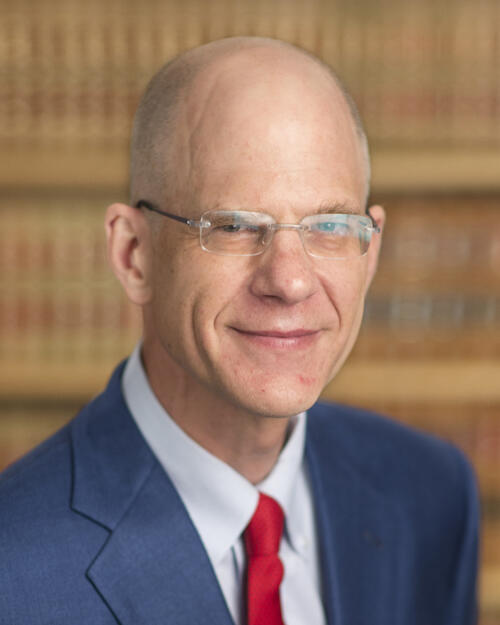
About the Speaker: Professor Michael S. Goodman is a Professor in ‘Intelligence and International Affairs’ in the Department of War Studies, King's College London.  He has published widely in the field of intelligence history, including most recently The Official History of the Joint Intelligence Committee, Volume I: From the Approach of the Second World War to the Suez Crisis (Routledge, 2014), which was chosen as one of The Spectator’s books of the year.  He is series editor for ‘Intelligence and Security’ for Hurst/Columbia University Press and is a member of the editorial boards for five journals, including the three main intelligence ones. He is currently on secondment to the Cabinet Office where he is the Official Historian of the Joint Intelligence Committee.

Michael Goodman Professor in Intelligence and International Affairs Speaker King's College London
Seminars

Encina Hall

616 Serra St., C100

Stanford, CA 94305-6055

(650) 723-9732
0
sam_rebo_headshot.jpg

Sam Rebo is a Research and Project Assistant at FSI. He aids FSI Director Michael McFaul with background research for his upcoming book and facilitates FSI's new European Security Initiative.

Sam received his B.A. in International Relations with Honors in International Security from Stanford University. In the past, he has worked at the Moscow Carnegie Center, the French Institute of International Relations in Paris, and Global Integrity in Washington, D.C. His interests include Soccer and the Violin. He claims to make the best grilled cheese sandwich known to man.

Research Assistant and Project Coordinator
Authors
News Type
News
Date
Paragraphs


A podcast from the book event on Jan. 15 is available at the link above. An earlier interview with author Michael Armacost was first published in Oct. 2015 and is reposted below.

When it comes to elections, politics can supersede strategy. But what is often overlooked is the process through which the United States selects their commander in chief and its impact on policy – particularly, foreign policy.

What then shapes foreign policy during that time? “Events, my dear boy, events,” Harold Macmillan, a former British prime minister, famously replied when asked what could change a government's directions. To which Michael Armacost agrees and explores the interplay between campaign politics and foreign policy in his new book.

“Since World War II, the United States has consistently pursued a global role, but the tempo of its engagement with the world has been repeatedly adjusted to reflect circumstances and domestic moods,” Armacost wrote.

A veteran scholar, former ambassador and undersecretary of state for political affairs, Armacost is an expert on the U.S. government system and policy process. In the book, he examines ideology and the struggle for power in the six elections that have taken place since 1948, ending with Barack Obama’s re-election in 2012.

The book, which reads somewhat like a guide, largely began as a project for students, he said. 

Armacost initially came to Stanford in 1994, and in 2002, returned as a distinguished fellow at the Walter H. Shorenstein Asia-Pacific Research Center. He co-teaches a graduate course on U.S. policy in Northeast Asia.

“When I left government, I found a lot of literature on how foreign policy affects elections but little in the reverse,” Armacost said. “So my aim behind the research was to not only satisfy my own curiosity but to offer a comprehensive and accessible analysis for students.”

Armacost’s career in government began in 1983 when an advisor encouraged him to apply for a White House fellowship. His fellowship in the deputy secretary of state’s office – which was only set to be a single year in Washington – led to 24 years of public service.

He went on to serve as the U.S. ambassador to Japan from 1989 to 1993 and the Philippines from 1982 to 1984, and was a member of the National Security Council.

Armacost said he remains positive about the electoral system, while also suggesting a few reforms. The system ensures a cyclical chance to step back and assess where America stands in the world, he said.

“Our system provides regular opportunities to put the spotlight on troubling foreign policy problems,” he wrote. “And supplies an incentive to consider course corrections for costly, inconclusive foreign as well as domestic policies, or offers a chance to select new management to fix them.”

Shorenstein APARC asked him a few questions about his research in the context of the 2016 election cycle. His answers are posted below.

Will Obama attempt a “sprint to the finish line” on foreign policy?

He is well embarked on that sprint. In the fourth quarter of his presidency, he is eager to burnish his foreign policy legacy. President Obama’s agenda is clear. It includes the normalization of relations with Cuba, implementation of the Iran nuclear agreement, ratification of the Trans-Pacific Partnership free trade agreement, and promotion of further international cooperation on climate change. He will also seek to avoid losing ground in geopolitical competition with ISIS in Iraq and Syria, the Russians in the Ukraine and elsewhere, and China in the South China Sea.

A president’s power to effectively undertake controversial initiatives at home and abroad tends to ebb as his tenure runs out. Those requiring Congressional support are particularly problematic. And events will play a large role in determining the problems and opportunities that come his way before Jan. 20, 2017.

Does the Trans-Pacific Partnership (TPP) stand a chance of getting ratified?

It stands a chance, but it will not be easy. Fortunately, Trade Promotion Authority has been secured from the Congress. Hence, it will be limited to an up or down vote without amendments.

Opposition from labor unions and environmental groups assures that there will be very limited Democratic support for the TPP, and Hillary Clinton, Bernie Sanders and Martin O’Malley have publicly expressed their opposition. There has also been some erosion of support for free trade among the Republicans, whose leaders have mostly expressed misgivings about some of the TPP’s provisions.

I believe the TPP will advance U.S. economic and strategic interests, but whether its ratification will be achieved before or after the 2016 election is at this point uncertain.

How do the politics of the TPP differ from that of George H.W. Bush’s pursuit of the NAFTA agreement in 1992?

In 1992 President Bush didn’t hesitate to push hard for NAFTA throughout his campaign. And the Mexican and Canadian governments also regarded the U.S. election day as a convenient deadline for getting the agreement finished. The president’s GOP Party believed in free trade, and considered the push for an embryonic hemispheric market a worthy and historic objective. A NAFTA accord could be portrayed as extending a helping hand to a friendly neighbor. The Party’s business constituency was supportive; the bulwark of opposition to the deal were labor and environmental groups, which were unlikely to vote for Bush anyway.

Promoting NAFTA also offered the president a chance to put the Democratic candidate, Bill Clinton, who had made public remarks supporting such an agreement, on the spot. If he reversed his position and opposed the accord, he could be accused of “waffling;” if he didn’t, he would risk alienating his labor and environmental constituencies. Bush nearly got the deal finished, but side letters on labor and environmental issues remained to be completed after Clinton won the election.

This year, a Democratic president is confronting major opposition from his own party, and widespread support from Congressional Republicans is therefore indispensable to his chances of ratifying the agreement. A number of Republican leaders who are generally supportive of free trade, however, contend that President Obama was so eager to wrap up the deal on his own watch, that he missed a chance to drive a harder bargain. Others are reluctant to hand the president a foreign policy victory during a presidential campaign.

And as November 2016 nears, the Democratic candidate is likely to be reluctant to buck unions and environmental groups who not only provide much needed financial support, but supply the volunteers who perform crucial “get out the vote” duties on election day.

Where does foreign policy fit into the 2016 campaign? 

Foreign policy is likely to feature very prominently in the coming election, particularly if the economy continues its steady, if modest, rate of growth. The reason is simple. The United States faces serious challenges in the Middle East, the Ukraine, South Asia and the South China Sea. And many voters who favored retrenchment in 2008, now fear it is now perceived increasingly by friends and adversaries as weakness and/or retreat.

One should not, however, expect the presidential campaign to illumine the strategic choices we face abroad. Presidential contenders typically articulate a wide range of aspirational foreign policy goals. But they rarely outline priorities among these declared aims, let alone their potential costs and risks, or the trade-offs among them. To address these core elements of strategy might offend one or another potential voting bloc. Candidates, therefore, tend to focus upon the appeal of their foreign policy objectives at home, rather than their efficacy abroad.

A wide field of candidates has emerged early on. What foreign policy issues are not being addressed that should figure in the debates?

It’s a bit early to say. The first primaries are still three months away. Few debates have yet been held. The election is likely in any event to be in part a referendum on President Obama’s record. But Hillary Clinton, who served for four years as the Secretary of State, is differentiating her position from that of Obama’s on a number of foreign policy matters. And as I noted above, the focus in most campaigns is on laudable goals rather than the key elements of strategy, i.e. the operational tests of foreign policy for anyone who occupies the Oval Office.

What will happen to the U.S. “pivot back to Asia” strategy?

President Obama performed a useful service in underlining America’s growing stake in Asia. I would expect the candidates of both major parties to affirm their intent to devote more time, attention and resources to the Asia-Pacific region. The problems the current administration has experienced in Asia are a by-product of the policy’s implementation. Many Asian leaders wonder whether the policy has been forgotten or overtaken by events. Adjustments in our regional security policy have been essentially symbolic.

With China, we are still looking for a sustainable balance between constructive engagement and prudent hedging. The diplomatic opening to Myanmar was timely, but progress has been complicated by ethnic struggles in that country. American leaders visit Asia periodically, but the United States is still perceived as primarily preoccupied with problems in the Middle East. Conclusion of the TPP will lend credibility to the policy, but only if the agreement is ratified. So it will be up to the next president to put some meat on the bones of this strategic initiative.

How do election cycles in the United States and South Korea mesh, and what might the coming cycle mean for U.S.-Korean relations?

America has a four-year election cycle for the presidency. The Republic of Korea elects its presidents for a five-year term. We have experienced several occasions when our cycles appeared out of sync, i.e. when the United States elected more conservative candidates to the White House as the Koreans chose more liberal contenders for the Blue House. George W. Bush, a conservative, served during a period when the South Korean presidents – Kim Dae Jung and Roh Moo-Hyun – were both liberals or progressives. American and South Korean perspectives on policy toward North Korea diverged sharply. Nonetheless, they joined hands in launching the U.S.-Korea Free Trade Agreement, and formulated plans for a major redeployment of U.S. military forces away from the Seoul metropolis to bases further south. And President Obama, a liberal, fashioned a close relationship with Presidents Lee Myung-bak and Park Geun-hye, both conservatives.

Thus, shared national interests have a way of tempering the ideological predilections of our respective leaders, enabling them to collaborate when dangers loom or when opportunities beckon.

South Korea now trades twice as much with China as it does with the United States and Japan combined. So its economy is tied more closely to China now, though it still looks to Washington for protection. Seoul will not want to choose between its economic interests and its strategic concerns. The United States has no reason to force such a choice on its ally, but it is clear that Beijing hopes to use its economic leverage to influence the Republic of Korea’s strategic decisions, for example, its readiness to deploy a THAAD, high altitude ballistic missile defense system. This is the kind of issue that could feed back into our election-year politics.

Related links

WNYC Brian Lehrer Show (Audio): How Elections Derail Foreign Policy (Aug. 4, 2015)

Hero Image
rtr3a3uf
Confetti on stage as U.S. President Barack Obama celebrates after winning the U.S. presidential election in Chicago, Illinois, Nov. 7, 2012.
Reuters/Phillip Scott
All News button
1
Date Label
-

Abstract

Image
fabbrini jacket book  20151
Professor Sergio Fabbrini will present highlights from his most recent book Which European Union? Europe After the Euro Crisis. He puts forward an argument for interpreting the European Union (EU) from a comparative perspective. The aim is to bring Stein Rokkan to Brussels, that is to interpret the structuring and functioning of the EU according to the basic analytical concepts of the literature on comparative politics. Which European Union? not only repositions the EU in a comparative context, but also conceptually innovates the tool-kit of comparative politics. Based on a reinterpretation of the literature on comparative federalism, the book conceptualizes two species of the ‘federal political system’ genus, i.e. federal states arising from the disaggregation of previously unitary states and federal unions arising from the aggregation of previously independent states.


Speaker Bio

Image
sergio fabbrini photo personal2
Sergio Fabbrini is Director of the School of Government and Professor of Political Science and International Relations at the LUISS Guido Carli University of Rome, where he holds the Jean Monnet Chair. He is also Recurrent Visiting Professor of Comparative Politics at the Department of Political Science and Institute of Governmental Studies, University of California at Berkeley. He has published fourteen books, two co-authored books and fourteen edited or co-edited books. His most recent publications in English include Compound Democracies: Why the United States and Europe Are Becoming Similar, 2nd edn (2010) and America and Its Critics: Vices and Virtues of the Democratic Hyperpower (2008).


This event is hosted by the Bill Lane Center for the American West and co-sponsored by the Center on Democracy, Development and the Rule of Law. 


[[{"fid":"220764","view_mode":"crop_870xauto","fields":{"format":"crop_870xauto","field_file_image_description[und][0][value]":"","field_file_image_alt_text[und][0][value]":"","field_file_image_title_text[und][0][value]":"","field_credit[und][0][value]":"","field_caption[und][0][value]":"","field_related_image_aspect[und][0][value]":"","thumbnails":"crop_870xauto"},"type":"media","attributes":{"width":"870","class":"media-element file-crop-870xauto"}}]]

Sergio Fabbrini LUISS Guido Carli University of Rome LUISS Guido Carli University of Rome
Seminars
-

This event is now full.  Please contact khaley@stanford.edu if you would like to be added to the wait list.

Russian President Vladimir Putin is not the cipher he is sometimes thought to be. His early life, his career in intelligence, and his early service in the newly democratic St. Petersburg -- explain the policies now on display at home and increasingly abroad. Putin has evolved as the country has, becoming the most consequential leader of any country in the world. Although he is often portrayed as an enigma or as caricature, it is essential to understand the characteristics, events and goals that motivate him.  

Steven Lee Myers has worked at The New York Times for twenty-six years, seven of them in Russia during the period when Putin consolidated his power. He spent two years as bureau chief in Baghdad, covering the winding down of the American war in Iraq, and now covers national security issues. He lives in Washington, D.C.


Steven Lee Myers Diplomatic Correspondent, Washington Bureau, The New York Times
Lectures
Authors
News Type
News
Date
Paragraphs

New research finds that without climate change mitigation, even wealthy countries will see an economic downturn by 2100.

When thousands of scientists, economists and policymakers meet in Paris this December to negotiate an international climate treaty, one question will dominate conversations: what is the climate worth?

A new study published in the journal Nature shows that the global economy will take a harder hit from rising temperatures than previously thought, with incomes falling in most countries by the year 2100 if climate change continues unchecked. Rich countries may experience a brief economic uptick, but growth will drop off sharply after temperatures pass a critical heat threshold.

The study, co-led by Marshall Burke, a professor of Earth system science at Stanford's School of Earth, Energy & Environmental Sciences, provides a clear picture of how climate change will shape the global economy, which has been a critical missing piece for the international climate community leading up to the Paris talks. Understanding how much future climate change will cost in terms of global economic losses will help policymakers at the meetings decide how much to invest in emissions reductions today.

The work was co-authored by two researchers from the University of California, Berkeley: co-lead author Solomon Hsiang, the Chancellor's Associate Professor of Public Policy, and Edward Miguel, Oxfam Professor in Environmental and Resource Economics. 
 

Heat threshold

"The data tell us that there are particular temperatures where we humans are really good at producing stuff," said Burke, who is also Center Fellow at the Freeman Spogli Institute for International Studies and fellow, by courtesy, at the Stanford Woods Institute for the Environment. "In countries that are normally quite cold - mostly wealthy northern countries - higher temperatures are associated with faster economic growth, but only to a point. After that point, growth declines rapidly.

That point, it turns out, is an annual average temperature of about 55 degrees Fahrenheit.

As average temperatures move past that mark, wealthy countries will start to see a drop-off in economic output. Poorer countries, mostly in the tropics, will suffer even steeper losses because they are already past the temperature threshold. This has the potential to widen the global inequality gap, said Burke. 
 

A new approach

Looking at existing research, the team found a puzzling mismatch between micro-level studies, which show negative impacts of hot temperatures on output in specific sectors such as agriculture, and macro-level studies, which at least in rich countries show limited impacts on economic output.

"Many very careful studies show clearly that high temperatures are bad for things like agriculture and labor productivity, even in rich countries," Burke said. "While these relationships showed up again and again in the micro data – for example when looking at agricultural fields or manufacturing plants – they were not showing up in the existing macro-level studies, and we wanted to understand why."

The researchers suspected the problem was with the analysis, not the data, so they took a new approach.

Analyzing records from 166 countries over a 50-year period from 1960 to 2010, they compared each country's economic output in years of normal temperatures to that of unusually warm or unusually cool years. The data revealed a hill-shaped relationship between economic output and temperature, with output rising until the 55 F threshold and then falling faster and faster at higher temperatures. “Our macro-level results lined up nicely with the micro-level studies,” Hsiang said. 
 

burkehsiangmiguel hr asia Two possible future. Colors are 2100 temperatures under “business as usual” climate change (left) and aggressive climate policy (right). This image shows a simulation of future nightlights, as seen from space, since richer economies tend to glow brighter. A hotter world is a more unequal world, with the north benefitting and tropical economies declining. A cooler world leads to more equitable global growth, offering regions like Africa the chance to “catch up”. Courtesy of Marshall Burke.

Two possible future. Colors are 2100 temperatures under “business as usual” climate change (left) and aggressive climate policy (right). This image shows a simulation of future nightlights, as seen from space, since richer economies tend to glow brighter. A hotter world is a more unequal world, with the north benefitting and tropical economies declining. A cooler world leads to more equitable global growth, offering regions like Africa the chance to “catch up”. Source: Burke, Hsiang and Miguel. 
 

Higher temperatures, lower growth

The team then sought to understand what this historical pattern might mean for the future global economy as temperatures continue to warm. 

“Many other researchers have projected economic impacts under future climate change,” Hsiang said. “But we feel our results improve our ability to anticipate how societies in coming decades might respond to warming temperatures.”

Projecting future changes in economic output under climate change was challenging.

“Even without climate change, there are a lot of possible ways in which the future economy might evolve,” Burke said. “We start with a few different baseline scenarios and then we bring in our historical understanding of the relationship between temperature and economic output to better understand how these economic trajectories might change with warming temperatures."

The researchers’ findings were stark. 

In a scenario of unmitigated climate change, the team’s model shows that by 2100 the per-capita incomes of 77 percent of countries in the world would fall relative to current levels. By the team’s main estimate, global incomes could decline 23 percent by 2100, relative to a world without climate change. Other estimates are twice as high. The likelihood of global economic losses larger than 20 percent of current income is at least 40 percent, and much higher in some scenarios. 

These estimates are substantially larger than existing models indicate, a difference the research team attributes to their updated and data-driven understanding of how countries have historically responded to temperature increases.


Rich countries not immune

A common assumption among researchers has been that wealth and technology protect rich countries from the economic impacts of climate change, because they use these resources to adapt to higher temperatures.

"Under this hypothesis, the impacts of future warming should lessen over time as more countries become richer," Burke said. "But we find limited evidence that this is the case."

Burke's team found that, historically, rich countries did not appear to respond any differently to temperature change than poor countries. 

“The data definitely don’t provide strong evidence that rich countries are immune from the effects of hot temperatures,” said Hsiang.  “Many rich countries just happen to have cooler average temperatures to start with, meaning that future warming will overall be less harmful than in poorer, hotter countries.”


Paris climate talks

From Nov. 30 to Dec. 11, France will host the 21st Session of the Conference of the Parties to the United Nations Framework Convention on Climate Change (COP21/CMP11).

More than 40,000 delegates from national governments, private companies and civil society will meet in Paris to hash out an international agreement aimed at keeping global emissions low enough to prevent warming of more than two degrees Celsius.

On the table are three key issues: climate adaptation, mitigation and financing.

"We don't want to rule out that we could see unprecedented adaptation to hotter temperatures in the future, and we certainly hope we do see it," Burke said. "The historical evidence, though, suggests that this is not something we should count on."

The team says that mitigation, and how to pay for it, should be at the forefront of discussions in Paris.

"Our research is important for COP21 because it suggest that these economic damages could be much larger than current estimates indicate," said Burke. "What that means for policy is that we should be willing to spend a lot more on mitigation than we would otherwise. The benefits of action on mitigation are much greater than we thought, because the costs of inaction are much greater than we thought."


Note for reporters: The research team has created a website about their research results and methodology, including an interactive map showing country-by-country GDP projections through 2100 under a scenario of unmitigated climate change.


Hero Image
climate change three worlds Adobe Stock
All News button
1
-

Date: October 20, 2015  (Tuesday)

Time: 16:30 – 18:00  

Language: Lecture in English

Venue: Stanford Center at Peking University

China’s controversial one-child policy, launched in 1980, continues to generate controversy and misinformation.  Several generalizations about the policy are widely believed:  that Mao Zedong consistently opposed efforts to limit China’s population growth; that as a result China’s population continued to grow rapidly until after his death, necessitating the switch to mandatory and coercive birth limits; that the launching of the one-child policy led to a dramatic decline in China’s fertility rate; and that due to the one-child policy, China and the world benefited from 400 million births that were thereby prevented. These are just a few of the common claims about China’s one-child policy that are myths, contradicted by the facts.  This talk by Prof Whyte, which is based on a paper co-authored with demographers Wang Feng and Yong Cai, is designed to systematically correct the record. 

Martin K. Whyte is the John Zwaanstra Professor of International Studies and Sociology, Emeritus. He was Professor of Sociology at Harvard from 2000 to 2015. Previously, he taught at the University of Michigan and George Washington University. His research and teaching specialties are comparative sociology, sociology of the family, sociology of development, the sociological study of contemporary China, and the study of post-communist transitions. Within sociology, Whyte’s primary interest has been in historical and comparative questions—why particular societies are organized the way they are and how differences across societies affect the nature of people’s lives. Whyte is a member of the American Sociological Association, the Association for Asian Studies, the Sociological Research Association, the Population Association of America, and the National Committee for U.S. China Relations.


Stanford Center at Peking University, The Lee Jung Sen Building

Langrun Yuan, Peking University

Martin King Whyte John Zwaanstra Professor of International Studies and Sociology, Emeritus Harvard University
Lectures
News Type
News
Date
Paragraphs

The Program on Arab Reform and Democracy at Stanford’s Center on Democracy, Development, and the Rule of Law is pleased to welcome Egyptian academic and Former Member of Parliament Amr Hamzawy as a visiting scholar for the 2015-16 academic year. Hamzawy, who teaches political science at Cairo University and the American University in Cairo, brings to the program a deep knowledge of Middle East politics and specific expertise on democratization and reform processes in the region. A former Senior Associate at the Carnegie Endowment for International Peace, Hamzawy’s research focuses on questions of political change, human rights, and the rule of law in Egypt. He is a daily columnist for Al-Sherouk, an independent Egyptian newspaper, and writes regularly on the role of civil society actors and parties in Egypt’s often restricted political arena. Hamzawy is a former member of the Egyptian National Council for Human Rights, and was elected to serve in Egypt’s first parliament after the outset of the January 25 Revolution before it was dissolved in the summer of 2012.

Hamzawy will spend his residency at CDDRL working on a research project on the liberal elite and reemergence of autocracy in Egypt. His residency is generously funded by a grant from the Carnegie Corporation to support scholars from the Arab world. In the interview below, Hamzawy describes his current project and research plans. Hamzawy will be sharing his research findings with the CDDRL community in a seminar on October 27.


What are your research goals and priorities?

While at CDDRL, my research objective is to analyze contemporary liberal discourses on democracy and human rights in Egypt. The fact that the majority of Egyptian liberals called on the military establishment - prior to the July 3, 2013 coup which deposed the elected president Mohamed Morsi - to interfere in politics and terminate the emerging pluralist dynamics warrants an in-depth examination. Equally puzzling, is the readiness of Egyptian liberals to allow the former minister of defense and current president Abdel-Fattah al-Sisi’s rise to power, to accept a subordinate role in an increasingly restricted public space, and to tolerate without any noticeable resistance the emergence of a new autocracy in Egypt.


What has your research uncovered?

The research journey has been going in some fascinating directions and yielding some interesting answers. For instance, one set of factors pertains to the formation of the modern Egyptian state and the long-standing dependency of liberal elites on successive autocratic rulers and governments. Another revolves around historical legacies of mistrust and fear towards religious-based social movements and political actors. These legacies have contributed to the tendency of liberals to side with autocrats against popular opposition currents. Finally, the predominance of rent-seeking tendencies inside the state bureaucracy and among economic elites has limited the integration of liberals into Egypt’s social fabric. While there are fascinating historical analogies between the current moment and previous experiences in Egypt from the nineteenth and twentieth centuries, my research will remains focused on the contemporary era.


How is your experience in Egyptian politics informing your current projects?

Throughout the last four years, and while putting on different institutional hats and operating in very different contexts, I have collected first-hand insights on liberal narratives on the formation of the Egyptian state and state-society relations. These experiences also deepened my understanding of liberals’ discourses on their historical encounters with religious forces, their social and political preferences, and their views on the wider public—which some key liberal figures have been willing to disenfranchise to avoid Islamist victories in the polls. These insights, as well as my own experiences as an elected member of the Egyptian People’s Assembly of 2012, the first legislature that was elected freely and without government manipulation, will inform the research.  


What are the most important factors that undermined the movement that supported the January 25, 2011 Revolution in Egypt?

That is a tough question. It is easy to state that neither the military establishment nor the vastly entrenched security apparatus wanted the January 25, 2011 Revolution. They feared that it could lead to a democratic transition in which their roles, benefits, and privileges would have been limited or at least subjected to greater scrutiny. Also, there is no doubt that the rent-seeking economic elites and various forces of the Mubarak regime were heavily invested in blocking an orderly transition to democracy. These are facts that have been well documented and researched.

However, no less significant is the recurrent retreat of liberal elites from pluralist processes and procedures. It appears as if Egyptian liberals have never been ready to support a democratic opening that could bring Islamists to power. Liberals have also been reluctant to shoulder the burden of standing against the autocratic ways of the military and the security establishment, or to help civil society and human rights groups garner more popular support. To explain the root causes and impacts of Egypt’s illiberal liberals is the task of my current research project.

Hero Image
5893917234 02bda8a077 z
Amr Hamzawy. Photo from Bündnis 90/Die Grünen flickr page
All News button
1
Subscribe to Governance