FSI's research on the origins, character and consequences of government institutions spans continents and academic disciplines. The institute’s senior fellows and their colleagues across Stanford examine the principles of public administration and implementation. Their work focuses on how maternal health care is delivered in rural China, how public action can create wealth and eliminate poverty, and why U.S. immigration reform keeps stalling.
FSI’s work includes comparative studies of how institutions help resolve policy and societal issues. Scholars aim to clearly define and make sense of the rule of law, examining how it is invoked and applied around the world.
FSI researchers also investigate government services – trying to understand and measure how they work, whom they serve and how good they are. They assess energy services aimed at helping the poorest people around the world and explore public opinion on torture policies. The Children in Crisis project addresses how child health interventions interact with political reform. Specific research on governance, organizations and security capitalizes on FSI's longstanding interests and looks at how governance and organizational issues affect a nation’s ability to address security and international cooperation.
States make war, and wars make states. The second clause of Tilly's dictum assumes that the fiscal effort that states exert to wage war persists over time. This paper investigates the effect of war on long-term fiscal capacity as a function of two types of war financing instruments: taxes and loans. Tax-waged wars are argued to exert lasting effects on state capacity, as new taxes require enhancements of the state apparatus as well as complementary fiscal innovations. Loan-waged wars may not contribute to long-term state capacity, as countries might default once the war is over, thus preempting any persistent fiscal effect. Importantly, the way war is waged might be endogenous. To cope with this possibility, I exploit unanticipated crashes in the nineteenth-century international capital markets, which temporarily banned warring states from borrowing regardless of their (un)observed characteristics. The analysis shows that countries that fought wars while the international credit markets were down have today higher fiscal capacity, measured by income tax ratios as well as the size of the tax administration. Altogether, the paper advances the conditions under which wars exert positive and lasting effects on state building.
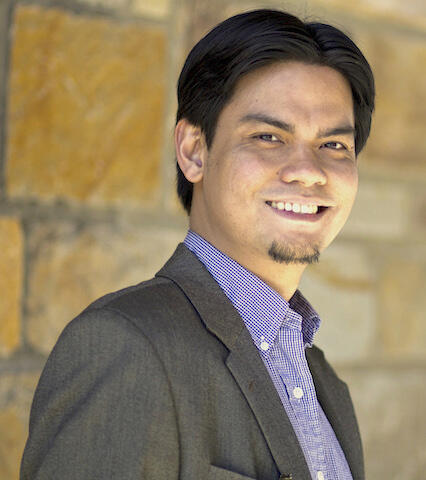
Didac Queralt is a junior professor at the Institute of Political Economy and Governance (IPEG) in Barcelona. He received his Ph.D. from the NYU Politics Department in September 2012.
His research lies at the intersection of comparative political economy and international relations, with a focus on the political economy of fiscal capacity building in Europe (East and West) and the Americas. Using formal methods, he investigates tax compliance in scenarios of low fiscal capacity, as well as the replacement of old forms of taxation (e.g. trade taxes) by modern extractive technologies (e.g. income taxation) that result from deliberate investment in the tax administration. He analyzes the theoretical predictions using contemporary data from developing economies in Latin America and Eastern Europe, as well as historical data for European powers in the pre-modern era.
In addition, he investigates the origins of direct taxation in the Western World, both with macro- and micro-data, as well as the electoral politics underlying the expansion of the fiscal state. Currently, he is involved in a quasi-experimental test of the legacy of pre-modern wars on state capacity, and an field experiment on tax progressivity in Colombia,
This seminar is part of the Comparative Politics Workshop in the Department of Political Science and is co-sponsored by The Europe Center.
Encina Hall West, Room 400 (Graham Stuart Lounge)
Didac Queralt
Junior Professor
Speaker
Institute of Political Economy and Governance (IPEG), Barcelona
Taiwan’s domestic politics, particularly presidential elections, has been the main driver of the island’s relations with China for two decades. The 2016 elections, in which the Democratic Progressive Party, led by Dr. Tsai Ing-wen, won both the presidency and majority control of the Legislative elections, promises to be no exception. Although PRC intentions under President Xi Jinping are far from certain, some change from the state of play under the current Ma Ying-jeou administration seems fairly certain, with implications for U.S. policy.
Bio
Richard Bush is a Senior Fellow at the Brookings Institution and Director of its Center for Northeast Asian Policy Studies, and the Chen-Fu and Cecilia Yen Koo Chair in Taiwan Studies. He came to Brookings in July 2002 after nineteen years working in the US government, including five years as the Chairman and Managing Director of the American Institute in Taiwan. He is the author of a number of articles on U.S. relations with China and Taiwan, and of At Cross Purposes, a book of essays on the history of America’s relations with Taiwan, published in March 2004 by M. E. Sharpe. In the spring of 2005, Brookings published his study on cross-Strait relations, entitled Untying the Knot: Making Peace in the Taiwan Strait. In 2013, Brookings published his Uncharted Strait: The Future of China-Taiwan Relations.
Less than four years after Mao Zedong’s death, Deng Xiaoping declared that China needed to move away from an “over-concentration of power” by an individual leader to establish a more institutionalized system of governance. Xi Jinping’s ascension to power in 2013 promised a new era of reform of the Communist Party of China (CCP), specifically intended to preserve the party’s power. Rather than addressing governance issues, however, Xi’s actions, such as the anti-corruption campaign, have served to concentrate power in his hands, showing the weakness of political institutionalization in China after decades of collective leadership. While decision-making processes continue to be a black box, by reclaiming the CCP’s authority over policy-making, and by chairing CCP small leading groups, Xi appears to have moved China back to Mao-style personalistic rule. The puzzles that remain are how personalistic authoritarian rule has returned to a country characterized by a growing middle class and a modern open market economy; and what this reversion to personalistic leadership tells us about the ambiguities of institutions in communist ruling parties.
Susan Shirk is the Chair of the 21st Century China Program and Research Professor at the School of Global Policy and Strategy at the University of California - San Diego. She is also director emeritus of the University of California’s Institute on Global Conflict and Cooperation (IGCC). Susan Shirk first visited China in 1971 and has been teaching, researching and engaging China diplomatically ever since.
From 1997-2000, Shirk served as Deputy Assistant Secretary of State in the Bureau of East Asia and Pacific Affairs, with responsibility for China, Taiwan, Hong Kong and Mongolia.
In 1993, she founded, and continues to lead, the Northeast Asia Cooperation Dialogue (NEACD), a Track II forum for discussions of security issues among defense and foreign ministry officials and academics from the U.S., Japan, China, Russia, South Korea and North Korea.
Shirk's publications include her books, China: Fragile Superpower; How China Opened Its Door: The Political Success of the PRC's Foreign Trade and Investment Reforms; The Political Logic of Economic Reform in China; Competitive Comrades: Career Incentives and Student Strategies in China; and her edited book, Changing Media, Changing China.
Shirk served as a member of the U.S. Defense Policy Board, the Board of Governors for the East-West Center (Hawaii), the Board of Trustees of the U.S.-Japan Foundation, and the Board of Directors of the National Committee on United States-China Relations. She is a member of the Trilateral Commission, the Council on Foreign Relations, and an emeritus member of the Aspen Strategy Group. Dr. Shirk received her BA in Political Science from Mount Holyoke College, her MA in Asian Studies from the University of California, Berkeley, and her PhD in Political Science from the Massachusetts Institute of Technology.
After five years of political support for the regime of Bashar Al-Asad in its war against the opposition, Russia intervened militarily on his behalf in September 2015 and suddenly later this year Russian President Vladimir Putin announced the withdrawal of the Russian troops from Syria. While Moscow claims that its intervention was aimed at destroying ISIS and other terrorists groups, but the vast majority of its air strikes seem to target the moderate armed opposition, which has fought ISIS on the ground. This presentation assesses the outcome of Russia’s intervention, arguing that it neither achieved its goal of destroying ISIS nor did it tip the balance favor of Asad. Instead, the intervention had resulted in the killing of Syrian civilians, complicated the conflict in Syria, and constrained the prospects for a political solution by empowering Asad on the ground.
Speaker Bio
Image
Radwan Ziadeh is a senior analyst at the Arab Center in Washington D.C. He is the founder and director of the Damascus Center for Human Rights Studies in Syria and co-founder and executive director of the Syrian Center for Political and Strategic Studies in Washington, D.C. He is a Visiting Scholar at the Center for the Study of Human Rights at Columbia University, and Fellow at the Institute for Social Policy and Understanding (ISPU) in Washington D.C. Ziadeh was the managing editor of the Transitional Justice Project in the Arab World, and the Head of the Syrian Commission for Transitional Justice, which was established on November 14, 2013 by the Syrian Interim Government. He was also involved in the Syrian political opposition. He was elected in October 2011 as director of the Foreign Relations Office of the Syrian National Council until he resigned from the position in November 2012. He wrote more than twenty books in English and Arabic. His most recent book is Syria's Role in a Changing Middle East: The Syrian-Israeli Peace Talks (I.B.Tauris, 2016). Ziadeh holds a D.D.S in Dentistry from Damascus University, Diploma in international Human Rights Law from College of Law at the American University in Washington D.C, an MA in Democracy and Governance from Georgetown University in Washington D.C, and an MS in Finance from Kogod School of Business at the American University in Washington D.C.
After nearly five years since the start of the uprising, Syria finds itself divided and embattled, with no end in sight. More significantly, more than half of the Syrian population is displaced and the death toll surpassed 300,000 by all counts. The Syrian tragedy persists and, more than any other case of mass uprising in the region, continues to be shrouded in political power-plays and contradictions at the local, regional, and international levels. Defined increasingly by an absence of a clear favorable outcome, considering existing parties to the conflict, the logic of the lesser evil reigns supreme. This lecture is an attempt to understand the roots and dynamics of the tragic Syrian uprising, with particular attention to its background and to the recent Russian intervention.
Speaker Bio
Image
Bassam Haddad is Director of the Middle East Studies Program and Associate Professor in the Department of Public and International Affairs at George Mason University, and is Visiting Professor at Georgetown University. He is the author of Business Networks in Syria: The Political Economy of Authoritarian Resilience (Stanford University Press, 2011). Haddad is currently editing a volume on Teaching the Middle East After the Arab Uprisings, a book manuscript on pedagogical and theoretical approaches. His most recent books include two co-edited volumes: Dawn of the Arab Uprisings: End of an Old Order? (Pluto Press, 2012) and Mediating the Arab Uprisings (Tadween Publishing, 2013). Haddad serves as Founding Editor of the Arab Studies Journal a peer-reviewed research publication and is co-producer/director of the award-winning documentary film, About Baghdad, and director of the critically acclaimed film series, Arabs and Terrorism, based on extensive field research/interviews. More recently, he directed a film on Arab/Muslim immigrants in Europe, titled The "Other" Threat. Haddad is Co-Founder/Editor of Jadaliyya Ezine and serves on the Editorial Committee of Middle East Report. He is the Executive Director of the Arab Studies Institute, an umbrella for five organizations dealing with knowledge production on the Middle East and Founding Editor of Tadween Publishing.
[[{"fid":"221861","view_mode":"crop_870xauto","fields":{"format":"crop_870xauto","field_file_image_description[und][0][value]":"Bassam Haddad January 21","field_file_image_alt_text[und][0][value]":"","field_file_image_title_text[und][0][value]":"","field_credit[und][0][value]":"","field_caption[und][0][value]":"","field_related_image_aspect[und][0][value]":"","thumbnails":"crop_870xauto"},"type":"media","attributes":{"width":"870","class":"media-element file-crop-870xauto"}}]]
CISAC Central Conference Room Encina Hall, 2nd Floor 616 Serra St Stanford, CA 94305
Bassam Haddad
Associate Professor
George Mason University
In a piece in The Atlantic, FSI Senior Fellow Larry Diamond argues that to defeat ISIS, America must unite and revisit the core principles of freedom from which it was created. With a surge of illiberal populism spreading throughout the US and Europe, Diamond urges American leaders to reexamine the country's sense of purpose and not degrade freedom in the pursuit for security.
The sectarian-based segregation that has shaped urbanism in Baghdad is a direct outcome of the 2003 U.S.-led invasion and occupation of Iraq. The "post"-occupied city is characterized by the normalization of concrete “security” blast-walls that choke urban circulation and sever communities. The notorious blast walls -- or "Bremer Walls" -- perpetuate and intensify conditions of urban segregation. As the summer's surge of anti-government protests in Baghdad demonstrate, the short-sighted nature of this militarized solution to sectarian-based violence has proven to be a superficial and unsustainable fix to the deep dilemma of sectarian segregation codified in Iraq’s political system. This presentation will examine the context for recent public dissent on the streets of Baghdad through the story of the capital city's fragmentation between 2006 and 2007.
Speaker Bio
Image
Mona Damluji is Associate Dean and Director of The Markaz: Resource Center at Stanford University. She is a liberal arts educator, cultural activist and scholar with expertise in the Arab Middle East and broader Muslim World. Mona received her PhD from the University of California, Berkeley and was the Mellon Postdoctoral Fellow in Asian & Islamic Visual Culture at Wheaton College in Massachusetts. Mona regularly curates and organizes exhibits and programs featuring the work of artists and activists linked to Muslim and Arab communities and countries. Major recent projects have included "Open Shutters Iraq" at UC Berkeley and "Arab Comics: 90 Years of Popular Visual Culture" at Brown University. Mona has worked as the educational outreach director for the Arab Film Festival, organizing an annual festival screening for students and teachers in San Francisco, Oakland and Berkeley. Her exhibition and book reviews appear in Jadaliyya, AMCA and the International Journal of Islamic Architecture. Mona's publications also appear in the Journal of Urban History, Comparative Studies of South Asia, Africa and the Middle East, and Subterranean Estates: the Life Worlds of Oil and Gas.
With the nearing of the fifth anniversary of the January 25 Revolution, this panel examines the nature of politics under the rule of the current military sponsored regime in Egypt. What implications will the recent legislative elections have for political stability and the cohesion of the ruling coalition? How is the regime responding to the various economic challenges it currently confronts? In what ways has the persistence of state repression affected and shaped the space for political contestation and resistance?
Panelists
Joel Beinin Donald J. McLachlan Professor of History,
Stanford University
Lisa Blaydes Associate Professor of Political Science,
Stanford University
Amr Hamzawy ARD Visiting Scholar,
CDDRL, Stanford University
Nancy Okail Executive Director,
The Tahrir Institute for Middle East Policy
(via Skype)
Hesham Sallam Associate Director, ARD
CDDRL, Stanford University
Moderator:
Larry Diamond Senior Fellow, FSI;
Senior Fellow Hoover Institute,
Stanford University
Image
Joel Beinin is the Donald J. McLachlan Professor of History and Professor of Middle East History. He received his A.B. from Princeton University in 1970, his M.A. from Harvard University in 1974, and his A.M.L.S. and Ph.D. from the University of Michigan in 1978 and 1982. He also studied at the American University of Cairo and and the Hebrew University of Jerusalem. He lived in Egypt in 1969, 1980-81, 1985, 1986, 1994, 2004-05, and 2006-08 and in Israel in 1965-66, 1970-73, 1987, 1988, 1993, and 1993. He has taught Middle East history at Stanford University since 1983. From 2006 to 2008 he served as Director of Middle East Studies and Professor of History at the American University in Cairo. His research and writing focuses on workers, peasants, and minorities in the modern Middle East and on Israel, Palestine, and the Arab-Israeli conflict. Beinin has written or edited nine books, most recently Social Movements, Mobilization, and Contestation in the Middle East and North Africa; co-edited with Frédéric Vairel (Stanford University Press, 2011) and The Struggle for Worker Rights in Egypt (Solidarity Center, 2010). His articles have been published in leading scholarly journals as well as The Nation, Middle East Report, The Los Angeles Times, The San Francisco Chronicle, Le Monde Diplomatique, and others. He has appeared on Al-Jazeera TV, BBC radio, National Public Radio, and many other TV and radio programs throughout North America, and in France, Egypt, Singapore, and Australia, and has given frequent interviews to the global media. In 2002 he served as President of the Middle East Studies Association of North America.
Image
Lisa Blaydes is an Associate Professor of Political Science at Stanford University. She is the author of Elections and Distributive Politics in Mubarak’s Egypt (Cambridge University Press, 2011). Professor Blaydes received the 2009 Gabriel Almond Award for best dissertation in the field of comparative politics from the American Political Science Association for this project. Her articles have appeared in the American Political Science Review, International Studies Quarterly, International Organization, Journal of Theoretical Politics, Middle East Journal, and World Politics. During the 2008-2009 and 2009-2010 academic years, Professor Blaydes was an Academy Scholar at the Harvard Academy for International and Area Studies. She holds degrees in Political Science (PhD) from the University of California, Los Angeles and International Relations (BA, MA) from Johns Hopkins University.
Image
Larry Diamond is a senior fellow at the Hoover Institution and at the Freeman Spogli Institute for International Studies. He also serves as the Peter E. Haas Faculty Director of the Haas Center for Public Service at Stanford. For more than six years, he directed FSI’s Center on Democracy, Development, and the Rule of Law, and he continues to lead its programs on Liberation Technology, Arab Reform and Democracy, and Democracy in Taiwan. He is the founding co-editor of the Journal of Democracy and also serves as Senior Consultant at the International Forum for Democratic Studies of the National Endowment for Democracy. His sixth and most recent book, In Search of Democracy (Routledge, 2016), explores the challenges confronting democracy and democracy promotion, gathering together three decades of his work on democratic development, particularly in Africa and Asia. He has also edited or co-edited more than 40 books on democratic development around the world.
Image
Amr Hamzawy is a visiting scholar at the Program on Arab Reform and Democracy. He studied political science and developmental studies in Cairo, The Hague, and Berlin. After finishing his doctoral studies and after five years of teaching in Cairo and Berlin, Hamzawy joined the Carnegie Endowment for International Peace (Washington, DC) between 2005 and 2009 as a senior associate for Middle East Politics. Between 2009 and 2010, he served as the research director of the Middle East Center of the Carnegie Endowment in Beirut, Lebanon. In 2011, he joined the Department of Public Policy and Administration at the American University in Cairo, where he continues to serve today. Hamzawy also serves as an associate professor of political science at the Department of Political Science, Cairo University. His research and teaching interests as well as his academic publications focus on democratization processes in Egypt, tensions between freedom and repression in the Egyptian public space, political movements and civil society in Egypt, contemporary debates in Arab political thought, and human rights and governance in the Arab world. Dr. Hamzawy is a former member of the People’s Assembly after being elected in the first Parliamentary elections in Egypt after the 25th of Jan 2011 revolution. He is also a former member of the Egyptian National Council for Human Rights. Hamzawy contributes a daily column and a weekly op-ed to the Egyptian independent newspaper Shorouk.
Image
Nancy Okail is the Executive Director of TIMEP. She brings more than 15 years of experience promoting democracy and development in the Middle East and North Africa region to this role. Prior to joining TIMEP, Dr. Okail was the director of Freedom House’s Egypt program. She has also worked with the Egyptian government as a senior evaluation officer of foreign aid and has managed programs for Egyptian pro-democracy organizations that challenged the Mubarak regime. She was also one of the defendants convicted and sentenced to prison in the widely publicized case of 43 non-governmental organization workers charged with using foreign funds to foment unrest in Egypt. She holds a Ph.D. from the University of Sussex in the U.K. where her dissertation examined the power relations of foreign aid.
Image
Hesham Sallam is a Research Associate at CDDRL and serves as the Associate-Director of the Program on Arab Reform and Democracy. He is also a co-editor of Jadaliyya ezine and a former program specialist at the U.S. Institute of Peace. His research focuses on Islamist movements and the politics of economic reform in the Arab World. Sallam’s research has previously received the support of the Social Science Research Council and the U.S. Institute of Peace. Past institutional affiliations include Middle East Institute, Asharq Al-Awsat, and the World Security Institute. He is editor of Egypt's Parliamentary Elections 2011-2012: A Critical Guide to a Changing Political Arena (Tadween Publishing, 2013). Sallam received a Ph.D. in Government (2015) and an M.A. in Arab Studies (2006) from Georgetown University, and a B.A. in Political Science from the University of Pittsburgh (2003).
The fifteenth session of the Korea-U.S. West Coast Strategic Forum, held in Korea on November 17, 2015, convened senior South Korean and American policymakers, scholars and regional experts to discuss North Korea policy and recent developments on the Korean Peninsula. Hosted by the Korea Program at the Walter H. Shorenstein Asia-Pacific Research Center at Stanford University, the Forum is also supported by the Sejong Institute.
For scholars of corruption, the ferocious anti-corruption campaign launched by Xi Jinping since the end of 2012 has provided a wealth of fresh evidence of corruption in the Chinese body politic and economy. The revelations from media accounts and court documents suggest that crony capitalism -- defined by the incestuous relationship between government officials and private businessmen -- has penetrated key Chinese political institutions and economic sectors. Based on detailed examinations of 50 high-profile cases, many of them prosecuted in the last three years, this study investigates the institutional origins of crony capitalism, identifies principal modes of collusion between political and economic elites, and analyzes its behavioral patterns. The insights from this study imply that Xi's anti-corruption drive will have only limited success if it does not treat the causes of corruption in contemporary China.
Minxin PEI is the Tom and Margot Pritzker '72 Professor of Government and George R. Roberts Fellow and Director of the Keck Center for International and Strategic Studies. Dr. Pei’s areas expertise includes China, Comparative Politics, Pacific Rim, U.S./Asia Relations, and U.S./China Relations. Dr. Pei’s published work includes China’s Transition: The limits of developmental autocracy (Harvard University Press, 2006), and From Reform to Revolution: The demise of communism in China and the Soviet Union (Harvard University Press, 1994).