Governance

FSI's research on the origins, character and consequences of government institutions spans continents and academic disciplines. The institute’s senior fellows and their colleagues across Stanford examine the principles of public administration and implementation. Their work focuses on how maternal health care is delivered in rural China, how public action can create wealth and eliminate poverty, and why U.S. immigration reform keeps stalling. 

FSI’s work includes comparative studies of how institutions help resolve policy and societal issues. Scholars aim to clearly define and make sense of the rule of law, examining how it is invoked and applied around the world. 

FSI researchers also investigate government services – trying to understand and measure how they work, whom they serve and how good they are. They assess energy services aimed at helping the poorest people around the world and explore public opinion on torture policies. The Children in Crisis project addresses how child health interventions interact with political reform. Specific research on governance, organizations and security capitalizes on FSI's longstanding interests and looks at how governance and organizational issues affect a nation’s ability to address security and international cooperation.

CISAC
Stanford University
Encina Hall, E205
Stanford, CA 94305-6165

(650) 725-8035
0
Senior Research Scholar
rsd19_072_0081a.jpg

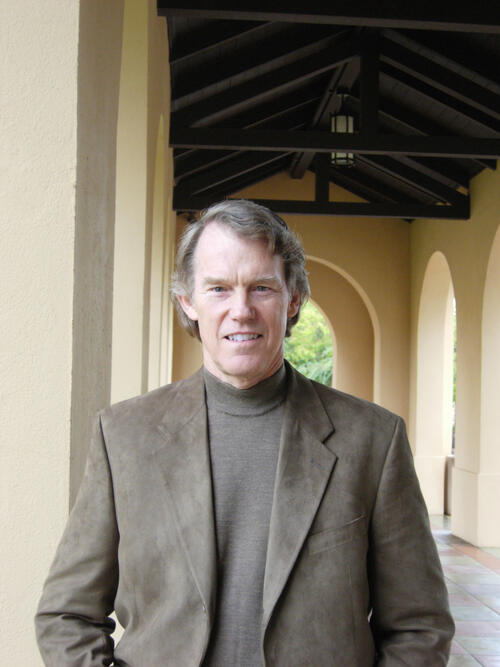
Harold Trinkunas is the Deputy Director and a Senior Research Scholar at the Center for International Security and Cooperation at the Freeman Spogli Institute for International Studies at Stanford University. Prior to arriving at Stanford, Dr. Trinkunas served as the Charles W. Robinson Chair and senior fellow and director of the Latin America Initiative in the Foreign Policy program at the Brookings Institution. His research focuses on issues related to foreign policy, governance, and security, particularly in Latin America. Trinkunas has written on emerging powers and the international order, ungoverned spaces, terrorism financing, borders, and information operations. 

Trinkunas has co-authored Militants, Criminals and Warlords: The Challenge of Local Governance in an Age of Disorder (Brookings Institution Press, 2017), Aspirational Power: Brazil’s Long Road to Global Influence (Brookings Institution Press, 2016) and authored Crafting Civilian Control of the Military in Venezuela (University of North Carolina Press, 2005). He co-edited and contributed to Oxford Handbook of Peaceful Change in International Relations (Oxford University Press, 2021), Three Tweets to Midnight: The Effect of the Global Information Ecosystem on the Risk of Nuclear Conflict  (Hoover Institution Press, 2020), American Crossings: Border Politics in the Western Hemisphere (Johns Hopkins University Press, 2015), Ungoverned Spaces: Alternatives to State Authority in an Era of Softened Sovereignty (Stanford University Press, 2010), Global Politics of Defense Reform (Palgrave MacMillan, 2008), and Terrorism Financing and State Responses (Stanford University Press, 2007).

Dr. Trinkunas also previously served as an associate professor and chair of the Department of National Security Affairs at the Naval Postgraduate School in Monterey, California. He received his doctorate in political science from Stanford University in 1999. He was born in Maracaibo, Venezuela. 


Deputy Director
CV
Date Label
Authors
News Type
News
Date
Paragraphs

With each passing day, computer hacking against countries, organizations and people is forcing the subject of cybersecurity to the top of national security agendas.

An estimated 42.8 million cyber attacks will take place this year, according to experts. Scaling up to meet this challenge is why more than 140 people from science, politics, business and the military attended the fourth annual Cyber Security Summit at Stanford’s Center for International Security and Cooperation (CISAC) on Sept. 19-20.

The Munich Security Conference and Deutsche Telekom sponsored the event. CISAC is in the Freeman Spogli Institute for International Studies. Participants delved deep into issues associated with today’s online world, including how to balance privacy and civil liberties with the need for intelligence, for example. Discussions ranged on questions such as:

• What will the future of warfare look like – human soldiers or killer robots?

• How do we ensure that technological progress does not escape human control?

• What are the biggest challenges combatting the online activities of groups like the Islamic State?

• What are the possible cyberspace conflicts between the U.S., Russia and China?

• Are countries ready for cyber attacks against key infrastructure such as energy, water and utilities, or the U.S. election system, for example?

Electoral impact

In a talk on cyber attacks and the U.S. elections, panelists discussed how such electoral manipulation in the ongoing presidential campaign might happen, and what could be done about it. While it was noted that foreign adversaries could undermine the American public’s confidence in its election system, one expert pointed out that it’s unlikely to occur undetected on a widespread basis.

Credibility is now the battlefield, one panelist said. If hacking occurs, how will an election be validated? The track record shows that Russian has attempted to influence elections in Eastern Europe, so hacking into U.S. political entities is their way to sow doubt among voters.

The economic costs of cyber attacks – $400 to $500 billion a year was one participant’s estimate – and “cyberspace norms” were other issues explored. Countries and companies are grappling with the losses associated with these incursions, and with how – and who – should set the rules for the “digital game.”

On encryption, questions in one discussion revolved around how the public and private sectors can resolve such issues, how far data privacy could be compromised for effective intelligence work, and vice versa.

Online jihadism was another subject. The conference panelists talked about which tools are most effective in countering jihadist propaganda and recruitment on the Internet. Also, the need for Europe and the U.S. to work together on such fronts was mentioned.

CISAC and FSI participants included Amy Zegart, co-director of CISAC and senior fellow at the Hoover Institution; Michael McFaul, director of the Freeman Spogli Institute and senior fellow at the Hoover Institution; Martin Hellman, professor emeritus of electrical engineering; among others. Other attendees hailed from U.S. and European Union agencies and businesses, and local Silicon Valley companies.

Zegart said a collaborative spirit and drive for innovation characterizes Stanford. “In the past three years, we have built an exciting program dedicated to educating current and future cyber leaders, producing policy-driven knowledge, and convening leaders across sectors and borders,” she wrote in the program guide.

McFaul, in his opening statement, noted the origins of CISAC – it was created when there was a different technological concern – nuclear materials. Then, scientists and social scientists at CISAC got together to work on nuclear proliferation. Today, the threat is cyber attacks, and CISAC is confronting this challenge. He said the scariest briefing he had in his ambassador position at the U.S. Department of State was on cybersecurity.

For his discussion on terrorism, Hellman brought pages of pro-encryption quotes from government officials. He suggested end-to-end encryption was good for Americans.

Crossing borders

The Munich Security Conference is considered to be the most important informal meeting on security policy. Outside speakers included Michael Cherthoff, former secretary of Homeland Security; Jane Holl Lute, the under secretary general for the United Nations; and Christopher Painter, coordinator for cyber issues at the U.S. Department of State.

Wolfgang Ischinger, the chair of the Munich Security Conference, said at the press conference that, “cybersecurity has over the last few years evolved to be one of the most indispensable agenda items.”

The “quest for rules” in cyberspace, he noted, is overwhelmingly difficult and vitally important.

Thomas Kremer, board member for co-sponsor Deutsche Telekom AG, said, “cyber attacks don’t accept national borders.” Cybersecurity has become a global issue, he explained, with ramifications for countries, companies and everyday people.

He added, “Our chances to fight cyber crime are far better when we collaborate.”

Stanford and CISAC are at the forefront of the national discussion on cybersecurity. The university launched the Stanford Cyber Initiative; hosted President Obama’s cybersecurity summit and defense secretary Ashton Carter’s unveiling of a new U.S. cyber strategy; and CISAC and the Hoover Institution have teamed up in recent years for media roundtables and Congressional bootcamps on cybersecurity.

Finally, CISAC senior research scholar Joe Felter and other experts held Hacking for Defense & Diplomacy class for educators and sponsors on Sept. 7-9. (See the final class presentations here). In spring 2016, they held the first such class to train students in cybersecurity for defense purposes. Steve Blank, a consulting associate professor in the Stanford School of Engineering’s Department of Management Science and Engineering, helped develop the class. This fall, they will prototype a Hacking for Diplomacy course at Stanford.

Click here for the Munich Security Conference’s agenda for this event and a list of participants. 

Hero Image
cybersecurity summit
Michael McFaul, second from the left and the executive director of the Freeman Spogli Institute, talks with other panelists at the Cyber Security Summit on Sept. 19. On the far left is Amy Zegart, co-director of CISAC, and in the middle is Michael Chertoff, former director of the U.S. Department of Homeland Security. On the far right is Vinh Nguyen, a national intelligence officer for the U.S. federal government, and to his left is Dmitri Alperovich, co-founder of CrowdStrike. | Rod Searcey
All News button
1
-

Ambassador Osius will make remarks on U.S.-Vietnam relations in the wake of President Obama’s May 2016 visit. He will focus on the unfinished task of reconciliation. Relations were normalized in 1995. Yet many in Vietnam’s diaspora community, especially those most affected by the legacies of the war, oppose rapprochement and engagement. Overseas communities can play important and constructive roles in relations between their countries of origin and the rest of the world. Ambassador Osius will argue that a fully engaged Vietnamese-American community could and would contribute a lot toward growing the U.S. partnership with Vietnam, including helping to shape a beneficial future of greater trade, improved regional stability, and an expanded role for civil society.

Image
ted osius
Ted Osius is the sixth U.S. ambassador to Vietnam (December 2014-Present). Previously he was an associate professor and a senior fellow, respectively, at the National War College and the Center for Strategic and International Studies; deputy chief of mission at the U.S. Embassy in Jakarta; and political minister-counselor at the U.S. Embassy in New Delhi. His earlier career included service as regional environment officer for Southeast Asia and the Pacific in the U.S. State Department and as senior advisor on international affairs in the Office of the Vice President. 

This event is co-sponsored by the U.S. - Asia Security Initiative and the Southeast Asia Program
Ted Osius U.S. Ambassador to Vietnam
Seminars
News Type
Commentary
Date
Paragraphs

North Korea conducted its fifth nuclear test in the wake of the G20 summit earlier this month. The United States immediately condemned North Korea’s behavior in a statement delivered by the White House, and a few days later, flew a set of bombers near the U.S. military base in Osan, South Korea.

Writing for Toyo KeizaiDaniel Sneider, associate director for research at the Shorenstein Asia-Pacific Research Center, said a consistent strategic and military reasoning drives the North Korean regime’s decision to test nuclear missiles. His analysis piece can be viewed in English and Japanese.

Sneider also spoke with Slate about how the next U.S. administration could respond, suggesting that a deployment of additional nuclear-capable aircraft at U.S. bases in Asia would send a strong signal to Pyongyang. The Slate article is available at this link.

South Korea has been seeking stronger international sanctions against North Korea since the test. As the country’s biggest trading partner, China is considered an important actor in the ability to influence North Korea. In the Korea Times, Sneider said a way to motivate China to augment their role in sanctions against North Korea is to remind Beijing that a continuation of North Korea's nuclear program would only lead to greater scale and capability of American military presence in the region. The Korea Times article is available at this link.

Hero Image
nk missile test
A television shows breaking news about North Korea's long-range rocket launch in February 2016, Seoul, South Korea. | Getty Images - Han Myung-Gu
All News button
1
-


Image
Taiwan's Democracy Challenged

This discussion will be based on the authors' recently published book, Taiwan's Democracy Challenged: The Chen Shui-bian Years, Lynne Rienner Publishing (2016).

Abstract

At the end of Chen Shui-bian’s two terms as the president of Taiwan, his tenure was widely viewed as a disappointment, if not an outright failure. Today, the Chen years (2000-2008) are remembered mostly for relentless partisan fighting over cross-Strait relations and national identity questions, prolonged political gridlock, and damaging corruption scandals—as an era that challenged, rather than helped consolidate, Taiwan’s young democracy and squandered most of the promise with which it began.

Yet as Taiwan’s Democracy Challenged: The Chen Shui-bian Years documents, this conventional narrative obscures a more complex and more positive story. The chapters here cover the diverse array of ways in which democratic practices were deepened during this period, including the depoliticization of the military and intelligence forces, the ascendance of an independent and professional judicial system, a strengthened commitment to constitutionalism and respect for the rule of law, and the creation of greater space for civil society representatives in the policy-making process. Even the conventional wisdom about unprecedented political polarization during this era is misleading: while elite politics became more divided and acrimonious, mass public opinion on cross-Strait relations and national identity was actually converging.

Not all developments were so positive: strong partisans on both sides of the political divide remained only weakly committed to democratic principles, the reporting of news organizations became more sensationalist and partisan, and the Taiwanese state’s exceptional autonomy from sectoral interests and vaunted capacity for long-term planning deteriorated. But on the whole, the authors argue, these years were not squandered. By the end of the Chen Shui-bian era, Taiwan’s democracy was firmly consolidated. 


This event is sponsored by the Taiwan Democracy Project in the Center on Democracy, Development, and the Rule of Law. It is free and open to the public, and lunch will be served. Please RSVP by October 31.

Taiwan's Democracy Challenged presentation slides
Download pdf

CISAC Central Conference Room, Encina Hall 2nd Floor

CDDRL
Stanford University
Encina Hall, C147
616 Jane Stanford Way
Stanford, CA 94305-6055

(650) 724-6448 (650) 723-1928
0
Mosbacher Senior Fellow in Global Democracy at the Freeman Spogli Institute for International Studies
William L. Clayton Senior Fellow at the Hoover Institution
Professor, by courtesy, of Political Science and Sociology
diamond_encina_hall.png MA, PhD

Larry Diamond is the William L. Clayton Senior Fellow at the Hoover Institution, the Mosbacher Senior Fellow in Global Democracy at the Freeman Spogli Institute for International Studies (FSI), and a Bass University Fellow in Undergraduate Education at Stanford University. He is also professor by courtesy of Political Science and Sociology at Stanford, where he lectures and teaches courses on democracy (including an online course on EdX). At the Hoover Institution, he co-leads the Project on Taiwan in the Indo-Pacific Region and participates in the Project on the U.S., China, and the World. At FSI, he is among the core faculty of the Center on Democracy, Development and the Rule of Law, which he directed for six and a half years. He leads FSI’s Israel Studies Program and is a member of the Program on Arab Reform and Development. He also co-leads the Global Digital Policy Incubator, based at FSI’s Cyber Policy Center. He served for 32 years as founding co-editor of the Journal of Democracy.

Diamond’s research focuses on global trends affecting freedom and democracy and on U.S. and international policies to defend and advance democracy. His book, Ill Winds: Saving Democracy from Russian Rage, Chinese Ambition, and American Complacency, analyzes the challenges confronting liberal democracy in the United States and around the world at this potential “hinge in history,” and offers an agenda for strengthening and defending democracy at home and abroad.  A paperback edition with a new preface was released by Penguin in April 2020. His other books include: In Search of Democracy (2016), The Spirit of Democracy (2008), Developing Democracy: Toward Consolidation (1999), Promoting Democracy in the 1990s (1995), and Class, Ethnicity, and Democracy in Nigeria (1989). He has edited or coedited more than fifty books, including China’s Influence and American Interests (2019, with Orville Schell), Silicon Triangle: The United States, China, Taiwan the Global Semiconductor Security (2023, with James O. Ellis Jr. and Orville Schell), and The Troubling State of India’s Democracy (2024, with Sumit Ganguly and Dinsha Mistree).

During 2002–03, Diamond served as a consultant to the US Agency for International Development (USAID) and was a contributing author of its report, Foreign Aid in the National Interest. He has advised and lectured to universities and think tanks around the world, and to the World Bank, the United Nations, the State Department, and other organizations dealing with governance and development. During the first three months of 2004, Diamond served as a senior adviser on governance to the Coalition Provisional Authority in Baghdad. His 2005 book, Squandered Victory: The American Occupation and the Bungled Effort to Bring Democracy to Iraq, was one of the first books to critically analyze America's postwar engagement in Iraq.

Among Diamond’s other edited books are Democracy in Decline?; Democratization and Authoritarianism in the Arab WorldWill China Democratize?; and Liberation Technology: Social Media and the Struggle for Democracy, all edited with Marc F. Plattner; and Politics and Culture in Contemporary Iran, with Abbas Milani. With Juan J. Linz and Seymour Martin Lipset, he edited the series, Democracy in Developing Countries, which helped to shape a new generation of comparative study of democratic development.

Download full-resolution headshot; photo credit: Rod Searcey.

Former Director of the Center on Democracy, Development and the Rule of Law
Faculty Chair, Jan Koum Israel Studies Program
Date Label
Larry Diamond Senior Fellow and Principal Investigator, Taiwan Democracy Project
Seminars
-

This talk will be based on Professor Lin's new book, Taiwan's China Dilemma: Contested Identities and Multiple Interests in Taiwan's Cross-Strait Economic Policy, Stanford University Press (2016). 


Abstract

China and Taiwan share one of the world's most complex international relationships. Although their similar cultures and complementary economies promoted an explosion of commercial ties since the late 1980s, they have not led to a stable political relationship, let alone progress toward the unification that both governments once claimed to seek. In addition, Taiwan’s economic policy toward China has alternated between liberalization and restriction. Most recently, Taiwan's Sunflower Movement succeeded in obstructing deeper economic ties with China. Why has Taiwan's policy toward China been so controversial and inconsistent?

Author Syaru Shirley Lin explains the divergence between the development of economic and political relations across the Taiwan Strait and the oscillation of Taiwan’s cross-Strait economic policy through the interplay of national identity and economic interests. She shows how the debate over Taiwanese national identity has been intimately linked to Taiwan’s economic policy during a turbulent time in cross-Strait relations. Using primary sources, opinion surveys, and interviews with Taiwanese opinion leaders, she paints a vivid picture of one of the most unsettled and dangerous relationships in the contemporary world.

As Taiwan grapples with the growing importance of the Chinese economy, it also experiences the uneven socio-economic consequences of globalization. This has produced a reconsideration of the desired degree of further integration with China, especially among the younger generations. Taiwan’s China Dilemma illustrates the growing backlash against economic liberalization and regional economic integration around the world.


Biography

Image
Shirley Lin

Syaru Shirley Lin teaches political science at the University of Virginia and is a member of the founding faculty of the master’s program in global political economy at the Chinese University of Hong Kong. Her book, Taiwan’s China Dilemma: Contested Identities and Multiple Interests in Taiwan's Cross-Strait Economic Policy, was published by Stanford University Press in 2016. She graduated from Harvard College and earned her masters and Ph.D. from the University of Hong Kong. Before starting her academic career, Prof. Lin was a partner at Goldman Sachs, where she was responsible for direct investment in Asia and spearheaded the firm’s investments in many technology start-ups such as Alibaba and Semiconductor Manufacturing International Corp. Previously, she specialized in the privatization of state-owned enterprises in Singapore and China. Prof. Lin’s present board service includes Goldman Sachs Asia Bank, Langham Hospitality Investments and Mercuries Life Insurance. She also advises Crestview Partners and the Focused Ultrasound Foundation and is a member of the Hong Kong Committee for Pacific Economic Cooperation.


This event is sponsored by the Taiwan Democracy Project in the Center on Democracy, Development, and the Rule of Law. It is free and open to the public, and lunch will be served. Please RSVP by October 17.

CISAC Central Conference Room, Encina Hall, 2nd Floor

Syaru Shirley Lin Professor of Political Economy Chinese University of Hong Kong and the University of Virginia
Lectures
News Type
News
Date
Paragraphs

The Shorenstein Asia-Pacific Research Center (APARC) at Stanford is now accepting applications for the Shorenstein Postdoctoral Fellowship in Contemporary Asia, an opportunity made available to two junior scholars for research and writing on Asia.

Fellows conduct research on contemporary political, economic or social change in the Asia-Pacific region, and contribute to Shorenstein APARC’s publications, conferences and related activities. To read about this year’s fellows, please click here.

The fellowship is a 10-mo. appointment during the 2017-18 academic year, and carries a salary rate of $52,000 plus $2,000 for research expenses.

For further information and to apply, please click here. The application deadline is Dec. 16, 2016.

Hero Image
27193530153 58630c4828 o
All News button
1
Paragraphs

It is tempting to characterize the recent round of North Korea missile and nuclear tests as only the latest example of the provocative behavior of its brash young leader, Kim Jong Un. A simultaneous launch of three medium-range missiles, mounted on mobile launchers, was defiantly timed to coincide with China’s hosting of the G20 summit in Hangzhou. And the latest nuclear test, the fifth carried out by North Korea, seemed designed to assert its status as a nuclear weapons power ahead of the U.S. presidential vote, Sneider writes.

All Publications button
1
Publication Type
Commentary
Publication Date
Journal Publisher
Toyo Keizai Online
Authors
Daniel C. Sneider
-

Abstract:

Low-income countries are less productive than their high-income counterparts. Is one reason because labor in high-income countries can more easily move to where it is most productive? We use detailed individual data combined with a spatial general equilibrium model of worker selection to study the determinants of labor productivity growth in Indonesia and the United States over the last 40 years. We find that while improvements in in situ labor productivity and the spatial allocation of human capital resources account for about 55% of Indonesian labor productivity growth, improvements in spatial mobility, due to lower costs of movement and improvements in the amenity of high productivity locations, account for nearly as much: 45%. In a comparison to the US, higher costs of movement in Indonesia account for 10% of the labor productivity gap between the two countries. These results suggest an important role of migration to explain aggregate productivity gaps both across and within countries.
 

Speaker Bio:

Image
melanie morten

Melanie Morten is an Assistant Professor of Economics at Stanford University. Her research focuses on migration in developing countries, including analyzing how migration changes informal financial safety nets and understanding the costs and potential productivity benefits of migration. She has worked on projects in India, Brazil, and Indonesia. She has a PhD in economics from Yale University.

Melanie Morten Assistant Professor, Department of Economics, Stanford University
Seminars
-

Abstract:

American government is incapable of dealing effectively with the challenges of modern society. Why the dysfunction? The usual suspects include polarization and the rise in campaign spending. But William Howell and Terry Moe argue—in their new book, Relic—that the roots of dysfunction go much deeper: to the Constitution itself. The framers designed the Constitution some 225 years ago for a simple agrarian society. But the government they created, a separation of powers system with a parochial Congress at its center, is ill-equipped to address the serious social problems that inevitably arise in a complex post-industrial nation. We are prisoners of the past. The solution is to update the Constitution for modern times. A promising step forward, the authors argue, is a simple reform that pushes Congress and its pathologies to the periphery of policymaking, and brings presidents to center stage.


Speaker Bio:

Image
terry moe
Terry M. Moe is the William Bennett Munro Professor of Political Science at Stanford University and a senior fellow at the Hoover Institution. He has written extensively on public bureaucracy and the presidency, as well as the theory of political institutions more generally. His articles include "The New Economics of Organization," "The Politicized Presidency," "The Politics of Bureaucratic Structure," "Political Institutions: The Neglected Side of the Story," "Presidents, Institutions, and Theory," “The Presidential Power of Unilateral Action” (with William Howell), “Power and Political Institutions,” “Political Control and the Power of the Agent,” and “Do Politicians Use Policy to Make Politics? The Case of Public Sector Labor Laws” (with Sarah F. Anzia). His most recent work is Relic: How Our Constitution Undermines Effective Government--And Why We Need a More Powerful Presidency (with William Howell, 2016)." He has also written extensively on the politics of American education. His newest books are The Comparative Politics of Education: Teachers Unions and Education Systems Around the World (edited with Susanne Wiborg, forthcoming 2017) and Special Interest: Teachers Unions and America’s Public Schools (2011). His past work on education includes Politics, Markets, and America's Schools (1990) and Liberating Learning: Technology, Politics, and the Future of American Education (2009), both with John E. Chubb, and Schools, Vouchers, and the American Public (2001).

Terry M. Moe William Bennett Munro Professor of Political Science at Stanford University
Seminars
Subscribe to Governance