Governance

FSI's research on the origins, character and consequences of government institutions spans continents and academic disciplines. The institute’s senior fellows and their colleagues across Stanford examine the principles of public administration and implementation. Their work focuses on how maternal health care is delivered in rural China, how public action can create wealth and eliminate poverty, and why U.S. immigration reform keeps stalling. 

FSI’s work includes comparative studies of how institutions help resolve policy and societal issues. Scholars aim to clearly define and make sense of the rule of law, examining how it is invoked and applied around the world. 

FSI researchers also investigate government services – trying to understand and measure how they work, whom they serve and how good they are. They assess energy services aimed at helping the poorest people around the world and explore public opinion on torture policies. The Children in Crisis project addresses how child health interventions interact with political reform. Specific research on governance, organizations and security capitalizes on FSI's longstanding interests and looks at how governance and organizational issues affect a nation’s ability to address security and international cooperation.

-

ABSTRACT

This talk examines the ways through which successive Egyptian governments have utilized lawmaking to eliminate opponents and silence voices of dissent since the coup of 3 July 2013. Key examples include the adoption of a draconian protest law and anti-terrorism laws. Most recently, the legislature passed a bill that, subject to the president’s approval, is poised to significantly curtail the autonomy of civil society organizations. By restricting freedom of expression and association and clamping down on voices of dissent, these legal initiatives have helped upgrade the repressive bureaucratic tools at the disposal of the government.

SPEAKER BIO

Image
amr hamzawy cropped
Amr Hamzawy is a Senior Fellow at the Middle East Program at the Carnegie Endowment for International Peace and FSI-Stanford Humanities Center International Visitor, 2016-17. He studied political science and developmental studies in Cairo, The Hague, and Berlin. After finishing his doctoral studies and after five years of teaching in Cairo and Berlin, Hamzawy joined the Carnegie Endowment for International Peace (Washington, DC) between 2005 and 2009 as a senior associate for Middle East Politics. Between 2009 and 2010, he served as the research director of the Middle East Center of the Carnegie Endowment in Beirut, Lebanon. In 2011, he joined the Department of Public Policy and Administration at the American University in Cairo, where he continues to serve today. Hamzawy also serves as an associate professor of political science at the Department of Political Science, Cairo University. He is a former Visiting Scholar at CDDRL's Program on Arab Reform and Democracy.

His research and teaching interests as well as his academic publications focus on democratization processes in Egypt, tensions between freedom and repression in the Egyptian public space, political movements and civil society in Egypt, contemporary debates in Arab political thought, and human rights and governance in the Arab world.

Dr. Hamzawy is a former member of the People’s Assembly after being elected in the first Parliamentary elections in Egypt after the 25th of Jan 2011 revolution. He is also a former member of the Egyptian National Council for Human Rights. Hamzawy contributes a daily column and a weekly op-ed to the Egyptian independent newspaper Shorouk.

Amr Hamzawy Senior Fellow Senior Fellow at the Middle East Program at the Carnegie Endowment for International Peace
Seminars
-

Rennie Moon explores a new framework for higher education official development assistance (ODA) with a focus on the transnational bridging benefits of social capital. She first explains why and how a transnational social capital approach can improve the current focus on human resources and local bridges in higher education development. She then illustrates its merits by examining, 1) the transnational bridging potential of social capital formed by foreign students currently studying in Korea; and 2) the actual transnational social capital contributions of foreign professionals who returned home after completing a Korean higher education ODA program. In doing so, she directs particular attention to the value of transnational social capital in promoting development cooperation and public diplomacy. She concludes by discussing how this approach has conceptual importance and practical implications for development cooperation in higher education.

Image
rennie moon 0
Moon is the 2016-17 Koret Fellow in the Korea Program at the Walter H. Shorenstein Asia-Pacific Research Center, and an associate professor at the Underwood International College at Yonsei University in Seoul, South Korea. With a background in international comparative education and sociology, her research has concentrated on globalization and education, brain/talent flows, diversity and social tolerance and official development assistance in higher education. Moon, a graduate of Stanford’s Graduate School of Education, Ph.D. ‘09, has collaborated with Stanford professor Gi-Wook Shin on a multiyear research project that examines diversity in higher education in East Asia. She co-edited the book Internationalizing Higher Education in Korea: Challenges and Opportunities in Comparative Perspective published in 2016. Her articles have appeared in academic journals including Comparative Education Review, Comparative Education, Australian Journal of International Affairs, and Pacific Affairs. As a Korean-American scholar, Moon has written editorials and columns in both English and Korean on higher education in Korea and Asia for the Nikkei Asian Review, The Conversation, East Asia Forum, Australian Outlook, Dong-A Daily, MK News, and other media outlets. Moon holds her a doctorate and a master's degree in international comparative education from Stanford and a bachelor’s degree in French from Wellesley College.

Supported by the Koret Foundation, the Koret Fellowship brings professionals to Stanford to conduct research on contemporary Korean affairs. 

616 Serra StreetEncina Hall E301Stanford, CA94305-6055
(650) 723-9404 (650) 723-6530
0
rennie_moon.jpg Ph.D.

Rennie J. Moon joins the Walter H. Shorenstein Asia-Pacific Research Center as the 2016-17 Koret Fellow in the Korea Program.  Moon is an associate professor at the Underwood International College at Yonsei University in Seoul, South Korea. Her research explores the interrelationships among globalization, migration and citizenship, and internationalization of higher education.

Moon, a graduate of Stanford’s Graduate School of Education, Ph.D. ‘09, has collaborated with Stanford professor Gi-Wook Shin on a multiyear research project that examines diversity in higher education in East Asia. She co-edited the book Internationalizing Higher Education in Korea: Challenges and Opportunities in Comparative Perspective published earlier this year. Her articles have appeared in academic journals including Comparative Education Review, Comparative Education, Australian Journal of International Affairs, and Pacific Affairs.

As a Korean-American scholar, Moon has written editorials and columns in both English and Korean on higher education in Korea and Asia for the Nikkei Asian Review, The Conversation, East Asia Forum, Australian Outlook, Dong-A Daily, MK News, and other media outlets.

Supported by the Koret Foundation, the Koret Fellowship brings professionals to Stanford to conduct research on contemporary Korean affairs. In 2015, the fellowship expanded its focus to include social, cultural and educational issues in North and South Korea, and aims to identify emerging scholars working on those areas.

During her fellowship, Moon will also give public talks and be a lead organizer of the Koret Workshop, an international conference held annually at Stanford.

Moon holds a doctorate and master’s degree in international comparative education from Stanford and a bachelor’s degree in French from Wellesley College.

Visiting Associate Professor
2016-2017 Koret Fellow
Rennie Moon <i>2016-17 Koret Fellow</i>, Shorenstein Asia-Pacific Research Center, Stanford University
Seminars
Authors
News Type
News
Date
Paragraphs

Space is more important than ever for the security of the United States, but it’s almost like the Wild West in terms of behavior, a top general said today.

Air Force Gen. John Hyten, commander of the U.S. Strategic Command, spoke Jan. 24 at Stanford’s Center for International Security and Cooperation. His talk was titled, “U.S. Strategic Command Perspectives on Deterrence and Assurance.”

Hyten said, “Space is fundamental to every single military operation that occurs on the planet today.” He added that “there is no such thing as a war in space,” because it would affect all realms of human existence, due to the satellite systems. Hyten advocates “strategic deterrence” and “norms of behavior” across space as well as land, water and cyberspace.

Otherwise, rivals like China and Russia will only threaten U.S. interests in space and wreak havoc for humanity below, he said. Most of contemporary life depends on systems connected to space.

Hyten also addressed other topics, including recent proposals by some to upgrade the country’s missile defense systems.

“You just don’t snap your fingers and build a state-of-the-art anything overnight,” Hyten said, adding that he has not yet spoken to Trump administration officials about the issue. “We need a powerful military,” but a severe budget crunch makes “reasonable solutions” more likely than expensive and unrealistic ones.

On the upgrade front, Hyten said he favors a long-range strike missile system to replace existing cruise missiles; a better air-to-air missile for the Air Force; and an improved missile defense ground base interceptor.

‘Critically dependent’

From satellites to global-positioning systems (GPS), space has transformed human life – and the military – in the 21st century, Hyten said. In terms of defining "space," the U.S. designates people who travel above an altitude of 50 miles as astronauts.

As the commander of the U.S. Strategic Command, Hyten oversees the control of U.S. strategic forces, providing options for the president and secretary of defense. In particular, this command is charged with space operations (such as military satellites), information operations (such as information warfare), missile defense, global command and control, intelligence, surveillance, and reconnaissance, global strike and strategic deterrence (the U.S. nuclear arsenal), and combating weapons of mass destruction.

Hyten explained that every drone, fighter jet, bomber, ship and soldier is “critically dependent” on space to conduct their own operations. All cell phones use space, and the GPS command systems overall are managed at Strategic Command, he said.

“No soldier has to worry about what’s over the next hill,” he said, describing GPS capabilities, which have fundamentally transformed humanity’s way of life.

Space needs to be available for exploration, he said.

“I watch what goes on in space, and I worry about us destroying that environment for future generations.” He said that too many drifting objects and debris exist – about 22,000 right now. A recent Chinese satellite interception created a couple thousand more debris objects that now circle about the Earth at various altitudes and pose the risk of striking satellites.

“We track every object in space” now, Hyten said, urging “international norms of behavior in space.”

He added, “We have to deter bad behavior on space. We have to deter war in space. It’s bad for everybody. We could trash that forever.”

But now rivals like China and Russia are building weapons to deploy in the lower levels of space. “How do we prevent this? It’s bigger than a space problem,” he said.

Deterring conflict in the cyber, nuclear and space realms is the strategic deterrence goal of the 21st century, Hyten said.

“The best way to prevent war is to be prepared for war,” he said.

Hyten believes the U.S. needs a fundamentally different debate about deterrence. And it all starts with nuclear weapons.

“In my deepest heart, I wish I didn’t have to worry about nuclear weapons,” he said. Hyten described his job as “pretty sobering, it’s not easy.”

But he also noted the mass violence of the world prior to 1945 when the first atomic bomb was used. Roughly 80 million people died from 1939 to 1945 during World War II. Consider that in the 10-plus years of the Vietnam War, 58,000 Americans were killed. That’s equivalent to two days of deaths in WWII, he said.

In a world without nuclear weapons, a rise in conventional warfare would produce great numbers of mass casualties, Hyten said. About war, he said, “Once you see it up close, no human will ever want to experience it.”

Though America has “crazy enemies” right now, in many ways the world is more safe than during WWII, Hyten said. The irony is that nuclear weapons deterrence has kept us from the type of mass killings known in events like WWII. But the U.S. must know how to use its nuclear deterrence effectively.

Looking ahead, Hyten said the U.S. needs to think about space as a potential war environment. An attack in space might not mean a response in space, but on the Earth.

Hyten describes space as the domain that people look up at it and still dream about. “I love to look at the stars,” but said he wants to make sure he’s not looking up at junk orbiting in the atmosphere.

‘Space geek’

Hyten has served in the Air Force for 35 years. He originally wanted to be an astronaut, but his eyesight was too bad. He got a waiver, and graduated Harvard in 1981 with an engineering degree on a ROTC scholarship. He entered the Air Force thinking he would only do four years. But then he had a close-up view of what a young Air Force officer could find in the last frontier of space as satellites and military space science were booming.

“God, I love space,” he said.

In introducing Hyten, Amy Zegart, co-director of CISAC, described him as a person of unwavering dedication and profound insights who understands the gravity of situations. “A self-described space geek,” she said.

Hyten lauded CISAC for its research and educational work on national security, and said he enjoyed being around people willing to test out new ideas and discuss potential solutions for vexing problems.

Earlier in the day on campus, Hyten met with William J. Perry, a former U.S. Secretary of Defense and senior fellow at CISAC; George Shultz, a former U.S. Secretary of Defense and senior fellow at the Hoover Institution; and Condoleezza Rice, a senior fellow at the Freeman Spogli Institute for International Studies and Hoover Institution.

General Hyten was nominated for reassignment to head the U.S. Strategic Command on Sept. 8, 2016. He commanded Air Force Space Command from 2014 to 2016.

Follow CISAC at @StanfordCISAC and  www.facebook.com/StanfordCISAC

MEDIA CONTACTS

Clifton B. Parker, Center for International Security and Cooperation: (650) 725-6488, cbparker@stanford.edu



Hero Image
c2 jkqeukaaw4p  jpg large
Air Force Gen. John Hyten, commander of the U.S. Strategic Command, spoke Jan. 24 at Stanford’s Center for International Security and Cooperation. | Rod Searcey
All News button
1
News Type
Commentary
Date
Paragraphs

"As an American citizen, I have been rather appalled, like many others, at the rise of Donald Trump. I find it hard to imagine a personality less suited by temperament and background to be the leader of the world’s foremost democracy. On the other hand, as a political scientist, I am looking ahead to his presidency with great interest, since it will be a fascinating test of how strong American institutions are," writes CDDRL Mosbacher Director Francis Fukuyama in his article in Politico Magazine from January 23. Read the article here.

Hero Image
american flag 373362 1920
All News button
1
-

Abstract:

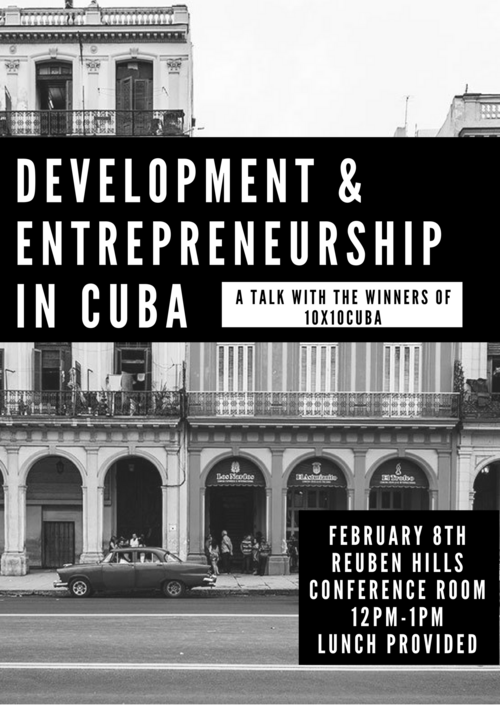
Join Professor Larry Diamond and the winners of the 10x10K Cuba competition for a talk on the emerging entrepreneurial scene in Cuba. The 10x10K Cuba is an international competition seeking to help talented programmers and entrepreneurs in Cuba. This event will feature Janse Lazo Valdes and Victor Manuel Moratón, the entrepreneurs leading the startups MiKMa and NinjaCuba.


Speaker(s) Bio:

Janse Lazo Valdes is a Computer Science engineer from the Havana University of Technologies José Antonio Echeverría. Valdes and his team Sírvete participated in Havana’s first Startup Weekend, coming in 2nd place. At Stanford, he is hoping to learn more about business opportunities, marketing, human resources, and leadership to promote entrepreneurship and development in Cuba. Valdes is representing the startup MiKMa.

MiKMa is a startup that will guarantee the advertising of houses for rent in national currency in Cuba and hopes to revolutionize the way in which the user makes the reservations of these properties.


Victor Manuel Moratón is a Computer Science engineer from the Havana University of Technologies José Antonio Echevarría. He specializes in software development and is the product developer of Ninjas Cuba. At Stanford, he wants to represent the emerging entrepreneurial Cuban community and meet leaders in the sector of entrepreneurship and development. Moratón is representing the startup NinjaCuba.

NinjaCuba is a website oriented to the search of talents of computer science in Cuba thought for the thousands of computer engineers, cybernetics, designers, companies and groups of development. NinjaCuba hopes to connect people in the technology space with employment opportunities.


Image
development and entrepreneurship in cuba

Janse Lazo Valdes Computer Science Engineer, Havana University of Technologies José Antonio Echeverría
Victor Manuel Moratón Computer Science Engineer, Havana University of Technologies José Antonio Echevarría.
Seminars
News Type
News
Date
Paragraphs

Event Recap: The European Crises, Andrew Moravcsik (Princeton University)


The Europe Center kicked off its winter quarter talks by continuing its series on the European Union. Andrew Moravcsik, Professor of Politics and International Affairs at Princeton University’s Woodrow Wilson School of Public and International Affairs and Director of the European Union Program at Princeton, spoke on the topic of "The European Crises."

Andrew MoravcsikIn his talk, Moravcsik spoke about the four major crises currently facing the European Union and argued that these crises present less cause for concern than current discourse would suggest. The first crisis is Europe's purported decline in geopolitical power, particularly vis-à-vis China. Contrary to these claims, however, Moravcsik presented evidence indicating that the European Union outstrips China on various measures, including military spending, the number of combat and non-combat forces deployed abroad, number of aircraft carriers, number of allies, relative economic power, civilian foreign economic assistance, and its effective use of non-military intervention. The second crisis is one of Euroscepticism, as exemplified by Brexit. Moravcsik noted that the current British negotiating position largely reflects the status quo. Moreover, he is skeptical that the there will be a domino effect. Specifically, mainstream political parties are unlikely to call for a referendum on the EU, particularly given the results of the British vote, and that the anti-EU parties, even at their most successful, gain too little national political power to successfully hold a referendum. Migration constitutes the third crisis, and Moravcsik argues that this crisis is as serious as it is being portrayed. However, this crisis is unlikely to undermine the entire European project, as there is a clear and effective political solution - closing the border using fences, criminal law, and repatriation agreements. The final crisis is the lack of economic growth. Again, this crisis is exaggerated as both the EU-28 and the Eurozone have had higher per capita growth over the past decade than has the U.S. or Japan. However, that growth has been uneven across the EU member states and has been either stagnant or negative in countries such as Portugal and Greece. Moravcsik's ultimate take away was that in order to undo the European Union, a crisis must be serious and lacking a clear policy solution, and none of the four crises currently facing the EU meet both of these criteria.


Featured Faculty Research: Vincent Barletta

We would like to introduce you to some of The Europe Center’s faculty affiliates and the projects on which they are working. Our featured faculty member this month is Vincent Barletta. Vincent is an Associate Professor of Comparative Literature and of Iberian and Latin American Cultures. He earned his Ph.D. from the University of California, Los Angeles in 1998 and joined the faculty at Stanford in 2007.

Vincent's research and teaching focus on medieval and early modern Iberian literatures; Portuguese literature, empire and humanism; Islam and Aljamiado literature; comparative literature; literature and linguistic anthropology; and literature and philosophy. In a recent article, Vincent examines the translation practices of sixteenth-century Ibero-Muslims. As Christian kingdoms expanded into the Muslim territories of the Iberian Peninsula throughout the first half of the second millennium, so the dominant jurisprudence shifted from Islamic law to Christian law. This process culminated in the early sixteenth century, when non-Christians were forced to convert to Christianity. Vincent examines the ways in which clandestine Muslim communities during this period translated and adapted juridical Islamic texts. He argues that the translations themselves and the structure of the texts reflect an interest in "closeness." In order to explicate his arguments, he presents analysis of Abū al-Ḥassan cAli ibn cIsa al-Ṭulayṭulī’s Mukhtaṣar (Compendium), which is a tenth-century guidebook to obligatory religious devotions.

Barletta, Vincent. 2016. "Closeness Before the Law: Purity, Prayer, and al-Tulaytilī's Mukhtasa." Journal of Spanish Cultural Studies 17(3):271-284.


Featured Graduate Student Research: Justin Tackett

We would like to introduce you to some of the graduate students that we support and the projects on which they are working. Our featured graduate student this month is Justin Tackett (English). Justin is a Ph.D. candidate in the Department of English at Stanford University.

Justin TackettIn his research, Justin is interested in 19th and 20th century British and American literature, with a focus on sound studies, poetics, Victorianism, transatlantic modernism, periodicals, technology, and urbanization. In his dissertation Justin examines sound technology and poetry in Britain and America from 1816 to 1914. In one of his dissertation chapters, Justin focuses on the work of the little-known Irish poet, James Henry. Supported by The Europe Center, Justin traveled to Dublin in October 2016 in order to examine the only known repository of Henry's manuscripts, which is housed in the Trinity College archives. In addition to his work in the archives, Justin was able to meet with Emeritus Professor John Richmond, now in his nineties and housebound, who wrote the first Henry biography in 1976. His book is now extremely rare and prohibitively expensive, but he generously gave Justin a copy, which will be of great value for his continuing research. In addition to his work towards the chapter on Henry, Justin was able to advance the research for various other chapters of his dissertation by meeting with other scholars and visiting sites of historical importance. Justin plans to return to Trinity in order to finish cataloging Henry's papers.

Please visit our website for more information about our Graduate Student Grant program.

Call for Applications: The Europe Center's Undergraduate Internship Program

Application Deadline: February 7, 2017

A key priority of The Europe Center is to provide Stanford’s undergraduate student community with opportunities to develop a deep understanding of contemporary European society and affairs. By promoting knowledge about the opportunities and challenges facing one of the world’s most economically and politically integrated regions, the Center strives to equip our future leaders with the tools necessary to tackle complex problems related to governance, geopolitics, and economic interdependence both in Europe and in the world more broadly.

In order to facilitate this goal, The Europe Center is sponsoring undergraduate internships to be completed in summer 2017. Sponsored internships are available with the following entities:

  • The Alliance of Liberals and Democrats for Europe (ALDE) Brussels, Belgium
    ALDE is a transnational political party comprised of national political parties represented in the European Parliament.
    Positions Available: 2
    Program Dates: June 12, 2017 to July 21, 2017
  • Bruegel Brussels, Belgium
    Bruegel is a think-tank devoted to policy research on international economic issues.
    Positions Available: 3
    Program Dates: July 31, 2017 to September 8, 2017
  • Carnegie Europe Brussels, Belgium
    Carnegie Europe is an independent policy research center providing foreign policy analysis and policy recommendations on the strategic issues facing Europe and its role in the world.
    Positions Available: 1
    Program Dates: 9 consecutive weeks, with some flexibility to adjust this to work with the intern's summer schedule, between June 19, 2017 and September 15, 2017 (start and end dates to be determined by the host and the student)
  • The Centre for European Policy Studies (CEPS) Brussels, Belgium
    CEPS is a policy think-tank providing research and activities on economic and international policy matters.
    Positions Available: 1
    Program Dates: 6 consecutive weeks between June 19, 2017 and September 15, 2017 (start and end dates to be determined by the host and the student)

We invite applications from Stanford University undergraduate students interested in these exciting opportunities. For more information on The Europe Center's Undergraduate Internship Program, please visit our website.


Visiting Scholar: Dirk Rupnow

The Europe Center is pleased to welcome Dirk Rupnow to Stanford as the 2016-2017 Distinguished Visiting Austrian Chair Professor. Dirk is a Professor of Contemporary History, Head of the Institute for Contemporary History, and Founding Coordinator of the Center for Migration and Globalization at the University of Innsbruck.

Dirk RupnowDirk is a historian who is interested in 20th century European history, Holocaust and Jewish studies, cultures and politics of memory, and intellectual and migration history. His current research focuses on developing an inclusive narrative of post-war Austrian history, one that reflects the current plurality and diversity of Austrian society. In order to do so, Dirk will be working primarily on two projects during his time at The Europe Center. In the first project, he is examining the so-called "guest worker“ migration to Austria during the 1960s and 1970s. Because labor migration was viewed as temporary, it somehow remained a blank spot in narratives of post-war Austrian history. But in fact, it has had a lasting effect on Austrian society. The migrants remain nonetheless invisible and have no voice in the discourse on the national history. Dirk seeks to uncover greater information and new sources in order to provide a more complete and multiperspective portrayal of contemporary Austrian history as both a European and global transnational history. In the second project, Dirk seeks to understand how museums can be used to present an inclusive historical narrative to the public. He will lead a group of Austrian museum curators and museologists on a tour of the historical museums in Washington, D.C. - including the National Museum of the American Indian and the National Museum of African American History and Culture - in order to observe how the U.S. presents the history of both minority and marginalized groups. As a member of the Advisory Board for the planned House of Austrian History in Vienna, Dirk intends for this work to facilitate a compelling and inclusive presentation of Austrian history. Please join us in welcoming Dirk to Stanford.


The Europe Center Sponsored Events

January 31, 2017 
12:00PM - 1:30PM 
Lukas Schmid, University of Lucerne 
Human Barriers to International Trade
CISAC Central Conference Room, Encina Hall, 2nd Floor
RSVP by 5:00PM January 27, 2017.

February 2, 2017 
12:00PM - 1:30PM 
Amie Kreppel, University of Florida 
The Political and Institutional Effects of Brexit 
CISAC Central Conference Room, Encina Hall, 2nd Floor
RSVP by 5:00PM January 30, 2017.

February 9, 2017 
12:00PM - 1:30PM 
Walter Scheidel, Stanford University 
Book Talk: The Great Leveler
CISAC Central Conference Room, Encina Hall, 2nd Floor 
RSVP by 5:00PM February 6, 2017.

February 16, 2017 
12:00PM - 1:30PM 
Norman Naimark, Stanford University 
Book Talk: Genocide: A World History
Oksenberg Conference Room, Encina Hall, 3rd Floor 
RSVP by 5:00PM February 13, 2017.

Save the Date: March 3, 2017 
4:00PM - 5:30PM 
Valéry Giscard d'Estaing, Former President of the French Republic (1974 - 1981)
This event is sponsored by the France-Stanford Center and co-sponsored by The Europe Center.

Save the Date: April 3, 2017 
11:30AM - 1:00PM 
Guido Tabellini, Bocconi University
Room 400 (Graham Stuart Lounge), Encina Hall West 
No RSVP required. 
This seminar is part of the Comparative Politics Workshop in the Department of Political Science and is co-sponsored by The Europe Center.

April 11, 2017 
12:00PM - 1:30PM 
Philippe Van Parijs, University of Louvain
Europe's Destiny: A View from Brussels 
CISAC Central Conference Room, Encina Hall, 2nd Floor 
RSVP by 5:00PM April 7, 2017.

Save the Date: April 24, 2017 
11:30AM - 1:00PM 
Torun Dewan, London School of Economics
Room 400 (Graham Stuart Lounge), Encina Hall West 
No RSVP required. 
This seminar is part of the Comparative Politics Workshop in the Department of Political Science and is co-sponsored by The Europe Center.

Save the Date: June 5, 2017 
11:30AM - 1:00PM 
Daniel Stegmuller, University of Mannheim
Room 400 (Graham Stuart Lounge), Encina Hall West 
No RSVP required. 
This seminar is part of the Comparative Politics Workshop in the Department of Political Science and is co-sponsored by The Europe Center.

European Security Initiative Events

January 26, 2017 
12:00PM - 1:15PM 
Andrei Kozyrev, Former Minister of Foreign Affairs, Russian Federation
The Future of U.S.-Russian Relations
Bechtel Conference Center, Encina Hall
RSVP by 5:00PM January 20, 2017.

Save the Date: January 30, 2017 
12:00PM - 1:15PM 
Marie Mendras, Sciences Po and National Center for Scientific Research (CNRS)
Reuben Hills Conference Room, Encina Hall, 2nd Floor 
RSVP by 5:00PM January 25, 2017.

Save the Date: April 10, 2017 
Time TBA 
Ivan Krastev, Center for Liberal Strategies, Sofia, Bulgaria


We welcome you to visit our website for additional details.


Hero Image
TEC logo
All News button
1
News Type
Commentary
Date
Paragraphs

 Larry Diamond, FSI Senior Fellow and Hesham Sallam, CDDRL Associate Director and Research Associate Program on Arab Reform and Democracy, predict that state-led reforms will not be enough to alleviate public discontent in the Middle East. Read the whole article here http://bit.ly/2iSNmQU

Hero Image
gettyimages 632386268
LOUAI BESHARA/AFP/Getty Images
All News button
1
News Type
Commentary
Date
Paragraphs

"The book on Trump is still not written. We must to await the coming months to see which man, the deal-maker or the extremist, comes to the fore. But Trump’s victory also represents the latest stage in a global shift toward populist nationalism, a pattern whose meaning is starting to become frighteningly clear," writes our Mosbacher Director Francis Fukuyama in Prospect Magazine. Read the article here.

Hero Image
gettyimages 632202066
Photo by Alex Wong/Getty Images)
All News button
1
News Type
Commentary
Date
Paragraphs

"One mistake was to discount Russia’s importance in international affairs. The U.S. became engrossed in wars in Iraq and Afghanistan, thinking that Russia was weak, and generally unimportant. Under President George W. Bush, the U.S. assumed that the world was unipolar after the Cold War, and that it would always be so," writes Kathryn Stoner, a senior fellow at the Freeman Spogli Institute for International Studies and faculty director of the Ford Dorsey Program on International Policy Studies at Stanford for the New York Times "Room for Debate". Read the article here.

Hero Image
gettyimages 472411866
ALEXANDER NEMENOV/AFP/Getty Images
All News button
1
Paragraphs

If you want to understand the trade and industrial policy that President Donald Trump is now going to pursue, simply jump into a DeLorean time machine with Marty McFly and go back to 1985. As the title of that iconic film, released that year, proclaimed – it is Back to the Future, Sneider writes.

All Publications button
1
Publication Type
Commentary
Publication Date
Journal Publisher
Toyo Keizai Online (Tokyo Business Today)
Authors
Daniel C. Sneider
Subscribe to Governance