Governance

FSI's research on the origins, character and consequences of government institutions spans continents and academic disciplines. The institute’s senior fellows and their colleagues across Stanford examine the principles of public administration and implementation. Their work focuses on how maternal health care is delivered in rural China, how public action can create wealth and eliminate poverty, and why U.S. immigration reform keeps stalling. 

FSI’s work includes comparative studies of how institutions help resolve policy and societal issues. Scholars aim to clearly define and make sense of the rule of law, examining how it is invoked and applied around the world. 

FSI researchers also investigate government services – trying to understand and measure how they work, whom they serve and how good they are. They assess energy services aimed at helping the poorest people around the world and explore public opinion on torture policies. The Children in Crisis project addresses how child health interventions interact with political reform. Specific research on governance, organizations and security capitalizes on FSI's longstanding interests and looks at how governance and organizational issues affect a nation’s ability to address security and international cooperation.

-


Abstract: Despite decades of research on organizational disasters, such events remain too common. Scholars across a wide range of disciplines agree that one of the most viable approaches to preventing such catastrophes is to observe near-misses and use them to identify and eliminate problems before they produce large failures. Unfortunately, these important warning signals are too often ignored because they are perceived and interpreted as successes rather than near-misses, near-failures, or simply failures.  Through a series of studies, we explore how organizational messages might nudge more recognition of a near-miss event as something other than a success.  The intent is not to make organizations more risk-averse, per se, but to make leaders with decision power more aware of the risks they assume and how the low probabilistic nature of high risk decisions facilitates our tendency to become more risk-tolerant over time.

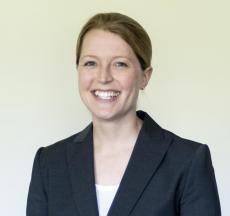
Speaker Bio: Catherine Tinsley, Ph.D., is the Raffini Family Professor of Management at Georgetown University’s McDonough School of Business, Faculty Director of the Georgetown University Women’s Leadership Institute, Academic Director of Georgetown McDonough’s Executive Master’s in Leadership program, and a Senior Policy Scholar at the Georgetown Center for Business and Public Policy.  Tinsley is an expert on principled leadership, workforce development, negotiations, and decision making.  She looks at how and why people make decisions, especially when managing risk, and empowering employees.  She applies decision analytic frameworks to understand leadership challenges, and expert and novice responses to natural disasters (such as hurricanes) and man-made disasters (terrorist attacks).

For the past three years, she participated in The World Economic Forum’s annual meeting in Davos, Switzerland where she spoke about the interplay between confidence and economic empowerment. Tinsley has collaborated with the White House and U.S. State Department on developing programs related to gender and workforce development, including partnering with the Council of Women World Leaders to convene the first ever world-wide meeting of the Ministers of Women’s Affairs.  

Tinsley has served on three committees for the National Academy of Sciences— The Committee to Improve Intelligence Analysis for National Security, The Committee on Unifying Social and Cultural Frameworks in the Military, and the Committee on The Context of Military Environments (where she served as vice-Chair).   She has received several awards for her research as well as grants from NASA, the National Science Foundation, the Department of Homeland Security, the Department of Defense and Army Research Office.  

Tinsley has published more than 50 articles and book chapters in peer-reviewed journals and her research has been covered extensively in the popular media.

Catherine Tinsley Professor of Management McDonough School of Business, Georgetown University
Seminars
Authors
News Type
News
Date
Paragraphs

The same logic that kept a nuclear war from breaking out between the United States and former Soviet Union is the best strategy to now pursue with North Korea, several scholars said Tuesday at Stanford.

The panel, convened at Stanford’s Center for International Security and Cooperation (CISAC), included political scientist Scott D. Sagan of CISAC; political scientist Mira Rapp-Hooper of Yale University; and political scientist Vipin Narang of MIT. The moderator was James D. Fearon, a political scientist at the Freeman Spogli Institute for International Studies. The event was titled “Can the U.S. Deter a Nuclear North Korea” and held in the William J. Perry Conference Room in Encina Hall.

Nuclear decision-making

The discussion revolved around whether North Korea will have the ability to strike the U.S. with nuclear warheads, and can the U.S. depend on a deterrence strategy like it did during the Cold War?

Deterrence theory holds that nuclear weapons are intended to deter other states from attacking with their nuclear weapons, through the promise of retaliation and possibly mutually assured destruction 

Sagan, who recently wrote an essay in Foreign Affairs magazine on the North Korea nuclear crisis, said he has come to decide deterrence is the best approach to the issue.

“I am not one who gladly listens to the siren song of nuclear deterrence,” he said, noting that while he is a self-described dove on disarmament issues, he is more hawkish on allowing countries to obtain nuclear weapons, which deterrence implies. “I accept deterrence reluctantly.”

In North Korea, he said, no military alternatives exist to solve the problem. For example, even if a decapitation strike were successful – and several U.S. attempts have failed in the past with regard to Saddam Hussein and Muammar Gaddafi – there’s no way to know if North Korean leader Kim Jong-un has already given his generals the green light to unleash nuclear or powerful conventional attacks in the case of his demise.

For Sagan, deterrence is a more complicated issue today than during the Cold War when the U.S. and U.S.S.R. were rational actors with thousands of nuclear weapons. He is especially concerned with the rhetoric and the preventive war suggestions emanating from the Trump Administration.

Senior U.S. military leaders, Sagan said, have a duty not to follow “impaired-decision making” that might come from the president. He invoked the prospect of using the Cabinet and the 25th Amendment to halt such an order and remove the president from office. Currently, he belives the nuclear decision process is problematic, as the president alone can directly order the Strategic Air Command to launch nuclear weapons.

Sagan advises that a revised nuclear chain of command should include both the U.S. Secretary of Defense and the U.S. Attorney General. A U.S. Senate hearing, led by Sen. Bob Corker, is actually studying the nuclear authorization process due to concerns with Trump's rhetoric and escalation of the North Korean issue.

“We need more checks on how we decide to use nuclear weapons,” said Sagan, who studies nuclear strategy, ethics and war, public opinion about the use of force, and nuclear non-proliferation and arms control.

He noted that U.S. National Security Advisor H.R McMaster recently criticized his predecessor, Susan Rice, for saying the U.S. could "tolerate" nuclear weapons in North Korea the same way we tolerated nuclear weapons in the Soviet Union​.

He quoted McMaster: “'A regime that poses a continuous threat to the its neighbors in the region and now may pose a threat, direct threat, to the United States with weapons of mass destruction? A regime that imprisons and murders anyone who seems to oppose that regime, including members of his own family, using sarin nerve gas in a public airport?'”

But Sagan said we have long tolerated such authoritarian regimes that have nuclear weapons. 

Stumbling accidentally into war with North Korea also seems like a rising risk. On Sept. 27, several U.S. service members and their families received a fraudulent “noncombatant evacuation operation” order via text and social media, he said. The fake notices were quickly reported up the chain of command and the U.S. issued a statement denouncing their validity – the perpetrators have not been found. But Sagan says it illustrates how easy it is to create a situation where North Korea felt a U.S. invasion and attack is imminent – and as a result, could choose to unleash a nuclear first strike.

‘Western fantasy’

Narang, who was once a CISAC visiting assistant professor, studies nuclear proliferation and strategy, South Asian security, and general security studies.

“Deterrence is your friend,” he said in explaining why it can work with North Korea. If the U.S. believes North Korea seeks to preserve its regime – a status quo intention – then deterrence theory works much like it did with the former Soviet Union.

On the other hand, if the U.S. believes North Korea has darker motives, such as reunifying the Korean peninsula through an invasion, then that perspective could lead to a U.S. first strike. Also, the existing U.S. demand of rolling back North Korea’s nuclear program – “denuclearization” – is a “Western fantasy.” They will not give up nuclear weapons, he said.

He said the U.S. does not like to be deterred from making a first strike – as in preventive war – but that is what it must accept if it decides to follow the deterrence course. North Korea, once it possesses an ICBM capable of hitting the U.S. mainland, would pose such a deterrence in the balance of power between the two countries.

“The good news is that deterrence can work, coupled with coercive diplomacy,” Narang said. “We know how to play this game.”

He believes Jong-un is a rational actor, though a cruel dictator. “There’s nothing to suggest he’s crazy.” Ultimately, he said, an effective deterrence policy depends on clarity, consistency, coherence and communications.

U.S. nuclear shield, alliances

An expert on security in the Asia-Pacific region and alliance politics, Rapp-Hooper talked about the U.S. relationships, especially with Japan and South Korea, and the “nuclear shield” over these countries that those agreements offer. As a result, neither country has developed nuclear weapons.

This dynamic, however, could change if a North Korean missile could reach the U.S., said Rapp-Hooper, who earned a bachelor’s degree in history at Stanford.

“North Korea is eroding U.S. security guarantees over time,” she said, adding that once those missiles are capable of hitting a U.S. city, would the U.S. government still protect Seoul from attack and let an American city be hit?

The Korean situation, Rapp-Hooper said, is much different than Europe in the Cold War, when such an American nuclear shield existed against a Soviet invasion. Many different U.S. agreements exist now than during that time; no U.S. nuclear weapons are forwardly deployed in northeast Asia, like in Europe then; and the unilateral threats coming from the Trump Administration are unprecedented in nuclear diplomacy.

On the latter point, she called it the “Trump multiplier” effect. “That’s the most exacerbating thing of all,” she said, noting that elements of the White staff are pushing a “better-use-it-now” or preventive attack approach, whereas Secretary of Defense James Mattis and Secretary of State Rex Tillerson see North Korea as more concerned with preserving its regime.

Sagan also pointed out how President Trump’s speech at the United Nations in September led to a realization among the North Koreans that they had no choice but to continue to develop nuclear weapons.

That’s when the president said, “’Rocket Man is on a suicide mission for himself and for his regime,’” Sagan noted.

​He then recalled Kim Jong Un’s response to Trump’s speech, quoting the North Korean leader: “’His remarks which described the U.S. option through straightforward expression of his will have convinced me, rather than frightening or stopping me, that the path I chose is correct and that it is the one I have to follow to the last.’”​


Hero Image
gettyimages 847114660
The same logic – deterrence – that kept the United States and the former Soviet Union from nuclear war is the best option to deal with North Korea, scholars said Tuesday at Stanford.
Getty Images/Chung Sung-Jun
All News button
1
Graduate School of Business 655 Knight Way Stanford, CA 94305
(650) 721 1298
0
Associate Professor of Political Economy, GSB
Associate Professor, by courtesy, of Economics and of Political Science
saumitra_jha.jpg

Along with being a Senior Fellow at the Freeman Spogli Institute for International Studies, Saumitra Jha is an associate professor of political economy at the Stanford Graduate School of Business, and convenes the Stanford Conflict and Polarization Lab. 

Jha’s research has been published in leading journals in economics and political science, including Econometrica, the Quarterly Journal of Economics, the American Political Science Review and the Journal of Development Economics, and he serves on a number of editorial boards. His research on ethnic tolerance has been recognized with the Michael Wallerstein Award for best published article in Political Economy from the American Political Science Association in 2014 and his co-authored research on heroes with the Oliver Williamson Award for best paper by the Society for Institutional and Organizational Economics in 2020. Jha was honored to receive the Teacher of the Year Award, voted by the students of the Stanford MSx Program in 2020.

Saum holds a BA from Williams College, master’s degrees in economics and mathematics from the University of Cambridge, and a PhD in economics from Stanford University. Prior to rejoining Stanford as a faculty member, he was an Academy Scholar at Harvard University. He has been a fellow of the Niehaus Center for Globalization and Governance and the Center for the Study of Democratic Politics at Princeton University, and at the Center for Advanced Study in the Behavioral Sciences at Stanford. Jha has consulted on economic and political risk issues for the United Nations/WTO, the World Bank, government agencies, and for private firms.


Senior Fellow at the Freeman Spogli Institute for International Studies
Dan C. Chung Faculty Scholar at the Freeman Spogli Institute for International Studies
Senior Fellow at the Stanford Institute for Economic Policy Research
Date Label
Stanford Law School Neukom Building, Room N230 Stanford, CA 94305
650-725-9875
0
James B. McClatchy Professor of Law at Stanford Law School
Senior Fellow, Freeman Spogli Institute
Professor, by courtesy, Political Science
Professor, by courtesy, Communication
headshot_3.jpg

Nathaniel Persily is the James B. McClatchy Professor of Law at Stanford Law School, with appointments in the departments of Political Science, Communication, and FSI.  Prior to joining Stanford, Professor Persily taught at Columbia and the University of Pennsylvania Law School, and as a visiting professor at Harvard, NYU, Princeton, the University of Amsterdam, and the University of Melbourne. Professor Persily’s scholarship and legal practice focus on American election law or what is sometimes called the “law of democracy,” which addresses issues such as voting rights, political parties, campaign finance, redistricting, and election administration. He has served as a special master or court-appointed expert to craft congressional or legislative districting plans for Georgia, Maryland, Connecticut, New York, North Carolina, and Pennsylvania.  He also served as the Senior Research Director for the Presidential Commission on Election Administration. In addition to dozens of articles (many of which have been cited by the Supreme Court) on the legal regulation of political parties, issues surrounding the census and redistricting process, voting rights, and campaign finance reform, Professor Persily is coauthor of the leading election law casebook, The Law of Democracy (Foundation Press, 5th ed., 2016), with Samuel Issacharoff, Pamela Karlan, and Richard Pildes. His current work, for which he has been honored as a Guggenheim Fellow, Andrew Carnegie Fellow, and a Fellow at the Center for Advanced Study in the Behavioral Sciences, examines the impact of changing technology on political communication, campaigns, and election administration.  He is codirector of the Stanford Program on Democracy and the Internet, and Social Science One, a project to make available to the world’s research community privacy-protected Facebook data to study the impact of social media on democracy.  He is also a member of the American Academy of Arts and Sciences, and a commissioner on the Kofi Annan Commission on Elections and Democracy in the Digital Age.  Along with Professor Charles Stewart III, he recently founded HealthyElections.Org (the Stanford-MIT Healthy Elections Project) which aims to support local election officials in taking the necessary steps during the COVID-19 pandemic to provide safe voting options for the 2020 election. He received a B.A. and M.A. in political science from Yale (1992); a J.D. from Stanford (1998) where he was President of the Stanford Law Review, and a Ph.D. in political science from U.C. Berkeley in 2002.   

CV
Date Label
-

Abstract: In this talk, based on his new book “Experience on Demand: What Virtual Reality is, How it Works, and What it Can Do,” Bailenson draws upon two decades spent researching the psychological effects of virtual reality (VR) to help people understand this powerful new tool. ​He describes the profound ways this technology can be put to use—not to distance ourselves from reality, but to enrich our lives and influence us to treat others, the environment, and ourselves better.

Speaker Bio: Jeremy Bailenson is founding director of Stanford University’s Virtual Human Interaction Lab, Thomas More Storke Professor in the Department of Communication, Professor (by courtesy) of Education, Professor (by courtesy) Program in Symbolic Systems, a Senior Fellow at the Woods Institute for the Environment, and a Faculty Leader at Stanford’s Center for Longevity. He earned a B.A. cum laude from the University of Michigan in 1994 and a Ph.D. in cognitive psychology from Northwestern University in 1999. He spent four years at the University of California, Santa Barbara as a Post-Doctoral Fellow and then an Assistant Research Professor.

Bailenson studies the psychology of Virtual Reality (VR), in particular how virtual experiences lead to changes in perceptions of self and others. His lab builds and studies systems that allow people to meet in virtual space, and explores the changes in the nature of social interaction. His most recent research focuses on how VR can transform education, environmental conservation, empathy, and health.

He consults pro bono on VR policy for a wide variety of government agencies, has published numerous papers and opinion pieces, and has produced three VR documentary experiences which were official selections at the Tribeca Film Festival in 2016 and 2017. His new book, “Experience on Demand” will be published by Norton in January.

Jeremy Bailenson Professor of Communication Stanford University
Seminars
-

Through the Hack the Pentagon program, The Department of Defense (DoD) had asked Synack to look for vulnerabilities left undetected by traditional security solutions in one of their highly complex and sensitive systems. The DoD was going to push the limits of security beyond that of most enterprises, and the results were surprising. Hear from Synack CEO Jay Kaplan how the government can benefit from bug bounty programs, what Hack the Pentagon revealed about DoD security, and why more and more organizations are employing red team penetration testing. 

Jay Kaplan co-founded Synack after serving in several security-related capacities at the Department of Defense, including the DoD’s Incident Response and Red Team. Prior to founding Synack, Jay was a Senior Cyber Analyst at the National Security Agency (NSA), where his focus was supporting counterterrorism-related intelligence operations. Jay received a BS in Computer Science with a focus in Information Assurance and a MS in Engineering Management from George Washington University studying under a DoD/NSA-sponsored fellowship. Jay holds a number of security certifications from ISC(2) and GIAC.

Encina Hall, E008 (garden level)

Jay Kaplan CEO Synack
Seminars
Authors
News Type
News
Date
Paragraphs

The Center for International Security and Cooperation now has more than 46 podcasts, dating all the way back to Oct. 19, 2016. Listen to them on the CISAC page on the iTunes website. Simply mouse over the title and click play. Open iTunes to download and subscribe to CISAC podcasts. Seminars and events at CISAC are routinely audiotaped for use as podcasts. Also, the Freeman Spogli Institute for International Relations offers the World Class podcast series, featuring scholars and experts from FSI, CISAC and beyond.

Hero Image
gettyimages 513740370 Getty Images/Blackzheep
All News button
1
-

Amidst, domestic political battles and growing tensions across key regions, Americans are actively questioning their country’s role in the world. On Thursday, November 9, Robert Kagan, senior fellow with the Project on International Order and Strategy at the Brookings Institution, will speak on the fragility of the global system that the United States constructed, as deeply etched patterns of history return.

Following World War II, American statesmen embarked on a series of policies that yielded today’s relatively peaceful, prosperous, and democratic world – carving a garden out of the international jungle. Yet, this environment is artificial and impermanent. Preserving it has been a constant struggle. As Americans tire of this struggle, nature will reassert itself, and the future of this world that the United States imposed on the globe is far from certain.

Speaker Bio:

Robert Kagan is a senior fellow with the Project on International Order and Strategy in the Foreign Policy program at Brookings. He is a contributing columnist at The Washington Post. His most recent book is The New York Times bestseller, The World America Made. His previous books include: The Return of History and the End of Dreams, Dangerous Nation: America’s Place in the World from its Earliest Days to the Dawn of the 20th Century, Of Paradise and Power, and A Twilight Struggle: American Power and Nicaragua, 1977-1990. For his writings, Politico Magazine named Kagan one of the “Politico 50” in 2016, the “thinkers, doers and visionaries transforming American politics in 2016.” His most recent pieces include “The Twilight of the Liberal World Order” in Brookings Big Ideas for America and “Backing into World War III” in Foreign Policy. He served in the State Department from 1984 to 1988 as a member of the policy planning staff, as principal speechwriter for Secretary of State George P. Shultz, and as deputy for policy in the Bureau of Inter-American Affairs. He is a graduate of Yale University and Harvard University’s Kennedy School of Government and holds a doctorate in American history from American University.

Robert Kagan
Robert Kagan Senior Fellow, Project on International Order and Strategy, Brookings Institution
Authors
News Type
News
Date
Paragraphs

CISAC's Siegfried Hecker this week won the Dwight D. Eisenhower award from the American Nuclear Society. He received the honor, along with former Senator Richard Lugar (R-IN) and former Senator Sam Nunn (D-GA), for his "historic achievements in the advancement of nuclear nonproliferation, arms control, and peaceful uses of nuclear energy." The annoucement from the American Nuclear Society noted:

"Dr. Siegfried Hecker, an international expert in plutonium metallurgy, is being recognized for his nuclear non–proliferation efforts during and following his tenure as the Director of the Los Alamos National Laboratory. Dr. Hecker was part of a historic visit by a U.S. delegation to Sarov, Russia, known as Arazamas-16 during the Cold War.  This was the first visit to the closed city by the U.S., and it laid the foundation for a series of programs aimed at securing nuclear materials in Russia and all of its former republics. Dr. Hecker’s current research at Stanford University’s Center for International Security and Cooperation is focused on reducing the risks of nuclear terrorism worldwide, the nuclear challenges in India, North Korea, Pakistan, and the nuclear aspirations of Iran."

Hero Image
26183981372 1cabdb35f7 k Courtesy of CISAC
All News button
1
-

[[{"fid":"228881","view_mode":"crop_870xauto","fields":{"format":"crop_870xauto","field_file_image_description[und][0][value]":"","field_file_image_alt_text[und][0][value]":false,"field_file_image_title_text[und][0][value]":false,"field_credit[und][0][value]":"","field_caption[und][0][value]":"","thumbnails":"crop_870xauto","alt":"","title":""},"type":"media","field_deltas":{"1":{"format":"crop_870xauto","field_file_image_description[und][0][value]":"","field_file_image_alt_text[und][0][value]":false,"field_file_image_title_text[und][0][value]":false,"field_credit[und][0][value]":"","field_caption[und][0][value]":"","thumbnails":"crop_870xauto","alt":"","title":""}},"link_text":null,"attributes":{"style":"margin-left: 0px; margin-right: 15px; padding: 0px; float: left; width: 140px; height: 187px;","class":"media-element file-crop-870xauto","data-delta":"1"}}]]Hak-kyu Sohn, a career politician and the former chairman of the South Korea's Democratic Party, will share his insights into Korean democracy based on his decades of experience in politics.

As a student activist, Sohn participated in Korea's democratization movement, which rose up against the nation's military dictatorship, and he also led labor and human rights movements. As a result of his activities under South Korea's oppresive military rule, Sohn was imprisoned. Later, he went on to be appointed minister of health and welfare, became governor of Gyonggi Province, and served four terms as a member of the National Assembly.

Sohn received a PhD in politics from University of Oxford, England, and BA in political science from Seoul National University.

Philippines Conference Room
Encina Hall, 3rd floor
616 Serra Street
Stanford University
Directions

Hak-kyu Sohn <i>Visiting Scholar, Shorenstein APARC; former Chairman of Democratic Party, South Korea</i>
Seminars
Subscribe to Governance