International Development

FSI researchers consider international development from a variety of angles. They analyze ideas such as how public action and good governance are cornerstones of economic prosperity in Mexico and how investments in high school education will improve China’s economy.

They are looking at novel technological interventions to improve rural livelihoods, like the development implications of solar power-generated crop growing in Northern Benin.

FSI academics also assess which political processes yield better access to public services, particularly in developing countries. With a focus on health care, researchers have studied the political incentives to embrace UNICEF’s child survival efforts and how a well-run anti-alcohol policy in Russia affected mortality rates.

FSI’s work on international development also includes training the next generation of leaders through pre- and post-doctoral fellowships as well as the Draper Hills Summer Fellows Program.

-

China Chats with Stanford Faculty

The Rise of Robots in China with Professor Hongbin Li

China’s production and adoption of robotic technology have accelerated rapidly in recent years, surpassing Japan, US, and Germany. Stanford professor Hongbin Li and a team of scholars draw on multi-year field research data to show fresh insights into China’s aggressive push into automation—specifically, the increasing use of robots—to maintain its status as the “world’s factory.” His analysis offers an unprecedented look at what’s happening at the factory level, and fresh insight into how rising labor costs, an aging population and government policies are reshaping Chinese manufacturing.

In this Stanford alumni event, Hongbin Li, co-director of Stanford Center on China's Economy and Institutions and senior fellow at the Stanford Institute for Economic Policy Research, was joined by Scott Rozelle, co-director of Stanford Center on China's Economy and Institutions and senior fellow at the Freeman Spogli Institute for International Studies, who moderated a discussion about the major themes of the research. 

Watch the event recording:


About the Speakers:

Image
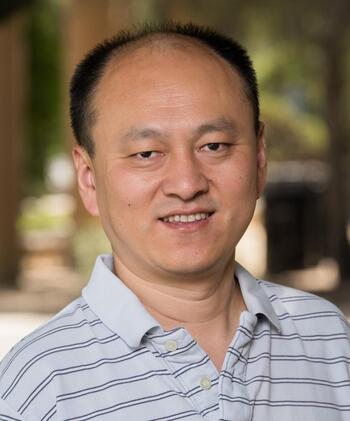
hongbin li headshot

Hongbin Li is the Co-Director of the Stanford Center on China's Economy and Institutions (SCCEI) and a Senior Fellow of Stanford Institute for Economic Policy Research (SIEPR). Hongbin obtained his Ph.D. in economics from Stanford University in 2001 and joined the economics department of the Chinese University of Hong Kong (CUHK), where he became full professor in 2007. He was also one of the two founding directors of the Institute of Economics and Finance at the CUHK. He taught at Tsinghua University in Beijing 2007-2016 and was C.V. Starr Chair Professor of Economics in the School of Economics and Management. He also founded and served as the Executive Associate Director of the China Social and Economic Data Center at Tsinghua University. He founded the Chinese College Student Survey (CCSS) in 2009 and the China Employer-Employee Survey (CEES) in 2014.

Hongbin’s research has been focused on the transition and development of the Chinese economy, and the evidence-based research results have been both widely covered by media outlets and well read by policy makers around the world . He is currently the co-editor of the Journal of Comparative Economics.


Image
Headshot of Dr. Scott Rozelle
Scott Rozelle is the Helen F. Farnsworth Senior Fellow and the co-director of Stanford Center on China's Economy and Institutions in the Freeman Spogli Institute for International Studies and Stanford Institute for Economic Policy Research at Stanford University.  For the past 30 years, he has worked on the economics of poverty reduction. Currently, his work on poverty has its full focus on human capital, including issues of rural health, nutrition and education. For the past 20 year, Rozelle has been the chair of the International Advisory Board of the China Center for Agricultural Policy in Peking University. In recent years Rozelle spends most of his time co-directing the Rural Education Action Project (REAP). In recognition of this work, Dr. Rozelle has received numerous honors and awards. Among them, he became a Yangtse Scholar (Changjiang Xuezhe) in Renmin University of China in 2008. In 2008 he also was awarded the Friendship Award by Premier Wen Jiabao, the highest honor that can be bestowed on a foreigner. 

Seminars
Authors
Gary Mukai
News Type
Blogs
Date
Paragraphs

In his March 15, 2021 lecture for SPICE’s Reischauer Scholars Program, actor George Takei—who played Hikaru Sulu, helmsman of the USS Enterprise in Star Trek—added “and Stand Back” to the iconic Star Trek words, “Live Long and Prosper,” as he was greeting students. His addition of “and Stand Back” was a message to the RSP students that it is important to continue to socially distance during the pandemic.

During his riveting lecture, Takei didn’t need to draw upon his acting skills to engage his audience of students as he recollected his family’s life after the Japanese attack on Pearl Harbor on December 7, 1941, and drew parallels between his family’s experience during World War II and anti-Asian sentiment and hate crimes (including killings and stabbings) against Asian Americans today. Takei was four years old at the time of the Pearl Harbor attack, and following the signing of Executive Order 9066 by President Franklin Roosevelt on February 19, 1942, Takei and his family along with approximately 120,000 people of Japanese descent—two thirds of whom were American citizens like Takei—were forced from their homes.

As he did with his legions of fans in Star Trek, Takei had the students glued to their screens as he recalled the day that he and his family were forced from their home in Los Angeles.

On that day that I can never forget, I had just turned five years old. It was a few weeks after my birthday, April 20. My father had gotten us dressed up hurriedly and told us to wait in the living room while my father and mother did some last-minute packing in the bedroom. Our baby sister was an infant and she was in the bedroom with them in a cradle. In the living room, my brother and I were just gazing out the front window at our neighborhood and suddenly we saw two soldiers marching up our driveway. They carried rifles with shiny bayonets on them. They stomped up the front porch and with their fists, began pounding the door. I still remember how it felt, like the walls were trembling… My father came out of the bedroom, answered the door, and literally, at gunpoint we were ordered out of our home… Shortly after and escorted by one of the soldiers, my mother came out holding our baby sister in one arm and a huge duffle bag in the other, and tears were streaming down her cheeks. The terror of that morning is still alive in me. I will never be able to forget that horrific day. It is seared into my memory.

Upon hearing this, RSP student Kogen Brown reflected, “I was deeply struck by the fact that these details remained in Mr. Takei’s mind after all these years. I remember only a few snippets of my life from that age, and the fact that he remembers so many specific aspects about the time that he was interned really goes to show the emotional and psychological impact that internment had on Japanese Americans—even those who were so young that they didn’t know what was happening or why it was happening to them.”

The War Relocation Authority (WRA) was the federal agency created in 1942 to oversee the Japanese Americans who were removed from the West Coast during World War II. The WRA built and operated a network of camps, where those removed were subjected to forced incarceration. Takei and his family were taken to the horse stables in Santa Anita Racetrack where they were assigned to a horse stall, which was still pungent with horse manure. The family stayed for four or five months in the so-called Santa Anita Assembly Center while the more permanent concentration camps were being built. From Santa Anita, Takei and his family were sent by train to the so-called Rohwer War Relocation Center in Arkansas. Takei recollected, “There, as a five-year-old child, I had an adventure. A discovery of a whole alien world. I am a southern Californian. I’m used to palm trees. In Rohwer beyond the barbed wire fence was the bayou. I have memories of camp as a fun experience, but that was a child’s experience. At the same time, parallel to my childhood experience, my parents had a grotesque experience—barbed wire fences, sentry towers, machine guns pointed at them. When we made the night run to the latrine from our barrack, searchlights followed us. My mother considered it an invasive, humiliating light but the five-year-old me thought it was nice that they lit the way for me to pee. Same experiences but two different memories.”

During his recollection of his life during World War II, Takei noted, “There are relevant lessons that apply to what’s happening today. We talk about Asian hate, hate of Asian people, and horrific things are being done to elderly Asians because of the pandemic we are going through. This kind of hate is what Japanese Americans were subjected to more than 80 years ago… back then, graffiti was painted on some of our homes, on our cars… like what’s happening today.”

Takei underscored the ironies of being detained behind barbed wire. He noted,

I went to school in a black tar barrack and every morning, we started the school day with the Pledge of Allegiance to the flag. I could see the barbed wire fence and the sentry towers right outside my school house window as I recited the words, ‘with liberty and justice for all.’

“I still can’t wrap my head around how horribly the U.S. government failed Japanese Americans,” reflected RSP student Kalia Lai, “Hearing from Mr. Takei that he and the other Japanese American students still had to say the Pledge of Allegiance at the start of school made me realize how empty those words, ‘with liberty and justice for all,’ turned out to be for Japanese Americans, and how inhumane the incarceration camps were.”

Takei also shared that in 1943, the War Department and WRA established a “loyalty questionnaire” as a means to assess the loyalty of all adults in the WRA camps. Takei spoke specifically about the final two questions, questions 27 and 28, which created confusion and resentment.

Question number 27 asked if Japanese Americans were willing to serve in the armed forces of the United States on combat duty wherever ordered. Question number 28 asked if individuals would swear unqualified allegiance to the United States and faithfully defend the United States from any or all attack by foreign or domestic forces, and forswear any form of allegiance or obedience to the Japanese Emperor, or any other foreign government, power, or organization. U.S. citizens resented being asked to renounce loyalty to the Emperor of Japan when they had never held a loyalty to the Emperor. At the time, Japanese immigrants were barred from becoming U.S. citizens, so they wondered if renouncing their only citizenship would leave them stateless.

Despite the confusion, thousands from Hawaii and the concentration camps served in the U.S. Army. The 442nd Regimental Combat Team was organized on March 23, 1943, after more than a year during which Americans of Japanese descent were declared enemy aliens by the U.S. War Department. Takei emphatically noted, “We weren’t the enemy, we were Americans.” The 442nd RCT became the most decorated unit for its size and length of service in U.S. military history. Following the end of the war, President Truman honored them and said, “You fought not only the enemy, but you fought prejudice—and you have won.”

Takei noted the importance for students to study about history as it teaches us important lessons and stated that he has made it his life’s mission to talk about the incarceration of Japanese Americans. “As a matter of fact, today we are living through a time that will be studied as a very important part of history by future generations,” expressed Takei. Recalling his years behind barbed wire, he emphasized that he and his family were viewed with suspicion and hate simply because of the way they looked. “There were no charges, no trial, no due process… Terror made toxic by racism started to affect the so-called leaders of our country, the politicians, but instead of leading, these politicians got swept up by the hysteria and became part of that hysteria… We have so much to learn from history because we are repeating the same kind of mentality that put us in these barbed wire prison camps.”

These words resonated in RSP student Noah Kurima, whose paternal grandparents were among the 120,000 who were incarcerated. Kurima commented, “What surprised me the most upon hearing Mr. Takei speak about his wartime experiences are the parallels that I see in our country eight decades later. As a 16-year-old, I would have hoped that more progress had been made in the area of cross-cultural understanding. The hysteria, racism, and failure of political leadership that Mr. Takei described from his childhood seem eerily similar to what I have seen in the media recently. I hope that the RSP students in the year 2100 will not be witnessing the same parallels that I am today.”

In a strongly emphasized message to the students, Takei said that the ideals of the United States “are noble but they become real and true only when the people infuse those ideals with truth with backing. At times of panic and hysteria, we start behaving irrationally.”

RSP Instructor Naomi Funahashi reflected, “I hope that my students especially take this message to heart. I honestly hesitated to close the session because of the clear impact that Mr. Takei was having on my students.” Funahashi gratefully acknowledged Takei and noted, “Sharing your recollections—particularly those of you as a five-year-old boy—we could feel your very palpable sense of terror and fear, and through your voice, you helped students to understand why it’s such an important issue to study today.”

George Takei is a social justice activist, social media superstar, Grammy-nominated recording artist, New York Times bestselling author, and pioneering actor whose career has spanned six decades. He has appeared in more than 40 feature films and hundreds of television roles, and he has used his success as a platform to fight for social justice, LGBTQ+ rights, and marriage equality. For the full story of George Takei’s childhood imprisoned within American concentration camps during World War II, see his graphic memoir, They Called Us Enemy. Naomi Funahashi and I are grateful to Brad Takei for his support of George’s lecture and this article, and also to Michael Kurima for his support as a liaison between SPICE and George Takei.

Read More

Koki Mashita at Webb School of California; photo courtesy Koki Mashita
Blogs

The Reischauer Scholars Program: The Inspiration to Start an Investment Firm

The following reflection is a guest post written by Koki Mashita, an alumnus of the Reischauer Scholars Program.
The Reischauer Scholars Program: The Inspiration to Start an Investment Firm
Illustration of a virtual classroom session
Blogs

Bridging “Social Distancing” Across the Pacific: 6 Tips for Facilitating Cross-Cultural Online Learning

Bridging “Social Distancing” Across the Pacific: 6 Tips for Facilitating Cross-Cultural Online Learning
Hero Image
George Takei, Hosato Enterprises, Inc., Los Angeles
George Takei; photo courtesy Hosato Enterprises, Inc., Los Angeles
All News button
1
Subtitle

In his March 15, 2021 lecture for SPICE’s Reischauer Scholars Program, actor George Takei—who played Hikaru Sulu, helmsman of the USS Enterprise in Star Trek—added “and Stand Back” to the iconic Star Trek words, “Live Long and Prosper,” as he was greeting students.

-

This seminar has been cancelled. Please join us for our next seminar in the series with Professor Albert Park on April 27, 2021.

Controlling the Narrative with Professor Joseph Piotroski, Stanford University

This seminar provides an overview of corporate news reporting in China, with a focus on understanding the political and market-based incentives behind Chinese newspapers' biased coverage of China's listed companies. And, given these prevailing incentives, we will explore how politicians in China use the Party's flagship newspaper, the People’s Daily, to coordinate the reporting of corporate news in China.


Image
Headshot of Dr. Joseph Piotroski
About the Speaker

Joseph Piotroski is the Robert K. Jaedicke Professor of Accounting at Stanford University’s Graduate School of Business, and a Senior Fellow at the Asian Bureau of Finance and Economic Research (ABFER). Professor Piotroski earned his PhD from the University of Michigan in 1999, an MBA from Indiana University in 1994, a BS in Accounting from the University of Illinois in 1989, and worked as a tax consultant for Coopers and Lybrand in Chicago. His research focuses on corporate transparency, governance, and regulation in a global context. His current research examines the impact of legal, political, and regulatory forces on capital market behavior and corporate decision-making, most notably in China and other emerging economies. His research has been published in scholarly journals in the areas of accounting, finance, and economics, and his research on value investing has been frequently cited in the popular press and is widely used in practice. 


Seminar Series Moderators:

Image
Headshot of Dr. Scott Rozelle

Scott Rozelle holds the Helen Farnsworth Endowed Professorship at Stanford University and is Senior Fellow in the Food Security and Environment Program and the Shorenstein Asia-Pacific Research Center, Freeman Spogli Institute (FSI) for International Studies. For the past 30 years, he has worked on the economics of poverty reduction. Currently, his work on poverty has its full focus on human capital, including issues of rural health, nutrition and education. For the past 20 year, Rozelle has been the chair of the International Advisory Board of the Center for Chinese Agricultural Policy, Chinese Academy of Sciences (CAS). In recent years Rozelle spends most of his time co-directing the Rural Education Action Project (REAP). In recognition of this work, Dr. Rozelle has received numerous honors and awards. Among them, he became a Yangtse Scholar (Changjiang Xuezhe) in Renmin University of China in 2008. In 2008 he also was awarded the Friendship Award by Premiere Wen Jiabao, the highest honor that can be bestowed on a foreigner. 

Image
hongbin li headshot
Hongbin Li is the James Liang Director of the China Program at the Stanford King Center on Global Development, and a Senior Fellow of Stanford Institute for Economic Policy Research (SIEPR). Hongbin obtained his Ph.D. in economics from Stanford University in 2001 and joined the economics department of the Chinese University of Hong Kong (CUHK), where he became full professor in 2007. He was also one of the two founding directors of the Institute of Economics and Finance at the CUHK. He taught at Tsinghua University in Beijing 2007-2016 and was C.V. Starr Chair Professor of Economics in the School of Economics and Management. He founded the Chinese College Student Survey (CCSS) in 2009 and the China Employer-Employee Survey (CEES) in 2014.

Hongbin’s research has been focused on the transition and development of the Chinese economy, and the evidence-based research results have been both widely covered by media outlets and well read by policy makers around the world. He is currently the co-editor of the Journal of Comparative Economics.


Register Here

Register once to receive the Zoom meeting link that will be used for all lectures in this series.

Seminars
News Type
News
Date
Paragraphs

APARC is pleased to announce the appointment of political scientist Dr. Diana Stanescu and doctoral candidate in sociology Mary-Collier Wilks as our 2021-22 Shorenstein postdoctoral fellows on contemporary Asia. They will begin their appointments at Stanford in autumn 2021.

The Shorenstein Postdoctoral Fellowship on Contemporary Asia supports recent doctoral graduates dedicated to research and writing on contemporary Asia, primarily in the areas of political, economic, or social change in the Asia-Pacific, or international relations in the region.

Fellows develop their dissertations and other projects for publication, present their research, and participate in the intellectual life of APARC and Stanford at large. Our postdoctoral fellows often continue their careers at top universities and research organizations around the world and remain involved with research and publication activities at APARC.

Meet our new postdoctoral scholars:


Diana Stanescu

Research Project: Do Bureaucratic Networks Matter for Market Access? The Effect of Informal Connections on Trade and FDI of Japanese Firms.

Image
Portrait of Diana Stanescu
Diana Stanescu is a postdoctoral fellow with the Program on U.S.-Japan Relations at Harvard University’s Weatherhead Center for International Affairs. She holds a B.A. in International Relations and Asian Studies from Mount Holyoke College and an M.A. and Ph.D. in Political Science from Princeton University. She is a former pre-doctoral exchange scholar in the Department of Government at Harvard.

Dr. Stanescu’s research interests include international trade, regulation, and lobbying with a focus on Japan. Using formal and quantitative methods, her research addresses the overarching question of how bureaucracies shape global economic governance, from a structural and agent-driven perspective. Her dissertation, “The Bureaucratic Politics of Foreign Economic Policymaking,” explains the mechanisms by which stakeholders shape international economic policy through bureaucratic channels of influence. Additional work looks at the micro-foundations of bureaucratic structure and its consequences for policy, examines the role of individual bureaucrats within domestic and international institutions, and develops micro-level data on bureaucratic careers and appointments.

At APARC, Stanescu will further assess how politicians and interest group representatives maneuver within bureaucratic channels to have influence over foreign economic policy. In particular, she will examine how bureaucratic-interest group networks help firms obtain market access abroad, with evidence from trade and foreign direct investment in Japan.

Mary-Collier Wilks

Research project: How do conceptions of gender, sexuality, and women’s advancement shape the construction of development knowledge and foreign aid?

Image
Portrait of Mary-Collier Wilks
Mary-Collier Wilks is currently a doctoral candidate in Sociology at the University of Virginia. Her research agenda centers on meaning-making and power dynamics in international organizations, with a particular focus on the ways in which people encounter international development in everyday lives and the gendered meanings, divisions, and struggles that arise from such encounters.

It was Wilk’s work as a grant writer at a local NGO, Social Services of Cambodia, that first sparked her interests in globalization, gender, and the politics of international development. Having seen how resources and ideas from all over the world flow through NGOs to affect the lives of people in Cambodia, she began thinking about the complicated process of foreign aid and international development. She also gained experience as a consultant in the development sector, performing a gender analysis for a USAID health project and serving as a trainer for a USAID Women’s Leadership Conference.

For her dissertation, which is funded by the National Science Foundation and the Fulbright IIE, Wilks conducted a multi-sited ethnography comparing U.S. and Japanese international NGOs that advance women's health in Cambodia. Her work contributes to scholarly theories of global civil society and international development, contending that to adequately analyze and improve development outcomes, we must attend to national variation in international NGO programs and practices.

At APARC, Wilks will transform her dissertation manuscript into a book and extend her comparative research agenda to investigate how NGO practices are shaped by the business cultures in which their donors are embedded.

Read More

Oriana Skylar Mastro testifies to the U.S.-China Economic and Security Review Commission on Taiwan deterrence.
News

Oriana Skylar Mastro Testifies on Deterring PRC Aggression Toward Taiwan to Congressional Review Commission

China may now be able to prevail in cross-strait contingencies even if the United States intervenes in Taiwan’s defense, Chinese security expert Oriana Skylar Mastro tells the U.S.-China Economic and Security Review Commission. Changes must be made to U.S. military capabilities, not U.S. policy, she argues.
Oriana Skylar Mastro Testifies on Deterring PRC Aggression Toward Taiwan to Congressional Review Commission
[Left] Postdoc Spotlight, Jeffrey Weng, Shorenstein Postdoctoral Fellow in Contemporary Asia, [Right] Jeffrey Weng
Q&As

Postdoc Spotlight: Jeffrey Weng on Language and Society

Shorenstein Postdoctoral Fellow in Contemporary Asia Jeffrey Weng shares insights from his research into how language and society shape one another, particularly how the historical use of Mandarin affects contemporary Chinese society and linguistics.
Postdoc Spotlight: Jeffrey Weng on Language and Society
Hero Image
Spring blooms in the courtyard near History Corner, Stanford University. L.A. Cicero
All News button
1
Subtitle

Political scientist Dr. Diana Stanescu and sociologist Mary-Collier Wilks will join APARC as Shorenstein postdoctoral fellows on contemporary Asia for the 2021-22 academic year.

Authors
Callista Wells
News Type
News
Date
Paragraphs

The China Program at Shorenstein APARC had the privilege of hosting Jude Blanchette, the Freeman Chair in China Studies at the Center for Strategic and International Studies (CSIS). The program, entitled "What’s ‘Communist’ about the Communist Party of China?," explored the goals and ideology of the Chinese Communist Party (CCP), as well as what they might mean for the future of China in the global community. Professor Jean Oi, William Haas Professor of Chinese Politics and director of the APARC China Program, moderated the event.

After the death of Mao Zedong in 1976, the goals of the CCP became less clear. As the country began to adopt market reforms in the 1980s and 1990s, CCP theorists were forced into contortions providing ideological justifications for policies that appeared overtly capitalist. Deng Xiaoping’s concept of “Socialism with Chinese characteristics” came to be seen as a theoretical fig leaf rather than a description of an egalitarian economic system, and by the 2000s, a consensus emerged that the CCP had completely abandoned any pretense of pursuing the Marxist vision it purported to hold. With the rise of Xi Jinping, however, the Party talks with renewed vigor about Marxism-Leninism and the goal of achieving actual, existing socialism. Has the CCP re-discovered communism?  In his talk, Blanchette discussed the abandoned and existing legacies of Mao Zedong, Marxism-Leninism, and the CCP’s vision of socialism. Watch now: 

Read More

Min Ye speaking
News

Domestic or International? The Belt and Road Initiative Is More Internally Focused Than We Think, Says Expert Min Ye

Domestic or International? The Belt and Road Initiative Is More Internally Focused Than We Think, Says Expert Min Ye
Banner of Hau L. Lee
News

The Pandemic, U.S.-China Tensions and Redesigning the Global Supply Chain

The Pandemic, U.S.-China Tensions and Redesigning the Global Supply Chain
American and Chinese flags
News

U.S.-China Relations in the Biden Era

Dr. Thomas Wright examines the recent history of US-China relations and what that might mean for the new administration.
U.S.-China Relations in the Biden Era
Hero Image
National Emblem of the People's Republic of China on the Great Hall of the People
All News button
1
Subtitle

Is the Chinese Communist Party really communist at all? Expert Jude Blanchette, Freeman Chair in China Studies at the Center for Strategic and International Studies, weighs in.

-

* Please note all CISAC events are scheduled using the Pacific Time Zone.


Seminar Recording:  https://youtu.be/-hERfg-DCYw


About the Event: 

This presentation explores two topics at the nexus of technology and international security: interstate influence operations and technological revolutions.

After Russian interference in the 2016 U.S. election, influence operations have become a central focus among American policymakers, foreign policy pundits, and publics alike. Yet, Goldstein argues that they remain under-explored and under-theorized in international security studies, with disagreement over how to define the phenomenon implicit in the existing literature. Goldstein will introduce a conceptual framework for foreign influence operations and argue that security studies scholars should pay greater attention to the subject for two reasons. First, they are policy-relevant and likely to remain so; they are cost effective, propagandists are prone to inflate their impact, and they are difficult to deter. Second, studying influence operations can contribute to the academic discipline of security studies by helping to expand restrictive notions of state power and challenge dominant models of foreign policy decision-making.

How do emerging technologies affect the rise and fall of great powers? Scholars have long observed that rounds of technological revolution disrupt the economic balance of power, bringing about a power transition in the international system. However, there has been limited investigation of how this process occurs. The standard explanation emphasizes a country’s ability to dominate innovation in leading sectors, seizing monopoly profits in new, fast-growing industries centered around major technological breakthroughs. Investigating historical cases of industrial revolutions followed by economic power transitions, Ding will present an alternative mechanism based on the diffusion of general-purpose technologies. The findings have direct implications for how recent breakthroughs in artificial intelligence could affect the U.S.-China power balance.


About the Speakers: 

Jeffrey Ding is a Ph.D. candidate in the Department of Politics and International Relations at the University of Oxford. Jeffrey’s current research is centered on how technological change affects the rise and fall of great powers. Through investigating historical cases of industrial revolutions, Jeffrey traces causal mechanisms that connect significant technical breakthroughs and economic power transitions — with an eye toward the implications of advances in AI for a possible U.S.-China power transition. Jeffrey’s previous research covered related topics, including China's development of AI, identifying strategic goods and technologies, and technical standards as a vehicle of AI governance.


Josh A. Goldstein is a PhD Candidate and Clarendon Scholar in the Department of Politics and International Relations at the University of Oxford. For the 2020-2021 year, he is a pre-doctoral fellow with the Stanford Internet Observatory and part of the inaugural class of non-resident Hans J. Morgenthau Fellows at the Notre Dame International Security Center. Josh’s 3-paper doctoral dissertation takes a multi-method approach to studying the challenges that democracies face from influence operations. His broader research interests lie in international security, political psychology, and foreign policy-decision making.


Virtual Seminar

0
Postdoctoral Fellow, Stanford Internet Observatory (2021-2022)
Predoctoral Fellow, Stanford Internet Observatory (2020-2021)
Josh-Goldstein.jpeg

Josh A. Goldstein is a past postdoctoral scholar at the Stanford Internet Observatory. He received his PhD in International Relations from the University of Oxford, where he studied as a Clarendon Scholar. At the Stanford Internet Observatory, Dr. Goldstein investigated covert influence operations on social media platforms, studied the effects of foreign interference on democratic societies, and explored how emerging technologies will impact the future of propaganda campaigns. He has given briefings to the Department of Defense, the State Department, and senior technology journalists based on this work, and published in outlets including Brookings, Lawfare, and Foreign Policy.

Prior to joining SIO, Dr. Goldstein received an MPhil in International Relations at Oxford with distinction and a BA in Government from Harvard College, summa cum laude. He also assisted with research and writing related to international security at the Belfer Center, Brookings Institution, House Foreign Affairs Committee, and Department of Defense.

0
ding.png

Jeff is an Assistant Professor of Political Science at George Washington University. Previously, he was a postdoctoral fellow at Stanford's Center for International Security and Cooperation, sponsored by Stanford's Institute for Human-Centered Artificial Intelligence. His research agenda centers on technological change and international politics. His book project investigates how past technological revolutions influenced the rise and fall of great powers, with implications for U.S.-China competition in emerging technologies like AI. Other research papers tackle how states should identify strategic technologies, assessments of national scientific and technological capabilities, and interstate cooperation on nuclear safety and security technologies. Jeff's work has been published in Foreign Affairs, Security Studies, The Washington Post, and other outlets. Jeff received his PhD in 2021 from the University of Oxford, where he studied as a Rhodes Scholar. He has also worked as a researcher for Georgetown's Center for Security and Emerging Technology and the Centre for the Governance of AI at the University of Oxford.

Affilate
Seminars
-

* Please note all CISAC events are scheduled using the Pacific Time Zone.


Seminar Recording:  https://youtu.be/Mwjn39S48rE


About the Event: NATO Secretary General Stoltenberg will speak about how the transatlantic alliance is adapting to change in this turbulent period.  President Biden has clearly signaled that he is resolved to reach out to the NATO allies, working to repair the trans-Atlantic bond. To strengthen the bond between America and Europe and prepare the alliance for the future, the Secretary General has launched the NATO 2030 initiative.  This includes proposals on how NATO can better harness technology and innovation, tackle the security implications of climate change, and help make our societies more resilient. While NATO must continue to deter and defend against Russia, it is also keeping channels open to Moscow. The rise of China presents both challenges and opportunities that NATO has started to address. And missions in Afghanistan and Iraq are on the cusp of change, with decisions underway about what role NATO will play in the future. All in all, an exciting time to hear from NATO’s Secretary General.

This event is co-sponsored with The Europe Center.


About the Speaker: 

Jens Stoltenberg became NATO Secretary General in October 2014, following a distinguished international and domestic career. As a former Prime Minister of Norway and UN Special Envoy, Mr. Stoltenberg has been a strong supporter of greater global and transatlantic cooperation. Mr. Stoltenberg’s mandate as NATO Secretary General has been extended until the end of September 2022.

Under Mr. Stoltenberg’s leadership, NATO has responded to a more challenging security environment by implementing the biggest reinforcement of its collective defence since the Cold War, increasing the readiness of its forces and deploying combat troops in the eastern part of the Alliance. He believes in credible deterrence and defence while maintaining dialogue with Russia. He has also advocated for increased defence spending and better burden sharing within the Alliance, and a greater focus on innovation. NATO has also stepped up its efforts in the fight against terrorism. He strongly supports a partnership approach, with cooperation between NATO and the European Union reaching unprecedented levels.

Before coming to NATO, he was the UN Special Envoy on Climate Change from 2013 to 2014. He has also chaired UN High-level Panels on climate financing and the coherence between development, humanitarian assistance and environmental policies.

As Prime Minister of Norway, Mr. Stoltenberg increased the defence spending and transformed the Norwegian armed forces with new high-end capabilities and investments. He also signed an agreement with Russia on establishing maritime borders in the Barents and Polar Sea, ending a 30-years dispute.

Mr. Stoltenberg was also Prime Minister during the deadly terrorist attacks, which killed 77 people in Oslo and Utøya on 22 July 2011, urging in response, “more democracy, more openness, and more humanity, but never naïvete”.

Mr Stoltenberg holds a postgraduate degree in Economics from the University of Oslo. After graduating in 1987, he held a research post at the National Statistical Institute of Norway, before embarking on a career in Norwegian politics.

  • 2005-2013: Prime Minister of Norway
  • 2002-2014: Leader of the Norwegian Labor Party
  • 2000-2001: Prime Minister of Norway
  • 1996-1997: Minister of Finance
  • 1993-1996: Minister of Industry and Energy
  • 1991-2014: Member of Parliament
  • 1990-1991: State Secretary at the Ministry of the Environment
  • 1985-1989: Leader of the Norwegian Labour Youth

Jens Stoltenberg was born in Oslo on 16 March 1959. He is married to Ingrid Schulerud. They have two grown-up children.

Virtual Seminar

Jens Stoltenberg Secretary General NATO
Seminars
Authors
Gary Mukai
News Type
Blogs
Date
Paragraphs

Stanford e-Kawasaki is an online course for high school students in Kawasaki City, Japan, that is sponsored by Kawasaki City. Launched in fall 2019, it is offered by the Stanford Program on International and Cross-Cultural Education (SPICE) in collaboration with Kawasaki City. SPICE is grateful to Kawasaki Mayor Norihiko Fukuda whose vision made this course possible. 


The two key themes of Stanford e-Kawasaki are entrepreneurship and diversity, and Stanford e-Kawasaki Instructor Maiko Tamagawa Bacha invites guest speakers with these themes in mind. Most guest speakers address one of the themes. However, when Victoria Tsai—a Taiwanese American entrepreneur who is the founder and CEO of Tatcha—agreed to speak, Bacha noted that she could not imagine anyone more qualified to share her insights on both themes. Tatcha was founded by Tsai to share the geisha’s wisdom with modern women everywhere, and to further the belief that true beauty begins with the heart and the mind. Launched in 2009, Tatcha is now one of the biggest skincare retailers in the United States.

While listening to Tsai’s guest lecture on February 5, 2021, Bacha and I were especially struck by her resilience, approachability and gift for empowering youth, openness to diverse perspectives, and respect for traditional culture. We both quickly realized what a great role model she is for all of the Stanford e-Kawasaki students but for the girls, in particular.

Resilience
While sharing her experiences as a young professional on Wall Street, Tsai mentioned that she was 21 and was next to the World Trade Center buildings when they were hit by a terrorist attack on September 11, 2001. She recalled, “We saw lots of people jumping and dying and then my husband got very sick and it made me question my purpose in life. And at that time, I didn’t know anything about ikigai [a Japanese concept that means “a reason for being”] but I knew that if I was going to spend the hours that I am awake working and not with my family and not playing, that I wanted my work to mean something.” After experiencing various jobs and going to business school, which “looked good on paper,” she decided to seek work with a greater purpose.

This led her to establish Tatcha. Tsai mentioned to the students that she hadn’t taken a salary at Tatcha for nine years. This prompted a student to ask about her motivation, to which Tsai replied, “When I think of my life’s purpose, I don’t expect it to be easy, but I do hope that it’s worthwhile. This work is my life’s purpose, so even when it gets hard, I just think, ‘that’s part of life.’” During the pandemic, I imagine that Tsai’s resilience really resonated among the students.

Approachability and Gift for Empowering Youth
I knew from articles about Tsai that she is a Harvard Business School graduate and an extremely successful CEO. Yet, by accepting the invitation to speak to the high school students in Kawasaki—some of whom are aspiring entrepreneurs—she demonstrated her desire to pass on her wisdom to the next generation. Prior to Tsai’s guest lecture, Bacha had sent her a list of questions that the students had written based on their reading about Tsai’s background. In her opening comments, Tsai noted, “You are much more advanced than I was. I could not compete with you.”

This comment seemed to quickly put students at ease. One of the students commented, “I think it’s wonderful that you found purpose in life and help people… A lot of young people like me and my friends feel lost in life, don’t have a dream or long-term vision of our lives, so I want to know how can we find our own purpose in life or dream.” This comment prompted Tsai to describe an activity that was devised by Harvard Business School’s Dr. Tim Butler, who has noted that as youth, they actually already have a hunch about what they want to be when they grow up, but just don’t know the specific names of the jobs. Tsai continued, “then, the problem is when you get older, you start hearing your friends, parents, and teachers saying, ‘oh, you should do that.’ And then in your head you can’t tell anymore if you really want to do something, or if you simply think you should do it because everybody else thinks you should do it.” The activity that Butler recommends is in two parts: (1) read articles that interest you, and identify patterns (specifically, areas of interest) in them; and (2) while keeping these interests in mind, write about what you envision yourself doing in ten years as you are the happiest that you have ever been—that is, completely focused and engaged. Tsai encouraged the students to try this, and some already have.

Openness to Diverse Perspectives
When a student asked Tsai about overcoming gender- and culture-related differences, she reflected upon three experiences: one on the trading floor on Wall Street and two in Kyoto with a taxi driver and geisha. Concerning her Wall Street experience, Tsai recollected, “When I first worked on Wall Street and I walked onto the trading floor, I was so scared. One, there were no women, and I couldn’t even understand what they were saying because they were speaking financial language… I remember being so intimidated. Then one year later, I could understand everything.” She came to the conclusion that “These people are not smarter than me. They’re just older, and the harder I work, the faster I can close the gap in knowledge. I have a great education, I have a decent mind, I have a very strong work ethic, I’ll just keep asking questions. So I figured it out.”

Concerning her experience with a taxi driver in Kyoto, Tsai noted that he is the one who taught her that there’s a difference between a job and a purpose. Through his actions, the driver taught her that his job is to be a driver but that his purpose is to make people happy. When he met Tsai for the first time, she was not feeling well and thus didn’t seem happy. After dropping off Tsai at her hotel, he went home to make CDs of images of Kyoto and delivered them to the hotel, thinking that the images would make her happy. They did and he felt only then that his job had been completed. Tsai reflected, “… and that just stuck with me and I did not know what omotenashi [hospitality that goes above and beyond the expectations of the person receiving the service] was back then, but then I felt it in my heart.”

Lastly, concerning her experience with geisha, who inspired Tatcha’s skincare products, Tsai noted “People in America don’t understand what a geisha is. The importance of a geisha is they were trained in a lot of the classical Japanese arts, such as dance, music, flower arrangement, and the tea ceremony. These are classical traditions that have very important meanings. I think that if you forget where you come from, then you don’t know where you are going. And so I try to hold on to tradition, because it matters. I just thought that’s a beautiful thing… I learned so much from geisha about entrepreneurship and about women’s empowerment through Japanese traditions.”

Respect for Traditional Culture
Her emphasis on Japanese traditions prompted a student to comment, “I was surprised that you made an innovation from old Japanese culture. However, there is a trend to discard old customs. So, how can we get a balance between new trends and old customs?” Tsai shared that what is so interesting about ancient civilizations like China and Japan is that “there is a lot of wisdom in this and something to learn from the past. What we try to do [at Tatcha] is to innovate within tradition, so I never tried to change the core of the tradition, because if it lasted 1000 years, there’s a very good reason for its continuity.”

What Does It Mean to Be a Global Citizen?
One very interesting part of Tsai’s presentation was to learn about Tatcha’s work with Room to Read, which seeks to transform the lives of millions of children in low-income communities in Southeast Asia and Africa by focusing on literacy and gender equality in education. A percentage of each Tatcha purchase is donated to Room To Read. Despite the enormity of some of the challenges that these youth face, Tsai noted that “they have a dream and they show up every day and they study hard and they work hard because they want that dream to come true. Nothing that I will ever face in my life will compare to what these little girls are going through, but then I think if I do my job and I don’t give up, then I can make sure thousands, hundreds of thousands, millions of those girls can have a different life, and then my life meant something.” This really resonated in Bacha, who is very familiar with Room to Read as her husband works for the organization.

Reflecting upon the session, Tsai noted “I learned about the concept of sekaijin [global citizen] when studying the writings of D.T. Suzuki, and I fell in love with the idea. As people who live between cultures, we have the opportunity to share the best of both worlds to advance society and uplift individuals. It was an honor to share my story of cross-cultural entrepreneurship with the students, who were inquisitive, earnest, and wise beyond their years. I believe that Stanford’s e-Kawasaki program is helping to nurture tomorrow’s sekaijin.” When I consider the question, “What does it mean to be a global citizen?,” Tsai immediately comes to mind, and believe that Tsai’s talk really encouraged the students to aspire to become sekaijin as well.


The SPICE staff would like to express its appreciation to Tsuyoshi Inoue of Kawasaki City and Hisashi Katsurayama from the Kawasaki Board of Education for their unwavering support of Stanford e-Kawasaki.

Read More

Archways and pillars in Stanford University's Main Quad
Blogs

Stanford e-Kawasaki: Arches and Pillars of Support During an Unstable Time

Stanford e-Kawasaki: Arches and Pillars of Support During an Unstable Time
SPICE Director Dr. Gary Mukai with Mayor Norihiko Fukuda
Blogs

Stanford e-Kawasaki: The Vision of Mayor Norihiko Fukuda

Stanford e-Kawasaki: The Vision of Mayor Norihiko Fukuda
120219 3010
News

Announcing the Honorees of SPICE’s 2019–20 Regional Programs in Japan

Announcing the Honorees of SPICE’s 2019–20 Regional Programs in Japan
Hero Image
Victoria Tsai in Kyoto
Victoria Tsai in Kyoto; photo courtesy Victoria Tsai
All News button
1
Subtitle

The entrepreneur and businesswoman spoke to students about how certain key experiences in her life influenced her path.

Authors
News Type
News
Date
Paragraphs

February 19th marks the 79th anniversary of President Franklin D. Roosevelt’s signing of Executive Order 9066 in 1942 that led to the incarceration of Japanese Americans during World War II. The Mineta Legacy Project and SPICE are providing an educational opportunity for people across the country to learn about the Japanese American experience during World War II by presenting a webinar on Saturday, February 20, at 10am PST. (Register for free at http://bit.ly/DORteacherwebinar.) As part of the webinar, representatives from both organizations will be giving a virtual tour of the free online curriculum, What Does It Mean to Be an American?, which was inspired by Secretary Norman Mineta, who was incarcerated as a young boy and rose to become the U.S. Secretary of Commerce under President Bill Clinton and U.S. Secretary of Transportation under President George W. Bush. The curriculum is also a companion component to the documentary film, Norman Mineta and His Legacy: An American Story. The Mineta Legacy Project is also making the film available to stream throughout the month of February.

Representing SPICE will be Rylan Sekiguchi, who was recently announced as the recipient of the 2021 Franklin R. Buchanan Prize for his authorship of What Does It Mean to Be an American? The prize is awarded annually by the Association for Asian Studies, which will formally honor Sekiguchi in a ceremony at 2pm PDT on March 24, 2021.

The curriculum is comprised of six lessons: Immigration, Civil Liberties and Equity, Civic Engagement, Justice and Reconciliation, Leadership, and U.S.–Japan Relations. There are more than 200 primary source images and 23 videos created specifically for the curriculum. During the webinar, in addition to hearing from Sekiguchi, educators will hear Karen Korematsu talking about her father and civil rights icon Fred Korematsu; Secretary Norman Mineta sharing why Japan is so important to him; the reaction from Japanese American women on receiving their apology and redress checks; and the powerful story of 99-year old Yae Wada from Berkeley, who reveals the decades of anger she felt from the time she and her family were evicted from the Bay Area and how she found peace upon receiving her apology. Importantly, the curriculum is broader than the Japanese American experience, exploring issues of inclusion and delving into the definitions of civil liberties and justice and how they are implemented.

Register for the free webinar at http://bit.ly/DORteacherwebinar.

Read More

seven students headshot
Blogs

What Does It Mean to Be an American?: Reflections from Students (Part 2)

Reflections of eight students on the website "What Does It Mean to Be an American?"
What Does It Mean to Be an American?: Reflections from Students (Part 2)
mlp team with bush manual rotate 360
News

Presidents Bill Clinton and George W. Bush interviewed for the Mineta Legacy Project

Presidents Bill Clinton and George W. Bush interviewed for the Mineta Legacy Project
Hero Image
Secretary Norman Mineta and Rylan Sekiguch
Secretary Norman Mineta and Rylan Sekiguchi; photo courtesy Gary Mukai
All News button
1
Subtitle

The Mineta Legacy Project and SPICE are providing an educational opportunity for people across the country to learn about the Japanese American experience during World War II by presenting a webinar on Saturday, February 20, at 10am PST.

Authors
News Type
Blogs
Date
Paragraphs

Grandparents have an endearing position of high stature in Mexican culture. Grandchildren have countless stories about the cariño (endearment) they receive from Abuelito (Grandpa) and Abuelita (Grandma). My immigrant grandparents sacrificed a lot when they migrated to the United States. Their courageous journeys and perseverance to attain the American dream left an invaluable mark on me. My abuelito’s journey to the United States initially on the Bracero Program led me to conduct research on the program. The Bracero Program was a binational labor agreement between the United States and Mexico that was in effect from 1942 to 1964. It was established due to the labor shortage brought about by World War II. Thousands of Mexican men were recruited and joined the program to work primarily in agriculture in states like California.

It was my abuelito’s cariño, work ethic, and courage as an immigrant that I have never forgotten. My abuelito worked in the highlands of Jalisco, Mexico, where his skilled farm labor contributed to making the highlands of Jalisco productive for the cultivation of agave. Thousands of the region’s men—including my abuelito—joined the Bracero Program and left Mexico for the United States. Once in the United States, they worked in the agricultural industry and transformed it into the multibillion-dollar business that it is today.

In my research, I have had the chance to interview members of the family of Rafael Silva, who was also a bracero from Jalisco. One of his grandsons, Isa Silva, will be entering Stanford next fall as a recruit for the Stanford Men’s Basketball team. I recently had the chance to talk with Isa and reflect upon the legacy of his abuelito and mine. The work that they performed was brutal, often working with the short-handled hoe for long periods. Reflecting on his abuelito’s contribution to making the Salinas Valley into the “Salad Bowl of the World,” Isa noted, “My grandparents’ immigrant journey and hard work means everything to me. It’s one thing that motivates me and inspires me. I respect the generations before me and am forever grateful for their sacrifices. Because of my grandparents and parents, I work hard in the classroom and it has taught me to give back.”

After the Bracero Program formally ended in 1964, agricultural executives sponsored thousands of braceros like Rafael Silva to stay in California. Not only had the braceros’ lives been transformed from rural poverty in Mexico to making working-class earnings, but their hard work would also eventually transform the lives of their children and grandchildren like Isa. Considered the “Ellis Island” for many Mexican immigrants, the U.S.–Mexico border became an important migration corridor for thousands wanting to find work in the agricultural fields in places like the Salinas Valley. For many young braceros, their earnings provided them with the hope of one day marrying and starting a family. For Rafael Silva, that hope became a reality when he married Eva Silva Ruelas and they settled near the U.S.–Mexico border in San Luis, Sonora, Mexico. While Rafael worked in the agricultural fields in Arizona, Eva and her young children resided in San Luis. Eventually they were able to move together to the Salinas Valley where Rafael continued working in the agricultural fields and Eva worked at the Matsui Nursery, a company founded by Andy Matsui, an immigrant from Japan.

My research has uncovered numerous stories of braceros like Rafael Silva overcoming poverty. Among children and grandchildren of braceros are professors at U.C. Berkeley and Stanford, members of the U.S. Congress and California legislature, as well as successful entrepreneurs, attorneys, educators, physicians, and a former NASA astronaut. Despite these successes, braceros themselves have received little recognition. With this in mind, I decided to organize an event with SPICE to honor braceros, with hopes that it would also make an indelible impression on a Mexican American generation whose bracero fathers or grandfathers had made major contributions to the U.S. economy. They, too, were part of America’s “Greatest Generation.”

Image
photo of braceros in Stanford sweatshirts


On February 26, 2014, ten former braceros and their families were invited to an event at Encina Hall at Stanford. The invitees included Rafael Silva and Eva Silva Ruelas. Former FSI Director Mariano Florentino Cuellar, who is currently a California Supreme Court Justice, spoke along with Stanford Biology Professor Rodolfo Dirzo and me. SPICE Director Gary Mukai moderated the event and spoke about his youth as a farm laborer working with braceros. The evening was historic in that it was one of only a few times that former agricultural workers were recognized at a university. In the photo, I am standing next to my abuelito, José Guadalupe Rodriguez Fonseca, top left. Isa’s abuelito, Rafael Silva, is in the front center.

Image
extended Silva family


What else stood out that evening was the Silva grandchildren’s palpable love for their grandparents. One photo of the evening captures the Silva family legacy. Rafael (wearing a Stanford sweatshirt) and Eva Silva are in the middle with six of their children and numerous grandchildren surrounding them. Isa is standing in front of his grandfather. Three of their grandchildren are currently attending Stanford, with Isa soon to become the fourth. Reminiscing about the event, Isa noted, “I was a ten-year-old boy. It was cool to see the whole family get together and be there. We were there to support my abuelito and recognize all his hard work. It was great to see him honored for what he did so long ago. As we grow older, we appreciate him more and more.” Isa knows that his abuelito and abuelita’s journey is what transformed the Silva family and made his own American dream possible. Reflecting that pride in his family’s story, Isa closed our conversation by saying, “On and off the court, I will always represent being Mexican American.”

Read More

Hero Image
Isa Silva and his family
Isa Silva and his family; photo courtesy Karen Hickey/Stanford Athletics
All News button
1
Subtitle

Isa Silva, grandson of a bracero from Jalisco, will enter Stanford next fall as a recruit for the Stanford Men’s Basketball team.

Subscribe to International Development