President Alejandro Toledo: The Shared Society
Related Multimedia

Presentation

Presentation

 FSI researchers consider international development from a variety of angles. They analyze ideas such as how public action and good governance are cornerstones of economic prosperity in Mexico and how investments in high school education will improve China’s economy.
They are looking at novel technological interventions to improve rural livelihoods, like the development implications of solar power-generated crop growing in Northern Benin.
FSI academics also assess which political processes yield better access to public services, particularly in developing countries. With a focus on health care, researchers have studied the political incentives to embrace UNICEF’s child survival efforts and how a well-run anti-alcohol policy in Russia affected mortality rates.
FSI’s work on international development also includes training the next generation of leaders through pre- and post-doctoral fellowships as well as the Draper Hills Summer Fellows Program.
This paper examines how education policy generates residential sorting and changes residential land price inequality within a city. In 1974, Seoul shifted away from an exam based high school admission system, created high school districts and randomly allocated students to schools within each district. Furthermore, the city government relocated South Korea’s then most prestigious high school from the city center to the city periphery in order to reduce central city congestion. I examine how residential land prices change across school districts using a first differenced boundary discontinuity design. By focusing on the immediate years before and after the creation of school districts and using general functional forms in distance, I find that residential land prices increase by about 13% points more on average and by about 26% points across boundaries in the better school district. Furthermore, there is evidence of dynamic sorting whereby the increase in neighborhood income attracts other high schools to relocate in the following years.
In this session of the Shorenstein APARC Corporate Affiliate Visiting Fellows Research Presentations, the following will be presented:
Yoshihiro Kaga, Ministry of Economy, Trade & Industry, Japan, "The Roles of University-Industry Collaboration for Promoting Innovation"
The existence of top class universities, especially those ties with industry, is regarded as one of the key characteristics of the Silicon Valley ecosystem, where the most successful innovation-based economic growth in the world is observed today. Kaga has conducted a literature review of previous research on this topic and research on Stanford organizations facilitating university-industry ties. Kaga will present his findings and share implications for policies in Japan. His research is in cooperation with Shingo Nakano.
Feng Lin, ACON Biotechnology, "Innovations in China Primary Healthcare Reform: Development and Characteristics of the Community Health Services in Hangzhou"
One of the five major tasks for China’s health reforms launched in 2009 was to promote the development of a primary healthcare system. Hangzhou is one of the cities with a long history in China for developing community health services. Lin has studied the model of community health services in Hangzhou, which is characterized as government-led, guaranteed with enough funding, personnel, space and regulation; supported by a unified information platform; and the assigned central role of general practitioners as health “gatekeepers”. His data collection and analysis have indicated that the basic health status of residents in Hangzhou is comparable to that in Western developed countries. Based on these findings, Lin proposes that the primary healthcare level in Hangzhou will be further developed and promoted with the indexed performance evaluations and more effective implementation of additional measures.
Shingo Nakano, Ministry of Economy, Trade & Industry, Japan, "Policy Implications for Increasing the Number of Start-ups in Japan"
As mentioned in “Japan Revitalization Strategy (Revised in 2014),” it is critical for Japan to develop an environment where venture businesses are launched one after another. The Japanese government has taken some measures to this end, but significant obstacles - such as institutional, human, financial, etc. - remain for venture businesses. Nakano's research looks at how to eliminate these obstacles, while focusing on increasing the number of start-ups in Japan. Based on his findings, Nakano will discuss some policy implications for improving the Japanese start-up ecosystem. His research was conducted in collaboration with Yoshihiro Kaga.
Philippines Conference Room
Encina Hall, 3rd Floor, Central
Governance is exceptionally complex in health systems. Part of the complexity lies in the differences between these systems; especially across countries. Differences make it difficult to assess governance conditions in a comparative sense, and call for a framework to think about this issue. This talk discusses a potential framework based on the idea that governance mechanisms vary depending on relationships in systems and the problems that systems face. The framework is applied to different countries to show how different health sector governance regimes might be required for different contexts.
 Matt Andrews

Global Talent seeks to examine the utility of skilled foreigners beyond their human capital value by focusing on their social capital potential, especially their role as transnational bridges between host and home countries. Gi-Wook Shin (Stanford University) and Joon Nak Choi (Hong Kong University of Science and Technology) build on an emerging stream of research that conceptualizes global labor mobility as a positive-sum game in which countries and businesses benefit from building ties across geographic space, rather than the zero-sum game implied by the "global war for talent" and "brain drain" metaphors.
"Advanced economies like Korea face a growing mismatch between low birth rates and increasing demand for skilled labor. Shin and Choi use original, comprehensive data and a global outlook to provide careful, accessible and persuasive analysis. Their prescriptions for Korea and other economies challenged by high-level labor shortages will amply reward readers of this landmark study." —Mark Granovetter, Professor of Sociology, Stanford University
The book empirically demonstrates its thesis by examination of the case of Korea: a state archetypical of those that have been embracing economic globalization while facing a demographic crisis—and one where the dominant narrative on the recruitment of skilled foreigners is largely negative. It reveals the unique benefits that foreign students and professionals can provide to Korea, by enhancing Korean firms' competitiveness in the global marketplace and by generating new jobs for Korean citizens rather than taking them away. As this research and its key findings are relevant to other advanced societies that seek to utilize skilled foreigners for economic development, the arguments made in this book offer insights that extend well beyond the Korean experience.
Books will be available for purchase at the event or purchase online
Gi-Wook Shin is the director of the Walter H. Shorenstein Asia-Pacific Research Center; the Tong Yang, Korea Foundation, and Korea Stanford Alumni Chair of Korean Studies; the founding director of the Korea Program; a senior fellow of the Freeman Spogli Institute for International Studies; and a professor of sociology, all at Stanford University. As a historical-comparative and political sociologist, his research has concentrated on social movements, nationalism, development, and international relations.
Shin is the author/editor of more than a dozen books and numerous articles. His recent books include Global Talent: Skilled Labor as Social Capital in Korea (2015), Criminality, Collaboration, and Reconciliation: Europe and Asia Confronts the Memory of World War II (2014); New Challenges for Maturing Democracies in Korea and Taiwan (2014); Asia’s Middle Powers? (2013); Troubled Transition: North Korea's Politics, Economy, and External Relations (2013); History Textbooks and the Wars in Asia: Divided Memories (2011); South Korean Social Movements: From Democracy to Civil Society (2011); One Alliance, Two Lenses: U.S.-Korea Relations in a New Era (2010); Cross Currents: Regionalism and Nationalism in Northeast Asia (2007); Rethinking Historical Injustice and Reconciliation in Northeast Asia (2006); and Ethnic Nationalism in Korea: Genealogy, Politics, and Legacy (2006). Due to the wide popularity of his publications, many of them have been translated and distributed to Korean audiences. His articles have appeared in academic journals including American Journal of Sociology, Comparative Studies in Society and History, Political Science Quarterly, International Sociology, Nations and Nationalism, Pacific Affairs, and Asian Survey. Shin is currently writing a book on historical memories of the Asia-Pacific wars with Daniel Sneider.
Joon Nak Choi is an associate professor in the Department of Management at Hong Kong University of Science and Technology. Prior to joining HKUST, he was a Postdoctoral Fellow at the Shorenstein Asia-Pacific Research Center at Stanford University. He earned his Ph.D and M.A in Sociology at Stanford University and his B.A. in Economics and International Relations from Brown University. His ongoing research continues to focus upon the effects of social and political capital, especially in Korea.
Hwy-Chang Moon joined the Walter H. Shorenstein Asia-Pacific Research Center (Shorenstein APARC) for the 2015-2016 academic year. During his time at Shorenstein APARC, Moon will be working on a research project titled, “The Global Strategy of Korean Firms in Silicon Valley.”
Moon received his PhD from the University of Washington and is currently a professor of international business strategy in the Graduate School of International Studies at Seoul National University in South Korea, where he also served as the Dean. He has previously taught at the University of Washington, University of the Pacific, State University of New York at Stony Brook, Helsinki School of Economics, Keio University, and Hitotsubashi University. Moon has also consulted for several multinational companies, international organizations, and governments (e.g., Malaysia, Dubai, Azerbaijan, and the Guangdong Province of China).
Gi-Wook Shin is the William J. Perry Professor of Contemporary Korea in the Department of Sociology, senior fellow at the Freeman Spogli Institute for International Studies, and the founding director of the Korea Program at the Walter H. Shorenstein Asia-Pacific Research Center (APARC) since 2001, all at Stanford University. In May 2024, Shin also launched the Taiwan Program at APARC. He served as director of APARC for two decades (2005-2025). As a historical-comparative and political sociologist, his research has concentrated on social movements, nationalism, development, democracy, migration, and international relations.
In Summer 2023, Shin launched the Stanford Next Asia Policy Lab (SNAPL), which is a new research initiative committed to addressing emergent social, cultural, economic, and political challenges in Asia. Across four research themes– “Talent Flows and Development,” “Nationalism and Racism,” “U.S.-Asia Relations,” and “Democratic Crisis and Reform”–the lab brings scholars and students to produce interdisciplinary, problem-oriented, policy-relevant, and comparative studies and publications. Shin’s latest book, The Four Talent Giants, a comparative study of talent strategies of Japan, Australia, China, and India to be published by Stanford University Press in the summer of 2025, is an outcome of SNAPL.
Shin is also the author/editor of twenty-seven books and numerous articles. His books include The Four Talent Giants: National Strategies for Human Resource Development Across Japan, Australia, China, and India (2025); Korean Democracy in Crisis: The Threat of Illiberalism, Populism, and Polarization (2022); The North Korean Conundrum: Balancing Human Rights and Nuclear Security (2021); Superficial Korea (2017); Divergent Memories: Opinion Leaders and the Asia-Pacific War (2016); Global Talent: Skilled Labor as Social Capital in Korea (2015); Criminality, Collaboration, and Reconciliation: Europe and Asia Confronts the Memory of World War II (2014); New Challenges for Maturing Democracies in Korea and Taiwan (2014); History Textbooks and the Wars in Asia: Divided Memories (2011); South Korean Social Movements: From Democracy to Civil Society (2011); One Alliance, Two Lenses: U.S.-Korea Relations in a New Era (2010); Cross Currents: Regionalism and Nationalism in Northeast Asia (2007); and Ethnic Nationalism in Korea: Genealogy, Politics, and Legacy (2006). Due to the wide popularity of his publications, many have been translated and distributed to Korean audiences. His articles have appeared in academic and policy journals, including American Journal of Sociology, World Development, Comparative Studies in Society and History, Political Science Quarterly, Journal of Asian Studies, Comparative Education, International Sociology, Nations and Nationalism, Pacific Affairs, Asian Survey, Journal of Democracy, and Foreign Affairs.
Shin is not only the recipient of numerous grants and fellowships, but also continues to actively raise funds for Korean/Asian studies at Stanford. He gives frequent lectures and seminars on topics ranging from Korean nationalism and politics to Korea's foreign relations, historical reconciliation in Northeast Asia, and talent strategies. He serves on councils and advisory boards in the United States and South Korea and promotes policy dialogue between the two allies. He regularly writes op-eds and gives interviews to the media in both Korean and English.
Before joining Stanford in 2001, Shin taught at the University of Iowa (1991-94) and the University of California, Los Angeles (1994-2001). After receiving his BA from Yonsei University in Korea, he was awarded his MA and PhD from the University of Washington in 1991.
Shorenstein APARC
Encina Hall
Stanford University
Stanford, CA 94305-6055
Joon Nak Choi is the 2015-2016 Koret Fellow in the Korea Program at Stanford University's Walter H. Shorenstein Asia-Pacific Research Center (Shorenstein APARC). A sociologist by training, Choi is an assistant professor at Hong Kong University of Science and Technology. His research and teaching areas include economic development, social networks, organizational theory, and global and transnational sociology, within the Korean context.
Choi, a Stanford graduate, has worked jointly with professor Gi-Wook Shin to analyze the transnational bridges linking Asia and the United States. The research project explores how economic development links to foreign skilled workers and diaspora communities.
Most recently, Choi coauthored Global Talent: Skilled Labor as Social Capital in Korea with Shin, who is also the director of the Korea Program. From 2010-11, Choi developed the manuscript while he was a William Perry postdoctoral fellow at Shorenstein APARC.
Hwy-Chang Moon has joined the Walter H. Shorenstein Asia-Pacific Research Center (Shorenstein APARC) for the 2015-2016 academic year. During his time at Shorenstein APARC, he will be working on a research project entitled, “The Global Strategy of Korean Firms in Silicon Valley," and will also teach a course on Korean economy and business in the fall quarter.
Moon is a professor of international business strategy at the Graduate School of International Studies (GSIS), Seoul National University, where he also served as the dean of GSIS.
Professor Moon is the editor-in-chief of the Journal of International Business and Economy, and has published numerous articles and books on topics covering international business strategy, cross-cultural management and economic development in East Asia with a focus on South Korea. He frequently provides his perspectives on global economy and business through interviews and televised debates, and his writings appear regularly in South Korean newspapers. The New York Times and NHK World TV have also asked for his perspectives on these topics.
Professor Moon received a PhD from the University of Washington, and has previously taught at the University of Washington, University of the Pacific, State University of New York at Stony Brook, Helsinki School of Economics, Keio University, and Hitotsubashi University. He has also consulted several multinational companies, international organizations, and governments (e.g., Malaysia, Dubai, Azerbaijan, and the Guangdong Province of China).

China’s Communist Party seized power in 1949 after a long period of guerrilla insurgency followed by full-scale war, but the Chinese revolution was just beginning. China Under Mao narrates the rise and fall of the Maoist revolutionary state from 1949 to 1976—an epoch of startling accomplishments and disastrous failures, steered by many forces but dominated above all by Mao Zedong.
Mao’s China, Andrew Walder argues, was defined by two distinctive institutions established during the first decade of Communist Party rule: a Party apparatus that exercised firm (sometimes harsh) discipline over its members and cadres; and a socialist economy modeled after the Soviet Union. Although a large national bureaucracy had oversight of this authoritarian system, Mao intervened strongly at every turn. The doctrines and political organization that produced Mao’s greatest achievements—victory in the civil war, the creation of China’s first unified modern state, a historic transformation of urban and rural life—also generated his worst failures: the industrial depression and rural famine of the Great Leap Forward and the violent destruction and stagnation of the Cultural Revolution.
Misdiagnosing China’s problems as capitalist restoration and prescribing continuing class struggle against imaginary enemies as the solution, Mao ruined much of what he had built and created no viable alternative. At the time of his death, he left China backward and deeply divided.
Books will be available for purchase at the event
Andrew G. Walder, Author, has long specialized on the sources of conflict, stability, and change in communist regimes and their successor states. His publications on China have ranged from the political and economic organization of the Mao era to changing patterns of stratification, social mobility, and political conflict in the post-Mao era. Another focus of his research has been on the political economy of Soviet-type economies and their subsequent reform and restructuring. His current research focuses on popular political mobilization in late-1960s China and the subsequent collapse and rebuilding of the Chinese party-state.
Walder joined the Stanford faculty the fall of 1997. He received his PhD in sociology at the University of Michigan in 1981 and taught at Columbia University before moving to Harvard in 1987. As a professor of sociology, he served as chair of Harvard's MA Program on Regional Studies-East Asia for several years. From 1995 to 1997, he headed the Division of Social Sciences at the Hong Kong University of Science and Technology. From 1996 to 2006, as a member of the Hong Kong Government's Research Grants Council, he chaired its Panel on the Humanities, Social Sciences, and Business Studies.
Thomas P. Bernstein, Discussant, earned his PhD from Columbia University, 1970. He joined the faculty of the Department of Political Science and of the East Asian Institute in 1975, having previously taught at Yale and Indiana Universities. He retired in December 2007. He is a specialist on comparative politics, with a focus on China as well as on communist systems generally. He has written on the collectivization of agriculture in the Soviet Union and China and on the two famines that each country experienced in the l930's and late l950's. Publications on China include a book on Chinese youth (Yale University Press, 1977), which was translated into China in 1993, as well as articles and book chapters on the Mao era, China’s growth without political liberalization, prospects for democratization, and on education. His recent writings have focused on various aspects of state-peasant relations in China’s reform period. Together with Professor Xiaobo Lu, he co-authored Taxation without Representation in Contemporary Rural China (Cambridge University Press, 2003). In recent years, he has resumed work on Sino-Soviet relations and comparisons. In 2010, he published a co-edited book with Hua-yu Li, China Learns from the Soviet Union, 1949-Present (Lexington Book). And he has written on reform and authoritarian rule in contemporary China and Russia. Prior to retirement, he served on various editorial boards, including Comparative Politics and China Quarterly. He has held various fellowships, including a Guggenheim. He served as Chair of the Department of Political Science from 1986-l989 and again from 1991 to l994.
Shorenstein APARC
Stanford University
Encina Hall E301
Stanford, CA 94305-6055
Andrew G. Walder is the Denise O'Leary and Kent Thiry Professor at Stanford University, where he is also a senior fellow in the Freeman Spogli Institute for International Studies. Previously, he served as Chair of the Department of Sociology, Director of the Walter H. Shorenstein Asia-Pacific Research Center, and Head of the Division of International, Comparative and Area Studies in the School of Humanities and Sciences.
Walder has long specialized in the sources of conflict, stability, and change in communist regimes and their successor states. His publications on Mao-era China have ranged from the social and economic organization of that early period to the popular political mobilization of the late 1960s and the subsequent collapse and rebuilding of the Chinese party-state. His publications on post-Mao China have focused on the evolving pattern of stratification, social mobility, and inequality, with an emphasis on variation in the trajectories of post-state socialist systems. His current research is on the growth and evolution of China’s large modern corporations, both state and private, after the shift away from the Soviet-inspired command economy.
Walder joined the Stanford faculty in 1997. He received his Ph.D. in sociology at the University of Michigan in 1981 and taught at Columbia University before moving to Harvard in 1987. From 1995 to 1997, he headed the Division of Social Sciences at the Hong Kong University of Science and Technology.
Walder has received fellowships and grants from the Guggenheim Foundation, the National Science Foundation, the National Academy of Sciences, the Henry Luce Foundation, the Ford Foundation, the Social Science Research Council, and the Center for Advanced Study in the Behavioral Sciences. His books and articles have won awards from the American Sociological Association, the Association for Asian Studies, and the Social Science History Association. He is an elected member of the American Academy of Arts and Sciences.
His recent and forthcoming books include Fractured Rebellion: The Beijing Red Guard Movement (Harvard University Press, 2009); China Under Mao: A Revolution Derailed (Harvard University Press, 2015); Agents of Disorder: Inside China’s Cultural Revolution (Harvard University Press, 2019); and A Decade of Upheaval: The Cultural Revolution in Feng County (Princeton University Press, 2021) (with Dong Guoqiang); and Civil War in Guangxi: The Cultural Revolution on China’s Southern Periphery (Stanford University Press, 2023).
His recent articles include “After State Socialism: Political Origins of Transitional Recessions.” American Sociological Review 80, 2 (April 2015) (with Andrew Isaacson and Qinglian Lu); “The Dynamics of Collapse in an Authoritarian Regime: China in 1967.” American Journal of Sociology 122, 4 (January 2017) (with Qinglian Lu); “The Impact of Class Labels on Life Chances in China,” American Journal of Sociology 124, 4 (January 2019) (with Donald J. Treiman); and “Generating a Violent Insurgency: China’s Factional Warfare of 1967-1968.” American Journal of Sociology 126, 1 (July 2020) (with James Chu).
"'Critical Engagement': British Policy toward the DPRK" examines the United Kingdom's policy toward the Democratic People's Republic of Korea (DPRK). The policy known as "critical engagement" has been applied for over 14 years.
"UK efforts are not going to have the immediate result we all want. However, they do show...that it is possible to carry out engagement and hopefully reduce the chasm between DPRK thinking and the rest of the world," author Mike Cowin writes. He suggests that the British approach is similar to that advised by a Stanford research team in Tailored Engagement.
Cowin wrote an earlier policy paper on relations between the DPRK and the European Union in March 2015.
Mike Cowin is the 2014-15 Pantech Fellow in the Korea Program at the Walter H. Shorenstein Asia-Pacific Research Center. Before coming to Stanford, he served as the deputy head of mission at the British Embassy in Pyongyang, North Korea. He has also served in the British embassies in Seoul from 2003 to 2007, and in Tokyo from 1992 to 1997.
Social and economic grievances of Tunisian youth played a major role in igniting the uprising in Tunisia, and more generally, the so-called Arab Spring. Despite a successful political transition in the country, progress on addressing youth grievances has been slow in light of deteriorating living conditions, rampant corruption, and rising unemployment. These realities continue to pose a serious challenge to the prospects of building a sustainable democracy in Tunisia. Based on data gathered from meetings with a diverse group of 500 young Tunisians, this talk will shed light on youth’s perceived and actual exclusion from social, economic, and political opportunities. In doing so it will provide a critical assessment of the underlying causes of youth alienation in the country and prospects for greater political, social and economic inclusion.

Ghazi Ben Ahmed leads the Mediterranean Development Initiative of the Center for Transatlantic Relations, Johns Hopkins SAIS in Tunisia. He is the founder and the Secretary General of the Club de Tunis, a Tunisian based foundation that helps policymakers and entrepreneurs devise strategies and development projects for inclusive growth. He has set up jointly with Dar El Dhekra (Remembrance House, the first Tunisian Jewish Association), a project to safeguard Tunisian Jewish Heritage by promoting its products on the US market. Ghazi Ben Ahmed is the Tunisia Coordinator for Leaders Engaged in New Democracies (LEND). He cooperates with the U.S. State Department, the Community of Democracies, and the Club de Madrid to provide peer advice, peer support, and capacity building to political leaders and policy makers in Tunisia. Previously he was the Lead Trade Expert in the African Development Bank (AfDB). Before joining the AfDB, he was a Senior Advisor at the United Nation agency for Trade and Development (UNCTAD), in the Africa and LDC Division. He also worked for almost 10 years in the European Commission in Brussels, in several Directorates-Generals: Trade, EuropeAid and External Relations, responsible for trade issues, EU trade and development policy, textile negotiations, macroeconomic analysis, structural adjustment and institutional building in the Mediterranean countries.
*This event is co-sponsored with the Mediterranean Studies Forum.*
[[{"fid":"218669","view_mode":"crop_870xauto","fields":{"format":"crop_870xauto","field_file_image_description[und][0][value]":"Ghazi Ben Ahmed flyer","field_file_image_alt_text[und][0][value]":"","field_file_image_title_text[und][0][value]":"","field_credit[und][0][value]":"","field_caption[und][0][value]":"","field_related_image_aspect[und][0][value]":"","thumbnails":"crop_870xauto","pp_lightbox":false,"pp_description":false},"type":"media","attributes":{"height":"540","width":"870","class":"media-element file-crop-870xauto"}}]]
Okimoto Conference Room
3rd Floor East Wing
Encina Hall
616 Serra Street
Stanford, California 94305
North Korea fired off short-range missiles last Tuesday close to the arrival of U.S. Secretary of Defense Ashton Carter to the region. Carter, who was on his inaugural trip to Asia as the newly confirmed Secretary of Defense, said the launch was a sign of the region’s continued tensions.
The United States consistently expresses concern over North Korea’s nuclear and missile capabilities, yet attempts to resume the Six-Party Talks, the negotiations to denuclearize North Korea which began in 2003, have been unsuccessful. The United Kingdom, although not an official participant in the Talks, has had diplomatic relations with North Korea since 2000, setting itself apart from many in the West, and from Japan which do not have formal diplomatic ties with the country.
In a new policy brief, Mike Cowin, the 2014-15 Pantech Fellow at the Walter H. Shorenstein Asia-Pacific Research Center (APARC), discusses lesser-known channels of engagement between the United Kingdom and North Korea.
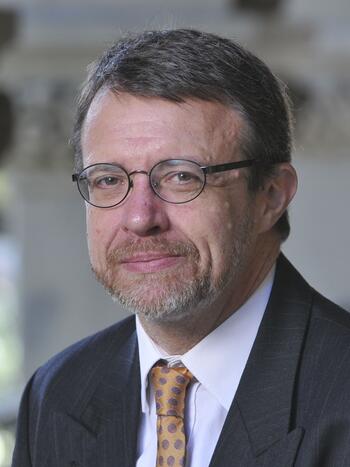
Cowin is the former deputy head of mission at the British Embassy Pyongyang, and implemented many of the programs he describes in the paper, "Critical Engagement": British Policy Towards the DPRK.
Typically small-scale and led largely in collaboration with European NGOs, the Embassy’s initiatives span from humanitarian aid – providing water supplies and sewage systems – to exchanges – hosting visiting delegations of North Korean paralympic athletes and English teachers.
The Embassy also works to build a stronger understanding of modern Britain in North Korea. They have shown films such as Wallace and Grommit and Philomena at the Pyongyang International Film Festival, and supplemented reading materials in the Grand People’s Study House, a central library in Pyongyang.
Cowin says that it’s not easy to construct these exchanges, but if established, they provide small steps in the right direction, and help set the stage for critical engagement in the future. The United Kingdom’s approach shares commonalities with the suggestions made by a Stanford research team in Tailored Engagement, he says.
“The United Kingdom’s efforts are not going to have the immediate result we all want. However, they do show that the DPRK is not completely isolated from the Western world and that it is possible to carry out engagement,” he says.
Cowin is also the author of an earlier policy brief on relations between North Korea and the European Union.


Ambassador David Lane was nominated by President Barack Obama to serve as the U.S. Representative to the United Nations Agencies for Food and Agriculture and confirmed by the U.S. Senate on May 24, 2012.
Ambassador Lane has more than twenty years of experience working in leadership positions across sectors. Before coming to Rome, he served at the White House as Assistant to the President and Counselor to the Chief of Staff.
Prior to joining the Obama Administration, he served as President and CEO of the ONE Campaign, a global advocacy organization focused on extreme poverty, development, and reform. Before that, as Director of Foundation Advocacy and the East Coast Office of the Bill & Melinda Gates Foundation, he helped lead that organization’s advocacy and public policy efforts.
During the Clinton Administration, he served as Executive Director of the National Economic Council at the White House and Chief of Staff to the U. S. Secretary of Commerce. He served as Vice-Chair of Transparency International USA, and he is a member of the Council on Foreign Relations
Ambassador Lane earned his B.A. from the University of Virginia and his M.P.A. from the Princeton University Woodrow Wilson School of Public and International Affairs.
Sponsored by the Center on Democracy, Development and the Rule of Law (CDDRL) and the Center on Food Security and the Environment (FSE). Supported in part by Zachary Nelson ('84) and Elizabeth Horn.
