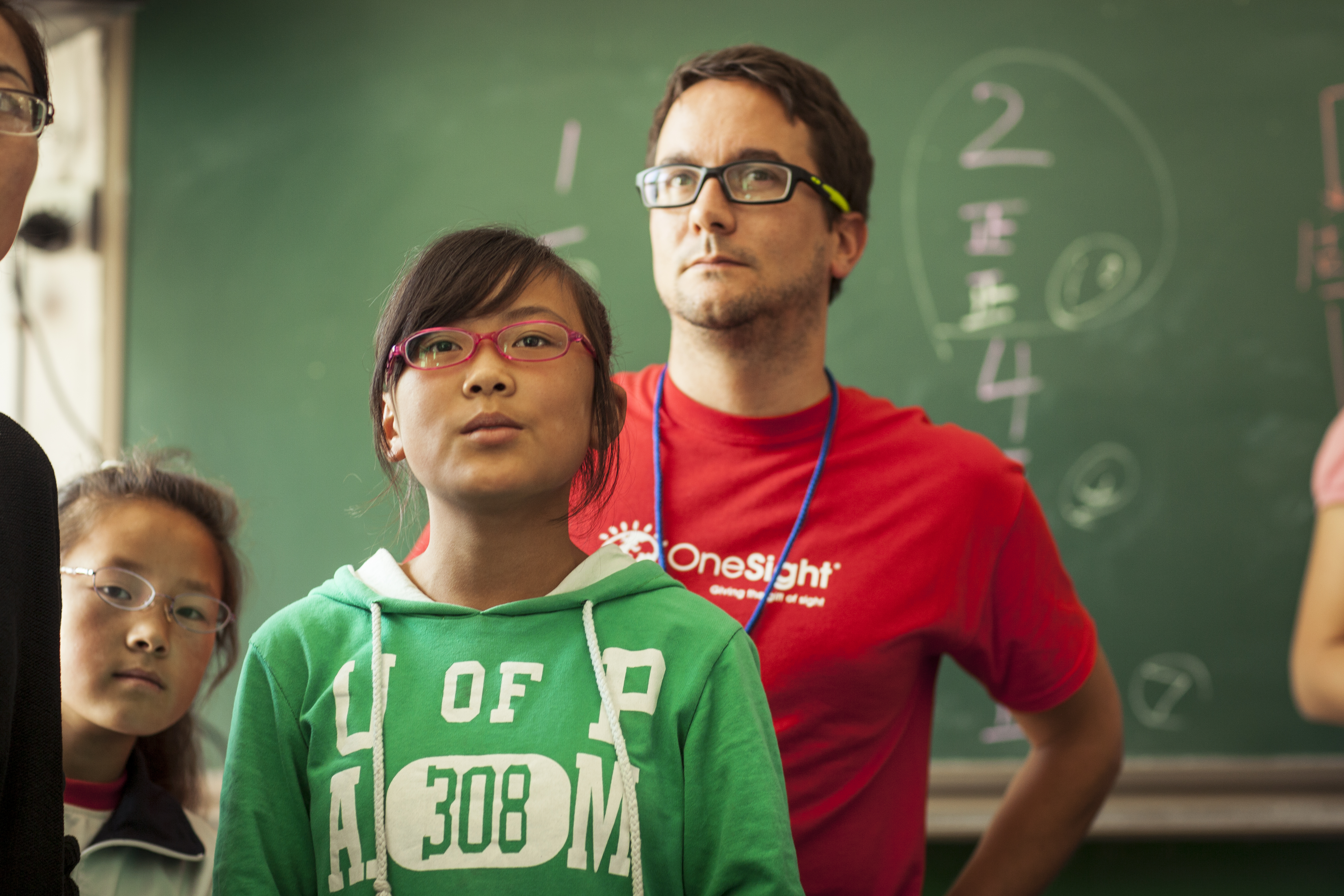
As the year comes to a close, the snow still has not completely melted in the city of Shangluo, 167 kilometers southeast of Xi’an. On Wednesday, February 11th, 33-year-old Bo Li and 31-year-old Shuxia Yan climb the steep, snow-covered sloping road to the village of Heigouhe in Shangzhen, Danfeng county. On this day, the two officials, who work for Shangzhen Family Planning Services, are paying a visit to the eight newborn to three-year-old children in this nationally designated poverty county.
On the same day in Weijiatai, Shangnan county, also near Shangluo, grassroots-level family planning official Haichun Yan similarly walked three kilometers along a rugged village road. She was on her way to visit a two-and-a-half-year-old girl named Zitong Huang, whose family lives in the village of Yangbo, seven or eight kilometers outside of town.
In the past, if family planning officials arrived in a village, they would not receive such a warm welcome as they do today. Up until the present day, the average quality, expertise, and attitude toward law enforcement among a portion of China’s grassroots-level family planning officials are still poor. In some places, fines imposed on ordinary citizens for exceeding the One Child Policy were even taken as bonuses to family planning officials’ salaries. In many areas, control over family planning still functioned as a strict “single veto” standard to assess village leaders.
To this day, the one-month abortion, forcibly induced labor, and the imaginary cries of aborted fetuses--now banned by the state--cast shadows over the hearts of family planning officials who worked in the 1990s.
But today, Bo Li and others look like Father Christmas with a sack of toys on their backs. The big, gray-checked burlap sack that Haichun Yan carries is filled with toys, teaching materials, picture books, and parenting manuals.
Including Bo Li and Haichun Yan, altogether in Shangluo there are 69 grassroots family planning officials. In a departure from their former services providing ligations and imposing fines, since November 2014 they have been assigned to a new mission. They have been trained to become early child development “parenting trainers.” In contrast to family planning officials of the 1980s and ‘90s who carried megaphones, moved as a large group, and arrived in villages to throw open buildings, pull people out and give them ligations; in the eyes of villagers these “parenting trainers”--who carry toys and arrive to help children--are completely different.
This is the “Perfecting Parenting” early child development project, and Bo Li and the other 69 grassroots-level family planning officials in Shangluo are the first batch of “parenting trainers” to be trained. They and 227 randomly selected newborn to three-year-old babies are in the process of carrying out an early child development intervention as part of an experiment conducted together by the National Health and Family Planning Commission and the Rural Education Action Program (a joint establishment between Shaanxi Normal University’s Center for Experimental Economics in Education, the Center for Chinese Agricultural Policy at the Chinese Academy of Sciences, and Stanford University in the United States).
The project’s principal investigator is Scott Rozelle, an American with a head full of curly gray hair who speaks fluent Chinese. Rozelle was born in the United States and is a professor of development economics at Stanford University. He first set foot in China in 1984, and has been researching problems in China’s rural areas for as long as some of the newly-trained family planning officials have been alive.
While searching for reasons behind the lagging development of China’s rural children, Rozelle stopped and interviewed villagers. He told Caixin reporters he couldn’t count the number of times he had heard grandmothers--carrying children around rural villages--ask him, “Why should I talk to a baby? Why should I play with him? He is still so young, and he can’t speak. I’ll wait until he can speak and then talk to him.” Rozelle discovered that rural families’ severe lack of accurate information on how to raise babies was not only a weak link that the entire country would not be able to skip over, but was also a fundamental reason explaining the gap that develops very early between rural and urban children.
With respect to this problem, “Perfecting Parenting” has arisen at an opportune time. According to the program’s plan, each week the family planning officials designated as “parenting trainers” will visit and coach a baby--playing games with them, doing art, singing songs, and together with the child completing the specially designed curriculum. They will also record whether or not the child can jump, count, stand on one leg, and perform other development indicators. Each meeting lasts one hour.
Closing the gap in early education
On January 28th, 2015, a Caixin reporter arrived with Bo Li and others in the village of Heigouhe. On that day snowflakes had just started to float through the sky. Two-and-a-half-year-old Yibo Cao had a slight fever. Her parents worked in another part of the country and still had not returned home. The primary responsibility for carrying for her as she grew up fell on her 46-year-old grandmother, Yinlian Xu.
The city of Shangluo is named for the Shang mountains and Luo river, and the history of civilization there can be traced to the pre-Qin era. However, nowadays all seven counties that fall under Shangluo’s jurisdiction have been nationally-designated as impoverished counties. The foundation for business in the area is weak, and hopes for development can only be placed on supplying traditional Chinese medicine ingredients, agricultural by-product processing, and small-scale industry in limestone building materials.
Shangluo has become Shaanxi province’s most concentrated region of migrant workers. Of the city’s total population of 2.34 million people, over 560,000 leave the city to work in another part of the country, a number equivalent to the half of the prefecture’s rural labor force. Furthermore, according to Shangluo’s official statistics, annual income per capita in local rural areas is only 6,223 yuan.
Yibo Cao and her migrant parents are rarely together--they are apart far more. In order to keep her job, her mother cannot return home even at Chinese New Year. In the village of Heigouhe, where the population in the prime of their lives has left for work, daily life is very simple. Other than occasionally tending to maize, wheat, and other crops on small plots of land, grandmothers ordinarily have a lot of time to look after children. When a little more pocket money is needed, grandfathers who still count as young--not yet 50-years-old--search for odd jobs to do in the village. Between Yibo Cao and her elderly grandparents, the entire household’s expenses are probably around 1,000 yuan each month.
Just like Yinlian Xu and many other relatively young, small-town grandmothers, two-and-a-half-year-old Mengyue Li’s grandmother Chunling Wang also used to maintain the child-rearing mantra, “feed them until they are full, dress them warmly, don’t drop them and everything’s ok.” She somewhat sheepishly told Caixin reporters that before the launch of the “Perfecting Parenting” project, she raised her granddaughter in the ways that her ancestors had passed down.
When the weather is warm, Chunling Wang, who still farms in the fields, brings Mengyue Li with her to a cherry field where she can look after her close at hand. When the weather is cold, she leaves her at home to watch television. Chunling Wang said that Mengyue Li’s family had not bought books for her, “they all think she is still young, she doesn’t know how to read yet.”
However, Scott Rozelle thinks this causes great harm to children. “Such young children, wrapped up so tightly, lying on their beds, without anyone to talk to or play games with; adults only know how to make them eat enough and not cry--this is wrong.”
There is already a large body of scientific research confirming that in a baby’s first 1,000 days of life, the external stimulation, frequency of interaction with caregivers, and quality of interaction with caregivers they receive has a significant impact on their long-term physiological and mental development. In a child’s first two years of life, in which the brain grows continuously, about 700 neuronal connections happen every second.
In China’s rural areas--especially in poor regions where a large number of grandparents raise the children--the deficit of child-rearing knowledge has turned into the starting line of China’s rural-urban gap in human capital. This gap already begins to open in the first 1,000 days of life.
Heigouhe is the epitome of a midwestern Chinese village. According to a sample study by REAP’s partner center in Shaanxi, of the rural Chinese children surveyed, 33 percent of babies lagged behind in motor development and 21 percent lagged in cognitive development.
According to Shaanxi Normal University, 70 percent of urban children in China receive higher education, but in poor rural areas, only 8 percent of children do. A further 30 percent of rural children drop out before they even complete junior high school.
If this situation does not change, intergenerational transmission of poverty is almost a guaranteed destiny. Even if children follow the path taken by their parents and go to cities to work, it’s still hard to call the prospect of economic mobility optimistic.
Every week, the family planning officials give the newborn- to three-year-old children a children’s picture book. In addition to explaining the book to the children themselves, the officials also ask the children’s caretakers to tell the story to the children several times during the week.
Chunling Wang, who never bought picture books for her children, quite proudly told Caixin reporters her granddaughter, Mengyue Li--just two-and-a-half-years-old and unable to read--is already taking initiative to look over the picture books left behind by the family planning officials. She says, “when she arrives at the page where the rabbit and her mother wander off together, she bursts into tears, crying inconsolably.”
Soot from the smoking wood stove clings to the mud brick walls in Yibo Cao’s family’s house, and a large area is taken up by a big bed where the grandmother sleeps with her granddaughter in her arms. Other than a spongy old sofa and an iron stove with a straight chimney, the house has nothing else to show. Conspicuously, it lacks a child’s room or child’s table and chair--things often seen in the homes of urban children. Bo Li and Shuxia Yan are there together, one encouraging Yibo Cao to play a game, the other occupied with properly stacking up three levels of paper cups on a red, plastic-covered low wooden table, for use in the day’s lesson training Yibo Cao in fine motor development and hand-eye coordination.
As Renfu Luo, the principal curriculum designer for the “Perfecting Parenting” project and a research associate at the Center for Chinese Agricultural Policy at the Chinese Academy of Sciences, points out, babies only need to be shown appropriate guidance and nurturing in the early stages of their development, and rural children’s reading ability, interest in reading, and comprehension will no longer be innately inferior to that of urban children.
The people find a path, the government joins hands
The REAP team first began to pay attention to parenting, education, and other problems faced by rural children ten years ago. “Once I started, I couldn’t clearly distinguish a difference between early child development and what is commonly called early education” Luo told Caixin reporters.
In their search to uncover the crucial link explaining the gap between rural and urban children, Renfu Luo from the Chinese Academy of Sciences, Scott Rozelle from Stanford University, Yaojiang Shi from the Center for Experimental Economics in Education at Shaanxi Normal University, and others have directed the REAP team’s efforts toward rural children’s vocational education, primary education, vision problems, and nutritional problems. The team aims to dismantle each issue by unceasingly carrying out comparative before-and-after experiments.
In 2014, REAP finally determined that it is most important to leverage the earliest link in the entire education impact chain--by initiating a fundamental change in the views and knowledge of caregivers about raising children.
In the National Health and Family Planning Commission office on Zhichun Road in Beijing, Jianhua Cai, director of the Health and Family Planning Training and Communication Center, is also pondering over the situation. Nowadays, the general public’s desire to have children is weakening and China’s population surplus is declining--in the future what will they do?
Jianhua Cai reflects, “if we want to maintain the same level of economic development, China’s next generation will have to be smarter.” If China wants to transform its method of economic growth to rely mainly on innovation, and thereby avoid the “middle income trap,” “we cannot depend only on urban children, we cannot waste even a single person. We must set out now to solve the problems that are likely to arise in 20 years.”
When describing the cooperation behind the “Perfecting Parenting” project, both the REAP team and the National Health and Family Planning Commission say that the government and the public “hit it off.”
Shaanxi Normal University is located in the western part of the country, and therefore has many dedicated and enthusiastic young graduate students who are capable of researching in the field. The Center for Chinese Agricultural Policy at the Chinese Academy of Sciences then reports on experimental findings and policy recommendations via the direct channel of communication between the Chinese Academy of Sciences and the decision-making level of the central government. Additionally, the National Health and Family Planning Commission has ranks of officials in every part of the country--including the villages--that it can mobilize. “We have feet underneath us,” says Cai Jianhua. In contrast to the Ministry of Education and Women’s Federation, he believes that this is what makes the Health and Family Planning system a superior fit for shouldering the heavy task of early child development.
In June of 2014, the project’s implementers launched the first step: they began to gather and compile well-developed foreign lesson plans on baby counselling. They then adapted them to the local area and revised them into a manual that both grassroots-level family planning officials and children’s caretakers could use effectively.
Another problem arose regarding which teaching materials and toys to use for the lessons. Within China there is still no complete set of interactive toys for newborn to three-year-old children to use weekly as they grow. Therefore, the project implementers were forced to find factories to custom-make their teaching materials and toys, then divide and pack them into weekly sets--all in accordance with the newly compiled lesson manual. Last summer, 15 new graduate students at the Center for Experimental Economics in Education at Shaanxi Normal University volunteered as “Perfecting Parenting” project coordinators. Not only did these students report to school in advance, they also often stayed up until one or two o’clock on summer nights busily packing and sorting balloons, scissors, bubble water, and other teaching materials.
Each week, the group of 70 parenting trainers exchanges toys with the child’s family, then disinfects and packages the used ones. The toys fill up two large trucks, and are transported from Shaanxi Normal University campus to the various villages. In total, the toys cost approximately 100,000 yuan, the main material cost of running the “Perfecting Parenting” project up to this point. This cost is shared by the National Health and Family Planning Commission, the Center for Chinese Agricultural Policy at the Chinese Academy of Sciences, and the Center for Experimental Economics in Education at Shaanxi Normal University.
At the end of October 2014, 227 babies were randomly selected to join the project’s pilot scheme. The National Health and Family Planning Commision also sent notifications out through the Shaanxi province, Shangluo prefecture Health and Family Planning branch to the grassroots-levels officials. Officials from villages in which treatment group babies lived were asked to gather together to take part in a training.
In mid-November, the family planning officials newly trained as “early child development trainers” began to visit the baby’s families, walking down the village roads with teaching materials in hand. However, for many the first part of the road was not smooth. “I really don’t know how you speak with the mother of a small child,” says Hailan Tang, a family planning official from Huaping village in Dansheng county, Shangluo. The first time he visited the home of two-year-old Guohao Wang, shortly after the project launched, he was driven out by the child’s grandmother. Helpless, Hailan Tang suddenly glimpsed Guohao Wang peaking out at him from behind the door. This cemented Tang’s sense of responsibility toward the child, and he resolved to question the child’s mother when she was home.
“If I am not accepted what can I do?” However, Guohao Wang’s mother, who was very difficult to meet with, tossed aside questions like this from Hailan Tang. She didn’t believe that the state would deliver toys for free. Many rural children’s caregivers worry that once a child has become dependent on the toys, the state will start to charge for them.
In addition, because farming is time-consuming, or because negative feelings toward the family planning system exist in a family’s memory, some families treated the “parenting trainers” with cool indifference at the start of the project. After several weeks, experiences such as “the toys were scattered in all directions and footprints covered the lesson books” and “[the families] would not drink even a cup of water” had become common among many family planning officials.
As the project progressed, Shuhui Qin--a family planning official in Shilipu village, Shanyang county who began her job in 1999--increasingly began to feel that out of all of her assignments, “Perfecting Parenting” gave her the greatest feeling of accomplishment. No matter if it’s Yiling Cao running out the door in the rain to help her bring a sack of toys inside, rattling and shaking them; or Haoyu Liu accompanying her out the door, then turning around and racing back inside to read a picture book; or somewhat shy Xinyu Chen hiding in a cardboard box upon seeing a stranger; “at night when my eyes are closed, I often think of them.”
Faced with the merging of the grassroots-level health and family planning systems--which will be completed in July or August this year--and the job adjustments that will be subsequently worked out, Shuhui Qin, who is already in the middle of her career, says, “if I am allowed, I want to specialize in this.”
In the future, who will implement?
Since its launch in rural households in mid-November, to date the “Perfecting Parenting” project has been going on for four months. The 69 family planning officials trained as “parenting trainers” have developed a profound bond. If they aren’t busy sharing pictures of themselves with the babies, then they discuss who has just had a big harvest, or the first day they began work travelling to children’s homes.
However, at the start not everyone was happy to see the “Perfecting Parenting” pilot project land within their boundaries.
In addition to ordinally being responsible for carrying out prenatal examinations and the “three exams,” family planning officials working in village branches are also occasionally transferred by the village government to take on other tasks. After the launch of “Perfecting Parenting,” each family planning official is now in charge of three to four children, so every week they must set aside at least one work day to travel to each child’s home. Leaders who would like to transfer the family planning officials to assist with other tasks are having more difficulty arranging time.
Once, on their way to a village to visit households, Shuhui Qin and her colleague Jia Liu happened to catch up with the town secretary and mayor as they arrived at the station in Chagang. After realizing this, Shuhui Qin hurriedly called the mayor to explain the whole story, informing him of her whereabouts. “When he heard which village we were in, he said ok, he would go to the village office and wait, and he would definitely see us that day.” But when Shuhui Qin and Jia Liu arrived at the office looking travel-worn and carrying large woven bags bursting with toys, the mayor murmured only one sentence, “why do you come back looking like you’ve been working outside?”
Heavy-hearted, but having already walked four or five miles and disrupted their visits with the phone call to Chagang, the two took advantage of the situation and opened their sack, spreading out all the toys. One-by-one, they explained each toy’s purpose, how it was used, and how it fit into the teaching plan. “Wait until your daughter-in-law has a baby, then we will also teach your grandchild,” they said. Only after that point did the town leaders slowly begin to understand this field of work. Now, when the mayor sees Shuhui Qin and Jia Liu on the road, sometimes he rolls down the car window and asks, “are you going to ‘work’ again today? Would you like a ride for a ways?”
Given the project’s gradual progression since the training period last November, and considering the REAP team and 69 family planning official’s six month timeline, Shuxia Yan--who works in Shangzhen, Danfeng county--is a little worried. When this round of the project ends in April or May, “will our group be broken up?” Shuxia Yan understands that, following the consolidation of the health and family planning systems, everyone--from the county-level to the most basic-level village officials--could be assigned to a new job or post.
Furthermore, what will happen to the 227 children who will reach the “Perfecting Parenting” experiment’s three-year-old age limit? Shuxia Yan is not too concerned about this point. “We cannot leave the children, we will absolutely go to see them often,” she says.
Yaojiang Shi is the director of the Center for Experimental Economics in Education at Shaanxi Normal University, and is on the frontlines in Shaanxi, directing the “Perfecting Parenting” troops and ready to solve related problems at any moment. He told Caixin reporters that after the end of the first round in April or May, they will select a new group of children to survey, then continue to visit households and ensure that the project carries on.
This April, the first group of 227 children who both consumed nutritional packets and received half a year of interaction through the “Perfecting Parenting” project will face a two-hour-long baby development indicator test. Their performance will be compared to that of more than 1,500 children of the same age throughout Shaanxi who received only the nutritional packet intervention, and not training visits with the family planning officials. After the completion of the first round of “Perfecting Parenting,” the foundation for policy presentations will be formed on whether or not the development gap between the two groups is statistically significant, and on which development indicators the gap is the widest.
In 2014, China welcomed the arrival of 16,870,000 newborn babies in total. Regarding this statistic, Jianhua Cai says, “if the whole country has 50 million children aged zero- to three-years-old, then there could be at least 8 million people working in early child development.” Jianhua Cai revealed that--in order to ensure that this type of work has society’s approval and the power of popular support invested in it--the Ministry of Human Resources and Social Security (following the recommendation of the National Health and Family Planning Commission) has already agreed to add a new “child development parenting instructor” occupation to the 2015 version of the “National Occupational Classification Document.”
Jianhua Cai predicts that once the importance of early child development is publicly recognized enough to encourage investment in social capital, the relevant industry standards, training, and professional licensing system will also be gradually established. This process can not only solve the country’s employment problems, but also may allow millions of grassroots-level family planning officials to find a new career focus.
Furthermore, after receiving training, ambitious rural youth who have joined the workforce in the big cities can flow back to the countryside and small towns to work as professionals. They have the potential to become an emerging force in rural areas.
But how will the manpower costs of establishing this system be resolved? Yaojiang Shi proposes that, by transferring family planning and village officials to this new task, other than funding for training, the burden of personnel expenditures on public finances will remain fundamentally unchanged. Yaojiang Shi also believes that after this service matures and receives public recognition, it will naturally attract private capital and investment from the people. Shi says, “the government only needs to launch the project and reveal it.”
In cities in the western part of the country such as Shangluo, each village family planning branch has only four or five people. The smallest may be provided with only one or two family planning officials. In this round of the experiment, 69 officials must set aside one work day to serve 227 children. The crucial point in someday opening a “Perfecting Parenting” style early child development service will be whether or not local governments are willing to set aside the corresponding manpower. This will be the case regardless of whether a “household visit” model is used or each village prepares a center.
Yulu Qin, who has been working in family planning for 20 years, still doesn’t know what her own position will be after the family planning branch in the town of Gaoba, Shanyang county--where she is the station master--merges into the town hospital. “I can’t take care of patients” she says; but at least with regard to her current assignment, “my heart is at ease.”
Yulu Qin laments that her previous family planning work was done for the abstract, overall national interest, limiting the well-being of common individuals and families. But now, the start of the “Perfecting Parenting” project “took our former work and turned it completely upside-down.” Yulu Qin says, now “we can both serve the national interest and bring happiness to the people.”
Hongwei He, the Shangluo Prefecture Health and Family Planning Bureau chief, told Caixin reporters that pilot project areas by no means specially set aside a budget for the “Perfecting Parenting” project. They simply provided manpower, training, communications subsidies, and other administrative support. However, if early child development work becomes a large-scale public service, establishing a stable budget will be an unavoidable issue--especially in the vast, rural impoverished areas.
In 2013, China’s public education expenditures exceeded 2.44 trillion yuan, or 4.3 percent of the country’s GDP. Yet there was not a single specialized budget item set for use on newborn to three-year-old children’s early development.
Jianhua Cai believes that if the “Perfecting Parenting” project’s results are able to prove the effectiveness of early child development work, they may be able to secure stable public investment. He says, “even if we secure only 0.1 percent of GDP, that is probably 63 billion yuan or more, and the whole nation’s prospects can be changed. Right now, we are struggling for that 0.1 percent.”

 FSI researchers consider international development from a variety of angles. They analyze ideas such as how public action and good governance are cornerstones of economic prosperity in Mexico and how investments in high school education will improve China’s economy.