Security

FSI scholars produce research aimed at creating a safer world and examing the consequences of security policies on institutions and society. They look at longstanding issues including nuclear nonproliferation and the conflicts between countries like North and South Korea. But their research also examines new and emerging areas that transcend traditional borders – the drug war in Mexico and expanding terrorism networks. FSI researchers look at the changing methods of warfare with a focus on biosecurity and nuclear risk. They tackle cybersecurity with an eye toward privacy concerns and explore the implications of new actors like hackers.

Along with the changing face of conflict, terrorism and crime, FSI researchers study food security. They tackle the global problems of hunger, poverty and environmental degradation by generating knowledge and policy-relevant solutions. 

Authors
News Type
Q&As
Date
Paragraphs

By stepping up its military presence along the Ukrainian border, Russian President Vladimir Putin hopes that Ukraine and the West will make concessions and Ukraine will realign itself back to Moscow, says Stanford scholar Steven Pifer. But nothing has alienated Ukraine more than Kremlin policy over the past eight years, particularly Russia’s military seizure of Crimea in 2014 and its role in the Donbas conflict that has claimed more than 13,000 lives, he said.

Here, Pifer, the William J. Perry Fellow at Stanford’s Center for International Security and Cooperation (CISAC), discusses what Putin hopes to accomplish by amassing military troops along the Ukrainian border and why Ukraine’s democratic ambitions pose such a threat to Russia’s authoritarian leader.

Read the rest at Stanford News

Hero Image
Man smiling
All News button
1
Subtitle

As Russia increases its military presence along the Ukrainian border, Stanford scholar Steven Pifer discusses what Russia hopes to achieve and why its policies toward Ukraine are backfiring.

For winter quarter 2022, CISAC will be hosting hybrid events. Many events will offer limited-capacity in-person attendance for Stanford faculty, staff, fellows, visiting scholars, and students in accordance with Stanford’s health and safety guidelines, and be open to the public online via Zoom. All CISAC events are scheduled using the Pacific Time Zone. 

REGISTRATION

(Stanford faculty, visiting scholars, staff, fellows, and students only)


About the Event: In Nigeria today, frequent conflicts, disappearances and mass violence, especially in the Northern region of the country, have amounted to large-scale destruction of human life and the displacement of large populations as unarmed civilians are caught in the crossfire. The effects of climate change on the Lake Chad basin are key triggers of conflict as herders migrate to other parts of the region to find fodder and water for their cattle. Existing responses to conflict and mass violence in Nigeria have been beset by challenges. The migration patterns of nomadic communities have begun to signal security concerns beyond the immediately impacted regions. In late 2017, state governments within the western and southern parts of the country began to set up community policing strategies to address growing security challenges around their states, including those relating to the (perceived) threats associated with the movement of cattle herders. Complicating this situation, the presence of large groups of cattle has incentivized “conflict entrepreneurship” as armed groups of young men across north-central, north-west and southern parts of the country engage in cattle rustling. Government efforts at various levels, ranging from the creation of legal and policy frameworks to programs on-the-ground, have been inadequate to protect civilians and have led to the development new mechanisms for human protection.  For example, interventions by the Nigerian Federal Government have, at times, accelerated conflict, as with the passage of an anti-grazing law that has fueled controversy over implementation at state and local levels of government. Local civil society initiatives have continued to emerge to address the gap and attempt to mitigate ever growing security concerns in the region. One such strategy has involved the development of Early Warning and Early Response Systems (EWER) using geospatial technologies and other forms of crowd sourcing imagery to enhance local resilience in the face of security threats and strengthen the ability of communities to protect themselves in a sustainable way. However, the potential of such technologies depends on the ability to “see” particular phenomena and render other phenomena illegible. This paper will argue that such geospatial technology’s interpretive power is concerned with assigning to future violence an interpretive code based on its baseline values.  As an act of decoding that is anticipatory, the power of EWER processes lies in its decoding potential. These interpretive code processes provide participants with the potential to engage in analyses that involve mapping patterns and potential risk that have the ability to produce indicators that have material effects. It is these material effects, drawn from visual codes, that are used to justify action that is life preserving as well as render other relations illegible and therefore invisible to intervention.  This paper explores the emergence of EWER strategies used to address widespread violence and the challenge of illegibility that is central to it.


About the Speaker: M. Kamari Clarke is the Distinguished Professor of Transnational Justice and Sociolegal Studies at the University of Toronto where she teaches in the Centre for Criminology and Sociolegal Studies and the Centre for Diaspora and Transnational Studies. Over her career she has worked at The University of California Los Angeles (2018-2021), Carleton University (2015-2018), The University of Pennsylvania (2013-2015) Yale University (1999-2013), and at Yale she was the former chair of the Council on African Studies from 2007- 2010 and the co-founder of the Yale Center for Transnational Cultural Analysis.  For more than twenty years, Professor Clarke has conducted research on issues related to legal institutions, human rights and international law, religious nationalism and the politics of globalization. For more than 20 years, Professor Clarke has conducted research on issues related to legal institutions, international legal domains, religious nationalism, and the politics of globalization and race. She  is the author of nine books and over fifty peer reviewed articles and book chapters, including her 2009 publication of Fictions of Justice: The International Criminal Court and the Challenge of Legal Pluralism in Sub-Saharan Africa (Cambridge University Press, 2009) and Affective Justice (with Duke University Press, 2019), which won the finalist prize for the American Anthropological Association’s 2020 Elliot P. Skinner Book Award for the Association for Africanist Anthropology.  Clarke has also been the recipient of other research and teaching awards, including Carleton University’s 2018 Research Excellence Award.  During her academic career she has held numerous prestigious fellowships, grants and awards, including multiple grant awards from the National Science Foundation and from The Social Sciences and the Humanities Research Council of Canada (SSHRCC), the Rockefeller Foundation, the Wenner-Gren Foundation for Anthropological Research and, very recently, the 2021 Guggenhiem Award for Career Excellence.

Virtual to Public. Only those with an active Stanford ID with access to William J Perry Conference Room in Encina Hall may attend in person. 

Kamari Clarke University of Toronto / UCLA
Seminars
-

Image
image of Jamal Greene, columbia law professor on blue background advertising january 18th seminar

Join us on Tuesday, January 18 from 12 PM - 1 PM PST for Free Speech on Public Platforms featuring Professor Jamal Greene of Columbia Law School in conversation with Daphne Keller, Director of the Program on Platform Regulation at the CPC. This weekly seminar series is jointly organized by the Cyber Policy Center’s Program on Democracy and the Internet and the Hewlett Foundation’s Cyber Initiative. 

It is commonly assumed that social media companies owe their freedom to moderate solely to their status as private actors. This seminar explores the adequacy of that assumption by considering the hypothetical construct of a state-run social media platform. Jamal Greene argues that the categorical nature of First Amendment norms leave the doctrine ill-equipped to order regulation of such a platform, and that international human rights norms, while less categorical, remain immature in this space. Greene suggests that the most promising area of legal intervention would address the development of procedural rather than substantive norms.

Speaker:

Jamal Greene is the Dwight Professor of Law at Columbia Law School, where he teaches courses in constitutional law, comparative constitutional law, and the law of the political process. He is the author of How Rights Went Wrong: Why Our Obsession With Rights Is Tearing America Apart, as well as numerous articles and book chapters on constitutional law and theory. He is also a co-chair of the Oversight Board, an independent body that reviews content moderation decisions on Facebook and Instagram. He served as a law clerk to the Hon. Guido Calabresi on the U.S. Court of Appeals for the Second Circuit and for the Hon. John Paul Stevens on the U.S. Supreme Court. He earned his J.D. from Yale Law School and his A.B. from Harvard College.

-

Image
cloud governance event with speaker photos of kelly born, marietje schaake

Join us for our winter seminar series starting Tuesday, January 11 from 12 PM - 1 PM PST.  The first in the session is Cloud Governance Challenges and features leaders from the Carnegie Endowment’s Cloud Governance Project and Marietje Schaake of the Stanford Cyber Policy Center, in conversation with Kelly Born of the Hewlett Foundation. This weekly seminar series is jointly organized by the Cyber Policy Center’s Program on Democracy and the Internet and the Hewlett Foundation’s Cyber Initiative.

Central to the ongoing digital transformation is the growth of cloud computing, which is enabling remarkable gains in efficiency, innovation, and connectivity around the world. However, the cloud also accentuates many preexisting digital policy challenges and brings to the fore new ones. It increases the consequences of disruption resulting from cyberattacks and natural disasters, and raises the stakes associated with ensuring equitable access to the digital environment. It also creates some new challenges associated with the concentration of the cloud market in the hands of a few hyperscale providers. Left to their own devices, cloud providers lack the incentives to comprehensively address these issues, and governments’ ability to fill the gap is being challenged by the pace of the developments in the cloud technology landscape. To promote more coherent and effective governance of the cloud, concerned players must recognize the challenges, interconnections, and policy tradeoffs across issue areas. They will need to apply a combination of regulation, self-regulation, and industry standards, while balancing competing private, national, and international interests. 

Speakers:

Kelly Born, Director, Cyber Initiative, William and Flora Hewlett Foundation

Ariel Eli Levite, Nonresident Senior Fellow, Carnegie Endowment for International Peace

Vishnu Kannan, Special Assistant to the President, Carnegie Endowment for International Peace

Marietje Schaake, International Policy Director, Cyber Policy Center
 

-

For winter quarter 2021, CISAC will be hosting hybrid events. Many events will offer limited-capacity in-person attendance for Stanford faculty, staff, fellows, visiting scholars, and students in accordance with Stanford’s health and safety guidelines, and be open to the public online via Zoom. All CISAC events are scheduled using the Pacific Time Zone. 

SEMINAR RECORDING

Virtual Only.

Rolf Nikel
Seminars
-

This event is part of Shorenstein APARC's winter 2022 webinar series, New Frontiers: Technology, Politics, and Society in the Asia-Pacific.

While North Korea’s nuclear capabilities often make headlines, the DPRK increasingly poses a risk that is more difficult to see, in the form of sophisticated cyber attacks. Neighboring South Korea, one of the most digitized nations in the world, must closely monitor and defend against North Korea’s cyber threat, as attacks can disrupt economic, social, and defense infrastructures. This panel will discuss what kind of cyber threat North Korea poses to South Korea and beyond, how South Korea addresses the North Korean cyber attacks, and what other countries can learn from their response.

Speakers:

portrait of Jenny JunJenny Jun is a PhD Candidate in the Department of Political Science at Columbia University and Nonresident Fellow at the Atlantic Council’s Cyber Statecraft Initiative. Her current research explores the dynamics of coercion in cyberspace. Her broader interests include cyber conflict, North Korea, and security issues in East Asia. Jenny is a co-author of the 2015 Center for Strategic and International Studies (CSIS) report North Korea’s Cyber Operations: Strategy and Responses, published by Rowman & Littlefield. She has presented her work on North Korea’s cyber operations at various panels and has provided multiple government briefings and media interviews on the topic. She received her MA and BS each from the Security Studies Program (SSP) and the School of Foreign Service (SFS) at Georgetown University.
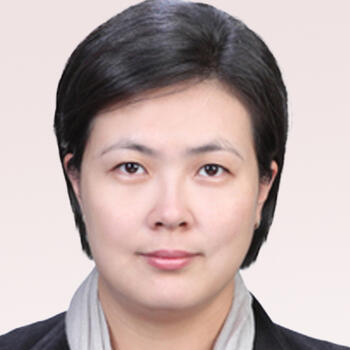
Image
portrait of So Jeong Kim

So Jeong Kim is a principal researcher at the National Security Research Institute where she joined in 2004. She currently leads the cybersecurity policy team and provides recommendations on cybersecurity policy and regulatory issues. She was involved in drafting South Korea’s National Cyber Security Strategy published in April 2019, in the 4thand 5th UN Group of Governmental Experts as an adviser, and in the MERIDIAN process as an advisor and organizer. Her main research area is in national cybersecurity policy, international norm-setting processes, confidence building measures, critical information infrastructure protection, law and regulations, and cybersecurity evaluation development. She received her PhD in Engineering from the Graduate School of Information Security at Korea University in 2005.

Gi-Wook Shin, director of APARC and the Korea Program at Stanford University, will moderate the discussion.

Via Zoom. Register at https://bit.ly/3mXJSQW

Panel Discussions
Authors
Melissa Morgan
News Type
Commentary
Date
Paragraphs

A year ago, a crowd on the National Mall violently breached the halls of the U.S. Capitol with the intent of disrupting the formal ratification of the 2020 presidential election. Despite the chaos, Joe Biden was inaugurated as the president, the prosecution of individual perpetrators has begun, and the House of Representatives January 6 Commitee's investigation is ongoing. Yet there remains a sense that something fundamental to American democracy has changed. Where is America now, one year from the attack?

To mark the first anniversary of the January 6 Capitol riot, scholars from across the Freeman Spogli Institute for International Studies share their thoughts on what has happened in the year since, and what the ongoing effects of the violence signal about the future of democracy and the integrity of America’s image at home and abroad.


Intensifying Divisions

Larry Diamond, Mosbacher Senior Fellow in Global Democracy

The January 6 insurrection was the gravest assault on American democracy since the Civil War, and it came much closer to disrupting the peaceful transfer of power (and possibly our democracy itself) than we realized at the time.

Rather than providing a sobering lesson of the dangers of political polarization, the insurrection seems only to have intensified our divisions, and the willingness to contemplate or condone the use of violence. According to a recent Washington Post survey, a third of Americans feel violence against the government could be justified in some circumstances —a sharp increase from 16 percent in 2010 and 23 percent in 2015.

Sadly, many politicians have not been the least bit chastened by the close brush with a constitutional catastrophe. The “Big Lie” that Biden did not legitimately win the 2020 election retains the support of most Republicans and a substantial proportion of independents. Around the country, Republican legislatures have been introducing, and in many states adopting, bills that would give Republican legislatures the ability to reverse or sabotage legitimate electoral outcomes, and other bills that make it more difficult for people (especially Democratic-leaning groups) to vote. All of this is doing deep damage to the global reputation and hence “soft power” of American democracy.

Although they are generally relieved that Trump is no longer president, our allies remain deeply worried about the stability and effectiveness of American democracy.

What gives me some hope is the expanding network of civil society organizations documenting the multiple threats to electoral integrity in the U.S. But we are going to need much more widespread and resourceful mobilization to counter the downward spiral of our democracy.

Professor Larry Diamond

Larry Diamond

Mosbacher Senior Fellow in Global Democracy at FSI
Full Profile

Problems at Home, Issues Abroad

Francis Fukuyama, Olivier Nomellini Senior Fellow

The Capitol uprising on January 6 marked a grave crisis in American institutions, when a sitting President refused to transfer power peacefully and sought to actively overturn an election.  The Republican Party, rather than repudiating the uprising and marginalizing its organizers, instead rallied in subsequent weeks to normalize the event.  These developments, while bad in themselves from the standpoint of US politics, also sent an unmistakable geopolitical signal that the Biden presidency would not represent an American return to “normal” internationalism.  The Administration would lead a deeply polarized country uncertain of its own global role.

This is the point at which geopolitics and domestic unrest come together. The single greatest weakness of the United States today does not lie in its economy or military power, but in the deep polarization that has affected American politics.  This is not just speculation, but something underlined by Kremlin-linked commentators, as Françoise Thom has detailed: in the words of one, "the decrepit empire of the Stars and Stripes, weakened by LGBT, BLM, etc." makes "it is clear that it will not survive a two-front war."  They see that a significant number of Republicans believe that the Democratic Party represents a bigger threat to the American way of life than does Russia.  A country that cannot rally around sensible public health measures during a pandemic will not rally around defense of freedom abroad.  This is the significance of January 6:  it has hardened partisan divisions rather than being the occasion for national soul-searching.

Read Francis Fukuyama's full commentary in American Purpose.

Francis Fukuyama

Francis Fukuyama

Olivier Nomellini Senior Fellow at FSI
Full Profile

Democracy vs. Partisanship

Didi Kuo, Senior Research Scholar at CDDRL

It has been a year since rioters stormed the United States Capitol in an effort—an organized, violent effort—to declare Donald Trump the rightful winner of the 2020 presidential election. The riots signaled a dangerous turn in American politics, an attack on the basic, fundamental institutions of democracy. For democracy to work, all sides must agree on the rules of the game: the fairness of the balloting and counting process, the routine and peaceful transfer of power. We now see what happens when the institutions and procedures of elections are delegitimated.

Our political leaders can act now to restore confidence in elections. They can do so by protecting election administrators from threats of violence, by depoliticizing oversight of elections, and by passing democratic reforms. Although President Biden’s Freedom to Vote Act and John Lewis Voting Rights Advancement Act have been blocked by Republicans, narrower versions of these bills could create stricter federal election standards. And Americans can organize to protect democracy through civic groups that push for ballot access and election integrity, particularly at the state level. Politicians and activists alike must make clear that election administration is not a partisan issue. As the nation enters the third year of a global pandemic and an upcoming midterm election, our leaders must make strengthening democracy their utmost priority.

Watch Kuo's conversation with Hakeem Jefferson about the anniversary of the riots at the U.S. Capitol.

Didi Kuo

Didi Kuo

Senior Research Scholar at CDDRL
Full Profile

Epistemic Fractures and Exploitation

Herbert Lin, Senior Research Scholar at CISAC

The failure of the Jan. 6 insurrection provided an opportunity for the United States to collectively take a step back from the conspiracy theories and lies that pervaded American political discourse in the preceding couple of years. But alas, the nation failed to take advantage of that opportunity, with tens of millions of Americans maintaining their delusions as strongly as ever. Substantial numbers of Americans continue to believe that Donald Trump really won the 2020 election, and the number of QAnon adherents and believers was virtually unchanged.

Even more alarming has been the cynical exploitation of such trends by elected officials in their quest to gain or retain political power. Rather than standing up for the rule of law and defending the conclusions of an independent judiciary regarding various allegations of election fraud, they have pointed to such outcomes as yet more evidence of a system rigged against them. We now live in a environment in which no conceivable evidence can persuade true believers to change their minds, and the resulting epistemic fractures translate into a once-unified nation sharply divided against itself.  A worse national posture to meet the challenges of coming great-power competition could not be imagined.

Read more of Herbert Lin's analysis of contemporary security issues and power competition in his latest book, Cyber Threats and Nuclear Weapons (Stanford University Press, 2021).

Dr. Hebert Lin

Herbert Lin

Senior Research Scholar at CISAC
Full Profile

The Need to Protect and Invest In Elections

Matthew Masterson, Non-resident Fellow at the Stanford Internet Observatory

The insurrection on January 6th left a scar on American Democracy. For the first time in our history, America did not have a peaceful transition of power. The effects of that day continue to be felt every day in election offices across the United States. Election officials, the guardians of our Democracy, are targets of harassment and threats fueled by the ongoing lies regarding the integrity and accuracy of the election. Worse yet, there have been little no consequences for these threats against our democracy. While some who participated in January 6th are being investigated and prosecuted, those responsible for the threats against election officials have faced little to no accountability for their actions. Facing ongoing threats and little support from law enforcement election officials are leaving their jobs out of fear for their own safety and the safety of their families.

Healing the wound of January 6th won’t be easy; there must be accountability for the damage done to our democracy. American democracy is resilient and strong, but can not survive the unchecked attacks against it. Those who seek to profit from the lies about 2020 need to be held accountable for selling out democracy in pursuit of their own political and financial gain. They must be defeated at the ballot box or their businesses made to pay the price  by Americans unwilling to accept holding democracy for ransom. As we bring accountability, we need to invest in continuing to improve the security, accessibility and integrity of the process. We need to fund elections on an ongoing basis like the national security issue they are. The only response to this sustained attack on our democracy is a sustained investment in protecting it.  

Matt Masterson

Matthew Masterson

Non-resident Fellow at the Stanford Internet Observatory
Full Profile

Read More

storming of capital 2021
News

To Support Democracy Abroad, the U.S. Needs To Set Its Own House In Order, says FSI Director Michael McFaul

Former U.S. ambassador to Russia and Stanford political scientist Michael McFaul recommends that the incoming Biden administration “go big” in its efforts to reaffirm core democratic values – including passing comprehensive, structural reforms.
To Support Democracy Abroad, the U.S. Needs To Set Its Own House In Order, says FSI Director Michael McFaul
Capitol Building
News

Stanford Scholars React to Capitol Hill Takeover

FSI scholars reflect on the occupation of the U.S. Capitol on Wednesday and suggest what needs to happen next to preserve democracy.
Stanford Scholars React to Capitol Hill Takeover
Hero Image
Protesters attack the U.S. Capitol on January 6, 2021.
Protesters attacked the U.S. Capitol on January 6, 2021 in an attempt to disrupt the verification of the 2020 election results.
Getty
All News button
1
Subtitle

On the first anniversary of the riot at the U.S. Capitol, scholars from across FSI reflect on the ongoing ramifications the violence is having on America's domestic politics and international influence.

Date Label
-

For winter quarter 2021, CISAC will be hosting hybrid events. Many events will offer limited-capacity in-person attendance for Stanford faculty, staff, fellows, visiting scholars, and students in accordance with Stanford’s health and safety guidelines, and be open to the public online via Zoom. All CISAC events are scheduled using the Pacific Time Zone. 

SEMINAR RECORDING

This event is virtual only. This event will not be held in person.

Michael Kofman
Seminars
-

For winter quarter 2021, CISAC will be hosting hybrid events. Many events will offer limited-capacity in-person attendance for Stanford faculty, staff, fellows, visiting scholars, and students in accordance with Stanford’s health and safety guidelines, and be open to the public online via Zoom. All CISAC events are scheduled using the Pacific Time Zone. 

SEMINAR RECORDING

This event is virtual only. This event will not be held in person.

Rose Gottemoeller
James Goldgeier
Seminars
0
John Perrino

John Perrino received his undergraduate and MPA at the George Washington University, focusing on internet policy and political communication. At the Stanford Internet Observatory he works on expanding policy strategy and working to build SIO's presence in DC. 

He previously held positions with GW’s Columbian College of Arts and Sciences and Elliott School of International Affairs. Perrino got his start in Internet policy as a Communications Fellow at the Internet Education Foundation, helping organize and promote Capitol Hill briefings and the annual State of the Net conference. He was most recently a Director at Glen Echo Group.


Former Policy Analyst, Stanford Internet Observatory, Cyber Policy Center
Date Label
Subscribe to Security
