
 FSI researchers strive to understand how countries relate to one another, and what policies are needed to achieve global stability and prosperity. International relations experts focus on the challenging U.S.-Russian relationship, the alliance between the U.S. and Japan and the limitations of America’s counterinsurgency strategy in Afghanistan.
Foreign aid is also examined by scholars trying to understand whether money earmarked for health improvements reaches those who need it most. And FSI’s Walter H. Shorenstein Asia-Pacific Research Center has published on the need for strong South Korean leadership in dealing with its northern neighbor.
FSI researchers also look at the citizens who drive international relations, studying the effects of migration and how borders shape people’s lives. Meanwhile FSI students are very much involved in this area, working with the United Nations in Ethiopia to rethink refugee communities.
Trade is also a key component of international relations, with FSI approaching the topic from a slew of angles and states. The economy of trade is rife for study, with an APARC event on the implications of more open trade policies in Japan, and FSI researchers making sense of who would benefit from a free trade zone between the European Union and the United States.


Peace in Afghanistan: “Nothing is agreed until everything is agreed”
-
This is a virtual event. Please click here to register and generate a link to the talk.
The link will be unique to you; please save it and do not share with others.
The link will be unique to you; please save it and do not share with others.
ABSTRACT:
Despite major international conferences and milestones fast approaching, the peace process in Afghanistan is unlikely to end soon. Referring to the many interdependent and intractable issues to negotiate, the lead U.S. negotiator conceded that “nothing is agreed until everything is agreed.” Even if ongoing diplomatic efforts yield agreements, such deals – like the February 2020 U.S.-Taliban agreement – will likely be difficult to implement, verify, and enforce. Underlying core concerns, like the presence of transnational terrorist networks and Kabul’s weak institutional capacity, will persist regardless of the diplomatic process. This event will explore the status and prospects of the current peace process and its implications for U.S. policy. It will consider the long-term political competition between the Taliban and the Kabul government, the role of U.S. forces, and the constructive and disruptive roles that regional actors may play.
SPEAKERS:
Despite major international conferences and milestones fast approaching, the peace process in Afghanistan is unlikely to end soon. Referring to the many interdependent and intractable issues to negotiate, the lead U.S. negotiator conceded that “nothing is agreed until everything is agreed.” Even if ongoing diplomatic efforts yield agreements, such deals – like the February 2020 U.S.-Taliban agreement – will likely be difficult to implement, verify, and enforce. Underlying core concerns, like the presence of transnational terrorist networks and Kabul’s weak institutional capacity, will persist regardless of the diplomatic process. This event will explore the status and prospects of the current peace process and its implications for U.S. policy. It will consider the long-term political competition between the Taliban and the Kabul government, the role of U.S. forces, and the constructive and disruptive roles that regional actors may play.
SPEAKERS:
Image

Image

MODERATOR:
Image
This event is co-sponsored by: The Center for South Asia
Via Zoom webinar. Please register at:
https://bit.ly/3cOcabZ
Seminars
Moral Choices Without Moral Language: 1950s Wargaming at The RAND Corporation
-
* Please note all CISAC events are scheduled using the Pacific Time Zone.
Seminar Recording: https://youtu.be/L04_-G6N7Go
About the Event: What can wargames tell us about the ethics of decision-making under the threat of nuclear escalation? The “Cold War Game” (CWG) that took place from 1954-1956 at the RAND Corporation offers insights into the origins of deterrence and the dilemmas of contemplating the possible futures of war with rare events or little empirical data through the method of gaming. Based on extensive archival research at RAND Corporation in Santa Monica, CA, this project identifies the methodological and epistemological issues faced by early systems analysts and social scientists in attempting to link political and economic issues to traditional military wargaming in the nuclear era. The CWG sought to both quantify the non-rational or social dimensions of nuclear decision-making as well as develop psychological insights, to recognize the ways that propaganda and psychology were used as techniques of warfare alongside the quantitative and rational analytics of game theory. I argue that discussions of the ethics of nuclear weapons were sidelined throughout the Cold War for nuclear strategists and my questions examine how ethics functioned even it its absence of explicit discourse. Nevertheless, a kind of ethical restraint became implicit throughout the CWG that tempered even the most bellicose players through the process of physical play by forcing strategists to face the weight of their decisions. Differing epistemological approaches to the game from the social science division and the mathematics/economics division at RAND offers a unique empirical test to compare qualitative and quantitative approaches to wargaming operating within the same context of uncertainty in the early Cold War period. The conclusions of this study offers insights for contemporary dilemmas of AI and wargaming the future of war today. Ultimately, the project offers both an in-depth look at the origins of the political-military wargames and interjects with the larger questions of how abstraction and technostrategic language enables and constrains the acceptable discourse for decision-making in the face of nuclear brinksmanship.
About the Speaker: John R. Emery is a Stanton Nuclear Security Fellow at Stanford University’s Center for International Security and Cooperation. He received his Ph.D. in political science from the University of California, Irvine and then became a Tobis Fellow at the Interdisciplinary Center for the Scientific Study of Ethics and Morality at UC Irvine. His research agenda is at the intersection of security studies, ethics of war, and science and technology studies. His previous work on drones, ethics, AI, and counter-terrorism has been published in Law & Policy, Critical Military Studies, Ethics & International Affairs, and Peace Review. His current research agenda explores issues of human-machine interaction in the U.S. national security context analyzing both historical and contemporary cases.
Virtual Seminar
John R. Emery
0
john.emery@ou.edu
emery.jpg
John R. Emery is an Assistant Professor of International Security at the University of Oklahoma in the Department of International and Area Studies. He holds a Ph.D. in Political Science from the University of California, Irvine. His research focuses broadly on the intersection of ethics of war, security studies and technology. His work on 1950s nuclear wargaming at the RAND Corporation and the impact of wargames on ethical intuition has been published in Texas National Security Review. Previous work on drones, ethics, counter-terrorism, and just war is published in Critical Military Studies, Ethics & International Affairs, and Peace Review. In 2017-2018 he was awarded the NSF-funded Technology, Law and Society Fellowship to undertake an interdisciplinary study of the impact of AI, Big Data, and blockchain on law and society scholarship.
Affiliate
Seminars
China’s Dangerous Double Game in North Korea
News Type
Commentary
Date
Paragraphs
This op-ed by Oriana Skylar Mastro was originally published in Foreign Affairs.
A new administration in Washington faces a familiar problem: North Korea is once again testing missiles, including ballistic missiles, in contravention of a UN Security Council resolution. Rather than retread dead-end paths, the administration of U.S. President Joe Biden has pledged to think anew on North Korea, and it has already distinguished itself from its predecessor by signaling that it will consult with U.S. allies and partners to formulate a strong response to Pyongyang that does not rule out diplomacy.
Such a reorientation is welcome. But if the new administration really wants to move the needle on North Korea, it will need to rethink the assumptions it has inherited about China’s role there. So far, the Biden team has cleaved to the long-held view that the United States and China share a common interest in the nuclear disarmament of North Korea and that U.S. policy there must make use of Beijing’s tremendous influence over the government in Pyongyang. During his visit to Seoul last week, Secretary of State Antony Blinken asserted that “Beijing has an interest, a clear self-interest, in helping to pursue the denuclearization of [North Korea] because it is a source of instability.” Blinken further paid tribute to China’s “critical role" and “unique relationship" with North Korea.
[Subscribe to our newsletters to get updates on all of our scholars' work.]
But Beijing has demonstrated for almost three decades where its self-interest really lies, and that is in maintaining the status quo. China certainly doesn’t want to see North Korea weakened and the United States strengthened on the Korean Peninsula. But neither does it want the balance to tip so strongly toward North Korea that the United States feels compelled to bulk up its military posture. China is toeing a careful line to keep the prospect of peaceful denuclearization alive without provoking Pyongyang or aggravating tensions with the United States.
If Beijing were to do nothing to assist in denuclearization, the United States could lose confidence in diplomacy and decide instead to increase its military presence on the peninsula or even to take military action. But if Beijing does too much to help the United States, North Korea could collapse, and the whole peninsula could fall within the U.S. orbit. China’s North Korea policy is therefore an elaborate balancing act. Through it, Beijing seeks to maintain influence over the regime of Kim Jong Un without emboldening it; participate in multilateral efforts to pressure North Korea, such as the UN sanctions program, without exposing Pyongyang to pressure that could precipitate regime collapse; and offer the United States just enough hope for a diplomatic solution to forestall military intervention while simultaneously ensuring that any resolution contributes to China’s relative power, not that of the United States.
China’s Balance
For better or worse, the past year has been one of great change in Chinese strategy and policy, especially toward its neighbors. China flew an unprecedented number of sorties into Taiwanese airspace, placed trade sanctions on Australia after the latter supported inquiries into the origins of COVID-19, and came to blows with India over a border dispute that had not seen armed conflict in decades. But in the case of North Korea, China has stuck to its balancing act.
Beijing and Pyongyang have been on tepid terms the past few years. On paper, the Sino-North Korean Mutual Aid and Cooperation Friendship Treaty makes the two countries allies. But in practice, the Chinese government has distanced itself from the alliance, stating that if North Korea provoked a conflict, Beijing had no obligation to defend it. A Chinese Foreign Ministry spokesperson remarked in 2006 that China was not an ally of North Korea, and Chinese Foreign Minister Wang Yi has characterized the relationship as “normal state-to-state relations.”
A flurry of diplomatic activity in 2018 and 2019 gave many the impression that the two countries meant to repair and normalize their relationship. Xi Jinping and Kim Jong Un met for the first time in March 2018, marking Kim’s first meeting with any world leader. Four more meetings between the two followed, in May and June 2018 and January and June 2019, and Chinese official media noted that the relationship “radiated a new vitality.” But despite numerous exchanges of platitudes since—just last week, Xi sent a message to Kim affirming that the countries’ traditional friendship is a “valuable asset” and seeming to suggest an intention to strengthen relations—Xi has maintained his distance from Kim and his regime.
The 70th anniversary of China’s entrance in the Korean War passed without a summit or fanfare about the nations’ closeness. Social-distancing requirements undoubtedly had something to do with the lack of a high-level meeting but could not explain the absence of the customary propaganda about how the two countries are like “teeth to lips.” Moreover, Xi continues to avoid referring to North Korea as an ally. After his state visit to Pyongyang in June 2019, Xi described the relationship as one of “friendly cooperative relations,” and on a January 2021 phone call with Kim, he characterized the bilateral relationship as one of “friendly socialist neighbors linked by mountains and rivers”—in the language of the Chinese government, hardly an expression of closeness and solidarity.
Then there is China’s approach to managing international efforts aimed at reining in North Korea. Here too, China has continued the same dance, trying to come off as a team player while restraining the international community from acting too harshly against the Kim regime. China voted in favor of all three of the UN Security Council resolutions on North Korea in 2017. In 2019, Beijing even garnered praise from then-President Donald Trump, who said that China was “a big help” in dealing with North Korea. On March 25, 2021, Pyongyang conducted two ballistic missile tests in violation of the UN Security Council resolutions, and Beijing’s Ministry of Foreign Affairs did not condemn them but predictably “call[ed] on all parties concerned to work together to maintain the situation of detente, and promote political settlement of the Peninsular issue through dialogue and consultation.”
Beijing has always been skeptical of using sanctions to coerce North Korean compliance on the nuclear issue, expressing concern that too much pressure could push Kim to lash out and undermine international efforts. When the United Nations imposed sanctions in 2017, China at first appeared poised to strictly enforce them. But then Beijing quickly reverted to business as usual, teaming up with Moscow to try to ease sanctions. China also allegedly violated the regulations by supplying North Korea with 22,730 tons of refined oil and helping Pyongyang export about $370 million worth of coal. Three months ago, the United States publicly accused China of circumventing the sanctions to aid North Korea, and China denied having done so.
Beijing’s North Korea policy is primarily motivated by a desire to counter U.S. power in the Asia-Pacific region and increase Chinese influence on the Korean Peninsula. The nuclear issue gives Beijing a pretext to call for the United States to reduce its military presence and activity on the peninsula on the grounds that North Korea would halt weapons development if it felt less threatened.
Beijing decidedly does not want a war on the peninsula. Such a conflict could destabilize the region and end with a unified Korea under U.S. influence. Trump’s “fire and fury” approach and his willingness to meet directly with Kim threatened China’s ability to triangulate between Washington and Pyongyang in order to ensure its own maneuverability. The real possibility that the United States would forcibly displace the North Korean regime convinced Beijing to both strengthen its ties with Kim and put real pressure on his government. But the last Trump-Xi summit, in February 2019, was a failure; the Trump administration seemingly abandoned its focus on denuclearizing the Korean Peninsula, and Beijing returned to business as usual.
Biden’s Choice
To set a new course on North Korea, the Biden administration needs to throw Beijing off balance once more. The status quo—in which Beijing enhances its influence over the future of the peninsula and wins international image points while simultaneously undercutting the United States’ North Korea policy—is no longer acceptable. The United States needs to strike its own balance: one in which Washington makes progress on reducing the threat from North Korea while also gaining ground in its competition with Beijing.
Multilateral diplomacy that takes a more incremental approach to denuclearization, such as a freeze on North Korea’s current program, will not accomplish this end. Beijing would welcome such a move, as many in China thought that Trump’s demand for complete denuclearization was counterproductive and that Washington’s alienation of its allies risked spurring South Korea or Japan to develop nuclear capabilities. China sees a multilateral approach as one that affords it more influence on the relevant players and can help ensure a positive outcome for Beijing.
The White House should instead consider pursuing multilateral diplomacy that excludes Beijing or that at the very least does not give China pride of place. Such an approach would be consistent with the predilections of many of Biden’s advisers, who seek a pragmatic tack that does not rely on Beijing’s goodwill. China would likely react by scrambling to redefine its role in managing peninsular affairs in order to make sure that it is not cut out of any deal. China might tighten its relations with North Korea and Russia in order to influence policy through them as proxies. The United States could then join forces with European allies in response, whether to counter Beijing’s overreaching claims in the South China Sea or to buttress democracies against Chinese political interference.
Greater closeness between China and North Korea could prove useful to the United States. North Korea has in effect placed the harshest imaginable sanctions on itself, shutting its borders completely in January 2020 to prevent the spread of the novel coronavirus. The country’s trade with China is down 81 percent as a result. China’s economic leverage over North Korea has thus dissipated—and with it, the effectiveness of sanctions as a coercive tool. China may now work to create new leverage against North Korea, perhaps through positive inducements, which could supply another tool for the Biden administration to use later on. And if Beijing cannot forge closer ties with Pyongyang, it might even seek to ingratiate itself with Seoul—also a favorable development for Washington, as such relations may allow the United States to pursue deeper military cooperation with South Korea’s regional allies without fear of provoking a strong Chinese response.
Some Biden advisers, including Kurt Campbell, have called for a bolder approach. One possibility is for Washington to shift its focus from denuclearization to arms control. Under this scenario, the United States would accept North Korea as a de facto nuclear state and take measures to enhance deterrence against it, such as stepping up the U.S. military presence and tightening military cooperation with allies in the region. China would have a harder time than before delegitimizing the U.S. military presence in the region and just might be compelled to do what is necessary to induce North Korea’s denuclearization, even at the cost of destabilizing the regime.
Biden’s new approach to North Korea must force China to tip its carefully constructed balance toward either complete cooperation or obvious obstruction. Depending on which way China goes, the United States can then decide whether to include Beijing or cut it out of its North Korea policy efforts. But one thing is clear: conducting business as usual with Beijing hurts U.S. objectives in both denuclearization and competition with China.
Mastro on the Conversation Six podcast
On the Conversation Six podcast, Mastro joins Ali Wyne, a senior analyst with Eurasia Group's Global macro practice, to discuss China's policy towards North Korea.
Listen now
Read More
![[Left] Graphic of missile, Taiwan flag, and China flag; [Right] Oriana Skylar Mastro](https://fsi9-prod.s3.us-west-1.amazonaws.com/s3fs-public/styles/375x211_x2/public/hero/oriana_taiwan_munk_debate_hero.png?h=c4d9845d&itok=TLVd4QBm)


Hero Image

All News button
1
Subtitle
Biden must force Beijing to cooperate fully with Washington or pivot to obvious obstruction writes FSI Center Fellow Oriana Skylar Mastro in her latest op-ed for Foreign Affairs.
Reckoning the Cold War's Legacy in Turkey
-
About the Event
This conversation with Behlul Özkan (Marmara University)and Mehmet Ali Tuğtan(Bilgi University) will examine the adverse and long-lasting impact of the US-led anti-communism on Turkish democracy. We will trace the roots of current authoritarianism in the top-down Islamization of society and institutions since the 1950s, paying special attention to the role of the military- an institution often regarded as the protector of secularism.
This event is a part of the Program on Turkey. It is co-organized by the Ottoman Turkish Studies Association and supported by OTES@Stanford.
About the Speakers
Behlül Özkan received his PhD from Fletcher School of Law and Diplomacy, Tufts University in 2009. He is currently Associate Professor in the Department of International Relations at Marmara University, Istanbul. Özkan is the author of From the Abode of Islam to the Turkish Vatan: Making of a National Homeland in Turkey (Yale University Press, 2012). He also contributed op-eds to New York Times, Huffington Post, Open Democracy. Özkan is also a board member of European Council on Foreign Relations (ECFR). In recent years his academic studies has been focused on Political Islam in Turkey and Europe.
Mehmet Ali Tuğtan is assistant professor in International Relations at Istanbul Bilgi University. He has a PhDin Political Science from Boğaziçi University. His research focuses on Turkish-American Relations, Contemporary World Politics and Security Studies. Dr. Tugtan has edited a book on the Turkish involvement in the Korean War (Kore Savaşı: Uzak Savaşın Askerleri) published in 2013.
Behlul Özkan
Marmara University, Istanbul
Mehmet Ali Tuğtan
Istanbul Bilgi University
Ayça Alemdaroğlu
Encina Hall, E108
616 Jane Stanford Way
Stanford, CA 94305-6055
0
ayca@stanford.edu
Research Scholar
Ayça Alemdaroğlu is the Associate Director of the Program on Turkey and a Research Scholar at the Center on Democracy, Development, and the Rule of Law at Stanford University. She is also a Global Fellow at the Peace Research Institute Oslo (PRIO). As a political sociologist, Ayça explores social and political inequalities and changes in Turkey and the Middle East.
Previously, she was an Assistant Professor of Sociology and the Associate Director of the Keyman Modern Turkish Studies Program at Northwestern University.
She received her Ph.D. in sociology from the University of Cambridge, her MA in political science from Bilkent University, and her BSc. degrees in political science and sociology from the Middle East Technical University.
She serves on the editorial committee of the Middle East Report.
Associate Director, Program on Turkey
Hide publication sections
Off
Panel Discussions
Joe Biden’s Killer Comment: Undiplomatic, but the End of U.S.-Russia Relations?
News Type
Commentary
Date
Paragraphs
Two weeks ago, President Joe Biden affirmatively responded to George Stephanopoulos’s question, “Vladimir Putin. You think he’s a killer?” Russian commentators voiced outrage, while some American observers foresee a new or intensified ice age in U.S.-Russia relations.
The Russian president is a big boy though. He surely did not like Biden’s answer, but it is difficult to imagine that he would refuse to engage when he sees doing so in his or Russia’s interest.
Biden could and should have used more diplomatic language in replying to Stephanopoulos: “Look, there is a tightly controlled system over there. Certain things do not happen without the approval of the guy at the top.” Still, was his assessment incorrect?
Russia has carried out a conflict against Ukraine in eastern Donbas that has taken more than thirteen thousand lives and has no discernible motive other than to destabilize Kyiv. Putin-opponent Alexei Navalny was poisoned last summer, apparently by a special unit of the Russian Federal Security Service. In 2018, a Russian military intelligence hit team traveled to Britain, where it tried to poison Sergei Skripal, a busted double-agent who wound up in London after a spy swap.
Over twenty years, Putin has built a “power vertical” that concentrates authority in the Kremlin. It strains credulity to think the Donbas conflict or failed attacks on Navalny and Skripal would have occurred without his knowledge and consent.
It’s true that a comment like Biden’s is not usual between Washington and Moscow. Recall, however, that Ronald Reagan called the Soviet Union an “evil empire” whose leaders “reserve unto themselves the right to commit any crime, to lie, to cheat.” He poured Stinger missiles and other weapons into Afghanistan to drive out the Soviet army. Mikhail Gorbachev nonetheless chose to deal with Reagan, and the two recorded major successes for relations between Washington and Moscow.
While Biden intends to push back against Russian overreach, his administration has also indicated readiness to cooperate where U.S. and Russian interests coincide. On his first day in office, Biden agreed to extend the New Strategic Arms Reduction Treaty until 2026, essentially accepting Putin’s offer from 2019. His officials plan to talk to Russian officials on a range of strategic stability issues. National Security Advisor Jake Sullivan has a channel to his Russian counterpart. U.S. ambassador to Russia John Sullivan (no relation) is the rare Trump political appointee kept in place after Biden took office. The Russians presumably noticed all this.
Dr. Julie Newton, an associate professor at the American University of Paris, recently expressed concern that Biden’s comment will fuel Russian grievances. Not to say that the deterioration in U.S.-Russia and West-Russia relations is solely the Kremlin’s fault, but Russian officials have a long list of grievances that often seem to boil down to “everyone is mad at us, what’s wrong with everyone?” They show no sign of having asked themselves whether invading neighboring states, cyber hacks against Western governmental and private institutions, and assassination attempts on the streets of European cities contribute to the problem.
Newton seems to believe Biden’s comment could make Putin less prepared to engage on issues that matter to Washington. Perhaps, but Putin calculates costs and benefits. Russia, like the United States, has an interest in keeping the nuclear arms competition bounded. While a nuclear Iran might pose a bigger problem for Washington, Moscow certainly would not welcome it. The Kremlin has an interest in a stable Afghanistan; if things go badly there, it’s much closer to Russia. Climate change poses challenges for Russia. Moscow and Washington can benefit from cooperation on these questions. Would Putin forgo that? Indeed, Kremlin spokesperson Dmitry Peskov on March 29 listed a number of issues for U.S.-Russian engagement.
Additionally, Newton appears to suggest a double standard. She notes that Biden has not sanctioned Saudi Arabia’s Mohammed bin Salman. That is not exactly true. The White House has indicated that Biden will deal with the Saudi king, not Mohammed bin Salman. Putin and the Saudi king, not MbS, have invitations to Biden’s virtual climate summit in April.
Biden’s comment shocked those in Moscow, where they had become used to Donald Trump. Trump rarely, if ever, criticized Putin or Russian misbehavior. He also did not produce a single positive achievement in U.S.-Russia relations. Under Biden, New START extension got done in two weeks. To be sure, that does not mean a reset for U.S.-Russia relations, but in contrast to his predecessor, Biden is a serious interlocutor. Putin may not like being called a killer—who would? However, when he sees engagement with Biden can advance his goals, he will engage.
Steven Pifer, a fellow at the Robert Bosch Academy and also affiliated with the Brookings Institution and Stanford University, is a retired Foreign Service officer.
Originally for National Interest
Hero Image

All News button
1
Subtitle
Putin may not like being called a killer—who would? However, when he sees engagement with Biden can advance his goals, he will engage.
The Crisis in Myanmar: Repression, Resistance, Repercussions
-
Co-sponsored by the Southeast Asia Program, Shorenstein Asia Pacific Research Center, Stanford University, with the Center for Southeast Asian Studies, University of Michigan
Shocking events obliterate context. The coup in Myanmar on 1 February 2021 is a case in point. Who could imagine the cruelty of the Burmese generals who on February 1st 2021 grabbed power and proceeded to retain it by arresting thousands and murdering hundreds of its local opponents? Who expected that on February 2nd the country’s youth would launch a nonviolent Civil Disobedience Movement (CDM) and keep it going and growing against such massively intimidating odds? In this webinar, two experts will provide the essential but all too often missing contexts—current and historical, domestic and foreign, political and socioeconomic—within which the crisis can be understood, its future projected, and its implications assessed. To those ends, the on-the-ground knowledge, personal experience, and close observer’s insights of Burmese scholar Moe Thuzar will interact with the insights of American professor David Steinberg based on his Burmese experiences and scholarship dating back into the 20th century.
The webinar will consider in particular what the coup and its aftermath may imply for Southeast Asia and its relations with China. Relevant in that regard is the involvement of all four panel members in a recent collection, The Deer and the Dragon: Southeast Asia and China in the 21st Century—Steinberg and Ciorciari as authors, Emmerson as editor, and Thuzar as an analyst who is using the book in her own research.
Image

Image

Co-moderated by John Ciorciari, Director, Weiser Diplomacy Center, University of Michigan, and Donald K. Emmerson, Director, Southeast Asia Program, Stanford University
Via Zoom Webinar
Register: https://bit.ly/3mdiwEY
David I. Steinberg
Distinguished Professor of Asian Studies Emeritus, Georgetown University, Washington, DC
Moe Thuzar
Fellow and Co-coordinator, Myanmar Studies Programme, ISEAS-Yusof Ishak Institute, Singapore
John Ciorciari
Moderator
Director, Weiser Diplomacy Center, University of Michigan
Donald K. Emmerson
0
emmerson@stanford.edu
Senior Fellow Emeritus at the Freeman Spogli Institute for International Studies
Affiliated Faculty, CDDRL
Affiliated Scholar, Abbasi Program in Islamic Studies
At Stanford, in addition to his work for the Southeast Asia Program and his affiliations with CDDRL and the Abbasi Program in Islamic Studies, Donald Emmerson has taught courses on Southeast Asia in East Asian Studies, International Policy Studies, and Political Science. He is active as an analyst of current policy issues involving Asia. In 2010 the National Bureau of Asian Research and the Woodrow Wilson International Center for Scholars awarded him a two-year Research Associateship given to “top scholars from across the United States” who “have successfully bridged the gap between the academy and policy.”
Emmerson’s research interests include Southeast Asia-China-US relations, the South China Sea, and the future of ASEAN. His publications, authored or edited, span more than a dozen books and monographs and some 200 articles, chapters, and shorter pieces. Recent writings include The Deer and the Dragon: Southeast Asia and China in the 21st Century (ed., 2020); “‘No Sole Control’ in the South China Sea,” in Asia Policy (2019); ASEAN @ 50, Southeast Asia @ Risk: What Should Be Done? (ed., 2018); “Singapore and Goliath?,” in Journal of Democracy (2018); “Mapping ASEAN’s Futures,” in Contemporary Southeast Asia (2017); and “ASEAN Between China and America: Is It Time to Try Horsing the Cow?,” in Trans-Regional and –National Studies of Southeast Asia (2017).
Earlier work includes “Sunnylands or Rancho Mirage? ASEAN and the South China Sea,” in YaleGlobal (2016); “The Spectrum of Comparisons: A Discussion,” in Pacific Affairs (2014); “Facts, Minds, and Formats: Scholarship and Political Change in Indonesia” in Indonesian Studies: The State of the Field (2013); “Is Indonesia Rising? It Depends” in Indonesia Rising (2012); “Southeast Asia: Minding the Gap between Democracy and Governance,” in Journal of Democracy (April 2012); “The Problem and Promise of Focality in World Affairs,” in Strategic Review (August 2011); An American Place at an Asian Table? Regionalism and Its Reasons (2011); Asian Regionalism and US Policy: The Case for Creative Adaptation (2010); “The Useful Diversity of ‘Islamism’” and “Islamism: Pros, Cons, and Contexts” in Islamism: Conflicting Perspectives on Political Islam (2009); “Crisis and Consensus: America and ASEAN in a New Global Context” in Refreshing U.S.-Thai Relations (2009); and Hard Choices: Security, Democracy, and Regionalism in Southeast Asia (edited, 2008).
Prior to moving to Stanford in 1999, Emmerson was a professor of political science at the University of Wisconsin-Madison, where he won a campus-wide teaching award. That same year he helped monitor voting in Indonesia and East Timor for the National Democratic Institute and the Carter Center. In the course of his career, he has taken part in numerous policy-related working groups focused on topics related to Southeast Asia; has testified before House and Senate committees on Asian affairs; and been a regular at gatherings such as the Asia Pacific Roundtable (Kuala Lumpur), the Bali Democracy Forum (Nusa Dua), and the Shangri-La Dialogue (Singapore). Places where he has held various visiting fellowships, including the Institute for Advanced Study and the Woodrow Wilson International Center for Scholars.
Emmerson has a Ph.D. in political science from Yale and a BA in international affairs from Princeton. He is fluent in Indonesian, was fluent in French, and has lectured and written in both languages. He has lesser competence in Dutch, Javanese, and Russian. A former slam poet in English, he enjoys the spoken word and reads occasionally under a nom de plume with the Not Yet Dead Poets Society in Redwood City, CA. He and his wife Carolyn met in high school in Lebanon. They have two children. He was born in Tokyo, the son of U.S. Foreign Service Officer John K. Emmerson, who wrote the Japanese Thread among other books.
China and the World
Learn morePolicy Perspectives on the South China Sea
Learn moreHide publication sections
Off
Seminars
A View from Across the Pacific: Chinese Perceptions of the United States
-
This is a virtual event. Please click here to register and generate a link to the talk.
The link will be unique to you; please save it and do not share with others.
Presented by the Stanford China Program and the Stanford Center at Peking University.
Tuesday, April 27
6:00 pm – 7:15 pm (PST)
Wednesday, April 28
9:00 am – 10:15 am (China)
A large amount of ink has been spilled in the last few years--and even more so since COVID-19--in the U.S. regarding American perceptions of the P.R.C. Relatively little, however, has been conveyed regarding how China might view the U.S. today. In this talk, we bring together two eminent professors, Professor Jia Qingguo and Professor Wang Dong, from the School of International Studies, Peking University, to examine how policymakers, professionals, and average citizens in China might perceive the United States and what that might imply for the U.S.-China bilateral relationship. Dr. Thomas Fingar, Shorenstein APARC Fellow, will moderate the conversation.
This event is part of Shorenstein APARC's spring webinar series.
Image

Image

Image

Via Zoom Webinar. Register at: https://bit.ly/3rAcwXC
Thomas Fingar
<br>Shorenstein APARC Fellow, Stanford University<br><br>
Jia Qingguo (贾庆国)
<br>Former Dean and Professor, School of International Studies, Peking University<br><br>
Wang Dong (王栋)
<br>Professor, School of International Studies, Peking University; Executive Director, Institute for Global Cooperation and Understanding (iGCU), Peking University<br><br>
Seminars
The South Korean and U.S. Government Role in Promoting Human Rights in North Korea
-
To watch the recording of the event, click here.
This is the second event in a three-part series on North Korea Human Rights hosted by APARC's Korea Program in the spring quarter.
Book Launch for Patterns of Impunity: Human Rights in North Korea and the Role of the U.S. Special Envoy by Robert R. King
 As U.S. Special Envoy for North Korean human rights issues from 2009 to 2017, Ambassador Robert King led efforts to ensure that human rights issues were an integral part of U.S. policy toward North Korea. In this book launch webinar, he will share his extensive experience as special envoy and insights into the U.S. role in addressing the North Korean human rights crisis. Ambassador King will be joined by Jung-Hoon Lee, Professor of International Relations at Yonsei University, who will talk about his role as Ambassador for North Korean Human Rights in the past. Professor Lee will remark on how the North Korean human rights issues have been impeded under the current government in South Korea.
Speakers:
Image

Image

Via Zoom: Register at https://bit.ly/3uws3dg
The Biden-Suga Summit and the Future of the Free and Open Indo-Pacific
-
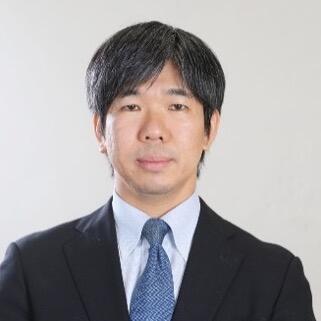
Prime Minister Suga becomes the first foreign leader to visit President Biden in the White House on April 16th. The visit symbolizes the importance of the US-Japan alliance for both countries as they seek to stave off China’s ambitions in the region and in the world. What has the summit meeting accomplished, where is the Free and Open Indo-Pacific vision headed, and how will the US-Japan alliance intersect with other emerging frameworks such as the Quad and the CPTPP to shape the regional and global geopolitics in the coming years and decades? Featuring two leading foreign policy experts from Japan and the US, Yuichi Hosoya (Keio University) and Sheila Smith (Council on Foreign Relations), this panel examines these questions on the heels of the Biden-Suga meeting. Moderated by Kiyoteru Tsutsui (Stanford University), the webinar will have a Q&A session, and the participants are welcome to submit their questions in advance using the registration form and at the event using the Q&A function of Zoom.
SPEAKERS
Image
Image

MODERATOR
Image

This event is being held virtually via Zoom. Please register for the webinar via the following link: https://bit.ly/3u0U1xp
Yuichi Hosoya
<br><i>Professor of International Politics at Keio University</i><br><br>
Sheila Smith
<br><i>Senior Fellow for Japan studies at the Council on Foreign Relations</i><br><br>
Panel Discussions