International Relations

FSI researchers strive to understand how countries relate to one another, and what policies are needed to achieve global stability and prosperity. International relations experts focus on the challenging U.S.-Russian relationship, the alliance between the U.S. and Japan and the limitations of America’s counterinsurgency strategy in Afghanistan.

Foreign aid is also examined by scholars trying to understand whether money earmarked for health improvements reaches those who need it most. And FSI’s Walter H. Shorenstein Asia-Pacific Research Center has published on the need for strong South Korean leadership in dealing with its northern neighbor.

FSI researchers also look at the citizens who drive international relations, studying the effects of migration and how borders shape people’s lives. Meanwhile FSI students are very much involved in this area, working with the United Nations in Ethiopia to rethink refugee communities.

Trade is also a key component of international relations, with FSI approaching the topic from a slew of angles and states. The economy of trade is rife for study, with an APARC event on the implications of more open trade policies in Japan, and FSI researchers making sense of who would benefit from a free trade zone between the European Union and the United States.

-

In the eyes of China’s neo-authoritarian reformers, Singapore, despite being a tiny city-state, long exemplified a state of affairs for which the PRC should strive: resilient authoritarianism alongside but unweakened by liberalizing steps conducive to economic growth.  On behalf of Beijing’s effort to learn from Singapore, tens of thousands of officials visited the city-state and thousands of articles and books were written about it. Today, however, Xi Jiinping has derided foreign templates and relegated adopting the “Singapore model” to a path not taken by China’s current hard-line leadership and unavailable for authoritarian reformers to pursue. Although the demotion was triggered by Xi’s anti-reformism and China’s rise, Singapore’s loss of “model” character was also path-dependent. Chinese academics studying Singapore had long misunderstood fundamental institutional differences between the two countries that went back to the city-state’s colonial past and China’s Stalinist-Maoist revolution. Efforts to model reforms on the Singaporean “state-party” ran into the prerogatives of the Chinese party-state. Proposals to strengthen market forces, impose limited legal constraints on the party, and introduce semi-competitive elections were seen as threatening the institutional foundations of the CPC. Moreover, despite a (partial) revival of Confucianism in China that imitated the city-state’s attraction to “Asian values,” Singapore’s neo-liberal “pragmatism” and multi-racialism contradicted the CPC’s self-portrayal as an engine of Marxist socialism embodying the Han-Chinese nation.

Image
mark thompson 0120
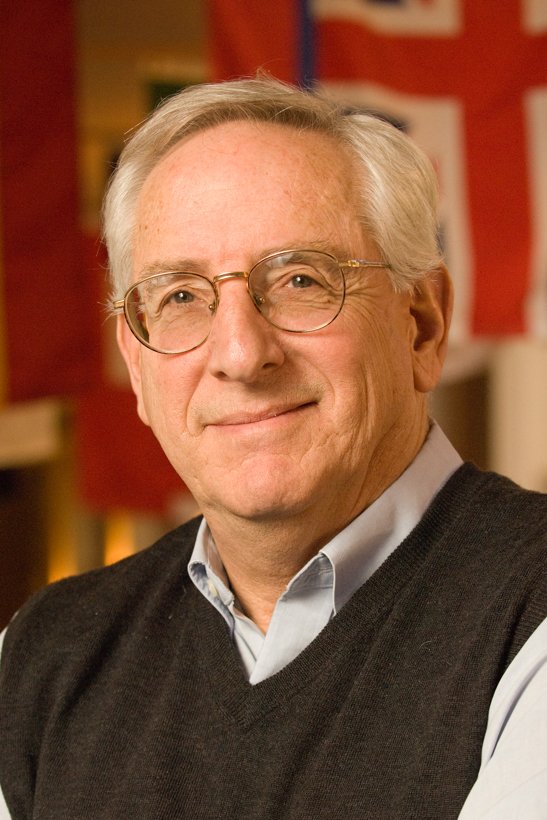
Mark R. Thompson heads the Southeast Asia Research Centre at the City University of Hong Kong. He is president of the Hong Kong Political Science Association (HKPSA) and a former president of the Asian Political and International Studies Association (2013-14). A comparativist specializing in Southeast Asian politics, his publications include China’s “Singapore Model” and Authoritarian Learning, ed. with Stephan Ortmann (forthcoming 2020); Authoritarian Modernism in East Asia (2019); The Routledge Handbook of the Contemporary Philippines, ed. with Eric Batalla (2018); Dynasties and Female Political Leaders in Asia, ed. with Claudia Derichs (2014); Democratic Revolutions: Asia and Eastern Europe (2004); and The Anti-Marcos Struggle (1995).

Shorenstein APARC
Stanford University
Encina Hall E301
Stanford, CA 94305-6055

(650) 725-6459 (650) 723-6530
0
MarkThompson[1].JPG PhD

Professor Thompson builds on Barrington Moore's insight that there are different "paths to the modern" world. Thompson's manuscript explores alternatives to the familiar South Korean-and Taiwan-based model of "late democratization." According to that model, political pluralism follows a formative period of economic growth during which labor is demobilized and big business, religious leaders, and professionals depend upon and are co-opted by the state.

Thompson argues that even when these preconditions are in place, democratization need not follow. Singapore is an illuminating case in point. The autocratic growth model pays insufficient attention to politics, including the sometimes crucial role of student activists in challenging developmental authoritarianism and triggering a democratic transition, as in Indonesia. As political actors, students (rather than a progressive bourgeoisie) may fill the oppositional vacuum created by the preconditions that characterized predemocratic South Korean and Taiwan.

In his critique of Northeast Asian-style, post-authoritarian "late democratization" and its emphasis on economic growth as the driver of political change, Professor Thompson uses evidence drawn from paired comparisons of Vietnam with China, Hong Kong with Singapore, and between South Korea and Taiwan on the one hand and other major Southeast Asian cases on the other.

Mark R. Thompson is a professor of political science at the University of Erlangen-Nuremberg in Germany.  A Chicago native, he took his first degree in religious studies at Brown University followed by postgraduate work at Cambridge University and the University of the Philippines.  Fascinated by Philippine people power, he wrote his dissertation at Yale University on the anti-Marcos struggle (Yale University Press, 1996). After moving to Germany, he witnessed popular uprisings in East Germany and Eastern Europe, inspiring him to conceptualize democratic revolutions in essays later published as a book (Routledge, 2004).  He is in residence at Stanford as Lee Kong Chian Distinguished Fellow in Southeast Asian Studies from February through April 2009.

Lee Kong Chian NUS-Stanford Distinguished Fellow on Southeast Asia
Head and Professor of Politics, Department of Asian and International Studies, City University of Hong Kong
Seminars
-

Abstract: A Supply and Demand Framework for YouTube Politics (with Joseph Phillips)

Youtube is the most used social network in the United States. However, for a combination of sociological and technical reasons, there exist little quantitative social science research on the political content on Youtube, in spite of widespread concern about the growth of extremist YouTube content. An emerging journalistic consensus theorizes the central role played by the video "recommendation engine," but we believe that this is premature. Instead, we propose the "Supply and Demand" framework for analyzing politics on YouTube. We discuss a number of novel technological affordances of YouTube as a platform and as a collection of videos, and how each might drive supply of or demand for extreme content. We then provide large-scale longitudinal descriptive information about the supply of and demand for alternative political content on YouTube. We demonstrate that viewership of far-right videos peaked in 2017.

Image
Kevin Munger
Kevin Munger is Assistant Professor of Political Science and Social Data Analytics, Penn State University. Ph.D., New York University, 2018. His research looks at social media and other contemporary internet technology has changed political communication. He has published research on the subject using a variety of methodologies, including textual analysis, field experiments, longitudinal surveys and qualitative theory. His research has appeared in leading journals like the American Journal of Political Science, Political Behavior, Political Communication, and Political Science Research & Methods. His present interests include cohort conflict in American politics and developing new methods for social science in a rapidly changing world.

-

TEC will be canceling all public events and seminars until at least April 15th due to ongoing developments associated with COVID-19.


How do we explain that the European Union gained so much authority, especially in economic areas? Most explanations of the EU usually start off by misdescribing how much authority it exerts over its member-states. Classic IR theorists in realist or liberal traditions describe the EU as a strong international regime, allowing them to explain it simply as a response to especially-strong regional versions of the exogenously-given conditions that ostensibly favor international cooperation elsewhere. Even more endogenously-inclined theorists who explain the EU as an ideational or institutionally path-dependent project tend to describe it as a quasi-federation that still falls well short of a “United States of Europe.” But if the EU certainly lacks some important powers of federal states, in some core areas it has surpassed them. Employing a comparison of the EU to three Anglo-Saxon federations (United States, Canada, Australia), we show that today’s EU actively exercises authority over states’ market openness and fiscal discipline that these federations have never claimed. This re-description of the EU outcome displays just how far Europe has departed from the expectations of classic IR theories, and highlights the kind of strongly endogenous ideational and institutional explanation it requires. Co-author: Craig Parsons, University of Oregon.


Image
Matthias Matthijs

Matthias Matthijs is associate professor of international political economy. His research focuses on the politics of economic crises, the role of economic ideas in economic policymaking, the politics of inequality, and the democratic limits of regional integration. He was one of the inaugural recipients in 2015 of a Johns Hopkins Catalyst Award, in recognition of his work as a promising early-career investigator. He teaches courses in international relations, comparative politics, and international economics, and was twice awarded the Max M. Fisher Prize for Excellence in Teaching, in 2011 and 2015.

Since the summer of 2019, he is also a Senior Fellow for Europe at the Council on Foreign Relations (CFR). He also currently serves as the Chair of the Executive Committee of the European Union Studies Association (EUSA).

Matthijs is the editor (with Mark Blyth) of the book The Future of the Euro published by Oxford University Press in 2015, and author of Ideas and Economic Crises in Britain from Attlee to Blair (1945-2005), published by Routledge in 2011. The latter is based on his doctoral dissertation, which received the Samuel H. Beer Prize for Best Dissertation in British Politics by a North American scholar, awarded by the British Politics Group of the American Political Science Association (APSA) in 2010.

In 2018, he won the Best Paper Award from APSA’s European Politics and Society section for “When Is It Rational to Learn the Wrong Lessons?” (co-authored with Mark Blyth). Among various other research and writing projects, he is currently working on a book-length manuscript that delves into the collapse of national elite consensus around European integration.

Dr. Matthijs received his BSc in applied economics with magna cum laude from the University of Antwerp in Belgium, and his MA and PhD in international relations from Johns Hopkins University.

Matthias Matthijs Speaker School of Advanced International Studies, Johns Hopkins University
Lectures
-

IMPORTANT EVENT UPDATE: 

In keeping with Stanford University's March 3 message to the campus community on COVID-19 and current recommendations of the CDC, the Asia-Pacific Research Center is electing to make this event available through live stream only. We appreciate your understanding and cooperation as we do our best to keep our community healthy and well. 

Please join the live stream via Zoom by clicking here at the scheduled time, 4:30 PM, on March 4 to view Adam Segal's talk.


Analysts on both sides of the Pacific have described an escalating “technology cold war” between Beijing and Washington. Chinese hackers attack American technology companies and Beijing is reportedly planning on the removal of foreign software and hardware from government offices. Washington is blocking Chinese investments, using punitive measures against Huawei and Chinese surveillance companies, and scrutinizing research collaboration with Chinese universities as well as scientists and students. Both sides believe they are in and have to win a race to dominate 5G, AI, quantum, and other emerging technologies. What are the weapons of the tech cold war, and are the US and China doomed to ever more competition, or can they find common ground for cooperation? What does increasing competition between China and the United States mean for the rest of the world?

Image
Portrait of Adam Segal
Adam Segal is the Ira A. Lipman Chair in emerging technologies and national security and Director of the Digital and Cyberspace Policy Program at the Council on Foreign Relations (CFR). An expert on security issues, technology development, and Chinese domestic and foreign policy, Segal was the project director for the CFR-sponsored Independent Task Force reports titled Innovation and National Security: Keeping Our Edge. His most recent book, The Hacked World Order: How Nations Fight, Trade, Maneuver, and Manipulate in the Digital Age (PublicAffairs, 2016), describes the increasingly contentious geopolitics of cyberspace. His work has appeared in the Financial Times, the New York Times, Foreign Policy, the Wall Street Journal, and Foreign Affairs, among others. He currently writes for the blog, “Net Politics.”


Image
Image of red flag over the Shanghai Bund
This event is part of the 2020 Winter/Spring Colloquia series, The PRC at 70: The Past, Present – and Future?, sponsored by APARC's China Program.


Adam Segal Director Digital and Cyberspace Policy Program, Council on Foreign Relations
Seminars
-

Panel discussion with Stanford international affairs experts on escalating U.S.-Iran tensions.


Register: Click here to RSVP


Livestream: Please click here to join the livestream.


About this Event: U.S.-Iran tensions are at a new high following the U.S. drone strike that killed Iranian Major General Qassem Soleimani. Both sides continue to exchange threats of violence, and the implications for Iran’s nuclear ambitions, the fight against ISIS, and the U.S. presence in Iraq are expected to be profound. Join us for a panel discussion with Lisa Blaydes, Colin Kahl, Brett McGurk and Abbas Milani, moderated by Michael McFaul, on how recent developments may reshape the geopolitical landscape in one of the most volatile regions of the world.


This event is co-sponsored with Hamid and Christina Moghadam Program in Iranian Studies, Freeman Spogli Institute for International Studies, and the Middle East Initiative at the Center for International Security and Cooperation.


Speaker's Biographies:

Lisa Blaydes is a Professor of Political Science at Stanford University and a Senior Fellow at the Freeman Spogli Institute for International Studies. She is the author of Elections and Distributive Politics in Mubarak’s Egypt (Cambridge University Press, 2011). Her articles have appeared in the American Political Science ReviewInternational Studies QuarterlyInternational OrganizationJournal of Theoretical PoliticsMiddle East Journal, and World Politics. She holds degrees in Political Science (PhD) from the University of California, Los Angeles and International Relations (BA, MA) from Johns Hopkins University.


Colin Kahl is co-director of the Center for International Security and Cooperation, the inaugural Steven C. Házy Senior Fellow at the Freeman Spogli Institute for International Studies, and a Professor, by courtesy, in the Department of Political Science at Stanford University. He is also a Strategic Consultant to the Penn Biden Center for Diplomacy and Global Engagement.

From October 2014 to January 2017, he was Deputy Assistant to the President and National Security Advisor to the Vice President. In that position, he served as a senior advisor to President Obama and Vice President Biden on all matters related to U.S. foreign policy and national security affairs, and represented the Office of the Vice President as a standing member of the National Security Council Deputies’ Committee. From February 2009 to December 2011, Dr. Kahl was the Deputy Assistant Secretary of Defense for the Middle East at the Pentagon. In this capacity, he served as the senior policy advisor to the Secretary of Defense for Egypt, Iran, Iraq, Israel and the Palestinian territories, Saudi Arabia, Syria, Yemen, and six other countries in the Levant and Persian Gulf region. In June 2011, he was awarded the Secretary of Defense Medal for Outstanding Public Service by Secretary Robert Gates. 

From 2007 to 2017 (when not serving in the U.S. government), Dr. Kahl was an assistant and associate professor in the Security Studies Program at Georgetown University's Edmund A. Walsh School of Foreign Service. From 2007 to 2009 and 2012 to 2014, he was also a Senior Fellow at the Center for a New American Security (CNAS), a nonpartisan Washington, DC-based think tank. From 2000 to 2007, he was an assistant professor of political science at the University of Minnesota. In 2005-2006, Dr. Kahl took leave from the University of Minnesota to serve as a Council on Foreign Relations International Affairs Fellow in the Office of the Secretary of Defense, where he worked on issues related to counterinsurgency, counterterrorism, and responses to failed states. In 1997-1998, he was a National Security Fellow at the John M. Olin Institute for Strategic Studies at Harvard University.

Current research projects include a book analyzing American grand strategy in the Middle East in the post-9/11 era. A second research project focuses on the implications of emerging technologies on strategic stability.

He has published numerous articles on international security and U.S. foreign and defense policy in Foreign Affairs, Foreign Policy, International Security, the Los Angeles Times, Middle East Policy, the National Interest, the New Republic, the New York Times, Politico, the Washington Post, and the Washington Quarterly, as well as several reports for CNAS.

His previous research analyzed the causes and consequences of violent civil and ethnic conflict in developing countries, focusing particular attention on the demographic and natural resource dimensions of these conflicts. His book on the subject, States, Scarcity, and Civil Strife in the Developing World, was published by Princeton University Press in 2006, and related articles and chapters have appeared in International Security, the Journal of International Affairs, and various edited volumes.

Dr. Kahl received his B.A. in political science from the University of Michigan (1993) and his Ph.D. in political science from Columbia University (2000).


Brett McGurk is the Frank E. and Arthur W. Payne Distinguished Lecturer at the Freeman Spogli Institute and Center for Security and Cooperation at Stanford University.

McGurk’s research interests center on national security strategy, diplomacy, and decision-making in wartime.  He is particularly interested in the lessons learned over the presidencies of George W. Bush, Barack Obama, and Donald Trump regarding the importance of process in informing presidential decisions and the alignment of ends and means in national security doctrine and strategy.  At Stanford, he will be working on a book project incorporating these themes and teaching a graduate level seminar on presidential decision-making beginning in the fall of 2019.  He is also a frequent commentator on national security events in leading publications and as an NBC News Senior Foreign Affairs Analyst. 

Before coming to Stanford, McGurk served as Special Presidential Envoy for the Global Coalition to Defeat ISIS at the U.S. Department of State, helping to build and then lead the coalition of seventy-five countries and four international organizations in the global campaign against the ISIS terrorist network.  McGurk was also responsible for coordinating all aspects of U.S. policy in the campaign against ISIS in Iraq, Syria, and globally.

McGurk previously served in senior positions in the George W. Bush and Barack Obama administrations, including as Special Assistant to President Bush and Senior Director for Iraq and Afghanistan, and then as Deputy Assistant Secretary of State for Iraq and Iran and Special Presidential Envoy for the U.S. campaign against the Islamic State under Obama.

McGurk has led some of the most sensitive diplomatic missions in the Middle East over the last decade. His most recent assignment established one of the largest coalitions in history to prosecute the counter-ISIS campaign. He was a frequent visitor to the battlefields in both Iraq and Syria to help integrate military and civilian components of the war plan. He also led talks with Russia over the Syria conflict under both the Trump and Obama administrations, initiated back-channel diplomacy to reopen ties between Iraq and Saudi Arabia, and facilitated the formation of the last two Iraqi governments following contested elections in 2014 and 2018.

In 2015 and 2016, McGurk led fourteen months of secret negotiations with Iran to secure the release of Washington Post reporter Jason Rezain, U.S. Marine Amir Hekmati, and Pastor Saad Abadini, as well as three other American citizens.

During his time at the State Department, McGurk received multiple awards, including the Distinguished Honor Award and the Distinguished Service Award, the highest department awards for exceptional service in Washington and overseas assignments.

McGurk is also a nonresident senior fellow in the Middle East Program at the Carnegie Endowment for International Peace.

McGurk received his JD from Columbia University and his BA from the University of Connecticut Honors Program.  He served as a law clerk to Chief Justice William H. Rehnquist on the U.S. Supreme Court, Judge Denis Jacobs on the U.S. Court of Appeals for the 2d Circuit, and Judge Gerard E. Lynch on the U.S. District Court for the Southern District of New York.


Abbas Milani is the Hamid & Christina Moghadam Director of Iranian Studies at Stanford University and a Professor (by courtesy) in the Stanford Global Studies Division. He is also one of the founding co-directors of the Iran Democracy Project and a research fellow at the Hoover Institution. His expertise include U.S.-Iran relations as well as Iranian cultural, political, and security issues. Until 1986, he taught at Tehran University’s Faculty of Law and Political Science, where he was also a member of the Board of Directors of the university’s Center for International Relations. After moving to the United States, he was for fourteen years the Chair of the Political Science Department at the Notre Dame de Namur University. For eight years, he was a visiting Research Fellow in University of California, Berkeley’s Middle East Center.

Professor Milani came to Stanford ten years ago, when he became the founding director of the Iranian Studies Program. He also worked with two colleagues to launch the Iran Democracy Project at the Hoover Institution. He has published more than twenty books and two hundred articles and book reviews in scholarly magazines, journals, and newspapers. His latest book is a collection he co-edited with Larry Diamond, Politics & Culture in Contemporary Iran: Challenging the Status Quo  (Lynne Rienner Publishers, 2015).


Michael McFaul is the Ken Olivier and Angela Nomellini Professor of International Studies in Political Science, Director and Senior Fellow at the Freeman Spogli Institute for International Studies, and the Peter and Helen Bing Senior Fellow at the Hoover Institution, all at Stanford University. He was also the Distinguished Mingde Faculty Fellow at the Stanford Center at Peking University from June to August of 2015. He joined the Stanford faculty in 1995. He is also an analyst for NBC News and a contributing columnist to The Washington Post. McFaul served for five years in the Obama administration, first as Special Assistant to the President and Senior Director for Russian and Eurasian Affairs at the National Security Council at the White House (2009-2012), and then as U.S. Ambassador to the Russian Federation (2012-2014).

He has authored several books, most recently the New York Times bestseller,  “From Cold War to Hot Peace: An American Ambassador in Putin’s Russia.”  Earlier books include Advancing Democracy Abroad: Why We Should, How We Can; Transitions To Democracy: A Comparative Perspective  (eds. with Kathryn Stoner); Power and Purpose: American Policy toward Russia after the Cold War (with James Goldgeier); and Russia’s Unfinished Revolution: Political Change from Gorbachev to Putin. His current research interests include American foreign policy, great power relations between China, Russia, and the United States, and the relationship between democracy and development. 

Prof. McFaul was born and raised in Montana. He received his B.A. in International Relations and Slavic Languages and his M.A. in Soviet and East European Studies from Stanford University in 1986. As a Rhodes Scholar, he completed his D. Phil. in International Relations at Oxford University in 1991.

Encina Hall West, Room 408
Stanford, CA 94305-6044

(650) 723-0649
0
Senior Fellow at the Freeman Spogli Institute for International Studies
Professor of Political Science
lisa_blaydes_108_vert_final.jpg

Lisa Blaydes is a Professor of Political Science at Stanford University. She is the author of State of Repression: Iraq under Saddam Hussein (Princeton University Press, 2018) and Elections and Distributive Politics in Mubarak’s Egypt (Cambridge University Press, 2011). Professor Blaydes received the 2009 Gabriel Almond Award for best dissertation in the field of comparative politics from the American Political Science Association for this project.  Her articles have appeared in the American Political Science Review, International Studies Quarterly, International Organization, Journal of Theoretical Politics, Middle East Journal, and World Politics. During the 2008-2009 and 2009-2010 academic years, Professor Blaydes was an Academy Scholar at the Harvard Academy for International and Area Studies. She holds degrees in Political Science (PhD) from the University of California, Los Angeles, and International Relations (BA, MA) from Johns Hopkins University.


Affiliated faculty at the Center on Democracy, Development and the Rule of Law
Affiliated faculty at the Center for International Security and Cooperation
Date Label

Encina Hall 
616 Jane Stanford Way
Stanford, CA 94305-6055

0
Director, Freeman Spogli Institute for International Studies
Steven C. Házy Senior Fellow, Freeman Spogli Institute for International Studies
Professor, by courtesy, of Political Science
colin_kahl_2025_sq.jpg

Colin Kahl is director of the Freeman Spogli Institute for International Studies and the Steven C. Házy Senior Fellow. He is also the faculty director of CISAC’s Program on Geopolitics, Technology, and Governance, and a professor of political science (by courtesy).

From April 2021-July 2023, Dr. Kahl served as the under secretary of defense for policy at the U.S. Department of Defense. In that role, he was the principal adviser to the secretary of defense for all matters related to national security and defense policy and represented the department as a standing member of the National Security Council Deputies’ Committee. He oversaw the writing of the 2022 National Defense Strategy, which focused the Pentagon’s efforts on the “pacing challenge” posed by the PRC, and he led the department’s response to Russia’s invasion of Ukraine and numerous other international crises. He also led several other major defense diplomacy initiatives, including an unprecedented strengthening of the NATO alliance; the negotiation of the AUKUS agreement with Australia and the United Kingdom; historic defense force posture enhancements in Australia, Japan, and the Philippines; and deepening defense and strategic ties with India. In June 2023, Secretary of Defense Lloyd Austin III awarded Dr. Kahl the Department of Defense Distinguished Public Service Medal, the highest civilian award presented by the secretary of defense.

During the Obama Administration, Dr. Kahl served as deputy assistant to President Obama and national security advisor to Vice President Biden from October 2014 to January 2017. He also served as deputy assistant secretary of defense for the Middle East from February 2009 to December 2011, for which he received the Outstanding Public Service Medal in July 2011.

Dr. Kahl is the co-author (along with Thomas Wright) of Aftershocks: Pandemic Politics and the End of the Old International Order (New York: St. Martin’s Press, 2021) and the author of States, Scarcity, and Civil Strife in the Developing World (Princeton, NJ: Princeton University Press, 2006). He has also published numerous article on U.S. national security and defense policy in Foreign Affairs, Foreign Policy, International Security, the Los Angeles Times, Middle East Policy, the National Interest, the New Republic, the New York Times, Politico, the Washington Post, and the Washington Quarterly, as well as several reports for the Center for a New American Security (CNAS), a non-partisan think tank in Washington, DC.

Dr. Kahl previously taught at Georgetown University and the University of Minnesota, and he has held fellowship positions at Harvard University, the Council on Foreign Relations, CNAS, and the Penn Biden Center for Diplomacy and International Engagement.

He received his B.A. in political science from the University of Michigan (1993) and his Ph.D. in political science from Columbia University (2000).

Date Label
Abbas Milani

Encina Hall
616 Jane Stanford Way
Stanford, CA 94305-6055

0
Senior Fellow, Freeman Spogli Institute for International Studies
Ken Olivier and Angela Nomellini Professor of International Studies, Department of Political Science
Peter and Helen Bing Senior Fellow, Hoover Institution
mcfaul_headshot_2025.jpg PhD

Michael McFaul is the Ken Olivier and Angela Nomellini Professor of International Studies in Political Science, Senior Fellow at the Freeman Spogli Institute for International Studies, and the Peter and Helen Bing Senior Fellow at the Hoover Institution, all at Stanford University. He joined the Stanford faculty in 1995 and served as FSI Director from 2015 to 2025. He is also an international affairs analyst for MSNOW.

McFaul served for five years in the Obama administration, first as Special Assistant to the President and Senior Director for Russian and Eurasian Affairs at the National Security Council at the White House (2009-2012), and then as U.S. Ambassador to the Russian Federation (2012-2014).

McFaul has authored ten books and edited several others, including, most recently, Autocrats vs. Democrats: China, Russia, America, and the New Global Disorder, as well as From Cold War to Hot Peace: An American Ambassador in Putin’s Russia, (a New York Times bestseller) Advancing Democracy Abroad: Why We Should, How We Can; and Russia’s Unfinished Revolution: Political Change from Gorbachev to Putin.

He is a recipient of numerous awards, including an honorary PhD from Montana State University; the Order for Merits to Lithuania from President Gitanas Nausea of Lithuania; Order of Merit of Third Degree from President Volodymyr Zelenskyy of Ukraine, and the Dean’s Award for Distinguished Teaching at Stanford University. In 2015, he was the Distinguished Mingde Faculty Fellow at the Stanford Center at Peking University.

McFaul was born and raised in Montana. He received his B.A. in International Relations and Slavic Languages and his M.A. in Soviet and East European Studies from Stanford University in 1986. As a Rhodes Scholar, he completed his D. Phil. in International Relations at Oxford University in 1991. 

CV
Date Label
Seminars
0
Kip Wainscott portrait

Kip Wainscott is a senior advisor at the Cyber Policy Center, where he directs programs and initiatives for the Global Digital Policy Incubator to promote policymaking that reinforces democratic values, universal human rights, and the rule of law in the digital realm.

Kip served in the White House under President Obama as Senior Director of Cabinet Affairs and Senior Advisor to the Domestic Policy Council, where his portfolio focused on issues related to justice, opportunity, and technology. He also was Senior Counsel in the Office of Legal Policy at the Department of Justice, where he worked on the development and coordination of technology policy and other initiatives of high priority to the Attorney General. After leaving the administration, Kip helped launch CrowdJustice, a digital platform for engaging online communities in support of public interest litigation. Since 2017, he has led democracy programming and policy engagement in Silicon Valley for the National Democratic Institute for International Affairs.

Before entering government, Kip was an attorney in a leading political and election law practice, where he advised on presidential nomination procedures, voting laws, and represented clients in litigation and ethics matters. For the 2012 election cycle, Kip was counsel and national delegate director for the Obama-Biden reelection campaign.

Kip was a 2019 Policy Fellow at Stanford’s Digital Civil Society Lab, where he supported research and co-authored a paper examining how civil society organizations can better protect their digital rights through policy advocacy. He has also authored chapters for two books on the subject of government and political ethics. He is a member of the Pacific Council on International Policy, and serves on the Advisory Council for the Institute for Data, Democracy, and Politics at the George Washington University.

Senior Advisor, GDPi
News Type
Q&As
Date
Paragraphs

Interview with Colin Kahl

In May 2018, President Trump withdrew the United States from the Iran nuclear deal, and re-imposed crippling economic sanctions against Tehran. Iran responded by restarting elements of its nuclear program and sponsoring militant attacks against US interests and allies in the Middle East. Trump claims he will keep the pressure on until Iran agrees to a better nuclear deal, while Iranian leaders insist they will not negotiate under duress. Colin Kahl, Steven C. Házy senior fellow at the Freeman Spogli Institute for International Studies' Center for International Security and Cooperation and former national security advisor to the vice president of the United States, speaks with WorldAffairs CEO Jane Wales about Trump's Iran strategy and how it risks igniting war with the country.


Listen to More on  World Affairs

Hero Image
gettyimages 1026661736
All News button
1
-

Image
Portrait of M Taylor Fravel
Since 1949, China has adopted nine national military strategies, known as “strategic guidelines.” The strategies adopted in 1956, 1980, and 1993 represent major changes in China's military strategy or efforts by the People's Liberation Army to wage war in a new way. This talk examines why major changes in strategy have been pursued at these periods and not at other times, highlighting the role of shifts in the conduct of warfare in the international system and unity among the top leaders of the Chinese Communist Party.

M. Taylor Fravel is the Arthur and Ruth Sloan Professor of Political Science and Director of the Security Studies Program at the Massachusetts Institute of Technology.  Taylor studies international relations, with a focus on international security, China, and East Asia.  His books include Strong Borders, Secure Nation: Cooperation and Conflict in China's Territorial Disputes (Princeton University Press, 2008) and Active Defense: China's Military Strategy Since 1949 (Princeton University Press, 2019).  His other publications have appeared in International SecurityForeign AffairsSecurity StudiesInternational Studies ReviewThe China QuarterlyThe Washington QuarterlyJournal of Strategic StudiesArmed Forces & SocietyCurrent HistoryAsian SurveyAsian SecurityChina Leadership Monitor, and Contemporary Southeast Asia. Taylor is a graduate of Middlebury College and Stanford University, where he received his PhD.  He also has graduate degrees from the London School of Economics and Oxford University, where he was a Rhodes Scholar.  In 2016, he was named an Andrew Carnegie Fellow by the Carnegie Corporation.  Taylor serves on the board of directors of the National Committee on U.S.-China Relations and as the Principal Investigator for the Maritime Awareness Project.


Image
Image of red flag over the Shanghai Bund

This event is part of the 2020 Winter/Spring Colloquia series, The PRC at 70: The Past, Present – and Future?, sponsored by APARC's China Program.
 

M. Taylor Fravel Arthur and Ruth Sloan Professor of Political Science, MIT
Seminars
-

renee diresta Renne DiResta
Abstract: Disinformation campaigns and black propaganda are not new, but they are evolving. Media coverage of disinformation and propaganda has focused primarily on the social-first memetic operations of the Internet Research Agency and its targeting of the United States 2016 presidential election. This talk examines a broader collection of influence operations, all affiliated with one state adversary – Russia – but leveraging distinctly different tactics. It investigates a 'playbook' that is far more expansive (and evolving) than previously understood, and assesses disinformation campaigns along several axes. We explore narrative vs memetic pathways, long-term vs discrete actions, and a collection of goals ranging from persuasion to distraction. This talk also discusses how online influence operations are deployed in conjunction hack-and-leak campaigns, and community infiltration. 

Renee DiResta Bio >


E207, Encina Hall 

0
renee-diresta.jpg

Renée DiResta is the former Research Manager at the Stanford Internet Observatory. She investigates the spread of malign narratives across social networks, and assists policymakers in understanding and responding to the problem. She has advised Congress, the State Department, and other academic, civic, and business organizations, and has studied disinformation and computational propaganda in the context of pseudoscience conspiracies, terrorism, and state-sponsored information warfare.

You can see a full list of Renée's writing and speeches on her website: www.reneediresta.com or follow her @noupside.


Former Research Manager, Stanford Internet Observatory
Renee DiResta Research Manager Stanford Internet Observatory
Seminars
Subscribe to International Relations