-

Speaker: Tamar Hermann, academic director, The Viterbi Family Center, The Israel Democracy Institute, Israel

What do public opinion surveys reveal to us about political preferences in Israel? Has the Gaza War led to shifts in those preferences, and if so, how? And who is likely to win the next national elections in Israel? In this webinar, one of Israel’s most prominent public opinion experts, Tamar Hermann, presents and analyzes the latest data.

***

Professor Tamar Hermann is a Senior Research Fellow at the Israel Democracy Institute and the Academic Director of the Viterbi Family Center for Public Opinion and Policy Research. The Center documents the attitudes of the Israeli public across a broad range of issues: politics, culture, ideology, religion, education and national security. Since 2010, Prof. Hermann has headed the team which develops and produces the annual Israeli Democracy Index, and since 2018 – the monthly Israeli Voice Index. Prof. Herman is a Professor of Political Science at the Open University in Israel.
 

Tamar Hermann

Tamar Hermann

Academic Director at the Viterbi Family Center, The Israel Democracy Institute
Full Profile

During the 2024 winter quarter (January-March) FSI's Visiting Fellows in Israel Studies program is hosting a series of webinars exploring various aspects of contemporary Israeli politics, societal and security challenges. Webinars will take place on Wednesdays, 10:00-11:15am PST (20:00-21:15pm, Israel Time). Each webinar will feature a guest speaker from Israel or the U.S. and will include a lecture or moderated conversation with the guest, followed by a Q&A with the audience.

Amichai Magen
Amichai Magen
Larry Diamond
Larry Diamond
Tamar Hermann
Seminars
Date Label
-

Speaker: Yaniv Roznai, associate professor and vice-dean, Harry Radzyner Law School; co-director, Rubinstein Center for Constitutional Challenges, Reichman University, Israel 

What can courts do when confronted with executives and legislators prepared to violate basic constitutional norms or seek to undermine democracy through constitutional amendments? Are there situations in which courts need to step in to prevent “abusive constitutionalism”? In this webinar Larry Diamond and Amichai Magen talk with Yaniv Roznai about Israel’s Supreme Court’s dramatic recent decisions.

***

Yaniv Roznai is an Associate Professor and Vice-Dean at the Harry Radzyner Law School, and C0-director at the Rubinstein Center for Constitutional Challenges, Reichman University. He holds a PhD and LL.M (Distinction) from The London School of Economics (LSE), and LLB and BA degrees (magna cum laude) in Law and Government from the IDC, Herzliya (now Reichman University). Roznai's scholarship focuses on comparative constitutional law, constitutional theory, legisprudence, and public international law. He is the author of Unconstitutional Constitutional Amendments – The Limit of Amendment Powers (Oxford University Press, 2017).
 

Yaniv Roznai

Yaniv Roznai

Associate Professor and Vice-Dean at the Harry Radzyner Law School and Co-director of the Rubinstein Center for Constitutional Challenges, Reichman University
Full Profile

During the 2024 winter quarter (January-March) FSI's Visiting Fellows in Israel Studies program is hosting a series of webinars exploring various aspects of contemporary Israeli politics, societal and security challenges. Webinars will take place on Wednesdays, 10:00-11:15am PST (20:00-21:15pm, Israel Time). Each webinar will feature a guest speaker from Israel or the U.S. and will include a lecture or moderated conversation with the guest, followed by a Q&A with the audience.

Amichai Magen
Amichai Magen
Larry Diamond
Larry Diamond
Yaniv Roznai
Seminars
Date Label
-

Speaker: Danielle Gilbert, assistant professor of political science, Northwestern University

Israel has a long and troubled history responding to hostage crises, but the nature and scale of Hamas’s hostage taking on October 7th is unprecedented. In this webinar, Danielle Gilbert will discuss the long history of hostage taking in war, the evolution of hostage diplomacy, and what lessons can be drawn from the current hostage crisis in Gaza.

***

Danielle Gilbert’s research explores the causes and consequences of hostage taking, including projects on rebel kidnapping, hostage recovery policy, and hostage diplomacy. Following Hamas’s October 7th attack, she published the essay: “Why the Gaza Hostage Crisis Is Different.” In 2023, she was selected to serve on the Bipartisan Commission on Hostage Taking and Wrongful Detention at the Center for Strategic and International Studies (CSIS) In Washington, DC. Before embarking on an academic career, she served four years on Capitol Hill including as a Senior Legislative Assistant and Appropriations Associate, and she worked as a policy advisor on presidential and congressional campaigns.
 

Danielle Gilbert

Danielle Gilbert

Assistant Professor of Political Science at Northwestern University
Full Profile

During the 2024 winter quarter (January-March) FSI's Visiting Fellows in Israel Studies program is hosting a series of webinars exploring various aspects of contemporary Israeli politics, societal and security challenges. Webinars will take place on Wednesdays, 10:00-11:15am PST (20:00-21:15pm, Israel Time). Each webinar will feature a guest speaker from Israel or the U.S. and will include a lecture or moderated conversation with the guest, followed by a Q&A with the audience.

Amichai Magen
Amichai Magen
Larry Diamond
Larry Diamond
Danielle Gilbert
Seminars
Date Label
-

Speaker: Mohammed Darawshe, director of strategy at the Shared Society Center, Givat Haviva Educational Center, Galilee, Israel

When Hamas perpetrated the worst terrorist attack in Israel’s history on October 7th 2023, it targeted not only Jews, but also Israeli Arabs. Among those killed by Hamas on October 7th was Awad Darawsheh, a 23 year-old paramedic, who was working at the Nova Music Festival, when the terrorists struck. In this webinar, Larry Diamond and Amichai Magen talk with Awad’s first cousin, Mohammed Darawshe, about the impact of October 7th and the subsequent war on Israeli Arabs and the prospects of Israeli-Palestinian peace.

***

Mohammed Darawshe is the Director of Strategy at the Shared Society Center of the Givat Haviva Educational Center in the Galilee, and a faculty member of the Shalom Hartman Institute. He is widely consulted as a leading expert on Jewish-Arab relations. He previously served as Co-Director of The Abraham Fund Initiatives and as Elections Campaign Manager for the Democratic Arab Party and later The United Arab List. He was the recipient of the Peacemakers Award from the Catholic Theological Union, and the Peace and Security Award of the World Association of NGO’s, and was Leadership Fellow at the New Israel Fund. In 2008, Mohammed Darawshe was elected as a city council member in his hometown Iksal. In 2009 he served as a member of The National Committee which drafted Israel’s Coexistence Education policy.
 

Mohammed Darawshe

Mohammed Darawshe

Director of Strategy at the Shared Society Center, Givat Haviva Educational Center
Full Profile

During the 2024 winter quarter (January-March) FSI's Visiting Fellows in Israel Studies program is hosting a series of webinars exploring various aspects of contemporary Israeli politics, societal and security challenges. Webinars will take place on Wednesdays, 10:00-11:15am PST (20:00-21:15pm, Israel Time). Each webinar will feature a guest speaker from Israel or the U.S. and will include a lecture or moderated conversation with the guest, followed by a Q&A with the audience.

Amichai Magen
Amichai Magen
Larry Diamond
Larry Diamond
Mohammed Darawshe
Seminars
Date Label
-

Speaker: Haviv Rettig Gur, senior analyst for The Times of Israel 

2023 will be remembered as Israel’s year of horrors. It began with deep societal polarization, mass protests, and anxiety about the future of Israeli democracy, following the new Netanyahu government’s plan to weaken judicial independence. It ended with the most devastating terrorist attack in Israel’s history and a war that is now being fought on multiple fronts. In this webinar, Amichai Magen, FSI's visiting fellow in Israel Studies, will be joined by one of Israel’s leading analysts, Haviv Rettig Gur, to take stock of 2023 and seek to ascertain what awaits Israel in 2024.

***

A veteran Israeli-American journalist and analyst, Haviv Rettig Gur serves as The Times of Israel’s Senior Analyst. He has reported from over 20 countries and served as director of communications for the Jewish Agency for Israel, Israel’s largest NGO. Haviv lectures on Israeli politics, the U.S.-Israel relationship, the peace process, modern Jewish history and identity, and Israel-diaspora relations.
 

Haviv Rettig Gur

Haviv Rettig Gur

Senior Analyst at the Times of Israel
Full Profile

During the 2024 winter quarter (January-March) FSI's Visiting Fellows in Israel Studies program is hosting a series of webinars exploring various aspects of contemporary Israeli politics, societal and security challenges. Webinars will take place on Wednesdays, 10:00-11:15am PST (20:00-21:15pm, Israel Time). Each webinar will feature a guest speaker from Israel or the U.S. and will include a lecture or moderated conversation with the guest, followed by a Q&A with the audience.

Amichai Magen
Amichai Magen
Haviv Rettig Gur
Seminars
Date Label
Authors
News Type
News
Date
Paragraphs

In early October, Arab Barometer, a central resource for quantitative research on Arab countries, completed its most recent survey in Palestine, offering unique insight into the views of Palestinians living in the West Bank and Gaza. The next day, Oct. 7, Hamas launched its surprise attack on Israel.

On Wednesday, Nov. 29, Stanford’s Program on Arab Reform and Democracy presented the online event, “Public Opinion in Palestine Before the Conflict,” to discuss the survey findings in the context of the attacks. Amaney A. Jamal and Michael Robbins, two principal investigators at Arab Barometer, discussed how Palestinians view their government, their living conditions, the Israeli-Palestinian conflict, and international actors. The Program on Arab Reform and Democracy is housed at the Center on Democracy, Development and the Rule of Law (CDDRL).

Read the full article in the Stanford Report.

Hero Image
Michael Robbins and Amaney A. Jamal
Michael Robbins and Amaney A. Jamal are principal investigators at Arab Barometer, a nonpartisan research network that conducts public opinion surveys in the Middle East and North Africa. At a recent campus event, they offered insights from their most recent survey in Palestine.
All News button
1
Subtitle

Stanford’s Program on Arab Reform and Democracy – housed at the Center on Democracy, Development and the Rule of Law – hosted an event last Wednesday to discuss the Arab Barometer’s most recent survey, which concluded just as Hamas conducted its Oct. 7 attack on Israel.

Authors
News Type
News
Date
Paragraphs

As part of on ongoing effort by the Freeman Spogli Institute for International Studies (FSI) to provide research-based programming on the current situation in the Middle East, Scott Sagan and Allen Weiner joined moderator Janine Zacharia at an event co-sponsored with the Stanford Law School to discuss the legal framework of war and how the current conflict in Gaza fits into those precepts.

Scott Sagan is senior fellow at FSI and co-director of the institute’s Center for International Security and Cooperation. Allen Weiner, an FSI affiliate, is a senior lecturer in law and director of the Stanford Program in International Law at Stanford Law School, and a former legal counselor at the U.S. Embassy in The Hague. Janine Zacharia is a lecturer in the Department of Communication.

Their discussion took place  before a Stanford student audience.


Conduct in Conflict


To understand how the principles of just war theory are relevant  today, Dr. Sagan began by outlining what they are and where they came from.

Principles governing honorable and dishonorable conduct in conflict have ancient origins, but the most comprehensive foundations of the law of armed conflict, or international humanitarian law, originate from the four Geneva Conventions concluded in the years following WWII and the bombing of Hiroshima and Nagasaki, Japan, with atomic weapons. Beginning in 1949, these conventions provided an important set of agreements governing the rules of war. In the 1977 Additional Protocols, these agreements were developed and expanded on in greater detail to create the framework recognized internationally today.

However, as Sagan noted, neither Israel nor the United States is party to the Additional Protocols of the 1977 Geneva Convention.  Nevertheless, both countries accept that some of the foundational principles codified on the Protocols constitute customary international law, and are thus legally binding on them.
 

Key Principles of the Laws of War


In their discussion, Sagan and Weiner focused on three principles in particular: the principle of distinction, the principle of proportionality, and the principle of precaution. As defined by Sagan, they state the following:

Principle of Distinction — Only military targets are permissible in conflict; civilians and civilian targets are not permitted. It is left up to warring parties to determine what constitutes each one. 

Principle of Proportionality — Collateral damage will occur in war, even if civilians are not targeted. Therefore, militaries must weigh the advantage of attacking a particular target compared to the harm that it will do to civilians. Attacking a military target of high importance, even if it entails the risk of harming many civilians, might be acceptable, but attacking a target of low-importance with high potential for collateral damage is unacceptable.

Principle of Precaution — Military commanders must take precautions to limit the amount of civilian damage while pursuing targets.

Expanding on that, Weiner also reminded the audience of what the principles of armed conflict are not:

“The laws of war are not the same as human rights law,” he emphasized. “They recognize the existence of war. They recognize that armies are going to engage in killing and destruction. International humanitarian law is designed to minimize the worst suffering that war causes.”
 

The Laws of War in Practice


While these principles provide a general framework, applying them to the specific case of Israel and Hamas is legally complex.

“There is a lot of flexibility and discretion in the application of these laws,” Weiner explained.

The status of Gaza adds another layer of complication. As a sui generis entity, it falls into a gray zone of independent legal classification. Originally part of the Palestinian Mandate, after the Arab-Israeli 1948 war, it was controlled by Egypt until 1967. Israel took control of the territory at the end of the 1967 Six-Day War.  Around the time of 1979 Camp David Accords, Anwar Sadat relinquished any territorial claims Egypt might have to the territory.  Israel withdrew its military forces and citizens from the Gaza Strip in 2005, and since 2007 the territory has been governed by Hamas, which is not the recognized government of Palestine, whose status as a state is likewise contested on the geopolitical stage.

“All of these issues create incredibly complex issues regarding which bodies of law apply to Gaza,” says Weiner.

Beyond the contestation about what legal rules apply to this conflict between Israel and Hamas, and how they should be interpreted, another confounding issue in analyzing the application of laws governing the use of force is the scarcity of reliable, clear facts about what is or is not happening in Gaza. As other Stanford scholars have reported, misinformation about the Israel-Hamas war has been rampant, further fueling animosity and anger both on the ground and online.

Speaking to this, Weiner acknowledged, “I am not able to ascertain with confidence what the facts are around many actions taking place on the ground. And that makes commenting as an outsider about the application of the laws of war in this situation extremely difficult and fraught. We have to be modest and we have to be humble about this.”
 

Questions of Scale


Because many key facts regarding what has and is happening on the ground in Gaza remain unclear, Sagan and Weiner refrained from offering definitive opinions on if or how the rules of war are being violated.

Both scholars agreed that Israel’s goal of eradicating Hamas as the governing entity in Gaza as a response to the attacks on October 7 was a legitimate goal. But each was quick to caution that legitimacy alone is not always the best guiding principle in cases of conflict.

“We need to recognize that there can be acts which are lawful, but awful,” Sagan reminded the audience. “The aims may be legitimate, but if in pursuing those aims you are creating more terrorists than you are killing, the aim you had may have been lawful in terms of its scope, but awful in terms of its consequences.” 

Weiner returned to the principle of jus ad bellum proportionality in thinking about the consequences of scale in responding to an attack such as the one conducted by Hamas on October 7. That principle is different from the jus in bello concept of proportionality, which requires the military advantages of a particular action to be weighed against civilian harms. Under jus ad bellum proportionality, there is also the need to weigh whether the overall scope of a military campaign is proportional to the cause that triggered the response.

But, Weiner cautioned, the jus ad bellum proportionality test “is among the most notoriously fuzzy and ambiguous standards that is used.”  

Looking specifically at Gaza, Weiner continued, “I stipulate that destroying Hamas is a legitimate war aim for Israel under these circumstances. But if you can’t do that without causing excessive damage, I do wonder whether the goal of the state in resorting to war has become greater than the harm it is causing.”
 

Beyond Revenge


While laws and legal precedent may provide a type of formal structure for conduct in conflict, Sagan and Weiner also acknowledged the very impactful role that emotion and human impulses play in how the spirit of those structures are interpreted. 

Speaking to data he and colleagues have collected on the relationship between identity, nationalism, and the ethics of war, Sagan admitted that, “I am concerned that in this conflict and others, the desire for vengeance can easily cloud judgements about what is right and what is wrong.” 

Reflecting on his own experiences, Weiner offered this consideration:

“Having lived through the American response to 9/11, I felt that because there was so much demand for retribution and for vengeance, something about our norms and values and practices changed in the United States. And, clouded by that sense of vengeance, I think after 9/11 the United States made a series of decisions that turned out to be very bad decisions from a national security standpoint and a humanitarian standpoint. And I do worry that the same might be true in Israel, particularly in respect to the scope of the war aims that it is setting.”

As the conflict continues and more information becomes available, Sagan encouraged those in attendance to be judicious and open in their thinking and analysis, even — and particularly — when that may be uncomfortable.

“In cases like the one we are witnessing now, we have to be very strict about what are facts and what are values. We have rights to our own values and our own interpretations. But we don’t have rights to our own facts,” said Sagan.

Read More

Panelists at the event "1973 Yom Kippur War: Lessons Learned"
News

The 1973 Yom Kippur War and Lessons for the Israel-Hamas Conflict

Scholars of Israel and the Middle East discussed the strategic takeaways of the 1973 Yom Kippur War and their relevance to the region’s current security crisis.
The 1973 Yom Kippur War and Lessons for the Israel-Hamas Conflict
Center on Democracy, Development and the Rule of Law director Kathryn Stoner, former national security advisor H. R. McMaster and former U.S. Ambassador to Ukraine Steven Pifer were panelists in a talk titled "How the War in Ukraine Could End" on Oct. 31 at Encina Hall.
News

Professors reflect on evolving role of democracy in global politics

Students, alumni, and professors reflected on the role of American democracy in the global arena at the International Luncheon panel on Democracy Day.
Professors reflect on evolving role of democracy in global politics
Amichai Magen, Marshall Burke, Didi Kuo, Larry Diamond, and Michael McFaul onstage for a panel discussion at Stanford's 2023 Reunion and Homecoming
Commentary

At Reunion Homecoming, FSI Scholars Offer Five Policy Recommendations for the Biden Administration

FSI scholars offer their thoughts on what can be done to address political polarization in the United States, tensions between Taiwan and China, climate change, the war in Ukraine, and the Israel-Hamas war.
At Reunion Homecoming, FSI Scholars Offer Five Policy Recommendations for the Biden Administration
Hero Image
Janine Zacharia, Scott Sagan, and Allen Weiner present a discussion at the Stanford Law School.
Scott Sagan and Allen Weiner discuss the laws of armed conflict and principles of just war theory in the context of the war currently being waged in Israel and the Gaza Strip at an event moderated by Janine Zacharia at the Stanford Law School.
Melissa Morgan
All News button
1
Subtitle

Scott Sagan and Allen Weiner explain the principles that govern the laws of armed conflict and the current war between Israel and Hamas.

Authors
Melissa Morgan
News Type
Commentary
Date
Paragraphs

If you had five minutes to speak with the president of the United States, what would you say? That’s the question Michael McFaul, director of the Freeman Spogli Institute for International Studies, posed to FSI scholars at a Stanford 2023 Reunion Homecoming event.

The discussion, “Global Threats Today: What's At Stake and What We Can Do About It,” centered around five major challenges currently facing the world: political dissatisfaction and disillusionment at home, tensions between China and Taiwan, the consequences of climate change, the ongoing war between Russia and Ukraine, and the conflict between Hamas and Israel.

Speaking to each of these areas of concern and how they overlap, FSI scholars Didi Kuo, Larry Diamond, Marshall Burke, Michael McFaul, and Amichai Magen offered their perspectives on what can be done. You can listen to their full conversation on the World Class podcast and browse highlights from their policy ideas below.

Follow the link for a full transcript of "Global Threats: What's at Stake and What We Can Do About It."


Reform the Electoral College |  Didi Kuo


One of the major problems people feel right now in American politics is that their voices aren’t heard. We live in what my colleague Francis Fukuyama calls a "vetocracy," meaning there are a lot of veto points in our system.

In a lot of other democratic institutional configurations, you have rule by the majority. But in the United States, we have an institutional configuration that allows a very small group — for example, 15 people in the House of Representatives — to hold up government in various ways. We see this in dramatic examples on the national level, but it also trickles down to the local level where you see it in issues like permitting hold-ups.

Reforming the Electoral College would be a very direct way of changing that vetocracy. The United States is one of the only advanced democracies that has this indirect system of elections. If all the votes counted equally and all the presidential candidates had to treat all of us the same and respond to us equally in all 50 states, it would do a lot to show the power of the popular vote and realign us more closely to the principle of majoritarianism that we should seek in our institutions.

Didi Kuo

Didi Kuo

Center Fellow at the Freeman Spogli Institute
Full Profile


Allow Taiwan to License Weapons Production |  Larry Diamond


My recommendation is deterrence, deterrence, deterrence. It is not inevitable that the People's Republic of China is going to launch an all-out military assault on Taiwan. But if the United States does not do more to make that a costly decision, the likelihood it will happen are exponentially higher.

Deterrence works. The United States deterred the Soviet Union from moving against West Berlin and much of Europe for decades. But it only works if you have a superior force.

To that end, the United States needs to pre-position more military force in the region. There's now a $12 billion backlog of weapons that Taiwan has ordered and paid for but hasn't received yet. That’s because the American defense production system is completely broken. This is the same reason why we can’t get weapons to Ukraine at the pace we need there.

This issue could be fixed, at least in part, if we licensed the production of some of these weapon systems directly to Taiwan. Their ability to build plants and produce these systems is much more agile than our own, and so licensing the rights to production would dramatically increase the deterrence factor against China, in addition to deepening our cooperation with allies throughout the region.

Professor Larry Diamond

Larry Diamond

Mosbacher Senior Fellow in Global Democracy at FSI
Full Profile


Pursue Climate Mitigation AND Adaptation |  Marshall Burke


There are three things we can do in response to climate change: we can mitigate, we can adapt, or we can suffer. We’re off to a good start, but we have decades of long slog ahead of us to get that right. And it's not just us; even if we do a good job, we depend on other countries to also do a good job. The Biden administration has already been engaged on some of that front, but there’s more work to do there.

And even with our best efforts, we are not going to be able to move as fast as we want or mitigate our greenhouse gas emissions as quickly as we need to avoid climate change. So, we're going to have to live with some climate change, which means adaptation. And if we can't adapt, then we're going to suffer. 

The key point is that we are very poorly adapted to today's climate, much less the climate we're going to have 30 or 50 years from now. The West Coast and California are prime examples of this. There have been monumental wildfire seasons there the last few years, and there are significant negative health impacts from smoke exposure. I see it in my own home, even as someone who studies this and should know better and do more to reduce those risks.

The point is, we're really poorly adapted to the current climate, and things are going to get a lot worse. We need to focus on mitigation; it’s still really important and we need to get it done. But at the same time, we need to figure out how to adapt and live with the changing climate that we're going to experience.

Marshall Burke

Marshall Burke

Deputy Director of the Center on Food Security and the Environment
Full Profile


Weapons for Ukraine, Sanctions on Russia |  Michael McFaul


When I was in Kyiv this September, I had a chance to meet with President Zelenskyy, and he pointed out an absolutely crazy reality. Companies in the United States and Europe are still making tens of thousands of dollars in profits from selling various technologies that ultimately end up in Russia. It’s getting in through places like Hong Kong and Kazakhstan and Belarus and Georgia, and it allows Russia to keep waging its horrific war.

At the same time, the United States is spending millions of dollars to arm Ukraine with systems to shoot down the Russian rockets that were built using the components they got from the West. That’s completely illogical, bad policy. I know it’s hard to control technology, but we have to find a better way than what we’re doing right now. If you're an American taxpayer, that is your money being wasted.

That means more and better weapons for Ukraine, faster. And that means more and better sanctions on Russia, faster. That is the way to speed the end of this war.

Michael McFaul

Michael McFaul

Director of the Freeman Spogli Institute
Full Profile


Be Confident in America |  Amichai Magen


Just a few short years ago, we were all talking about the decline of the United States. I think that is far from inevitable. People speak about the 20th century as the “American Century.” The 21st century can also be the American Century. It's in our hands.

Be bullish on America. Be confident in America. Rediscover the spirit of America for adaptation and innovation and entrepreneurship. We need to wake up from the break we’ve taken from history in the post-Cold War era and rally once again in our spirit, our research, and our intellect.

We need to find new solution structures to the great challenges of our era: environmental challenges, AI, biotechnological challenges, nuclear challenges. And we can do it. China is on the verge of demographic decline and economic decline. Russia is a very dangerous international actor, but it is not a global superpower. We must reinvent the institutions and the alliances that we need for the 21st century in order to make sure that we continue a journey towards greater peace and prosperity for all of mankind.

Amichai Magen

Amichai Magen

Visiting Fellow in Israel Studies at the Freeman Spogli Institute
Full Profile


The entire discussion, including the audience Q&A, is available to watch on FSI's YouTube channel. To stay up to date on our content, be sure to like, subscribe, and turn on notifications.

Read More

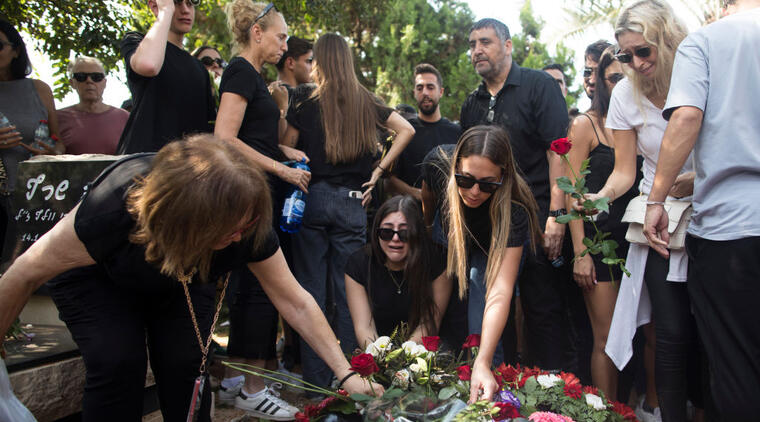
Family and friends of May Naim, 24, who was murdered by Palestinians militants at the "Supernova" festival, near the Israeli border with Gaza strip, react during her funeral on October 11, 2023 in Gan Haim, Israel. (Getty Images)
News

FSI Scholars Analyze Implications of Hamas’ Terror Attack on Israel

Larry Diamond moderated a discussion between Ori Rabinowitz, Amichai Magen and Abbas Milani on the effects of Hamas’ attacks on Israel and what the emerging conflict means for Israel and Middle Eastern geopolitics.
FSI Scholars Analyze Implications of Hamas’ Terror Attack on Israel
Michael McFaul poses with a Stanford University flag in front of a group of Ukrainian alumni during a reunion dinner in Kyiv.
Blogs

On the Ground in Ukraine: A Report from Michael McFaul and Francis Fukuyama

A trip to Kyiv gave FSI Director Michael McFaul and Olivier Nomellini Senior Fellow Francis Fukuyama the opportunity to meet with policymakers, military experts, and Ukrainian alumni of FSI's programs and fellowships.
On the Ground in Ukraine: A Report from Michael McFaul and Francis Fukuyama
Democracy Day 2023 light up marquee letters
News

Democracy Day sweeps Stanford

Thousands turned out for the student-run, campuswide event, which has grown significantly since launching in 2021.
Democracy Day sweeps Stanford
Hero Image
Amichai Magen, Marshall Burke, Didi Kuo, Larry Diamond, and Michael McFaul onstage for a panel discussion at Stanford's 2023 Reunion and Homecoming
Melissa Morgan
All News button
1
Subtitle

FSI scholars offer their thoughts on what can be done to address political polarization in the United States, tensions between Taiwan and China, climate change, the war in Ukraine, and the Israel-Hamas war.

Date Label
-
A map of the Middle East
Wikimedia Commons

The Freeman Spogli Institute for International Studies invites you to attend a conversation between two experts on the Middle East.

Ghaith al-Omari, the Rosalinde and Arthur Gilbert Foundation Senior Fellow in The Washington Institute's Irwin Levy Family Program on the U.S.-Israel Strategic Relationship, is the former executive director of the American Task Force on Palestine. He served as advisor to the negotiating team during the 1999–2001 permanent-status talks in addition to holding various other positions within the Palestinian Authority.

Ambassador Dennis Ross is the counselor and William Davidson Distinguished Fellow at the Washington Institute for Near East Policy, and teaches at Georgetown University’s Center for Jewish Civilization. For more than twelve years, Ambassador Ross played a leading role in shaping U.S. involvement in the Middle East peace process, dealing directly with the parties as the U.S. point man on the peace process in both the George H.W. Bush and Bill Clinton administrations.

The conversation will be moderated by Janine Zacharia, who has reported on Israel, the Middle East and U.S. foreign policy for close to two decades including stints as Jerusalem Bureau Chief for the Washington Post, chief diplomatic correspondent for Bloomberg News, Washington bureau chief for the Jerusalem Post, and Jerusalem correspondent for Reuters. She appears regularly on cable news shows and radio programs as a Middle East analyst and is currently a visiting lecturer in the Department of Communication at Stanford.

These experts, who share different perspectives on this issue, will bring context to the unfolding crisis in Gaza.

Janine Zacharia
Ghaith al-Omari
Dennis Ross
Panel Discussions
Subscribe to Israel