Authors
News Type
News
Date
Paragraphs

Scholars hosted by the Visiting Fellows in Israel Studies program at the Freeman Spogli Institute for International Studies (FSI) on October 27 discussed the lessons of the 1973 Yom Kippur War and its relevance for understanding the current Israel-Hamas war.

The seminar, “1973 Yom Kippur War: Lessons to Remember,” was moderated by Larry Diamond, the Mosbacher Senior Fellow in Global Democracy at FSI who is also leading the Visiting Fellows in Israel Studies program at FSI. 

In his opening remarks, Diamond said, “Our hearts go out to the people of Israel and this struggle they have now in the wake of one of the most horrific terrorist attacks in anyone’s living memory, maybe the most horrific. And to all of the people in Israel and Gaza, who are innocent people who’ve lost their lives.”

Speakers included Or Rabinowitz of the International Relations Department of the Hebrew University of Jerusalem and a visiting associate professor at FSI’s Center for International Security and Cooperation (CISAC); Gil-li Vardi, a former visiting scholar at CISAC and Stanford history lecturer; Professor Emeritus Meron Medzini of the Hebrew University of Jerusalem and former Israeli Prime Minister Golda Meir’s spokesperson during 1973–1974; and Ron Hassner, the Chancellor’s Professor of Political Science and Helen Diller Family Chair in Israel Studies at UC Berkeley. 

Israel’s Nuclear Question

On October 6, 1973, an Arab alliance of Egyptian and Syrian forces launched a surprise attack on Israel on Yom Kippur – the Jewish holy day of atonement. The three-week conflict was one of the deadliest Arab-Israeli wars. It ended with an Israeli victory, shaping inter-state relations in the region for years to come.

Rabinowitz addressed the nuclear dimension of the Yom Kippur War, quoting Richard Nixon, who said in 1972, “The Israelis have nuclear weapons. I’m not going to tell you how I know, but I know that.”

She said a “partial picture” exists of Israel’s nuclear capabilities during the 1973 conflict, and more research needs to be done. Back then, Israel and the U.S. had reached an understanding about Israel’s “ambiguous nuclear posture,” as well as an agreement that any U.S.-made fighter jets would not be used to deploy nuclear weapons. Regarding nuclear-equipped missiles, “we have to take it into account that this was probably a political signaling which wasn’t backed by an actual ability to put in a nuclear warhead on the ballistic missile, but we just don’t know,” Rabinowitz said.

She added, “I am convinced that Golda Meir would have shown nuclear restraint, even if a bilateral understanding had not been in effect with the U.S. – because it made sense, there were moral clouds, and the Israeli objective was to align itself with the U.S. and guarantee further collaboration, and that would have just backfired.”

An Evolving Military Strategy

Vardi said the Yom Kippur War generated a huge incentive for the U.S. military and others to later develop the “AirLand Battle Doctrine,” which emphasizes close coordination between land forces acting as an aggressively maneuvering defense, and air forces attacking rear-echelon forces feeding those front-line enemy forces. 

“It also taught the military leadership in Israel that their instincts are the right ones, that they should always be on the offensive. If war is coming, then they should always be very active about it – active to the point of aggression,” she said.

As for Egypt, Vardi said, they weren’t planning an all-out war against Israel if they didn’t receive help from the Soviet Union or elsewhere, and their tactical goals were therefore limited.

She also noted Israel’s battle doctrine, which rests on three pillars – deterrence, intelligence, and military decision-making, as well as a defensive strategy to be executed offensively, by transferring the battle to enemy territory.

This doctrine failed on October 7 when Hamas attacked Israel, killing more than 1,400 people in Israeli territory. “Israeli security perceptions will need to change,” Vardi said.

If Hamas is removed from Gaza, something else needs to go and fill that gap.
Larry Diamond
Mosbacher Senior Fellow in Global Democracy at FSI

Confronting Hamas

On October 7, Medzini said, Israel was dealt its worst blow since 1948. “Totally unprepared, wrong intelligence, the army in disarray, leadership, very poor response. And, parts of proper Israel were occupied by Palestinians with a huge number of casualties.”

He said, “The entire country was stunned. How could this happen to us?”

The Yom Kippur War was totally different than today’s conflict between Israel and Hamas, Medzini said. In 1973 it was launched by mostly secular governments in Egypt and Syria, whereas Hamas is a religious organization. 

“We thought in terms of Western thinking or Arab thinking. We did not take into account that Hamas is a religious organization. If you read their covenant, if you look at the logo, it’s not only to destroy the Jews of Israel, it’s to destroy the Jews” everywhere, Medzini said. 

Hassner said Israel’s opponents erred during the Yom Kippur War by believing the Israelis would be unable to mobilize quickly. 

“Mobilization turned out to be very easy,” he said, “because everybody was in the same place. Everybody was in the synagogue. And so, unit commanders just went to the nearest synagogues and told all the young men to come out. The roads were empty, which the Egyptians seemed to be unaware of. Mobilization to the front may have happened at twice the speed at which the Israeli military had planned to mobilize, because nobody else was on the road.”

Also, Hassner said, a backlash effect can exist if one is attempting to exploit their opponents’ religious holiday – “you are going to unleash a certain amount of religiously motivated anger.”

Regarding Israel’s security situation today, Rabinowitz said Prime Minister Benjamin Netanyahu’s policies reflect a deep miscalculation of Hamas since the terror group rose to power in 2007 in the Gaza Strip. After Netanyahu took office in 2009, “he went on the record saying that his main mission is to strengthen Hamas” by favoring it over other Palestinian groups.

Medzini said Israel has to conduct a major operation in Gaza to make sure that Hamas loses its military and political capabilities. “You can’t kill an ideology. You can’t kill a religion. But you can certainly destroy a military capability and capacity,” he said. But, Medzini also noted, “Where do we go from here? What’s the end game?”

Diamond spoke of reigniting the peace process and bringing back the two-state solution in a very actual manner. “I’ll note what I think everybody in the room knows that if Hamas is removed from Gaza, something else needs to go and fill that gap.”

Read More

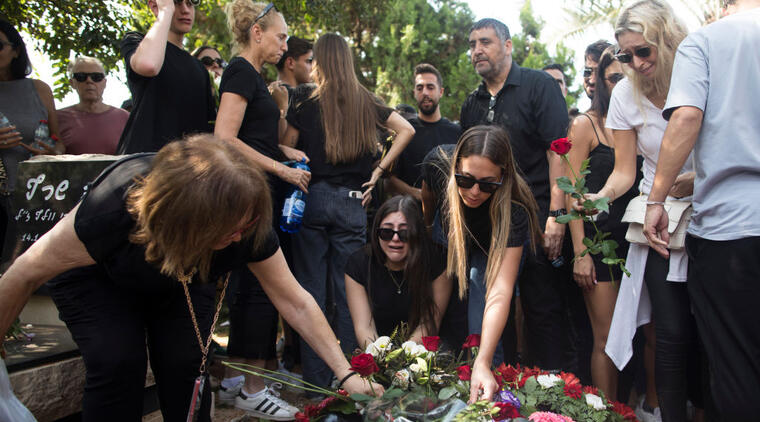
Family and friends of May Naim, 24, who was murdered by Palestinians militants at the "Supernova" festival, near the Israeli border with Gaza strip, react during her funeral on October 11, 2023 in Gan Haim, Israel. (Getty Images)
News

FSI Scholars Analyze Implications of Hamas’ Terror Attack on Israel

Larry Diamond moderated a discussion between Ori Rabinowitz, Amichai Magen and Abbas Milani on the effects of Hamas’ attacks on Israel and what the emerging conflict means for Israel and Middle Eastern geopolitics.
FSI Scholars Analyze Implications of Hamas’ Terror Attack on Israel
Larry Diamond, Or Rabinowitz, Yonatan Eyov, and Amichai Magen in discussion in the Bechtel Conference Center at the Freeman Spogli Institute for International Studies at Stanford University.
News

Visiting Fellows in Israel Studies Program is in Full Swing at FSI

The program aims to foster cross-disciplinary analysis of Israel and its unique position as a regional influence and geopolitical actor.
Visiting Fellows in Israel Studies Program is in Full Swing at FSI
Michael McFaul poses with a Stanford University flag in front of a group of Ukrainian alumni during a reunion dinner in Kyiv.
Blogs

On the Ground in Ukraine: A Report from Michael McFaul and Francis Fukuyama

A trip to Kyiv gave FSI Director Michael McFaul and Olivier Nomellini Senior Fellow Francis Fukuyama the opportunity to meet with policymakers, military experts, and Ukrainian alumni of FSI's programs and fellowships.
On the Ground in Ukraine: A Report from Michael McFaul and Francis Fukuyama
Hero Image
Panelists at the event "1973 Yom Kippur War: Lessons Learned"
All News button
1
Subtitle

Scholars of Israel and the Middle East discussed the strategic takeaways of the 1973 Yom Kippur War and their relevance to the region’s current security crisis.

Date Label
Authors
News Type
News
Date
Paragraphs

Scholars from the Freeman Spogli Institute for International Studies discussed the global and regional implications of Hamas’ terror attack during a webinar on October 13, 2023.

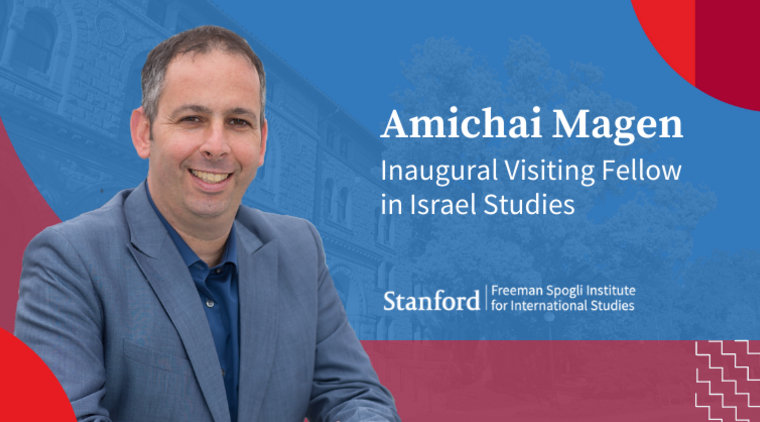
Larry Diamond, the Mosbacher Senior Fellow in Global Democracy at FSI and William L. Clayton Senior Fellow at the Hoover Institution, moderated the conversation. Speakers included Abbas Milani, the Hamid and Christina Moghadam Director of Iranian Studies; Ori Rabinowitz of the International Relations Department of the Hebrew University of Jerusalem and a visiting associate professor at FSI’s Center for International Security and Cooperation; and Amichai Magen, of the Lauder School of Government, Diplomacy, and Strategy, Reichman University in Herzliya, Israel, and the inaugural visiting fellow in Israel Studies at FSI. 

Israel declared war against Hamas after the terrorist group infiltrated the country on October 7, firing thousands of rockets at residential areas, killing civilians, and inflicting the most lethal attack on Israel since its founding in 1948.

Diamond said, “The brutal October 7 attacks on innocent Israeli civilians by the terrorist group Hamas constitute one of the most appalling incidents of terrorism in our lifetimes.” He noted that for a smaller country the size of Israel, when compared to the U.S., their death toll of 1,200 that weekend is equivalent to more than 40,000 Americans – or more than 10 times the U.S. death toll on 9/11.

Impact on Israelis

Rabinowitz said Israelis have been deeply affected by Hamas’ atrocities. “It’s trauma being compounded by failure of the Israeli state and the army institution to respond immediately to all levels of this. It really brought to the surface images of the Holocaust.” 

However, she said, Israeli civil society is strong and resilient, and it’s taking on the role of providing what the government's institutions and leadership should have provided more quickly after the attacks. “Soldiers called up for duty were driven to the front by their parents and by family friends,” for example, she said.

Magen said Hamas’ attacks shattered three fundamental myths for Israelis. One involved the notion that Israel could coexist with Hamas and Palestinian Islamic Jihad. The second illusion that broke was the belief that the government of Israel and the Israeli Defense Forces could effectively protect the civilian population.

“The reason why this is a much bigger trauma than Yom Kippur (in 1973) is because on Yom Kippur there was a very high military death toll, but the civilian population was protected,” Magen said. "However, this time, thousands of Israeli civilians were massacred before the Israeli state could even respond."

The third illusion, Magen said, was the belief that global jihad was non-existent in today’s world. “This is a cautionary tale – sometimes Israel is the canary in the coal mine. What happens in Israel today may tragically happen in the United States or elsewhere.”

Iran and Regional Implications

Milani noted the speculation about whether Iran ordered the attacks, but said that misses the larger picture. “Iran created Hamas in this sense. Iran is the architect of the narrative” that the future of the Middle East must not include Israel.

He said the only solution for lasting peace in the region is a two-state solution (with a Palestinian state) and an Iran with a democratic government. But extremists are in power in all the involved countries and now this outcome is even more difficult, said Milani. “Iran has been adamant in undermining the two-state solution.”

Milani also said the Hamas incursions should end the illusion shared by some in the West that you can make enough concessions to the Iranian regime and it will change its support for terrorism. 

“This regime is not going to abide by laws, it is not going to abide by its commitments. It is murderously suppressing the Iranian people,” he said.

Iran, Milani believes, sees the Hamas attacks as a major turning point in its bid for regional supremacy and the demise of Israel. It wants to undermine the delicate normalization talks between Israel, Saudi Arabia and other Arab countries. With Iranian-backed Hezbollah aiming more than 150,000 rockets at Israel, Iran is maneuvering for possibly a broader conflict and chaos that could see Israel confronting several fronts.

Milani added that his heart goes out to all the victims and the hostages of this ordeal, noting that the 2 million-plus citizens of Gaza are also hostages to this catastrophe. “Human beings should be considered as hostages in this brutal regime (Hamas).” Their lives should be protected as well, and this would be best for the future of the Middle East and for the future of Israel.

Factors Leading to Attacks

Rabinowitz said scholars in the future will need to examine how the more radical factions in the Middle East realigned and created such a situation, she said. 

Magen said Israel was too complacent in regard to their technologically-enhanced security systems, rife with domestic political polarization, and naïve that a deal could be struck with Hamas.

“Israel was clearly perceived to be vulnerable and divided internally, and the enemy pounced. We in Israel tend to think that we watch very carefully what is happening in the neighborhood, but the neighborhood also watches us,” he said.

With Iran nearing the nuclear threshold for a weapon of mass destruction, the West needs to be incredibly aware of this possibility, Magen said. 

Campus Conversations

Diamond and the scholars emphasized the need for civil dialogue and safe spaces for conversations on college campuses about the Israeli-Palestinian conflict. Rabinowitz said the Stanford community is well-positioned to achieve this. 

She said, “We’re not in Israel and Gaza, and we can use this opportunity to foster more dialogue between the different groups, between different students, and I think that is part of our jobs.”

Magen said, “We must create constructive spaces for empathic and sympathetic analysis, conversation, and engagement. We need to talk about difficult issues – we live in a difficult world.” 

The Freeman Spogli Institute for International Studies produced the webinar, “The Hamas Terrorist Attack on Israel and its Implications for the Middle East,” in cooperation with the Visiting Fellows in Israel Studies program, where Professors Magen and Rabinowitz are visiting scholars. The program was launched in September 2021 with the aim of deepening FSI’s academic expertise in geopolitics and democracy studies as it relates to Israel.

Read More

Family and friends of May Naim, 24, who was murdered by Palestinians militants at the "Supernova" festival, near the Israeli border with Gaza strip, react during her funeral on October 11, 2023 in Gan Haim, Israel.
Commentary

Terrorism Is Terrorism

On war and conflict in the Middle East, we need nuanced explanations and prudent prescriptions but without compromising on essential truths.
Terrorism Is Terrorism
A mourner kneels at the funeral of May Naim in Israel following the massacre at music festival
Commentary

This Was Never Supposed to Happen

October 7th was a catastrophe for Israel’s people—and its government.
This Was Never Supposed to Happen
Larry Diamond, Or Rabinowitz, Yonatan Eyov, and Amichai Magen in discussion in the Bechtel Conference Center at the Freeman Spogli Institute for International Studies at Stanford University.
News

Visiting Fellows in Israel Studies Program is in Full Swing at FSI

The program aims to foster cross-disciplinary analysis of Israel and its unique position as a regional influence and geopolitical actor.
Visiting Fellows in Israel Studies Program is in Full Swing at FSI
Hero Image
Family and friends of May Naim, 24, who was murdered by Palestinians militants at the "Supernova" festival, near the Israeli border with Gaza strip, react during her funeral on October 11, 2023 in Gan Haim, Israel. (Getty Images)
Family and friends of May Naim, 24, who was murdered by Palestinian militants at the "Supernova" festival, near the Israeli border with Gaza strip, react during her funeral on October 11, 2023 in Gan Haim, Israel. (Getty Images)
All News button
1
Subtitle

Larry Diamond moderated a discussion between Ori Rabinowitz, Amichai Magen and Abbas Milani on the effects of Hamas’ attacks on Israel and what the emerging conflict means for Israel and Middle Eastern geopolitics.

Date Label
Authors
Amichai Magen
News Type
Commentary
Date
Paragraphs

At approximately 6:30am on October 7th—on the holy sabbath of Shemini Atzeret, the eighth and final day of the Jewish holiday of Sukkot—air raid sirens went off all across Israel. Before the day was done, more than 3,000 rockets, missiles, and mortar shells were fired by Hamas, as well as Palestinian Islamic Jihad (PIJ), from Gaza into Israel. As with all recent attacks, the barrages were fired from within densely populated Palestinian civilian areas into densely populated civilian areas inside Israel, constituting a double war crime.

But this time things were different. This time the salvos of rocket fire—as intensive, indiscriminate, and far-ranging as they undoubtedly were—were not the attack itself. They were primarily a diversion meant to obfuscate, and provide cover for, a Hamas invasion, slaughter, and kidnapping operation.

Read the full article in "Persuasion."

Hero Image
A mourner kneels at the funeral of May Naim in Israel following the massacre at music festival Getty
All News button
1
Subtitle

October 7th was a catastrophe for Israel’s people—and its government.

Date Label
Authors
Michael A. McFaul
News Type
Commentary
Date
Paragraphs

Last week, Hamas carried out horrific, barbaric acts of terrorism against innocent Israeli civilians, resulting in over a thousand killed, including 22 American citizens. The brutality and scale of their slaughter – including killing grandmothers and babies – was shocking. No previous injustice, prior wrong, or longstanding grievance justifies these heinous actions. Hamas launched its terrorist attacks knowing very well that Israel would retaliate, deliberately triggering more suffering for the people they claim to defend. As an act of self-defense, the democratically elected government has the responsibility to protect its citizens and the legitimate right to use force for self-defense, first and foremost against Hamas and Islamic Jihad, but also in response to other actors in the region – Hezbollah and their Iranian backers – if they try to expand the scope of this war.

In waging its military offensive, the Israeli Defense Forces (IDF) must abide by international law and minimize civilian casualties and civilian suffering. Hamas must do the same and stop using Palestinian civilians as human shields to protect their terrorists and military supplies. That is both immoral and illegal. International organizations and the international community also need to work together to reduce civilian suffering in this war, including working with Egypt and Israel to allow safe passage for Palestinian refugees from Gaza into Egypt temporarily.

Hamas has consolidated a ruthless dictatorship to maintain power in Gaza. While polls show that Hamas is popular in Gaza, no citizen there voted for last week’s grotesque massacre, and obviously, Palestinians residing in the West Bank and Israel had no voice either. Even while watching with horror as some Palestinians celebrate these terrorist acts, analysts must be careful not to conflate Hamas with all Palestinians.

Palestinians deserve democratic governance, self-rule, sovereignty, and protection of their human rights and their property. The strategy of neglect of these issues has failed. In the book "Advancing Democracy Abroad: Why We Should and How We Can" which I published in 2010, I identified “help[ing] to negotiate a peace treaty between Israel and Palestine” (p. 203) as a key U.S. policy objective for promoting democracy and fighting terrorism in the Middle East. I still believe that today. But we must have the moral clarity to denounce Hamas’s horrific terrorism without qualification and at the same time give greater attention to protecting Palestinians’ human rights, including the right to self-determination. Passion for the latter is no excuse for the former.

As a professor at Stanford University who leads a major research institute of international studies, I personally and we collectively as an academic community have a responsibility to study and explain this conflict, both the short-term precipitants and the long-term causes. At the Freeman Spogli Institute for International Studies, we have the Center for International Security and Cooperation which has worked on the Middle East for decades, as well as programs both on Israel Studies and Arab Reform and Democracy. We also collaborate closely with the Program in Iranian Studies. Academic research is our paramount mission. Follow their work in the coming days and weeks. Read my colleague Amy Zegart’s essay on “Israel’s Intelligence Disaster” in Foreign Affairs published today. 

Tune in to our webinar, open to all, on the Middle East this Friday at 2pm Pacific Time - register here. All scholars at FSI speak for themselves, do their own independent research, and follow no institutional guidance from me. No doubt, some will disagree with this essay. Academic freedom and diversity of views are positive features of our institution, our university, and hopefully all universities.

As a former policymaker still engaged in U.S. foreign policy debates, I also feel obliged to make recommendations that advance American interests and values. At this moment in history, charting a successful U.S. foreign policy course in the Middle East is not simple or obvious. Untangling complexity, accurately weighing tradeoffs, and anticipating second and third-order consequences of immediate policy actions is essential.

But one can do all these things – nuanced explanation and prudent prescription – without compromising on essential truths. Terrorism is terrorism. It must be identified clearly and denounced forcefully. It is never justified.

Hero Image
Family and friends of May Naim, 24, who was murdered by Palestinians militants at the "Supernova" festival, near the Israeli border with Gaza strip, react during her funeral on October 11, 2023 in Gan Haim, Israel.
Family and friends of May Naim, 24, who was murdered by Palestinian militants at the "Supernova" festival, near the Israeli border with Gaza strip, react during her funeral on October 11, 2023 in Gan Haim, Israel.
Getty Images
All News button
1
Subtitle

On war and conflict in the Middle East, we need nuanced explanations and prudent prescriptions but without compromising on essential truths.

-
Family and friends of May Naim, 24, who was murdered by Palestinians militants at the "Supernova" festival, near the Israeli border with Gaza strip, react during her funeral on October 11, 2023 in Gan Haim, Israel. (Getty Images)

On Saturday October 7, 2023, two Iranian-backed terrorist organizations based in the Gaza Strip — Hamas and Palestinian Islamic Jihad (PIJ) — inflicted the most lethal attack suffered by the State of Israel since its founding in May 1948. 

Over 1200 Israelis, overwhelmingly civilians, were murdered, 3000 wounded, and approximately 150 kidnapped into Gaza, to be used as human shields and bargaining chips. The attacks also involved unspeakable acts of sexual violence and infanticide. Retaliatory Israeli air strikes have killed over 800 Gazans so far. 

The conflict risks escalating to an all-out regional confrontation, involving several other Iranian proxies (most notably Hezbollah in Lebanon) and even a direct Iran-Israel war. This could have devastating and transformative implications for the Middle East, U.S. foreign policy, and the entire international system. What led to the events of October 7? How was Israel caught so completely off guard? Did Iran order the attack? What are the possible scenarios for the conflict? And what can the Biden Administration do?

SPEAKERS

Amichai Magen

Amichai Magen

Inaugural visiting fellow in Israel Studies at FSI
Lauder School of Government, Diplomacy, and Strategy, Reichman University in Herzliya, Israel
Full Profile
Abbas Milani photo by Babak Payami

Abbas Milani

Hamid and Christina Moghadam Director of Iranian Studies
Stanford University
Full Profile
Or Rabinowitz

Or Rabinowitz

Visiting associate professor at FSI's Center for International Security and Cooperation
International Relations Department of Hebrew University, Jerusalem
Full Profile

MODERATOR

Portrait of Hesham Sallam

Larry Diamond

Mosbacher Senior Fellow in Global Democracy at FSI
William L. Clayton Senior Fellow at the Hoover Institution
FULL PROFILE
Larry Diamond
Larry Diamond

Zoom Only

0
Director, Jan Koum Israel Studies Program, CDDRL
Senior Research Scholar, CDDRL
Visiting Fellow in Israel Studies, FSI (2022-2025)
W. Glenn Campbell National Fellow, Hoover Institution (2008-2009)
CDDRL Affiliated Scholar, 2008-2009
CDDRL Predoctoral Fellow, 2004-2008
amichai_magen.jpg

Amichai Magen is a Senior Research Scholar at the Center on Democracy, Development and the Rule of Law (CDDRL) and the founding director of the center's Jan Koum Israel Studies Program. Previously, he served as the visiting fellow in Israel Studies at Stanford University's Freeman Spogli Institute for International Studies, head of the MA Program in Diplomacy & Conflict Studies, and director of the Program on Democratic Resilience and Development (PDRD) at the Lauder School of Government, Diplomacy and Strategy, Reichman University, Herzliya, Israel. His research and teaching interests address democracy, the rule of law, liberal orders, risk and political violence, as well as Israeli politics and policy.

Magen received the Yitzhak Rabin Fulbright Award (2003), served as a pre-doctoral fellow at the Center on Democracy, Development and the Rule of Law, and was the W. Glenn Campbell National Fellow at the Hoover Institution (2008-9). In 2016, he was named a Richard von Weizsäcker Fellow of the Robert Bosch Academy, an award that recognizes outstanding thought leaders around the world. Between 2018 and 2022, he served as principal investigator in two European Union Horizon 2020 research consortia, EU-LISTCO and RECONNECT. Amichai Magen served on the Executive Committee of the World Jewish Congress (WJC) and is a Board Member of the Israel Council on Foreign Relations (ICFR) and the International Coalition for Democratic Renewal (ICDR).

Date Label
Amichai Magen

615 Crothers Way,
Encina Commons, Room 128A
Stanford University
Stanford, CA 94305

(650) 721-4052
0
Research Fellow, Hoover Institution
abbas_milani_photo_by_babak_payami.jpg PhD

Abbas Milani is the Hamid and Christina Moghadam Director of Iranian Studies at Stanford University and a visiting professor in the department of political science. In addition, Dr. Milani is a research fellow and co-director of the Iran Democracy Project at the Hoover Institution.

Prior to coming to Stanford, Milani was a professor of history and political science and chair of the department at Notre Dame de Namur University and a research fellow at the Institute of International Studies at the University of California at Berkeley. Milani was an assistant professor in the faculty of law and political science at Tehran University and a member of the board of directors of Tehran University's Center for International Studies from 1979 to 1987. He was a research fellow at the Iranian Center for Social Research from 1977 to 1978 and an assistant professor at the National University of Iran from 1975 to 1977.

Dr. Milani is the author of Eminent Persians: Men and Women Who Made Modern Iran, 1941-1979, (Syracuse University Press, Syracuse, NY, 2 volumes, November, 2008); King of Shadows: Essays on Iran's Encounter with Modernity, Persian text published in the U.S. (Ketab Corp., Spring 2005); Lost Wisdom: Rethinking Persian Modernity in Iran, (Mage 2004); The Persian Sphinx: Amir Abbas Hoveyda and the Riddle of the Iranian Revolution (Mage, 2000); Modernity and Its Foes in Iran (Gardon Press, 1998); Tales of Two Cities: A Persian Memoir (Mage 1996); On Democracy and Socialism, a collection of articles coauthored with Faramarz Tabrizi (Pars Press, 1987); and Malraux and the Tragic Vision (Agah Press, 1982). Milani has also translated numerous books and articles into Persian and English.

Milani received his BA in political science and economics from the University of California at Berkeley in 1970 and his PhD in political science from the University of Hawaii in 1974.

Hamid and Christina Moghadam Director of Iranian Studies
Co-director of the Iran Democracy Project
CDDRL Affiliated Scholar
Date Label
Abbas Milani
0
Visiting Fellow in Israel Studies
or-rabinowitz_headshot.jpg

Or (Ori) Rabinowitz is a tenured senior lecturer (Associate Professor) at the International Relations Department of the Hebrew University and a Visiting Fellow of Israel Studies at Stanford, 2025-2026. After receiving the British Foreign Office's Chevening Scholarship, Rabinowitz completed a PhD at the War Studies Department of King’s College London in 2011. Her first book, Bargaining on Nuclear Tests, was published in 2014 by Oxford University Press. Her second book, currently under contract with Cambridge University Press, explores the evolution of US-Israeli collaboration in countering nuclear proliferation in the Middle East. She has published numerous peer-reviewed articles, think pieces, and op-eds in leading journals and magazines. She is also the recipient of several grants and awards, including two personal grants from the Israel Science Foundation.

CV
Date Label
Or Rabinowitz
Seminars
Date Label
-
Louis Fishman

Join FSI's Visiting Fellows in Israel Studies Program and CDDRL's Program on Turkey for a seminar focusing on current developments in Israel and Turkey.


Our guest speaker, Louis Fishman (associate professor at Brooklyn College, City University of New York), will discuss domestic politics in both countries and their importance for global democracy and regional security. Further, he will ponder on similarities and differences between the two countries in terms of ethnic divisions and the meaning of citizenship.

The seminar is presented in cooperation with The Taube Center for Jewish Studies, the Abbasi Program in Islamic Studies, the Mediterranean Studies Forum, and Stanford's Department of History.

Ayça Alemdaroğlu, associate director of the Program on Turkey and a research scholar at the Center on Democracy, Development and the Rule of Law, will moderate the discussion. 

ABOUT THE SPEAKER 


Louis Fishman is an associate professor in the history department at Brooklyn College, City University of New York. He is the author of the book Jews and Palestinians in the late Ottoman Era, 1908-1914: Claiming the Homeland (Edinburgh University Press, January 2020). His academic work focuses on late Ottoman Palestine, the Jews of the Ottoman Empire, and the Israeli-Palestinian conflict. He also regularly contributes to the Israeli newspaper Haaretz, where he writes about Turkish and Israeli politics while providing political commentary to other international media and policy outlets. He divides his time between New York, Istanbul, and Tel Aviv.

Zoom registration is available to the public. Only those with an active Stanford ID and access to Encina Hall E008 may attend in person.

Image
FSI and Program on Turkey logos
Ayça Alemdaroğlu
Ayça Alemdaroğlu

Virtual to Public. Only those with an active Stanford ID with access to Encina E008 in Encina Hall may attend in person.

Louis Fishman
Seminars
Date Label
Authors
Melissa Morgan
News Type
Commentary
Date
Paragraphs

Since the beginning of 2023, many citizens in Israel have taken part in a weekly ritual: street protests.

Most of the demonstrations are aimed at proposals from Prime Minister Benjamin Netanyahu’s administration to reform aspects of Israel’s judicial system, including reducing certain powers held by the Supreme Court to check the power of Israel’s legislative body, the Knesset.

After months of sustained opposition, it appeared that the most controversial proposals would be dropped. In March, Prime Minister Netanyahu announced a pause on the judicial overhaul plan, citing intentions to seek a compromise with dissenting members of the legislature. But in late July, a vote in the Knesset successfully passed a bill which removes the Supreme Court’s ability to invoke the “reasonableness clause,” or a legal tool by which the court can reject decisions or appointments made by the government if they fail to meet a standard of reasonable precedent and function.

This move has set off alarm bells both inside and outside of Israel. The only well-established, functioning democracy in the Middle East, many fear that the country may be heading toward a constitutional crisis.

To offer context on the current situation and its implication both for Israel and the broader geopolitical community, Amichai Magen, the inaugural Visiting Fellow in the Israel Visiting Fellows Program at the Freeman Spogli Institute for International Studies, joined Michael McFaul on the World Class podcast

In their conversation, Magen explains some of the cultural and political reasons that led Israel to this point, and offers his analysis of how Israel might move forward.

Listen to the full episode above, or browse highlights from their conversation below. Click here for a transcript of "Understanding Israel's Democracy."


The Paradox of Israeli Democracy


At the heart of the current crisis, says Magen, are unresolved tensions in Israel’s identity as a democratic nation. It has been a democracy since its recognition as an independent state in 1948, and in its 75 years as a nation, pulled off nothing less than a miracle of growth, development, and economic success. In 2022, it was the fastest growing country of the Organization for Economic Co-operation and Development (OECD) nations and entered the top 20 ranking of countries with the highest GDP per capita. Outside of strictly economic statistics, it was also listed as the fourth happiest country on earth, falling in line behind Finland, Denmark and Iceland.

“This is a country that came from very inauspicious circumstances and has not only survived, but thrived as an open and pluralistic society,” Magen told McFaul. “If you and I looked at Israel this time last year, we would be in awe of this country.”

However, there have always been vulnerabilities brewing under the surface of this great success.

Israel has done pretty well by fudging those issues and focusing on mundane bread-and-butter political issues. But we find ourselves confronting a coalition government that today wants to take Israel down a different path.
Amichai Magen
Visiting Scholar

Israel notably lacks a formal, written constitution, and has long relied on what Magen references as “norms and mores” in order to keep the work of government in line with accepted precedent. He explains further:

“Israel has decided not to decide on some of the critical questions that are normally settled in constitutional conventions. We don't have formal rules on separation of church and state. We decided not to decide on whether the ultra-orthodox in Israel should serve in the army or not serve in the army. We decided not to decide what should be the relationship between the Jewish majority and the Arab Israeli minority that makes up 20% of the Israeli population.

“And Israel has done pretty well by fudging those issues, by not bringing them to the fore, and by essentially trying to focus on mundane bread-and-butter political issues. But we find ourselves confronting a coalition government that today wants to take Israel down a different path.” 
 

Learning from the Current Crisis


In the short-term, Magen does not see a short-term fix for the current situation as long as the Netanyahu government remains entrenched. Speaking about the situation in a recent BBC interview, he expressed his fears that the situation “has reached a point where Netanyahu's personal political fortunes are being put ahead of everything else in Israel."

But there are signs of what may lay ahead. Current polling in Israel shows that if national elections were held now, the Netanyahu administration would lose. And the ongoing protests , now nearly eight months long, show the commitment of the demonstrators.

Magen hopes that this current crisis will be a springboard for Israel to finally address some of the issues it has “decided not to decide.” While a singular, decisive constitutional convention would be satisfying, Magen imagines these changes will most likely come as a series of decisions over time.

“At the very least, we need to set in place the procedural rules of the game to make sure that we have stronger guardrails around how we’re going to conduct our national politics,” he explained.

Continuing, he said, “It might happen in one grand bargain, but I think more realistically, we will see a series of incremental changes of finer grained reforms that will try to put in place those guardrails. I think there's going to be quite a lot of pressure for Israelis to move in that direction, and that is the space to watch over the coming months and years.”
 

International Implications


Magen says another important lesson Israel’s current situation has to offer is a comparative lens for other democracies around the world suffering from similar polarization.

“This is not unique to Israel. We've seen something similar happening in places like Holland, Sweden, and Germany. There's something in the air that is driving mistrust and polarization and a collapse in public trust in elected authorities all around the world. And that is something we need to do a better job at understanding,” Magen emphasizes.

Just as authoritarians and populists have their international networks and circles, we really need to strengthen the circles and the networks of support for democracy all around the world.
Amichai Magen
Visiting Scholar in Israel Studies

The implications of Israel’s importance as a democratic cornerstone in the Middle East also shouldn’t be underestimated, says Magen.

“We've managed to make tremendous progress in Middle Eastern peace based on the understanding that Israel's neighbors have that Israel is a powerful, cohesive, and coherent international actor. If that is undermined, then we could find ourselves in a much more precarious regional and international environment with very serious consequences for energy markets and for stability in the Middle East and Europe and beyond,” he warns.

Magen explains that it is critical in this moment for the people of Israel to know that their efforts to protect and preserve democracy in their country is recognized by fellow democrats around the world.

“This is a time when the people of Israel — not only the Israeli government — really need to hear from their friends around the world, including, and I would say first and foremost, in the United States,” says Magen.

It’s a principle that’s applicable not only to the current situation in Israel, but to the global democratic community as a whole, he explains. 

“Just as authoritarians and populists have their international networks and circles, we really need to strengthen the circles and the networks of support for democracy all around the world, including for Israeli democracy,” Magen urges. “And we'd better do it earlier rather than later.”

Read More

Larry Diamond, Or Rabinowitz, Yonatan Eyov, and Amichai Magen in discussion in the Bechtel Conference Center at the Freeman Spogli Institute for International Studies at Stanford University.
News

Visiting Fellows in Israel Studies Program is in Full Swing at FSI

The program aims to foster cross-disciplinary analysis of Israel and its unique position as a regional influence and geopolitical actor.
Visiting Fellows in Israel Studies Program is in Full Swing at FSI
Vladamir Putin and Xi Jinping shake hands.
News

Understanding the Global Rise of Authoritarianism

National security analyst and veteran podcaster Ben Rhodes joins Michael McFaul on World Class to discuss his new book, After the Fall: Being American in the World We've Made, and the reasons nationalism and authoritarianism are on the rise across the globe.
Understanding the Global Rise of Authoritarianism
Women protest over the death of Mahsa Amini, a young Kurdish women who died in the custody of Iranian police.
Commentary

The Future of Women, Life, and Freedom in Iran

The death of Mahsa Amini in Iran has ignited protests unlike anything seen in the country since the 1970s and might be the spark that finally lights the way for democratic reforms, Dr. Abbas Milani tells Michael McFaul on the World Class Podcast.
The Future of Women, Life, and Freedom in Iran
Hero Image
Protestors wave flags as thousands of Israelis attend a rally against Israeli Government's judicial overhaul plan on March 27, 2023 in Jerusalem, Israel.
Protestors wave flags as thousands of Israeli citizens attend a rally against the government's judicial overhaul plan in Jerusalem, Israel.
Getty
All News button
1
Subtitle

Law and governance expert Amichai Magen joins FSI Director Michael McFaul on the World Class podcast to discuss the judicial reforms recently passed by Israel’s legislature, and the implications these have for democracy in Israel and beyond.

Date Label
-

In cooperation with Kino Lorber, the Israel Visiting Scholars program at the Freeman Spogli Institute for International Studies (FSI) is offering a public screening of the film Cinema Sabaya.

Inspired by writer-director Orit Fouks Rotem’s own experiences as a teacher, Cinema Sabaya presents a deft and heartfelt portrait of art’s capacity to unite disparate communities, moving effortlessly between the gravity of their conversations and the genuine joy of this unlikely group of friends.

A reception with food and drink will follow the screening.

Parking at Stanford is limited. Please plan your visit accordingly.

This event will not be livestreamed.


About the Film


A group of Palestinian and Israeli women attend a video workshop at a small town community center run by Rona (Dana Ivgy, Zero Motivation), a young filmmaker from Tel Aviv, who teaches them to document their lives. As each student shares footage from her home life with the others, their beliefs and preconceptions are challenged and barriers are broken down. The group comes together as mothers, daughters, wives, and women living in a world designed to keep them apart, forming an empowering and lasting bond as they learn more about each other... and themselves.
 

Film poster for Cinema Sabaya
Courtesy of Kino Lorber


Levinthal Hall
424 Santa Teresa Street
Stanford, CA 94305

Film Screenings
Date Label
-
The Tel Aviv skyline
Getty

Join the new Visiting Fellow in Israel Studies program for a panel discussion on democracy in Israel as the country marks its 75th Independence Day. Since its founding in 1948, Israel has established itself as a vibrant democracy and a powerful geopolitical actor on the regional and global stage.

Moderated by Larry Diamond, the Mosbacher Senior Fellow in Global Studies at FSI, the panelists, including Associate Professors Amichai Magen and Or Rabinowitz, and the Jewish Agency Israel Fellow at Stanford Yonatan Eyov, will reflect on Israel’s many notable achievements as well as the challenges to its democratic nature.
 

Meet the Panelists


Yonatan Eyov is the current Jewish Agency Israel Fellow at Stanford University. The fellows program is a partnership between the Jewish Agency and Hillel which brings Israeli young adults to college and university campuses around the world to help these environments’ fulfill their role as safe spaces for education, tolerance, and diversity. Eyov hols a bachelor's degree in Communication and Media Studies from Reichman University.

Yonatan Eyov

Yonatan Eyov

Jewish Agency Israel Fellow at Stanford University
Full Profile


Dr. Amichai Magen is a Senior Lecturer and Director of the Program on Democratic Resilience and Development (PDRD) at the Lauder School of Government, Diplomacy and Strategy at Reichman University. He is the inaugural Visiting Fellow in Israel Studies at the Freeman Spogli Institute, where he is continuing his research on limited statehood, governance failures, and political violence in the international system.

Amichai Magen

Amichai Magen

Visiting Fellow in Israel Studies
Full Profile


Dr. Or Rabinowitz is an associate professor at the International Relations Department of the Hebrew University of Jerusalem, Israel. During the academic year of 2022-2023 she holds the post of visiting associate professor at Stanford’s CISAC. Her research interests include nuclear proliferation, intelligence studies, and Israel-U.S. relations.

Or Rabinowitz

Or Rabinowitz

Visiting Scholar at CISAC
Full Profile
Larry Diamond
Larry Diamond
Yonatan Eyov Jewish Agency Israel Fellow at Stanford University
Amichai Magen Visiting Fellow in Israel Studies
Ori Rabinowitz Visiting Associate Professor
Panel Discussions
Date Label
Subscribe to Israel