-

If you are a Stanford faculty, student, or staff member, please email z3project@paloaltojcc.org for discounted admission. Stanford ID will be requested at the event. 

Speaker: Tzipi Livni, former Israeli Vice Prime Minister, Foreign Minister, and Justice Minister.

A year after the October 7th attack, in the midst of deep domestic disagreements and an evolving multi-front war, Israel is at an historic crossroads. Where do we go from here?

***

Tzipi Livni is a prominent Israeli stateswoman and former Vice Prime Minister, Foreign Minister, and Justice Minister. Widely regarded as one of Israel's most influential women since Golda Meir, Livni has been a key figure in national security, peace negotiations, and Israeli politics. Known for her steadfast leadership and advocacy for peace, she has worked tirelessly to uphold Israel's democratic values while safeguarding its security interests. Livni led centrist political parties and was Israel’s chief negotiator in peace talks with the Palestinians in 2008 and 2013.

Amichai Magen is a Visiting Professor in Political Science and Visiting Fellow in Israel Studies at Freeman Spogli Institute for International Studies. In Israel, he is a Senior Lecturer (US Associate Professor) and Head of the MA Program in Diplomacy & Conflict Studies at Reichman University, where he also directs the Program on Democratic Resilience and Development. His research focuses on democracy, the rule of law, and political violence.
 

Tzipi Livni

Tzipi Livni

Former Israeli Vice Prime Minister, Foreign Minister, and Justice Minister.

Please contact z3project@paloaltojcc.org for any questions about this event.

Amichai Magen
Amichai Magen

Schultz Cultural Arts Hall
Oshman Family Jewish Community Center
3921 Fabian Way Palo Alto, CA 94303

Tzipi Livni, former Israeli Vice Prime Minister, Foreign Minister, and Justice Minister
Seminars
Date Label
Paragraphs

A burgeoning literature considers the domestic causes and consequences of democratic backsliding for public perceptions of democracy but has yet to fully examine the role of international factors in explaining these perceptions. Specifically, the effect of democratic backsliding in one democracy on public support for democratic principles in other countries has, thus far, defied theoretical and empirical investigation. Addressing this gap, we propose and test a theory of the effects of backsliding on global opinion in which information about democratic decline in one country can lead to increased support for authoritarian governance in another country. To test this, we use an original survey experiment in Israel where we test the effect of two narratives regarding the 2020 U.S. elections—one signaling democratic decline and one signaling democratic resilience—on support for authoritarian governance. We find that respondents exposed to the narrative of U.S. democratic decline were more supportive of authoritarian governance compared to respondents exposed to the narrative of democratic resilience. We further find marginal evidence that the respondents’ ideological preferences condition the effect of narrative exposure. Our findings suggest that the democratic backsliding literature has insufficiently explored the global consequences of domestic events and processes on democratic decline worldwide.

All Publications button
1
Publication Type
Journal Articles
Publication Date
Journal Publisher
International Journal of Public Opinion Research
Authors
Amichai Magen
Number
Issue 2
Authors
News Type
News
Date
Paragraphs


This article originally appeared in The Stanford Daily.

European Union (EU) High Representative for Foreign Affairs and Security Policy Josep Borrell M.S. ’75 visited the Hoover Institution on Monday for an event hosted by the Freeman Spogli Institute for International Studies (FSI).

In a keynote speech followed by a conversation with the institute’s director and former ambassador to Russia, Michael McFaul, Borrell delved Europe’s crucial role and responsibilities in addressing ongoing war in Ukraine and Gaza, as well as geopolitical security and emerging technology more broadly.

Borrell emphasized the need for EU countries to collectively adapt to the changing geopolitical landscape and increase their strategic responsibility. He stressed the importance of European unity in the face of challenges posed by Russia’s aggression in Ukraine and the ongoing Israel-Gaza war, noting that the security landscape has “dramatically changed.”

“Europe has to learn to speak the language of power,” Borrell said, emphasizing the need for Europe to increase its military capacities while utilizing all available tools to face global challenges.

Listen to Representative Borrell's full discussion with Michael McFaul below on a special episode of World Class podcast.

Follow the link for a transcript of "Strategic Responsibility in the EU, United States, and Beyond."

Regarding the Israel-Gaza war, Borrell called for a political process that would empower the Palestinian Authority and reach a solution for peace, describing the current state as “a stain on human consciousness.” He urged the international community to push for a ceasefire, secure the release of hostages, and ensure better access to humanitarian aid in the region.

“It is not a natural catastrophe what is happening in Gaza. It is not an earthquake, it is not a flood when you come and help people suffering the consequences. [It] is a manmade disaster, is a manmade catastrophe,” Borrell said.

Among the other global challenges Borrell called for Europe to address was the continent’s dependence on China for critical materials and technologies. He emphasized the importance of coordinating with the US to counter China’s growing influence in the global economic and political sphere.

“More coordination in front of China should be one of the most important things that the Europeans and the Americans should do in order to balance the challenges of this world,” Borrell said.

More broadly, Borrell spoke to the importance of coordination between the US and EU to work globally to protect “political freedom, economic prosperity, and social cohesion.”

Borrell acknowledged that the United States is a global leader in emerging technologies, particularly artificial intelligence, and stressed the importance of cooperation on trade and technological innovation. He expressed concern that regulatory hurdles may be hindering the EU’s ability to catch up with the U.S. in the technology sector and emphasized the significance of transatlantic collaboration in shaping the future of technology.

“I am happy to know that we are partners in building a responsible and human-centric technological innovation,” Borrell said.

The importance of partnership across countries was a throughline in Borrell’s speech, as he concluded with a reminder of the interconnectedness of global security and social well-being. “You cannot be secure at home if your neighbor is not eating dinner.”


Watch High Representative Borrell's full keynote remarks below. Video courtesy of the European Commission.

Read More

Dr. Salam Fayyad, former prime minister of the Palestinian Authority, in conversation with Larry Diamond, FSI's Mosbacher Senior Fellow in Global Democracy, at an event hosted by CDDRL's Program on Arab Reform and Democracy.
News

Palestinian Statehood and the War in Gaza

Salam Fayyad, former prime minister of the Palestinian Authority, spoke about the quest for peace and Palestinian statehood during a conversation on the Palestinian people, the Gaza War, and the conflict’s implications for stability in the Middle East, hosted by CDDRL’s Program on Arab Reform and Democracy.
Palestinian Statehood and the War in Gaza
Michael McFaul listens to President Zuzana Čaputová speak during the Q&A portion of her fireside chat at the Freeman Spogli Institute for International Studies at Stanford University.
News

Slovak President Optimistic about Democracy, but Warns about Russian Misinformation

During a visit to the Freeman Spogli Institute for International Studies, Slovak President Zuzana Čaputová reminded the Stanford community that the stakes of the war in Ukraine are high and will impact democracies far beyond Eastern and Central Europe.
Slovak President Optimistic about Democracy, but Warns about Russian Misinformation
Will Dobson, book cover of "Defending Democracy in an Age of Sharp Power," and Chris Walker
News

How Can Democracies Defend Against the Sharp Power of Autocrats?

Christopher Walker, Vice President for Studies and Analysis at the National Endowment for Democracy, and Will Dobson, co-editor of the Journal of Democracy, discussed their new book, “Defending Democracy in an Age of Sharp Power” (Johns Hopkins University Press 2023).
How Can Democracies Defend Against the Sharp Power of Autocrats?
Hero Image
Michael McFaul [left], the director of the Freeman Spogli Institute for International Studies, speaks with Josep Borrell [right], High Representative of the European Union for Foreign Affairs and Security Policy, during an event at Stanford University on May 13, 2024.
European Union High Representative Josep Borrell visited Stanford University to discuss Europe's strategic responsibility in Ukraine, Gaza, and the digital sphere. | Melissa Morgan
All News button
1
Subtitle

Borrell emphasized the need for EU countries to adapt to the changing geopolitical landscape and increase their strategic responsibility, whether in responding to Russian aggression in Ukraine, the crisis in Gaza, or competition with China.

Authors
News Type
News
Date
Paragraphs

Salam Fayyad, a former prime minister of the Palestinian Authority, told a Stanford audience that a peaceful outcome of the Gaza War depends on a principled two-state solution that recognizes Palestinian rights at the outset.

Fayyad engaged in a conversation on April 29 with Larry Diamond and Hesham Sallam at an event hosted by the Center on Democracy, Development and the Rule of Law’s (CDDRL) Program on Arab Reform and Democracy (ARD). Diamond is the Mosbacher Senior Fellow in Global Democracy at the Freeman Spogli Institute for International Studies and director of the Program on Arab Reform and Democracy, and Sallam is a CDDRL senior research scholar and associate director for the program. 

The problem, Fayyad said, is that a two-state solution has never been defined with adequate precision. “Part of this is to be expected if something is going to be the product of negotiations,” as was not the case in prior years with proposals such as the Oslo Accords.

On Oct. 7, 2023, Palestinian militants led by Hamas attacked Israel, killing almost 1,200 people, and Israel responded by launching an invasion of Gaza that has killed more than 34,000 Palestinians as of April 2024. With the war ongoing for seven months now, the Palestinian-Israeli conflict goes back many decades to 1948, when Israel was established. The question now is, what does the future hold for Gaza, the Palestinian people, Israel, and stability in the Middle East?

Fayyad raised the issue of what the key organizing principle to determine a future State of Palestine and a peaceful solution with Israel could be.

He said, “That process must be preceded by formal recognition of our rights as a people, our national rights. It's very important. Oslo was not about that. Oslo was very transactional.”

‘Voices in these discussions’


Sallam, a moderator, said in an email prior to the event that “the ongoing war has caused a grave humanitarian catastrophe in Gaza with tens of thousands of deaths, a serious risk of famine, and a pressing public health crisis. It is important for us to advance as many conversations as possible about how we got to this reality and how we can find a peaceful exit out of it. And it is imperative to elevate and center Palestinian voices in these discussions.”

He added, “Dr. Fayyad’s visit to CDDRL’s Program on Arab Reform and Democracy promises to shed light on a host of pressing questions that the Stanford community has been grappling with since last year. It is a timely opportunity to learn, engage, and deliberate.”

It is important for us to advance as many conversations as possible about how we got to this reality and how we can find a peaceful exit out of it. And it is imperative to elevate and center Palestinian voices in these discussions.
Hesham Sallam
Associate Director, Program on Arab Reform and Democracy

Fayyad is an economist who served as minister of finance for the Palestinian Authority from 2002 to 2005 and as prime minister from 2007 to 2013. During his tenure, he introduced a number of economic and governance reforms. Afterward, he founded "Future for Palestine," a nonprofit development foundation. He also worked for the International Monetary Fund, including as the resident representative in the West Bank and Gaza Strip. Currently, he is a Visiting Senior Scholar and Daniella Lipper Coules '95 Distinguished Visitor in Foreign Affairs at the Princeton School of Public Affairs. He is also a distinguished statesman at the Atlantic Council and a distinguished fellow at the Brookings Institution.

Recognition of Rights


Fayyad said that the recognition of Palestinian rights is critical to any future negotiations. “One of the key lessons learned is that it's a mistake to engage in a problematic process that is not defined well in terms of outcome – what it is supposed to lead to if it is not based particularly from our point of view, or on recognition of our national rights as a people? Because so far, we have gotten none of that.”

He added, “I, like many Palestinians, would find it reasonable to engage in a process that could take us there in agreement and through negotiation.”

Fayyad said that if Palestinians' interests and those of all countries in the region are ultimately to live in peace and sustainable harmony, then the process must be recalibrated. “It has to be more principled.”

Asymmetry and Conflict History


Fayyad said that asymmetry exists between Palestinians and Israelis. “You see this everywhere, in terms of power relations, you see it everywhere, all facets of life. You see it on college campuses; you see it everywhere.”

For example, he said that Israel, over 75 years, has built a strong, vibrant economy with a strong military. “So, to deny people (Palestinians) the right to self-determination, which is a right that is absolute for us under international law, just like any other people anywhere in the world,” is asymmetrical.

He noted, “It is equally important, if not more important, for us Palestinians to understand that just because we are the weaker party in this balance of power … that we must actively assume full agency in the act of our liberation. We must.”

It is equally important, if not more important, for us Palestinians to understand that just because we are the weaker party in this balance of power … that we must actively assume full agency in the act of our liberation. We must.
Salam Fayyad
Former Prime Minister, Palestinian Authority

During the conversation, Diamond told Fayyad, “Everything you've talked about was challenging enough on Oct. 6.” But, he asked, how have the last seven months after a devastating terrorist attack affected everything, including the war in Gaza that has leveled much of the physical infrastructure of the country? “Where do we go from here?”

Fayyad described Oct. 7 as a “major shock” that has made a solution more difficult and distant than it already was. He added that Israel’s response to eliminate Hamas is likely impossible to extremely unlikely.

A Sisyphean Task


Our freedom is an inalienable right, Fayyad said about the Palestinian people, and it's an inseparable component of them as human beings. 

“As human beings and members of the human race, like everyone, we have that to share with everyone else. You have to have that kind of recalibration.”

Future conversations between Palestinians and Israelis have to begin from the recognition that two equal parties exist to this disagreement, he said. “Not the oppressor, not the oppressed, not the master and the slave. Not the master and the surrogate.”

Fayyad compared the Palestinian-Israeli conflict to a Sisyphean task of sorts. 

“But I never really understood Sisyphus to be an exercise in futility myself,” he said. “You learn something every time that boulder rolls back on. It's really about empowerment. That’s why it is most inspiring to try it. Even if you fail, even if you know you’re going to fail, you learn from it, you learn from it, and you keep pushing that boulder up the hill. There will come a point in time when the stars align for that which is just.”

The Program on Arab Reform and Democracy at the Center on Democracy, Development and the Rule of Law at Stanford University examines the different social and political dynamics within Arab countries and the evolution of their political systems, focusing on the prospects, conditions, and possible pathways for democratic reform in the region.

Read More

Michael Robbins and Amaney A. Jamal
News

Survey sheds light on Palestinian views ahead of Hamas attack on Israel

Stanford’s Program on Arab Reform and Democracy – housed at the Center on Democracy, Development and the Rule of Law – hosted an event last Wednesday to discuss the Arab Barometer’s most recent survey, which concluded just as Hamas conducted its Oct. 7 attack on Israel.
Survey sheds light on Palestinian views ahead of Hamas attack on Israel
Panelists at the event "1973 Yom Kippur War: Lessons Learned"
News

The 1973 Yom Kippur War and Lessons for the Israel-Hamas Conflict

Scholars of Israel and the Middle East discussed the strategic takeaways of the 1973 Yom Kippur War and their relevance to the region’s current security crisis.
The 1973 Yom Kippur War and Lessons for the Israel-Hamas Conflict
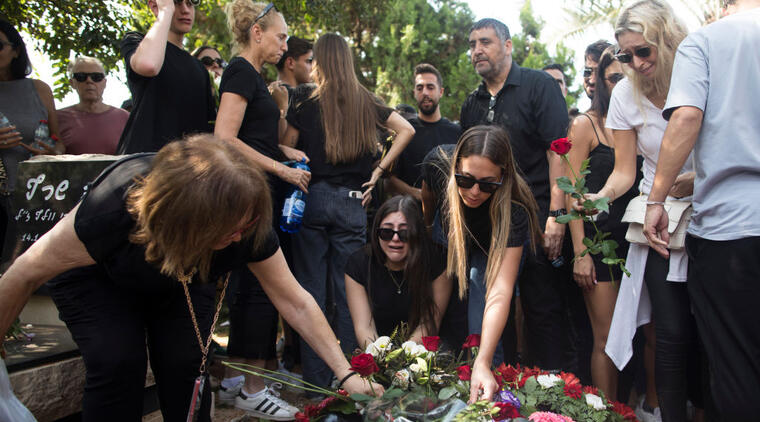
Family and friends of May Naim, 24, who was murdered by Palestinians militants at the "Supernova" festival, near the Israeli border with Gaza strip, react during her funeral on October 11, 2023 in Gan Haim, Israel. (Getty Images)
News

FSI Scholars Analyze Implications of Hamas’ Terror Attack on Israel

Larry Diamond moderated a discussion between Ori Rabinowitz, Amichai Magen and Abbas Milani on the effects of Hamas’ attacks on Israel and what the emerging conflict means for Israel and Middle Eastern geopolitics.
FSI Scholars Analyze Implications of Hamas’ Terror Attack on Israel
Hero Image
Dr. Salam Fayyad, former prime minister of the Palestinian Authority, in conversation with Larry Diamond, FSI's Mosbacher Senior Fellow in Global Democracy, at an event hosted by CDDRL's Program on Arab Reform and Democracy.
Dr. Salam Fayyad, former prime minister of the Palestinian Authority, in conversation with Larry Diamond, FSI's Mosbacher Senior Fellow in Global Democracy, at an event hosted by CDDRL's Program on Arab Reform and Democracy. Photo: Damian Marhefka | Damian Marhefka
All News button
1
Subtitle

Salam Fayyad, former prime minister of the Palestinian Authority, spoke about the quest for peace and Palestinian statehood during a conversation on the Palestinian people, the Gaza War, and the conflict’s implications for stability in the Middle East, hosted by CDDRL’s Program on Arab Reform and Democracy.

Authors
News Type
News
Date
Paragraphs

An environmental catastrophe is brewing in the Gaza Strip – large swaths of Gaza’s infrastructure have been destroyed, agricultural lands have been ruined, air pollution and sewage risks are escalating, and water resources are contaminated, panelists said on a webinar hosted by the Visiting Fellows in Israel Studies,  a program at the Freeman Spogli Institute for International Studies, on April 8.

Larry Diamond, the Mosbacher Senior Fellow in Global Democracy at the Freeman Spogli Institute for International Studies, and Professor Alon Tal, a Visiting Fellow in Israel Studies, moderated the event, Environmental Lessons and Implications of the Gaza War.”

Panelists included Galit CohenDr. Tareq Abu Hamed, Dorit Banet, and Victor Weiss. Since Hamas’ terror attacks on Israel on Oct. 7, 2023, and Israel’s military response into Gaza afterwards, the environmental ramifications from the war have become perilous, the panelists noted. Given possible long-lasting ecological implications, the United Nations has already started a comprehensive assessment of the impacts from the conflict in Gaza – a slow-going process as fighting continues.


We have to build a new relationship and partnerships with the other regional countries to promote resilience.
Victor Weiss
Director of Sustainability for the Israel National Security Council


Estimated $18 Billion Reconstruction 


To begin with, projected reconstruction costs to rebuild Gaza currently total $18 billion, said Galit Cohen, director of the Program on Climate Change at the Israel Institute for National Security. She has experience identifying and analyzing risks and opportunities for Israel’s national security in the field of climate change.

Water, sewage, waste, food and air pollution risks abound in Gaza, which is one of the most densely populated areas in the world, Cohen said. At least 57 percent of water, sanitation and health facilities in Gaza have been destroyed so far, including desalinization plants, and only 3-7 liters of water is typically available per day for each person, which is well below the recommended minimum of 50-100 liters.

“In the current situation in regard to the environmental issues, it's about the water security and about the sewage, sanitation and construction waste – all the list of those issues that need to be mitigated and also dealt with,” Cohen said. For example, “there is no active wastewater treatment facility now in Gaza,” and the many unclaimed dead bodies deep in the rubble pose environmental risks as well.

As for solutions, she said, “Trying to build the institutions and the government that can undertake the responsibility of the civil society there” is the first step to working together on a rebuild of Gaza. The goal should be to create a new coalition with the U.S. and countries such as Egypt, Jordan, UAE, and Saudi Arabia (and others) that can undertake a reconstruction of Gaza so Palestinians can live there without enduring an environmental catastrophe.

“This is the only way we can survive here – Israel and all the rest,” Cohen said.


In such areas, this needs to be totally agreed upon with totally new regulation in Israel.
Dorit Banet
Co-founder of the Eilat-Eilot Renewable Energy Initiative


Coalition Building


Dr. Tareq Abu Hamed, director of the Arava Institute for Environmental Studies, described the sensitive environmental interdependence of countries in the region.

“The streams and rivers originating in Israel and the West Bank originate in Jordan, and in Israel the vast majority of the aquifers of underground water in our region is shared between Israel and its neighbors – between Jordan and its neighbors, and it’s shared between Palestine and its neighbors. That means if there’s an environmental challenge or an environmental issue with the water that we have, one country alone cannot deal with it. Regional cooperation is a must,” he said.

Dr. Hamed has served as the Israeli Ministry of Science’s Deputy Chief Scientist, and later the Acting Chief Scientist, and was the highest ranking Palestinian in the Israeli government. About his current position at the Arava Institute, he said, “We use the environment as a tool. We use science as [a] diplomacy tool to bring people together. We use science to build bridges, to build trust, and to build understanding.”

The regional effects in climate change could be exacerbated by the war in Gaza, he said. “The region that we live in is a hotspot when it comes to climate change, the heat waves, and the sea level rise.”

The warming of the Eastern Mediterranean is increasing, and it is already much higher than any other place in the world, he said. On top of this, climate change often produces migration to other areas, creating possible instability effects for existing populations in the new areas, and statistics show people already have been moving out of Gaza and other countries in the immediate region, likely due to the worsening climate, and in addition now, to the conflict.

He said the intense bombing of Gaza has significantly damaged farmlands, infrastructure, including apartment buildings, the roads, water treatment plants, wastewater treatment plants and water wells. “What happened on Oct. 7 happened because of the lack of knowledge of the other side.” 

He added, “This is a great chance for us to rethink what happened and to rebuild a better future for all of us.”


We use the environment as a tool. We use science as diplomacy to bring people together. We use science to build bridges, to build trust, and to build understanding.
Tareq Abu Hamed
Director of the Arava Institute for Environmental Studies


Renewable Energy Concerns – or Opportunity?


The war in Gaza seriously affects the prospect of green or renewable energy in the immediate conflict area, said Dorit Banet, who co-founded the Eilat-Eilot Renewable Energy Initiative and has been Israel’s leading government official in the area of renewable energy for two decades.

More than 100,000 Israelis were estimated to be displaced from their homes in southern Israel after Oct. 7. Banet has noted in prior media stories that some in Israel are eying a push to “build back better” by transforming the region into a more sustainable area. Israel has committed to reaching 30% renewable energy by 2030, though that may be difficult.

Banet said at least another 2 gigawatts of solar renewable energy could be immediately produced in one particular Israeli area based on the existing infrastructure – and eventually as much as another 8.5 gigawatts of solar energy. 

This would offer people in the area much more energy resilience, she said. “In such areas, this needs to be totally agreed upon with totally new regulation in Israel.”


This is the only way we can survive here – Israel and all the rest.
Galit Cohen
Director of the Program on Climate Change at the Israel Institute for National Security


Promoting Resilience


Victor Weiss, director of sustainability for the Israel National Security Council, said the ongoing war could have a negative impact on the global economy, the availability of budget, and the willingness of countries to allocate resources to climate issues.   

“A regional war is expected to affect fuel markets and lead to damaged supply chains” and the general instability of markets, said Weiss, who was a senior military officer and founder of the Israel Defense Force’s Environmental Unit.

“We have to build a new relationship and partnerships with the other regional countries to promote resilience,” he added.

Weiss said that Israel’s National Security Council recently defined climate issues as a strategic threat to that country’s national security. “The climate chapter was written in the National Security Council Risk Assessment and the main threats were mapped. We are working to define the threats, to formulate the national response to those threats,” he said.

An opportunity exists for Israel, Gaza and every population affected by this conflict to “go forward on the hope of an optimistic future to our region,” he said.


‘Powerful, Informative’


In closing, Prof. Diamond described the discussion as “very powerful, informative and in the end, also moving” for the audience. “There’s going to be a staggering challenge of reconstruction when this war is over, and hopefully we can get started on it as soon as possible.”

Alon Tal added, “We’ve only begun this discussion about the reconstruction. Let’s hope that very quickly we can end the destruction, the death and the suffering, and move forward to a time of renewal.”
 

The full webinar of "Environmental Lessons and Implications of the Gaza War" is available to view below.

Read More

Alon Tal joins the Freeman Spogli Institute for International Studeis as a Visiting Fellow in Israel Studies
News

Alon Tal Joins the Visiting Fellows in Israel Studies Program at FSI

Professor Tal’s expertise in sustainability and public policy will offer students valuable insight into the intersection of climate change issues and politics in the Middle East.
Alon Tal Joins the Visiting Fellows in Israel Studies Program at FSI
Picture of the the Jerusalem Light Rail walking up Jaffa Street. Modern face of Jerusalem, Israel.
News

New Continuing Studies Course on Modern Israel with Larry Diamond and Amichai Magen

Open for enrollment now through Stanford Continuing Studies, "Modern Israel: Insights and Analysis from Stanford Scholars and Guests" will run online for ten weeks on Wednesdays, from April 3 through June 5.
New Continuing Studies Course on Modern Israel with Larry Diamond and Amichai Magen
Mohammad Darawshe (bottom), an expert on Jewish-Arab relations inside Israel speaks to the Stanford community via Zoom on on the impact of the Oct. 7 Hamas attack on Israeli Arabs alongside Amichai Magen (top left) and political scientist Larry Diamond (top right).
News

How an Israeli Arab Scholar Finds ‘Pieces of Peace’

In a webinar for the Stanford community, an expert on Jewish-Arab relations in Israel shared what he and other scholars have found works – and doesn’t – in advancing peace between the two communities.
How an Israeli Arab Scholar Finds ‘Pieces of Peace’
Hero Image
[Left to Right] Dorit Banet, Galit Cohen, Tareq Abu Hamed, Victor Weiss
Dorit Banet, Galit Cohen, Tareq Abu Hamed, and Victor Weiss joined the Visiting Fellows in Israel Studies Program at the Freeman Spogli Institute for International Studies to discuss the environmental consequences of the ongoing war in Gaza.
All News button
1
Subtitle

Environmental experts examined the challenge of sustainable restoration and preserving environmental quality for the future of Gazans and residents of the region in the wake of the Israel-Hamas War.

-

This event is at full capacity. Registration is no longer available.

The Daniel Pearl Memorial Lecture honors the life of Daniel Pearl (Class of '85), who was a journalist, musician, and family man dedicated to the ideals of peace and humanity. In 2002, Daniel was kidnapped and killed by terrorists in Pakistan while working as a foreign correspondent for the Wall Street Journal.

The 2024 Pearl Memorial Lecture is presented by the Visiting Fellows in Israel Studies at the Freeman Spogli Institute for International Studies in partnership with the Daniel Pearl Foundation and Hillel at Stanford.

Yossi Klein Halevi

Yossi Klein Halevi

Yossi Klein Halevi is a senior fellow at the Shalom Hartman Institute in Jerusalem. Together with Imam Abdullah Antepli of Duke University, he co-directs the Institute's Muslim Leadership Initiative (MLI), which teaches emerging young Muslim American leaders about Judaism, Jewish identity, and Israel. Halevi’s 2013 book, Like Dreamers, won the Jewish Book Council's Everett Book of the Year Award. His latest book, Letters to My Palestinian Neighbor, is a New York Times bestseller. He is a contributing op-ed writer for the New York Times and the Wall Street Journal, and is a former contributing editor to the New Republic.
Full profile
Larry Diamond
Larry Diamond
Yossi Klein Halevi senior fellow Shalom Hartman Institute in Jerusalem
Lectures
Date Label
-

From possible hydrological contamination caused by tunnel flooding to deforestation caused by indiscriminate shelling, the environmental implications of the War in Gaza have played only a secondary role in public awareness of the conflict. Nonetheless, there may be long-lasting ecological implications to the present military activities which need to be considered. As attention turns to “the day after,” this panel of leading experts consider the challenge of sustainable restoration and preserving environmental quality for the future of Gazans and residents of the region.

Alon Tal, a Visiting Fellow in Israel Studies at the Freeman Spogli Institute for International Studies, will act as moderator for this discussion.

Dorit Banet

Dorit Banet

Co-founded Eilat-Eilot Renewable Energy Initiative
Dorit Banet has been Israel’s leading government official in the area of renewable energy for two decades. As head of the Eilot-Eilat Renewable Energy Initiative, she led the effort which converted the region into the world’s first 100% day-time solar electricity area. Ms. Banet served as an environmental consultant for the Israel Lands Authority in its planning for rebuilding the Gaza- Envelope region after October 7th.
Dorit Banet Full Profile
Galit Cohen

Galit Cohen

Director of the Program on Climate Change at the Israel Institute for National Security
Galit is working to identify and analyze risks and opportunities for Israel’s national security in the field of climate change. In her former position as Director General of the Israel Ministry of Environmental Protection, Cohen served as Israel’s most senior environmental regulator. She has over 20 years of experience in initiating and managing national policy transformations while implementing her deep understanding of international trends and governmental reforms, environmental and climate technologies, and financial issues.
Galit Cohen Full Profile
Dr. Tariq Abu Hamed, Director of the Arava Institute for Environmental Studies

Dr. Tareq Abu Hamed

Director of the Arava Institute for Environmental Studies
Dr. Tareq Abu Hamed completed his doctorate in Chemical Engineering from Ankara University. His postdoctoral research at Weizmann and the University of Minnesota’s Mechanical Engineering Department Solar Energy Lab focused on renewable energy. He served as Deputy Chief Scientist, and later the Acting Chief Scientist at Israel’s appointed Israeli Ministry of Science’s Deputy, the highest ranking Palestinian in the Israeli government. He rejoined to the Arava Institute in 2016 as Director of its Center for Renewable Energy and Academic Director, and was appointed Executive Director in 2021.
Dr. Tareq Abu Hamed Full Profile
Victor Weiss

Victor Weiss

Director of Sustainability, Israel National Security Council
Victor Weiss was a senior military officer who founded the Israel Defense Force’s Environmental Unit. He has subsequently served as the Director of the Heschel Center for Sustainability and Co-executive Director of the Climate Restoration Center. Recently, he was hired to oversee issues involving climate and sustainabiiltiy at Israel’s National Security Council.
Larry Diamond
Larry Diamond
Alon Tal

Dorit Banet co-founder Eilat-Eilot Renewable Energy Initiative
Galit Cohen Director of the Program on Climate Change Israel Institute for National Security
Dr. Tareq Abu Hamed Director Arava Institute for Environmental Studies
Victor Weiss Director of Sustainability Israel National Security Council
Panel Discussions
Israel Studies
Date Label
-
Helen Mirren stars as Golda Meir in "GOLDA,", a film by Guy Nattiv for Bleecker Street and Vertical
Bleeker Street

In cooperation with Bleecker Street and Mean Streets Management, the Israel Studies program at the Freeman Spogli Institute for International Studies (FSI) is offering a public screening of the Academy Award-nominated film, GOLDA.

Inspired by a true story of Israeli Prime Minister Golda Meir’s leadership during the 19 tragic days of the Yom Kippur War in 1973, the film brings us back to the hardships of political decisions for the sake of the nation, statehood and regional peace.

Opening remarks will be offered by Larry Diamond and Meron Medzini. Larry Diamond is the William L. Clayton Senior Fellow at the Hoover Institution and Mosbacher Senior Fellow in Global Democracy at the Freeman Spogli Institute for International Studies. Meron Medzini is a Professor Emeritus in the Department of Asian Studies of the Hebrew University of Jerusalem.

This event is free and open to the public, registration required. 

CDDRL
Stanford University
Encina Hall, C147
616 Jane Stanford Way
Stanford, CA 94305-6055

(650) 724-6448 (650) 723-1928
0
Mosbacher Senior Fellow in Global Democracy at the Freeman Spogli Institute for International Studies
William L. Clayton Senior Fellow at the Hoover Institution
Professor, by courtesy, of Political Science and Sociology
diamond_encina_hall.png MA, PhD

Larry Diamond is the William L. Clayton Senior Fellow at the Hoover Institution, the Mosbacher Senior Fellow in Global Democracy at the Freeman Spogli Institute for International Studies (FSI), and a Bass University Fellow in Undergraduate Education at Stanford University. He is also professor by courtesy of Political Science and Sociology at Stanford, where he lectures and teaches courses on democracy (including an online course on EdX). At the Hoover Institution, he co-leads the Project on Taiwan in the Indo-Pacific Region and participates in the Project on the U.S., China, and the World. At FSI, he is among the core faculty of the Center on Democracy, Development and the Rule of Law, which he directed for six and a half years. He leads FSI’s Israel Studies Program and is a member of the Program on Arab Reform and Development. He also co-leads the Global Digital Policy Incubator, based at FSI’s Cyber Policy Center. He served for 32 years as founding co-editor of the Journal of Democracy.

Diamond’s research focuses on global trends affecting freedom and democracy and on U.S. and international policies to defend and advance democracy. His book, Ill Winds: Saving Democracy from Russian Rage, Chinese Ambition, and American Complacency, analyzes the challenges confronting liberal democracy in the United States and around the world at this potential “hinge in history,” and offers an agenda for strengthening and defending democracy at home and abroad.  A paperback edition with a new preface was released by Penguin in April 2020. His other books include: In Search of Democracy (2016), The Spirit of Democracy (2008), Developing Democracy: Toward Consolidation (1999), Promoting Democracy in the 1990s (1995), and Class, Ethnicity, and Democracy in Nigeria (1989). He has edited or coedited more than fifty books, including China’s Influence and American Interests (2019, with Orville Schell), Silicon Triangle: The United States, China, Taiwan the Global Semiconductor Security (2023, with James O. Ellis Jr. and Orville Schell), and The Troubling State of India’s Democracy (2024, with Sumit Ganguly and Dinsha Mistree).

During 2002–03, Diamond served as a consultant to the US Agency for International Development (USAID) and was a contributing author of its report, Foreign Aid in the National Interest. He has advised and lectured to universities and think tanks around the world, and to the World Bank, the United Nations, the State Department, and other organizations dealing with governance and development. During the first three months of 2004, Diamond served as a senior adviser on governance to the Coalition Provisional Authority in Baghdad. His 2005 book, Squandered Victory: The American Occupation and the Bungled Effort to Bring Democracy to Iraq, was one of the first books to critically analyze America's postwar engagement in Iraq.

Among Diamond’s other edited books are Democracy in Decline?; Democratization and Authoritarianism in the Arab WorldWill China Democratize?; and Liberation Technology: Social Media and the Struggle for Democracy, all edited with Marc F. Plattner; and Politics and Culture in Contemporary Iran, with Abbas Milani. With Juan J. Linz and Seymour Martin Lipset, he edited the series, Democracy in Developing Countries, which helped to shape a new generation of comparative study of democratic development.

Download full-resolution headshot; photo credit: Rod Searcey.

Former Director of the Center on Democracy, Development and the Rule of Law
Faculty Chair, Jan Koum Israel Studies Program
Date Label
Larry Diamond Mosbacher Senior Fellow in Global Democracy Freeman Spogli Institute for International Studies
Meron Medzini Professor Emeritus Hebrew University of Jerusalem
Film Screenings
Date Label
Authors
News Type
News
Date
Paragraphs

Born in the aftermath of World War II, the State of Israel has undergone remarkable development as a nation over the past 75 years, oscillating between periods of war and strained peace while building a vibrant multiethnic society, economy, and technology sector. Taught by Larry Diamond (Mosbacher Senior Fellow in Global Democracy at the Freeman Spogli Institute for International Studies, William L. Clayton Senior Fellow at the Hoover Institution, and professor, by courtesy, of sociology and of political science) and Amichai Magen (visiting professor and fellow in Israel Studies at the Freeman Spogli Institute for International Studies), this 10-week online course will offer an informed analysis of modern Israel. Each week, the professors will be joined by Stanford experts and other guest speakers who will analyze important dimensions of Israeli life.

This course will inevitably dedicate time to the ongoing Middle East conflict, which again exploded into violence last October, and to the continuing efforts to find a formula for Israeli-Palestinian peace. In this context, former Secretary of State Condoleezza Rice will discuss the emerging dynamics of geopolitics in the Middle East, and former Palestinian negotiator Ghaith al-Omari and Ambassador Dennis Ross will explore options for Israeli-Palestinian peacemaking. In addition, Israeli author Yossi Klein Halevi will revisit his New York Times bestselling book, Letters to My Palestinian Neighbor, in light of the October 7, 2023, Hamas terror attack and the subsequent Gaza war. But the course will also look beyond the conflict, venturing into other lesser-known areas of Israeli life and history, including lectures on the politics of historical memory in divided societies with Stanford professor of history James T. Campbell, and Zionism and anti-Zionism with Stanford professor of the humanities Russell Berman. UC Berkeley School of Law professor Masua Sagiv will discuss the constitutional questions central to Israel’s effort to have a Jewish and democratic state. As we proceed, Sophia Khalifa Shramko will share the experience of growing up as an Arab woman in Israel. Finally, Stanford professor of economics Ran Abramitzky and Stanford visiting professor Alon Tal will explore Israel’s modern economy and efforts to use innovation to achieve sustainability in an environmentally challenging region. 

Please note: There are no formal prerequisites for this course, though prior interest and engagement with topics related to Israel and the Middle East are an advantage. This course is co-sponsored by Stanford's Freeman Spogli Institute for International Studies (FSI), and it is an adaptation of a class offered to Stanford undergraduates.

Read More

Amichai Magen, Marshall Burke, Didi Kuo, Larry Diamond, and Michael McFaul onstage for a panel discussion at Stanford's 2023 Reunion and Homecoming
Commentary

At Reunion Homecoming, FSI Scholars Offer Five Policy Recommendations for the Biden Administration

FSI scholars offer their thoughts on what can be done to address political polarization in the United States, tensions between Taiwan and China, climate change, the war in Ukraine, and the Israel-Hamas war.
At Reunion Homecoming, FSI Scholars Offer Five Policy Recommendations for the Biden Administration
Family and friends of May Naim, 24, who was murdered by Palestinians militants at the "Supernova" festival, near the Israeli border with Gaza strip, react during her funeral on October 11, 2023 in Gan Haim, Israel. (Getty Images)
News

FSI Scholars Analyze Implications of Hamas’ Terror Attack on Israel

Larry Diamond moderated a discussion between Ori Rabinowitz, Amichai Magen and Abbas Milani on the effects of Hamas’ attacks on Israel and what the emerging conflict means for Israel and Middle Eastern geopolitics.
FSI Scholars Analyze Implications of Hamas’ Terror Attack on Israel
Protestors wave flags as thousands of Israelis attend a rally against Israeli Government's judicial overhaul plan on March 27, 2023 in Jerusalem, Israel.
Commentary

What’s Happening to Israel’s Democracy?

Law and governance expert Amichai Magen joins FSI Director Michael McFaul on the World Class podcast to discuss the judicial reforms recently passed by Israel’s legislature, and the implications these have for democracy in Israel and beyond.
What’s Happening to Israel’s Democracy?
Hero Image
Picture of the the Jerusalem Light Rail walking up Jaffa Street. Modern face of Jerusalem, Israel.
Picture of the the Jerusalem Light Rail walking up Jaffa Street. Modern face of Jerusalem, Israel. Photo credit: Laura Siegal via Unsplash | Laura Siegal via Unsplash
All News button
1
Subtitle

Open for enrollment now through Stanford Continuing Studies, "Modern Israel: Insights and Analysis from Stanford Scholars and Guests" will run online for ten weeks on Wednesdays, from April 3 through June 5.

Date Label
Subscribe to Israel