Inequality
-

In cooperation with Kino Lorber, the Israel Visiting Scholars program at the Freeman Spogli Institute for International Studies (FSI) is offering a public screening of the film Cinema Sabaya.

Inspired by writer-director Orit Fouks Rotem’s own experiences as a teacher, Cinema Sabaya presents a deft and heartfelt portrait of art’s capacity to unite disparate communities, moving effortlessly between the gravity of their conversations and the genuine joy of this unlikely group of friends.

A reception with food and drink will follow the screening.

Parking at Stanford is limited. Please plan your visit accordingly.

This event will not be livestreamed.


About the Film


A group of Palestinian and Israeli women attend a video workshop at a small town community center run by Rona (Dana Ivgy, Zero Motivation), a young filmmaker from Tel Aviv, who teaches them to document their lives. As each student shares footage from her home life with the others, their beliefs and preconceptions are challenged and barriers are broken down. The group comes together as mothers, daughters, wives, and women living in a world designed to keep them apart, forming an empowering and lasting bond as they learn more about each other... and themselves.
 

Film poster for Cinema Sabaya
Courtesy of Kino Lorber


Levinthal Hall
424 Santa Teresa Street
Stanford, CA 94305

Film Screenings
Date Label
Authors
News Type
News
Date
Paragraphs

View a Japanese version of this announcement.


The Japanese public supports women’s advancement in society, finds the Stanford Japan Barometer, a survey platform launched by the Japan Program at Stanford University’s Walter H. Shorenstein Asia-Pacific Research Center (APARC). This result is somewhat surprising, considering Japan’s poor showing in global gender equality rankings.

Led by Professor of Sociology Kiyoteru Tsutsui, the Henri H. and Tomoye Takahashi Professor and director of the Japan Program at APARC, and Charles Crabtree, an assistant professor in the Department of Government at Dartmouth College and a former visiting assistant professor with the Japan Program, the Stanford Japan Barometer (SJB) is a periodic public opinion survey on political, economic, and social issues concerning contemporary Japan with three main parts: (1) questions about respondents’ demographic background; (2) a stable set of questions about support for policy issues, political parties, public institutions, and international entities; and (3) a thematically focused set of questions and experimental studies on topics of great relevance at the time of the survey. The survey is conducted with a national, quota-based sample of 8,000 Japanese residents.

In the first installation of the survey, conducted in late November 2022, the SJB examined issues concerning gender and sexuality in Japan. It found, among other results, that most Japanese are in favor of recognizing same-sex unions and support a legal change to allow married couples to keep separate surnames. The SJB also examined questions related to women’s advancement in Japanese society, the focus of the following report.

One prominent gender equality issue that often recurs in Japanese public discourse is women’s under-representation in prominent positions, especially in politics and business. According to the latest Global Gender Gap Report released by the World Economic Forum, Japan ranks 116th out of 146 countries in terms of gender equality. Japan fares well in the categories of Education and Health, but in Politics and Economy, it ranks 139th and 121st respectively. In another ranking on women’s role and influence in the workforce, the Glass-Ceiling Index compiled by The Economist, Japan ranks second-worst among the 29 developed countries surveyed. Japan barely avoided the lowest ranking (a dubious distinction taken by South Korea), but indeed ranks lowest in terms of the proportion of women in national parliaments (single or Lower House) among OECD countries, with only 10% of Lower House members being female.

To better understand this striking gender disparity, Tsutsui and Crabtree had respondents complete conjoint experiments that examined what types of candidates the Japanese public is more likely to support for a Diet seat and an external corporate board member. The results show, perhaps surprisingly, that Japanese people prefer women for these positions (52% to 48% for the Diet and 51% to 49% for corporate board). Women support female candidates more than men, but men also prefer female candidates over male ones, averaging across all other candidate characteristics such as education and occupational background. These differences are fairly stable across different ages, educational and family backgrounds, and political party support. Contrary to what gender representation in politics and corporate leadership would indicate, the SJB results suggest that there is robust support for women’s representation in those powerful positions across different spectrums of the Japanese public.

Tsutsui and Crabtree also asked a series of questions about views on gender roles and women’s advancement in Japanese society. Respondents were particularly supportive of more men taking parental leave and helping with childcare, registering 6.3 on a scale of 0-10 (5 being neutral and a number larger than 5 indicating support for the statement). They were not supportive of the statements about traditional gender roles, such as “Men should work outside the home and women should stay home” (3.8), or “Boys should be raised to be manly and girls should be raised to be womanly” (4.3). Interestingly, for all these questions, there is a statistically significant difference between male and female respondents, with men showing greater support for traditional gender roles, although the general trend is a shift away from traditional gender roles even among men.

On questions concerning women’s advancement in Japanese society, the Japanese public demonstrated strong support for the argument that more efforts should be made to increase the number of female politicians (5.8), executives (5.9), and board members (5.8). There is no substantial difference between men and women for these questions, indicating that the support for women’s advancement in politics and business is broadly shared across genders.

When it comes to using a quota to ensure women’s seats in the national Diet, management positions, and board rooms, the opinions are divided across the gender line, with women being significantly more supportive (5.1, 5.2, 5.2) than men (4.8, 4.7, 4.7). This likely indicates that men are threatened by the idea of quota as it would reduce the likelihood of their advancement toward these powerful positions.

Men’s resistance to quotas notwithstanding, overall, the Japanese public supports women’s advancement in society, perhaps recognizing the need for Japan to change in light of the embarrassing showing in global rankings of women’s empowerment. These results suggest that the slow pace of change in women’s advancement in Japan might be attributable to the behavior of gatekeepers, who are mostly older men who come from different socioeconomic backgrounds than the SJB’s average survey respondent, rather than to a lack of public support.


For media inquiries about the survey, please reach out to:
Noa Ronkin
APARC Associate Director for Communications and External Relations
noa.ronkin@stanford.edu

Read More

Portrait of a Japanese woman standing next to a window reflecting daylight
News

The Japanese Public Broadly Supports Legalizing Dual-Surname Option for Married Couples

Reflecting complex gender politics at play in Japan, the Stanford Japan Barometer, a new periodic public opinion survey co-developed by Stanford sociologist Kiyoteru Tsutsui and Dartmouth College political scientist Charles Crabtree, finds that the Japanese public largely supports a legal change to allow married couples to keep separate surnames.
The Japanese Public Broadly Supports Legalizing Dual-Surname Option for Married Couples
 People gather during a rally calling for an anti-discrimination legislation in Japan.
News

Most Japanese Support Same-Sex Marriage, New Public Opinion Survey Finds

The initial set of results of the Stanford Japan Barometer, a new periodic public opinion survey co-developed by Stanford sociologist Kiyoteru Tsutsui and Dartmouth College political scientist Charles Crabtree, indicate that most Japanese are in favor of recognizing same-sex unions and reveal how framing can influence the public attitude toward LGBTQ communities.
Most Japanese Support Same-Sex Marriage, New Public Opinion Survey Finds
Stanford sociologist Kiyoteru Tsutsui discusses Japan on the "Endgame" podcast
Commentary

Video Interview: Kiyoteru Tsutsui Discusses Japan’s Economic Diplomacy in Southeast Asia

Kiyoteru Tsutsui, the Henri H. and Tomoye Takahashi Professor and Senior Fellow in Japanese Studies at Shorenstein APARC, joined Visiting Scholar Gita Wirjawan, host of “Endgame,” a video podcast, to discuss a range of topics, including his work on human rights, the demographic problem in Japan, global democratic decline, and Japan’s approach to Southeast Asia as a projector of soft power.
Video Interview: Kiyoteru Tsutsui Discusses Japan’s Economic Diplomacy in Southeast Asia
Hero Image
A young professional woman standing in a city street, holding a notebook and talking to unseen audience.
electravk via Getty
All News button
1
Subtitle

Contrary to current levels of women’s under-representation in leadership positions in Japan, the Stanford Japan Barometer, a new periodic public opinion survey co-developed by Stanford sociologist Kiyoteru Tsutsui and Dartmouth College political scientist Charles Crabtree, finds that the Japanese public favors women for national legislature and corporate board member positions.

-
2023 World House Film Festival

A documentary film festival in celebration of the 2023 Martin Luther King, Jr., Holiday featuring films that explore "The Crisis of Democracy in the World House"


Join The World House Project for a free, four-day virtual film festival in celebration of the 2023 Martin Luther King, Jr. holiday, beginning Friday evening, January 13, through Monday, January 16, 2023.

The virtual event will feature over 40 documentaries, as well as interviews and panel discussions with World House Project director Dr. Clayborne Carson and special guests that explore the theme of "The Crisis of Democracy in the World House."

For registration, film listings, and festival schedule, visit our website.

Virtual

Film Screenings
Date Label
-
Image
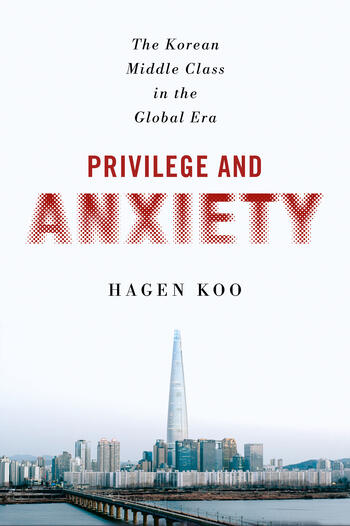
Book cover of Privilege and Anxiety by Hagen Koo

The middle classes in most advanced economies today are frequently described as being “squeezed” and “shrinking.”  Hagen Koo’s recent book, Privilege and Anxiety, examines what has happened to the Korean middle class in the era of rapid globalization and demonstrates that the middle class experiences far more complex changes than usually assumed. Koo argues that globalization inserts an axis of polarization into the middle class, separating a small minority that benefits from the globalized economy and a large majority that suffers from it. This internal differentiation generates new class dynamics, as the newly affluent seek to distinguish themselves from the rest of the middle class and establish a new, privileged class position. The rest of the middle class tries to follow the affluent’s class practices, suffering great anxieties and frustrations. The middle class thus turns into an arena of intense class distinction struggles, bringing great anxieties to both the affluent and the lower segments of the middle.


Image
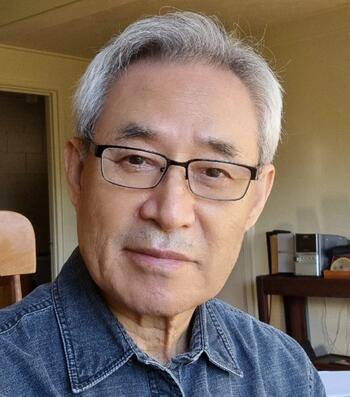
Portrait of Hagen Koo

Hagen Koo is Professor Emeritus of Sociology at the University of Hawaii at Manoa. Born in Korea, Koo received his BA in Korea and briefly worked as a journalist before coming to America where he received a PhD at Northwestern University. He has published extensively on economic development and social change in South Korea. His major work includes Korean Workers: The Culture and Politics of Class Formation (Cornell University Press, 2001). After his retirement in 2017, he spends more time in Korea studying the changing social fabric of Korean society in the global era. Privilege and Anxiety (Cornell University Press, 2022) represents his most recent work.

Discussants:

Alek Sigley is a PhD student at Stanford University's Modern Thought and Literature program, where he is writing a dissertation on North Korea. From 2018-2019 he studied for a master's degree in contemporary North Korean fiction at Kim Il Sung University's College of Literature. He speaks Mandarin, Korean and Japanese. Follow him on Twitter @AlekSigley.

Elisa Kim is a PhD candidate in the department of sociology at Stanford University. Her dissertation theorizes on racialization by systematically investigating the portrayal of minority groups in South Korean newspapers across time using computational methods. Prior to the PhD, she majored in Asian American Studies at Pomona College and has an MA in East Asian Studies from Stanford, researching the relational landscape of North Korean human rights organizations.

This event is made possible by generous support from the Korea Foundation and other friends of the Korea Program.

Gi-Wook Shin

Via Zoom. Register at https://bit.ly/3z8fJog

Hagen Koo Professor Emeritus of Sociology Author The University of Hawaii at Manoa
Seminars

Shorenstein APARC
Stanford University
Encina Hall, E301
Stanford,  CA  94305-6055

0
Visiting Scholar at APARC, 2022-23
Ankhbayar_Begz.jpg

Dr. Ankhbayar Begz joined the Walter H. Shorenstein Asia-Pacific Research Center (APARC) as visiting scholar for the fall and winter quarter of the 2022-2023 academic year. Dr. Begz currently serves as researcher at Mongolian University of Science and Technology's Open Education Center. While at APARC, he conducted research regarding democracy, women’s political participation, higher education, and gender equality issues in Mongolia and Asia.

News Type
News
Date
Paragraphs

The Program on Arab Reform and Democracy (ARD) at CDDRL, in partnership with the Arab Studies Institute, is pleased to announce the release of the sixth episode of Mofeed-19, a 19-minute video podcast that discusses research efforts pertaining to the impact of the COVID-19 pandemic on the Arab world. The podcast is part of the Mofeed Project, an initiative that builds foundational resources for understanding how the politics and societies of the Arab world have adapted in light of the pandemic. Mofeed is supported in part by the Open Society Foundation.

Cohosted by ARD scholars Amr Hamzawy and Hesham Sallam, the sixth episode features American University of Beirut (AUB) Sociologist Rima Majed. The discussion focused on how the pandemic impacted Lebanon's sectarian politics and social inequality, as well as calls for political change and popular expressions of socio-economic discontent.

Watch the sixth episode below, and follow the podcast on Spotify:

Follow Mofeed-19 on Social Media

Read More

CARDs screen
News

ARD Launches CARDs Interview Series

The Program on Arab Reform and Democracy (ARD) at CDDRL is pleased to announce the launch of an interview series titled “Conversations on Arab Reform and Democracy” (CARDs).
ARD Launches CARDs Interview Series
Hero Image
Rima Majed
All News button
1
Subtitle

Rima Majed, Assistant Professor of Sociology at American University of Beirut, joins ARD scholars Amr Hamzawy and Hesham Sallam on the sixth episode of Mofeed-19, a 19-minute video podcast that discusses research efforts pertaining to the impact of the COVID-19 pandemic on the Arab world.

-

Image
Banner image of APARC May 24 Webinar, center text "How Can Women 'Shine' Brighter in Japan? Gains and Obstacles in Women's Advancement in Japanese Society", with photo of a Japanese woman thinking to the right

May 24, 5:00 p.m - 6:30 p.m. PT / May 25, 9:00 a.m. - 10:30 a.m. JT

The advancement of women in the workplace has been an elusive goal in Japan for decades. The shrinking and aging population call for a change in gender expectations that would enable Japan to tap women’s talents for economic growth, but many hurdles continue to block progress in gender equity in the workplace and at home. In this session, two experts who have led the efforts to increase women in leadership positions discuss the accomplishments and future challenges in enhancing gender diversity and inclusion in Japanese organizations. 


Panelists

Image
Square photo portrait of Mika Nabeshima
Mika Nabeshima has held several global assignments since joining Tokio Marine headquarters in 1991,
She established her career in claims, working with clients to resolve liability and property claims, provide risk management solutions, manage litigation, and fight fraudulent claims.
After seven years at Tokio Marine America, she became general manager of human resources at TMHD in 2019 and then added the role of Chief Diversity & Inclusion Officer, becoming the company’s first female C-suite officer, in April 2021.

Mika is responsible for Tokio Marine’s global HR strategy, from talent management and development to diversity & inclusion initiatives, governance of group companies, and ensuring the safety of expats around the world.
She graduated from Davidson College (North Carolina) with a B.A. in Political Science in 1991. 


Image
Square photo portrait of Naomi Koshi
Naomi Koshi is a lawyer, an entrepreneur, and former mayor of Otsu City. From 2002 to 2011, Naomi practiced corporate law at Nishimura & Asahi in Tokyo and Debevoise & Plimpton in New York. From 2010 to 2011, Naomi was a Visiting Fellow at Columbia Business School.  In 2012, Naomi was elected mayor of Otsu City and served a total of eight years. As the youngest female mayor, Naomi successfully expanded Otsu's childcare system, thus making it easier for many Japanese women to return to the workforce. Naomi is admitted to practice law in Japan, New York, and California and is now a partner at Miura & Partners. In 2021, Naomi Co-Founded OnBoard K.K., a company specializing in diversifying Japanese corporate boards. Naomi also serves as an outside director of V-Cube, Inc and SoftBank Corp. She holds multiple degrees from Hokkaido University and an LL.M. from Harvard Law School.


Moderator

Image
Square photo portrait of Kiyoteru Tsutsui
Kiyoteru Tsutsui is the Henri H. and Tomoye Takahashi Professor, Professor of Sociology, Senior Fellow at the Freeman Spogli Institute for International Studies, and Deputy Director of the Walter H. Shorenstein Asia-Pacific Research Center, where he is also Director of the Japan Program. He is the author of Rights Make Might: Global Human Rights and Minority Social Movements in Japan (Oxford University Press, 2018), co-editor of Corporate Responsibility in a Globalizing World (Oxford University Press, 2016) and co-editor of The Courteous Power: Japan and Southeast Asia in the Indo-Pacific Era (University of Michigan Press, 2021). 


Image
Square image with Webinar title "How Can Women “Shine” Brighter in Japan?: Gains and Obstacles in Women’s Advancement in Japanese Society", with a photo of a Japanese Woman thinking
This event is part of the 2022 Spring webinar seriesNegotiating Women's Rights and Gender Equality in Asia, sponsored by the Walter H. Shorenstein Asia-Pacific Research Center.

Kiyoteru Tsutsui
Kiyoteru Tsutsui

via Zoom Webinar

Naomi Koshi Partner, Miura & Partners, CEO, OnBoard K.K., Former Mayor of Otsu City
Mika Nabeshima Executive Office and General Manager of Human Resources Dept., Tokio Marine Holdings
-
Decoupling: Gender Injustice in China's Divorce Courts event image

Using 'big data' computational techniques to scrutinize cases covering 2009–2016 from all 252 basic-level courts in two Chinese provinces, Henan and Zhejiang, Ethan Michelson reveals that women have borne the brunt of a dramatic intensification since the mid-2000s of a decades-long practice of denying divorce requests. This talk discusses key findings from his new book of the same name. Michelson's analysis of almost 150,000 divorce trials reveals routine and egregious violations of China's own laws upholding the freedom of divorce, gender equality, and the protection of women's physical security. Michelson takes the reader upstream to the institutional sources of China's clampdown on divorce and downstream to its devastating and highly gendered human toll, showing how judges in an overburdened court system clear their oppressive dockets at the expense of women's lawful rights and interests.


Image
Portrait of Ethan Michelson
Ethan Michelson is the James and Noriko Gines Department Chair in East Asian Languages and Cultures as well as Professor of Sociology and Law at Indiana University Bloomington, where he has been teaching courses on law and society, law and authoritarianism, and contemporary Chinese society since 2003. He has won several awards for his published research on China’s legal system.

Via Zoom

Ethan Michelson Professor of Sociology and Law, Hamilton Lugar School of Global and International Studies, Indiana University Bloomington
Seminars
Authors
Michael Breger
Callista Wells
News Type
News
Date
Paragraphs

As reports of leveled mosques, detention camps, and destroyed cultural and religious sites in China's Xinjiang province emerged in the mid-to-late 2010s, the world took notice of the Chinese Communist Party's (CCP) flagrant oppression of Uighur Muslims and other minorities. Under the Xi Jinping administration, the Xinjiang region in northwestern China has experienced what is perhaps the greatest period of cultural assimilation since the Cultural Revolution. This massive state repression represents a primary research focus for Dr. James Millward, Professor of Inter-societal History at the Walsh School of Foreign Service at Georgetown University, who joined both APARC's China Program and the Stanford History Department as a visiting scholar for winter quarter 2022.

Millward's specialties include the Qing empire, the silk road, and historical and contemporary Xinjiang. In addition to his numerous academic publications on these topics, he follows and comments on current issues regarding Xinjiang, the Uyghurs and other Xinjiang indigenous peoples, PRC ethnicity policy, and Chinese politics more generally. We caught up with Millward to discuss his work and experience at Stanford this past winter quarter. Listen to the conversation: 


Sign up for APARC's newsletters to receive analysis and commentary from our scholars and guest speakers.


Aggressive Assimilating Thrust

Millward emphasizes the importance of documenting the scope and scale of the crisis in Xinjiang. "What's happened in the last four or five years in Xinjiang is of great global importance and interest to people," he says, and although it is still early to write the history of this period of repression, "it's important at least to try and get an organized draft of it down and to try to begin to interpret rather than just narrate the litany of things going on: the camps, the digital surveillance, forced labor, birth depressions, and try and put it all into some kind of framework where we can understand it." 

China’s crackdown on Uyghur Muslims and other minorities in Xinjiang is part of aggressive intolerance of cultural and political diversity that is emerging as a central feature of Xi Jinping’s tenure, explains Millward. The shift in the CCP's assimilationist policies constitutes a complete "reversal of what had been an earlier approach to diversity in China," which allowed for 56 different nationalities to have regional autonomy. His aim is to "point out a really aggressive assimilating thrust under the Xi Jinping regime [...] and then also to look more clearly at settler colonialism in Xinjiang."

To learn more about the historical context of current events in Xinjiang and how to understand them against contemporary Chinese politics, tune in to Millward's public lecture of February 2, 2022, “The Crisis in Xinjiang: What’s Happening Now and What Does It Mean?

In this talk, Millward explains how PRC assimilationist policies, if most extreme in Xinjiang, are related to the broader Zhonghua-izing campaign against religion and non-Mandarin language and perhaps even to intensified control over Hong Kong and efforts to intimidate Taiwan.

U.S.-China Cooperation Amid Strained Ties

The Xinjiang crisis has affected how the United States views China, bringing an unexpected unity to the usually-polarized American foreign policy arena. "The Xinjiang issue has contributed to the broad-spectrum feeling in the American political sphere that engagement with China has failed," notes Millward. The parallels between China's repression of minorities and some of the worst events in the 20th century in Europe "have brought together the political sides in America and rallied them around a much stronger anti-China stance," he says.

From Millward's perspective, however, it is not only possible but also necessary for the United States to act on Xinjiang and press China on its human rights record while cooperating with China on other issues. "This is the art of diplomacy, you have to compartmentalize and deal with different issues, particularly with two countries as large as the United States and China." In Millward's view, areas pertinent to U.S.-China collaboration are varied and transcend global challenges such as climate change or pandemics. Those are simplistic dichotomies," he says. "We have 300,000 Chinese students in our universities and we welcome them and learn a lot from them [...] We benefit from Chinese expertise in all sorts of ways."

Millward spent a productive winter quarter at APARC. Returning to Stanford as a visiting scholar provided him a unique opportunity to reconnect with his past on The Farm and survey all that has changed in the years since he completed his doctorate under the tutelage of the late Professor Harold Kahn. "The trailer park where I lived as a first-year graduate student is no more, and I couldn't even find the footprint of where it was."

Portrait of James Millward

James Millward

Visiting Scholar at APARC
Full Biography

Read More

From top left, clockwise: Lauren Hansen Restrepo, James Millward, Darren Byler and Gardner Bovingdon speaking at a panel at APARC.
News

The Human Rights Crisis in Xinjiang Uyghur Autonomous Region

The Human Rights Crisis in Xinjiang Uyghur Autonomous Region
money
News

Bargaining Behind Closed Doors: Why China’s Local Government Debt Is Not a Local Problem

New research in 'The China Journal' by APARC’s Jean Oi and colleagues suggests that the roots of China’s massive local government debt problem lie in secretive financing institutions offered as quid pro quo to localities to sustain their incentive for local state-led growth after 1994
Bargaining Behind Closed Doors: Why China’s Local Government Debt Is Not a Local Problem
Hero Image
millward
All News button
1
Subtitle

APARC Visiting Scholar James Millward discusses PRC ethnicity policy, China's crackdown on Uyghur Muslims and other minorities in Xinjiang province, and the implications of the Xinjiang crisis for U.S. China strategy and China's international relations.

-

Join the REDI Task Force for the next event in our "Critical Conversations: Race in Global Affairs" series as we examine policing and criminalization.

Activist calls to "defund the police" have catalyzed new conversations about the function and purpose of policing. Yet the realities of policing and criminalization, as a function of a state-apparatus that protect power and private property, are varied and complex. Beyond the day-to-day experiences of traffic violations or emergency calls, policing can be expanded to analyze institutions and communal experiences of criminalization - from the military to schooling to struggles for democracy. One broad area of agreement is the disproportionate harm that policing and criminalization has on marginalized and dispossessed populations, from Black schoolchildren to vigilantism in a post-apartheid state. This panel will travel the globe, describing specific cases in Africa, the U.S., and Latin America, articulating the connections between state violence, criminalization, and policing.

This online event is free and open to the public.

Speaker bios:

Image
Didi Kuo

Didi Kuo is the Associate Director for Research and Senior Research Scholar at the Center on Democracy, Development, and the Rule of Law at Stanford University. She is a scholar of comparative politics, with a focus on democratization, corruption and clientelism, political parties and institutions, and political reform. Her recent work examines changes to party organization, and the impact these changes have on the ability of governments to address challenges posed by global capitalism. She is the author of Clientelism, Capitalism, and Democracy: the rise of programmatic politics in the United States and Britain (Cambridge University Press, 2018), which examines the role of business against clientelism and the development of modern political parties in the nineteenth-century. 

She has been at Stanford since 2013 as the manager of the Program on American Democracy in Comparative Perspective, which examines problems such as polarization, inequality, and responsiveness, and recommends possibilities for reform. She also teaches in the Fisher Family Honors Program at CDDRL. She is a non-resident fellow in political reform at New America, where she was a 2018 Eric and Wendy Schmidt Fellow. She received a PhD in political science from Harvard University, an MSc in Economic and Social History from Oxford University, where she studied as a Marshall Scholar, and a BA from Emory University.
 

Image
an image of a woman in front of a book shelf

Subini Annamma is an Associate Professor in the Graduate School of Education at Stanford University. Her research critically examines the ways students are criminalized and resist that criminalization through the mutually constitutive nature of racism and ableism, how they interlock with other marginalizing oppressions, and how these intersections impact youth education trajectories in urban schools and youth prisons. Further, she positions students as knowledge generators, exploring how their narratives can inform teacher and special education. Dr. Annamma’s book, The Pedagogy of Pathologization (Routledge, 2018) focuses on the education trajectories of incarcerated disabled girls of color and has won the 2019 AESA Critic’s Choice Book Award & 2018 NWSA Alison Piepmeier Book Prize. Dr. Annamma is a past Ford Postdoctoral Fellow, AERA Division G Early Career Awardee, Critical Race Studies in Education Associate Emerging Scholar recipient, Western Social Science Association's Outstanding Emerging Scholar, and AERA Minority Dissertation Awardee. Dr. Annamma’s work has been published in scholarly journals such as Educational Researcher, Teachers College Record, Review of Research in Education, Teaching and Teacher Education, Theory Into Practice, Race Ethnicity and Education, Qualitative Inquiry, among others.


Image
an image of a woman smiling

Kanisha Bond is an Assistant Professor of Political Science at Binghamton University (SUNY). Bond earned a PhD in Political Science from Penn State University, an MPP (International Development & Crime Policy) from Georgetown University, and a BA (International Relations & Spanish) from Bucknell University. Bond's work orbits one central research question: How do organization and identity influence dynamics of political challenge in polarized societies? She uses quantitative and qualitative methods to examine specifically mobilization and institution-building among radical socio-political groups around the world, and particularly in North America, Latin America, and Africa. Her written work has been published in the American Political Science Review, Journal of Politics, British Journal of Political Science, International Negotiation, Qualitative and Mixed Methods Research, and the Newsletter of the Comparative Politics Section of the American Political Science Association. She has contributed book reviews to the American Journal of Sociology and Journal of Conflict Studies, and research-based public commentary to Foreign Policy, The Washington Post, The New York Times, and Adi Magazine.

She also co-convene the Advancing Research in Conflict (ARC) Consortium Summer Program, which provides methods and ethics training and support to researchers working in violence-affected contexts, and serve on a variety of editorial, review, and advisory boards for organizations that advocate for rigorous and accessible political science in the public interest. 


Image
an image of a woman smiling

Dorothy Kronick is an Assistant Professor of Political Science. She studies Latin American political economy, focusing on Venezuela and the politics of crime and policing. Dorothy completed her PhD at Stanford University. Prior to her doctoral studies at Stanford, Dorothy lived in Caracas as a Fulbright Scholar. Her research has appeared or is forthcoming in the American Political Science Review and the Journal of Conflict Resolution; her writing on Venezuelan politics has been published in The New York Times, The Washington Post, FiveThirtyEight, The New Republic, and Caracas Chronicles, among other outlets.


Image
an image of a man

Nicholas Rush Smith is an Associate Professor of Political Science at the City University of New York – City College and a Senior Research Associate in the Department of Sociology at the University of Johannesburg. He is the author of Contradictions of Democracy: Vigilantism and Rights in Post-Apartheid South Africa (Oxford University Press, 2019) and, alongside Erica S. Simmons, co-editor of Rethinking Comparison: Innovative Methods for Qualitative Political Inquiry (Cambridge University Press, 2021). His work has also been published in African Affairs, American Journal of Sociology, Comparative Politics, Perspectives on Politics, Polity, PS: Political Science and Politics, and Qualitative and Multi-Method Research, among other outlets.


Zoom Registration required:

REGISTER


Encina Hall, C150
616 Jane Stanford Way
Stanford, CA 94305

0
Center Fellow, Freeman Spogli Institute for International Studies
didi_kuo_2023.jpg

Didi Kuo is a Center Fellow at the Freeman Spogli Institute for International Studies (FSI) at Stanford University. She is a scholar of comparative politics with a focus on democratization, corruption and clientelism, political parties and institutions, and political reform. She is the author of The Great Retreat: How Political Parties Should Behave and Why They Don’t (Oxford University Press) and Clientelism, Capitalism, and Democracy: the rise of programmatic politics in the United States and Britain (Cambridge University Press, 2018).

She has been at Stanford since 2013 as the manager of the Program on American Democracy in Comparative Perspective and is co-director of the Fisher Family Honors Program at CDDRL. She was an Eric and Wendy Schmidt Fellow at New America and is a non-resident fellow with the Carnegie Endowment for International Peace. She received a PhD in political science from Harvard University, an MSc in Economic and Social History from Oxford University, where she studied as a Marshall Scholar, and a BA from Emory University.

Date Label
FSI Senior Research Scholar Moderator Stanford University
Subini Annamma Associate Professor of Education Panelist Stanford University
Kanisha Bond Assistant Professor of Political Science Panelist SUNY-Binghampton
Nicholas Rush Smith Associate Professor of Political Science Panelist CUNY - City College
Dorothy Kronick Assistant Professor of Political Science Panelist University of Pennsylvania
Panel Discussions
Subscribe to Inequality