Inequality
-

Join the REDI Task Force for an invigorating keynote speech by Professor Tracey L. Meares, weaving together the past and present linkages between racial inequality and the law.

Safety and security are critical building blocks of community vitality, but too often the state’s response to safety — especially in race-class subjugated communities — is to assume that armed first responders are coincident with public safety. This response is wrong both normatively and empirically, but it does not mean that the state ought to retreat from its obligation to address safety deprivation.  This lecture will focus on the concept of “the police power,” which has a long history outside the policing service, and what it might mean to rethink it.
 

This online event is free and open to the public.


Image
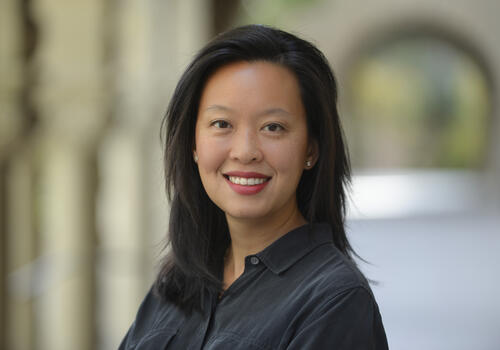
image of Tracey L. Meares

Speaker bio:

Tracey L. Meares is the Walton Hale Hamilton Professor and a Founding Director of the Justice Collaboratory at Yale Law School. Before joining the faculty at Yale, she was a professor at the University of Chicago Law School from 1995 to 2007, serving as Max Pam Professor and Director of the Center for Studies in Criminal Justice. She was the first African American woman to be granted tenure at both law schools.

Professor Meares is a nationally recognized expert on policing in urban communities. Her research focuses on understanding how members of the public think about their relationship(s) with legal authorities such as police, prosecutors and judges. She teaches courses on criminal procedure, criminal law, and policy and she has worked extensively with the federal government having served on the National Academy of Sciences Committee on Law and Justice, a National Research Council standing committee and the U.S. Department of Justice, Office of Justice Programs Science Advisory Board.

In April 2019, Professor Meares was elected as a member to the American Academy of Arts and Sciences. In December 2014, President Obama named her as a member of his Task Force on 21st Century Policing. She has a B.S. in general engineering from the University of Illinois and a J.D. from the University of Chicago Law School.

Zoom Registration required:

REGISTER

Tracey L. Meares Walton Hale Hamilton Professor of Law and Founding Director of The Justice Collaboratory Speaker Yale University
Lectures
-


Image
an image of a map of the world with a U.S. and China flag with the event text details.


How can we understand the geopolitical rivalry between the U.S. and China without fueling anti-Asian hate?

Join REDI's student representatives, Maddy Morlino and Miku Yamada, for an open discussion on how we can avoid contributing to racial discrimination when engaging in academic dialogues on U.S.-China competition.

This in-person event will facilitate an open dialogue with participants and invited speakers, FSI Senior Fellow Thomas Fingar and Postdoctoral Fellow, Dongxian Jiang. Since seating is limited, registration is reserved for current Stanford faculty, students, and staff only with a Stanford.edu email.

Confirmed attendees will be notified by email on February 22.

Speaker bios:

Thomas Fingar is a Shorenstein APARC Fellow in the Freeman Spogli Institute for International Studies at Stanford University. He was the inaugural Oksenberg-Rohlen Distinguished Fellow from 2010 through 2015 and the Payne Distinguished Lecturer at Stanford in 2009. From 2005 through 2008, he served as the first deputy director of national intelligence for analysis and, concurrently, as chairman of the National Intelligence Council. Fingar served previously as assistant secretary of the State Department’s Bureau of Intelligence and Research (2000-01 and 2004-05), principal deputy assistant secretary (2001-03), deputy assistant secretary for analysis (1994-2000), director of the Office of Analysis for East Asia and the Pacific (1989-94), and chief of the China Division (1986-89). Between 1975 and 1986 he held a number of positions at Stanford University, including senior research associate in the Center for International Security and Arms Control.

Dongxian Jiang is a political theorist and intellectual historian. His primary research interests lie in comparative political theory, the history of political thought, and pressing practical questions of democratic and international politics, including Western and non-Western perspectives on human rights, democracy, good governance, and political legitimacy. He is also interested in the transmission and traveling of political ideas across divergent intellectual traditions. He holds a B.A. in International Politics and Philosophy from Peking University, an M.A. in Political Science from Duke University, and a Ph.D. in Politics from Princeton University (as of September 2020). Dongxian Jiang is currently Civics Initiative Postdoctoral Fellow, Department of Political Science, Stanford University.

Registration required:

REGISTER


Thomas Fingar FSI Senior Fellow Speaker Stanford University
Dongxian Jiang Political Science Postdoctoral Fellow Speaker Stanford University
Seminars
-

This is a virtual event. Please click here to register and generate a link to the talk. 
The link will be unique to you; please save it and do not share with others.


Policies implemented by the CCP in Xinjiang since c. 2016 have become a central issue in PRC international relations, leading to international determinations that those policies constitute genocide; scrutiny of global supply chains for Xinjiang cotton, textiles and polysilicon; US sanctions on companies and individuals and Congressional inquiries directed at Airbnb and other multinationals operating in Xinjiang; and diplomatic boycotts of the Olympics. The assimilationist policies, if most extreme in Xinjiang, are related to the broader Zhonghua-izing campaign against religion and non-Mandarin language and perhaps even to intensified control over Hong Kong and efforts to intimidate Taiwan—an aggressive intolerance of cultural and political diversity that is emerging as a central feature of Xi Jinping’s tenure. This talk will review the Xinjiang crisis to date and suggest how we should understand these events and trends.


Image
Portrait of James Millward
James Millward is Professor of Inter-societal History at the Walsh School of Foreign Service, Georgetown University, teaching Chinese, Central Asian and world history. He joins the Walter H. Shorenstein Asia-Pacific Research Center (APARC) as visiting scholar with the China Program for the 2022 winter quarter. He is also an affiliated professor in the Máster Oficial en Estudios de Asia Oriental at the University of Granada, Spain. His specialties include Qing empire; the silk road; Eurasian lutes and music in history; and historical and contemporary Xinjiang. He follows and comments on current issues regarding the Uyghurs and PRC ethnicity policy. Millward has served on the boards of the Association for Asian Studies (China and Inner Asia Council) and the Central Eurasian Studies Society, and was president of the Central Eurasian Studies Society in 2010. He edits the ''Silk Roads'' series for University of Chicago Press. His publications include The Silk Road: A Very Short Introduction (2013), Eurasian Crossroads: A History of Xinjiang (2007), New Qing Imperial History: The Making of Inner Asian Empire at Qing Chengde (2004), and Beyond the Pass: Economy, Ethnicity and Empire in Qing Central Asia (1998). His articles and op-eds on contemporary China appear in The New York Times, The Los Angeles Review of Books, The New York Review of Books and other media.  

Via Zoom Webinar. Register at: https://bit.ly/3zX2GoF

James Millward Visiting Scholar, APARC, Stanford University; Professor of Inter-societal History, Walsh School of Foreign Service, Georgetown University
Seminars
-

The REDI Task Force invites you to the next event in our Critical Conversations: Race in Global Affairs series; an exploration of the life of enslaved women. This panel discussion will feature experts of enslavement across the Atlantic including the U.S., Brazil, West Africa, and the West Indies.

What do we really understand about the lives and legacies of African enslaved women across the Atlantic? Enslavement is often rendered through a genderless lens, one in which the category of "race" trumps all else. However, research tells a very different story and one that requires an intimate analysis - enslaved women across the Atlantic held an experience that was shaped uniquely by their race and gender. This conversation will explore how Black women during the slave period acted and reacted to the material forces that shaped their lives in an attempt to not only survive the harsh conditions but to carve out a future for ancestors. This interdisciplinary discussion will draw from various archival sources ranging from Senegambia to Brasil's sugar plantations to articulating novel understandings of enslaved women's selfhood. 

The panel will feature perspectives from three historians to uncover the intimate lives of African women; their kinship, religious, and resistance practices. Tracing a path through different locales, from free to enslaved status, we will discuss not only the lives of enslaved women, but their legacies.

This event is free and open to the public. There will be time for a Q&A.

Note: This discussion will be recorded. 

Speaker bios:

Alexis Wells-Oghoghomeh is an Assistant Professor of Religious Studies whose teaching and research explores the intersections of race, religion, and gender in the United States. A historian of African-American religion, she specializes in the religiosity of enslaved people in the South, religion in the African Atlantic, and women’s religious histories.  Her first book The Souls of Womenfolk: The Religious Cultures of Enslaved Women in the Lower South (UNC 2021) offers a gendered history of enslaved people’s religiosity from the colonial period to the onset of the Civil War. She is currently at work on her second project, which traces the gendered, racialized history of phenomena termed “witchcraft” in the United States. Her work has been supported by the Ford Foundation, Mellon Foundation, and Forum for Theological Education, among others. She received her B.A. in English from Spelman College, and Master of Divinity and Ph.D. from Emory University.

Jessica Marie Johnson is an Assistant Professor in the Department of History at the Johns Hopkins University and a Fellow at the Hutchins Center for African and African American Studies at Harvard University. She is also the Director of LifexCode: Digital Humanities Against Enclosure. Johnson is a historian of Atlantic slavery and the Atlantic African diaspora. She is the author of Wicked Flesh: Black Women, Intimacy, and Freedom in the Atlantic World (University of Pennsylvania Press, August 2020), a winner of numerous awards including the 2021 Wesley-Logan Best Book in African Diaspora History Prize from the Association of American Historians and the 2021 Lora Romero First Book Publication Prize of the American Studies Association. Her work has appeared in Slavery & Abolition, The Black Scholar, Meridians: Feminism, Race and Transnationalism, American Quarterly, Social Text, The Journal of African American History, the William & Mary Quarterly, Debates in the Digital Humanities (2nd edition), Forum Journal, Bitch Magazine, Black Perspectives (AAIHS), Somatosphere and Post-Colonial Digital Humanities (DHPoco) and her book chapters have appeared in multiple edited collections. She is the Founding Curator of #ADPhDProjects which brings social justice and histories of slavery together. She is also Co-Kin Curator at Taller Electric Marronage.  She is also a Digital Alchemist at the Center for Solutions to Online Violence and a co-organizer of the Queering Slavery Working Group with Dr. Vanessa Holden (University of Kentucky). Her past collaborations include organizing with the LatiNegrxs Project. As a historian and Black Studies scholar, Johnson researches black diasporic freedom struggles from slavery to emancipation. As a digital humanist, Johnson explores ways digital and social media disseminate and create historical narratives, in particular, comparative histories of slavery and people of African descent.

Nohora Arrieta Fernández is a Presidential Postdoctoral Fellow at UCLA. She received her Ph.D. in Latin American Literature and Cultural Studies from Georgetown University in 2021. Her current research focuses on art history, visual studies, the history of commodities, and the intellectual traditions of the African Diaspora in the Americas. She has published essays and articles on Latin American literature and visual arts, comics, and the Afro-Latin American Diaspora, and is a collaborator of art magazines as Artishock and Contemporyand. She recently co-edited Transition. The Magazine of Africa and the Diaspora, 130. Her first co-translation project, Semantic of the World, the Poetry of Romulo Bustos, will be published by New Mexico Press (2022).


Online via Zoom

REGISTER

Alexis Wells-Oghoghomeh Assistant Professor of Religious Studies Stanford University
Jessica Marie Johnson Assistant Professor History Johns Hopkins University
Sonita Moss Research Associate Discussant REDI
Nohora Arrieta Fernandez Postdoctoral Fellow UCLA
Seminars
-

This panel will examine the evolving political conflicts in Tunisia since the July 25 power grab executed by President Kais Saied that has been widely characterized as a step toward cementing authoritarian rule. Our panelists will examine the challenges recent developments have posed to Tunisia’s struggling democracy and the prospects for building consensus around an inclusive process of political reform.
 

Register Now

SPEAKER BIOS
 

Image
Achraf Aouadi
Achraf Aouadi is a Tunisian activist and academic that founded the watchdog organization I WATCH after the Tunisian Revolution in 2011. The organization is committed to fighting corruption and enhancing transparency. Aouadi is a holder of a master’s degree in international relations from the University of Birmingham. He is a former CDDRL Draper Hills fellow.

Image
Saida Ounissi
Saida Ounissi is a member of the Tunisian Assembly of People’s Representatives and previously served as Minister for Employment and Vocational Training. She represents Tunisians living in the North of France for the Ennahdha Party and was first elected in October 2014 and reelected in October 2019. In 1993, her family fled the dictatorship of Ben-Ali for France where she completed all her schooling. In 2005, she joined the University of Paris 1 Panthéon Sorbonne for a double degree in History and Political Science. She obtained her master’s degree at the Institute for the Study of Economic and Social Development and completed her studies with an internship at the African Development Bank in Tunis. In 2016, she was recruited by Prime Minister Youssef Chahed to join his Cabinet as Secretary of State in the Ministry of Employment and Vocational Training, charged with vocational training and private initiative. In 2018, she was promoted as the Minister for Employment and Vocational Training, becoming the youngest minister in Tunisia.

This event is co-sponsored by the Program on Arab Reform and Democracy at CDDRL, Stanford University's Center for African Studies, and the Abbasi Program in Islamic Studies.

Online, via Zoom: REGISTER

Achraf Aouadi
Saida Ounissi
Seminars
Authors
News Type
News
Date
Paragraphs

This article was first published by the social and political economy portal IndiaSpend.


Women from poor households made about 235,000 fewer hospital visits compared to men for seven gender-neutral disease categories between January 2017 and October 2019, a new study analyzing a Rajasthan state health insurance scheme has estimated. The Bhamashah Swasthya Bima Yojana aims to provide health insurance to about 46 million persons living below the poverty line, as a step towards universal and equitable access to healthcare in the state, per the study.

Pascaline Dupas and Radhika Jain of Stanford University studied data of insurance claims from 4.2 million hospital visits under the Bhamashah scheme from its launch in December 2015 till October 2019, and the study was published as a National Bureau of Economic Research working paper. The study was conducted in partnership with the Rajasthan state government.

Women made up 45% of hospital visits under the Bhamashah scheme between January 2017 and October 2019, though their share in the population is 48%, per the study. The gender gap is starker for girls and older women. The share of girls in children aged under 10 years who visited the hospital under this insurance program was 33%, though their share of this age group's population is 47%; among those aged above 50 years, women are 51%, yet their share of hospital visits under this insurance program was 43%.

"We were struck by this discrepancy in the data. We were not expecting such a large [gender] difference," Dupas, an economist and professor at Stanford University, told IndiaSpend. In most other developed countries for which such data have been analyzed, subsidized healthcare usually caters to those who otherwise don't have access to it, added Jain, a postdoctoral fellow in Asia Health Policy at Stanford University, US.

Read More

Closeup on hands holding a glucometer
News

A New Validated Tool Helps Predict Lifetime Health Outcomes for Prediabetes and Type 2 Diabetes in Chinese Populations

A research team including APARC's Karen Eggleston developed a new simulation model that supports the economic evaluation of policy guidelines and clinical treatment pathways to tackle diabetes and prediabetes among Chinese and East Asian populations, for whom existing models may not be applicable.
A New Validated Tool Helps Predict Lifetime Health Outcomes for Prediabetes and Type 2 Diabetes in Chinese Populations
Hero Image
Two women standing in a street in Rajasthan, India
UN Women/ Anindit Roy-Chowdhury/ Ashutosh Negi via Flickr
All News button
1
Subtitle

A new study of the Rajasthan government's Bhamashah health insurance program for poor households has found that just providing health insurance cover doesn't reduce gender inequality in access to even subsidized health care.

Authors
News Type
Commentary
Date
Paragraphs

This opinion piece was first published in the economics and policy portal Ideas for India.


Equity in healthcare is a key goal of health policy in India. Analyzing administrative data from Rajasthan, this article highlights substantial gender gaps in the utilization of subsidized hospital care under the state health insurance program. These disparities persist despite substantial program expansion and seem to be driven by households being less willing to allocate resources to female vis-à-vis male health.

Over the past 15 years, India’s central government and numerous state governments have put in place health insurance programmes that entitle low-income households to free healthcare at public and empanelled private hospitals. Health equity and universal health coverage are explicit goals of these programs. In new research, we study gender equity in the Bhamashah Swasthya Bima Yojana (BSBY)1 health insurance program, which was launched in the state of Rajasthan in 2015, and is similar in design to the national Pradhan Mantri Jan Arogya Yojana (PMJAY).

Our starting point is a dataset of insurance claims filed for all 4.2 million hospital visits between 2015 and 2019, including patient age, gender, residence address, hospital visited, dates of admission and discharge, and service(s) received. We geo-coded hospital locations and patient addresses, which allowed us to calculate proximity to hospitals and the distance traveled for every hospital visit. Finally, we linked the insurance data to the 2011 Census and data on three rounds of village-level (gram panchayat) elections. To our knowledge, the dataset we compiled from these various sources is the first dataset of its type in India and allows us to study care-seeking under insurance with unusual granularity.

Read More

Demographics and Innovation in the Asia-Pacific
News

New Book Explores the Intersection of Demographic Shifts and Innovation, Offering Lessons from Asian Nations

Contributing authors to the new volume 'Demographics and Innovation in the Asia-Pacific' convened for a virtual book launch and discussion of the challenges facing aging societies in East Asia and the roles technology and innovation may play in rebalancing them.
New Book Explores the Intersection of Demographic Shifts and Innovation, Offering Lessons from Asian Nations
A Japanese robot prototype lifts a dummy patient
News

Robot Adoption Brings Benefits to Japan’s Aging Society

In one of the first studies of service sector robotics, APARC scholars examine the impacts of robots on nursing homes in Japan. They find that robot adoption may not be detrimental to labor and may help address the challenges of rapidly aging societies.
Robot Adoption Brings Benefits to Japan’s Aging Society
Hero Image
Two women sitting outdoor in Khidarpur Jadoo, Rajasthan, India.
@meaneggs via Unsplash
All News button
1
Subtitle

Stanford University researchers' study of Bhamashah Swasthya Bima Yojana reveals that just expanding geographical access and reducing the cost of healthcare won't reduce gender disparity.

-

Webinar recording: https://youtu.be/sQBR-NZBWks


Webinar Description:

On March 18, 2021, the California Department of Education adopted the Ethnic Studies Model Curriculum. Chapter 3 of the Model Curriculum includes a section on “Native American Studies.” Three Native and Indigenous educators will reflect on this and the state of ethnic studies in their regions. The educators are Dr. Harold Begay, Dr. Sachi Edwards, and Dr. Ronda Māpuana Shizuko Hayashi-Simpliciano. Kasumi Yamashita will serve as the moderator of the panel. She is an Instructor for SPICE and was trained as a cultural anthropologist at Harvard University and was a Fulbright Scholar to Brazil.

Some of the topics that will be addressed include (1) the various academic field names of the study of Native and Indigenous people; (2) the complexity and diversity of Native and Indigenous people’s experiences, highlighting key concepts like indigeneity, settler colonialism, diaspora, social justice and activism; and ontological and epistemological philosophy; and (3) recommended resources for K–12 educators.

These topics are not only relevant to teachers in California but to teachers in other states as well. K–12 educators and administrators are encouraged to sign up at https://bit.ly/3z4kxtc.

This webinar is a joint collaboration between the National Consortium for Teaching about Asia (NCTA), Center for East Asian Studies, and SPICE.
 

Featured Speakers:

Dr. Harold Begay

Image
Harold headshot

Dr. Harold Begay, Superintendent of Schools, Navajo Nation, was raised on the Navajo Nation in northern Arizona, amid a deep bicultural chasm irrevocably bound by his traditional Dine’ (Navajo) culture upbringing and mainstream Western Greco-Roman education in the United States. He completed his Ph.D. in school finance/economics, concentrating his advanced studies in educational administration, bilingual education, and social foundations of education from the University of Arizona. Dr. Begay has worked in several Native American school districts in different teaching and administrative capacities over a span of 25 years. Has been a Visiting Scholar at U.C. Berkeley and is currently doing transnational educational work with Stanford University.


Dr. Sachi Edwards

Image
sachi headshot

Dr. Sachi Edwards is a Faculty Member at Soka University in Tokyo, Japan, and also a Lecturer in the Educational Foundations department at the University of Hawaiʻi, Mānoa. Her areas of research include higher education, internationalization, and religious identity, diversity, and oppression. Dr. Edwards received a Ph.D. in higher education from the University of Maryland, College Park. She teaches classes about higher education, international and intercultural education, educational theory/philosophy, qualitative research methods, and academic writing. She was recently featured with Dr. Ronda Māpuana Shizuko Hayashi-Simpliciano in discussion on “Ainu in Diaspora: Rising from Shame, Honoring Ainu Resilience,” hosted by the Japanese American Memorial Pilgrimages.


Dr. Ronda Māpuana Shizuko Hayashi-Simpliciano

Image
mapuana headshot

Dr. Ronda Māpuana Shizuko Hayashi-Simpliciano is Vice Principal of the Hawaiian language immersion school, Ke Kula Kaiapuni ʻo Ānuenue, Honolulu, Hawaiʻi. She is an Ainu-Hawaiian scholar and educator who works in the field of indigenous language and culture restoration. She did her doctoral work at the University of Hawaiʻi, Mānoa. Dr. Hayashi-Simpliciano recently gave a talk on “Ainu in Diaspora History,” hosted by the Japanese American Memorial Pilgrimages.

Via Zoom Webinar. Registration Link: https://bit.ly/3z4kxtc.

Dr. Harold Begay Superintendent of Schools, Navajo Nation
Dr. Sachi Edwards Faculty Member at Soka University in Tokyo, Japan
Dr. Ronda Māpuana Shizuko Hayashi-Simpliciano Vice Principal, Ke Kula Kaiapuni ʻo Ānuenue, Honolulu, Hawaiʻi
Workshops
Authors
News Type
News
Date
Paragraphs

In a webinar dated, February 12, 2021, a panel of Stanford University scholars shared their reflections on the legacy of the January 25, 2011 Uprising in Egypt. Marking the 10-year anniversary of the uprising and the ouster of Hosni Mubarak, the panel examined the trajectory of authoritarianism in the country over the past decade. Moderated by ARD Associate-Director Hesham Sallam, the panel included former CDDRL Visiting Scholar Nancy Okail, Stanford Professor of History Emeritus Joel Beinin, and CDDRL Senior Research Scholar Amr Hamzawy. The panelists addressed a variety questions including: How have political developments in Egypt and elsewhere in recent years informed our understanding of the January 25 Uprising and its significance? In what ways have authoritarian institutions adapted in the aftermath of the 2011 uprising and how have they shaped the prospects for political change and/or stability? Where are the sites of political contestation and resistance in today’s Egypt?


Hero Image
Joel Beinin Nancy Okail Amr Hamzawy Hesham Sallam
All News button
1
Authors
Kiyoteru Tsutsui
News Type
Commentary
Date
Paragraphs

This op-ed by Kiyoteru Tsutsui originally appeared in Nikkei Asia.


As the summer of racial unrest forced America to confront its racist past and present yet again, a book by Heather McGhee, The Sum of Us: What Racism Costs Everyone and How We Can Prosper Together, which documents how racial division prevents Americans from uniting to lift everyone's lot, has attracted a good deal of attention.

From welfare to education to policing, Americans have generally supported policies that lifted the white middle class. But as the middle class has become more racially diverse, politics has become a divisive zero-sum game, with many whites seeing government spending as shifting money away from them toward minorities, even if whites also benefit.

This politics of racial division forecloses a social consensus that could boost the U.S. as a whole, leading to flagging social infrastructure, sputtering criminal justice system reform and challenges in offering broad economic support even to counter the pandemic.

This is not a problem unique to the United States. Social scientists have studied the relationship between racial division and low levels of public goods provision in multiple countries and established that ethno-racially heterogeneous societies tend to provide less in the way of public services.

Plagued by suspicions that some groups might benefit more than others, diverse societies tend to have greater difficulty in reaching consensus and working together on a strategy for economic and social development that would improve everyone's lives.

On this count, Japan is at the other end of the spectrum. More ethno-racially homogenous than most other advanced democracies, Japan has fared well when it comes to providing public goods such as efficient public transportation systems, low crime rates and universal health care.

Japan is often quick to reach a broad consensus about government spending on public services, since people generally feel that everyone benefits if they all support each other. Strong social cohesion, facilitated by the relative homogeneity of the population, enables this social consensus that supports spending on public goods.

The flip side of this coin is Japanese society's persistent resistance to diversity and disruption. Used to the comfort of living and working with similar people, Japan has been criticized for its reluctance to accept immigrants.

In response, the Japanese government has rather clumsily allowed immigrant workers in recent decades, first encouraging the migration of Japanese-Brazilians on the basis of shared ethnic roots that were supposed to make it easy for them to assimilate.

Learning that the reality of Japanese-Brazilians' life in Japan did not support this idea, Japan then adopted trainee programs to bring in foreign workers on a temporary basis. With the emphasis squarely on the temporary nature of their stay, those who came to Japan under this scheme could not contribute toward the country's long-term diversity.

Faced with a declining population, Japan needs immigrant labor, and its business leaders have consistently supported accepting more migrant workers. In addition to addressing the labor shortage, a more diverse workforce would likely stimulate innovation and facilitate adaptation to changing economic environments. Much social science research has demonstrated positive relationships between diversity and innovation.

Yet Japan's leaders are having a hard time pressing ahead. While it is easy for the public to come to a consensus for policies that boost all Japanese, it has proved difficult for them to support any policy that would undermine Japan's homogeneity.

Aside from ethnic diversity, Japan's consensus-oriented society is generally resistant to change. Valuing the protection of all members, companies have been slow to streamline and transform their operations to adapt to the changing economic environment, resulting in the prolonged economic decline since the 1990s.

While Brazil is home to the world's largest overseas Japanese population, many Japanese-Brazilians who moved to Japan discovered it was not easy for them to assimilate.

Urged on by American consultants, Japan imported America's neoliberal economic model to revitalize its economy through this period, and the lifetime employment and seniority-based salary system has given way to a rise in temp workers and various attempts to introduce a merit-based salary system. These efforts have not met with much success, leaving behind a questionable legacy, including the suppression of wages after the labor shortage of recent years.

In the U.S., racial division undermines the provision of public goods that would reduce economic inequality. But its acceptance of diversity contributes to innovation and economic revitalization that keeps the U.S. at the vanguard of a new economy.

In Japan, ethno-racial harmony facilitates public goods provision that prevents economic inequality from spiraling out of control. But aversion to diversity and dissent makes it difficult to accept much-needed immigrant labor and to adapt to changes in the economic environment.

In both countries, these characteristics are ingrained into their social fabric and resistant to change. However, the two largest economies with a democratic polity have much to learn from each other, and they should work together to find solutions for their problems.

Otherwise, China's nondemocratic model could become the dominant model for economic success, with its top-down forced consensus and suppression of diversity.

Democracies have long proven better at correcting their mistakes and adjusting to changes in their environment. As the two largest democratic economies in the world, the U.S. and Japan should be able to overcome the cost of racial division and the cost of homogeneity respectively even if it takes decades to achieve that.

Read More

Demonstrators in South Korea sitting on the ground and carrying signs in Korean
Q&As

Gi-Wook Shin on Racism in South Korea

Protections against gender and sexual discrimination are increasing in South Korea, but addressing longstanding racial discriminations based in nationalism and building a multicultural identity still has a long way to go, says Gi-Wook Shin in a new interview with Asia Experts Forum.
Gi-Wook Shin on Racism in South Korea
A man wearing a face mask prays for the new year at Meiji Shrine in Tokyo, Japan.
Commentary

Japan's Challenges in the Next Year are Greater than its Opportunities

Surging coronavirus cases and ongoing political scandals have docked Suga's approval ratings, but successfully handling the upcoming Olympics and taking further strides with the United States, ASEAN, and South Korea may help him rebound.
Japan's Challenges in the Next Year are Greater than its Opportunities
Hero Image
Protesters hold signs and chant slogans during a Black Lives Matters Peaceful March on June 14, 2020 in Tokyo, Japan.
Protesters hold signs and chant slogans during a Black Lives Matters Peaceful March on June 14, 2020 in Tokyo, Japan. | Takashi Aoyama, Getty Images
All News button
1
Subtitle

Japan Program Director Kiyoteru Tsutsui explores the cost of racial division versus the cost of homogeneity by comparing the experiences of Japan and the United States.

Subscribe to Inequality