Rule of Law
-

Tom Ginsburg is the Deputy Dean and Leo Spitz Professor of International Law at the University of Chicago, where he also holds an appointment in the Political Science Department.  He holds B.A., J.D. and Ph.D. degrees from the University of California at Berkeley. He currently co-directs the Comparative Constitutions Project, an NSF-funded data set cataloging the world’s constitutions since 1789.  His books include The Endurance of National Constitutions (2009) (with Zachary Elkins and James Melton), which won the best book award from Comparative Democratization Section of American Political Science Association; Judicial Review in New Democracies (2003), Administrative Law and Governance in Asia (2008), Rule By Law: The Politics of Courts in Authoritarian Regimes (with Tamir Moustafa, 2008), and Comparative Constitutional Law (with Rosalind Dixon, 2011).  He is a member of the American Academy of Arts and Sciences.  Before entering law teaching, he served as a legal advisor at the Iran-U.S. Claims Tribunal, The Hague, Netherlands, and he has consulted with numerous international development agencies and governments on legal and constitutional reform.  He currently serves a senior advisor on Constitution Building to International IDEA.


Stanford University’s School of Law and Freeman Spogli Institute for International Studies (FSI) are sponsoring a set of workshops for faculty working on the rule of law, corporate law, administrative law, international risk analysis, legal development in low-income countries, democratization, public health, development economics, and related fields. One desired outcome is the identification of the cognitive gaps between lawyers and social scientists around these topics, and the development of mutual language and understanding to spur better comprehension of different disciplines’ approaches to similar issues.

Manning Faculty Lounge

Stanford Law School

559 Nathan Abbott Way 


Thomas Ginsburg
Seminars
-

Abstract: The purpose of this book project is to explain what it is about terrorism that makes it inherently difficult for the American government to formulate an effective counterterrorism policy. Why is terrorism such an intractable problem?  What are the obstacles to developing a consistent and coherent counterterrorism strategy?  The barriers that we identify flow from the issue itself, not the particular political predispositions of individual policy makers or flawed organizational processes.  We also find that scholars and policy makers face similar difficulties – the study of terrorism is often confused and contentious, and the study of counterterrorism can be even more frustrating.  

The book is co-authored by Martha Crenshaw and  Gary LaFree, Director of the National Center for the Study of Terrorism and Responses to Terrorism (START) at the University of Maryland, as well as professor in the Department of Criminology and Criminal Justice.


About the Speaker: Martha Crenshaw is a senior fellow at CISAC and FSI and a professor of political science by courtesy at Stanford. She was the Colin and Nancy Campbell Professor of Global Issues and Democratic Thought and professor of government at Wesleyan University in Middletown, Conn., where she taught from 1974 to 2007. She has written extensively on the issue of political terrorism; her first article, "The Concept of Revolutionary Terrorism," was published in the Journal of Conflict Resolution in 1972. Her recent work includes “Trajectories of terrorism: Attack patterns of foreign groups that have targeted the United States, 1970–2004,” in Criminology & Public Policy, 8, 3 (August 2009) (with Gary LaFree and Sue-Ming Yang), “The Obama Administration and Counterterrorism,” in Obama in Office: the First Two Years, ed. James Thurber (Paradigm Publishers, 2011), and “Will Threats Deter Nuclear Terrorism?” in Deterring Terrorism: Theory and Practice, ed. Andreas Wenger and Alex Wilner (Stanford University Press, 2012). She is also the editor of The Consequences of Counterterrorism (Russell Sage Foundation, 2010). In 2011 Routledge published Explaining Terrorism, a collection of her previously published work.

She served on the Executive Board of Women in International Security and is a former President and Councilor of the International Society of Political Psychology (ISPP). She coordinated the working group on political explanations of terrorism for the 2005 Club de Madrid International Summit on Democracy, Terrorism and Security. In 2005-2006 she was a Guggenheim Fellow. Since 2005 she has been a lead investigator with the National Center for the Study of Terrorism and the Response to Terrorism (START) at the University of Maryland, funded by the Department of Homeland Security. In 2009 she was awarded a grant from the National Science Foundation/Department of Defense Minerva Initiative for a project on "mapping terrorist organizations." She serves on the editorial boards of the journals International Security, Political Psychology, Security Studies, Dynamics of Asymmetric Conflict, and Terrorism and Political Violence. She is currently a member of the Committee on Evaluating the Effectiveness of the Global Nuclear Detection Architecture of the National Academies of Science.


Encina Hall (2nd floor)

Martha Crenshaw Senior Fellow at the Freeman Spogli Institute for International Studies Professor, by courtesy, of Political Science Speaker Stanford University
Seminars
-

Dr. Rachel Kleinfeld is a senior associate at the Carnegie Endowment for International Peace, where she focuses on issues of rule of law, security, and governance in post-conflict countries, fragile states, and states in transition. As the founding CEO of the Truman National Security Project, she spent nearly a decade leading a movement of national security, political, and military leaders working to promote people and policies that strengthen security, stability, rights, and human dignity in America and around the world.  Kleinfeld has consulted on rule of law reform for the World Bank, the European Union, the OECD, the Open Society Institute, and other institutions, and has briefed multiple U.S. government agencies. She is the author of Advancing the Rule of Law Abroad: Next Generation Reform (Carnegie, 2012).


This event is part of the Governance and the Rule of Law series being hosting jointly by the Freeman Spogli Institute for International Studies and Stanford's School of Law.

Dr. Rachel Kleinfeld
Seminars
Authors
News Type
News
Date
Paragraphs

Karl Eikenberry recently returned from a visit to Rwanda where he lectured military and policy officials from across East Africa at the Rwanda Defence Force Command and Staff College (RDFCSC). Eikenberry, who is a retired lieutenant general from the U.S. Army and the former U.S. ambassador to Afghanistan, was able to apply his experience to help build the capacity of the military and armed forces in post-conflict countries in Africa.

Reflecting on the trip, Eikenberry discussed the role that the military plays in supporting the development of the rule of law in post-conflict societies and how academic institutions can support state-building efforts abroad through knowledge exchange and training programs.

Eikenberry is the William J. Perry Fellow in International Security at the Center for International Security and Cooperation at Stanford’s Freeman Spogli Institute for International Studies. He is also an affiliate of FSI’s Center on Democracy, Development and the Rule of Law as well as the Shorenstein Asia-Pacific Research Center.


What attracted you to this opportunity? 


Last summer, I had the opportunity to present on civil-military relations at the tenth annual Draper Hills Summer Program, organized by the Center on Democracy, Development, and the Rule of Law. Subsequently, I was asked by one of the participating fellows from Rwanda if I might visit the country to present to leaders of its armed forces on this same topic. I enthusiastically accepted the invitation extended by the Rwanda Defence Force Command and Staff College (RDFCSC), which opened just three-years ago, to lead a two-day seminar of 47 senior military and police officers from Rwanda, Tanzania, South Sudan, Burundi, Uganda, and Kenya.

We discussed strategy, security policy formulation and implementation, civil-military relations, and counterinsurgency warfare. These were topics relevant to my own professional experiences as a soldier and diplomat having served in post-conflict countries like Afghanistan. Given the challenges that several countries in the East African Community are facing in strengthening their political institutions, providing security for their populations, and improving their economies and peoples livelihoods, I thought I might be able to make a small contribution to the curriculum at the RDFCSC. I also hoped to learn from the faculty and students who have seen and accomplished a great deal over the course of their own 20-30 year careers.


What surprised you the most about the experience?


I was struck by the fact that many of the military officers participating in this 46-week masters degree course had served on multiple tours of duty in difficult multinational peace enforcement and peacekeeping missions in their own countries and the surrounding region. They had an extraordinary grasp of the political, security, and development problems that their civilian leaders were attempting to solve. Most realized that without regional cooperation that the prospects of their own country prospering were quite limited. So I was impressed with how they viewed security as having both national and collective dimensions. The students were keen to learn about the theory and practice of civil-military relations in democratic countries and some of the best learning resulted from exchanges among the students themselves.


What role can the military play in helping to advance democratic development in post-conflict societies like Rwanda, Burundi and South Sudan?


Militaries can play several important roles in post-conflict societies, especially those that have been traumatized by civil war fought along ethnic or sectarian lines. First, if the armed forces are inclusive, they can serve as a very visible reassurance to the people that reconciliation is not only possible, but is being practiced. Second, if the armed forces demonstrate a commitment to the rule of law, they can provide an example worthy of emulation to political authorities attempting to establish effective government institutions. Third - and last - capable popular national military forces can eventually suppress and replace the violent unaccountable militias whose existence obstructs social and economic development.  


What role can experts from Stanford and other leading academic institutions play in helping to support the development and capacity building of the military in post-conflict societies?


I was impressed with how eager the Rwandan and East Africa Community military officers were to learn about the influence of history, constitutional law, political culture, society, missions, and resources on the character of a nation’s civil-military relations. I think the Stanford CDDRL faculty and fellows can contribute much to the development and capacity building of militaries in post-conflict societies due to their breadth and depth of experience. CDDRL collectively has global expertise in political, security, and development issues and brings to the table skills that can prove helpful to those grappling with difficult but important state-building challenges, such as ordering civil-military relations in democratic countries. At the same time, CDDRL can learn much by exchanging views with those responsible for managing change, like the military and police officers whom I spent time with in Rwanda. 

Hero Image
eikenberry fixed
Karl Eikenberry lectures military and policy officials from across East Africa at the Rwanda Defence Force Command and Staff College (RDFCSC).
All News button
1
-

At the NATO Summit in Wales in September 2014, NATO leaders were clear about the security challenges on the Alliance’s borders. In the East, Russia’s actions threaten our vision of a Europe that is whole, free and at peace.  On the Alliance’s southeastern border, ISIL’s campaign of terror poses a threat to the stability of the Middle East and beyond.  To the south, across the Mediterranean, Libya is becoming increasingly unstable. As the Alliance continues to confront theses current and emerging threats, one thing is clear as we prepare for the 2016 Summit in Warsaw: NATO will adapt, just as it has throughout its 65-year history.

Image
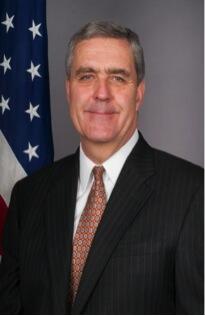
Douglas Lute, Ambassador of the United States to NATO


In August 2013, Douglas E. Lute was sworn-in as the Ambassador of the United States to the North Atlantic Treaty Organization (NATO).  From 2007 to 2013, Lute served at the White House under Presidents Bush and Obama, first as the Assistant to the President and Deputy National Security Advisor for Iraq and Afghanistan, and more recently as the Deputy Assistant to the President focusing on Afghanistan, Pakistan and India.  In 2010, AMB Lute retired from the U.S. Army as a Lieutenant General after 35 years on active duty.  Prior to the White House, he served as the Director of Operations on the Joint Staff, overseeing U.S. military operations worldwide. He served multiple tours in NATO commands including duty in Germany during the Cold War and commanding U.S. forces in Kosovo.  He holds degrees from the United States Military Academy and Harvard University.

A light lunch will be provided.  Please plan to arrive by 11:30am to allow time to check in at the registration desk, pick up your lunch and be seated by 12:00 noon.

Co-sponsored by The Europe Center, the Freeman Spogli Institute for International Studies, the Center for International Security and Cooperation and the Center for Russian, East European and Eurasian Studies.


Douglas Lute United States Ambassador to NATO Speaker
Lectures
-

ABSTRACT

The Buddhist Compassion Relief Tzu Chi (Ciji) Foundation from Taiwan is perhaps one of the largest Buddhist charities in the Chinese world today. This talk traces how Tzu Chi developed under the “regime of civility” in Taiwan. The same regime also contributed to the recent controversies between Tzu Chi and the Aborigines. I argue that the tension between the Buddhist non-governmental organization and the Christian Aborigines has to do with the inequality under the regime of civility: on the one hand, the Aborigines have been marginalized as the “subject” of the civility campaign by the state; and, on the other hand, the same regime of civility is what allows the Buddhist charity to thrive in civil society. This talk raises the question whether civility could turn against civil society.

SPEAKER BIO

Image
huang julia

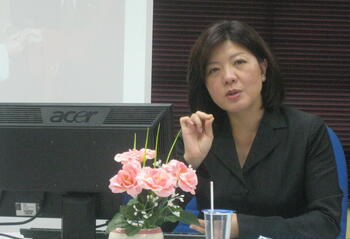
C. Julia Huang is a Professor of Anthropology at National Tsing Hua University, Taiwan, and currently a Visiting Scholar at the Ho Center for Buddhist Studies at Stanford University. Huang has published articles in the Journal of Asian Studies, Ethnology, Positions, Nova Religio, the Eastern Buddhist, and the European Journal for East Asian Studies. Her book, Charisma and Compassion: Cheng Yen and the Buddhist Tzu Chi Movement (Harvard University Press, 2009) is an ethnography of a lay Buddhist movement that began as a tiny group in Taiwan and grew into an organization with ten million members worldwide. Huang has recently completed a book manuscript, The Social Life of Goodness: Religious Philanthropy in Chinese Societies (with Robert P. Weller and Keping Wu). She is currently working on a project on the Buddhist influences on cadaver donations for medical education in Taiwan.


This event is part of the Taiwan Democracy Project.

Ends of Compassion--presentation
Download pdf
C. Julia Huang Professor of Anthropology National Tsing Hua University, Taiwan
Seminars
-

Abstract

Thorn (www.wearethorn.org) drives technology innovation to fight child sexual exploitation. The talk will provide an overview of how technology has drastically changed the dynamics of crimes against children and will present concepts for how technology can also be used in new, innovative ways to combat these crimes and protect children.
 

Bechtel Conference Room, Encina Hall

Julie Cordua Speaker CEO,Thorn
Helen Stacy Director Commentator Program on Human Rights
Seminars
-

Abstract

In 2010-2011, the "Arab Spring" brought unexpected revolutions to many Middle Eastern and North African countries. Why did these seemingly invincible regimes fall, while China remained durably authoritarian? Many observers credited global media for the political transformations. While the hopes of Arab Spring democracy have proven to be fragile or short-lived, we can effectively explore the relationship between political communication and regime stability by turning our attention to Taiwan’s remarkable democratization, which remains under-appreciated by the international community.

This talk considers political communication in Taiwan from the martial law era to the heady days of democratic activism beginning in the late 1970s and lasting till the 1990s. Professor Esarey argues that the Chiang Ching-kuo administration’s diminishing capacity to control a small but influential opposition (dangwai) media, and even mainstream newspapers, gradually permitted reformers to reframe debates, reset the political agenda, and challenge state narratives and legitimacy claims. 

When viewed in comparative perspective, Taiwan’s successful democratization suggests that seeking regime change is impracticable, and even perilous, without considerable and sustainable media freedom as well as opportunities for the public to advocate, evaluate, and internalize alternative political views. A balance of “communication power” between state and societal actors facilitates a negotiated and peaceful transition from authoritarianism.


Bio

Professor Ashley Esarey received his PhD in Political Science from Columbia University and was awarded the An Wang Postdoctoral Fellowship by Harvard University. He has held academic appointments at Middlebury College, Whitman College, and the University of Alberta, where he is an instructor in the departments of East Asian Studies and Political Science and a research associate of the China Institute. Esarey has written on democratization and authoritarian resilience, digital media and politics, and information control and propaganda. His recent publications include My Fight for a New Taiwan: One Woman’s Journey from Prison to Power (with Lu Hsiu-lien) and The Internet in China: Cultural, Political, and Social Dimensions (with Randolph Kluver).


Communication Power and Taiwan's Democratization
Download pdf
Ashley Esarey Research Associate, China Institute University of Alberta
Seminars
-

Abstract:

Authoritarian ruling parties are expected to resist democratization, often times at all costs. And yet some of the strongest authoritarian parties in the world have not resisted democratization, but have instead embraced it. This is because their raison d’etre is to continue ruling, though not necessarily to remain authoritarian. Put another way, democratization requires ruling parties hold free and fair elections, but not that they lose them. Authoritarian ruling parties can thus be incentivized to concede democratization from a position of exceptional strength. This alternative pathway to democracy is illustrated with Asian cases – notably Taiwan – in which ruling parties democratized from positions of considerable strength, and not weakness. The conceding-to-thrive argument has clear implications with respect to “candidate cases” in developmental Asia, where ruling parties have not yet conceded democratization despite being well-positioned to thrive were they to do so, such as the world’s most populous dictatorship, China.


Bio:

Joseph Wong is the Ralph and Roz Halbert Professor of Innovation at the Munk School of Global Affairs, University of Toronto, and Professor of Political Science and Canada Research Chair in Democratization, Health and Development. Professor Wong was the Director of the Asian Institute at the Munk School from 2005 to 2014. In addition to academic articles and book chapters, Professor Wong has published four books: Healthy Democracies: Welfare Politics in Taiwan and South Korea (2004) and Betting on Biotech: Innovation and the Limits of Asia’s Developmental State (2011), both published by Cornell University Press, as well as Political Transitions in Dominant Party Systems: Learning to Lose, co-edited with Edward Friedman (Routledge, 2008), and Innovating for the Global South: Towards a New Innovation Agenda, co-edited with Dilip Soman and Janice Stein (University of Toronto Press, 2014). He is currently working on a book monograph with Dan Slater (University of Chicago) on Asia’s development and democracy, which is currently under contract with Princeton University Press. Professor Wong earned his Hons. B.A from McGill University (1995) and Ph.D. from the University of Wisconsin-Madison (2001). 

Philippines Conference Room, 3rd Floor, Encina Hall

616 Serra St., Stanford, CA

Joe Wong Professor and Canada Research Chair in Political Science University of Toronto
Seminars
-

Abstract: What happens to armed organizations after they sign peace accords? Why do they remilitarize or demilitarize? This project provides an explanation for this variation in post-war trajectories based on the geography of recruitment – whether the armed groups recruited locally or non-locally. The theory’s mechanisms center on social networks, principal-agent problems, and information asymmetries. I link these factors to changes in the distribution of power and the likelihood of successful bargaining, resumed violence or consolidated peace. The empirics draw on the comparative laboratory of contemporary Colombia where 37 armed organizations signed peace accords with the government and then diverged in their post-war trajectories: half remilitarized, half demilitarized. Drawing on data from eleven surveys collected over the course of ten years, I analyze how ex-combatants were networked in geographical space over time. I then examine the implications of cohesive or eroded networks on remilitarization using organization-level data derived from intelligence agencies and municipality-level data on 29,000 violent events over the course of 46 years of war. The project then turns to process tracing in various regions of Colombia, employing over 300 in-depth interviews to illustrate the validity of the causal process. The empirics provide strong support for the theory and cast doubt on explanations centered on the political economy of violence and correlates of civil war. The project has important implications for future research on civil wars, intrastate peace processes, and state formation and outlines a series of recommendations for policy.

About the Speaker: Sarah Daly is Assistant Professor of Political Science at University of Notre Dame. Her research interests include civil wars and peace-building, international security, and ethnic politics with a regional focus on Latin America. Her book manuscript, under contract with Cambridge University Press, explores the post-war trajectories of armed organizations. Her other research seeks to explain sub-national variation in insurgency onset, organized crime and state-building, recidivism of ex-combatants during war to peace transitions, state strategies towards ethnic minorities in the former Soviet Union, and the role of emotions in transitional justice regimes. Her research has been published in the Journal of Peace Research, British Journal of Political Science, Comparative Politics, Conflict, Security & Development, and in several edited volumes. Sarah has conducted field research in Colombia, Ecuador, Chile and Brazil, is a Term Member of the Council on Foreign Relations, and has spent time at the World Bank, Organization of American States, and Peace Research Institute of Oslo. She has also served as a fellow in the Political Science Department and at the Center for International Security and Cooperation at Stanford University, at the Saltzman Institute of War & Peace Studies at Columbia University, and at the Belfer Center for Science and International Affairs at Harvard University. Her research has been funded by the Swedish Ministry of Foreign Affairs, Mellon Foundation/American Council of Learned Societies, Social Science Research Council, National Science Foundation, Harry Frank Guggenheim Foundation, Smith Richardson Foundation, Fulbright Program, United States Institute of Peace, MIT Center for International Studies, and MIT Entrepreneurship Center.

Encina Hall (2nd floor)

Sarah Daly Assistant Professor of Political Science Speaker Kellogg Institute for International Studies, University of Notre Dame
Seminars
Subscribe to Rule of Law