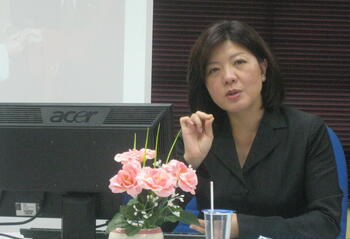
Understanding the nature of violent conflict in the world's most dangerous flashpoints may help find ways to peace and stability, according to a Stanford expert.
Once a soldier, now a scholar, Joe Felter knows better than most the intrinsic meaning of war and conflict – he served on the front lines in the U.S. Special Forces in places such as Iraq, Afghanistan and the Philippines.
Today, the senior research scholar at Stanford's Center for International Security and Cooperationand research fellow at the Hoover Institution is on a different kind of mission: building knowledge on the subject of politically motivated conflict.
For example, how are the most casualties suffered and under what conditions? Are there patterns to why rebels are surrendering? And how do armed battles affect development and education in local communities?
Answers to these and other questions are found in the Empirical Studies of Conflict project database, which is led by Felter and Jacob Shapiro, his former Stanford political science classmate, now a professor at Princeton University. The effort focuses on insurgency, civil war and other sources of politically motivated violence worldwide. Launched last year, it currently covers the Philippines, Afghanistan, Colombia, Iraq, Northern Ireland, Mexico, the Israeli-occupied territories, Pakistan and Vietnam. The site includes geospatial and tabular data as well as thousands of documents, archives and interviews.
Since 2009, Felter has collaborated with colleagues at Princeton, the University of California, San Diego, and other institutions in developing the database. Today, they are advising policymakers and military leaders on how best to curb conflict, reduce civilian casualties and promote prosperity. Felter and his colleagues have outlined some of their work in this Foreign Affairs article published in January 2015.
Felter's research on Filipino insurgencies, for instance, has produced significant results. The senior officials there have invited him to brief their military on battlefield trends and counterinsurgency strategy, as Felter and his colleagues have interviewed thousands of combatants as part of the project.
What do they learn about the insurgent mindset? One Islamic militant chief talked tactics with him, then revealed that his greatest tool was his men's belief that Allah was waiting for them on the other side. Others included a Roman Catholic nun who was running guns and money to help the poor and a young college freshman recruited with the promise of $40 a month to support her family.
Pathways to peace
In the case of the Philippines, Felter had access to more than 100,000 individual reports of conflict episodes dating back to 1975 and more than 13,000 interview transcripts from rebels who were captured or had surrendered over the last 30 years. That information was coded in detail and compiled as part of the Empirical Studies of Conflict Project database. The Philippines is home to some of the most protracted Muslim separatist and communist insurgencies in the world, and that is precisely why the government is interested in learning how to thwart it.
L.A. Cicero
Crystal Lee, a Stanford senior and history major, has been Joe Felter’s research assistant since her freshman year.
"For me, it's kind of validating all the thousands and thousands of hours that went into all our coding," said Felter, adding that the information will help the Philippines government find ways to ease the costs and human suffering in the conflicts it faces.
It has been a transformational journey for Felter, who retired in 2012 from the U.S. Army as a colonel following a career as a Special Forces and foreign area officer with missions and deployments across Asia, Panama, Iraq and Afghanistan. In 2010-11, he commanded the International Security and Assistance Force Counter Insurgency Advisory and Assistance Team in Afghanistan.
"I spent a long time in the military deployed to environments where you could appreciate that what you were doing was having an impact," Felter said.
In higher education now, his vantage point is different from what it was on the front lines. Today, both perspective and policy are two of his main goals.
"Since I transitioned to academia, I haven't lost my commitment to trying to help practitioners in the field to better understand conflict – by using data," Felter said.
Stanford senior Crystal Lee, a history major, has been working with Felter as a research assistant since her freshman year, helping him code and compile the datasets.
"It's been really interesting for me to think about the implications that this type of data analysis has on governments and broader policy work," said Lee, who also has analyzed and reconstructed hundreds of interviews with former rebels for Felter's upcoming book.
She said that a romantic notion exists in Silicon Valley that if one uses a huge database, one can wave a magic wand and believe that so-called "big data" will solve everything. "But it's a really messy field and we've had to use best practices to make sense of the increasingly complicated picture of counterinsurgency and terrorism," she said.
Study at the local level
Felter pointed out that to truly comprehend the nature of counterinsurgency in places like the Philippines, Iraq or Afghanistan, one must realize that its roots are in local communities.
"You need to study it at the local level to really understand it," Felter said. "And the Philippines is like a petri dish for studying both insurgency and counterinsurgency because you have multiple, long-running insurgencies, each with distinct characteristics, and with an array of government and military responses to address these threats over time."
The coders are now doubling back over the dataset from 1975 to 2012 to make sure it's accurate and cleaned of any potentially sensitive details before it goes public. The data are the basis for two of Felter's ongoing book projects and dozens of working papers and journal articles.
Roots of research
A Stanford alum, Felter was in the Philippines in 2004 conducting field research as part of his doctoral dissertation when he was first able to gain access to what would become a trove of detailed incident-level data on insurgency and counterinsurgency.
John Tronco
Stanford scholar Joe Felter with members of the First Scout Ranger Regiment, Philippine Army. His research in the Philippines helps inform the Empirical Studies of Conflict database.
After bringing back the data and meeting with his faculty advisers – Stanford political science Professors David Laitin and James Fearon – he realized the extensive incident-level data could be coded in a manner that would make it a tremendous resource for scholars studying civil wars, insurgencies and other forms of politically motivated violence.
"This comprehensive conflict dataset is going to be the holy grail of micro-level conflict data," Felter said. "It has the potential to drive a significant number of publications, reports and analyses, and enable conflict researchers to develop insights and test theories that they would not have been able to do before."
The network is expanding. A dozen young scholars who were supported by funding for the Empirical Studies of Conflict (ESOC) project as postdoctoral fellows have now been placed in tenure-track positions at universities.
"What's unique about ESOC is that we're trying hard to make it easier for others to study conflict by pulling together everything we can on the conflicts we've studied," said Jake Shapiro, an associate professor of politics and international affairs at Princeton University and the project's co-director.
On Iraq, for example, the website provides data on conflict outcomes, politics and demographics, in addition to maps, links to other useful information sources and other types of research on Iraq, he said.
Shapiro says researchers working for the Canadian Armed Forces, the World Bank and the U.S. military have already turned to the database for help. Insurgencies cost human lives and dollars, enough so that the United States and the international community are now focused on rebuilding social and political orders in those troubled countries.
As Felter put it, "We are devoted to learning from all those experiences and to making it easier for others to do so as well, so that we can all live more peacefully and safely in the future."
Research highlights
The Empirical Studies of Conflict project includes the following scholarly advances:
• Research on insurgent compensation paid during the U.S. Iraq conflict shows that pay was not based on risk factors.
• Findings show rebel violence will decrease when projects are secure and valued by community members and when implementation is conditional on the behavior of non-combatants.
• A journal article describes the preference for "certainty" in the relationship between violence and economic risk in wartime Afghanistan.
Media Contact
Beth Duff-Brown, Center for International Security and Cooperation: (650) 725-6488,bethduff@stanford.edu
Clifton B. Parker, Stanford News Service: (650) 725-0224, cbparker@stanford.edu