Democracy
Authors
News Type
News
Date
Paragraphs

Appeared in Stanford Report, April 16, 2015

A pioneering textual analysis of French political speeches led by Stanford Professor of French Cécile Alduy reveals how Marine Le Pen, leader of France's surging far-right National Front, has made extremism palatable in a land of republican values.

French politician Marine Le Pen carried her father's right-wing fringe political party to first place in the country's latest elections for European Parliament.

Stanford scholar Cécile Alduy says Le Pen's success at the helm of France's right-wing National Front can be attributed to a combination of sophisticated rebranding and skillfully crafted moderate rhetoric that sells a conservative agenda that borders on extreme.

An associate professor of French at Stanford and a faculty affiliate of The Europe Center, Alduy conducted a qualitative and quantitative analysis of more than 500 speeches by Marine Le Pen and her father, Jean-Marie Le Pen, to find out what has made their party surge in the polls. 

Alduy's word-for-word analysis of National Front political speeches, published in the book Marine Le Pen prise aux mots: Décryptage du nouveau discours frontiste (Seuil, 2015) has become a flashpoint of political discourse in France.

The resulting research is the first study of Marine Le Pen's discourse, the first to compile a corpus of this magnitude of political speeches by a French political organization.

After sifting through the data and performing extensive close readings of the corpus, Alduy found that the stylistic polish of Marine Le Pen's language conceals ideological and mythological structures that have traditionally disturbed French voters. Her research reveals how radical views can be cloaked in soothing speech.

"Marine Le Pen's language is full of ambiguities, double meanings, silences and allusions," Alduy said.
 

Spatial layout of Marine Le Pen's speeches This diagram shows the spatial lay out of Marine Le Pen's discursive universe. Using factorial analysis in Hyperbase, one can create a "map" of all the most used words and how they correlate to one another: the closer they are spatially, the stronger their correlation, or how often they appear together.

Courtesy of Cécile Alduy
This diagram shows the spatial lay out of Marine Le Pen's discursive universe. Using factorial analysis in Hyperbase, one can create a "map" of all the most used words and how they correlate to one another: the closer they are spatially, the stronger their correlation, or how often they appear together.
Image Courtesy of Cécile Alduy

But in terms of political agenda and ideological content, Alduy said the continuity between the younger and elder Le Pen is striking. "What is different is the words and phrases she uses to express the same agenda," Alduy said.

Alduy, whose research centers on the history and mythology of national and ethnic identities since the European Renaissance, conducted the research with the help of Stanford graduate and undergraduate students and with communication consultant Stéphane Wahnich.  Academic technology specialist Michael Widner of Stanford Libraries and the Division of Literatures, Cultures and Languages, provided technical expertise throughout and trained students in the art of indexing the database.

With a grant from Stanford's Vice Provost for Undergraduate Education, Alduy and her team transcribed and analyzed more than 500 speeches by Marine and Jean-Marie Le Pen dating from 1987 to 2013. 

Alduy's team used text analysis software such as Hyperbase or Voyant Tools to measure precisely how Marine's language differs from that of Jean-Marie.

They found, for example, that Marine Le Pen used the word "immigrants" 40 times in speeches, compared to 330 times for Jean-Marie, or 0.6 percent versus 1.9 percent, respectively. Instead, she used the more impersonal "immigration" or "migration policy" to discuss the issue and present this hot-topic issue as a matter of abstract economic policy rather than an ideological anti-immigration stance.

While Jean-Marie paired "immigrants" or "immigration" with words like "danger," "threat" or "loss," yielding phrases that scapegoat or even demonize France's large immigrant population, Marine used more technocratic pairings such as "protection," "cost," "euro" or "pay."

The effect, Alduy contended, is a repositioning of immigration from the racial and cultural problem Jean-Marie claimed it was to an economic one. Yet the actual policy agenda changed little from father to daughter, Alduy observed.

New language, same story

Jean-Marie Le Pen founded the National Front in 1972 to unite under the same political banner several extremist groups, from royalists to conservative Catholics nostalgic of the Vichy régime and the colonial Empire.

Since 1987 and his polemical statement about the Holocaust being a "detail" in the history of World War II, Jean-Marie has employed shock value to get media coverage. When asked about his daughter's new "normalization" strategy, which smoothes out the old xenophobic rhetoric in favor of a mainstream lingua, he routinely declares: "Nobody cares about a nice National Front."

But the party polled in the low double digits until Marine Le Pen took the helm in 2011. As she rose in the polls, Alduy began studying her speeches to understand what powered the politician's steady ascent.

In May 2014, Le Pen's National Front stunned the French political establishment by pulling 25 percent of the vote in European parliamentary elections, becoming the top French vote-getter in a multiparty system. President François Hollande's Socialists came in third. Last month, the party equaled that percentage in elections for local councilors. Such results make Marine Le Pen a credible contender for France's presidency as the country looks ahead to its 2017 presidential cycle.

To demonstrate how Marine Le Pen's language presents formerly unpopular ideas in a new light, Alduy pointed to the party's policy of préférence nationale (national preference,) the cornerstone of its platform since the late 1970s. This policy would give priority for jobs, social services and benefits to French citizens, and would strip from children of legally resident noncitizens the family benefits now available to all children in France.

As touted by Jean-Marie Le Pen, however, Alduy noted, "The phrase préférence nationale has negative connotations in the French mind."

"'Preference' sounds arbitrary, potentially unfair, and goes against the republican principle of equality in the eye of the law," Alduy noted. "So Marine Le Pen has renamed this measure priorité nationale (national priority) or even sometimes patriotisme social (social patriotism). Both new phrases sound positive and don't evoke discrimination as the former did.

"'Priority' evokes action, responsibility, leadership – all the qualities one would like an effective chief executive to embody," Alduy said. "Patriotism is a noncontroversial word that can rally across the political spectrum. Who wants to be called anti-patriotic by opposing 'social patriotism'? Yet both phrases refer to exactly the same measures."

In the same vein, Alduy observed, Marine Le Pen eschews the word "race" while her father stated unequivocally "races are unequal."

"Instead," Alduy said, "Marine Le Pen explains that 'cultures,' 'civilizations' and 'nations' have a right to remain separate and different, or else risk disappearing, overwhelmed by hordes of outsiders with a different, incompatible culture.

"The word 'race' has disappeared, but the same peoples are the target of this fear of the other."

Listening between the lines

Alduy's findings hint at ways voters everywhere can critically evaluate political thought and make sound political decisions in times of stress.

She observed that other far-right European movements, such as Geert Wilders' Party for Freedom in the Netherlands, have similarly rebranded themselves to expand their base.

"Like the National Front, the Party for Freedom now adopts the posture of a champion of Western liberal values and the defense of 'minorities' – gays and women – against the alleged homophobia and misogyny of Islam," Alduy said. "Yet the Party for Freedom is a typical xenophobic, far-right, anti-immigration, anti-Europe party in every other respect.

"I hope that people will start to pay attention to the meaning of words in political speeches and in the media."

In 2015-16, Alduy said, she hopes to convey to students the nuances of political code words such as laïcité (secularism), "the Republic" or "immigration" in a Stanford course titled How to Think About the Charlie Hebdo Attacks: Political, Social and Literary Contexts.

"We all have to be careful and listen to what is left between the lines," Alduy said.

"When we hear someone speak about equality or democracy, we have to pay attention not just to what we want to hear, or to what we assume these words mean, but to decipher what they mean in the context of this speaker's worldview.

"The positive or negative connotations of certain words can mislead us to think that we share the same definition of them with the politicians that use them to gain our vote."

Marine Le Pen prise aux mots is currently available only in French.  Analyses and graphs taken from the book are available in English on the website www.decodingmarinelepen.stanford.edu.

Corrie Goldman, director of humanities communication: (650) 724-8156, corrieg@stanford.edu

Dan Stober, Stanford News Service: (650) 721-6965, dstober@stanford.edu

Hero Image
National Front politician Marine Le Pen hugs her father, Jean Marie le Pen
France's far-right National Front politician Marine Le Pen hugs her father, Jean Marie le Pen, after her May Day 2012 speech in Paris. The younger Le Pen's meteoric rise in French politics has captured the attention of Stanford scholar Cécile Alduy, who has analyzed the differences between her speeches and those of her more polarizing father.
Francois Mori/AP
All News button
1
Authors
Christian E. Ollano
News Type
Q&As
Date
Paragraphs


Svitlana Zalishchuk (’11), an alumna of the Draper Hills Summer Fellow Program (DHSFP) at Stanford’s Center on Democracy, Development and the Rule of Law reflects on the challenges and motives behind her decision to run for public office in Ukraine. Amidst a transitional moment in her country’s history, Zalishchuk won a seat in Ukraine’s Parliament alongside DHSFP alumni Sergii Leshchenko ('13) and Mustafa Nayyem ('14). Before joining government, Zalishchuk led the Ukrainian NGO, Centre UA, which works to reassert citizens' influence on politics and restore freedom of speech in Ukraine.


1) What are the top challenges Ukraine faces today?

Ukraine is currently confronted with challenges on two fronts. The first is in the east of the country – the war with Russia. The second challenge is with the old system of government against corrupt and rotten institutions ­­ both struggles are an attempt to break up with Ukraine’s Soviet past.

There is an essential interdependence between these two battles. With the war in Donbass (in the east of Ukraine) it is much more difficult to implement the reforms. At the same time, without reforms it is impossible to win the war in the East.

In the end, Putin’s aim is not to control two Ukrainian regions, but to make the European idea a failed idea in Ukraine. The reunion of the Ukrainian territories in the long-term will be based on the people’s wish to live better lives in a free and democratic European country. Reforms are the most powerful weapon against this post-Soviet front.


2) How has civil society responded to the new leadership under President Petro Poroshenko?

President Petro Poroshenko was elected with more than 50 percent support of the voters. But to be a leader of a country, which has a military conflict with one of the biggest powers in the world and is going through one of the most difficult economic crises since its independence, is a monumental task.

Ukrainian society has high expectations of the new president, government and parliament – institutions that represent the shift of the political elites after the Euromaidan protests in Kyiv. But it is almost impossible to meet these expectations. The country’s decision to move toward democratic development has been made at the expense of thousands of Ukrainian lives.

Currently, the government has been facing harsh criticism for countless mistakes, a slow reform process, and lack of effort to combat corruption. Society continues to live through unprecedented self-organization. Groups of volunteers have formed across the country to perform various tasks that the state sometimes is unable to execute - such as the creation of volunteer battalions, the financing of the army, and the construction of housing for refugees. 

Still, it is a bit early to answer this question. Society is still waiting for the results of this leadership: reforms and a peaceful settlement of the conflict.


3) What challenges do you face, currently, as a member of parliament? What kind of changes do you hope to implement in your current role?

The biggest challenge is to justify people’s expectations that a new generation in politics will be able to change the country. People need to realize that real changes do not come with new faces in the government - and not even with newly adopted bills - but with well-functioning institutions. Building these will take time.

Nevertheless, we have to show that reforms are possible even in times of military conflict and economic crisis. New anti-corruption policies and measures; judicial and police reform; deregulation; constitutional reform that decentralizes the country to allow more power to local communities – these are the first steps of a long journey toward our European goal.

In the long-term, politicians with roots tracing back to the Euromaidan protests have to build their political identities alongside new political parties. The legacy of the Euromaidan protests has to be institutionalized.


4) What prompted you to run for parliament? How would you describe the transition from a journalist to politician?

Having experienced censorship for many years in Ukraine, we have chosen to fight for the freedom of speech. This meant doing a little more outside the normal responsibilities of a journalist.

We have been advocating for the Freedom of Information Bill for five years. We were demanding reform in the media sphere for ten. We were fighting against corruption not only by writing about it, but also by initiating nation-wide civic campaigns. We were on the frontline of both revolutions – Orange in 2004 and Euromaidan in 2014. After this, pursuing a career in politics seemed like a logical next step to transform this fight into a constructive continuation of reforms.


5) How has the Draper Hills Summer Fellows Program contributed – if at all- towards your new role in government?

One of the most important experiences from the Draper Hills Summer Fellows Program was the recalibration and transformation of my local way of thinking into a global way of thinking. I was able to move from only seeing a national (Ukrainian) perspective on the problems with democratic and economic reforms to seeing an understanding of how all these challenges have been faced by many countries in the world.


6) Do you have any advice for alumni members who are seeking to run for office?

I have three personal conclusions. First, politics is a team game. It is important to build or find a circle of trustworthy and like-minded people. Second, goal-oriented strategy is essential for long-term political journeys. And finally, cooperation with civil society, continuous engagement with voters and communication with people is crucial.

Pursuing a career in politics was a difficult decision for my friends and I. But life proved that there are no right decisions. You make the decisions and then you make them right.


Hero Image
svitlana
All News button
1
-

Audio 


Abstract

Governance is exceptionally complex in health systems. Part of the complexity lies in the differences between these systems; especially across countries. Differences make it difficult to assess governance conditions in a comparative sense, and call for a framework to think about this issue. This talk discusses a potential framework based on the idea that governance mechanisms vary depending on relationships in systems and the problems that systems face. The framework is applied to different countries to show how different health sector governance regimes might be required for different contexts.


Speaker Bio

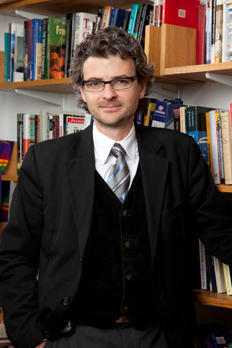
mattandrews Matt Andrews
Matt Andrews is Associate Professor of Public Policy at Harvard Kennedy School. A South African, he does research on governance in developing countries and also on implementation of reforms. His most recent work examines comparative governance arrangements as well as problem driven approaches to doing development differently.


**This event is co-sponsored by the FSI Policy Implementation Lab.** 


Governance Maps, Traps and Emergent Strategies
Matt Andrews Associate Professor of Public Policy, Harvard Kennedy School Associate Professor of Public Policy, Harvard Kennedy School
Seminars
-

Abstract:

Ballroom dancing legend Pierre Dulaine will discuss his 'Dancing Classrooms' method which he applied in his award winning documentary 'Dancing in Jaffa' to bring Arab and Jewish children together through dance. Mr. Dulaine will speak about the film, his journey into the world of dance and his experience as a Judge on the Arabic version of the TV show 'So You Think You Can Dance.'  Talk features audio-visual presentation and free lunch.

Speaker Bio:

Image
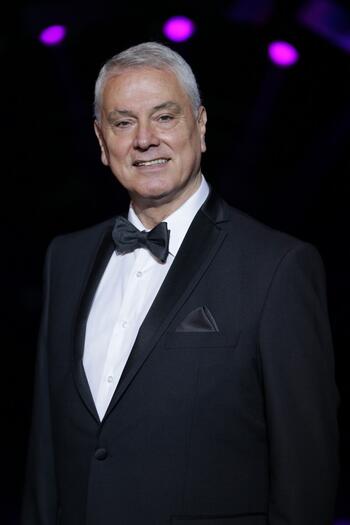
pierre dulaine 21

Pierre Dulaine was born in Jaffa, Palestine in 1944 to an Irish father and a Palestinian mother--both of whom fled the area in 1948.  After eight months of moving several times, Dulaine's family settled in Amman, Jordan. In 1956, the Suez Crisis forced Dulaine's parents to flee the country, eventually resettling in Birmingham, England.  In 1994 Dulaine founded the Dancing Classrooms program in New York City's public schools in which he encouraged children from various backgrounds to dance together. He later traveled to the city of his birth, Jaffa, to visit his childhood home and to make a film, 'Dancing in Jaffa,' where he brought Israeli Arabs and Jews together through dance and music.  His life was also fictionalized in the film Take the Lead starring Antonio Banderas.  More recently, Pierre Duaine has gained much acclaim in the Arab world for his role as Judge on the Arabic version of the TV show 'So You Think You Can Dance' where he encouraged young Arab men and women to pursue dance as way of dealing with difficult circumstances and certain outdated social taboos.

(See flyer for a list of the co-sponsors)


Note: A screening of 'Dancing in Jaffa' will take place on campus on May 29. For more information, click here.


[[{"fid":"218684","view_mode":"crop_870xauto","fields":{"format":"crop_870xauto","field_file_image_description[und][0][value]":"PD flyer","field_file_image_alt_text[und][0][value]":"","field_file_image_title_text[und][0][value]":"","field_credit[und][0][value]":"","field_caption[und][0][value]":"","field_related_image_aspect[und][0][value]":"","thumbnails":"crop_870xauto","pp_lightbox":false,"pp_description":false},"type":"media","attributes":{"height":1344,"width":870,"class":"media-element file-crop-870xauto"}}]]

Stanford Language Center,
Building 30-102,
Stanford, CA

Pierre Dulaine
Lectures
-

Abstract

Social and economic grievances of Tunisian youth played a major role in igniting the uprising in Tunisia, and more generally, the so-called Arab Spring. Despite a successful political transition in the country, progress on addressing youth grievances has been slow in light of deteriorating living conditions, rampant corruption, and rising unemployment. These realities continue to pose a serious challenge to the prospects of building a sustainable democracy in Tunisia. Based on data gathered from meetings with a diverse group of 500 young Tunisians, this talk will shed light on youth’s perceived and actual exclusion from social, economic, and political opportunities. In doing so it will provide a critical assessment of the underlying causes of youth alienation in the country and prospects for greater political, social and economic inclusion.

Speaker Bio

Image
attachment 1

Ghazi Ben Ahmed leads the Mediterranean Development Initiative of the Center for Transatlantic Relations, Johns Hopkins SAIS in Tunisia. He is the founder and the Secretary General of the Club de Tunis, a Tunisian based foundation that helps policymakers and entrepreneurs devise strategies and development projects for inclusive growth. He has set up jointly with Dar El Dhekra (Remembrance House, the first Tunisian Jewish Association), a project to safeguard Tunisian Jewish Heritage by promoting its products on the US market. Ghazi Ben Ahmed is the Tunisia Coordinator for Leaders Engaged in New Democracies (LEND). He cooperates with the U.S. State Department, the Community of Democracies, and the Club de Madrid to provide peer advice, peer support, and capacity building to political leaders and policy makers in Tunisia. Previously he was the Lead Trade Expert in the African Development Bank (AfDB). Before joining the AfDB, he was a Senior Advisor at the United Nation agency for Trade and Development (UNCTAD), in the Africa and LDC Division. He also worked for almost 10 years in the European Commission in Brussels, in several Directorates-Generals: Trade, EuropeAid and External Relations, responsible for trade issues, EU trade and development policy, textile negotiations, macroeconomic analysis, structural adjustment and institutional building in the Mediterranean countries.


*This event is co-sponsored with the Mediterranean Studies Forum.*


[[{"fid":"218669","view_mode":"crop_870xauto","fields":{"format":"crop_870xauto","field_file_image_description[und][0][value]":"Ghazi Ben Ahmed flyer","field_file_image_alt_text[und][0][value]":"","field_file_image_title_text[und][0][value]":"","field_credit[und][0][value]":"","field_caption[und][0][value]":"","field_related_image_aspect[und][0][value]":"","thumbnails":"crop_870xauto","pp_lightbox":false,"pp_description":false},"type":"media","attributes":{"height":"540","width":"870","class":"media-element file-crop-870xauto"}}]]


Okimoto Conference Room
3rd Floor East Wing
Encina Hall
616 Serra Street
Stanford, California 94305

Ghazi Ben Ahmed Executive Director Mediterranean Development Initiative
Seminars
-

Abstract:

In July and August, hostilities in the Gaza Strip left 2,131 Palestinians and 71 Israelis dead, including 501 Palestinian children and one Israeli child. Of Gaza’s 1.8 million residents, 475,000 are living in temporary shelters or with other families because their homes have been severely damaged. The extent of destruction has raised questions around culpability for war crimes on all sides of the conflict. International organizations including the United Nations Human Rights Council, Amnesty International and Human Rights Watch have called for independent investigation. At the end of 2014, Palestine deposited a 12(3) application to the ICC for ad-hoc jurisdiction as well as acceded to the Rome Statute, thus granting the International Criminal Court the authority to investigate war crimes conducted in Palestinian territory. Such an investigation would bring both Israel and Palestine under scrutiny for events from this summer and as far back as 2012, and possibly to 2002 when the ICC was first formed to investigate war crimes. This is the third large scale military offensive against the besieged coastal enclave since Israel’s unilateral disengagement in 2005. Given the shortcomings of the ceasefire on August 26, 2014, another attack is seemingly inevitable. How is such civilian carnage possible notwithstanding the humanitarian and human rights legal regimes established to reduce civilian suffering? And what are the prospects for accountability under international criminal law and beyond? This lecture will explore these questions and specifically the prospects for accountability at the ICC. 


Speaker Bio:

Image
20120912 law 006

Noura Erakat is a human rights attorney, activist, and an Assistant Professor at George Mason University. Her scholarship investigates the laws of war, human rights, refugee law, and national security. She is a Co-Editor of Jadaliyya, an electronic magazine that leverages scholarly expertise and local knowledge on the Middle East. She has taught International Human Rights Law and the Middle East at Georgetown University since Spring 2009 and before beginning at George Mason University, she was a Freedman Teaching Fellow at Temple University, Beasley School of Law. She has served as Legal Counsel for a Congressional Subcommittee in the House of Representatives, chaired by Congressman Dennis J. Kucinich. She helped to initiate and organize several national formations including Arab Women Arising for Justice (AMWAJ) and the U.S. Palestinian Community Network (USPCN). While an undergraduate student at UC Berkeley, Noura helped launch the first university divestment campaign at UC Berkeley in 2001 and upon graduating from Berkeley Law School, she helped seed BDS campaigns throughout the country uas the National Organizer with the US Campaign to End the Israeli Occupation. There, she also helped initiate federal lawsuits in the U.S. against Israeli officials in for war crimes and crimes against humanity. She has lived and worked throughout the Middle East including as part of a legal fact-finding delegation to the Gaza Strip in the aftermath of Israel’s Winter 2008/09 onslaught and spent the Spring 2010 academic semester in Beirut, Lebanon as a Visiting Scholar at the American University in Beirut.  Noura has appeared on PBS News Hour, BBC World Service, NPR’s “To The Point,” MSNBC's "Up With Chris Hayes," Fox’s “The O’ Reilly Factor,” NBC’s “Politically Incorrect,” Democracy Now, and Al-Jazeera Arabic and English. Her non-scholarly publications have appeared in the New York Times, USA Today, the Los Angeles Review of Books, The Nation, Huffington Post, and Foreign Policy among others.  Most recently, she co-published an anthology entitled Aborted State? The UN Initiative and New Palestinian Junctures. 


This event is co-sponsored by the Sohaib and Sara Abbasi Program in Islamic Studies.


[[{"fid":"218623","view_mode":"crop_870xauto","fields":{"format":"crop_870xauto","field_file_image_description[und][0][value]":"Noura Erakat flyer","field_file_image_alt_text[und][0][value]":"","field_file_image_title_text[und][0][value]":"","field_credit[und][0][value]":"","field_caption[und][0][value]":"","field_related_image_aspect[und][0][value]":"","thumbnails":"crop_870xauto","pp_lightbox":false,"pp_description":false},"type":"media","attributes":{"width":"870","class":"media-element file-crop-870xauto"}}]]

Okimoto Conference Room
3rd Floor East Wing
Encina Hall
616 Serra Street
Stanford, California 94305

Noura Erakat Assistant Professor George Mason University
Seminars
-

Abstract:

Islamic charities occupied a critical space in Mubarak-era Egypt. While there are a plethora of organizational types and activities, Mona Atia describes a particular type of work performed by Islamic charities as a merging of religious and capitalist subjectivity, or pious neoliberalism. Pious neoliberalism describes how Islamism works in conjunction with neoliberalism rather than as an alternative to it. It represents a new compatibility between business and piety that is not specific to any religion, but rather is a result of the ways in which religion and economy interact in the contemporary moment. In Egypt, pious neoliberalism produces new institutions, systems of knowledge production and subjectivities. This lecture explores the relationship between Islamic charity and Egypt’s variegated religious landscape. The author will discuss how Islamic charities helped spread Islamic practices outside the space of the mosque and into everyday life/spaces and their impact on development in Egypt.

Speaker Bio:

Image
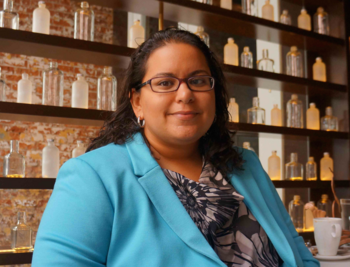
mona atia

Mona Atia is Associate Professor of Geography and International Affairs at the George Washington University. She received her PhD in Geography at the University of Washington, where she received the 2008 Distinguished Dissertation Award. She holds a MSc in Cities, Space and Society from the London School of Economics and a BS in Business Administration from the University of California at Berkeley. Professor Atia is a critical development geographer whose areas of expertise include Islamic charity and finance, philanthropy and humanitarianism, and the production of poverty knowledge. She is author of Building a House in Heaven: Pious Neoliberalism and Islamic Charity in Egypt (University of Minnesota Press, 2013). She currently holds an NSF CAREER Award for her project "The Impact of Poverty Mapping on the Geography of Development."


This event is co-sponsored by the Sohaib and Sara Abbasi Program in Islamic Studies.


[[{"fid":"218621","view_mode":"crop_870xauto","fields":{"format":"crop_870xauto","field_file_image_description[und][0][value]":"Mona Atia flyer","field_file_image_alt_text[und][0][value]":"","field_file_image_title_text[und][0][value]":"","field_credit[und][0][value]":"","field_caption[und][0][value]":"","field_related_image_aspect[und][0][value]":"","thumbnails":"crop_870xauto","pp_lightbox":false,"pp_description":false},"type":"media","attributes":{"height":"540","width":"870","class":"media-element file-crop-870xauto"}}]]


Reuben Hills Conference Room
2nd Floor East Wing E207
Encina Hall
616 Serra Street
Stanford, California 94305

Mona Atia Associate Professor The George Washington University
Seminars
-

**Please note that the event time has been changed to 4:30-6:30pm.**

Abstract

The Middle East security landscape is as complex and challenging as ever: The rise of ISIL; ongoing instability in Syria and Iraq; the framework of a nuclear agreement and the challenges of Iran's destabilizing activities. Dr. Spence will discuss how the U.S. Defense Department approaches these immediate challenges, as well as the impact of longer-term challenges and opportunities in the region. Dr. Spence will also discuss the role of the Defense Department in supporting political reform in the Middle East.


Speaker Bio

Image
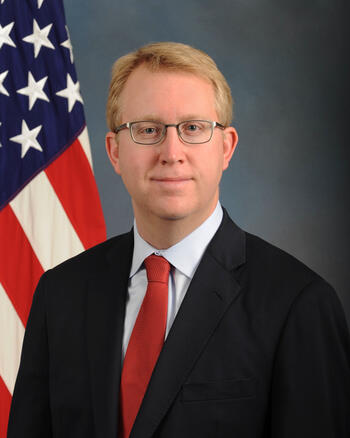
matthewspence
Dr. Matthew Spence was appointed Deputy Assistant Secretary of Defense for Middle East Policy in February 2012.  He is the principal advisor to the Secretary of Defense for Middle East policy, including Iraq, Syria, Iran, Israel, Egypt, and the Gulf states.  Prior to that, Dr. Spence worked at the White House on the National Security Council as Special Assistant to the President and Senior Director for International Economic Affairs and as Senior Advisor to two National Security Advisors. Dr. Spence is the co-founder of the Truman National Security Project. He has served as a Lecturer in International Relations at Oxford University, and has been widely published in international affairs. Trained as a lawyer, Dr. Spence also practiced criminal and international law in California, and served as a law clerk for Judge Richard Posner. A Marshall Scholar and Truman Scholar, Dr. Spence received his doctorate in International Relations from Oxford University; J.D. from Yale Law School; and B.A. and M.A. in International Policy Studies from Stanford University. He was born and raised in southern California.

Matthew Spence Deputy Assistant Secretary of Defense for Middle East Policy Deputy Assistant Secretary of Defense for Middle East Policy
Seminars
-

On November 14-15, the Program on American Democracy in Comparative Perspective hosted a conference on Lobbying and Campaign Finance. The conference brought together academics, practitioners, and lawyers to understand the impact of money in politics on a variety of outcomes, including special interest capture, democratic distortion, and inequality. The conference provided a rare opportunity to combine discussions of potential political reforms with evaluation of recent empirical findings in the area of lobbying and campaign finance. Participants covered a range of topics, including lobbying in Congress and in executive agencies; the relationship between patterns of campaign finance and partisan polarization; campaign finance laws, political parties, and special interest influence; and the regulation of lobbying and political money in other advanced democracies. The conference report summarizes the reform ideas that emerged from the conference discussions, including increasing soft money to political parties, disclosure of dark money, limiting lobbying access through the revolving door, and increasing the capacity of government.


The conference was held at the William and Flora Hewlett Foundation, a donor to the Program on American Democracy.

Agenda and Participants
Download pdf
Conference Report
Download pdf
Conferences
-

**Watch livestream here**

*Purchase book here*

Watch live streaming video from bccconferencechannel at livestream.com

Abstract

Latin America has gone through a major transformation in the past two decades. According to the United Nations, with the discovery of new oil and mineral deposits and increases in energy exports, manufacturing, and tourism, Latin America's economic growth and development will increase, and the region's global influence will become greater and greater.

In The Shared Society, Alejandro Toledo, whose tenure as president of Peru helped spur the country's economic renaissance, develops a plan for a future Latin America in which not only is its population much better off economically than today but the vast 40 percent of its poor and marginalized are incorporated into a rising middle class, democratic institutions work more effectively, and the extraordinary ecosystem of Latin America is preserved.


Speaker Bio:

Image
pid 25984

Alejandro Toledo served as the President of Peru from 2001 to 2006 and has been honored by the U.S. Senate for his policies during that tenure. He has held positions at the World Bank and the United Nations and was a Visiting Scholar in International Affairs at Harvard University as well as at Johns Hopkins University and a Senior Fellow and Distinguished Visiting Lecturer at Stanford University and the Brookings Institution. Toledo founded and continues to serve as the President of the Global Center for Development and Democracy in Washington, DC. 


This event is sponsored by CDDRL, FSI, the Center for Latin American Studies and Redwood Press.


[[{"fid":"218581","view_mode":"crop_870xauto","fields":{"format":"crop_870xauto","field_file_image_description[und][0][value]":"","field_file_image_alt_text[und][0][value]":"","field_file_image_title_text[und][0][value]":"","field_credit[und][0][value]":"","field_caption[und][0][value]":"","field_related_image_aspect[und][0][value]":"","thumbnails":"crop_870xauto","pp_lightbox":false,"pp_description":false},"type":"media","attributes":{"height":1433,"width":870,"class":"media-element file-crop-870xauto"}}]]

Former President of Peru (2001-2006) Former President of Peru (2001-2006)
Seminars
Subscribe to Democracy