Democracy
-

This panel will examine the evolving political conflicts in Tunisia since the July 25 power grab executed by President Kais Saied that has been widely characterized as a step toward cementing authoritarian rule. Our panelists will examine the challenges recent developments have posed to Tunisia’s struggling democracy and the prospects for building consensus around an inclusive process of political reform.
 

Register Now

SPEAKER BIOS
 

Image
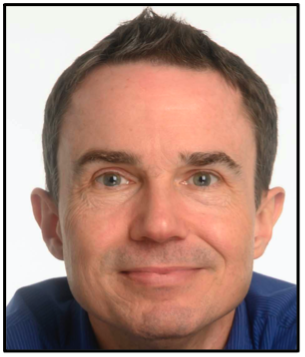
Achraf Aouadi
Achraf Aouadi is a Tunisian activist and academic that founded the watchdog organization I WATCH after the Tunisian Revolution in 2011. The organization is committed to fighting corruption and enhancing transparency. Aouadi is a holder of a master’s degree in international relations from the University of Birmingham. He is a former CDDRL Draper Hills fellow.

Image
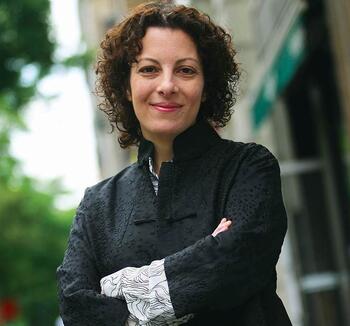
Saida Ounissi
Saida Ounissi is a member of the Tunisian Assembly of People’s Representatives and previously served as Minister for Employment and Vocational Training. She represents Tunisians living in the North of France for the Ennahdha Party and was first elected in October 2014 and reelected in October 2019. In 1993, her family fled the dictatorship of Ben-Ali for France where she completed all her schooling. In 2005, she joined the University of Paris 1 Panthéon Sorbonne for a double degree in History and Political Science. She obtained her master’s degree at the Institute for the Study of Economic and Social Development and completed her studies with an internship at the African Development Bank in Tunis. In 2016, she was recruited by Prime Minister Youssef Chahed to join his Cabinet as Secretary of State in the Ministry of Employment and Vocational Training, charged with vocational training and private initiative. In 2018, she was promoted as the Minister for Employment and Vocational Training, becoming the youngest minister in Tunisia.

This event is co-sponsored by the Program on Arab Reform and Democracy at CDDRL, Stanford University's Center for African Studies, and the Abbasi Program in Islamic Studies.

Online, via Zoom: REGISTER

Achraf Aouadi
Saida Ounissi
Seminars
-

There is an ongoing war between Ukraine and Russia. It is not a war solely for territories, resources, or people — it's an ideological war, indicative of the battle between authoritarianism and democracy. What is the real nature of this conflict and who are the parties involved? What tools does the Kremlin use to control the narrative and what can be done to stop it? And why is Ukraine the cornerstone of democracy in the region? Join former Prime Minister of Ukraine Oleksiy Honcharuk, the Bernard and Susan Liautaud Visiting Fellow at FSI, to discuss.


The Liautaud Fellowship was established to bring former heads of state or senior policymakers to Stanford, with the goal of promoting meaningful dialogue on the challenges world leaders face in crafting policy solutions for pressing global problems. Toomas Hendrik Ilves, the former President of Estonia, was the inaugural Liautaud Fellow in 2017, followed by H.R. McMaster in 2018.

ABOUT THE SPEAKER

Image
Oleksiy Honchaurk

Oleksiy Honchaurk was Ukraine’s 17th Prime Minister (August 2019 – March 2020). In just 5 months Mr. Honcharuk initiated important changes that other Ukrainian politicians had not dared to do for years (launched of large and small privatization processes, started of land market implementation, conducted Naftogaz unbundling, started combating shade markets – illegal gambling houses and petrol stations were closed, launched of Anti-Raider (illegal seizure of business or property) Office that would react within just 24 hours to any cases of such illegal seizure, etc).

Before he served as a Deputy Head of the Presidential Office of Ukraine and was a member of the National Reforms Council under the President of Ukraine. Previously for more than ten years, Mr. Honcharuk has been working in the legal sphere. He has established a reputation as a strong professional and qualified specialist. Mr. Honcharuk is also known as a strong fighter for business community rights. 2005-2008, he worked as a lawyer at PRIOR-Invest investment company and later on headed its legal department. 2008-2015, he worked as an arbitration manager and managing partner at Constructive Lawyers, a law firm he had founded, which provided legal services in the field of investment and financing real estate construction.

From 2015-2019, Oleksiy Honcharuk headed Better Regulation Delivery Office non-governmental organization (BRDO). Among his achievements as the head of the BRDO was the cancellation of around 1000 Government acts and adoption of more than 50 decisions, facilitating activity of business in Ukraine. Oleksiy Honcharuk also served as an external advisor to the First Deputy Prime Minister - Minister of Economic Development and Trade of Ukraine. He has a degree in law from Interregional Academy of Personal Management and in Public Administration from National Academy for Public Administration under the President of Ukraine. He was born on July 7, 1984, in Zhmerynka, Vinnytsia region.

Hybrid event: Online via Zoom, and in-person in Bechtel Conference Center

616 Jane Stanford Way,

Encina Hall,

Stanford, CA 94305-6055

0
Bernard and Susan Liautaud Visiting Fellow, 2021
rsd21_038_1181a.jpg

Ukraine’s 17th Prime Minister (August 2019 – March 2020). In just 5 months Mr. Honcharuk initiated important changes that other Ukrainian politicians had not dared to do for years (launched of large and small privatization processes, started of land market implementation, conducted Naftogaz unbundling, started combating shade markets –– illegal gambling houses and petrol stations were closed, launched of Anti-Raider (illegal seizure of business or property) Office that would react within just 24 hours to any cases of such illegal seizure, etc).

Before he served as a Deputy Head of the Presidential Office of Ukraine and was a member of the National Reforms Council under the President of Ukraine. Previously for more than ten years, Mr. Honcharuk has been working in the legal sphere. He has established a reputation as a strong professional and qualified specialist. Mr. Honcharuk is also known as a strong fighter for business community rights. 2005-2008, he worked as a lawyer at PRIOR-Invest investment company and later on headed its legal department. During 2008-2015, he worked as an arbitration manager and managing partner at Constructive Lawyers, a law firm he had founded, which provided legal services in the field of investment and financing real estate construction.

From 2015-2019, Oleksiy Honcharuk headed Better Regulation Delivery Office non-governmental organization (BRDO). Among his achievements as the head of the BRDO was the cancellation of around 1000 Government acts and adoption of more than 50 decisions, facilitating activity of business in Ukraine. Oleksiy Honcharuk also served as an external advisor to the First Deputy Prime Minister - Minister of Economic Development and Trade of Ukraine.

Oleksiy Honcharuk has a degree in law from Interregional Academy of Personal Management and in Public Administration from National Academy for Public Administration under the President of Ukraine. He was born on July 7, 1984, in Zhmerynka, Vinnytsia region.

CV
Former Prime Minister of Ukraine, Bernard and Susan Liautaud Visiting Fellow at FSI

FSI
Stanford University
Encina Hall C140
Stanford, CA 94305-6055

(650) 736-1820 (650) 724-2996
0
Satre Family Senior Fellow, Freeman Spogli Institute for International Studies
kathryn_stoner_1_2022_v2.jpg MA, PhD

Kathryn Stoner is the Mosbacher Director of the Center on Democracy, Development, and the Rule of Law (CDDRL), and a Senior Fellow at CDDRL and the Center on International Security and Cooperation at FSI. From 2017 to 2021, she served as FSI's Deputy Director. She is Professor of Political Science (by courtesy) at Stanford and she teaches in the Department of Political Science, and in the Program on International Relations, as well as in the Ford Dorsey Master's in International Policy Program. She is also a Senior Fellow (by courtesy) at the Hoover Institution.

Prior to coming to Stanford in 2004, she was on the faculty at Princeton University for nine years, jointly appointed to the Department of Politics and the Princeton School for International and Public Affairs (formerly the Woodrow Wilson School). At Princeton she received the Ralph O. Glendinning Preceptorship awarded to outstanding junior faculty. She also served as a Visiting Associate Professor of Political Science at Columbia University, and an Assistant Professor of Political Science at McGill University. She has held fellowships at Harvard University as well as the Woodrow Wilson Center in Washington, DC. 

In addition to many articles and book chapters on contemporary Russia, she is the author or co-editor of six books: "Transitions to Democracy: A Comparative Perspective," written and edited with Michael A. McFaul (Johns Hopkins 2013);  "Autocracy and Democracy in the Post-Communist World," co-edited with Valerie Bunce and Michael A. McFaul (Cambridge, 2010);  "Resisting the State: Reform and Retrenchment in Post-Soviet Russia" (Cambridge, 2006); "After the Collapse of Communism: Comparative Lessons of Transitions" (Cambridge, 2004), coedited with Michael McFaul; and "Local Heroes: The Political Economy of Russian Regional" Governance (Princeton, 1997); and "Russia Resurrected: Its Power and Purpose in a New Global Order" (Oxford University Press, 2021).

She received a BA (1988) and MA (1989) in Political Science from the University of Toronto, and a PhD in Government from Harvard University (1995). In 2016 she was awarded an honorary doctorate from Iliad State University, Tbilisi, Republic of Georgia.

Download full-resolution headshot; photo credit: Rod Searcey.

Mosbacher Director, Center on Democracy, Development and the Rule of Law
Professor of Political Science (by courtesy), Stanford University
Senior Fellow (by courtesy), Hoover Institution
CV
Date Label
Mosbacher Director of CDDRL
Lectures
Authors
Michael Breger
News Type
News
Date
Paragraphs

On September 17, 2021, APARC hosted a delegation from the Mongolian Parliament including speaker Gombojav Zandanshatar, who addressed a joint panel of parliament members and Stanford scholars. Zandanshatar, an alumnus at the Stanford Center on Democracy, Development and the Rule of Law, instituted a program of deliberative democracy in Mongolia, and reflected on the outcomes and challenges that still affect the nation.

Zandanshatar’s work with Stanford’s Center for Deliberative Democracy has impacted political reform processes in Mongolia, and he underscored the potential for academic exchange and policy research to improve overall governance and civic participation.

Sign up for APARC newsletters to receive our experts' analysis and commentary. 


A partnership years in the making

Following Zandanshatar’s initial time as a visiting scholar at CDDRL in 2015, he returned to Mongolia, where he promoted concepts of deliberative democracy. In 2017, the Mongolian government adopted the deliberative polling method developed by Stanford communications professor James Fishkin.

Other places around the world have looked seriously at what you are doing in Mongolia.
James Fishkin
Janet M Peck Chair of International Communication, Stanford

The deliberative method that analyzes public opinion was put in place to garner public input before the Mongolian constitution could be amended. Fishkin, who devised the deliberative polling process more than 30 years ago, sat on the panel and mentioned that "other places around the world have looked seriously at what you are doing in Mongolia." 

Member of Parliament Bulgantuya Khurelbaatar also addressed the panel, discussing the country’s path towards benefiting from democracy and a market economy. Bulgantuya shared statistics of recent economic and industrial outputs, and enumerated the many challenges facing the maturing democracy. Despite Mongolia's improvements in governance, the economy, the health sector, and access to education, the poverty rate in the country remains high (28.4%), there is a serious budget deficit, and the quality of education needs improvement, said Bulgantuya.

While many are optimistic about Mongolia’s ability to remain democratic in its current geostrategic context, Zandanshatar cited professor Larry Diamond's concept of democratic recession. Zandanshatar and Bulgantuya responded to questions from Diamond and CDDRL Director Kathryn Stoner on how Mongolia is dealing with the challenges to its democracy, especially against the rise of Russia and China, two authoritarian competitors on which its economy is heavily dependent. According to the delegatiuon, "Democracy is the only way Mongolia can stay alive as a nation."  These results of the panel suggest that autocratic pressure poses an important challenge to democratic integrity.

Read More

Flags of Asian states and text "Symposium: The Stakes in Asia"
Commentary

Talking Democracy: A Symposium on Asia

On a panel discussion hosted by the political quarterly 'Democracy,' Donald K. Emmerson joins experts to assess how the Biden administration is navigating the U.S. relationships in Asia.
Talking Democracy: A Symposium on Asia
A coronavirus spinning with Mongolia flag behind
Blogs

Lessons from Mongolia’s COVID-19 Containment Strategy

Dr. Gendengarjaa Baigalimaa, an oncologist at a hospital in Mongolia’s capital and former postdoctoral fellow with APARC’s Asia Health Policy Program, explains how decisive preventative measures have helped the country prevail in the fight against COVID-19.
Lessons from Mongolia’s COVID-19 Containment Strategy
Photo clinic HEADLINE 2
News

Stanford fellow addresses burden of cervical cancer in Mongolia

Stanford fellow addresses burden of cervical cancer in Mongolia
Hero Image
Mongolian parliamentary delegation
All News button
1
Subtitle

At an in-person address to a panel of parliament members and Stanford scholars, Speaker Gombojav Zandanshatar assessed the nation's experiment in deliberative democracy and offered reflections on the challenges that face maturing democracies.

-

This event is available through livestream only. Please register in advance to receive a personalized link to watch the webinar:  https://bit.ly/3tNN7wG

Myanmar Back into Darkness: 2021 Shorenstein Journalism Award Recipient Swe Win to Headline Award Panel Discussion

The military coup in February 2021 put an abrupt end to hopes of democracy and liberty in Myanmar.  With every form of free speech now brutally suppressed, one of the major victims of the coup has been the independent press. Newsrooms were raided and dozens of journalists have been arrested. Several publications, including Myanmar Now, had their operating licenses revoked and their websites blocked. Most of the staff of the news outlets targets by the junta were forced to flee to territories along the country's border areas controlled by ethnic armed organizations. From there, they continue their professional work despite the threats to their lives and logistical difficulties.  
 

Join APARC as we honor Burmese investigative journalist Swe Win, editor-in-chief of Myanmar Now and winner of the 2021 Shorenstein Journalism Award. In his award keynote address, Swe Win will speak about journalism under threat in Myanmar, what it is like to report on the crisis in the country from outside while in exile, and Myanmar’s future.

The keynote will be followed by a conversation with Swe Win and two experts: Scot Marciel, a career diplomat, former U.S. ambassador to Myanmar, and currently a visiting practitioner fellow on Southeast Asia at APARC, and Eileen Donahoe, executive director of the Global Digital Policy Incubator at Stanford.

The event will conclude with an audience Q&A session moderated by Donald K. EmmersonDirector of the Southeast Asia Program at APARC.

Follow us on Twitter and use the hashtag #SJA21 to join the conversation.

Speakers:

Image
Photo of Swe Win, winner of 2021 Shorenstein Journalism Award
Swe Win is a Burmese journalist, human rights defender, and the chief editor of Yangon-based news outlet Myanmar Now. He has survived an assassination attempt and detention by his own government. Now he leads Myanmar Now from exile and his newsroom is in hiding.

Swe Win has written extensively on human rights cases that involve physical injury or death, unlawful detention or miscarriage of justice in Myanmar. He is the recipient of the 2019 Ramon Magsaysay Award for Emergent Leadership, which is regarded as Asia's equivalent of the Nobel Prize, the 2017 European Union’s Schuman Award for Human Rights, and the 2016 Presidential Certificate of Honor for Social Service through Journalism from the Myanmar Ministry of Information for his groundbreaking investigation into years-long abuse of domestic workers at a Yangon tailor shop.

Previously, he worked as a senior reporter for the Irrawaddy Magazine and freelanced for international publications such as the New York Times. From 1998 to 2005, he spent seven years in jail for distributing anti-junta material.

Photograph: Thet Htoo for the Mekong Review - https://mekongreview.com/cause-and-karma


Image
Photo of Eileen Donahoe
Eileen Donahoe is the executive director of the Global Digital Policy Incubator (GDPI) at the Cyber Policy Center at Stanford University’s Freeman Spogli Institute for International Studies. GDPI is a global multi-stakeholder collaboration hub for development of policies that reinforce human rights and democratic values in digitized society. Areas of current research include AI and human rights, combating digital disinformation, and governance of digital platforms.

Donahoe served in the Obama administration as the first U.S. Ambassador to the UN Human Rights Council in Geneva, at a time of significant institutional reform and innovation. After leaving government, she joined Human Rights Watch as director of global affairs, where she represented the organization worldwide on human rights foreign policy, with special emphasis on digital rights, cybersecurity, and internet governance. Earlier in her career, she was a technology litigator at Fenwick & West in Silicon Valley.

She serves on the National Endowment for Democracy Board of Directors; the Transatlantic Commission on Election Integrity; the World Economic Forum Future Council on the Digital Economy; University of Essex Advisory Board on Human Rights, Big Data and Technology; NDI Designing for Democracy Advisory Board; Freedom Online Coalition Advisory Network; and Dartmouth College Board of Trustees.


Image
Photo of Scot Marciel
Scot Marciel is a career diplomat with 35 years of experience in Asia and around the world. He is currently a visiting practitioner fellow on Southeast Asia at Shorenstein APARC.

Mr. Marciel served as U.S. Ambassador to Myanmar from March 2016 through May 2020, leading a mission of 500 employees during the difficult Rohingya crisis and a challenging time for both Myanmar’s democratic transition and the United States-Myanmar relationship. Prior to serving in Myanmar, Ambassador Marciel served as Principal Deputy Assistant Secretary for East Asia and the Pacific at the State Department, where he oversaw U.S. relations with Southeast Asia.

In previous roles, he served as U.S. ambassador to Indonesia, the first U.S. ambassador for ASEAN Affairs, deputy assistant secretary of state for Southeast Asia, at U.S. missions in Turkey, Hong Kong, Vietnam, Brazil and the Philippines, and at the State Department in Washington in multiple positions.


About the Shorenstein Journalism Award:

The Shorenstein Journalism Award, which carries a cash prize of US $10,000, recognizes outstanding journalists who have spent their careers helping audiences around the world understand the complexities of the Asia-Pacific region, defined broadly to include Northeast, Southeast, South, and Central Asia and Australasia. Award recipients are veteran journalists with a distinguished body of work. News organizations are also eligible for the award.

The award is sponsored and presented by the Walter H. Shorenstein Asia-Pacific Research Center (Shorenstein APARC) at Stanford University. It honors the legacy of the Center’s benefactor, Mr. Walter H. Shorenstein, and his twin passions for promoting excellence in journalism and understanding of Asia. It also symbolizes the Center’s commitment to journalism that persistently and courageously seeks accuracy, deep reporting, and nuanced coverage in an age when attacks are regularly launched on the independent news media, on fact-based truth, and on those who tell it.

An annual tradition, the Shorenstein Journalism Award alternates between recipients whose work has mostly been conveyed through American news media and recipients whose work has mostly been conveyed through news media in one or more parts of the Asia-Pacific region. Included among the latter candidates are journalists who are from the region and work there, and who, in addition to their recognized excellence, may have helped defend and encourage free media in one or more countries in the region.

Learn more at https://aparc.fsi.stanford.edu/events/shorenstein-journalism-award.

Virtual Webinar Via Zoom

Register at: https://bit.ly/3tNN7wG

Swe Win <br><i>Editor-in-Chief, Myanmar Now; 2021 Shorenstein Journalism Award Winner </i><br><br>
Eileen Donahoe <br><i> Executive Director, Global Digital Policy Incubator, Stanford University </i><br><br>
Scot Marciel <br><i> Career Diplomat, Former U.S. Ambassador to Myanmar; Visiting Practitioner Fellow on Southeast Asia, Shorenstein APARC, Stanford University </i><br><br>
Panel Discussions
0
Visiting Scholar at The Europe Center, 2021-2022
potz_-_photo_3.jpg

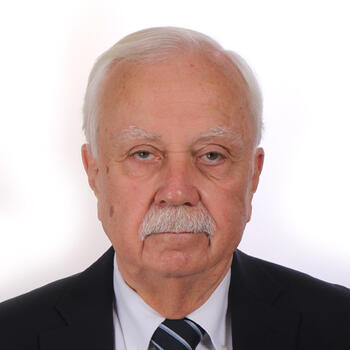
Maciej Potz is a professor of Political Science at the Department of Political Systems, Faculty of International and Political Studies, University of Łódź, Poland. He earned his Ph.D. in 2006 from the Silesian University in Katowice and his post-doctoral degree from the University of Łódź in 2017, both in Political Science. His primary area of interest is religion and politics, with special focus on theocracies (as a Foundation for Polish Science scholar, he studied Shaker and Mormon theocracies in the USA in 2009 and 2012) and political strategies of religious actors in contemporary democracies, especially in Poland and the USA. His other research interests include political theory (especially theory of power and democratic theory), comparative politics and, most recently, evolutionary political science.

Maciej Potz published three monographs: (i) Granice wolności religijnej [The Limits of Religous Liberty] 2008 (2nd ed. 2015), Wrocław: FNP, on religious freedom, church-state relations and confessional politics in the USA; (ii) Amerykańskie teokracje. Źródła i mechanizmy władzy usankcjonowanej religijnie [American Theocracies. The Sources and Mechanisms of Religion-Sanctioned Power] 2016, Łódź: UŁ, theorizing theocracy as a type of a political system and emprically exploring North American theocracies; (iii) Political Science of Religion: Theorizing the Political Role of Religion, 2020, London: Palgrave MacMillan – a theoretical framework for the analysis of religion’s impact on politics. He also authored several journal articles, including in Religion, State and Society, Journal of Political Power, Politics and Religion and Studia Religiologica.

Maciej Potz has taught political science-related courses in the University of Lodz and, as guest lecturer, at other European universities, including University of the West of Scotland in Glasgow, Buskerund College and NTNU (Norway), University of Joensuu (Finland), University of La Laguna (Spain). He participated in a number of international conferences, including “XXI World IAHR Congress in Erfurt (2015), IPSA World Congresses of Political Science in Santiago (2019), Madrid (2012) and Poznań (2016), APSA Annual Meeting (forthcoming in 2021).  

The research project he will be pursuing at Stanford, entitled Costly signaling Under His Eye: explaining the commune longevity puzzle, uses costly signaling theory of religion to explore the determinants of cohesion and longevity of (communitarian) religious groups. It also proposes a novel political interpretation of signaling behavior. Over the next three years, he will head a research team undertaking an empirical study (funded by National Science Centre of Poland) of power and status in Catholic religious orders.


-

For Fall Quarter 2021, FSI will be hosting hybrid events. Many events will be open to the public online via Zoom, and limited-capacity in-person attendance for Stanford affiliates may be available in accordance with Stanford’s health and safety guidelines.

                                                Register for Zoom                                                         Register for In-Person
                                                           (Open to all)                                                                    (Stanford affiliates only)          


Retired U.S. Army Lieutenant Colonel Alexander Vindman, who found himself at the center of a firestorm for his decision to report the phone call between former U.S. President Donald Trump and Ukrainian President Volodymyr Zelensky that led to presidential impeachment, tells his own story for the first time.


Here, Right Matters is a stirring account of Vindman's childhood as an immigrant growing up in New York City, his career in service of his new home on the battlefield and at the White House, and the decisions leading up to the moment of truth he faced for his nation.

Alexander Vindman, a retired U.S. Army Lieutenant Colonel, was most recently the director for Eastern Europe, the Caucasus, and Russia on the White House’s National Security Council. Previously, he served as the Political-Military Affairs Officer for Russia for the Chairman of the Joint Chiefs of Staff and as an attaché at the U.S. Embassy in Moscow, Russia. While on the Joint Staff, he co-authored the National Military Strategy Russia Annex and was the principal author for the Global Campaign for Russia. He is currently a doctoral student and fellow of the Foreign Policy Institute at the Johns Hopkins School of Advanced International Studies (SAIS), Pritzker Military Fellow at the Lawfare Institute, and a visiting fellow at the University of Pennsylvania Perry World House. Follow him on Twitter @AVindman.

Alexander Vindman | Retired U.S. Army Lieutenant Colonel
Lectures

Shorenstein APARC
Stanford University
Encina Hall E301,
Stanford CA 94305-6055

0
ho_ki_kim.jpg

Ho Ki Kim joined the Korea Program at APARC as the 2021 Koret Fellow. Kim is a professor of sociology at Yonsei University in Korea. He received a Ph.D. from Bielefeld University in Germany.

Professor Kim is the author of Contemporary Capitalism and Korean Society (in Korean, 1995), Modernity and Social Change in Korea (in Korean, 1999), Reflections on the Civil Society in Korea  (in Korean, 2007), Zeitgesit and Intellectuals (in Korean, 2012), Adventures of Intellectuals in Modern Korea (in Korean, 2020), and "Change of Ideological Terrain and Political Consciousness in South Korea" (2005). His research interests include political sociology and modern social theories. During his stay at Stanford, Professor Kim will conduct research on democracy in Korea.

Visiting Scholar at APARC
Koret Fellow, 2021-2022
Fall 2021
-

For Fall Quarter 2021, FSI will be hosting hybrid events. Many events will be open to the public online via Zoom, and limited-capacity in-person attendance for Stanford affiliates may be available in accordance with Stanford’s health and safety guidelines.

                                                Register for Zoom                                                         Register for In-Person
                                                           (Open to all)                                                                    (Stanford affiliates only)              


Why is democracy so threatened in America and around the world? And what can we do about it? Join Ben Rhodes to explore the answers to these questions and discuss his recent book, After the Fall.

Image
Ben Rhodes

In 2017, as Ben Rhodes was helping Barack Obama begin his next chapter, the legacy they had worked to build for eight years was being taken apart. To understand what was happening in America, Rhodes decided to look outward. Over the next three years, he traveled to dozens of countries, meeting with politicians, activists, and dissidents confronting the same nationalism and authoritarianism that was tearing America apart. Part memoir and part reportage, After the Fall investigates how much America’s fingerprints are on a world we helped to shape, through our post–Cold War embrace of unbridled capitalism and our post-9/11 nationalism and militarism; our mania for technology and social media; and the racism that fueled the backlash to America’s first Black president. At the same time, Rhodes learns from stories of a diverse set of characters—from Barack Obama himself to Cuban rebels to a rising generation of international leaders—that looking squarely at where America has gone wrong makes clear how essential it is to fight for what America is supposed to be, for our own country and the entire world.

Ben Rhodes is a writer, political commentator, and national security analyst. He is currently a contributor for NBC News and MSNBC; co-host of Pod Save the World; a senior advisor to former President Barack Obama; and chair of National Security Action, which he co-founded with Jake Sullivan in 2018. From 2009-2017, Ben served as a Deputy National Security Advisor to President Obama. In that capacity, he participated in all of President Obama’s key decisions, and oversaw the President’s national security communications, speechwriting, and public diplomacy.

Writer, political commentator, and national security analyst
Ben Rhodes | Writer, political commentator, and national security analyst
Seminars
Authors
Melissa Morgan
News Type
News
Date
Paragraphs

In 2015, Volodymyr Zelenskyy was at the height of a successful career as an entertainer. Though trained as a lawyer at the Kryvyi Rih Institute of Economics in Eastern Ukraine, the then 37 year old Zelenskyy was a successful comedian and public personality. As the star of the popular TV show, Servant of the People, he played a local history teacher who inadvertently becomes the president of Ukraine following a viral video rant about corruption.

No one watching comedic President Zelenskyy then could have possibly imagined the real-life plot twist that would follow. In an incredible act of life imitating art, in April 2019, Volodymyr Zelenskyy once again stood on stage in front of a cheering crowd, but this time as the actual president of Ukraine.

He won in a landslide election against incumbent president Petro Poroshenko on a platform of systemic change and progress using an almost exclusively virtual campaign. Speaking from his headquarters on election night, he affirmed the exuberance and hope of his supporters: “I can say as a citizen of Ukraine to all countries of the post-Soviet Union: Look at us — everything is possible.”

This same message shaped the theme of President Zelenskyy’s remarks at his historic address from the Freeman Spogli Institute for International Studies (FSI) at Stanford University on September 2. The first Ukrainian president to ever visit California, President Zelenskyy, First Lady Olena Zelenska and their delegation joined a group of FSI faculty members led by FSI Director Michael McFaul at an outdoor event held in the Encina Courtyard.

In his remarks, Zelenskyy drew inspiration from Steve Jobs’ famous "How to Live Before You Die" commencement address given at Stanford in 2005.

"This is one of the most famous speeches ever given at Stanford,” he said. “It's about believing in dreams and overcoming the impossible. This is the same as my story. I am just a common guy from a common family from a common industrial town in Eastern Ukraine. Yet here I am today at Stanford, because everything is possible."

He continued, “It is the same for Ukraine. Many people look at us and think that it will be impossible to achieve the goals we hope for. But we know that our critics are wrong. The people of our country love democracy and freedom and will not let threats take those things away. We know that anything is possible."

Looking to the future, Zelenskyy outlined the steps his administration is undertaking to bring increased digitization to Ukraine. These efforts include launching fully electronic passports, moving business and legal services online and expanding the scope of e-goverance. The hope is that this meld of new technology will help curb corruption while simultaneously creating more equitable opportunities and better access to public services for more Ukranians.

Speaking on the ambitious scope of these plans, the president acknowledged, “There will be resistance to the changes and innovations that we are going to make.” Nonetheless, he remains committed to the work ahead of strengthening democratic institutions in Ukraine and building on the progress that has already been made.  “We do not have a ‘Ukrainian Dream,’ yet,” he said. “But we have a ‘Ukrainian Goal’ and a ‘Ukrainian Mission’ to make the future we want for our country.” An edited recording of his remarks is below.

Keeping with Stanford tradition, Zelenskyy took questions from the audience after his prepared remarks. A variety of students and Stanford community members from Russia, Burma, Belarus and beyond had the opportunity to engage the president on a range of issues including U.S.-Ukraine relations, armament sales abroad and concerns over Russian aggression in Crimea and influence Eastern Ukraine. Of particular meaning was Zelensky’s affirmation and support for the democratic movement in Belarus led by Svaitlana Tsikhanouskaya, whom FSI hosted earlier this summer at a faculty roundtable.

Image
Tweet from Franak Viačorka

Students and faculty alike were appreciative of the president’s candor and good nature in addressing difficult topics.

Image
Tweet from Rose Gottemoeller
Image
Tweet from Graham Webster
Image
Tweet from Me Me Khant
Image
Tweet from Omar Pimentel

Following the formal remarks, President Zelenskyy and First Lady Zelenska had an opportunity to meet with Stanford President Marc Tessier-Lavigne in the Memorial Church Courtyard. Prior to leaving, the First Lady also sat down with leaders and students from Stanford's Office of Accessible Education (OAE), an area of interest she would like to support and better develop in Ukraine.

For FSI, the president’s visit was another affirmation of the special connection between Ukraine and the Stanford community. Since 2016, the Center on Democracy, Development and the Rule of Law has hosted the Ukrainian Emerging Leaders Program, which provides a 10-month academic training fellowship in support of mid-career practitioners working actively as policy-makers, legal professionals, entrepreneurs and leaders of civil society organizations in Ukraine.

Speaking to this shared history in his opening introductions, FSI Director Michael McFaul emphasized the crucial need for ongoing support and intellectual investment into Ukraine. “The fight for democracy and independence in Ukraine is one of the most important causes in the world today,” he affirmed. “Not just for Ukrainians, but for all who cherish the ideals of democracy, liberty and sovereignty.”

To President Zelenskyy, McFaul extended a future invitation: “You are always welcome back, either as president or in retirement as a professor.”

“With the classes you offer, I will think about it,” Zelenskyy replied with a smile.

Read More

President Zelenskky addresses Stanford students and community members via a live video address in the CEMEX auditorium.
News

President Volodymyr Zelenskyy Calls on Students to Lead as Future Ambassadors in a Special Video Address at Stanford

Ukraine’s President Volodymyr Zelenskyy spoke to the Stanford community in a special video address about his country’s war against Russia for independence, freedom, and global democracy, which he said requires the continued support of all the people of the free world.
President Volodymyr Zelenskyy Calls on Students to Lead as Future Ambassadors in a Special Video Address at Stanford
Larry Diamond speaking in the Bechtel Conference Center in Encina Hall
Commentary

"We Have Entered a New Historical Era": Larry Diamond on the Future of Democracy

Speaking at the April 2022 meeting of the FSI Council, Larry Diamond offered his assessment of the present dangers to global democracy and the need to take decisive action in support of liberal values.
"We Have Entered a New Historical Era": Larry Diamond on the Future of Democracy
Sviatlana Tsikhanouskaya discusses the future of democracy in Belarus with a roundtable of Stanford scholars.
News

Belarusian Leader Sviatlana Tsikhanouskaya Meets with Stanford Scholars for Roundtable on Democracy in Belarus

Democratic leader Sviatlana Tsikhanouskaya and her delegation joined an interdisciplinary panel of Stanford scholars and members of the Belarusian community to discuss the future of democracy in Belarus.
Belarusian Leader Sviatlana Tsikhanouskaya Meets with Stanford Scholars for Roundtable on Democracy in Belarus
Hero Image
President Volodymyr Zelenskyy of Ukraine speaks at the Freeman Spogli Institute for International Studies Rod Searcey
All News button
1
Subtitle

President Zelenskyy outlined the steps his administration is undertaking to bring increased digitization to Ukraine, curb corruption and create more equitable access to public services for more Ukrainians.

Encina Hall

616 Jane Stanford Way

Stanford, CA 94305-6055

0
CDDRL Visiting Scholar, 2021-23
marisa_kellam_2022.jpg

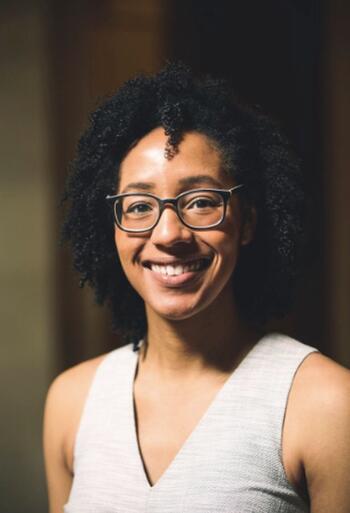
Marisa Kellam researches the quality of democracy with a focus on Latin America and a growing interest in East Asia. Her research links institutional analysis to various governance outcomes in democracies along three lines of inquiry: political parties and coalitional politics; mass electoral behavior and party system change; and democratic accountability and media freedom. She has published her research in various peer-reviewed journals, including The British Journal of Political Science, Comparative Political Studies, Party Politics, Electoral Studies, and Political Communication. Originally from Santa Rosa, California, Marisa Kellam earned her Ph.D. in political science from UCLA and spent several years as an assistant professor at Texas A&M University. Since 2013, she has been Associate Professor at Waseda University in Tokyo, Japan, where she also served as Director of the English-based degree programs for the School of Political Science & Economics. Currently she is a steering committee member for the V-Dem Regional Center for East Asia.

CV
Subscribe to Democracy