Democracy
News Type
News
Date
Paragraphs

At a moment marked by war, regional fragmentation, and mounting uncertainty across the Middle East, the Program on Arab Reform and Development (ARD) at Stanford University’s Center on Democracy, Development and the Rule of Law hosted a wide-ranging conversation between historian and Middle East scholar Joel Beinin and Hesham Sallam, CDDRL Senior Research Scholar and ARD Associate Director.

The discussion explored how the region’s current crises fit within longer historical trajectories, and what they may signal for the future of political order, state power, and social movements in the Arab world.

Throughout the conversation, Beinin situated contemporary wars and political ruptures within broader histories of authoritarianism, imperial intervention, and the erosion of regional political cohesion. The discussion ranged from the legacies of the post-9/11 era to the fragmentation of the Arab regional order, the failures of democratization, and the global rise of the far right.

Here are five major takeaways from the discussion:

1. The current moment is not simply another regional crisis — it reflects the fragmentation of the Arab order itself.


One of the central themes of the discussion was that today’s regional turmoil differs fundamentally from earlier periods of instability. Beinin argued that while the Arab world has long experienced cycles of war, authoritarianism, and external intervention, the current period is distinctive because the very idea of a coherent “Arab world” has weakened dramatically.

As Beinin put it, “A quarter of a century ago, you could still talk about the Arab world with a certain sense of unity… and today, increasingly, it doesn’t.” He stressed that this fragmentation is not merely geopolitical but also political and ideological. Regional powers now pursue sharply divergent agendas, while many traditional centers of Arab political and cultural influence have declined.

Egypt occupied a central place in this analysis. Beinin argued that Egypt, historically viewed as a political and cultural anchor of the Arab world, can no longer plausibly play a regional leadership role. He described the Egyptian regime as deeply constrained by debt crises, Gulf dependency, and intensifying authoritarian rule. Meanwhile, Gulf states such as Saudi Arabia and the United Arab Emirates (UAE) increasingly shape regional politics, albeit without the broader political legitimacy or cultural influence once associated with Cairo.

The result, according to Beinin, is a region characterized less by shared political trajectories than by fragmentation, competing alignments, and increasingly localized struggles for survival and authority.

2. The legacies of the post-9/11 era continue to shape U.S. policy toward the Middle East.


Early in the conversation, Sallam read aloud a passage from President George W. Bush’s 2002 State of the Union address, warning that the United States “will not permit the world’s most dangerous regimes to threaten us with the world’s most destructive weapons.” Sallam then revealed that the quotation was not from President Donald Trump, but from Bush in the lead-up to the Iraq War.

The exchange set up one of the discussion’s recurring themes: the persistence of interventionist frameworks in American political discourse on the Middle East.

Beinin argued that much of contemporary U.S. rhetoric surrounding Iran reproduces assumptions and narratives that shaped the run-up to the Iraq War. “None of it was true when they said it about Iraq,” he remarked, “and none of it is true when they’re saying it about Iran.”

More broadly, he suggested that the post-9/11 political climate fundamentally reshaped how the United States discussed the region. Reflecting on the years after the September 11 attacks, Beinin described g a political atmosphere in which attempts to contextualize regional dynamics were frequently dismissed as apologetics for extremism.

The conversation repeatedly returned to the dangers of reducing regional politics to moral binaries or civilizational narratives. Instead, Beinin emphasized the importance of historically grounded analysis attentive to state interests, political economy, and international power relations.

3. The authoritarian restoration after the Arab uprisings has become deeper and more punitive.


Another major takeaway concerned the aftermath of the Arab uprisings of 2010-2011 and the broader trajectory of authoritarianism in the region.

Beinin argued that states such as Egypt and Tunisia have emerged from the post-uprising period with harsher and more consolidated forms of authoritarian rule than existed prior to 2011. “Any kind of political, civil, even to some degree cultural resistance has been stamped out,” he said, citing the expansion of surveillance, imprisonment, and repression.

Yet the discussion also rejected the simplistic notion that the Arab uprisings were meaningless failures. Beinin pointed to later protest waves in Sudan and Algeria during 2019–2020 as evidence that activists and civil movements had absorbed important lessons from the earlier uprisings.

In Sudan in particular, he argued, protest movements understood that “the army is not on the side of the people,” reflecting a deeper awareness of how military institutions could derail revolutionary transitions. At the same time, Beinin stressed that regional interventions by Gulf powers played a major role in undermining these movements. He described how competing regional actors backed rival military factions, contributing to fragmentation and ultimately overwhelming civilian political forces.

The broader implication was that authoritarian resilience in the Arab world cannot be understood solely through domestic dynamics. Regional rivalries, external funding networks, and transnational counterrevolutionary alliances all play a central role in shaping political outcomes.

4. The Middle East’s crises are increasingly tied to a broader global rightward shift.


While much of the conversation focused specifically on the Arab world, Beinin consistently situated regional developments within broader international trends.

He argued that the current moment reflects not only regional disarray but also the rise of increasingly exclusionary and authoritarian political currents globally. Beinin pointed to “a hard lurch to the right” in multiple countries, including Israel, India, and parts of Europe.

This international dimension, he suggested, has profound implications for the Middle East. The rise of nationalist and authoritarian politics globally has helped normalize more extreme forms of militarism, ethnonationalism, and state violence. It has also weakened many of the international norms and institutions that once constrained state behavior, however imperfectly.

The discussion of Israel occupied a particularly important place here. Beinin linked Israel’s rightward shift to broader transformations in global politics. At several points, the conversation underscored how the wars in Gaza and Lebanon cannot be understood in isolation from these wider ideological and geopolitical currents.

Rather than treating the Middle East as uniquely unstable or exceptional, Beinin repeatedly encouraged the audience to see the region as deeply connected to broader crises of democracy, inequality, nationalism, and authoritarianism unfolding globally.

5. Historical perspective remains essential in moments of upheaval.


Perhaps the most important theme running through the conversation was methodological rather than purely political: the insistence on historical perspective in moments of crisis.

At the outset of the event, Sallam emphasized that the purpose of the discussion was “not to chase after the headlines,” but rather to “take the long view” and place contemporary developments “in conversation with scholarly research and debates.”

Throughout the conversation, Beinin repeatedly cautioned against analyses driven solely by immediate events, media cycles, or simplistic geopolitical narratives. Instead, he urged audiences to understand contemporary wars and political transformations as products of longer histories involving colonial legacies, state formation, authoritarian restructuring, social movements, and international intervention.

The discussion ultimately offered no easy optimism about the region’s future. Yet it also rejected fatalistic portrayals of the Arab world as uniquely doomed to instability. Instead, the conversation highlighted the importance of historical memory, critical scholarship, and political analysis capable of connecting contemporary crises to deeper structural processes.

A full recording of the conversation can be viewed below:

Read More

Smoke rises over buildings on March 3, 2026, in Tehran, Iran.
News

Six Takeaways on the War and the Arab World

Scholars convened by the Center on Democracy, Development and the Rule of Law’s Program on Arab Reform and Development identify six ways the conflict is testing the limits of Arab states' alliances, economic ambitions, and prospects for reform.
Six Takeaways on the War and the Arab World
Bassam Haddad
News

Syria in Transition: Historical Origins and Prospects

In a conversation with ARD Associate Director Hesham Sallam, Bassam Haddad, a leading expert on Syria and Associate Professor at George Mason University, addressed the factors that led to Assad’s fall, the role of international actors, and the uncertain prospects of Syria under its new leadership.
Syria in Transition: Historical Origins and Prospects
Hesham Sallam speaks at a podium with panelists Samia Errazzouki and Joel Beinin
News

Stanford experts detail democratic decline, authoritarian trends in the Middle East

Stanford scholars urged historical approaches to examine the impact of regional conflict in the Middle East and North Africa on authoritarian stability and dissent.
Stanford experts detail democratic decline, authoritarian trends in the Middle East
Hero Image
The Albina Bulk carrier sits anchored on March 22, 2026, at Sultan Qaboos Port in Muscat, Oman.
The Albina Bulk carrier sits anchored on March 22, 2026, at Sultan Qaboos Port in Muscat, Oman. Maritime traffic through the Strait of Hormuz, which conveys about 20% of the world's oil and gas, has mostly come to a halt after the joint U.S.-Israeli war with Iran that began on February 28. | Getty Images
All News button
1
Subtitle

In a discussion convened by the Program on Arab Reform and Development, Stanford scholars situate regional upheaval within longer trajectories of imperial intervention, authoritarian rule, and global political shifts.

Image
saudi arabia 84016 1920
Title
How War is Reshaping the Arab World
Aria Label
Read How War is Reshaping the Arab World
Date Label
In Brief
  • Stanford scholars Joel Beinin and Hesham Sallam examined the state of conflict and fragmentation in the Arab world, arguing that the current moment differs fundamentally from past instability in the region.
  • Beinin connected current U.S. rhetoric on Iran to post-9/11 interventionism while analyzing deepening authoritarianism following the Arab uprisings.
  • The discussion situated the Middle East upheaval within global rightward shifts, emphasizing historical perspective over headline-driven analysis of regional crises.
Display Hero Image Wide (1320px)
Yes
Authors
Aleeza Schoenberg Gelernt
News Type
News
Date
Paragraphs

In a seminar hosted by the Jan Koum Israel Studies Program at the Center on Democracy, Development and the Rule of Law, Matthew Levitt, who directs the Washington Institute's Reinhard Program on Counterterrorism and Intelligence, discussed the Middle East's changing strategic landscape through the lens of the 2026 Iran conflict. While Israel and the United States have achieved significant tactical successes against Hezbollah and the Houthis, Levitt argued, the countries have struggled in progressing the victories to long-term resolutions. He said state actors alone do not drive the region's conflict, but rather that proxy networks and aggressive public relations narratives hinder efforts towards stability.

Levitt then discussed the larger geopolitical effects of the conflict, including the shrinking chances for traditional peace agreements and increasingly negative international views of Israel after the October 7 attacks. He suggested that real changes in Israel’s global position would need political shifts and more transparency at home, while also noting the deep domestic doubts about solutions like a two-state framework. The discussion included the role of outside powers — especially China — in influencing regional dynamics through economic ties to Iran. He also touched on the likelihood that U.S.-Israel relations will increasingly shift from direct aid to joint investments in technology and defense.

Read More

Photo of speaker
News

War, Elections, and Constitutional Crisis: Israel’s Democratic Debate in a Time of Conflict

Constitutional scholar Masua Sagiv examines Israeli democracy, coalition politics, and institutional reform amid wartime pressures.
War, Elections, and Constitutional Crisis: Israel’s Democratic Debate in a Time of Conflict
event cover photo
Seminars

Yossi Melman — Israel's Intelligence Community: What Have We Learned From Gaza, Iran, and Lebanon?

Yossi Melman — Israel's Intelligence Community: What Have We Learned From Gaza, Iran, and Lebanon?
Event cover photo
News

Beyond Gaza: How Regional Rivalries Are Reshaping the Israel–Hamas Conflict

Oded Ailam examines Hamas, Iran, and shifting Middle East alliances in an Israel Insights webinar hosted by the Jan Koum Israel Studies Program.
Beyond Gaza: How Regional Rivalries Are Reshaping the Israel–Hamas Conflict
Hero Image
All News button
1
Subtitle

Matthew Levitt unpacks proxy warfare, shifting narratives, and the uneasy future of U.S.–Israel relations in a conversation hosted by the Jan Koum Israel Studies Program.

Image
Levitt and Magen
Date Label
Display Hero Image Wide (1320px)
No
Authors
Khushmita Dhabhai
News Type
News
Date
Paragraphs

CDDRL Visiting Scholar Michael Albertus’s Research Seminar presentation, “Winning Under Electoral Authoritarianism: Turning Out the ‘Right’ Votes in Venezuela,” examined how electoral infrastructure can become a subtle but powerful tool of authoritarian political control. The presentation, based on joint work with Felipe Baritto and Dany Jaimovich, focused on Venezuela and asked whether the expansion of polling centers under Chávez and Maduro was simply a response to demographic demand or whether it was politically targeted to benefit the ruling coalition.

The central puzzle of the presentation was that Venezuela substantially expanded its electoral infrastructure between 2000 and 2024, with the number of polling centers increasing by about 70 percent, even though population growth was much smaller. Albertus situated this puzzle within the broader literature on competitive authoritarianism, where regimes often maintain formally competitive elections but tilt the playing field through institutional design, state resources, media control, opposition harassment, and selective manipulation. His key contribution was to show that the organization of voting infrastructure itself may belong on this “menu of manipulation.”

The empirical strategy was built around a geocoded dataset of voting centers across Venezuelan election periods. The authors identified “new” polling centers and used stable polling centers to construct electoral Voronoi polygons, which served as local catchment areas. This allowed them to ask whether areas with higher prior support for Chavismo were more likely to receive new voting centers in later periods. Their baseline models used polygon and election-period fixed effects, with controls such as population, and clustered standard errors by municipality.

The main result was that lagged regime support predicted the creation of new polling centers. A 10-percentage-point increase in regime support was associated with roughly a 10-percentage-point increase in the probability of receiving a new polling center relative to the sample mean. Areas in the top quartile of regime support were about 30 percent more likely to receive a new center. These effects were strongest in urban areas and became larger as elections tightened and regime support weakened.

Albertus also presented evidence that new polling centers were not politically neutral spaces. Many carried regime-aligned names and ideological language, including terms associated with Bolivarianism, Chávez, communes, popular power, and revolutionary programs. This suggested that polling centers were not only administrative sites but also spaces of political embedding.

The presentation then turned to consequences. New polling centers were associated with higher turnout, especially in areas already supportive of the regime. They were also linked to smaller polling centers and more single-table centers, which may have made voter monitoring easier. In the 2024 election, the opposition's collection of actas (vote tabulations) was less likely in polygons where new polling stations had previously been established, suggesting that infrastructure expansion may have weakened the opposition's monitoring capacity.

Overall, the presentation argued that authoritarian regimes do not always need to rely on blatant fraud or overt suppression. They can instead selectively expand access, making voting easier for supporters while improving their own capacity for mobilization and monitoring. The project’s broader significance lies in showing how seemingly technical decisions about election administration can have deeply political effects.

Read More

Katherine Case presented her research in a CDDRL seminar on May 7, 2026.
News

Can Voters Help Identify Better Political Candidates?

Katherine Casey’s research finds that while community nominations can surface strong entrants, barriers to candidacy remain.
Can Voters Help Identify Better Political Candidates?
Anna Grzymala-Busse presented her research in a CDDRL seminar on April 30, 2026.
News

What Counts as a State?

Anna Grzymala-Busse examines how conceptual choices shape conclusions about Europe’s political development and fragmentation.
What Counts as a State?
Miriam Golden presented her research in a CDDRL seminar on April 23, 2026.
News

Research Explores How Voter Capacity Shapes Democratic Outcomes

Miriam Golden presents a new framework linking state capacity and fiscal capacity to reelection patterns across countries.
Research Explores How Voter Capacity Shapes Democratic Outcomes
Hero Image
Michael Albertus presented his research in a CDDRL seminar on May 14, 2026.
Michael Albertus presented his research in a CDDRL seminar on May 14, 2026. | Nora Sulots
All News button
1
Subtitle

Michael Albertus argues electoral infrastructure should be considered part of the broader “menu of manipulation” used by authoritarian regimes.

Date Label
In Brief
  • Michael Albertus presented research examining how Venezuela’s expansion of polling centers may have benefited areas with stronger support for the ruling regime.
  • The study found that new polling centers were associated with higher turnout in pro-regime areas and may have strengthened voter monitoring capacity.
  • Findings suggest electoral infrastructure can function as a subtle form of political manipulation within competitive authoritarian systems.
Display Hero Image Wide (1320px)
No
Paragraphs
Key Finding: The extraordinary delays in the installation of polling sites, albeit leading to a significant decline in turnout and an impact on vote margins between the second and third-placed candidates, were not enough to overturn electoral results. We estimate a reduction of 3 to 5 percentage points in turnout among affected polling stations, translating to approximately 27,000 foregone votes.


Background


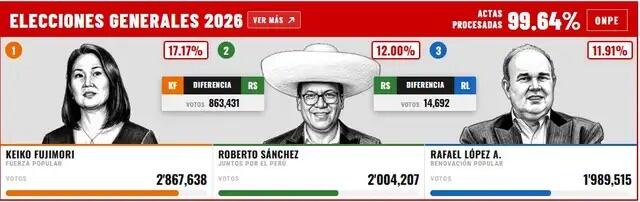
Peruvians went to the polls for the first round of general elections on April 12, 2026. However, major logistical failures delayed the opening of polling stations (mesas) across Lima, in some cases by more than eight hours. Using 29,229 polling-station records (actas) in PDF form to recover opening times, we estimate that at least 817,765 eligible voters were assigned to mesas that opened more than three hours late, 69,139 to mesas that opened more than eight hours late, and 54,362 to mesas that did not open until the following day.1

Peruvian democracy now finds itself at an inflection point: the margin between second and third place, with only one advancing to the runoff, is approximately 21,209 votes (0.09%), the narrowest since Peru's return to democracy in 2000. The third-place candidate, Rafael López Aliaga, has contested the results through what we term the missing voters theory: the claim that hundreds of thousands of voters were unable to cast ballots because mesas opened late or failed to open altogether. López Aliaga has called for the annulment of the election and the imprisonment of the head of the National Office of Electoral Processes (ONPE).

Although these delays to polling site installations should never have occurred, our analysis suggests the winners of the first round of the presidential election, based on current ballot counts, are still legitimate.
 

1 See accompanying technical working paper for full details: Missing Voters? Evidence from Polling Station Delays in the 2026 Peruvian Elections.


Methods


Estimating the effect of delays in opening polling stations on turnout is not straightforward because stations that open late are not necessarily random events. Our core statistical analysis leverages two complementary sources of variation to better approximate “apples-to-apples” comparisons: comparing neighboring polling tables within the same district, and then comparing each voting site against itself across four consecutive elections (2011 to 2026).

We define a polling station as “late” if a mesa opened more than three hours after its scheduled opening time of 7 am, while also varying this threshold hourly until 2 pm. In the previous three elections, almost no mesa opened more than three hours late, making it a reasonable cutoff for lateness. We additionally rely on the JNE’s official report identifying mesas confirmed to have opened after 2pm as a “ground truth” measure of delayed installations and separately examine mesas that opened the following day.
 

Image
Acta


Figure 1. Example of a scanned acta (polling station record) used to recover opening times.


The Dataset


Because no official 2026 election database was available during our analysis, we construct our own dataset by scraping the near-universe of available polling-station records (actas) across mesas in Lima. To compare turnout over time, we additionally collect voting site-level electoral data from presidential elections since 2011.
 

Methodology


We processed over 87,000 scanned actas using a state-of-the-art multimodal large language model (Gemini 2.5 Pro via Google Vertex) to recover polling station opening times from both digital and handwritten records, which were then manually verified. We additionally incorporated the JNE's April 16 report identifying mesas confirmed to have opened after 2 pm.


Results


Our core result suggests that those mesas that opened after 10 am on Sunday experienced a decline in turnout by 3 percentage points. Among those mesas where we can confirm an opening time after 2 pm, this effect increases to a 5.3-percentage-point decline in turnout. Moreover, for those mesas that opened a full day late on Monday, we estimate a 5-percentage-point decline in turnout.
 

Image
Table 1: Effect of Late Opening on Turnout


Note: *** p < 0.01, ** p < 0.05, * p < 0.10. Robust standard errors clustered by voting site in parentheses. Treated sample refers to the definition of the treatment variable. JNE refers to mesas observed opening after 2 pm by the Jurado Nacional de Elecciones report. Panel A reports OLS estimates. Panel B reports average marginal effects from fractional logit models. Column 7 only uses mesas that opened before 10 am on Sunday as the control group. Column 8 drops all mesas flagged in the JNE report given installation times cannot be confirmed before 2 pm.
 

Image
Figure 2. Binned estimates of mesa opening hour on turnout. Effects are relative to a “base” opening time of 7:00–7:59am.


Figure 2. Binned estimates of mesa opening hour on turnout. Effects are relative to a “base” opening time of 7:00–7:59 am.


Image
Figure 3. Event study results for 10am+ openers. Analysis is at the voting site level.


Figure 3. Event study results for 10 am+ openers. Analysis is at the voting site level.
 

When we “bin” the installation times of mesas into hourly intervals, we see an increasing pattern of turnout decline, as shown in Figure 2. However, this is not monotonic: there is a clear rebound for those mesas that opened around noon, as lunchtime gave voters a chance to return to the polls, although turnout continues to decline thereafter.

To show the impact of the delays relative to historical turnout rates, Figure 3 plots the results from an “event study,” focusing on those voting sites that comprise any mesa that opened after 10 am on Sunday. There is an evident drop in turnout for the delayed mesas of 2026, with no differential trends in turnout over the last three prior elections.


Estimating the “Missing Voters”


The key question emerging from the analysis is: exactly how many foregone votes resulted from the installation delays at voting stations? Using our estimates of turnout loss, we perform back-of-the-envelope calculations to quantify these “missing voters.” In Table 2, we estimate an overall loss of votes approximating 27,000 voters. This estimate combines the effects from voting stations opening after 10am on Sunday, in addition to the loss in turnout for Monday-openers.
 

Image
Table 2: Estimates of Missing Voters from Delayed Openings


Note: Exposure-weighted registered voters refers to total registered voters among delayed polling tables or voting sites. Panel A reports OLS estimates. Panel B reports TWFE estimates using the continuous fraction of mesas that opened late within a site (Voted Monday is included as it is effectively a 100% fraction). Combined 10 am+ and Voted Monday sum the predicted foregone votes from the two constituent estimates, with uncertainty computed using a site-cluster bootstrap.
 

We then estimate how these foregone votes would have been distributed between the second- and third-place candidates. Because the observed López Aliaga–Sánchez margin was itself affected by the delays, we construct a counterfactual using vote shares from untreated mesas within the same district, or the nearest untreated district when necessary. In Figure 4, combining turnout losses from both 10am+ Sunday-openers and Monday-openers, we estimate that López Aliaga lost approximately 5,691 votes relative to Sánchez — comfortably below the roughly 21,209-vote gap separating the candidates.
 

Image
Figure 4. Estimated potential change in electoral margin from delayed openings.


Figure 4. Estimated potential change in electoral margin from delayed openings. Points show point estimates; horizontal lines represent 95% confidence intervals using site-cluster bootstrapping. Negative values favor Sánchez (reduced margin for López Aliaga).


Conclusion


By tracking the first round of the Peruvian 2026 presidential election in real time, and using state-of-the-art LLMs combined with techniques in causal inference, our analysis reveals a strong decline in turnout, albeit not large enough to overturn electoral results.


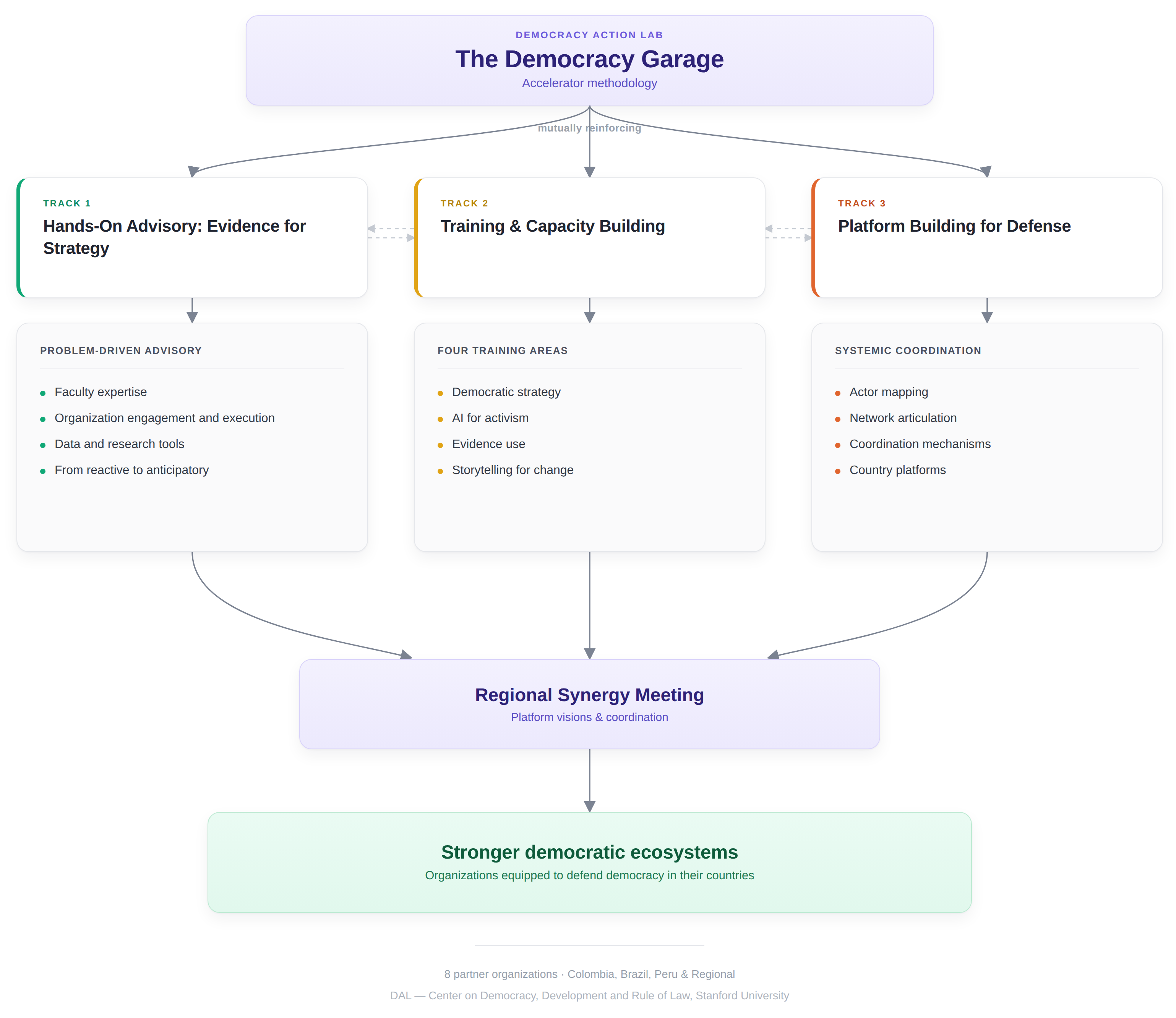
Acknowledgments: This brief was prepared collaboratively by the Democracy Action Lab team, with special contributions by Christopher Dann and Marcelo Peña.


Available for Interviews


Dra. Beatriz MagaloniCo-director of the Democracy Action Lab, Professor, Department of Political Science and Senior Fellow, FSI, Stanford University

Beatriz Magaloni is Graham H. Stuart Professor of International Relations in the Department of Political Science and Senior Fellow at the Freeman Spogli Institute for International Studies, where she co-directs the Democracy Action Lab and also the Poverty, Violence and Governance Lab (POVGOV), which she founded in 2010. In 2023, she was awarded the Stockholm Prize in Criminology, considered the equivalent of the Nobel Prize in this field, in recognition of her research on police violence and mechanisms to reduce it, particularly her studies in Mexico and Brazil that demonstrated that police militarization and torture do not improve public safety but do erode human rights.

Dr. Alberto Díaz-CayerosCo-director of the Democracy Action Lab and Senior Fellow, FSI/CDDRL, Stanford University

Alberto Díaz-Cayeros is Senior Fellow at the Freeman Spogli Institute and co-director of the Democracy Action Lab at the Center on Democracy, Development and the Rule of Law (CDDRL). He directed Stanford’s Center for Latin American Studies from 2016 to 2023, and his work focuses on federalism, poverty alleviation, indigenous governance, the political economy of health, violence, and citizen security in Mexico and Latin America.

Christopher DannResearcher, Democracy Action Lab

Chris Dann is a doctoral candidate at Stanford and a graduate fellow at POVGOV, with research focused on political economy. He was previously a pre-doctoral fellow with Professor Tim Besley at the London School of Economics.
 

Press Contact


Democracy Action Lab — CDDRL
Stanford University
Encina Hall, 616 Jane Stanford Way, Stanford, CA 94305
democracyactionlab@stanford.edu

All Publications button
1
Publication Type
Reports
Publication Date
Authors
Alberto Díaz-Cayeros
Beatriz Magaloni
Paragraphs

How can opposition actors challenge authoritarian rule? Electoral authoritarian regimes, characterised by multiparty elections, have emerged as the dominant form of autocracy in the 21st Century. While these elections create the appearance of political competition, they are structured to favour incumbents through systematic manipulation of the playing field, including efforts to weaken, divide, and constrain opposition parties. This policy brief synthesizes research on how opposition actors navigate these constraints and the implications for international efforts to support democratic change.

The brief examines five common approaches. Each can, under certain conditions, improve opposition prospects or constrain regime behavior. None, however, offers a reliable path to victory. Structural conditions, such as regime openness, elite cohesion, and incumbent vulnerability, shape which strategies are feasible and how effective they are likely to be, and each involves tradeoffs. Forming coalitions can help oppositions overcome fragmentation and compete more effectively, but strong performance may signal a threat and provoke backlash. Investments in party organisation can strengthen competitiveness, yet legible organisation also exposes parties to targeted repression and cooptation. Mobilizing protests can raise the costs of fraud and catalyse elite defections, but has increasingly triggered crackdowns as regimes adapt. Boycotts can help delegitimise elections, though they also risk depressing turnout and forfeiting institutional footholds. Finally, international outreach (“opposition diplomacy”) can encourage foreign pressure, but can also drain scarce resources and enable regimes to cast oppositions as agents of foreign interference.

A recurring pattern across these strategies is that apparent success can also generate new risks. Strong electoral performance and effective mobilisation often signal a threat to incumbents, incentivising backlash. As a result, opposition actors routinely face a dilemma: actions that improve short-term competitiveness may undermine longer-term survival, while more cautious approaches can entrench marginalization. These dynamics help explain why opposition parties remain persistent underdogs in authoritarian elections, even when public support exists.

In light of these realities, democracy promotion practitioners should remain clear-eyed about the long odds for opposition success, while recognizing that opposition parties represent central political actors and an important bulwark against further authoritarian consolidation. As such, practitioners should embrace collaborative relationships with opposition actors, despite imperfections. Encouraging oppositions to develop and adapt a portfolio of approaches, while anticipating regime retaliation, is also more realistic than promoting any single “best practice.”


THE AUTHORITARIAN ECOSYSTEM:

This collection of policy briefs, jointly published with the UK Political Studies Association specialist group on Autocracy and Regime Change, examines the authoritarian ecosystem — the interconnected network of institutions, actors, and norms that sustain authoritarian rule.

All Publications button
1
Publication Type
Policy Briefs
Publication Date
Subtitle

Part of WFD's "The authoritarian ecosystem" policy brief series.

Journal Publisher
Westminster Foundation for Democracy
Authors
Oren Samet
News Type
News
Date
Paragraphs

The Stanford Deliberative Democracy Lab, based at the University’s Center on Democracy, Development and the Rule of Law, today released the findings from two national Community Forums on the evolving expectations around privacy and governance of AI-powered wearable devices. In collaboration with Meta, the forum engaged a representative sample of 550 participants — 300 from the United States and 250 from India — to solicit people's perspectives on user controls and societal expectations. The Community Forums were conducted as national Deliberative Polls.

As AI wearables see rapid adoption worldwide, understanding public attitudes can help to ensure these technologies are developed and deployed responsibly. Three key themes emerged from the forum. Participants in both the U.S. and India indicated the highest levels of support for users having controls over when their wearables passively process environments and actively capture data. U.S. participants consistently favored individual agency over how wearables are used, both in public and private settings, whereas in India, there was a slight preference for governments to decide wearable usage rules in public spaces. Additionally, U.S. participants supported workplaces and schools having the primary authority to decide how AI-powered wearables should be used in those environments, while Indian participants also saw a significant role for governments in these settings.

The forum also revealed important nuances in public perspectives. For example, participants expressed a preference for AI wearables that are tailored to cultural and regional contexts, rather than standardized global designs. There was also broad support for AI agents capable of responding to emotional cues, underscoring the public's desire for personalized, human-centric wearable experiences.

"This global forum provided invaluable insights into how the public's expectations around privacy and governance of wearable AI are evolving," said Alice Siu, Associate Director of the Stanford Deliberative Democracy Lab. "The findings will be essential for policymakers, technology companies, and other stakeholders as they work to ensure these powerful technologies empower users while respecting fundamental rights."

Read More

Human finger touching a screen with AI agent
News

People Shaping AI: Groundbreaking Industry-Wide Forum Invites Public Input for the Future of AI Agents Through Public Deliberation

In an unprecedented collaboration, Stanford's Deliberative Democracy Lab has spearheaded the first-ever Industry-Wide Forum, a cross-industry effort putting everyday people at the center of decisions about AI agents.
People Shaping AI: Groundbreaking Industry-Wide Forum Invites Public Input for the Future of AI Agents Through Public Deliberation
Back view of crop anonymous female talking to a chatbot of computer while sitting at home
News

Meta and Stanford’s Deliberative Democracy Lab Release Results from Second Community Forum on Generative AI

Participants deliberated on ‘how should AI agents provide proactive, personalized experiences for users?’ and ‘how should AI agents and users interact?’
Meta and Stanford’s Deliberative Democracy Lab Release Results from Second Community Forum on Generative AI
Chatbot powered by AI. Transforming Industries and customer service. Yellow chatbot icon over smart phone in action. Modern 3D render
News

Navigating the Future of AI: Insights from the Second Meta Community Forum

A multinational Deliberative Poll unveils the global public's nuanced views on AI chatbots and their integration into society.
Navigating the Future of AI: Insights from the Second Meta Community Forum
Hero Image
Close-up of smart glasses showing augmented reality interface while held by a woman in a modern urban environment.
Getty Images
All News button
1
Subtitle

National community forums in the U.S. and India highlight differences in preferences for privacy, user control, and governance of emerging technologies.

Date Label
In Brief
  • Stanford’s Deliberative Democracy Lab convened national forums in the U.S. and India to examine public attitudes toward AI-powered wearable devices.
  • Participants in both countries strongly supported user control over data collection, with differences in preferences for government and institutional oversight.
  • Findings highlight demand for culturally tailored designs and personalized, human-centered AI features as adoption of wearables grows.
Display Hero Image Wide (1320px)
Yes
Authors
News Type
News
Date
Paragraphs

Introduction and Contribution:


There is a growing recognition, both in and outside of the academy, that democracy requires more than simply voting for and removing incumbents during elections. For one, relying solely on elected representatives deprives those being represented of direct control over decisions that affect them. In addition, it can also generate — as it has in the United States and elsewhere — large gaps in responsiveness and representation, particularly for historically disenfranchised and marginal groups. 

Participatory budgeting (PB) represents one influential attempt to overcome these gaps in democratic practice. First introduced in the 1980s by the Brazilian Workers’ Party (PT), PB empowers voters to allocate public funds to projects that benefit them. Since then, ordinary citizens in thousands of places across the world have helped determine the content of local budgets.

Despite its successes, academics and practitioners remain unclear about how to address and balance considerations related to budget constraints and ease of participation. This coincides with well-known mathematical difficulties surrounding the aggregation of votes, for example, that individually consistent preferences can yield inconsistent group outcomes.

Participatory budgeting empowers voters to allocate public funds to projects that benefit them.

In “Rank, Pack, or Approve,” Lodewijk Gelauff and Ashish Goel introduce a dataset drawn from the novel and comprehensive Stanford Participatory Budgeting platform. The data span over 150 real participatory budgeting processes, or “elections.” Importantly, the elections vary in terms of how ballots are designed and how participants make budgeting decisions. Gelauff and Goel ask how such variation shapes important budgeting outcomes, such as when participants are more likely to become fatigued and abandon the process. 

Two key findings from the study are as follows: First, more complex PB designs lead voters to, perhaps unsurprisingly, spend more time participating; however, this does not significantly increase abandonment or “dropout” rates. Second, voting methods that force participants to deal with cost trade-offs — as opposed to merely indicating their preferences — have been found to generate less expensive projects. 

The reader comes away with a sense of how subtle differences in the design of budgeting elections meaningfully shape the allocation of resources. This will resonate with social scientists who are familiar with how, for example, different kinds of electoral rules shape political competition. To understand Gelauff and Goel’s findings, it helps to first outline how PB elections differ from one another.

Ballot Design and Voting Methods:


The basic PB setup involves organizers choosing a voting method, a list of projects to potentially be funded, and an authentication process (i.e., checking that participants are valid voters). Voters then select or rank projects given the constraints of each voting rule or method. These three rules, captured in the paper’s title, are as follows: 

The first, “K-approval,” asks voters to select up to “K” projects. The top-voted projects receive funding until the budget runs out. K-approval is simple, but its main drawback is that it ignores the costliness of each project: voters only indicate which projects they like, rather than how those choices fit within a fixed budget. The second method, “K-ranking,” asks voters to rank their preferred projects, capturing their preferences in a more fine-grained manner. As votes are aggregated using the Borda scoring method, higher-ranked projects receive greater weight or value. Finally, the “knapsack” method asks voters to choose projects that fit within a fixed budget. This method best allows participants to balance costs in a way that mimics real city councils. However, knapsack is more complex and time-consuming than K-approval or K-ranking, although the online interface design, which mimics a shopping cart, is already much simpler than it would be on paper. 

Data Collection and Findings:


As mentioned, Gelauff and Goel’s data is drawn from the open-source Stanford PB platform. This tool enables cities to conduct online PB elections with a great deal of customizability, including location, budget, language of operation, authentication process (e.g., requiring personal information or sending SMS messages), as well as methods, phases, and windows of voting. Key for the authors’ purposes, it also tracks (anonymous) voters’ choices and how much time they spend during the election. Data collection began in 2014. 

The first key finding is motivated by the fact that election organizers often prefer K-approval for its simplicity. As such, Gelauff and Goel analyze how much time participants spend on their ballots and how often they quit. Although more complex ballots — those with a larger budget and number of projects — are shown to predict longer completion times, they do not significantly increase dropout rates. The authors note that more research is needed to assess whether knapsack specifically affects dropout.

The authors also find that voters select more expensive projects with K-approval compared to the knapsack methods. However, voters indicate similarly expensive preferences for their most-preferred projects under both methods; the key difference appears lower down the list of preferences, where the knapsack constraint forces them to be more cost-conscious. In other words, the knapsack cost constraint doesn’t affect which expensive project participants most prefer. Rather, it limits how many extra expensive projects they can add.

Overall, “Rank, Pack, or Approve” deepens our understanding of how PB can improve direct democratic engagement while reducing burdens on participants. It does this while providing a large quantity of real-world data, compared with prior research that has relied on crowdworkers without a real stake in the budgeting outcome. The authors helpfully illustrate how local governments can design PB processes that are clearer and more inviting to ordinary voters. Subsequent research will benefit from using this powerful data resource, as will organizers seeking to expand local engagement.

*Brief prepared by Adam Fefer.

Hero Image
Building with glass doors and polling station signage out front
Marilyn Tran via Unsplash
All News button
1
Subtitle

CDDRL Research-in-Brief [3.5-minute read]

Date Label
Display Hero Image Wide (1320px)
No
-
Lyuba's Hope film poster

Lyuba’s Hope follows Lyubov Sobol, a Russian anti-war opposition politician and anti-corruption figure, who has endured repeated arrests, hunger strikes, aborted political campaigns, attempted poisoning, and exile in her pursuit of a democratic post-Putin Russia.

As head of Alexei Navalny’s Anti-Corruption Foundation, Sobol advanced pathbreaking investigations, including that of “Putin’s cook,” Prigozhin. In 2026, she was among the fifteen Russian opposition figures admitted to the European Parliament PACE program.

Lyuba, who was a 2022 Visiting Scholar at Stanford’s Center on Democracy, Development and the Rule of Law (CDDRL), will join us in person for the screening of Lyuba’s Hope, along with noted Russian-American director Marianna Yarovskaya and Paul Gregory, Hoover Research Fellow and producer. Discussion will be moderated by Kathryn Stoner, Mosbacher Director of CDDRL and Satre Family Senior Fellow at the Freeman Spogli Institute for International Studies.

Gregory and Yarovskaya’s previous film collaboration, Women of the Gulag, was shortlisted for an Academy Award in 2018.

This event is sponsored by the Hoover History Lab, in partnership with the Center on Democracy, Development and the Rule of Law, the Center for Russian, East European and Eurasian Studies, and the Department of Slavic Languages and Literatures.
 

Logos for Hoover History Lab, CREEES, and CDDRL

Hauck Auditorium, David and Joan Traitel Building of the Hoover Institution
435 Lasuen Mall, Stanford (map)

Film running time: 80 mins. Discussion to follow.

Questions? Please contact rsvp-weisfeld@stanford.edu

Lyubov Sobol
Film Screenings
Date Label
-
Israeli supreme court
Aerial view of Israel's Supreme Court | Getty Images

On January 4, 2023, the newly elected government led by longtime Prime Minister, Benjamin Netanyahu, unveiled its “judicial reform”: a plan to legislate four constitutional amendments that would effectively dismantle the existing checks on the power of the executive.

Despite having a solid majority in parliament, just one of these amendments passed into law — and was quickly struck down by the Supreme Court. The four amendments were introduced as the reform’s “first phase;” a second phase was never announced.

At the core of this achievement was a small, ad-hoc group of concerned former public servants and activists. Under the group's leadership, initial anti-government protests quickly metastasized into the largest protest movement in Israel’s history. The small leadership group became the Protest Headquarters — a well-oiled protest machine with a full-time staff and thousands of volunteers from 200 organizations. At its peak, the movement had 400,000 people marching in the streets of a country with a population of 10 million.

What were the keys to the Protest Headquarters’ success? In this panel, we ask this of three key members of the Protest Headquarters. We will discuss the mechanisms that enabled its growth, the challenges and lessons learned from the movement, and the future prospects for Israeli democracy, with attention to dilemmas as Israelis return to the polls in late 2026.
 

More About the Speakers:


Yossi Kucik previously held several senior positions in the Israeli public sector, including Director-General of the Prime Minister’s Office, Commissioner of Wages at the Ministry of Finance, and Director-General of the Ministry of Aliyah and Immigrant Absorption, among other key roles. Following his public service career, Kucik transitioned into the private sector. He currently serves as Chairman of Direct Insurance Group, one of Israel’s leading financial groups. In addition, he owns two consulting firms: one specializing in Media strategy and the other focused on compensation and wage consulting. Kucik is also extensively involved in public and social initiatives. He serves as Chairman of Beit Yigal Allon and is a member of the Presidium of the Israel Democracy Institute, among several other public leadership roles. In January 2023, Kucik, together with Orni Petruschka, Dan Halutz, and Yehuda Eder, established the headquarters of the protest movement opposing the Netanyahu government’s proposed judicial overhaul, which they viewed as a threat to Israeli democratic institutions. Joined by additional public figures and activists, the headquarters played a pivotal role in the movement, bringing millions of Israelis to the streets in protest and successfully halting significant parts of the proposed legislation affecting Israel’s democratic framework. Kucik holds an MBA from the Hebrew University, is married to Nirit, a father of three, and a grandfather of four.

Orni Petruschka works to make Israel an open, liberal, and democratic society for all its citizens. In recent years, Orni has been a social entrepreneur. He co-founded the Resistance Headquarters against the current Israeli government; initiated several activities to promote philanthropy, especially for supporting liberal-democracy causes; and was involved in activities for advancing a two-state solution to the Israeli-Palestinian conflict. In addition, Orni co-chairs the Abraham Initiatives, an NGO which promotes equality and inclusion for Israel’s Arab citizens, and serves as Chairman of the Board of Molad — the Center for the Renewal of Israeli Democracy. Previously, Orni served as a fighter pilot in the Israeli Air Force, studied electrical engineering at the Technion and at Cornell University, and had a career as a technology entrepreneur, having started and managed two successful telecom equipment companies that were successfully acquired, one of which was considered a landmark transaction for Israeli high tech. Orni lives in Ramat Gan; he is married and a father of 3 daughters.

Adv. Dina Zilber, former Deputy Attorney General of Israel, is regarded as one of the country’s leading jurists. During her eight-year tenure as Deputy Attorney General (2012–2020), Adv. Zilber was responsible for providing ongoing legal counsel to the government and its various ministries on a wide range of complex, sensitive, and highly consequential matters, and for shaping the Attorney General’s positions across many areas within her responsibility. Prior to this appointment, Adv. Zilber served for 16 years as a senior attorney in the High Court of Justice Department at the State Attorney’s Office, where she represented the State before the Israeli Supreme Court in more than 1,600 petitions concerning major public importance. Adv. Zilber has authored two books: Bureaucracy as Politics (2006) and In the Name of the Law: The Attorney General and the Affairs that Shook the State (2012). She also initiated and edited an additional volume titled Roots in Law, published in honor of Israel’s 70th anniversary — a panoramic collection surveying the development of Israeli legal practice from the founding of the state to the present day, written by legal professionals from across all generations and departments of the Ministry of Justice. Adv. Zilber has received numerous public honors and awards, including the “Women at the Forefront” Award in the Government and Politics category (2017); the Leon Charney Award of Recognition from the Deborah Forum – Women in Foreign Policy and National Security (2018); the Transparency Shield Award from Transparency International Israel (2019); the Gorny Award for Public Sector Jurists (2020); and the Knight of Quality Government Award in the Executive Branch category (2020). Adv. Zilber holds an LL.M. with honors from Tel Aviv University. Over the years, she has taught undergraduate and graduate law students at various academic institutions. She lectures extensively in public and professional forums, and regularly publishes both legal scholarship and opinion articles in the press. Since the onset of Israel's judicial overhaul, she has also served as a key member of the Protest Headquarters Advisory Board.
 

About the Series


Lessons from Global Democratic Resistance is a public panel series that brings together frontline activists, civic leaders, institutional actors, and field‑informed scholars to examine how democratic actors have resisted, responded to, and learned from democratic backsliding across countries. The series aims to identify practical lessons and comparative insights for those defending democracy today and is organized by the Ash Center for Democratic Governance at the Harvard Kennedy School in collaboration with the Cornell Center on Global Democracy; Perry World House at the University of Pennsylvania; the Kellogg Institute for International Studies at the University of Notre Dame; the Democratic Futures Project at the University of Virginia; Stanford’s Center on Democracy, Development and the Rule of Law; and the Carnegie Endowment for International Peace.
 

Event Details


This event is online only, and registration is required. A recording will be made available after the event’s conclusion. The information collected in the registration form is for internal use only and will not be shared externally.

Amichai Magen
Amichai Magen

Online via Zoom. Registration is required.

For questions, please contact israelstudies@stanford.edu.

Yossi Kucik
Orni Petruschka
Dina Zilber
Israel Studies
Date Label
Authors
Surina Naran
News Type
News
Date
Paragraphs

Katherine Casey, professor of political economy at Stanford Graduate School of Business and the faculty director of the King Center on Global Development, presented her team’s work in a CDDRL Research Seminar on Thursday, May 7. Casey opened her talk establishing that citizen esteem for politicians is on the decline. In the U.S., only 16 percent trust the federal government. Across 30 African countries, while 75 percent believe elections are the best way to choose leaders, only 37 percent are satisfied with how their democracies are working. Casey asserts that the root of this dissatisfaction runs deep, ultimately posing the question: how can high-human-capital, representative individuals be identified, screened, encouraged to run for office, and brought into consideration by political parties? 

Casey’s team examined local governance in Sierra Leone to answer this question, partnering with government and civil society to test an intervention designed to induce candidate entry. The field experiment was a nationwide, randomized controlled trial covering all fourteen local district councils in Sierra Leone. The team chose to focus on local councils because the barriers to entry are low, the work requires competence but is not particularly specialized, and its part-time nature allows candidates to run without quitting their day jobs. The experiment included two rounds of random assignment and implementation. 

The experiment focused on three headline factors: representation, quality, and gatekeeping. During the representation phase, the field team visited villages and spoke with residents to better understand who they would want to represent them. These nominees were then screened for quality using metrics for human capital, work experience, local experience, managerial capital, and conscientiousness. After this screening, candidates' profiles were sent to political parties. Of those nominated at the representation level, 85 percent were willing to share their profiles, and 89 percent said they were interested in running for office. 

When conducting analysis, Casey’s team found that top nominees from the representation stage score higher than both status quo applicants and incumbents on quality metrics, differences that are large in magnitude and highly statistically significant. Many top nominees came from traditional authority lineages, and many work in education, positioning them as alternative elites. Among lower-ranked nominees, only 16 percent ultimately entered electoral races, but this rate rose to 25 percent among top-ranked nominees.  Their entry enhanced the maximum observed quality of applicants in the potential candidate pool.

Analysis was then conducted to determine whether the parties selected any nominees from the profiles, which found that nearly all wards had at least one candidate selected and that nominations increased the likelihood that a local woman would make the candidate list.  Incumbents were highly favored in this election, leaving little space for new entrants to win elected seats.

Casey ended her talk with a few conclusions. Firstly, the intervention successfully identified popular, high-quality, new entrants to politics, drawn from a different set of elites. The nominees self-selected into the entry on quality, boasting the highest observed quality among applicants and selected candidates, which also showed that representation need not trade off quality. Casey’s team also found a challenge in translating willingness to run into formal applications, a challenge she believes could be honed in on with more recruitment efforts. Ultimately, the collaboration between research and policymakers crafted a unique model to empower dissatisfied voters to nominate leaders they want to see in office. 

Read More

Anna Grzymala-Busse presented her research in a CDDRL seminar on April 30, 2026.
News

What Counts as a State?

Anna Grzymala-Busse examines how conceptual choices shape conclusions about Europe’s political development and fragmentation.
What Counts as a State?
Miriam Golden presented her research in a CDDRL seminar on April 23, 2026.
News

Research Explores How Voter Capacity Shapes Democratic Outcomes

Miriam Golden presents a new framework linking state capacity and fiscal capacity to reelection patterns across countries.
Research Explores How Voter Capacity Shapes Democratic Outcomes
Peter Magyar, lead candidate of the Tisza party, speaks to supporters after the Tisza party won the parliamentary elections on April 12, 2026 in Budapest, Hungary.
News

Hungary’s 2026 Election Signals Democratic Shift

Scholars Daniel Keleman and Hanna Folsz examine the defeat of Viktor Orbán’s Fidesz Party and the implications for Hungary and Europe.
Hungary’s 2026 Election Signals Democratic Shift
Hero Image
Katherine Case presented her research in a CDDRL seminar on May 7, 2026.
Katherine Case presented her research in a CDDRL seminar on May 7, 2026. | Surina Naran
All News button
1
Subtitle

Katherine Casey’s research finds that while community nominations can surface strong entrants, barriers to candidacy remain.

Date Label
In Brief
  • Katherine Casey presented research examining how to identify and encourage high-quality candidates to run for local office.
  • A nationwide field experiment in Sierra Leone found community nominations surfaced candidates who outperformed incumbents on key quality measures.
  • While top nominees were more likely to enter races, party preferences for incumbents limited new candidates’ electoral success.
Display Hero Image Wide (1320px)
No
Subscribe to Democracy