Elections
-

For a democracy, a necessary condition is openness to new political ideas. New ideas are often carried by new political parties. New parties are confronted with all kinds of reactions by established actors. What electoral effects do political, legal and media reactions have? Joost will present empirical evidence from experimental and non-experimental studies (in 15 countries since 1944) on reactions to various new parties, including anti-immigration parties.

Image
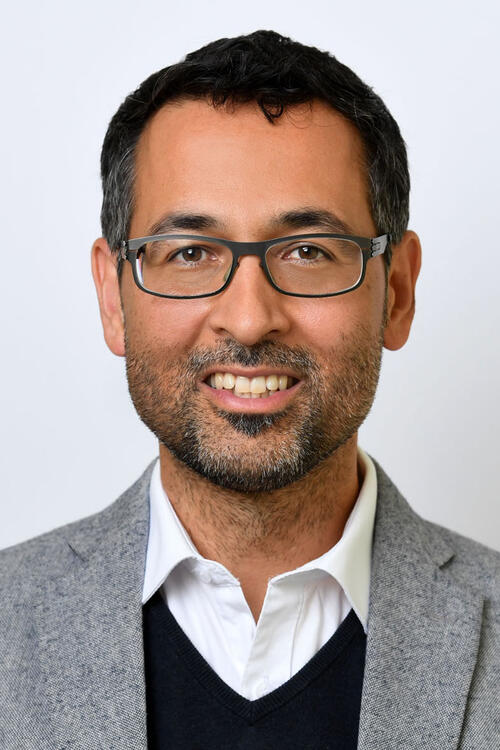
joost van spanje

Joost van Spanje is associate professor in the University of Amsterdam communication science department. This department ranks second worldwide (2017 QS Rankings by subject). Joost previously conducted research at the University of Oxford, the EUI in Florence, and New York University. His current research team investigates legal action against anti-immigration parties in 21 European countries since 1965, and its effects on citizens. Joost currently also studies how news media in established democracies cover new political parties. He has published 27 ISI-ranked journal articles as well as the monograph "Controlling the Electoral Marketplace: How Established Parties Ward Off Competition" (2017).

William J. Perry Conference Room
Encina Hall, 2nd floor
616 Serra Street

Joost van Spanje Associate Professor Guest speaker Communication Science Department, University of Amsterdam
Lectures
Paragraphs

Improving the quality of primary care may reduce avoidable hospital admissions. Avoidable admissions for conditions such as diabetes are used as a quality metric in the Health Care Quality Indicators of the Organization for Economic Cooperation and Development (OECD). Using the OECD indicators, we compared avoidable admission rates and spending for diabetes-related complications in Japan, Singapore, Hong Kong, and rural and peri-urban Beijing, China, in the period 2008–14. We found that spending on diabetes-related avoidable hospital admissions was substantial and increased from 2006 to 2014. Annual medical expenditures for people with an avoidable admission were six to twenty times those for people without an avoidable admission. In all of our study sites, when we controlled for severity, we found that people with more outpatient visits in a given year were less likely to experience an avoidable admission in the following year, which implies that primary care management of diabetes has the potential to improve quality and achieve cost savings. Effective policies to reduce avoidable admissions merit investigation.


All Publications button
1
Publication Type
Journal Articles
Publication Date
Journal Publisher
Health Affairs
Authors
Karen Eggleston
Paragraphs

Abstract

I leverage novel experimental designs and 2, 160 months of Members of Parliaments’ (MPs’) Constituency Development Fund spending to test whether fair elections promote democratic responsiveness. I nd that MPs elected in constituencies that were randomly assigned to high levels of election monitoring dur- ing Ghana’s 2012 polls spend 19 percentage points more of their CDFs, on average, compared to those who were elected from districts that had fewer monitors. These legislators were equally absent from parliamentary meetings as their low-monitoring counterparts elected during their terms in o ce, which suggests that fair elections do not motivate politicians to substitute constituency service for parliamen- tary work. The results imply that higher-integrity elections incentivize incumbents to exert more e fort to satisfy citizens’ demand for constituency service. Regarding mechanisms, I provide tentative causal evidence that politicians substitute e fort for fraud when they expect that similar intense future election monitoring will limit their ability to rig their reelection and enable voters to sanction poor performance. The paper demonstrates the downstream e fect of election monitoring on elite behavior and provides causal evidence of the impact of election quality on democratic accountability. 


All Publications button
1
Publication Type
Working Papers
Publication Date
Journal Publisher
CDDRL Working Papers
Authors
-

James E. Alt is the Frank G. Thomson Professor of Government. His current interests are in comparative political economy; the interaction of voters, political parties, budget and other political institutions, financial markets, and fiscal policies in industrial democracies. His recent research analyzes institutional transparency, accountability and corruption, and fiscal policy outcomes in OECD countries and US states. He is author, co-author, or editor of The Politics of Economic Decline (Cambridge University Press, 1979, reissued 2009), Political Economics (University of California Press, 1983), Cabinet Studies (Macmillan, 1975), Advances in Quantitative Methods (Elsevier, 1980), Perspectives on Positive Political Economy (Cambridge University Press, 1990), Competition and Cooperation (Russell Sage, 1999) and Positive Changes in Political Science (Michigan, 2007). He has published numerous articles in scholarly journals, including "Partisan Dealignment in Britain 1964-1974" in the British Journal of Political Science, "Political Parties, World Demand, and Unemployment" in the American Political Science Review, "Divided Government, Fiscal Institutions, and Deficits: Evidence from the States," in the American Political Science Review, "Fiscal Policy Outcomes and Electoral Accountability in American States," in the American Political Science Review, and “Disentangling Accountability and Competence in Elections: Evidence from U.S. Term Limits,” in the Journal of Politics. He is the founding director of the Center for Basic Research in the Social Sciences, now the Institute for Quantitative Social Science. He is or has been a member of the editorial boards of the American Political Science Review, American Journal of Political Science, British Journal of Political Science, Journal of Politics, Political Studies, and other journals, and has been a member of the Political Science Panel of the National Science Foundation. He was a Guggenheim Fellow 1997-98 and a Senior Research Fellow of Nuffield College, Oxford from 2007-2011. Alt is an International Fellow of the Institute for Fiscal Studies, London, and was elected to the American Academy of Arts and Sciences in 2004.

This seminar is part of the Comparative Politics Workshop in the Department of Political Science and is co-sponsored by the Munro Lectureship Fund and The Europe Center.

James Alt Frank G. Thomson Professor of Government speaker Harvard University
Seminars
-

While much of the existing literature examines vote buying in the context of party systems, including both competitive and hegemonic party systems, this talk, based on a study coauthored by Professor Susan Whiting, addresses vote buying in a context in which no political party effectively structures electoral competition—village elections in China. This study argues that the lure of non-competitive rents explains variation over time and space in the phenomenon of vote buying. It tests this hypothesis, derived from an in-depth case study, in a separate sample of 1200 households in 62 villages in five provinces, using villagers’ reports of vote buying in elections and survey data on land takings as an indicator of available rents. While the literature views the introduction of elections as increasing accountability of village leaders to voters, vote buying likely undermines accountability. This study suggests that the regime has tolerated vote buying as a means of identifying and coopting influential economic elites in rural communities.


Image
susan whiting
Susan Whiting is Associate Professor of Political Science and Adjunct Associate Professor of Law and International Studies at the University of Washington in Seattle.  She specializes in Chinese and comparative politics, with particular emphasis on the political economy of development.  Her first book, Power and Wealth in Rural China: The Political Economy of Institutional Change, was published by Cambridge University Press in 2001.  She has contributed chapters and articles on property rights, fiscal reform, governance, contract enforcement and dispute resolution to numerous publications. She has done extensive research in China and has contributed to studies of governance, fiscal reform, and non-governmental organizations under the auspices of the World Bank, the Asian Development Bank, and the Ford Foundation, respectively.  She, along with colleagues in the law school, is participating in a project on access to justice and legal aid provision in rural China.  Professor Whiting’s current research interests include property rights in land, the role of the courts in economic transition, as well as the politics of fiscal reform in transition economies. Among her courses, she teaches Comparative Politics, Chinese Politics, Qualitative Research Methods, and Law, Development, & Transition, a course offered jointly in the Department of Political Science, the Jackson School of International Studies, and the Law, Societies and Justice Program.


Image
China Toolkit
This event is part of the 2018 Winter Colloquia; An Expanding Toolkit: The Evolution of Governance in China

China has undergone historic economic, social and cultural transformations since its Opening and Reform. Leading scholars explore expanding repertoires of control that this authoritarian regime – both central and local – are using to manage social fissures, dislocation and demands. What new strategies of governance has the Chinese state devised to manage its increasingly fractious and dynamic society? What novel mechanisms has the state innovated to pre-empt, control and de-escalate contention? China Program’s 2018 Winter Colloquia Series highlights cutting-edge research on contemporary means that various levels of the Chinese state are deploying to manage both current and potential discontent from below.

Susan Whiting <i>Associate Professor of Political Science, Adjunct Associate Professor of Law and International Studies, University of Washington</i>
Lectures
-

Abstract: Recent public attention and debate around “fake news” has highlighted the growing challenge of determining information veracity online. This is a complex and dynamic problem at the intersection of technology, human cognition, and human behavior—i.e. our strategies and heuristics for making sense of information may make us vulnerable, within online spaces, to absorbing and passing along misinformation. Increasingly, it appears that certain actors are intentionally exploiting these vulnerabilities, spreading intentional misinformation—or disinformation—for various purposes, including geopolitical goals. Drawing on research conducted on online rumors in the context of crisis response, this talk explores what alternative narratives (or “conspiracy theories”) of crisis events reveal about “fake news”, political propaganda, and disinformation online

Speaker Bio: Kate Starbird is an Assistant Professor at the Department of Human Centered Design & Engineering (HCDE) at the University of Washington (UW). Kate's research is situated within human-computer interaction (HCI) and the emerging field of crisis informatics—the study of the how information-communication technologies (ICTs) are used during crisis events. One aspect of her research focuses on how online rumors spread—and how online rumors are corrected—during natural disasters and man-made crisis events. More recently, she has begun exploring the propagation of disinformation and political propaganda through online spaces. Kate earned her PhD from the University of Colorado at Boulder in Technology, Media and Society and holds a BS in Computer Science from Stanford University.

Kate Starbird Department of Human Centered Design & Engineering, University of Washington
Seminars
News Type
Commentary
Date
Paragraphs

"The United States and its liberal democratic allies must develop a new global strategy to counter the power projection of expansive autocracies and to reboot an international campaign to promote democratic values and ideas. But we also need to renew the core of what we are fighting for: the worth of our own democracy," writes Larry Diamond in "How to Reverse the Degradation of Our Politics."

Hero Image
choice 2692575 1920
All News button
1
Graduate School of Business 655 Knight Way Stanford, CA 94305
(650) 721 1298
0
Associate Professor of Political Economy, GSB
Associate Professor, by courtesy, of Economics and of Political Science
saumitra_jha.jpg

Along with being a Senior Fellow at the Freeman Spogli Institute for International Studies, Saumitra Jha is an associate professor of political economy at the Stanford Graduate School of Business, and convenes the Stanford Conflict and Polarization Lab. 

Jha’s research has been published in leading journals in economics and political science, including Econometrica, the Quarterly Journal of Economics, the American Political Science Review and the Journal of Development Economics, and he serves on a number of editorial boards. His research on ethnic tolerance has been recognized with the Michael Wallerstein Award for best published article in Political Economy from the American Political Science Association in 2014 and his co-authored research on heroes with the Oliver Williamson Award for best paper by the Society for Institutional and Organizational Economics in 2020. Jha was honored to receive the Teacher of the Year Award, voted by the students of the Stanford MSx Program in 2020.

Saum holds a BA from Williams College, master’s degrees in economics and mathematics from the University of Cambridge, and a PhD in economics from Stanford University. Prior to rejoining Stanford as a faculty member, he was an Academy Scholar at Harvard University. He has been a fellow of the Niehaus Center for Globalization and Governance and the Center for the Study of Democratic Politics at Princeton University, and at the Center for Advanced Study in the Behavioral Sciences at Stanford. Jha has consulted on economic and political risk issues for the United Nations/WTO, the World Bank, government agencies, and for private firms.


Senior Fellow at the Freeman Spogli Institute for International Studies
Dan C. Chung Faculty Scholar at the Freeman Spogli Institute for International Studies
Senior Fellow at the Stanford Institute for Economic Policy Research
Date Label
Stanford Law School Neukom Building, Room N230 Stanford, CA 94305
650-725-9875
0
James B. McClatchy Professor of Law at Stanford Law School
Senior Fellow, Freeman Spogli Institute
Professor, by courtesy, Political Science
Professor, by courtesy, Communication
headshot_3.jpg

Nathaniel Persily is the James B. McClatchy Professor of Law at Stanford Law School, with appointments in the departments of Political Science, Communication, and FSI.  Prior to joining Stanford, Professor Persily taught at Columbia and the University of Pennsylvania Law School, and as a visiting professor at Harvard, NYU, Princeton, the University of Amsterdam, and the University of Melbourne. Professor Persily’s scholarship and legal practice focus on American election law or what is sometimes called the “law of democracy,” which addresses issues such as voting rights, political parties, campaign finance, redistricting, and election administration. He has served as a special master or court-appointed expert to craft congressional or legislative districting plans for Georgia, Maryland, Connecticut, New York, North Carolina, and Pennsylvania.  He also served as the Senior Research Director for the Presidential Commission on Election Administration. In addition to dozens of articles (many of which have been cited by the Supreme Court) on the legal regulation of political parties, issues surrounding the census and redistricting process, voting rights, and campaign finance reform, Professor Persily is coauthor of the leading election law casebook, The Law of Democracy (Foundation Press, 5th ed., 2016), with Samuel Issacharoff, Pamela Karlan, and Richard Pildes. His current work, for which he has been honored as a Guggenheim Fellow, Andrew Carnegie Fellow, and a Fellow at the Center for Advanced Study in the Behavioral Sciences, examines the impact of changing technology on political communication, campaigns, and election administration.  He is codirector of the Stanford Program on Democracy and the Internet, and Social Science One, a project to make available to the world’s research community privacy-protected Facebook data to study the impact of social media on democracy.  He is also a member of the American Academy of Arts and Sciences, and a commissioner on the Kofi Annan Commission on Elections and Democracy in the Digital Age.  Along with Professor Charles Stewart III, he recently founded HealthyElections.Org (the Stanford-MIT Healthy Elections Project) which aims to support local election officials in taking the necessary steps during the COVID-19 pandemic to provide safe voting options for the 2020 election. He received a B.A. and M.A. in political science from Yale (1992); a J.D. from Stanford (1998) where he was President of the Stanford Law Review, and a Ph.D. in political science from U.C. Berkeley in 2002.   

CV
Date Label
News Type
News
Date
Paragraphs

"Trump is acting in manner that suggests that he hopes to repeat his 2016 feat of winning the Electoral College but not the popular vote.  What he has said and done to date is consistent with that strategic premise. The key elements of Trump’s agenda: stoke the populist base, split white from nonwhite Democrats and Independents, and take advantage of a favorable political geography.  Since the President’s popularity hovers at or just under 40 percent, a purely Electoral College strategy may at this point be his only option," writes Bruce E. Cain in The American Interest article "Trump’s Re-Election Strategy."

Hero Image
trump 2546104 1920
All News button
1
Subscribe to Elections