Health and Medicine

FSI’s researchers assess health and medicine through the lenses of economics, nutrition and politics. They’re studying and influencing public health policies of local and national governments and the roles that corporations and nongovernmental organizations play in providing health care around the world. Scholars look at how governance affects citizens’ health, how children’s health care access affects the aging process and how to improve children’s health in Guatemala and rural China. They want to know what it will take for people to cook more safely and breathe more easily in developing countries.

FSI professors investigate how lifestyles affect health. What good does gardening do for older Americans? What are the benefits of eating organic food or growing genetically modified rice in China? They study cost-effectiveness by examining programs like those aimed at preventing the spread of tuberculosis in Russian prisons. Policies that impact obesity and undernutrition are examined; as are the public health implications of limiting salt in processed foods and the role of smoking among men who work in Chinese factories. FSI health research looks at sweeping domestic policies like the Affordable Care Act and the role of foreign aid in affecting the price of HIV drugs in Africa.

-
Eilidh Geddes is a Ph.D. candidate in Economics from Northwestern University. Her work focuses on health economics, industrial organization, and applied microeconomics with a focus on markets with price regulations. In her dissertation, she investigates community rating in health insurance markets where firms may change entry behavior in response to market-level price discrimination regulation. She additionally studies the supply side effects of health insurance expansions and the effects of rent control.

Eilidh Geddes Photo


After registering, you will receive a confirmation email containing information about joining the meeting.

Registration


Hybrid Seminar: Breakfast will be provided for on-campus participants. 
Please register if you plan to attend, both for in-person and via Zoom.

Log in on your computer, or join us in person: 
Encina Commons, Room 119 
615 Crothers Way 
Stanford, CA 94305

Seminars
-
Event Flyer for "Global Health Economics, China, and the Science of Healthcare Delivery in the Digital Age' with photo of Sean Sylvia

Co-sponsored by Peking University Institute for Global Health and Development, and the Asia Health Policy Program

Digitization in healthcare coupled with advances in artificial intelligence and other so-called "4th Industrial Revolution" technologies are enabling a radical shift in how healthcare is delivered. Few places are attempting to integrate these into healthcare as rapidly as China. This talk will discuss China's comparative advantage in healthcare digitization and lay out a research agenda for the economics of digital health. While these technologies bring potential to improve access to high- quality care and lower costs, unintended consequences and effects on healthcare markets are underexplored. Evidence on these issues is needed to inform policy and better harness these technologies for population health. Specific applications will be drawn from ongoing research in China and elsewhere.

Image
Sylvia, Sean 021623

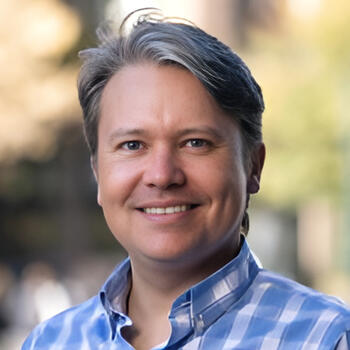
Sean Sylvia is an Assistant Professor of health economics at UNC. His primary research interest is in the delivery of healthcare in China and other middle-income countries. Working with multidisciplinary teams of collaborators, he conducts large-scale population-based surveys and randomized trials to develop and test new approaches to provide healthcare to the poor and marginalized. His recent work focuses on the use of information technology to expand access to quality healthcare.

Jianan Yang
Sean Sylvia Assistant Professor of Health Economics, Gillings School of Global Public Health, University of North Carolina at Chapel Hill
Seminars
-
Atheendar Venkataramani is an Assistant Professor in the Department of Medical Ethics and Health Policy and a staff physician at the Penn Presbyterian Medical Center. Dr. Venkataramani is a health economist who studies the life-course origins of health and socioeconomic inequality. His research, which combines insights from economics, epidemiology, and clinical medicine, spans both domestic and international settings.

Venkataramani Photo


After registering, you will receive a confirmation email containing information about joining the meeting.

Registration


Hybrid Seminar: Lunch will be provided for on-campus participants. 
Please register if you plan to attend, both for in-person and via Zoom.

Log in on your computer, or join us in person: 
Encina Commons, Room 119 
615 Crothers Way 
Stanford, CA 94305

Seminars
-
Natalia Serna is a Ph.D candidate in Economics from the University of Wisconsin-Madison. Her main research interests are in the intersection of industrial organization and health economics. In her latest paper, she studies the impact of risk selection on the breadth of hospital networks. Her future research agenda will further study cost-sharing, consumer inertia, and market power in health insurance, as well as government regulation of health service prices and medications.

Natalia Serna Photo


After registering, you will receive a confirmation email containing information about joining the meeting.

Registration


Hybrid Seminar: Lunch will be provided for on-campus participants. 
Please register if you plan to attend, both for in-person and via Zoom.

Log in on your computer, or join us in person: 
Encina Commons, Room 119 
615 Crothers Way 
Stanford, CA 94305

Seminars
-
Dr. Natalia Kunst is a decision sciences and health economics researcher who focuses on applying decision-analytic and statistical methods in cancer, genetics and precision medicine to assess and identify efficient strategies that would improve patients’ health outcomes, and to design and prioritize clinical research in limited-resource settings, also focusing on health disparities. Dr. Kunst is a Senior Advisor at the Norwegian Directorate of Health. Additionally, part of her time is dedicated to teaching and research as an Associate Professor in the Department of Health Management and Health Economics at the University of Oslo, Norway.


Natalia Kunst Photo


After registering, you will receive a confirmation email containing information about joining the meeting.

Registration


Hybrid Seminar: Lunch will be provided for on-campus participants. 
Please register if you plan to attend, both for in-person and via Zoom.

Log in on your computer, or join us in person: 
Encina Commons, Room 119 
615 Crothers Way 
Stanford, CA 94305

Seminars
-
Andrew Olenski is a Ph.D. candidate in Economics at Columbia University. His research on health care delivery and physician decision-making has been featured in many outlets, including the New England Journal of Medicine and the American Economic Journal: Economic Policy. In his dissertation, he studies the nursing home industry, using modern methods to measure provider quality, and examining the health consequences and policy implications of the recent wave of nursing home closures.
Andrew Olenski Photo


After registering, you will receive a confirmation email containing information about joining the meeting.

Registration


Hybrid Seminar: Lunch will be provided for on-campus participants. 
Please register if you plan to attend, both for in-person and via Zoom.

Log in on your computer, or join us in person: 
Encina Commons, Room 119 
615 Crothers Way 
Stanford, CA 94305

Seminars
-


Image
J'Mag Karbeah Photo


J'Mag Karbeah, PhD, MPH, is an Assistant Professor in the Division of Health Policy and Management at the University of Minnesota School of Public Health. She is a health services researcher whose research aims to interrogate and dismantle the impact of structural racism by focusing on maternal and child health issues. Her program of research leverages theories and methods from population health science as well as health services research to identify the complex and multidimensional ways through which racism impacts health. Her scholarship aims to build an empirical body of research that identifies how structural racism impacts maternal, infant, and child health outcomes. Her experience conducting mixed-method and community-based participatory research guides her scholarship.

Sherri Rose


Registration


After registering, you will receive a confirmation email containing information about joining the meeting.


Hybrid Seminar: Lunch will be provided for on-campus participants.
Please register if you plan to attend, both for in-person and via Zoom.

Log in on your computer, or join us in person:
William J. Perry Conference Room
Encina Hall, 2nd Floor
616 Jane Stanford Way
Stanford, CA 94305


Lectures
-
Michelle Mello is Professor of Law at Stanford Law School and Professor of Health Policy in the Department of Health Policy at Stanford University School of Medicine. She conducts empirical research into issues at the intersection of law, ethics, and health policy. Dr. Mello teaches courses in torts, public health law, and health policy. She holds a J.D. from the Yale Law School, a Ph.D. in Health Policy and Administration from the University of North Carolina at Chapel Hill, an M.Phil. from Oxford University, where she was a Marshall Scholar, and a B.A. from Stanford University.
Michelle Mello


After registering, you will receive a confirmation email containing information about joining the meeting.

Registration


Hybrid Seminar: Lunch will be provided for on-campus participants.
Please register if you plan to attend, both for in-person and via Zoom.

Log in on your computer, or join us in person:
Encina Commons, Room 119
615 Crothers Way
Stanford, CA 94305

This will be a presentation of work-in-progress, with questions and feedback solicited throughout the talk. 

Seminars
Authors
Ari Chasnoff
News Type
News
Date
Paragraphs

The U.S. Department of Health and Human Services (HHS) and the White House are currently reconsidering existing policy to manage “dual use research of concern” and research that would enhance potential pandemic pathogens, with expected new guidance in January. 

As biotechnology has advanced with remarkable speed and impact, so have the needs and demands for benefits, along with concerns about risks. Policy for managing these tradeoffs and mitigating risks has not kept up.

Today, two researchers at Stanford’s Freeman Spogli Institute for International Studies, David Relman and Megan Palmer, are among the co-authors on a Policy Forum article that appears in Science magazine, entitled “Strengthen Oversight of Risky Research on Pathogens.”

The article calls for a series of specific measures to enhance U.S. policy and spur the development of policy elsewhere in the world to address the serious gaps and challenges of the current guidance framework.

The recommendations include:

  • The ‘dual use research of concern’ (DURC) framework should apply to all human pathogens, not just the 15 agents currently listed.
  • Improved review processes must evaluate the risk and potential consequences of accidents, theft or insider diversions.
  • Research proposals should be required to go through independent, government-led risk–benefit assessments to determine whether the work should proceed and under what conditions.
  • The U.S. government should seek nongovernmental expertise for the review process. Currently, the HHS process involves only governmental experts, and the identity of these individuals is not publicly available.
  • All U.S. agencies and institutions that fund work related to the enhancement of potential pandemic pathogens should have that work evaluated under the revised enhanced potential pandemic pathogens framework.

In addition to Relman and Palmer, the other co-authors are Jassi Pannu, Anita Cicero, and Tom Inglesby at the Johns Hopkins Center for Health Security, and Marc Lipsitch at the Harvard School of Public Health.

“It is vital to get these policies right, not only for the US, but to inspire policy development in other countries with growing life science and biotechnology sectors,” write the authors. “Few countries have policies that fully manage these issues.”


Media Contact: Ari Chasnoff, Associate Director for Communications, Freeman Spogli Institute for International Studies

Read More

The White House in Washington D.C.
Q&As

At White House Summit on Bioeconomy, Work of Stanford Scholars Takes Major Leap Forward

With more funding and resources being allocated to America's biotech sector, CISAC affiliate Megan Palmer and core faculty member Drew Endy describe the opportunities and challenges of developing a more robust, ethical, and equitable bioeconomy.
At White House Summit on Bioeconomy, Work of Stanford Scholars Takes Major Leap Forward
Researchers examine medical vials
Commentary

5 Questions: David Relman on Investigating Origin of Coronavirus

Microbiologist David Relman discusses the importance of understanding how the coronavirus emerged.
5 Questions: David Relman on Investigating Origin of Coronavirus
The flag of Taiwan flies over a military monunment in Kinmen, Taiwan.
Commentary

Understanding the Stakes in Taiwan

Larry Diamond and Oriana Skylar Mastro join Michael McFaul on the World Class podcast to discuss China’s ambitions against Taiwan, and how the U.S. and its allies can deter Beijing.
Understanding the Stakes in Taiwan
Hero Image
Mutating virus variant and cell mutation variants as a health risk concept and new coronavirus outbreak or covid-19 viral cells mutations and influenza background as a 3D render.
Getty Images
All News button
1
Subtitle

In Science magazine, Stanford researchers Megan Palmer and David Relman are among co-authors recommending a reset of U.S. and global policy
to address the gaps and challenges of current guidance.

-
Dr. Schulman serves as Professor of Medicine, Associate Chair of Business Development and Strategy in the Department of Medicine, Director of Industry Partnerships and Education for the Clinical Excellence Research Center (CERC) at the Stanford University School of Medicine, and, by courtesy, Professor of Operations, Information and Technology at Stanford’s Graduate School of Business. He is the Director of Stanford's master degree program, the Master of Science in Clinical Informatics Management. Dr. Schulman’s research interests include organizational innovation in health care, health care policy and health economics.
Kevin Schulman Photo


This will be a presentation of work-in-progress, with questions and feedback solicited throughout the talk. 


After registering, you will receive a confirmation email containing information about joining the meeting.

Registration


Hybrid Seminar: Lunch will be provided for on-campus participants. 
Please register if you plan to attend, both for in-person and via Zoom.

Log in on your computer, or join us in person: 
Encina Commons, Room 119 
615 Crothers Way 
Stanford, CA 94305

Seminars
Subscribe to Health and Medicine