Governance

FSI's research on the origins, character and consequences of government institutions spans continents and academic disciplines. The institute’s senior fellows and their colleagues across Stanford examine the principles of public administration and implementation. Their work focuses on how maternal health care is delivered in rural China, how public action can create wealth and eliminate poverty, and why U.S. immigration reform keeps stalling. 

FSI’s work includes comparative studies of how institutions help resolve policy and societal issues. Scholars aim to clearly define and make sense of the rule of law, examining how it is invoked and applied around the world. 

FSI researchers also investigate government services – trying to understand and measure how they work, whom they serve and how good they are. They assess energy services aimed at helping the poorest people around the world and explore public opinion on torture policies. The Children in Crisis project addresses how child health interventions interact with political reform. Specific research on governance, organizations and security capitalizes on FSI's longstanding interests and looks at how governance and organizational issues affect a nation’s ability to address security and international cooperation.

-

On January 11, 2020 Taiwan held its presidential and legislative elections. Many observers expected the People’s Republic of China (PRC) to run an online disinformation campaign during the lead-up to the election in support of their preferred candidate, Han Kuo-yu, who was challenging incumbent Tsai Ing-wen. Such concerns were increased by demonstrated PRC online disinformation targeting the Hong Kong protests, and claims by an alleged PRC spy saying he led disinformation efforts targeting Taiwan during the 2018 elections. 

In this talk, we delve into case studies that highlight the role social media plays in disinformation at large in the Taiwanese information environment. We examine that while the fears of disinformation were generally not realized, we did find evidence of coordinated inauthentic behavior on Facebook, in particular on fan Pages and Groups for the two candidates. Our findings hold implications for researchers trying to distinguish authentic hyper-partisan domestic activism from coordinated disinformation. 

Image
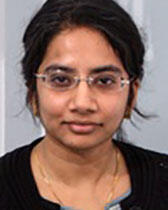
Carly Miller

Carly Miller is a social science researcher at the Stanford Internet Observatory. In addition to covering the Taiwanese election, she assists the team in other digital forensic research and thinking about how researchers external to social media platforms think about disinformation campaign and concepts such as attribution. Before coming to Stanford, Carly was a Team Lead at the Human Rights Investigations Lab at Berkeley Law School where she worked to unearth patterns of various bad actors’ media campaigns. Carly received her BA with honors in political science from the University of California, Berkeley in May 2019.


Image
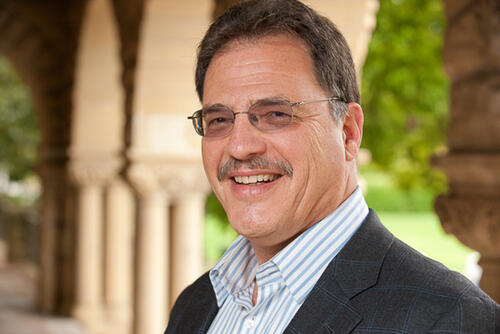
Vanessa Molter


Vanessa Molter is a Research Assistant at SIO and a Master in International Policy candidate at Stanford University, where she focuses on International Security in East Asia. At SIO, she monitors and writes on the Taiwanese social media environment. Previously, she has studied Taiwanese security affairs at the Institute for National Defense and Security Research in Taipei, Taiwan, a government-affiliated defense think-tank. Vanessa is fluent in Mandarin and holds a B.S. in International Business and East Asian studies from Tubingen University, Germany.


Center for International Security and Cooperation
Encina Hall
616 Jane Stanford Way
Stanford University
Stanford, CA 94305-6165

0
William J. Perry Lecturer, Freeman Spogli Institute for International Studies
Research Fellow at the Hoover Institution
dsg_gottemoeller.jpg

Rose Gottemoeller is the William J. Perry Lecturer at Stanford University's Freeman Spogli Institute for International Studies and Research Fellow at the Hoover Institute.

Before joining Stanford, Gottemoeller was the Deputy Secretary General of NATO from 2016 to 2019, where she helped to drive forward NATO’s adaptation to new security challenges in Europe and in the fight against terrorism.  Prior to NATO, she served for nearly five years as the Under Secretary for Arms Control and International Security at the U.S. Department of State, advising the Secretary of State on arms control, nonproliferation and political-military affairs. While Assistant Secretary of State for Arms Control, Verification and Compliance in 2009 and 2010, she was the chief U.S. negotiator of the New Strategic Arms Reduction Treaty (New START) with the Russian Federation.

Prior to her government service, she was a senior associate with the Carnegie Endowment for International Peace, with joint appointments to the Nonproliferation and Russia programs. She served as the Director of the Carnegie Moscow Center from 2006 to 2008, and is currently a nonresident fellow in Carnegie's Nuclear Policy Program.  

At Stanford, Gottemoeller teaches and mentors students in the Ford Dorsey Master’s in International Policy program and the CISAC Honors program; contributes to policy research and outreach activities; and convenes workshops, seminars and other events relating to her areas of expertise, including nuclear security, Russian relations, the NATO alliance, EU cooperation and non-proliferation. 

Date Label
Authors
News Type
News
Date
Paragraphs

For the first time in the history of the Leonard M. Rieser Award, the Bulletin of Atomic Scientists gave an honorable mention. The honor goes to Ivan Andriushin, Cecilia Eiroa-Lledo, Patricia Schuster, and Evgenii Varseev for their essay “Nuclear power and global climate change.”  (Photo is of the authors.)


This essay, written by an a team of two Russian and two American young researchers sprung from a collaboration under the umbrella of the U.S.-Russia Young Professionals Nuclear Forum (YPNF), a project established by CISAC’s Siegfried Hecker to encourage dialogue on critical nuclear issues between the younger generations of nuclear engineers and scholars in the US and Russia.


The essay that received the Rieser honorable mention was one of a series of articles born out of the YPNF program. “Their articles are of interest because they represent the views of some of the younger generation of professionals working together across cultural and disciplinary divides,” said Hecker.  “We were particularly struck by the following comment in their essay reflects on the perceived urgency of the task at hand: ‘We are the first generation that is experiencing the dramatic effects of global climate change and likely the last that can do something about it.” 


Since its first meeting in 2016, the YPNF meets alternatively in Moscow and Stanford, with its agenda designed to promote an open-minded approach to consideration of technical and political challenges presented by the use of nuclear power in energy production and in the military realm. The participants represent not only two different countries, each a world leader in nuclear scholarship, research, and technology expertise, but also a range of disciplines from nuclear engineering to particle physics to international relations to anthropology. 


On the 4th YPNF in Moscow in November 2018, one forum exercise was on The Future of Global Nuclear Power. It was designed to have the young professionals take a close look at the benefits and challenges facing nuclear power globally and to examine and debate the role that nuclear power should play globally in this century. The backdrop for the discussion was the trend of the declining share of electricity produced by nuclear power plants in the world electricity. In the past few years, it dropped to only 11% of global electricity in spite of increasing concerns about the impact of burning fossil fuels on global climate change. This exercise was the start of the winning essay.


Read the Rest at Bulletin of Atomic Scientists

Hero Image
q1teamsf 2018
All News button
1
-

Seminar Recording: https://youtu.be/c1RKnxPEk54


About this Event: U.S.-Russian relations are at perhaps their lowest point since the end of the Cold War and collapse of the Soviet Union.  What are the principal points of contention between Washington and Moscow, and what are the prospects for managing these differences as well as for making progress where U.S. and Russian interests align?


Speaker's Biography: Christopher Robinson is a career Foreign Service Officer with over 23 years of experience as a diplomat. He currently serves as Deputy Assistant Secretary of the Bureau of European and Eurasian Affairs.

Chris most recently was Minister Counselor for Political Affairs at U.S. Embassy Moscow, Russia. He also has served as Deputy Director for Russian Affairs at the State Department, as Political Counselor at the U.S. Mission to the Organization for Security and Cooperation in Europe (OSCE) in Vienna, Austria, and as Political Counselor in Managua, Nicaragua. His previous assignments have included Iraq, Belarus, Canada, Russia, and assignments in the Bureau of Western Hemisphere Affairs and the Bureau of European Affairs. He holds multiple State Department Superior and Meritorious Honor Awards. He speaks Russian and Spanish.

Chris received an M.S. in strategic studies from the National War College and a B.A. in international affairs from the George Washington University.

Christopher Robinson Deputy Assistant Secretary Bureau of European and Eurasian Affairs

Encina Hall
616 Jane Stanford Way
Stanford, CA  94305

0
Visiting Postdoctoral Scholar at The Europe Center, 2019-2020
Fulbright Postdoctoral Fellow, 2019-2020
photo_anghel.jpg

Veronica Anghel is a Postdoctoral Fulbright Fellow and Visiting Postdoctoral Scholar at The Europe Center. Her research focuses on the challenges to democratic state building and party politics in post-communist Europe. Her project is centered on the clashes between the intrinsic effects of formal and informal institutions and elite agency as critical junctures that lead to different outcomes of democratization. Her main area of study is the countries of Central and Eastern Europe. Currently, she engages in the academic debate regarding the perceived democratic ‘backlash’ of CEE post-communist states. Previously, Dr. Anghel held fellowships at the Johns Hopkins University – School of Advanced International Studies, the Institute for Human Sciences Vienna, the Institute for Central Europe Vienna, the University of Bordeaux and the Institute for Government in Vienna. Following her Stanford appointment, Dr. Anghel will join the European University Institute in Florence on a Max Weber Scholarship (2020 – 2021).

Dr. Anghel received her PhD summa cum laude from the University of Bucharest in co-direction with the University of Bordeaux. Her thesis ‘The Formation of Coalition Governments in Romania: Patterns Behind the Drift’ was awarded the prize of the best dissertation defended in 2018. Research based on this work was published in East European Politics and Societies, Government & Opposition and edited volumes. She is an analyst for the Economist Intelligence Unit and Oxford Analytica on issues related to CEE countries. She is also an editorial fellow for Government & Opposition. Dr. Anghel also worked as a foreign affairs advisor for the Romanian Presidential Administration (2015) and the Romanian Senate (2012 - 2015).

-

CISAC will be canceling all public events and seminars until at least April 5th due to the ongoing developments associated with COVID-19.

------------------------------------------------------------------------------------------------------------------------------------------------------


About this Event: In this new Brookings Marshall Paper, Michael O’Hanlon argues that now is the time for Western nations to negotiate a new security architecture for neutral countries in eastern Europe to stabilize the region and reduce the risks of war with Russia. He believes NATO expansion has gone far enough. The core concept of this new security architecture would be one of permanent neutrality. The countries in question collectively make a broken-up arc, from Europe’s far north to its south: Finland and Sweden; Ukraine, Moldova, and Belarus; Georgia, Armenia, and Azerbaijan; and finally Cyprus plus Serbia, as well as possibly several other Balkan states. Discussion on the new framework should begin within NATO, followed by deliberation with the neutral countries themselves, and then formal negotiations with Russia.

The new security architecture would require that Russia, like NATO, commit to help uphold the security of Ukraine, Georgia, Moldova, and other states in the region. Russia would have to withdraw its troops from those countries in a verifiable manner; after that, corresponding sanctions on Russia would be lifted. The neutral countries would retain their rights to participate in multilateral security operations on a scale comparable to what has been the case in the past, including even those operations that might be led by NATO. They could think of and describe themselves as Western states (or anything else, for that matter). If the European Union and they so wished in the future, they could join the EU. They would have complete sovereignty and self-determination in every sense of the word. But NATO would decide not to invite them into the alliance as members. Ideally, these nations would endorse and promote this concept themselves as a more practical way to ensure their security than the current situation or any other plausible alternative.

Book Full Text


Speaker's Biography: Michael O'Hanlon is a senior fellow, and director of research, in Foreign Policy at the Brookings Institution, where he specializes in U.S. defense strategy, the use of military force, and American national security policy. He co-directs the Security and Strategy Team, the Defense Industrial Base working group, and the Africa Security Initiative within the Foreign Policy program, as well. He is an adjunct professor at Columbia, Georgetown, and Syracuse universities, and a member of the International Institute for Strategic Studies. O’Hanlon was also a member of the External Advisory Board at the Central Intelligence Agency from 2011-2012.

Michael E. O’Hanlon Director of Research, Foreign Policy Brookings Institution
Seminars

Encina Hall, E108
616 Jane Stanford Way
Stanford, CA 94305-6055

650.736.3750
0
Research Scholar
ayca_2022.jpg

Ayça Alemdaroğlu is the Associate Director of the Program on Turkey and a Research Scholar at the Center on Democracy, Development, and the Rule of Law at Stanford University. She is also a Global Fellow at the Peace Research Institute Oslo (PRIO). As a political sociologist, Ayça explores social and political inequalities and changes in Turkey and the Middle East.

Previously, she was an Assistant Professor of Sociology and the Associate Director of the Keyman Modern Turkish Studies Program at Northwestern University. 

She received her Ph.D. in sociology from the University of Cambridge, her MA in political science from Bilkent University, and her BSc. degrees in political science and sociology from the Middle East Technical University. 

She serves on the editorial committee of the Middle East Report. 

Associate Director, Program on Turkey
Date Label
Authors
Siegfried S. Hecker
News Type
News
Date
Paragraphs

The sixth Young Professional Nuclear Forum (YPNF6), sponsored by the Center for International Security and Cooperation at Stanford University and the Moscow Engineering and Physics Institute (MEPhI), was held at MEPhI, Moscow, on November 4-7, 2019.


The mission of the forums is to foster collaboration between young professionals from Russia and the United States in the nuclear power and nonproliferation fields. The forum allows them to discuss and evaluate pressing global nuclear issues during times that the two governments are not cooperating and are not in serious dialogue. In recent years, the two governments have severely restricted opportunities and venues that previously used to be open to experienced nuclear professionals on both sides to cooperate with each other.  The benefits of nuclear cooperation were clearly demonstrated in hundreds of mutually beneficial collaborative projects by Russian and American nuclear professionals during the breakup of the Soviet Union and in the 20-plus years that followed.


These forums allow Stanford University and MEPhI to prepare the next generation to help rejuvenate cooperation once the governments realize that cooperation in the nuclear arena is essential. The young professionals participating in these meetings are upper level undergraduates, graduate students, postdocs, young faculty and junior specialists. They are the new generation who will be stepping in to solve the mounting challenges including nuclear security, nonproliferation, nuclear disarmament and how to mitigate the effects of climate change and toxic pollution of the planet.


The November 2019 meeting included two and a half days of lectures and group work on two exercises – one on a “World free of nuclear weapons” and the second on “The impact of nuclear accidents on the future of nuclear power.”


Most young professionals acknowledged – or came to realize – the enormity and complexity of Nuclear Zero as both a study area and a goal. At the same time, many noted that this very complexity provoked deeper thinking and the discussion opened new perspectives, especially for those on the engineering side. The young professionals also realized that they share more common ground on the issue of Global Zero than one might have thought.


The feedback on the nuclear accidents exercise also showed several notable takeaways. The aspects that appealed to the young professionals were: the comparative approach that pushed them to look beyond the known facts into similarities and specifics across the three accident cases; a perspective that integrated the technical, social, and cultural angles; and such examination being directly relevant to improved safety of nuclear energy, the objective close to heart to many of them who see their future as nuclear professionals.


It is also interesting that in this exercise the young professionals noted differences of perspective and opinion rather than similarities. As has been the case in all previous forums, these differences were valued and accepted as leading to a richer, more productive, discussions.


Their reports were sufficiently impressive that we have decided to follow the model of YPNF4 and have the young professionals turn the six short articles to be published in the Bulletin of the Atomic Scientists. We have the go-ahead from the editor of the Bulletin.


In addition to the working sessions, the forum provided the opportunity for personal interaction and connections. The young professionals rated their overall satisfaction of the meeting as 8.6 out of 10 expressed a strong preference to stay engaged between the forums working on collaborative projects.


On the whole, the response to the 6th YPNF seems to show a growing engagement and sense of ownership by the young professionals on both sides. The forum presented various opportunities for the young professionals to learn about issues, each other, and each other’s countries. Young professionals approached many of the senior experts individually with questions both within and beyond the Forum discussion areas and exchanged contacts for future interaction.


The forum was supported by MEPhI, the Carnegie Corporation of New York and the MacArthur Foundation.


Hero Image
cisac20 ypnf6
All News button
1
-

Abstract: A Supply and Demand Framework for YouTube Politics (with Joseph Phillips)

Youtube is the most used social network in the United States. However, for a combination of sociological and technical reasons, there exist little quantitative social science research on the political content on Youtube, in spite of widespread concern about the growth of extremist YouTube content. An emerging journalistic consensus theorizes the central role played by the video "recommendation engine," but we believe that this is premature. Instead, we propose the "Supply and Demand" framework for analyzing politics on YouTube. We discuss a number of novel technological affordances of YouTube as a platform and as a collection of videos, and how each might drive supply of or demand for extreme content. We then provide large-scale longitudinal descriptive information about the supply of and demand for alternative political content on YouTube. We demonstrate that viewership of far-right videos peaked in 2017.

Image
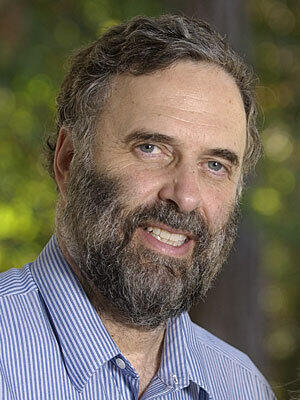
Kevin Munger
Kevin Munger is Assistant Professor of Political Science and Social Data Analytics, Penn State University. Ph.D., New York University, 2018. His research looks at social media and other contemporary internet technology has changed political communication. He has published research on the subject using a variety of methodologies, including textual analysis, field experiments, longitudinal surveys and qualitative theory. His research has appeared in leading journals like the American Journal of Political Science, Political Behavior, Political Communication, and Political Science Research & Methods. His present interests include cohort conflict in American politics and developing new methods for social science in a rapidly changing world.

Subscribe to Governance