Governance

FSI's research on the origins, character and consequences of government institutions spans continents and academic disciplines. The institute’s senior fellows and their colleagues across Stanford examine the principles of public administration and implementation. Their work focuses on how maternal health care is delivered in rural China, how public action can create wealth and eliminate poverty, and why U.S. immigration reform keeps stalling. 

FSI’s work includes comparative studies of how institutions help resolve policy and societal issues. Scholars aim to clearly define and make sense of the rule of law, examining how it is invoked and applied around the world. 

FSI researchers also investigate government services – trying to understand and measure how they work, whom they serve and how good they are. They assess energy services aimed at helping the poorest people around the world and explore public opinion on torture policies. The Children in Crisis project addresses how child health interventions interact with political reform. Specific research on governance, organizations and security capitalizes on FSI's longstanding interests and looks at how governance and organizational issues affect a nation’s ability to address security and international cooperation.

0
cooper.jpg

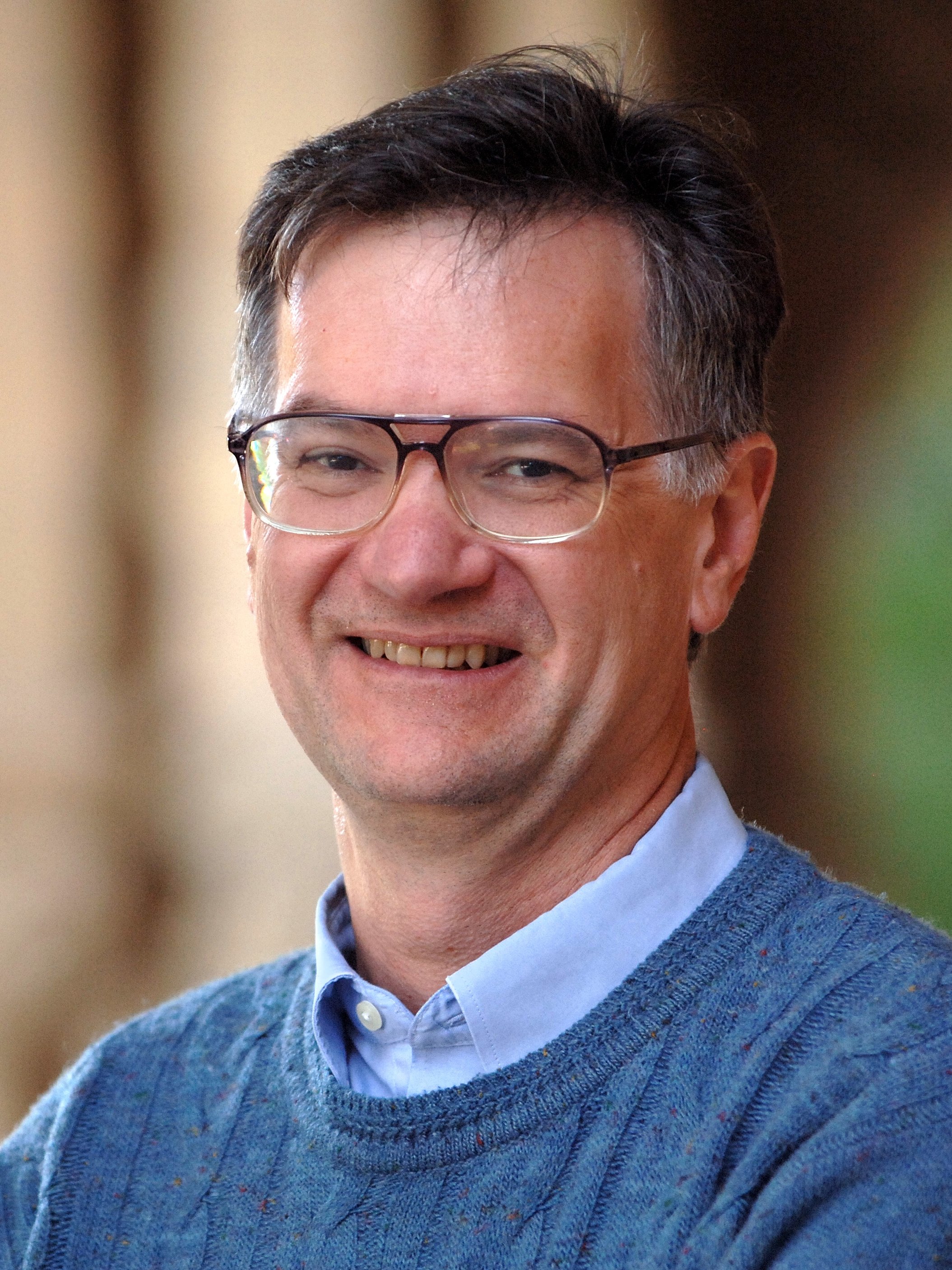
Austin R. Cooper is a Stanton Nuclear Security Fellow in the Security Studies Program at the Massachusetts Institute of Technology. He completed his PhD in History and Sociology of Science at the University of Pennsylvania. He has held fellowships at Stanford University’s Center for International Security and Cooperation and SciencesPo’s Nuclear Knowledges Program.

Affiliate
-

This is a virtual event. Please click here to register and generate a link to the talk. 
The link will be unique to you; please save it and do not share with others.


Sponsored by the Stanford China Program and the Stanford Center at Peking University.
 

International institutions established after WWII and shaped by the Cold War facilitated attainment of unprecedented peace and prosperity.  But what worked well in the past may no longer be adequate to address the challenges and opportunities in the world these institutions helped to create.  Should legacy institutions be reformed, replaced, or supplemented by new mechanisms to manage new global challenges?  This program will examine whether existing institutions of global governance are adequate, and if not, why changing them will be difficult.


Image
Dr. Thomas Fingar
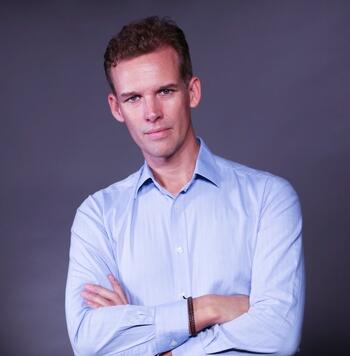
Thomas Fingar is a Shorenstein APARC Fellow in the Freeman Spogli Institute for International Studies at Stanford University. He was the inaugural Oksenberg-Rohlen Distinguished Fellow from 2010 through 2015 and the Payne Distinguished Lecturer at Stanford in 2009. From 2005 through 2008, he served as the first deputy director of national intelligence for analysis and, concurrently, as chairman of the National Intelligence Council. Fingar served previously as assistant secretary of the State Department’s Bureau of Intelligence and Research (2000-01 and 2004-05), principal deputy assistant secretary (2001-03), deputy assistant secretary for analysis (1994-2000), director of the Office of Analysis for East Asia and the Pacific (1989-94), and chief of the China Division (1986-89). Between 1975 and 1986 he held a number of positions at Stanford University, including senior research associate in the Center for International Security and Arms Control.

Fingar's most recent books are The New Great Game: China and South and Central Asia in the Era of Reform, editor (Stanford, 2016), Uneasy Partnerships: China and Japan, the Koreas, and Russia in the Era of Reform (Stanford, 2017), and Fateful Decisions: Choices that will Shape China’s Future, co-edited with Jean Oi (Stanford, 2020).


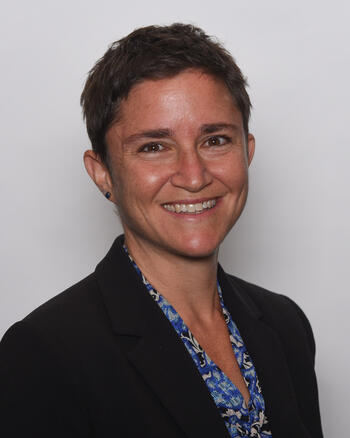
Dr. Stephen J. StedmanStephen Stedman is a Freeman Spogli senior fellow at the Center on Democracy, Development, and the Rule of Law and FSI, an affiliated faculty member at CISAC, and professor of political science (by courtesy) at Stanford University. 

In 2011-12 Professor Stedman served as the Director for the Global Commission on Elections, Democracy, and Security, a body of eminent persons tasked with developing recommendations on promoting and protecting the integrity of elections and international electoral assistance. The Commission is a joint project of the Kofi Annan Foundation and International IDEA, an intergovernmental organization that works on international democracy and electoral assistance. In 2003-04 Professor Stedman was Research Director of the United Nations High-level Panel on Threats, Challenges and Change and was a principal drafter of the Panel’s report, A More Secure World: Our Shared Responsibility. In 2005 he served as Assistant Secretary-General and Special Advisor to the Secretary- General of the United Nations, with responsibility for working with governments to adopt the Panel’s recommendations for strengthening collective security and for implementing changes within the United Nations Secretariat, including the creation of a Peacebuilding Support Office, a Counter Terrorism Task Force, and a Policy Committee to act as a cabinet to the Secretary-General.  His most recent book, with Bruce Jones and Carlos Pascual, is Power and Responsibility: Creating International Order in an Era of Transnational Threats (Washington DC: Brookings Institution, 2009).

Via Zoom Webinar. Register at: https://bit.ly/3b6qmKT

Thomas Fingar Shorenstein APARC Fellow, Stanford University
Stephen Stedman Deputy Director, Center on Democracy, Development and Rule of Law, Stanford University
Seminars
Authors
Herbert Lin
News Type
News
Date
Paragraphs

What do the 2020 Doomsday Clock - you know, the calculation that tells us which technologies and conditions may annihilate us all - and the 2020 presidential election have in common?

Listen to the conversation at WNPR

Hero Image
Red clock NASA GODDARD SPACE FLIGHT CENTER
All News button
1
Subtitle

Herb Lin discusses how close we are to midnight, which is to say, human annihilation.

News Type
News
Date
Paragraphs

In a recent perspective published by the New England Journal of Medicine (NEJM), Stanford Law student Alexandra Daniels analyzed a growing body of federal litigation brought by prisoners with the hepatitis C virus (HCV) who are seeking access to treatment for their condition. With co-author and mentor, Law Professor David Studdert — also a professor of medicine at Stanford Health Policy — Daniels documented the dire public health problem of HCV in prisons.

“People incarcerated in prisons account for approximately one third of HCV cases in the United States” the authors wrote, and nearly one in five prisoners are infected, compared with 1 percent of the general population. 

HCV is a slow-moving disease, but left untreated it eventually leads to cirrhosis, cancer, liver failure, and death.  

A new wave of “miracle” drugs for treating HCV appeared in 2014. Direct-acting antivirals–or DAAs–are far more effective than anything previously known. The catch–they are extremely expensive, upwards of $50,000 for a course of treatment.  This creates a far higher price tag for universal treatment than most prison systems can afford. The result is that, even though prisons are the epicenter of the HCV epidemic, only a small minority of prisoners have gained access to DAAs.

Read Full Story

Read More

gettyimages run illustration
News

Owning Handgun Associated With Dramatically Higher Risk of Suicide

Men who own handguns are eight times more likely to die of suicide by handgun than men who don’t have one — and women who own handguns are 35 times more likely than women who don’t, according to startling new research led by SHP's David Studdert.
Owning Handgun Associated With Dramatically Higher Risk of Suicide
gettyimages covid prisoners
News

Stanford Works With California Prisons to Test and Prevent COVID-19

A $1 million gift from the Horowitz Family Foundation allows Stanford researchers to work on reducing the spread of COVID-19 among the incarcerated and inform mitigation strategies in other high-density living situations.
Stanford Works With California Prisons to Test and Prevent COVID-19
A map of the United States.
Commentary

Partitioning the Curve — Interstate Travel Restrictions During the Covid-19 Pandemic

Many jurisdictions have responded to the unevenness of the COVID-19 pandemic by battening down their borders. SHP's David Studdert and Michelle Mello take a deep dive into the legalities of attempting to prevent people from crossing state lines in this New England Journal of Medicine perspective.
Partitioning the Curve — Interstate Travel Restrictions During the Covid-19 Pandemic
Hero Image
Prison Bars Getty Images
All News button
1
Subtitle

The U.S. Supreme Court has interpreted the 8th Amendment of the Constitution, which prohibits cruel and unusual punishment, to guarantee prisoners a minimum basic level of health care. Yet even though prisons are the epicenter of the hepatitis C epidemic, only a small minority of prisoners have gained access to new "miracle" drugs to treat HCV.

-

This event is available through livestream only. Please register in advance for the webinar by using the link below.

REGISTRATION LINKhttps://bit.ly/34pAVrb

Inside the Billion Dollar Whale Scandal: 2020 Shorenstein Journalism Award Recipient Tom Wright to Headline Award Panel Discussion

The $7 billion 1Malaysia Development Bhd (1MDB) scandal, one of the largest-ever financial frauds, exposed the depths of corruption in global markets. The story starts in Malaysia, but a raft of institutions from Goldman Sachs to Big Four auditors and Manhattan lawyers enabled the graft. Five years after the story came to light, almost no one has gone to jail. What’s in store for the main players, how can our justice system ensure history does not repeat itself, and how do political actors shape the trajectories of anticorruption efforts in Asia?
 

Tom Wright, winner of the 2020 Shorenstein Journalism Award, addresses these questions and more in his keynote address.

Wright is the coauthor of the New York Times bestseller Billion Dollar Whale, which unravels the story of one of the world's greatest financial scandals involving the multibillion-dollar looting of the Malaysian sovereign wealth fund 1MDB. Wright’s work sparked investigations by law enforcement and regulators in multiple countries and outrage in Malaysia, where the ruling coalition, after 61 years in power, suffered a landslide defeat in a shocking 2018 election.

The keynote will be followed by a guided interview with the award winner led by Meredith Weiss, Professor and Chair of Political Science at the Rockefeller College of Public Affairs and Policy, University at Albany, SUNY.

The event will conclude with an audience Q&A session moderated by Donald K. EmmersonDirector of the Southeast Asia Program at the Walter H. Shorenstein Asia-Pacific Research Center.

Follow us on Twitter and use the hashtag #SJA20 to join the conversation.

Speakers:

Image
Portrait of Tom Wright, winner of 2020 Shorenstein Journalism Award
Tom Wright is an author, journalist, and speaker who over the past twenty-five years has lived and worked mainly in South and Southeast Asia. He is a Pulitzer finalist, a Loeb winner, and co-author of the New York Times bestseller Billion Dollar Whale, about the 1MDB scandal. A theme running through Tom’s work is the blight of corruption in Asia, abetted by Western companies and institutions. He started his career with Reuters in Indonesia in the 1990s at a time when Gen. Suharto’s military dictatorship was crumbling. During the Asian financial crisis of 1997-1998, Tom joined Dow Jones Newswires in Bangkok, later moving to the Wall Street Journal.
 
He has investigated corruption in Indian companies, the failure of the U.S. civilian aid program for Pakistan, and was one of the first journalists to arrive at the scene of the raid in which Navy SEALs killed Osama bin Laden. In 2013, Tom spearheaded the coverage of the Rana Plaza factory disaster in Bangladesh, which killed over 1,000 people, earning the Wall Street Journal a Sigma Delta Chi award from The Society of Professional Journalists. The series exposed how international garment manufacturers turned a blind eye to safety violations in order to reduce costs.
 
As Asia Economics Editor in Hong Kong, Tom managed a number of correspondents in the region, while continuing to report. In 2015, he began investigations into the 1MDB scandal, an almost unbelievable series of events in which bankers at Goldman Sachs helped a young Malaysian financier steal at least $4 billion from Malaysian state fund 1MDB, one of the largest financial frauds of all time. The three-year investigation showed the degree to which Western institutions, from Wall Street banks, law firms, auditors, and even Hollywood film companies, ignore malfeasance in the pursuit of profits.
 

Image
Portrait of Meredith Weiss, Professor and Chair of Political Science in the Rockefeller College of Public Affairs and Policy at the University at Albany, State University of New York
Meredith Weiss is Professor and Chair of Political Science in the Rockefeller College of Public Affairs & Policy at the University at Albany, State University of New York. Her research addresses social mobilization and civil society, the politics of identity and development, parties and elections, institutional reform and (anti)corruption, and subnational governance in Southeast Asia, with particular focus on Malaysia and Singapore. She has conducted fieldwork in those two countries as well as Indonesia, the Philippines, and Timor-Leste, and has held visiting fellowships or professorships in Australia, Japan, Malaysia, the Philippines, Singapore, and the US.

Her books include Protest and Possibilities: Civil Society and Coalitions for Political Change in Malaysia (2006), Student Activism in Malaysia: Crucible, Mirror, Sideshow (2011), The Roots of Resilience: Political Machines and Grassroots Politics in Southeast Asia (2020), and eleven edited or co-edited volumes, most recently, The Political Logics of Anticorruption Efforts in Asia (2019) and Toward a New Malaysia? The 2018 Election and Its Aftermath (2020).  Her articles appear in Asian Studies ReviewAsian SurveyCritical Asian StudiesDemocratizationJournal of Contemporary AsiaJournal of DemocracyTaiwan Journal of Democracy, and elsewhere.

Professor Weiss co-edits the Cambridge University Press Elements book series on Politics and Society in Southeast Asia and is an associate editor for Southeast Asia of the Association for Asian Studies’ (AAS) Journal of Asian Studies. She co-founded the Southeast Asian Politics related group of the American Political Science Association (APSA) and chairs the APSA’s Asia Workshops steering committee, is past chair of the AAS’s Southeast Asia Council, and is on the Southeast Asia Research Group (SEAREG) Council. She received her MA and PhD in Political Science from Yale University and a BA in Political Science, Policy Studies, and English from Rice University.


About the Shorenstein Journalism Award:

The Shorenstein Journalism Award, which carries a cash prize of US $10,000, recognizes outstanding journalists who have spent their careers helping audiences around the world understand the complexities of the Asia-Pacific region, defined broadly to include Northeast, Southeast, South, and Central Asia and Australasia. Award recipients are veteran journalists with a distinguished body of work. News organizations are also eligible for the award.

The award is sponsored and presented by the Walter H. Shorenstein Asia-Pacific Research Center (Shorenstein APARC) at Stanford University. It honors the legacy of the Center’s benefactor, Mr. Walter H. Shorenstein, and his twin passions for promoting excellence in journalism and understanding of Asia. It also symbolizes the Center’s commitment to journalism that persistently and courageously seeks accuracy, deep reporting, and nuanced coverage in an age when attacks are regularly launched on the independent news media, on fact-based truth, and on those who tell it.

An annual tradition, the Shorenstein Journalism Award alternates between recipients whose work has mostly been conveyed through American news media and recipients whose work has mostly been conveyed through news media in one or more parts of the Asia-Pacific region. Included among the latter candidates are journalists who are from the region and work there, and who, in addition to their recognized excellence, may have helped defend and encourage free media in one or more countries in the region.

Learn more at https://aparc.fsi.stanford.edu/events/shorenstein-journalism-award.

Virtual Webinar Via Zoom

Registration Link: https://bit.ly/34pAVrb

Tom Wright <br>Journalist, Author, Speaker</br><br>
Meredith Weiss <br>Professor and Chair of Political Science, University at Albany,SUNY</br>
Seminars
-

**Please note all CDDRL events are scheduled using the Pacific Time Zone

About this Event:  This book offers a novel theory of the nuances in relationships between business and political elites in three authoritarian regimes in developing Asia: Indonesia under Suharto’s New Order, Malaysia under the Barisan Nasional (BN), and China under the Chinese Communist Party (CCP). How did business-state relations in all three regimes come to be seen as “crony,” and why do some crony arrangements generate growth and political stability and others stagnation or crisis? The book develops conceptual models of state-business relations (mutual alignment and mutual endangerment) and explains their genesis. I argue that the main factors explaining why one pattern dominates over the other are the political status of capitalists, determined during regime formation, and the political management of the financial system. The research draws on extensive archival and interview sources as well as novel datasets on corporate filings in each country.


Image
Meg Rithmere
About the Speaker:  Meg Rithmire is F. Warren MacFarlan associate professor in the Business, Government, and International Economy Unit. Professor Rithmire holds a PhD in Government from Harvard University, and her primary expertise is in the comparative political economy of development with a focus on China and Asia. Her first book, Land Bargains and Chinese Capitalism (Cambridge University Press, 2015), examines the role of land politics, urban governments, and local property rights regimes in the Chinese economic reforms. A new project, for which Meg conducted fieldwork in Asia 2016-2017, investigates the relationship between capital and the state and globalization in Asia. The project focuses on a comparison of China, Malaysia, and Indonesia from the early 1980s to the present. The research has two components; first, examining how governments attempt to discipline business and when those efforts succeed and, second, how business adapts to different methods of state control. 


Online, via Zoom: REGISTER

Meg Rithmire F. Warren MacFarlan associate professor in the Business, Government, and International Economy Unit
Seminars
-

**Please note all CDDRL events are scheduled using the Pacific Time Zone


About the Event:   As we enter the stretch run of the 2020 US election campaign, join us for an inside look at how public policy is formulated on political campaigns, and the key policy debates animating the election.


Image
Lanhee Chen
About the Speaker:  Lanhee J. Chen, Ph.D. is the David and Diane Steffy Fellow in American Public Policy Studies at the Hoover Institution; Director of Domestic Policy Studies and Lecturer in the Public Policy Program at Stanford University; and an affiliated faculty member of the Center on Democracy, Development and the Rule of Law at Stanford’s Freeman Spogli Institute. 

A veteran of several high-profile political campaigns, Chen has worked in government, the private sector, and academia. 

Chen has advised numerous major campaigns, including four presidential efforts.  In 2012, he was policy director of the Romney-Ryan campaign, serving as Governor Mitt Romney’s chief policy adviser and a senior strategist on the campaign.  Chen also advised Florida Senator Marco Rubio’s 2016 bid; Romney’s 2008 effort; and the Bush-Cheney reelection campaign in 2004.  In the 2014 and 2018 campaign cycles, he was the Senior Adviser on Policy to the National Republican Senatorial Committee (NRSC). 

He earned his Ph.D. in Political Science, A.M. in Political Science, J.D. cum laude, and A.B. magna cum laude in Government, all from Harvard University.   

Online, via Zoom: REGISTER

the David and Diane Steffy Fellow in American Public Policy Studies at the Hoover Institution; Director of Domestic Policy Studies and Lecturer in the Public Policy Program at Stanford University
Seminars
-

This event is being live-streamed on Zoom. Registration is required: https://stanford.zoom.us/webinar/register/WN_PTnI4nwGRLCERCHdP-cogw

On August 9, 2020, Belarus held a presidential election, which Alexander Lukashenko — Belarus' president of 26 years — claimed to have won with 80 percent of the vote. Exit polling, however, demonstrated that the opposition leader, Svetlana Tikhanovskaya, actually garnered wide popular support. Since the election, Belarusians have taken to the streets to demand a new election and/or that Lukashenko step down. But the regime appears intent on remaining in power and has used force against peaceful protesters. Workers in key factories have since gone on strike, and widespread protests continue. 

Join us for a special zoom seminar on Wednesday, August 19 from 11:30 a.m. to 12:45 p.m. PDT with Michael A. McFaul, Director of the Freeman Spogli Institute and former US Ambassador to Russia; Anna Grzymala-Busse, senior fellow at the Freeman Spogli Institute for International Studies and the director of The Europe Center; and Francis Fukuyama, Senior Fellow and Mosbacher Director of the Center on Democracy, Development and the Rule of Law and Director of the Ford Dorsey Master's in International Policy Program at FSI in a session on the events in Belarus that will be moderated by Kathryn Stoner, Senior Fellow and Deputy Director of the Freeman Spogli Institute.

Panel Discussions
Authors
Daphne Keller
News Type
Q&As
Date
Paragraphs

Daphne Keller leads the newly launched Program on Platform Regulation a program designed to offer lawmakers, academics, and civil society groups ground-breaking analysis and research to support wise governance of Internet platforms.

Q: Facebook, YouTube and Twitter rely on algorithms and artificial intelligence to provide services for their users. Could AI also help in protecting free speech and policing hate speech and disinformation?   

DK: Platforms increasingly rely on artificial intelligence and other algorithmic means to automate the process of assessing – and sometimes deleting – online speech. But tools like AI can’t really “understand” what we are saying, and automated tools for content moderation make mistakes all the time. We should worry about platforms’ reliance on automation, and worry even more about legal proposals that would make such automated filters mandatory. Constitutional and human rights law give us a legal framework to push back on such proposals, and to craft smarter rules about the use of AI. I wrote about these issues in this New York Times op ed and in some very wonky academic analysis in the Journal of European and International IP Law.

Q: Can you explain the potential impacts on citizens’ rights when the platforms have global reach but governments do not?

DK: On one hand, people worry about platforms displacing the legitimate power of democratic governments. On the other hand, platforms can actually expand state power in troubling ways. One way they do that is by enforcing a particular country’s speech rules everywhere else in the world. Historically that meant a net export of U.S. speech law and values, as American companies applied those rules to their global platforms. More recently, we’ve seen that trend reversed, with things like European and Indian courts requiring Facebook to take user posts down globally – even if the users’ speech would be legally protected in other countries. Governments can also use soft power, or economic leverage based on their control of access to lucrative markets, to convince platforms to “voluntarily” globally enforce that country’s preferred speech rules. That’s particularly troubling, since the state influence may be invisible to any given users whose rights are affected.   

There is such a pressing need for thoughtful work on the laws that govern Internet platforms right now, and this is the place to do it... We have access to the people who are making these decisions and who have the greatest expertise in the operational realities of the tech platforms.
Daphne Keller
Director of Program on Platform Regulation, Cyber Policy Center Lecturer, Stanford Law School

Q: Are there other ways that platforms can expand state power? 

DK: Yes, platforms can let states bypass democratic accountability and constitutional limits by using private platforms as proxies for their own agenda. States that want to engage in surveillance or censorship are constrained by the U.S. Constitution, and by human rights laws around the world. But platforms aren’t. If you’re a state and you want to do something that would violate the law if you did it yourself, it’s awfully tempting to coerce or persuade a platform to do it for you. This issue of platforms being proxies for other actors isn’t limited to governments – anyone with leverage over a platform, including business partners, can potentially play a hidden role like this.

I wrote about this complicated nexus of state and private power in Who Do You Sue? for the Hoover Institution.    

Q: What inspired you to create the Program on Platform Regulation at the Cyber Policy Center right now?

DK: There is such a pressing need for thoughtful work on the laws that govern Internet platforms right now, and this is the place to do it. At the Cyber Policy Center, there’s an amazing group of experts, like Marietje Schaake, Eileen Donahoe, Alex Stamos and Nate Persily, who are working on overlapping issues. We can address different aspects of the same issues and build on each other’s work to do much more together than we could individually.

The program really benefits from being at Stanford and in Silicon Valley because we have access to the people who are making these decisions and who have the greatest expertise in the operational realities of the tech platforms. 

The Cyber Policy Center is part of the Freeman Spogli Institute for International Studies at Stanford University.

Hero Image
Q&A with Daphne Keller
All News button
1
Subtitle

Keller explains some of the issues currently surrounding platform regulation

Paragraphs

Covid-19 has exposed major weaknesses in the United States’ federalist system of public health governance, which divides powers among the federal, state, and local governments. SARS-CoV-2 is exactly the type of infectious disease for which federal public health powers and emergencies were conceived: it is highly transmissible, crosses borders efficiently, and threatens our national infrastructure and economy. Its prevalence varies around the country, with states such as Washington, California, and New York hit particularly hard, but cases are mounting nationwide with appalling velocity. Strong, decisive national action is therefore imperative.

All Publications button
1
Publication Type
Journal Articles
Publication Date
Journal Publisher
New England Journal of Medicine
Authors
Michelle Mello
Number
2020
Subscribe to Governance