Governance

FSI's research on the origins, character and consequences of government institutions spans continents and academic disciplines. The institute’s senior fellows and their colleagues across Stanford examine the principles of public administration and implementation. Their work focuses on how maternal health care is delivered in rural China, how public action can create wealth and eliminate poverty, and why U.S. immigration reform keeps stalling. 

FSI’s work includes comparative studies of how institutions help resolve policy and societal issues. Scholars aim to clearly define and make sense of the rule of law, examining how it is invoked and applied around the world. 

FSI researchers also investigate government services – trying to understand and measure how they work, whom they serve and how good they are. They assess energy services aimed at helping the poorest people around the world and explore public opinion on torture policies. The Children in Crisis project addresses how child health interventions interact with political reform. Specific research on governance, organizations and security capitalizes on FSI's longstanding interests and looks at how governance and organizational issues affect a nation’s ability to address security and international cooperation.

-

Image
larry diamond, charles mok, jason hsu photos for event on april 12 on blue background
Join us on Tuesday, April 12 from 12 PM - 1 PM PT for “Internet Freedom Under Threat: The Divergent Paths of Taiwan and Hong Kong” featuring Charles Mok, Visiting Scholar at the Global Digital Policy Incubator and Jason Hsu, Chief Initiative Officer at Taiwan AI Labs, in conversation with Larry Diamond, co-lead for the Global Digital Policy Incubator and Senior Fellow at the Freeman Spogli Institute for International Studies. This weekly seminar series is jointly organized by the Cyber Policy Center’s Program on Democracy and the Internet and the Hewlett Foundation’s Cyber Initiative.

About The Seminar: 

Both Taiwan and Hong Kong face increasing threats of online misinformation and cybersecurity risks, but the freedoms of the Internet for their citizens appear to be heading in opposite directions. From censorship and surveillance to influencing public opinions and elections, what are the lessons from the experiences of Hong Kong and Taiwan for the world?

Our speakers will provide an overview of the state of internet freedom in Hong Kong from before to after the enactment of the National Security Law in 2020. Censorship and surveillance are on the rise, and a misinformation law is looming on the horizon, to give the government and the police even more unfettered power. We will also cover the techniques used by cyber intrusion groups aimed at toppling election campaigns. Drawing research work from Taiwan AI Labs, we elaborate on how AI is used to track misinformation on social media particularly on Chinese-language speaking portals.

Jason Hsu is Senior Research Fellow at The Ash Center for Democratic Governance and Innovation Harvard Kennedy School. From 2016 to 2020 Hsu served as Legislator At-Large in Taiwan’s Legislative Yuan (national parliament) overseeing technology policy, development, entrepreneurship and innovation. Known as Crypto Congressman, Jason is credited for setting up Asia Blockchain Alliance (ABA),Taiwan Parliamentary Coalition for Blockchain (TPCB) and Self- Regulatory Organization(SRO).

Charles Mok is a Visiting Scholar at the Global Digital Policy Incubator. Prior to his time at Stanford, Charles served as an elected member of the Legislative Council in the Hong Kong Special Administrative Region, representing the Information Technology functional constituency, for two terms from 2012 to 2020. He served alternatively as chair and vice chair of the Information Technology and Broadcasting Panel from 2016 to 2020. As a lawmaker, Charles was a champion for policies and legislations on privacy, open data, freedom of expression and information, cybersecurity, innovation, fintech, electronic health records, as well as human rights and democracy.

Larry Diamond is a senior fellow at the Hoover Institution, the Mosbacher Senior Fellow in Global Democracy at the Freeman Spogli Institute for International Studies (FSI), and a Bass University Fellow in Undergraduate Education at Stanford University. He is also professor by courtesy of Political Science and Sociology at Stanford. He leads the Hoover Institution’s programs on China’s Global Sharp Power and on Taiwan in the Indo-Pacific Region.  At FSI, he leads the Program on Arab Reform and Democracy, based at the Center on Democracy, Development and the Rule of Law, which he directed for more than six years.  He also co-leads with (Eileen Donahoe) the Global Digital Policy Incubator, based at FSI’s Cyber Policy Center. He is the founding coeditor of the Journal of Democracy and also serves as senior consultant at the International Forum for Democratic Studies of the National Endowment for Democracy. His research focuses on democratic trends and conditions around the world and on policies and reforms to defend and advance democracy.

Larry Diamond
0
Research Scholar, Global Digital Policy Incubator
charles_mok.jpg

Charles is a Research Scholar at the Global Digital Policy Incubator of the Center on Democracy, Development and the Rule of Law at Stanford University, a member of the Board of Trustees of the Internet Society, and a board member of the International Centre for Trade Transparency and Monitoring. Charles served as an elected member of the Legislative Council in the Hong Kong Special Administrative Region, representing the Information Technology functional constituency, for two terms from 2012 to 2020. In 2021, he founded Tech for Good Asia, an initiative to advocate positive use of technology for businesses and civil communities. As an entrepreneur, Charles co-founded HKNet in 1994, one of the earliest Internet service providers in Hong Kong, which was acquired by NTT Communications in 2000. He was the founding chair of the Internet Society Hong Kong, honorary president and former president of the Hong Kong Information Technology Federation, former chair of the Hong Kong Internet Service Providers Association, and former chair of the Asian, Australiasian and Pacific Islands Regional At-Large Organization (APRALO) of ICANN. Charles holds a BS in Computer and Electrical Engineering and an MS in Electrical Engineering from Purdue University.

Date Label
Jason Hsu
Seminars
-
Banner card for the 2022 Oksenberg Conference

This year’s Oksenberg Conference, "Prospects for the New Sino-Russian Partnership,” explores the “why” and “so what” of this newly bolstered alliance that has been declared as a partnership “with no limits.” What does it mean for the U.S. and other non-autocratic states? Given Russia’s invasion of Ukraine and the unprecedented economic sanctions that the US and its allies have slapped on Russia in the wake of that attack, the more immediately important question is: What does this alliance mean for China? How strong is this new bond with Russia? China now finds itself in an extremely difficult position as it tries to protect its own economic relationships with the US and its allies in Europe and Asia. What can or will China do about Russia? How was this alliance sold to the domestic audience of each country?

A roundtable of experts on China and Russia, including those with extensive government experience, joins us to examine this critically important relationship and address the many questions that it raises. Each panelist will present 10-12 minutes of opening remarks before turning to a moderated discussion. During the last 20 minutes, the moderator will pose curated questions to the roundtable from the audience.

The Oksenberg Conference is held annually and honors the legacy of the late Stanford professor Michel Oksenberg (1938-2001), who was a Senior Fellow at Shorenstein APARC and the Freeman Spogli Institute for International Studies. Professor Oksenberg also served as a key member of the National Security Council when the U.S. normalized relations with China, and consistently urged that the U.S. engage with Asia in a more considered manner. In tribute, the Oksenberg Lecture recognizes distinguished individuals who have helped to advance understanding between the U.S. and the nations of the Asia-Pacific.

Panelists in alphabetical order:

Una Aleksandra Bērziņa-Čerenkova is a political scientist, China scholar, Head of Political Science Doctoral Programme and China Studies Centre at Rīga Stradiņš University, Head of the Asia program at the Latvian Institute of International Affairs, a member of the China in Europe Research Network (CHERN) and European Think Tank Network on China (ETNC). She has held a Senior visiting research scholar position at Fudan University School of Philosophy, Shanghai, China, and a Fulbright visiting scholar position at the Center for East Asian Studies, Stanford University. Bērziņa-Čerenkova publishes on PRC political discourse, contemporary Chinese ideology, EU-China relations, Russia-China, and BRI and her most recent monograph is Perfect Imbalance: China and Russia.

Thomas Fingar is the former first Deputy Director of National Intelligence for Analysis and Chairman of the National Intelligence Council, currently at Stanford as a Shorenstein APARC Fellow in the Freeman Spogli Institute for International Studies. From 2005-2008, he served as the first Deputy Director of National Intelligence for Analysis and, concurrently, as Chairman of the National Intelligence Council. Fingar previously served as Assistant Secretary of the State Department's Bureau of Intelligence and Research (2000-2001 and 2004-2005), Principal Deputy Assistant (2001-2003), Deputy Assistant Secretary for Analysis (1994-2000), Director of the Office of Analysis for East Asia and the Pacific (1989-1994), and Chief of the China Division (1986-1989). Fingar's most recent books are Uneasy Partnerships: China and Japan, the Koreas, and Russia in the Era of Reform (Stanford, 2017), Fateful Decisions: Choices that will Shape China’s Future, co-edited with Jean Oi (Stanford, 2020), and From Mandate to Blueprint: Lessons from Intelligence Reform (Stanford, 2021)

Alex Gabuev is a Senior Fellow at the Carnegie Endowment for International Peace. His research is focused on Russia's policy toward East and Southeast Asia, political and ideological trends in China, and China's relations with its neighbors—especially those in Central Asia. Prior to joining Carnegie, Gabuev was a member of the editorial board of Kommersant publishing house and served as deputy editor in chief of Kommersant-Vlast, one of Russia's most influential newsweeklies. He has previously worked as a nonresident visiting research fellow at the European Council on Foreign Relations (ECFR) and taught courses on Chinese energy policy and political culture at Moscow State University. Gabuev is a Munich Young Leader of Munich International Security Conference and a member of Council on Foreign and Defense Policy (Russia).

Michael McFaul is Director at the Freeman Spogli Institute for International Studies, the Ken Olivier and Angela Nomellini Professor of International Studies in the Department of Political Science, and the Peter and Helen Bing Senior Fellow at the Hoover Institution. McFaul is also an International Affairs Analyst for NBC News and a columnist for The Washington Post. He served for five years in the Obama administration, first as Special Assistant to the President and Senior Director for Russian and Eurasian Affairs at the National Security Council at the White House (2009-2012), and then as U.S. Ambassador to the Russian Federation (2012-2014). He has authored several books, most recently the New York Times bestseller From Cold War to Hot Peace: An American Ambassador in Putin’s Russia. Earlier books include Advancing Democracy Abroad: Why We Should, How We Can; Transitions To Democracy: A Comparative Perspective (eds. with Kathryn Stoner); Power and Purpose: American Policy toward Russia after the Cold War (with James Goldgeier); and Russia’s Unfinished Revolution: Political Change from Gorbachev to Putin.

Evan Medeiros is a Professor and Penner Family Chair in Asia Studies in the School of Foreign Service at Georgetown University and former top advisor on the Asia-Pacific in the Obama Administration, responsible for coordinating U.S. policy toward the Asia-Pacific across the areas of diplomacy, defense policy, economic policy, and intelligence. Prior to joining the White House, Medeiros worked for seven years as a senior political scientist at the RAND Corporation and served at the Treasury Department as a Policy Advisor-China to Secretary Hank Paulson Jr., working on the U.S.-China Strategic Economic Dialogue. Medeiros is a member of the Board of Directors of the National Committee on U.S.-China Relations, a member of the International Advisory Board of Cambridge University's Centre for Geopolitics, and a Life Member of the Council on Foreign Relations.

Jean Oi (Moderator) is the William Haas Professor of Chinese Politics in the Department of Political Science and a Senior Fellow of the Freeman Spogli Institute for International Studies (FSI) at Stanford University. She also directs the China Program at the Walter H. Shorenstein Asia-Pacific Research Center at FSI and is the founding Lee Shau Kee Director of the Stanford Center at Peking University. Oi has published extensively on political economy and the process of reform in China. Her books include State and Peasant in Contemporary China: The Political Economy of Village Government and Rural China Takes Off: Institutional Foundations of Economic Reform. Recent edited volumes include Zouping Revisited: Adaptive Governance in a Chinese County, co-edited with Steven Goldstein, and Fateful Decisions: Choices That Will Shape China's Future, co-edited with Thomas Fingar. 

Jean C. Oi

Via Zoom.

Una Aleksandra Bērziņa-Čerenkova

Freeman Spogli Institute for International Studies
Stanford University
Encina Hall, C-327
Stanford, CA 94305-6055

(650) 723-9149 (650) 723-6530
0
Shorenstein APARC Fellow
Affiliated Scholar at the Stanford Center on China's Economy and Institutions
tom_fingar_vert.jpg PhD

Thomas Fingar is a Shorenstein APARC Fellow in the Freeman Spogli Institute for International Studies at Stanford University. He was the inaugural Oksenberg-Rohlen Distinguished Fellow from 2010 through 2015 and the Payne Distinguished Lecturer at Stanford in 2009.

From 2005 through 2008, he served as the first deputy director of national intelligence for analysis and, concurrently, as chairman of the National Intelligence Council. Fingar served previously as assistant secretary of the State Department’s Bureau of Intelligence and Research (2000-01 and 2004-05), principal deputy assistant secretary (2001-03), deputy assistant secretary for analysis (1994-2000), director of the Office of Analysis for East Asia and the Pacific (1989-94), and chief of the China Division (1986-89). Between 1975 and 1986 he held a number of positions at Stanford University, including senior research associate in the Center for International Security and Arms Control.

Fingar is a graduate of Cornell University (A.B. in Government and History, 1968), and Stanford University (M.A., 1969 and Ph.D., 1977 both in political science). His most recent books are From Mandate to Blueprint: Lessons from Intelligence Reform (Stanford University Press, 2021), Reducing Uncertainty: Intelligence Analysis and National Security (Stanford University Press, 2011), The New Great Game: China and South and Central Asia in the Era of Reform, editor (Stanford University Press, 2016), Uneasy Partnerships: China and Japan, the Koreas, and Russia in the Era of Reform (Stanford, 2017), and Fateful Decisions: Choices that will Shape China’s Future, co-edited with Jean Oi (Stanford, 2020). His most recent article is, "The Role of Intelligence in Countering Illicit Nuclear-Related Procurement,” in Matthew Bunn, Martin B. Malin, William C. Potter, and Leonard S Spector, eds., Preventing Black Market Trade in Nuclear Technology (Cambridge, 2018)."

Selected Multimedia

CV
Date Label
Alex Gabuev

Encina Hall
616 Jane Stanford Way
Stanford, CA 94305-6055

0
Senior Fellow, Freeman Spogli Institute for International Studies
Ken Olivier and Angela Nomellini Professor of International Studies, Department of Political Science
Peter and Helen Bing Senior Fellow, Hoover Institution
mcfaul_headshot_2025.jpg PhD

Michael McFaul is the Ken Olivier and Angela Nomellini Professor of International Studies in Political Science, Senior Fellow at the Freeman Spogli Institute for International Studies, and the Peter and Helen Bing Senior Fellow at the Hoover Institution, all at Stanford University. He joined the Stanford faculty in 1995 and served as FSI Director from 2015 to 2025. He is also an international affairs analyst for MSNOW.

McFaul served for five years in the Obama administration, first as Special Assistant to the President and Senior Director for Russian and Eurasian Affairs at the National Security Council at the White House (2009-2012), and then as U.S. Ambassador to the Russian Federation (2012-2014).

McFaul has authored ten books and edited several others, including, most recently, Autocrats vs. Democrats: China, Russia, America, and the New Global Disorder, as well as From Cold War to Hot Peace: An American Ambassador in Putin’s Russia, (a New York Times bestseller) Advancing Democracy Abroad: Why We Should, How We Can; and Russia’s Unfinished Revolution: Political Change from Gorbachev to Putin.

He is a recipient of numerous awards, including an honorary PhD from Montana State University; the Order for Merits to Lithuania from President Gitanas Nausea of Lithuania; Order of Merit of Third Degree from President Volodymyr Zelenskyy of Ukraine, and the Dean’s Award for Distinguished Teaching at Stanford University. In 2015, he was the Distinguished Mingde Faculty Fellow at the Stanford Center at Peking University.

McFaul was born and raised in Montana. He received his B.A. in International Relations and Slavic Languages and his M.A. in Soviet and East European Studies from Stanford University in 1986. As a Rhodes Scholar, he completed his D. Phil. in International Relations at Oxford University in 1991. 

CV
Date Label
Evan Medeiros
Conferences
-
Decoupling: Gender Injustice in China's Divorce Courts event image

Using 'big data' computational techniques to scrutinize cases covering 2009–2016 from all 252 basic-level courts in two Chinese provinces, Henan and Zhejiang, Ethan Michelson reveals that women have borne the brunt of a dramatic intensification since the mid-2000s of a decades-long practice of denying divorce requests. This talk discusses key findings from his new book of the same name. Michelson's analysis of almost 150,000 divorce trials reveals routine and egregious violations of China's own laws upholding the freedom of divorce, gender equality, and the protection of women's physical security. Michelson takes the reader upstream to the institutional sources of China's clampdown on divorce and downstream to its devastating and highly gendered human toll, showing how judges in an overburdened court system clear their oppressive dockets at the expense of women's lawful rights and interests.


Image
Portrait of Ethan Michelson
Ethan Michelson is the James and Noriko Gines Department Chair in East Asian Languages and Cultures as well as Professor of Sociology and Law at Indiana University Bloomington, where he has been teaching courses on law and society, law and authoritarianism, and contemporary Chinese society since 2003. He has won several awards for his published research on China’s legal system.

Via Zoom

Ethan Michelson Professor of Sociology and Law, Hamilton Lugar School of Global and International Studies, Indiana University Bloomington
Seminars
-

LECTURE RECORDING

Bechtel Conference Center
Encina Hall
616 Jane Stanford Way
Stanford, CA 94305

Congressman Ted Lieu
Seminars
-

Air pollution is a silent and invisible killer more lethal than violence, diseases, and smoking.  More than 95 percent of the global population lives in areas with unhealthy air by WHO standards.  Moreover, long-term exposure to polluted air can increase the probability of succumbing to COVID-19.  

Scientific solutions to contain air pollution are available, but limited progress has been made in implementing them.  Temporally, there has been an uneven success in reducing pollution even in the same locality over time, as exemplified by the exercise of political power to change the color of the sky leading up to the 2008 Beijing Olympics (aka Olympic Blue).  

In this talk, Professor Shen will discuss her new book, The Political Regulation Wave: A Case of How Local Incentives Systematically Shape Air Quality in China (Cambridge University Press, 2022).  Departing from extant works, which focus on air data manipulation or the effect of campaigns, the book asks, what explains the systematic temporal variation in actual and reported air quality after controlling for top-down implementation campaigns?  Making use of new data, approaches, and techniques from across social and environmental sciences, the book shows that local leaders ordered different levels of regulation over time based on what their political superiors desired, leading to the titular “waves” of regulation and pollution.  However, the effectiveness of their regulatory efforts depends on the level of ambiguity in controlling a particular pollutant.  When ambiguity dilutes regulatory effectiveness, having the right incentives and enhanced monitoring is insufficient for successful policy implementation.

You can read and download her book in pdf format here.

Image
Portrait of Shiran Victoria Shen
Shiran Victoria Shen forged her own path at Stanford University by simultaneously completing a Ph.D. in political science and an MS in civil and environmental engineering in five years after graduating Phi Beta Kappa, Sigma Xi, and with high honors from Swarthmore College. Her research explores the intersections of political science, public policy, environmental sciences, and engineering, with a particular understanding of how local politics influence environmental governance. Her first book, The Political Regulation Wave: A Case of How Local Incentives Systematically Shape Air Quality in China, was published by Cambridge University Press in March 2022.  In dissertation form, it was the recipient of two major association awards, the American Political Science Association’s Harold D. Lasswell Award and the Association for Public Policy Analysis and Management’s Ph.D. Dissertation Award. Earlier versions of its parts received the American Political Science Association’s Paul A. Sabatier Award for the best paper in science, technology & environmental politics and the Southern Political Science Association’s Malcolm Jewell Award for the best overall graduate student paper.

You can learn more about her work at http://svshen.com and follow her on Twitter @SVictoriaShen.

Via Zoom

Shiran Victoria Shen National Fellow, Hoover Institution, Stanford University; Assistant Professor of Environmental Politics, University of Virginia
Seminars

The rise of far-right populism in European Union (EU) member states such as Poland and Hungary has posed challenges to democracy and the rule of law few had anticipated as recently as a decade ago. European Commission action to counter rule of law violations has been weak. This panel will discuss the recent democratic backsliding in Poland and Hungary and the EU's (lack of) response to it. Particular attention will be paid to the April 3 Hungarian elections and the impact of the war in Ukraine.

Panel

Image
Anna Grzymala-Busse
Anna Grzymala-Busse is a professor in the Department of Political Science, the Michelle and Kevin Douglas Professor of International Studies, senior fellow at the Freeman Spogli Institute for International Studies and the director of The Europe Center. Her research interests include political parties, state development and transformation, informal political institutions, religion and politics, and post-communist politics. Anna's most recent book project, "Nations Under God," examines why some churches have been able to wield enormous policy influence. Others have failed to do so, even in very religious countries. Where religious and national identities have historically fused, churches gained great moral authority, and subsequently covert and direct access to state institutions. It was this institutional access, rather than either partisan coalitions or electoral mobilization, that allowed some churches to become so powerful.

Image
R. Daniel Kelemen
R. Daniel Kelemen is Professor of Political Science and Law, and Chair of the Department of Political Science at Rutgers University. An internationally renowned expert on European Union politics and law, he is author or editor of six books including Eurolegalism: The Transformation of Law and Regulation in the European Union (Harvard University Press), which won the Best Book Award from the European Union Studies Association, and author of over one hundred articles and book chapters. Kelemen is a member of the Council on Foreign Relations, and he is a frequent commentator on EU affairs in US and international media. Prior to Rutgers, Kelemen was Fellow in Politics, Lincoln College, University of Oxford. He has been a Member of the Institute for Advanced Study at Princeton, visiting fellow in the Program in Law and Public Affairs (LAPA) at Princeton University, and a Fulbright Fellow at the Centre for European Policy Studies in Brussels.

Image
Kim Lane Scheppele
Kim Lane Scheppele is the Laurance S. Rockefeller Professor of Sociology and International Affairs at Princeton University. Scheppele's work focuses on the intersection of constitutional and international law, particularly in constitutional systems under stress. After 1989, Scheppele studied the emergence of constitutional law in Hungary and Russia, living in both places for extended periods. After 9/11, she researched the effects of the international "war on terror" on constitutional protections around the world. Since 2010, she has been documenting the rise of autocratic legalism first in Hungary and then in Poland within the European Union, as well as its spread around the world. Her many publications in law reviews, in social science journals and in many languages cover these topics and others. She is a commentator in the popular press, discussing comparative constitutional law, the state of Europe, the rule of law and the rise of populism.

Moderator

Image
Christophe Crombez
Christophe Crombez is Interim Director and Senior Research Scholar at The Europe Center at the Freeman Spogli Institute for International Studies. He is also Professor of Political Economy at the Faculty of Economics and Business at KU Leuven in Belgium. He specializes in European Union (EU) politics and business-government relations in Europe.

Christophe Crombez

Encina Hall
616 Jane Stanford Way
Stanford, CA  94305


(650) 723-4270
0
Senior Fellow at the Freeman Spogli Institute for International Studies
Michelle and Kevin Douglas Professor of International Studies
Professor of Political Science
Senior Fellow, Hoover Institution
anna_gb_4_2022.jpg

Anna Grzymała-Busse is a professor in the Department of Political Science, the Michelle and Kevin Douglas Professor of International Studies, senior fellow at the Freeman Spogli Institute for International Studies and the director of The Europe Center. Her research interests include political parties, state development and transformation, informal political institutions, religion and politics, and post-communist politics.

In her first book, Redeeming the Communist Past, she examined the paradox of the communist successor parties in East Central Europe: incompetent as authoritarian rulers of the communist party-state, several then succeeded as democratic competitors after the collapse of these communist regimes in 1989.

Rebuilding Leviathan, her second book project, investigated the role of political parties and party competition in the reconstruction of the post-communist state. Unless checked by a robust competition, democratic governing parties simultaneously rebuilt the state and ensured their own survival by building in enormous discretion into new state institutions.

Anna's third book, Nations Under God, examines why some churches have been able to wield enormous policy influence. Others have failed to do so, even in very religious countries. Where religious and national identities have historically fused, churches gained great moral authority, and subsequently covert and direct access to state institutions. It was this institutional access, rather than either partisan coalitions or electoral mobilization, that allowed some churches to become so powerful.

Anna's most recent book, Sacred Foundations: The Religious and Medieval Roots of the European State argues that the medieval church was a fundamental force in European state formation.

Other areas of interest include informal institutions, the impact of European Union membership on politics in newer member countries, and the role of temporality and causal mechanisms in social science explanations.

Director of The Europe Center
spealer
R. Daniel Kelemen spealer Rutgers University
Kim L. Scheppele Princeton University
Seminars
Authors
News Type
News
Date
Paragraphs

Russia’s brutal war on Ukraine hits close to home – quite literally – for Ukrainian alumni, fellows, and students in the Freeman Spogli Institute for International Studies community.

Shared values and a commitment to democracy, freedom, and civil society define the longstanding relationship between FSI and Ukraine. Since 2005, FSI has trained and educated more than 225 Ukrainians in the Ukrainian Emerging Leaders Program (UELP), the Draper Hills Summer Fellows Program, and the Leadership Academy for Development (LAD). The Bernard and Susan Liautaud Visiting Fellow program has also hosted Oleksiy Honcharuk, a former Ukrainian prime minister, for research, writing and teaching.

“We made a big bet way back in 2005 on Ukraine’s cause, and we view it as a frontline country in the global struggle for democracy,” said FSI Director Michael McFaul. He noted FSI’s first effort 17 years ago, the Summer Fellows program, which later became the Draper Hills program, has offered training for mid-career professionals from emerging democracies, including Ukraine among others.

In 2021, in another affirmation of FSI’s special connection with Ukraine, Ukrainian president Volodymyr Zelenskyy visited the institute and gave a historic speech in which he said, “The people of our country love democracy and freedom … we know that anything is possible.” It was the first and only speech Zelenskyy has given so far at an American university.

President Volodymyr Zelenskyy addresses an audience at the Freeman Spogli Institute on September 2, 2021 during his historic visit to California and Stanford University.
President Volodymyr Zelenskyy addresses an audience at the Freeman Spogli Institute during his historic visit to California and Stanford University. | The Office of the President of Ukraine

FSI scholars are now engaged with their network of Ukrainian alums, checking in on their safety and plans, while also advocating on behalf of a democratic Ukraine in major media outlets. McFaul has given Congressional testimony, written op-eds, been involved in back-channel discussions with senior administration officials, and even appeared on the Stephen Colbert show to discuss the issue. He is the co-editor of "Revolution in Orange," a 2006 book that examines Ukraine’s democratic breakthroughs.

Francis Fukuyama, the Olivier Nomellini Senior Fellow and former director of FSI’s Center on Democracy, Development and the Rule of Law (CDDRL), has recently published articles on the strategic situation in Ukraine while sharing everyone’s deep concerns for Ukrainians under assault.

“We’ve been trying to help them in any way we can,” he said.

To deepen FSI’s expertise on Ukraine, the institute has established a Director’s Fund for Ukraine Initiatives, which will provide discretionary support for research, teaching, and policy outreach on Ukraine.

From Activism to Political Leadership


Well before the Russian invasion, FSI was already helping Ukraine cultivate its democracy.

“Our theory of change,” Fukuyama said, “is that we understand we can’t do things like provide policy advice very well to a country that’s so far away from us. But what we can do is try to help train a new generation of leaders who will inherit power, and in the near future, hopefully lead the country to a better outcome as we keep in touch with and support them.”

Toward this, the Ukrainian Emerging Leaders Program provides a 10-month academic training fellowship in support of three mid-career practitioners working actively as policy-makers, legal professionals, entrepreneurs and leaders of civil society organizations in Ukraine.
 

We made a big bet way back in 2005 on Ukraine’s cause, and we view it as a frontline country in the global struggle for democracy.
Michael McFaul
FSI Director


Alums of this and other programs include Artem Romaniukov, a civil society activist now in Ukraine who trained in the Emerging Leaders Program during 2019-20; the former Ukrainian Prime Minister Oleksiy Honcharuk, a visiting scholar in 2021; and Nataliya Gumenyuk, a Draper Hills alum from 2018 and Ukrainian journalist who’s now writing about the war, including social media posts in real-time – “I’m reporting on the ground in Kyiv on what I see with my own eyes,” she wrote.

Oleksandra “Sasha” Ustinova, a member of the Ukrainian parliament and alum of the Ukrainian Emerging Leaders Program (2018-19), is lobbying members of Congress. “We are still negotiating for help. And I tell them that every day of negotiations is thousands of lives,” Ustinova told the Washington Post. She was in Washington, D.C., when Russia invaded Ukraine, and has been unable to return.

Svyatoslav Vakarchuk, a Ukrainian rock musician who also holds a degree in theoretical physics, was a visiting scholar in 2017-18. After his time at Stanford he created a new political party, Holos, in his country. More recently, after the Russians bombed a children’s and maternity ward in Mariupol, he posted a video on Twitter on his observations while assisting on the scene there. In another video, Vakarchuk is seen singing to Ukrainians who are sheltering in the subways. He has traveled to major cities during the conflict — including badly targeted ones such as Kharkiv, Mykolaiv, and Zaporizhzhya — raising morale among troops and civilians.

Changes may be afoot for the Emerging Leaders Program. Fukuyama said it may not be viable for next year, because Ukrainian men are currently not allowed to leave the country. “One thing we’ve been thinking of is possibly converting that program into a more research-oriented program on Ukraine,” he said.

Fukuyama said that for the Leadership Academy for Development, rather than bringing people to campus, FSI sends faculty to countries like Ukraine to deliver one-week intensive training sessions to classes of 25. He says the academy has been held in Ukraine a half dozen or so times, including in its capital of Kyiv, with an estimated 150-200 participants.

Making the transition from civil society into actual politics is one of the key messages in the 17-year-old Draper Hills Summer Fellows program, Fukuyama noted. An alumna, Svitlana Zalishchuk (’11), won a seat in Ukraine’s parliament, along with alumni Serhiy Leshchenko (’13) and Mustafa Nayyem (’14). Before joining government, Zalishchuk led a Ukrainian NGO focused on freedom of speech. After serving in parliament, all three of these alums are now working directly to defeat Putin’s invading army: Leshchenko is an aide to Zelenskyy’s chief of staff; Nayyem is the Deputy Minister of Infrastructure of Ukraine, and Zalishchuk works for Ukraine’s state-owned gas company, Naftogaz.

In a recent BBC interview, Zalishchuk said, “I think the Ukrainian president made it very clear — he will not surrender, the Ukrainian army is backing him, the Ukrainian people are backing him, and the international community also demonstrated an incredible unity to stand up to Putin.”

Long before the Russian invasion, FSI’s special relationship with Ukraine attracted prominent coverage. In 2016, The New Yorker article, “Reforming Ukraine After the Revolutions,” described how the Draper Hills Summer Fellows program helped Ukrainian journalists Leshchenko and Nayyem rise to political leadership around the time of Ukraine’s Maidan Revolution in 2014.
 

We understand we can’t do things like provide policy advice very well to a country that’s so far away from us. But what we can do is try to help train a new generation of leaders who will inherit power, and in the near future, hopefully lead the country to a better outcome.
Francis Fukuyama
Olivier Nomellini Senior Fellow at FSI


Fukuyama explained how the program works: “We teach them about the structures of democracy as if they were Stanford undergraduates – this is what different political systems look like, here is how you can effect political change.”

Another on-campus program designed to offer research and teaching opportunities to former senior government officials is the Bernard and Susan Liautaud Visiting Fellow program, which brought the former prime minister of Ukraine, Oleksiy Honcharuk, to FSI in 2021. Honcharuk said then, “Stanford is the best place to rethink Ukraine’s past and plan the future, and that’s why I am especially happy to be here and add my expertise and experience to this important process.”

Alum Perspective from the Frontlines


Artem Romaniukov ('20), is now in Ukraine fighting the Russians with a rifle in hand and his family nearby.

“I was with my wife and six-year-old daughter in Kyiv when Putin’s invasion of Ukraine began. I grabbed my family and brought them to a place I thought they would be safer. Then I immediately volunteered to join the Ukrainian Defense Force. I have already seen active fire, which has resulted in a dreadful number of casualties, both for Ukrainians and Russians,” he wrote in an article for FSI. He is currently in Western Ukraine awaiting a new deployment.

Lieutenant Artem Romaniukov, on active duty at the Ukrainian Defence Forces, March 2022.
Lieutenant Artem Romaniukov on active duty with the Ukrainian Defence Forces, March 2022. | Artem Romaniukov

An entrepreneur with his own start-up company, Mriya, Romaniukov worries about the consequences the war is having on Ukraine's economy. 'For my own company, and with many Ukrainian businesses, we have managed to move our operations to safe places and are ready to export services. But international companies are concerned about the security situation and whether it is viable to place orders with Ukrainian firms. But it is crucial to keep the Ukrainian economy working right now.”

Ukrainian Student Perspectives


In a time of great uncertainty and anxiety, Ukrainian and other students on campus have found solace and solidarity at teach-ins and events hosted by FSI scholars, sharing what they’re doing to help family and friends back home and to raise awareness on campus.

Writing in the Stanford Magazine, Anastasiia Malenko, a junior studying economics and political science, described an online chat she was participating in with friends back home when the first Russian bombs began hitting Ukrainian cities. On the day after the invasion, Malenko organized a protest with a Stanford Ukrainian student group, urging immediate sanctions on Russia as well as military and humanitarian aid to the country. She also helped create a website, standwithukraine.how, and joined in the writing of a Stanford Ukrainian Community Joint Statement on Russia’s War Against Ukraine.

She later wrote in an email, “My family and friends are now demonstrating continued resilience in their fight for freedom against the Russian invaders. From coordinating humanitarian aid to managing local volunteer networks, they are writing the history of an independent democratic Ukraine.”

Malenko, who will join the CDDRL honors program as a senior, considers herself fortunate be in touch with friends and family back home. “As the rest of the world, I am hearing their stories of resilience, perseverance, pain, and calls for help … One of the bright moments is telling them about the support I’ve been witnessing on the Stanford campus and beyond — it makes them feel seen.”

She said FSI’s programs fully demonstrate the institute’s commitment to Ukraine. “Through my undergraduate career, these programs have been invaluable as they provided room for Ukrainian perspective in a field of Eastern European studies, usually dominated by the focus on Russian colonial history.”

Stanford’s Unwavering Support


FSI’s support of Ukrainian democracy reflects what Stanford stands for as a university dedicated to research, teaching and engagement – its slogan is “the winds of freedom blow.” When President Marc Tessier-Lavigne addressed the Faculty Senate on Feb. 24 shortly after the Russian invasion, he said, “There are scholars within our community who bring experience and deep insight to this range of issues, and who will help policymakers as they navigate this situation.”

He added, “It is important to remember that an international conflict of this scale will have effects and consequences for many members of our community, in many different ways. This is a difficult moment, and my thoughts are with all who are affected.”

A few days earlier, as Russian forces massed and an attack loomed, Tessier-Lavigne had joined McFaul to meet with Ukrainian students and scholars who had assembled for a dinner gathering at the latter’s home. The Stanford president was also instrumental in lighting up the iconic Hoover Tower on March 11 in the blue and yellow colors of the Ukrainian flag as a show of solidarity with the country and its people.

Policy, Research and Discovery


Steve Pifer, former U.S. ambassador to Ukraine and William J. Perry Research Fellow at FSI’s Center for International Security and Cooperation (CISAC), said the Ukrainians have resisted the Russian invasion with courage, tenacity and determination, surprising many, particularly in the Kremlin, which significantly underestimated the resistance that the Russian military would encounter.

“For many Ukrainians, this is an existential fight.  If they lose, they lose their democracy, however imperfect it might be.  And they also lose the vision that many, particularly the young, hold for Ukraine: to become a normal European state, such as the Czech Republic or Slovenia” he said.

Pifer has worked with CDDRL on conferences and panels on Ukraine and has many relationships with fellows from the Emerging Leaders Program. “That is a great project that gives young, rising Ukrainians the chance to study and think at Stanford about how best they can develop a modern Ukrainian state. And they have gone back to do some remarkable things.”

He says CDDRL maintains an active network of Ukrainian alumni of its programs:  “It has been interesting to keep up with some of them, both via Zooms and in person when I have visited Kyiv.”

FSI scholars like Pifer have long studied Ukraine, Russia and post-Soviet bloc nations in the context of emerging democracies. In 2002, McFaul wrote about the fall of the Berlin Wall in 1989 and the collapse of the Soviet Union in 1991, and the prospects for democracy in Eastern European countries like Ukraine.
 

Stanford is the best place to rethink Ukraine’s past and plan the future.
Oleksiy Honcharuk
Former Prime Minister of Ukraine


In his article “The Fourth Wave of Democracy and Dictatorship: Noncooperative Transitions in the Postcommunist World,” McFaul noted that “the balance of power and ideologies at the time of transition had path dependent consequences for subsequent regime emergence,” whether democratic, partially democratic or autocratic.

In another essay, “Indifferent to Democracy prescient of FSI’s future Ukrainian efforts, he argued for boosting democratic aspirations in those countries by “empowering human rights activists through high-level meetings with U.S. officials” and launching “assistance programs designed to strengthen the independent media, trade unions, political parties, civil society and the rule of law.”

In February of this year, as Russia built up its forces near Ukraine, McFaul wrote about Russian president Putin’s greatest fear: “To Putin, the Orange Revolution undermined a core objective of his grand strategy: to establish a privileged and exclusive sphere of influence across the territory that once comprised the Soviet Union.”

Rose Gottemoeller, the former Deputy Secretary General of NATO and Steven C. Házy Lecturer at CISAC, has written that, “In some ways, the simplest solution for NATO and the United States would be for Ukraine to decide that it didn’t want to join NATO, take it out of the constitution, and reinsert a provision about nonalignment.” However, she notes that the U.S. should make it clear that Ukraine won’t be ready for this for decades, and that a “moratorium is the best way of doing this at this point.”

On Russia’s misinformation efforts, Kathryn Stoner, the Mosbacher Director at CDDRL and an expert on Russian politics, told the Los Angeles Times that Russian outlets like RT harbor Russian propaganda.

“It is definitely the mouthpiece of the Russian government,” said Stoner, author of the 2021 book, "Russia Resurrected: Its Power and Purpose in a New Global Order."

Fukuyama makes an optimistic case for what the post-invasion world might look like: “A Russian defeat will make possible a ‘new birth of freedom,’ and get us out of our funk about the declining state of global democracy. The spirit of 1989 will live on, thanks to a bunch of brave Ukrainians.”
 

Scholars Making an Impact

Beyond direct efforts to support Ukraine and engagement with students and alumni, many FSI faculty are conducting research and sharing expertise on issues related to the conflict.

Read More

President Zelenskky addresses Stanford students and community members via a live video address in the CEMEX auditorium.
News

President Volodymyr Zelenskyy Calls on Students to Lead as Future Ambassadors in a Special Video Address at Stanford

Ukraine’s President Volodymyr Zelenskyy spoke to the Stanford community in a special video address about his country’s war against Russia for independence, freedom, and global democracy, which he said requires the continued support of all the people of the free world.
President Volodymyr Zelenskyy Calls on Students to Lead as Future Ambassadors in a Special Video Address at Stanford
President Volodymyr Zelenskyy of Ukraine speaks at the Freeman Spogli Institute for International Studies
News

‘Everything is Possible in Ukraine’: President Volodymyr Zelenskyy Addresses Stanford Community During Historic Visit

President Zelenskyy outlined the steps his administration is undertaking to bring increased digitization to Ukraine, curb corruption and create more equitable access to public services for more Ukrainians.
‘Everything is Possible in Ukraine’: President Volodymyr Zelenskyy Addresses Stanford Community During Historic Visit
Paul Wise and Ukrainian families with child cancer patients
Q&As

Paul Wise in Poland to Help Child Cancer Patients Fleeing Ukraine

SHP's Paul Wise returns from Poland where he was helping coordinate the evacuation of child cancer patients from Ukraine in an effort to get them to appropriate medical care facilities in other countries.
Paul Wise in Poland to Help Child Cancer Patients Fleeing Ukraine
Hero Image
Some of the original Ukrainian alumni from the Draper Hills Summer Fellowship gather in Kyiv in 2013.
Ukrainian alumni from the Draper Hills Sumnmer Fellowship gathered in Kyiv in September 2013 for several days of workshops and meetings focusing on democracy development and network building. | CDDRL
All News button
1
Subtitle

Since 2005, the Freeman Spogli Institute for International Studies has cultivated rich academic ties and friendships with Ukrainian scholars and civic leaders as part of our mission to support democracy and development domestically and abroad.

-

The Korea Program at Stanford will mark its 20-year anniversary with a conference focused on North Korean issues and South Korea’s pop culture wave (Hallyu), two aspects of Korea that continue to intrigue the public, exploring how to translate this public attention into an increased academic interest in Korea.

This event is made possible by generous support from the Korea Foundation and other friends of the Korea Program.

Bukchon Hanok village and text about Stanford's Korea Program 20th anniversary conference on May 19-20, 2022.

Featuring a keynote address by
Ban Ki-moon, former Secretary-General of the United Nations


DAY 1: Thursday, May 19, 9:00 a.m. - 5:15 p.m.

9:00-9:15 a.m.
Opening and Welcome Remarks

Gi-Wook Shin, Director of Asia-Pacific Research Center and Korea Program, Stanford
Michael McFaul, Director of the Freeman Spogli Institute for International Studies, Stanford
Gabriella Safran, Senior Associate Dean of Humanities and Arts, Stanford


9:15-10:45 a.m.
Panel on North Korea

Moderated by Yumi Moon, Associate Professor of History, Stanford

Siegfried Hecker, Professor Emeritus, Management Science and Engineering; Senior Fellow Emeritus, FSI, Stanford
Kim Sook, former ROK Ambassador to UN; Executive Director, Ban Ki-moon Foundation for a Better Future
Joohee Cho, Seoul Bureau Chief, ABC News


11:00-11:50 a.m. 
Korea Program at Stanford: Past, Present, and Future 

Moderated by Kelsi Caywood, Research Associate, Korea Program, APARC, Stanford

Paul Chang, Associate Professor of Sociology, Harvard University
Joon-woo Park, former ROK Ambassador to EU and Singapore; 2011-12 Koret Fellow
Jong Chun Woo, former president of Stanford APARC-Seoul Forum; Professor Emeritus, Seoul National University
Megan Faircloth, Senior in East Asian Languages and Cultures, Stanford


11:50 a.m.-12:30 p.m.        Lunch Break


12:30-1:30 p.m.
Keynote Address by Ban Ki-moon, former Secretary-General of the United Nations

Image
portrait of UN Secretary General Ban Ki-moon

Introduction by H.R. McMaster, former National Security Advisor; Fouad and Michelle Ajami Senior Fellow, Hoover Institution, Stanford

Moderated by Gi-Wook Shin, Director of APARC and Korea Program, Stanford


2:00-3:30 p.m.
Panel on the Korean Wave

Moderated by Dafna Zur, Associate Professor of East Asian Languages and Cultures; Director of Center for East Asian Studies, Stanford

SUHO, Leader of EXO
Angela Killoren, CEO of CJ ENM America, Inc.
Marci Kwon, Assistant Professor of Art and Art History, Stanford


3:45-5:15 p.m.
Documentaries on K-pop
 and North Korean Human Rights (teaser)*

Moderated by Haley Gordon, Research Associate, Korea Program, APARC, Stanford

Introduction of the films by Director Hark Joon Lee and Director of Photography Byeon Jaegil 

Vivian Zhu, Junior in International Relations and East Asian Studies, Stanford
Youlim Kim, Third-year PhD student in Microbiology & Immunology, Stanford
*The documentaries will not be shown on the livestream


Conference speakers
Conference speakers include (from left to right) Ban Ki-moon, Kathryn Moler, SUHO, Soo-Man Lee, Marci Kwon, Michael McFaul, Siegfried Hecker, Kim Hyong-O, Dafna Zur, H.R. McMaster, Michelle Cho, Gabriella Safran.

Day 2: Friday, May 20, 9:00 a.m. - 12:00 p.m.

9:00-10:30 a.m.
How to Translate Interest in North Korea and K-pop into Korean Studies

Moderated by Gi-Wook Shin, Director of Asia-Pacific Research Center and Korea Program

David Kang, Professor of International Relations and Business, USC
Yumi Moon, Associate Professor of History, Stanford
Michelle Cho, Assistant Professor of East Asian Studies, University of Toronto
Dafna Zur, Associate Professor of East Asian Languages and Cultures; Director of Center for East Asian Studies, Stanford


10:45 a.m.-12:00 p.m.
Future Visions of K-pop

Image
Soo-Man Lee
Keynote speech by Soo-Man Lee, Founder and Chief Producer of SM Entertainment

Introduction by Gi-Wook Shin, Director of Asia-Pacific Research Center and Korea Program

Conversation with:
Dafna Zur, Associate Professor of East Asian Languages and Cultures; Director of Center for East Asian Studies, Stanford
SUHO, Leader of EXO

Conferences
-


Image
Shorenstein APARC Japan Program April 18 Webinar information card: Japan's Foreign Policy in the Aftermath of the Russian Invasion of Ukraine, including photo portraits of speakers Hiroyuki Akita, Yoko Iwama, and Kiyoteru Tsutsui

April 18, 5:00 p.m - 6:30 p.m. PT / April 19, 9:00 a.m. - 10:30 a.m. JT

Russia’s invasion in Ukraine has transformed the landscape of international security in a multitude of ways and reshaped foreign policy in many countries. How did it impact Japan’s foreign policy? From nuclear sharing to the Northern Territories, it sparked new debates in Japan about how to cope with Putin’s Russia and the revised international order. With NATO reenergized and the United States having to recommit some resources in Europe, how should Japan counter an expansionist China, an emboldened North Korea, and a potentially hamstrung Russia to realize its vision of Free and Open Indo-Pacific? What might be the endgame in Ukraine and how would it impact the clash of liberal and authoritarian forces in the Indo-Pacific region? Featuring two leading experts on world politics and Japan’s foreign policy, this panel tackles these questions and charts a way forward for Japan.

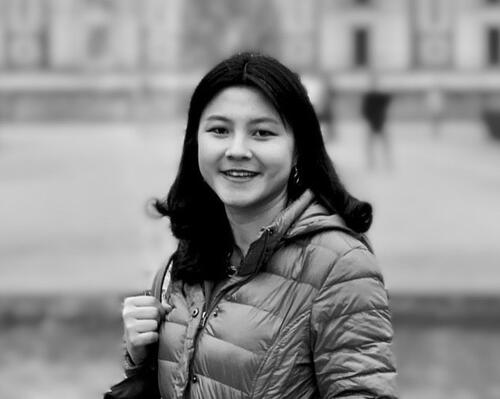
Square photo portrait of Yoko Iwama

Yoko Iwama is Professor of National Graduate Institute for Policy Studies (GRIPS). She is also the director of Security and Strategy Program and Maritime Safety and Security Program at GRIPS. 

She graduated from Kyoto University in 1986 and earned her PhD in Law. Having served as Research Assistant of Kyoto University (1994–97), Special Assistant of the Japanese Embassy in Germany (1998–2000), and Associate Professor at GRIPS (2000), she was appointed Professor at GRIPS in 2009. She was a student at the Free University of Berlin between 1989-1991, where she witnessed the end the reunification of the two Germanies. 

Her specialty is international security and European diplomatic history centering on NATO, Germany, and nuclear strategy. 

Her publications include John Baylis and Yoko Iwama (ed.) Joining the Non-Proliferation Treaty: Deterrence, Non-Proliferation and the American Alliance, (Routledge 2018); “Unified Germany and NATO,” (in Keiichi Hirose/ Tomonori Yoshizaki (eds.) International Relation of NATO, Minerva Shobo, 2012). 

Her newest book The 1968 Global Nuclear Order and West Germany appeared in August 2021 in Japanese. She is working on a co-authored book on the origins and evolution of the nuclear-sharing in NATO and a co-authored book on the Neutrals, the Non-aligned countries and the NPT.  

Square photo portrait of Hiroyuki Akita

Hiroyuki Akita is a Commentator of Nikkei. He regularly writes commentaries, columns, and analysis focusing on foreign and international security affairs. He joined Nikkei in 1987 and worked at the Political News Department from 1998 to 2002 where he covered Japanese foreign policy, security policy, and domestic politics. Akita served as Senior & Editorial Staff Writer from 2009 to 2017, and also worked at the “Leader Writing Team ” of the Financial Times in London in late 2017. 

 Akita graduated from Jiyu Gakuen College in 1987 and Boston University (M.A.). From 2006 to 2007, he was an associate of the US-Japan Program at Harvard University, where he conducted research on US-China-Japan relations. In March 2019, he won the Vaughn-Ueda International Journalist Award, a prize for outstanding reporting of international affairs. He is an author of two books in Japanese: “Anryu (Power Game of US-China-Japan)”(2008), and “Ranryu (Strategic Competition of US-Japan and China)”(2016). 

Square photo portrait of Kiyoteru Tsutsui

Kiyoteru Tsutsui is the Henri H. and Tomoye Takahashi Professor, Professor of Sociology, Senior Fellow at the Freeman Spogli Institute for International Studies, and Deputy Director of the Walter H. Shorenstein Asia-Pacific Research Center, where he is also Director of the Japan Program. He is the author of Rights Make Might: Global Human Rights and Minority Social Movements in Japan (Oxford University Press, 2018), co-editor of Corporate Responsibility in a Globalizing World (Oxford University Press, 2016) and co-editor of The Courteous Power: Japan and Southeast Asia in the Indo-Pacific Era (University of Michigan Press, 2021).  


Kiyoteru Tsutsui
Kiyoteru Tsutsui

Via Zoom Webinar

Yoko Iwama Professor & Center Director National Graduate Institute for Policy Studies (GRIPS)
Hiroyuki Akita Commentator Nikkei
Subscribe to Governance