Governance

FSI's research on the origins, character and consequences of government institutions spans continents and academic disciplines. The institute’s senior fellows and their colleagues across Stanford examine the principles of public administration and implementation. Their work focuses on how maternal health care is delivered in rural China, how public action can create wealth and eliminate poverty, and why U.S. immigration reform keeps stalling. 

FSI’s work includes comparative studies of how institutions help resolve policy and societal issues. Scholars aim to clearly define and make sense of the rule of law, examining how it is invoked and applied around the world. 

FSI researchers also investigate government services – trying to understand and measure how they work, whom they serve and how good they are. They assess energy services aimed at helping the poorest people around the world and explore public opinion on torture policies. The Children in Crisis project addresses how child health interventions interact with political reform. Specific research on governance, organizations and security capitalizes on FSI's longstanding interests and looks at how governance and organizational issues affect a nation’s ability to address security and international cooperation.

-

Abstract:

Twenty five years after the fall of the Berlin Wall, the democratic ascendency of the post-Soviet era is under severe challenge. While fragile democracies in Eastern Europe, Africa, and East Asia face renewed threats, the world has witnessed the failed democratic promises of the Arab Spring. What lessons can be drawn from these struggles? What conditions or institutions are needed to prevent the collapse of democracy? Embattled democracy is the subject matter of a new book, Fragile Democracies: Contested Power in the Era of Constitutional Courts. This book argues that the most distinctive antidote to authoritarianism in the post-1989 period is the presence of strong constitutional courts. A signature feature of the third wave of democratization, these courts serve as a bulwark against vulnerability to external threats as well as a catalyst for the internal consolidation of power. Particularly in societies still riven by deep divisions of race, religion, or national background, courts have become pivotal actors in allowing democracy to take root.


Speaker Bio:

Image
samuel issacharoff
Samuel Issacharoff is the Reiss Professor of Constitutional Law at New York University School of Law. His research addresses the law of the political process and constitutional law, as well as issues in civil procedure (especially complex litigation and class actions). He is a co-author of the seminal Law of Democracy casebook and recently served as the Reporter for the Project on Aggregate Litigation of the American Law Institute. Professor Issacharoff is a Fellow of the American Academy of Arts and Sciences.

Samuel Issacharoff Reiss Professor of Constitutional Law, New York University School of Law
Seminars

Montek Singh Ahluwalia is an economist who trained at Oxford as a Rhodes Scholar. He spent several years at the World Bank before returning to India to serve as the Economic Advisor to the Finance Minister. The Government of India then appointed him to several senior positions, including Secretary of Commerce and Secretary in the Department of Economic Affairs at the Ministry of Finance. In 1998, he was appointed as a Member of the Planning Commission and Advisory Council to the Prime Minister of India. In 2001, he became the Director of Independent Evaluation Office at the International Monetary Fund, resigning this position in 2004 to become the Deputy Chairman of the Planning Commission.

He has written widely about India and the world economy, co-authoring Redistribution with Growth: An Approach to Policy, and editing Macroeconomics and Monetary Policy: Issues for Reforming the Global Financial Architecture with Y.V. Reddy and S.S. Tarapore.

The Payne Distinguished Lectureship is named for Frank and Arthur Payne, brothers who gained an appreciation for global problems through their international business operations. This lectureship, hosted by the Freeman Spogli Institute for International Studies, brings speakers with an international reputation for leadership and visionary thinking to Stanford to deliver a major public lecture. 

This event is carried out in partnership with the Stanford Center for International Development (SCID).

A public reception will follow the lecture.

Montek Singh Ahluwalia Deputy Chairman, Planning Commission 2004-2014, Government of India Deputy Chairman, Planning Commission 2004-2014, Government of India
Lectures
Date Label
-

Sponsored by the Taiwan Democracy Project and the U.S. Asia Security Initiative at the Asia-Pacific Research Center (APARC)

Abstract

During the recent meeting between PRC President Xi Jinping and Taiwan President Ma Ying-jeou, the “1992 One China Consensus” served as a mutually acceptable paradigm for maintaining “peaceful and stable” conditions across the Taiwan Strait.  For Xi Jinping, the warmth of the visit thinly veiled a message to Taiwan’s leaders and electorate, as well as to onlookers in Washington.  Chinese officials and media clearly link the talks and confirmation of the 1992 Consensus to “the great rejuvenation of the Chinese nation”—a concept that is increasingly unpalatable to many in Taiwan.  Xi hopes to keep DPP presidential candidate Tsai Ing-wen (and perhaps even future KMT leaders) in the 1992 Consensus “box” and to co-opt the U.S. in this effort, but perhaps underestimates the political transformation underway on Taiwan. 

The Xi administration has also hardened its position regarding “core interests” such as Taiwan, embodied in a “bottom line principle” policy directive that eschews compromise.  Although many commentators and most officials across the region have shied away from stating that the PRC and Taiwan are at the crossroads of crisis, the collision of political transformation on Taiwan and the PRC’s “bottom line principle” will challenge the fragile foundations of peaceful cross-Strait co-existence.  Changes in the regional balance of military power brought about by a more muscular People’s Liberation Army compounds the potential for increased friction, providing Beijing with more credible options for coercion and deterrence.

This talk will consider the politics and principles involved in cross-Taiwan Strait relations in light of the upcoming 2016 Taiwan elections and the policies of the Xi Jinping administration; and will discuss some of the possible implications for China’s national security policy, regional stability, and the future of cross-Strait relations.

Bio

Image
Cortez Cooper
Mr. Cortez A. Cooper III joined RAND in April 2009, providing assessments of security challenges across political, military, economic, cultural, and informational arenas for a broad range of U.S. government clients.  Prior to joining RAND, Mr. Cooper was the Director of the East Asia Studies Center for Hicks and Associates, Inc.  He has also served in the U.S. Navy Executive Service as the Senior Analyst for the Joint Intelligence Center Pacific, U.S. Pacific Command.  As the senior intelligence analyst and Asia regional specialist in the Pacific Theater, he advised Pacific Command leadership on trends and developments in the Command’s area of responsibility.  Before his Hawaii assignment, Mr. Cooper was a Senior Analyst with CENTRA Technology, Inc., specializing in Asia-Pacific political-military affairs.  Mr. Cooper’s 20 years of military service included assignments as both an Army Signal Corps Officer and a China Foreign Area Officer.  In addition to numerous military decorations, the Secretary of Defense awarded Mr. Cooper with the Exceptional Civilian Service Award in 2001.

2016 Taiwan Elections and Implications for Cross-Strait and Regional Security
Download pdf
Cortez Cooper Senior International Policy Analyst RAND Corporation
Seminars
-

Abstract:

Both South Korea and Taiwan are considered consolidated democracies, but the two countries have developed very different sets of electoral campaign regulations. While both countries had highly restrictive election laws during their authoritarian eras, they have diverged after democratic transition. South Korea still restricts campaigning activities, including banning door-to-door canvassing, prohibiting pre-official period campaigning, and restricting the quantity and content of literature. Taiwan has removed most campaigning restrictions, except for finance regulations. This study explores the causes of these divergent trajectories through comparative historical process tracing, using both archival and secondary sources. The preliminary findings suggest that the incumbency advantage and the containment of the leftist or opposition parties were the primary causes of regulation under the soft and hard authoritarian regimes of South Korea and Taiwan. The key difference was that the main opposition party as well as the ruling party in South Korea enjoyed the incumbency advantage but that opposition forces in Taiwan did not. As a result, the opposition in Taiwan fought for liberalization of campaign regulations, but that in South Korea did not. Democratization in Taiwan was accompanied by successive liberalizations in campaign regulation, but in South Korea the incumbent legislators affiliated with the ruling and opposition parties were both interested in limiting campaigning opportunities for electoral challengers.


Bio:

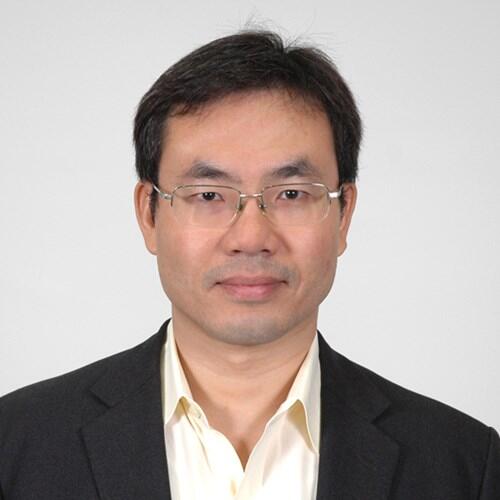
Dr. Jong-sung You is a senior lecturer in the Department of Political and Social Change, Australian National University. His research interests include comparative politics and the political economy of inequality, corruption, social trust, and freedom of expression. He conducts both cross-national quantitative studies and qualitative case studies, focusing on Korea and East Asia. He recently published a book entitled Democracy, Inequality and Corruption: Korea, Taiwan and the Philippines Compared with Cambridge University Press. His publications have appeared at American Sociological Review, Political Psychology, Journal of East Asian Studies, Journal of Contemporary Asia, Asian Perspective, Trends and Prospects, and Korean Journal of International Studies. He obtained his Ph.D. in Public Policy from Harvard University and taught at UC San Diego. Before pursuing an academic career, he fought for democracy and social justice in South Korea.


Jong-sung You Senior Lecturer College of Asia and the Pacific, Australia National University
Seminars
-
Abstract 
Based on first-hand participant-observation, this talk will examine the culture, politics, and spatiality of the Sunflower Movement. Taiwan's most significant social movement in decades, the Sunflower Movement not only blocked the passage of a major trade deal with China, but reshaped popular discourse and redirected Taiwan's political and cultural trajectory. It re-energized student and civil society, precipitated the historic defeat of the KMT in the 2014 local elections, and prefigured the DPP's strong position coming into the 2016 presidential and legislative election season.
 
The primary spatial tactic of the Sunflowers-- occupation of a government building-- was so successful that a series of protests in the summer of 2015 by high school students was partly conceived and represented as a "second Sunflower Movement". These students, protesting "China-centric" curriculum changes, attempted to occupy the Ministry of Education building. Thwarted by police, these students settled for the front courtyard, where a Sunflower-style pattern of encampments and performances emerged. While this movement did not galvanize the wider public as dramatically as its predecessor, it did demonstrate the staying power of the Sunflower Movement and its occupation tactics for an even younger cohort of activists.
 
The Sunflower Movement showed that contingent, street-level, grassroots action can have a major impact on Taiwan's cross-Strait policies, and inspired and trained a new generation of youth activists. But with the likely 2016 presidential win of the DPP, which has attempted to draw support from student activists while presenting a less radical vision to mainstream voters, what's in store for the future of Taiwanese student and civic activism? And with strong evidence of growing Taiwanese national identification and pro-independence sentiment, particularly among youth, what's in store for the future of Taiwan's political culture? 
 

Speaker Bio

Ian Rowen in Legislative Yuan Ian Rowen in Taiwan's Legislative Yuan during the Sunflower Student Movement protest.

Ian Rowen is PhD Candidate in Geography at the University of Colorado, Boulder, and recent Visiting Fellow at the European Research Center on Contemporary Taiwan, Academia Sinica’s Institute of Sociology, and Fudan University. He participated in both the Sunflower and Umbrella Movements and has written about them for The Journal of Asian StudiesThe Guardian, and The BBC (Chinese), among other outlets. He has also published about Asian politics and protest in the Annals of the Association of American Geographers (forthcoming) and the Annals of Tourism Research. His PhD research, funded by the US National Science Foundation, the Fulbright Program, and the Taiwan Foundation for Democracy, has focused on the political geography of tourism and protest in China, Taiwan, and Hong Kong. 


Presentation Slides

Ian Rowen Doctoral Candidate University of Colorado Dept of Geography
Seminars
-

While Prime Minister Abe Shinzo has emerged as the strongest Japanese leader in a decade, the dark underside of his administration has been widespread accusations of heavy-handed intimidation of the press. Especially in the last year, there have been numerous high-profile cases in which major media organizations have appeared to capitulate to such pressure, often engaging in a preemptive self-censorship known in Japan as jishuku, or “self-restraint.” A close examination of some of these cases reveals that the Abe administration has indeed engaged in an aggressive effort to shape press coverage using both the carrot of access, and the stick of political pressure and unbridled nationalist intimidation. However, much of the blame also belongs in the media organizations themselves, which have appeared unable, at least initially, to resist the administration’s pressure tactics. Indeed, the Abe government has appeared adept at exploiting weaknesses in Japan’s major media that include a competitive obsession with scoops, a heavy dependence on government sources seen in the so-called press club system and the lack of a shared sense of professional ethics and identity. The collapse of political opposition parties, and the strengthening of state secrecy laws during the second Abe administration also play roles. Deeper historical trends will also be considered, including weak notions of civil society and a moral centrality of the state that has its roots in the crash nation-building of the Meiji period.

Martin Fackler is currently Journalist-in-Residence at the Rebuild Japan Initiative Foundation, a Tokyo-based think tank. From 2009 to 2015, he covered Japan and the Korean peninsula as Tokyo bureau chief for the New York Times. In 2012, he was a finalist for the Pulitzer Prize in international reporting for his and his colleagues' investigative stories on the Fukushima Daiichi nuclear meltdown that the prize committee said offered a "powerful exploration of serious mistakes concealed by authorities in Japan." Martin is also the author (in Japanese) of the bestseller “Credibility Lost: The Crisis in Japanese Newspaper Journalism after Fukushima,” a critical look at Japanese media coverage of the 2011 earthquake and nuclear disaster. In total, he spent a decade in the Tokyo bureau of the New York Times, where he also served as economics correspondent. Before joining the Times in 2005, he worked in Tokyo for the Wall Street Journal, the Far Eastern Economic Review, the Associated Press and Bloomberg News, and in Beijing and Shanghai for AP. He has Masters degrees in journalism from the University of Illinois at Urbana and in East Asian history from the University of California, Berkeley.

Martin Fackler Journalist-in-Residence at the Rebuild Japan Initiative Foundation
Seminars
Date Label
-

This event is now full, and we are unable to accept any further RSVPs.  Please email khaley@stanford.edu if you would like to be added to a wait list.


Russia's aggressive foreign policy is backed by Putin's domestic popularity ratings and his strong grip on Russia's political system. But in reality, how firmly does Putin control Russian politics? Can the ongoing economic crisis in Russia pose challenges to his system and the upcoming federal elections of 2016-2018? What impact will Russian domestic politics play in Russia's international behavior?


Vladimir Milov is a Russian opposition politician, publicist, economist & energy expert. He was the Deputy Minister of Energy of Russia (2002), adviser to the Minister of Energy (2001-2002), and head of strategy department at the Federal Energy Commission, the natural monopoly regulator (1999-2001). Milov is the author of major energy reform concepts, including the concept of market restructuring and unbundling of Gazprom, which was banned from implementation by President Vladimir Putin. He is the founder and president of the Institute of Energy Policy, a leading independent Russian energy policy think tank (since 2003). Milov is a columnist of major Russian political and business publications, including Forbes Russia, and a frequent commentator on Russian political and economic affairs in major Western media outlets (The New York Times, The Financial Times, The Washington Post, The Economist, etc.). Since leaving the Russian Government in 2002, Milov has became a vocal public critic of Vladimir Putin’s dirigiste and authoritarian course. Milov is also active in the Russian opposition politics, serving as Chairman of the “Democratic Choice” opposition party (www.en.demvybor.ru), and is also known as co-author of the critical public report on Vladimir Putin’s Presidential legacy called “Putin. The Results”, written together with Boris Nemtsov (several editions published since 2008).

Vladimir Milov former Russian Deputy Minister of Energy Speaker
Lectures
-

Abstract

New President of the United States Institute of Peace, Nancy Lindborg, will discuss the global challenge of fragility and conflict, including a vision of the way forward. Ms. Lindborg’s remarks reflect a lifetime of working in the world’s most fragile regions and a time when the global humanitarian system is at a breaking point, with record numbers of people forcibly displaced globally.   


Speaker Bio

nancy lindborg presidential portrait Nancy Lindborg
Nancy Lindborg has served since February, 2015, as President of the United States Institute of Peace, an independent institution founded by Congress to provide practical solutions for preventing and resolving violent conflict around the world.   

Ms. Lindborg has spent most of her career working in fragile and conflict affected regions around the world.   Prior to joining USIP, she served as the Assistant Administrator for the Bureau for Democracy, Conflict and Humanitarian Assistance (DCHA) at USAID.  From 2010 through early 2015, Ms. Lindborg led USAID teams focused on building resilience and democracy, managing and mitigating conflict and providing urgent humanitarian assistance.   Ms. Lindborg led DCHA teams in response to the ongoing Syria Crisis, the droughts in Sahel and Horn of Africa, the Arab Spring, the Ebola response and numerous other global crises.

Prior to joining USAID, Ms. Lindborg was president of Mercy Corps, where she spent 14 years helping to grow the organization into a globally respected organization known for innovative programs in the most challenging environments.   She started her international career working overseas in Kazakhstan and Nepal. 

Ms. Lindborg has held a number of leadership and board positions including serving as co-president of the Board of Directors for the U.S. Global Leadership Coalition; co-founder and board member of the National Committee on North Korea; and chair of the Sphere Management Committee. She is a member of Council on Foreign Relations.

She holds a B.A and M.A. in English Literature from Stanford University and an M.A. in Public Administration from the John F. Kennedy School of Government at Harvard University.

Nancy Lindborg President of the United States Institute of Peace President of the United States Institute of Peace
Seminars
Encina Hall E301616 Serra StreetStanford, CA94305-6055
(650) 724-5579 (650) 723-6530
0
nico_ravanilla.jpg Ph.D.

Nico Ravanilla joins the Walter H. Shorenstein Asia-Pacific Research Center as Shorenstein Postdoctoral Fellow for the 2015-16 year.  His research interests are political economy and governance, comparative politics and Southeast Asia. While at Shorenstein APARC, Ravanilla will research how political selection impacts governance, and evaluate possible routes for incentivizing capable and virtuous citizens to run for public office.

His project titled “Nudging Good Politicians” looks at the case of the Sangguniang Kabataan, a governing body in the Philippines comprised of elected youth leaders. Ravanilla aims to apply his research to develop and scale up programs for politicians, especially those at the onset of their careers, which would include specialized leadership training and merit-based endorsement.

Ravanilla is also a Southeast Asia Research Group (SEAREG) Young Southeast Asia Fellow for 2015-16.  He received his Ph.D. in political science and public policy from the University of Michigan in summer 2015.

2015-16 Shorenstein Postdoctoral Fellow
-

Image
kentaro geek heresy

Over the last four decades, the United States saw an explosion of digital technologies that penetrated every corner of the country, yet during the same time span, the American rate of poverty did not decrease and inequality skyrocketed. In other words, a golden age of innovation did not lead to better lives for poor people living in the world's most technologically advanced country. This simple fact,  which flies in the face of Silicon Valley triumphalism, should give pause to foreign aid and international development efforts whose primary goal is to increase technology and its use.

Bio

Kentaro Toyama is W.K. Kellogg Associate Professor at the University of Michigan School of Information and a fellow of the Dalai Lama Center for Ethics and Transformative Values at MIT. Until 2009, Toyama was assistant managing director of Microsoft Research India, which he co-founded in 2005. At MSR India, he started the Technology for Emerging Markets research group, which conducts interdisciplinary research to understand how the world's poorest communities interact with electronic technology and to invent new ways for technology to support their socio-economic development. Prior to his time in India, Toyama did computer vision and machine learning research and taught mathematics at Ashesi University in Accra, Ghana. Toyama graduated from Yale with a PhD in Computer Science and from Harvard with a bachelor's degree in Physics. http://kentarotoyama.org
 

Wallenberg Theatre

450 Serra Mall #124

(The room is located in the main quad, across the road from Stanford Oval.)
 

Seminars
Subscribe to Governance