Governance

FSI's research on the origins, character and consequences of government institutions spans continents and academic disciplines. The institute’s senior fellows and their colleagues across Stanford examine the principles of public administration and implementation. Their work focuses on how maternal health care is delivered in rural China, how public action can create wealth and eliminate poverty, and why U.S. immigration reform keeps stalling. 

FSI’s work includes comparative studies of how institutions help resolve policy and societal issues. Scholars aim to clearly define and make sense of the rule of law, examining how it is invoked and applied around the world. 

FSI researchers also investigate government services – trying to understand and measure how they work, whom they serve and how good they are. They assess energy services aimed at helping the poorest people around the world and explore public opinion on torture policies. The Children in Crisis project addresses how child health interventions interact with political reform. Specific research on governance, organizations and security capitalizes on FSI's longstanding interests and looks at how governance and organizational issues affect a nation’s ability to address security and international cooperation.

-

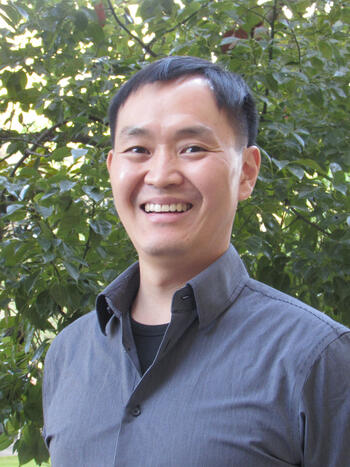
Left-center parties in South Korea and Taiwan recently defeated their conservative opponents amid a surge in turnout by younger voters. What are the underlying causes of these developments? Do they signal the beginning of a political transformation in these vibrant democracies? Booseung Chang will discuss the role of growing voter anger over socio-economic disparities and the rise of new nationalisms in potentially changing the political party systems of South Korea and Taiwan, along with the implications for the United States.

Image
bchang5x5
Booseung Chang is the 2015-16 Shorenstein Postdoctoral Fellow at Stanford’s Shorenstein Asia-Pacific Research Center. His research focuses on domestic developments and foreign relations of Japan, South Korea, and Taiwan, as well as North Korean nuclear issues. Chang received a doctorate in international relations from Johns Hopkins University. Previously, he served as a South Korean foreign service officer for fifteen years.

Booseung Chang <i>2015-16 Shorenstein Postdoctoral Fellow</i>, Stanford University
Seminars
News Type
Commentary
Date
Paragraphs

The Bank of Japan (BOJ) convened in late April to discuss the future of Japanese monetary policy. An outcome of that meeting was a decision to hold interest rates steady. On Bloomberg TV, Stanford economist Takeo Hoshi said the non-move is unsurprising and offered views on what to expect next from the BOJ.

The interview can be viewed here.
 
Hero Image
bloomberg tv hoshi
All News button
1
Authors
News Type
News
Date
Paragraphs

In a talk dated April 20, 2016, American University of Kuwait Scholar Farah Al-Nakib discussed her recently released book Kuwait Transformed: A History of Oil and Urban Life (Stanford University Press, 2016). The book traces the relationships between the urban landscape, patterns and practices of everyday life, and social behaviors and relations in Kuwait, from its settlement in 1716 through the bridge of oil discovery to the twenty-first century. The history that emerges reveals how decades of urban planning, suburbanization, and privatization have eroded an open, tolerant society and given rise to the insularity, xenophobia, and divisiveness that characterize Kuwaiti social relations today. However, over the past decade several social forces and youth-based movements—from political protesters to architects and small entrepreneurs—have been staking claims to the city and demanding a different kind of urban experience. Beyond simply reviving the declined urban center, Al-Nakib argues, their efforts have the potential to restore Kuwaiti society’s lost urbanity.


Hero Image
screen shot 2016 05 17 at 11 26 11 am
All News button
1
News Type
News
Date
Paragraphs

China and the United States have lately been characterized as geostrategic rivals and on a path toward inevitable conflict. But, according to Fu Ying, chairperson of China’s Foreign Affairs Committee of the National People’s Congress and former ambassador to the Philippines, Australia and the United Kingdom, this picture is incomplete and misrepresents a reality that is much more nuanced.

Fu discussed the current state of U.S.-China relations in a keynote speech at Stanford on Tuesday. Speaking to a full house in Encina Hall, she described different perspectives and shared challenges of China and the United States, and urged a new consensus between the world’s two largest economies.

“In the past thirty years, we’ve had friendly moments, but we were never very close. We had problems, but the relationship was strong enough to avoid derailing.

“Now we are at a higher level. If we work together now, we are capable of making big differences in the world. But if we fight, we will bring disasters – not only to the two countries, but to the world,” Fu said.

Fu’s visit was co-hosted by the China Program at the Shorenstein Asia-Pacific Research Center and the Center on Democracy, Development, and the Rule of Law, two centers in the Freeman Spogli Institute (FSI). Following her remarks, Thomas Fingar, a Shorenstein APARC Distinguished Fellow and former chairman of the National Intelligence Council, offered comments and took questions from the audience.

Fu opened her speech by saying she welcomed alternative views and “a debate.”

Misunderstandings, she said, afflict the U.S.-China relationship. Confusion shared between the two countries can largely be attributed to a “perception gap,” which, she said, is aggrandized through media reporting.

Concern on the American side over China, she said, is tied to its own doubts over its “constructive engagement” strategy. An approach held during the past eight U.S. administrations, the strategy was based on an assumption that supporting market-based reforms in China would lead to political change, she said. However, this has not occurred, and some in the U.S. are now urging the construction of another “grand strategy.”

The United States, she said, also has “rising anxiety about what kind of a global role China is going to play,” and about the future direction of the Chinese economy after its growth slid to hover around seven percent in the last two years compared to its once double digit growth in the past decade.

China interprets the United States’ apprehension as misguided, Fu said. “We see it as a reflection of the United States’ fear of losing its own primary position in the world.”

On the other hand, China, she said, is “relatively more positive” about its overall engagement with the United States. The purpose of Chinese foreign policy, Fu said, is to improve the international environment and to raise the standard of living of its people without exporting its values or seeking world power. “We believe China has achieved this purpose,” she added.

The United States and others must also remember that the past can loom large in the minds of the Chinese people, Fu said.

In attempting to understand China, “one should not lose sight of the historical dimension,” she said. China at various times in the nineteenth to early twentieth century was under occupation by foreign powers, she said, and this is a reason why sovereignty is a closely held value in the Chinese ethos.

The overall “perception gap” between China and the United States has moved from misunderstanding to fear, and that, she said, is causing negative spillover effects for both countries.

Two manifestations of this fear, she cited, are the United States’ “reluctance to acknowledge China’s efforts to help improve the existing order,” such as the development of the Asian Infrastructure Investment Bank and ‘One Belt, One Road’ initiative, and the U.S.’ “growing interference” in South China Sea issues.

“Will it lead to a reckless urge to ‘throw down the gauntlet’?” Fu asked.

She acknowledged that collision is a concern. China is focused on addressing its challenges with the United States, including avoiding potential incidents and finding ways “to adapt to and participate in adjustment in international order,” Fu said.

Yet, she cautioned that the two countries be realistic in their aims and know that China is not seeking to emulate the United States. China and the United States, unlike Japan and South Korea, do not have a formal strategic or security alliance, and they need not have one, Fu said.

“China is not an ally, and it should not be an enemy either,” she said.

“Can we accept and respect each other, and build new consensus?” she asked. She then stated, “I want to end my speech with a question mark as a salute to Stanford University which is renowned for its capability of addressing difficult questions.”

Fingar gave a brief response to Fu’s address.

Calling it largely “fictional,” he challenged the notion that there is high “American anxiety” about China. Instead, he noted, “Americans do not think very much about China,” as reflected in the multitude of polls taken recently during the primary campaigns. Thus, “there isn’t a lot of public drive to do things differently with China.”

Among U.S. academics, however, there is “puzzlement,” Fingar suggested. Puzzlement, he explained, borne less from any kind of loss of confidence in U.S. policy of constructive engagement but rather from China’s seeming departure from a trajectory that it had set for itself over the last 40 years. At the moment China’s reforms appear “bogged down;" its leaders, slow to take the critical steps necessary for economic growth; and its engagement with the outside world, increasingly unpredictable. “The puzzlement about China,” therefore, and “concern about policy has at least as much to do with concern that China may be stumbling as it does about a rising China,” he added. Debunking the zero-sum notion of international relations, Fingar emphasized instead that the United States has “done very well as a nation” in part because of its active engagement with and because of China’s success. “We welcome the rise of China, the rise of others,” he stated.

Fingar concluded with his opinion that the debacle in the South China Sea does not pose a serious threat to the relationship. Instead, “the world needs more examples of joint U.S.-Chinese cooperation and leadership” as was the case with recent breakthroughs in climate change between the United States and China. Otherwise, he added, other countries will not commit their resources for fear of a veto or objection from either the United States or China.

Later that day, Fu met with faculty members of FSI and Hoover.

Related links:

Photo gallery from the event

Hero Image
fu fingar headline
Fu Ying, chairperson of China's Foreign Affairs Committee at the National People's Congress, speaks with Thomas Fingar about U.S.-China relations at Stanford, May 10. | Adam Martyn
All News button
1
-

This five day intensive program for a select group of mid- and high-level Brazilian government officials and business leaders is designed to address how government can encourage and enable the private sector to play a larger, more constructive role as a force for economic growth and development. A driving principle of this LAD-Insper program is that policy reform is not like engineering or other technical fields that have discrete skills and clear, optimal solutions. Instead, successful reformers must be politically aware and weigh a broad range of factors that influence policy outcomes. For example, they must have a solid grasp of country-specific economic, financial, political and cultural realities. Most importantly, they must have a sense of how to set priorities, sequence actions and build coalitions. This program is designed to provide participants with an analytical framework to build these leadership abilities and operate effectively under adverse conditions. 

INSPER Campus

R. Quatá, 300 - Vila Olimpia, São Paulo, Brazil

Workshops
-

Japanese political science community has generally been slow in adopting an experimental approach in the study of Japanese politics. In the areas of public opinion research, however, there have been some new attempts that take advantages of the methodological merits of experiments in investigating the Japanese political attitudes and behaviors. In this presentation, Professor Kohno will introduce three studies that he and his colleagues have embarked on, which relate to three major issues that Japan faces: constitutional revision, national security policy, and people's attitudes under natural disasters.


Image
0000251710 he ye sheng
Professor Kohno received his Bachelor of Laws in 1985 from Sophia University, M.A. (International Relations) in 1987 from Yale University, Ph.D. (political science) in 1994 from Stanford University, and is currently Professor at School of Political Science and Economics, Waseda University. Before joining Waseda, he taught at University of British Columbia (1994-98) and at Aoyama Gakuin University (1998-2003), and he was a national fellow at the Hoover Institution (1996-97). Outside Waseda, Professor Kohno served as Senior Officer at Japan Society for the Promotion of Science (2013-16). He has published extensively in both English and Japanese on Japanese politics and Japan's foreign policy, including Japan's Postwar Party Politics (Princeton University Press, 1997) and Seido [Institutions] (University of Tokyo Press, 2002).

Masaru Kohno Professor, School of Political Science and Economics, Waseda University
Seminars
-

South Korea has relied on its export-oriented development model to become an economic powerhouse, but has now reached the limits of this model. Indeed, Korea’s phenomenal growth has incubated the seeds of its own destruction. Learning from the Korean developmental experience, China has adopted key elements of the Korean development model and has become a potent competitor in electronics and the heavy industries. Meanwhile, the organizational and institutional legacies of late industrialization have constrained Korean efforts to move into technology entrepreneurship and the service sector. These strategic challenges are compounded by a demographic bomb, as social development has led to collapsing birthrates in Korea, much like other developed countries in Europe and Asia. Within the next few years, the Korean workforce will start diminishing in size and aging rapidly, straining the country’s resources and curtailing its growth. In this seminar, Joon Nak Choi, 2015-16 Koret Fellow at Stanford's Shorenstein Asia-Pacific Reserach Center, will discuss innovations in business strategy, educational policy and social structure that are directly relevant to these problems, and that would alleviate or perhaps even reverse Korea’s economic malaise.

Image
joon nak choi 7 cropped
A Stanford graduate and sociologist by training, Choi is an assistant professor of management at the School of Business and Management, Hong Kong University of Science and Technology. His research and teaching areas include economic development, social networks, organizational theory, and global and transnational sociology, within the Korean context. He coauthored Global Talent: Skilled Labor as Social Capital in Korea (Stanford University Press, 2015).

This public event is made possible through the generous support of the Koret Foundation.

Shorenstein APARC
Encina Hall
Stanford University
Stanford, CA 94305-6055

0
joon_nak_choi_7_cropped.jpg

Joon Nak Choi is the 2015-2016 Koret Fellow in the Korea Program at Stanford University's Walter H. Shorenstein Asia-Pacific Research Center (Shorenstein APARC). A sociologist by training, Choi is an assistant professor at Hong Kong University of Science and Technology. His research and teaching areas include economic development, social networks, organizational theory, and global and transnational sociology, within the Korean context.

Choi, a Stanford graduate, has worked jointly with professor Gi-Wook Shin to analyze the transnational bridges linking Asia and the United States. The research project explores how economic development links to foreign skilled workers and diaspora communities.

Most recently, Choi coauthored Global Talent: Skilled Labor as Social Capital in Korea with Shin, who is also the director of the Korea Program. From 2010-11, Choi developed the manuscript while he was a William Perry postdoctoral fellow at Shorenstein APARC.

During his fellowship, Choi will study the challenges of diversity in South Korea and teach a class for Stanford students. Choi’s research will buttress efforts to understand the shifting social and economic patterns in Korea, a now democratic nation seeking to join the ranks of the world’s most advanced countries.
 
Supported by the Koret Foundation, the Koret Fellowship brings leading professionals to Stanford to conduct research on contemporary Korean affairs with the broad aim of strengthening ties between the United States and Korea. The fellowship has expanded its focus to include social, cultural and educational issues in Korea, and aims to identify young promising scholars working on these areas.


2015-2016 Koret Fellow
Visiting Scholar
<i>2015-16 Koret Fellow, Shorenstein APARC, Stanford University</i>
Seminars
-

Can Northeast Asia’s developmental sequence help explain – and even prescribe – economic development worldwide? Joe Studwell, former journalist for The Economist, the Economist Intelligence Unit, and the Financial Times, argues that the East Asian story holds the key to development for other countries. The sequential implementation of household farming to maximize agricultural yields; an acute focus on export-manufacturing; and financial repression and controlled capital accounts is key to promoting accelerated economic development. Emphasizing the role of politics to shape markets, Mr. Studwell notes that there are at least two kinds of economics: the “economics of development” and the “economics of efficiency,” which countries, after achieving a certain level of development, must pursue.


Joe Studwell has worked as a freelance writer and journalist in East Asia for over twenty years. He has written for the Economist Intelligence Unit, The Economist, the Financial Times, the Wall Street Journal, the Far Eastern Economic Review, the Observer Magazine and Asia Inc. From 1997 to 2007, Mr. Studwell was the founding editor of the China Economic Quarterly and also founder and director of the Asian research and advisory firm Dragonomics, now GaveKal Dragonomics. Joe Studwell’s previous books include Asian Godfathers: Money and Power in Hong Kong and South-East Asia (2007) named one of the year’s ten best books on Asia by the Wall Street Journal. His latest book is How Asia Works: Success and Failure in the World’s Most Dynamic Region, which was placed by both the Financial Times and The Economist on their “books of the year” lists. Mr. Studwell is currently completing his mid-career Ph.D. at Cambridge University, U.K.

Joe Studwell former journalist for The Economist, the Economist Intelligence Unit, and the Financial Times
Seminars
Authors
News Type
News
Date
Paragraphs

The U.S. government has invested $1.4 billion in HIV prevention programs that promote sexual abstinence and marital fidelity, but there is no evidence that these programs have been effective at changing sexual behavior and reducing HIV risk, according to a new Stanford University School of Medicine study.

Since 2004, the U.S. President’s Emergency Fund for AIDS Relief, known as PEPFAR, has supported local initiatives that encourage men and women to limit their number of sexual partners and delay their first sexual experience and, in the process, help to reduce the number of teen pregnancies. However, in a study of nearly 500,000 individuals in 22 countries, the researchers could not find any evidence that these initiatives had an impact on changing individual behavior.

Although PEPFAR has been gradually reducing its support for abstinence and fidelity programs, the researchers suggest that the remaining $50 million or so in annual funding for such programs could have greater health benefits if spent on effective HIV prevention methods. Their findings were published online May 2 and in the May issue of Health Affairs.

“Overall we were not able to detect any population-level benefit from this program,” said Nathan Lo, a Stanford MD/PhD student and lead author of the study. “We did not detect any effect of PEPFAR funding on the number of sexual partners or upon the age of sexual intercourse. And we did not detect any effect on the proportion of teen pregnancy.

“We believe funding should be considered for programs that have a stronger evidence basis,” he added.

A Human Cost

Senior author Eran Bendavid, MD, said the ineffective use of these funds has a human cost because it diverts money away from other valuable, risk-reduction efforts, such as male circumcision and methods to prevent transmission from mothers to their children.

“Spending money and having no effect is a pretty costly thing because the money could be used elsewhere to save lives,” said Bendavid, an assistant professor of medicine at Stanford and a core faculty member at Stanford Health Policy.

PEPFAR was launched in 2004 by President George W. Bush with a five-year, $15 billion investment in global AIDS treatment and prevention in 15 countries. The program has had some demonstrated success: A 2012 study by Bendavid showed that it had reduced mortality rates and saved 740,000 lives in nine of the targeted countries between 2004 and 2008.

However, the program’s initial requirement that one-third of the prevention funds be dedicated to abstinence and “be faithful” programs has been highly controversial. Critics questioned whether this approach could work and argued that focusing only on these methods would deprive people of information on other potentially lifesaving options, such as condom use, male circumcision and ways to prevent mother-to-child transmission, and divert resources from these and other proven prevention measures.

Abstinence, Faithfulness Funding Continues

In 2008, when President Barack Obama came into office, the one-third requirement was eliminated, but U.S. funds continued to flow to abstinence and “be faithful” programs, albeit at lower levels. In 2008, $260 million was committed to these programs, but by 2013 by that figure had fallen to $45 million.

Spending money and having no effect is a pretty costly thing because the money could be used elsewhere to save lives.

Although PEPFAR continues to fund abstinence and faithfulness programs as part of its broader behavior-based prevention efforts, there is no routine evaluation of the success of these programs. “We hope our work will emphasize the difficulty in changing sexual behavior and the need to measure the impact of these programs if they are going to continue to be funded,” Lo said.

While many in the medical community were critical of the abstinence-fidelity component, no one had ever analyzed its real-world impact, Lo said. When he presented the results of the study in February at the Conference on Retroviruses and Opportunistic Infection, he received rousing applause from the scientists in the audience, some of whom came to the microphone to congratulate him on the work.

To measure the program’s effectiveness, Lo and his colleagues used data from the Demographic and Health Surveys, a detailed database with individual and household statistics related to population, health, HIV and nutrition. The scientists reviewed the records of nearly 500,000 men and women in 14 of the PEPFAR-targeted countries in sub-Saharan Africa that received funds for abstinence-fidelity programs and eight non-PEPFAR nations in the region. They compared changes in risk behaviors between individuals who were living in countries with U.S.-funded programs and those who were not.

The scientists included data from 1998 through 2013 so they could measure changes before and after the program began. They also controlled for country differences, including gross domestic product, HIV prevalence and contraceptive prevalence, and for individuals’ ages, education, whether they lived in an urban or rural environment, and wealth. All of the individuals in the study were younger than 30.

Number of Sexual Partners

In one measure, the scientists looked at the number of sexual partners reported by individuals in the previous year. Among the 345,000 women studied, they found essentially no difference in the number of sexual partners among those living in PEPFAR-supported countries compared with those living in areas not reached by PEPFAR programs. The same was true for the more than 132,000 men in the study.

Changing sexual behavior is not an easy thing. These are very personal decisions.

The researchers also looked at the age of first sexual intercourse among 178,000 women and more than 71,000 men. Among women, they found a slightly later age of intercourse among women living in PEPFAR countries versus those in non-PEPFAR countries, but the difference was slight — fewer than four months — and not statistically significant. Again, no difference was found among the men.

Finally, they examined teenage pregnancy rates among a total of 27,000 women in both PEPFAR-funded and nonfunded countries and found no difference in rates between the two.

Bendavid noted that, in any setting, it is difficult to change sexual behavior. For instance, a 2012 federal Centers for Disease Control analysis of U.S.-based abstinence programs found they had little impact in altering high-risk sexual practices in this country.

“Changing sexual behavior is not an easy thing,” Bendavid said. “These are very personal decisions. When individuals make decisions about sex, they are not typically thinking about the billboard they may have seen or the guy who came by the village and said they should wait until marriage. Behavioral change is much more complicated than that.”

Level of Education

The one factor that the researchers found to be clearly related to sexual behavior, particularly in women, was education level. Women with at least a primary school education had much lower rates of high-risk sexual behavior than those with no formal education, they found.

“One would expect that women who are educated have more agency and the means to know what behaviors are high-risk,” Bendavid said. “We found a pretty strong association.”

The researchers concluded that the “study contributes to the growing body of evidence that abstinence and faithfulness campaigns may not reduce high-risk sexual behaviors and supports the importance of investing in alternative evidence-based programs for HIV prevention in the developing world.”

The authors noted that PEPFAR representatives have been open to discussing these findings and the implications for funding decisions regarding HIV prevention programs.

Stanford medical student Anita Lowe was also a co-author of the study.

The study was funded by the Doris Duke Charitable Foundation and Stanford’s Center on the Demography and Economics of Health and Aging.

Previously: PEPFAR has saved lives – and not just from HIV/AIDS, Stanford study finds
 

Hero Image
hiv ribbon
All News button
1
Subscribe to Governance