FSI's research on the origins, character and consequences of government institutions spans continents and academic disciplines. The institute’s senior fellows and their colleagues across Stanford examine the principles of public administration and implementation. Their work focuses on how maternal health care is delivered in rural China, how public action can create wealth and eliminate poverty, and why U.S. immigration reform keeps stalling.
FSI’s work includes comparative studies of how institutions help resolve policy and societal issues. Scholars aim to clearly define and make sense of the rule of law, examining how it is invoked and applied around the world.
FSI researchers also investigate government services – trying to understand and measure how they work, whom they serve and how good they are. They assess energy services aimed at helping the poorest people around the world and explore public opinion on torture policies. The Children in Crisis project addresses how child health interventions interact with political reform. Specific research on governance, organizations and security capitalizes on FSI's longstanding interests and looks at how governance and organizational issues affect a nation’s ability to address security and international cooperation.
The United Kingdom's vote to leave the European Union this summer promises to fundamentally alter the political and economic future of the UK and the rest of the European Union.
Christophe Crombez, Senior Research Scholar at The Europe Center, and Nick Bloom, Professor of Economics and Senior Fellow at SIEPR, explored the short-term and long-term consequences of Brexit and the future of the UK's relationship with Europe at a recent panel discussion titled "Brexit: What's Next for the UK and Europe." Ken Scheve, Professor of Political Science and the Director of The Europe Center, moderated the event.
To listen to the discussion in its entirety, please visit our YouTube Channel.
Abstract: This paper develops a theoretical approach to norm resistance and defiance in international affairs. Conventional models of norm dynamics (e.g. Finnemore and Sikkink’s “norm life-cycle”, Keck and Sikkink’s “boomerang model”; Risse, Ropp and Sikkink’s “spiral model”) focus mainly on diffusion and compliance, failing to account for resistance to global norms. I argue that transnational advocacy and pressure can backfire, resulting in further violations, the promotion of counter-norms, and repression of civil society. Drawing from social psychology, sociology, and criminology, the paper presents an alternative model of norm socialization, whereby attempts to “shame” states provoke defiance, or the increase in incidence or commitment to a particular norm offending behavior by a shamed regime, caused by a proud, shameless reaction against the shaming agent. Defiance unfolds through domestic and international logics that incentivize elites to violate international norms for political gain. In the long term, defiance can attach oppositional norms to collective identity, transforming domestic and international normative orders. I apply the theoretical framework to an empirical case study of the sexuality rights norm and its contestation by Uganda, Nigeria, and Russia.
About the speaker: Rochelle Terman is a political scientist (Ph.D., University of California Berkeley, 2016) studying international norms and identity using computational and mixed methods. Her dissertation / book project examines the backlash and unintended consequences of international “naming and shaming” campaigns, especially around women’s rights in the Muslim World. Previous work on the tension between Islamophobia and feminism was recently published in Theory, Culture & Society. She teaches computational social science in a variety of capacities.
Pick Hall 411
5828 S. University Avenue
Chicago, Illinois 60637
0
rterman@uchicago.edu
rochelleterman_rsd17_076_0417a.jpg
Rochelle is an assistant professor in the Department of Political Science at the University of Chicago. Her research examines international norms, gender and advocacy, with a focus on the Muslim world. She is currently working on a book project that examines resistance and defiance towards international norms. The manuscript is based on her dissertation, which won the 2017 Merze Tate (formerly Helen Dwight Reid) Award for the best dissertation in international relations, law, and politics from the American Political Science Association. Rochelle received her Ph.D. in Political Science with a designated emphasis in Gender & Women’s Studies at the University of California, Berkeley. Before coming to Chicago, she was a post-doc at the Center for International Security and Cooperation at Stanford University.
This event is co-sponsored by: The France-Stanford Center for Interdisciplinary Studies, The Europe Center, The Hoover Institution, Stanford Global Studies, The French and Italian Department, Division of Literatures, Cultures, and Languages, and The Stanford Humanities Center.
Encina Hall
Stanford University
Stanford, CA 94305
(650) 723-0249
(650) 723-0089
0
christophe.crombez@stanford.edu
Senior Research Scholar at The Europe Center
cc3.jpg
PhD
Christophe Crombez is a political economist who specializes in European Union (EU) politics and business-government relations in Europe. His research focuses on EU institutions and their impact on policies, EU institutional reform, lobbying, party politics, and parliamentary government.
Crombez is Senior Research Scholar at The Europe Center at the Freeman Spogli Institute for International Studies at Stanford University (since 1999). He teaches Introduction to European Studies and The Future of the EU in Stanford’s International Relations Program, and is responsible for the Minor in European Studies and the Undergraduate Internship Program in Europe.
Furthermore, Crombez is Professor of Political Economy at the Faculty of Economics and Business at KU Leuven in Belgium (since 1994). His teaching responsibilities in Leuven include Political Business Strategy and Applied Game Theory. He is Vice-Chair for Research at the Department for Managerial Economics, Strategy and Innovation.
Crombez has also held visiting positions at the following universities and research institutes: the Istituto Italiano di Scienze Umane, in Florence, Italy, in Spring 2008; the Department of Political Science at the University of Florence, Italy, in Spring 2004; the Department of Political Science at the University of Michigan, in Winter 2003; the Kellogg Graduate School of Management at Northwestern University, Illinois, in Spring 1998; the Department of Political Science at the University of Illinois at Urbana-Champaign in Summer 1998; the European University Institute in Florence, Italy, in Spring 1997; the University of Antwerp, Belgium, in Spring 1996; and Leti University in St. Petersburg, Russia, in Fall 1995.
Crombez obtained a B.A. in Applied Economics, Finance, from KU Leuven in 1989, and a Ph.D. in Business, Political Economics, from Stanford University in 1994.
Hide publication sections
Off
Senior Research Scholar
Panelist
The Europe Center
Knight Management Center
Stanford University
655 Knight Way
Stanford, CA 94305-7298
(650) 725-1673
0
Assistant Professor of Finance
Assistant Professor, by courtesy, of Economics
koudijs-peter-arieeliza.jpg
Peter Koudijs is an Assistant Professor of Finance at the Stanford Graduate School of Business where he teaches History of Financial Crises in the MBA program. He joined the GSB in August 2011. Peter received a Bachelor’s degree, cum laude, in Economics from the University of Utrecht in the Netherlands. He earned a PhD degree, summa cum laude, in Economics at Universitat Pompeu Fabra in Spain in 2011. Peter has obtained various grants and fellowships from the European Union, the Economic History Association and different Dutch and Spanish scholarship programs.
Abstract: What will be the state of digital security in five and 10 years? Will it be a "Wild West" where every person and organization must fight to protect their own personal data? Will the Internet of Things advance so much into our homes and cities that everyone – at all times – is under surveillance? Are sensors going to be smart enough to determine and predict human feelings – opening the door to cybercriminals hacking human emotion? These are scenarios from The University of California - Berkeley's Center for Long-Term Cybersecurity, which has modeled what the Internet and cybersecurity could look like in 2020 and beyond. Steve Weber, Faculty Director, and Betsy Cooper, Executive Director, will use examples from the scenarios to help think through what we should be doing today to prepare for the future of cybersecurity.
About the Speakers: Betsy Cooper is the Executive Director of the Berkeley Center for Long-Term Cybersecurity. Betsy, a former CISAC Postdoctoral Fellow, came to UC Berkeley from the Department of Homeland Security, where she served as an attorney advisor to the Deputy General Counsel and as a policy counselor in the Office of Policy. Prior to her arrival at Berkeley, Betsy worked for over a decade in homeland security consulting, managing projects for Atlantic Philanthropies (Dublin, Ireland), the Prime Minister's Strategy Unit in London, the World Bank, and a number of other think tanks. Betsy is also the author of over twenty manuscripts and articles on US and European immigration and refugee policy, and her book manuscript Europe's Security Solution: Can Immigrant Integration Really Prevent Terrorism? is currently under review. In addition to a law degree from Yale University, Betsy holds a DPhil in Politics from Oxford University, an M.Sc. in Forced Migration from Oxford University, and a B.A. in Industrial and Labor Relations from Cornell University. Betsy previously clerked for Judge William Fletcher on the Ninth Circuit Court of Appeals.
Steven Weber is the faculty director for the Berkeley Center for Long Term Cybersecurity (CLTC). He works at the intersection of technology markets, intellectual property regimes, and international politics. His research, teaching, and advisory work focus on the political economy of knowledge intensive industries, with special attention to health care, information technology, software, and global political economy issues relating to competitiveness. Steve went to medical school at Stanford then did his Ph.D. in the political science department also at Stanford. He served as special consultant to the president of the European Bank for Reconstruction and Development and has held academic fellowships with the Council on Foreign Relations and the Center for Advanced Study in the Behavioral Sciences, and was Director of the Institute of International Studies at UC Berkeley from 2003 to 2009. His books include The Success of Open Source and most recently The End of Arrogance: America in the Global Competition of Ideas (with Bruce Jentleson) and Deviant Globalization: Black Market Economy in the 21st Century (with Jesse Goldhammer and Nils Gilman).
Encina Hall, 2nd floor
Executive Director of the Berkeley Center for Long-Term Cybersecurity
University of California | Berkeley
Steven Weber
Faculty Director for the Berkeley Center for Long Term Cybersecurity
University of California | Berkeley
Abstract: In the 2008 presidential campaign, Barack Obama had a very specific agenda to revise and update the U.S. nuclear posture. However, there were many elements in his program which later disappeared, or which were modified by the time his Nuclear Posture Review came out in April 2010. Over the course of the 18-month review process, the option to implement a no-first use policy and the idea of an unconditional negative security assurance were both examined. A no-first use policy would mean that the U.S. would never use nuclear weapons first, only in response to a nuclear attack by its opponents; an unconditional negative security assurance would mean that the U.S. would not use or threaten to use nuclear weapons against non-nuclear weapon states. Both of these policies could have significantly reduced the role of nuclear weapons in U.S. posture, and they could have also limited the number of adversaries and contingencies that nuclear weapons need to cover. Although these goals were in line with President Obama’s nuclear agenda, the administration decided to adopt a careful alternative in both cases. My paper investigates why President Obama agreed to these alternatives, and the strategic implications of these policies.
About the Speaker: Dr. Anna Péczeli is a Stanton Nuclear Security Fellow at the Center for International Security and Cooperation (CISAC) at Stanford University. She is also a research fellow at the Centre for Strategic and Defence Studies (National University of Public Service – Budapest, Hungary), where she is currently on sabbatical leave. Previously she was an assistant lecturer at Corvinus University of Budapest, an adjunct fellow at the Hungarian Institute of International Affairs, a visiting research fellow at the Peace Research Institute Frankfurt, and a visiting Fulbright fellow at the Nuclear Information Project of the Federation of American Scientists in Washington, DC. Dr. Péczeli earned a Ph.D. degree in International Relations from Corvinus University of Budapest, her research focused on the Obama administration’s nuclear strategy – the review of nuclear guidance, and the extent to which the legacies of the Cold War still define U.S. nuclear planning.
Dr. Péczeli is a member of the G7 Berlin Group – International Coalition for CBRN Security Culture; the European Defence and Security Network (sponsored by the European Parliament); the CSIS Project on Nuclear Issues (PONI); the EU Non-Proliferation and Disarmament Consortium; and chair of the Executive Board of the International Student/Young Pugwash (ISYP) group.
Encina Hall, 2nd floor
Stanton Nuclear Security Fellow
CISAC, Stanford University
Due to an overwhelming response, we have reached venue capacity and are no longer accepting RSVPs.
On November 8, the American electorate chose Donald Trump as their next President. Mr. Trump comes to office with a declared intent to drastically change U.S. trade policy and to reassess U.S. alliances, including in Asia. Faced with the realities of governing, however, how will the new administration shape its policies toward Asia? How will it tackle both economic and security challenges in the region, and globally?
A panel of Stanford experts, just returned from South Korea and Japan and discussions there with Asian policy makers, will discuss these questions.
The panelists:
Gi-Wook Shin, Senior Fellow, Freeman Spogli Institute for International Studies; Professor of Sociology; Director, Shorenstein Asia-Pacific Research Center; Director, Korea Program, Shorenstein Asia-Pacific Research Center
Michael Armacost, Shorenstein APARC Distinguished Fellow; Former U.S. Ambassador to Japan
Takeo Hoshi, Henri H. and Tomoye Takahashi Senior Fellow in Japanese Studies, Freeman Spogli Institute for International Studies; Director, Japan Program, Shorenstein Asia-Pacific Research Center
Kathleen Stephens, William J. Perry Distinguished Fellow; Former U.S. Ambassador to Korea
Faculty from Anthropology, English and Political Science join Stanford students and staff for perspectives on the U.S. election and its implications for Mexico and Latin America, and for the prospects of immigrants living in the U.S.
(TBD) undergraduate (Centro Chicano and Latino Outreach and CORE Coordinator)
Lenica Morales-Valenzuela is a Masters in Latin American Studies student here at the Center of Latin American Studies. Her past research has focused on human rights advocacy for genocide survivors of the Guatemalan Civil War and studying root causes for Central American migration to the United States. Currently, her research is shifting towards issues of constitutionality of indigenous rights in Guatemala and how indigenous populations have been interacting (or not) with the Guatemalan state.
#LatinxsReact
Speakers:
Image
Professor Garcia’s work engages historical and institutional processes through which violence and suffering is produced and lived. A central theme is the disproportionate burden of addiction, depression and incarceration among poor families and communities. Her research is oriented toward understanding how attachments, affect, and practices of intimacy are important registers of politics and economy.
Professor Garcia is currently engaged in research in Mexico City that examines emerging social and discursive worlds related to the dynamics of extreme urban poverty, mental illness and drug addiction in Mexico City, particularly within its peripheral zones.
Image
Dr. Paula M. L. Moya is Professor of English and, by courtesy, of Iberian and Latin American Cultures and the Director of the Research Institute of Comparative Studies in Race and Ethnicity at Stanford University.
She was also a founding organizer and coordinating team member of The Future of Minority Studies research project (FMS), an inter-institutional, interdisciplinary, and multigenerational research project facilitating focused and productive discussions about the democratizing role of minority identity and participation in a multicultural society.
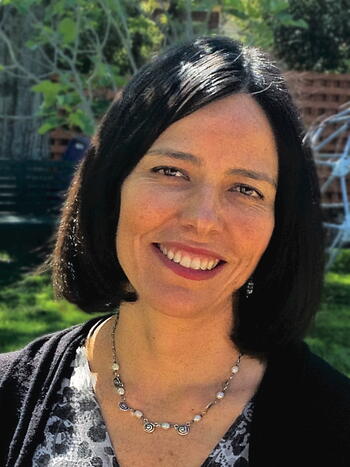
Beatriz Magaloni
Beatriz Magaloni is an Associate Professor in the Department of Political Science and a Senior Fellow at the Freeman Spogli Institute for International Studies (FSI) at Stanford University. She is also an affiliated faculty member of the Woods Institute of the Environment (2011-2013), a Faculty Fellow at the Stanford Center for International Development, and became an affiliated faculty member at CISAC in 2014.
Moderator(s):
Image
Francisco Preciado, J.D., Executive Director SEIU Local 2007 at Stanford. Francisco has experience working in local and state politics. He has advised California State Assembly Members and State Senators, managed a non-profit, worked as a union organizer, and completed several legal externships. He is a graduate of UC Berkeley School of Law, where he was recognized for his work assisting low-income workers. Francisco has a Masters Degree in Mexican American Studies from San Jose State University, and a dual Bachelors Degree in Political Science and Chicano(a) Studies from Stanford University.
Image
Alberto Diaz-Cayeros Director of the Center for Latin American Studies. Alberto joined the FSI faculty in 2013 after serving for five years as the director of the Center for US-Mexico studies at the University of California, San Diego. He earned his Ph.D at Duke University in 1997. He was an assistant professor of political science at Stanford from 2001-2008, before which he served as an assistant professor of political science at the University of California, Los Angeles. Diaz-Cayeros has also served as a researcher at Centro de Investigacion Para el Desarrollo, A.C. from 1997-1999. His work has primarily focused on federalism, poverty and economic reform in Latin America, and Mexico in particular. He has published widely in Spanish and English.
Dept. of Political Science
Encina Hall, Room 436
Stanford University,
Stanford, CA
(650) 724-5949
0
magaloni@stanford.edu
Senior Fellow at the Freeman Spogli Institute for International Studies
Graham H. Stuart Professor of International Relations
Professor of Political Science
beatriz_magaloni_2024.jpg
MA, PhD
Beatriz Magaloni Magaloni is the Graham Stuart Professor of International Relations at the Department of Political Science. Magaloni is also a Senior Fellow at the Freeman Spogli Institute, where she holds affiliations with the Center on Democracy, Development and the Rule of Law (CDDRL) and the Center for International Security and Cooperation (CISAC). She is also a Stanford’s King Center for Global Development faculty affiliate. Magaloni has taught at Stanford University for over two decades.
She leads the Poverty, Violence, and Governance Lab (Povgov). Founded by Magaloni in 2010, Povgov is one of Stanford University’s leading impact-driven knowledge production laboratories in the social sciences. Under her leadership, Povgov has innovated and advanced a host of cutting-edge research agendas to reduce violence and poverty and promote peace, security, and human rights.
Magaloni’s work has contributed to the study of authoritarian politics, poverty alleviation, indigenous governance, and, more recently, violence, crime, security institutions, and human rights. Her first book, Voting for Autocracy: Hegemonic Party Survival and its Demise in Mexico (Cambridge University Press, 2006) is widely recognized as a seminal study in the field of comparative politics. It received the 2007 Leon Epstein Award for the Best Book published in the previous two years in the area of political parties and organizations, as well as the Best Book Award from the American Political Science Association’s Comparative Democratization Section. Her second book The Politics of Poverty Relief: Strategies of Vote Buying and Social Policies in Mexico (with Alberto Diaz-Cayeros and Federico Estevez) (Cambridge University Press, 2016) explores how politics shapes poverty alleviation.
Magaloni’s work was published in leading journals, including the American Political Science Review,American Journal of Political Science, Criminology & Public Policy, World Development, Comparative Political Studies, Annual Review of Political Science, Cambridge Journal of Evidence-Based Policing, Latin American Research Review, and others.
Magaloni received wide international acclaim for identifying innovative solutions for salient societal problems through impact-driven research. In 2023, she was named winner of the world-renowned Stockholm Prize in Criminology, considered an equivalent of the Nobel Prize in the field of criminology. The award recognized her extensive research on crime, policing, and human rights in Mexico and Brazil. Magaloni’s research production in this area was also recognized by the American Political Science Association, which named her recipient of the 2021 Heinz I. Eulau Award for the best article published in the American Political Science Review, the leading journal in the discipline.
She received her Ph.D. in political science from Duke University and holds a law degree from the Instituto Tecnológico Autónomo de México.
Encina Hall, C149
616 Jane Stanford Way
Stanford, CA 94305
(650) 725-0500
0
albertod@stanford.edu
Senior Fellow, Freeman Spogli Institute for International Studies
Professor, by courtesy, of Political Science
alberto_diaz-cayeros_2024.jpg
MA, PhD
Alberto Díaz-Cayeros is a Senior Fellow at Stanford University's Freeman Spogli Institute for International Studies (FSI), and co-director of the Democracy Action Lab (DAL), based at FSI's Center on Democracy, Development and Rule of Law (CDDRL). His research interests include federalism, poverty relief, indigenous governance, political economy of health, violence, and citizen security in Mexico and Latin America.
He is currently working on a project on cartography and the developmental legacies of colonial rule and governance in indigenous communities in Mexico.
Tokyo Foundation - Shorenstein APARC Joint Symposium
RSVP required: send name & affiliation with the subject line “TF-APARC Symposium” to info@tkfd.or.jp
On November 8, Americans will go to the polls to choose their new president. How will the new administration tackle pressing issues confronting the United States and the world? For clues on the kind of policies the White House is likely to pursue starting next January to power the US economy and address foreign and security priorities, the Tokyo Foundation will host a symposium inviting top US and Japanese experts on November 17--less than 10 days following the election.
Organized jointly with the Shorenstein Asia-Pacific Research Center at Stanford University, the symposium will feature such experts on the Stanford faculty as Edward Lazear, former chairman of the President’s Council of Economic Advisers, and former US Ambassador to Japan Michael Armacost. Japanese panelists will include former World Bank economist and now Waseda University professor Shujiro Urata and Tokyo Foundation director of policy research Bonji Ohara.
To be conducted in English and Japanese (with simultaneous interpretation), the event will examine the direction of US policy, its impact on Japan, and the future of Japan-US relations.
Program
9:30 Opening Remarks
Gi-Wook Shin (Director, Shorenstein APARC, Stanford University) Takeo Hoshi (Chair of the Board, Tokyo Foundation; Director, Japan Program, Shorenstein APARC, Stanford University)
9:40 Keynote Address
Edward Lazear (Professor, Graduate School of Business, and Senior Fellow, Hoover Institution, Stanford University; former Chairman of the President’s Council of Economic Advisers)
10:00 Panel Discussion: “Economic and Trade Policies under the New Administration”
Panelists Shujiro Urata (Professor, Graduate School of Asia-Pacific Studies, Waseda University) Edward Lazear Kathleen Stephens (Distinguished Fellow, Shorenstein APARC, Stanford University; former US Ambassador to South Korea) Kenji Kushida (Research Associate, Japan Program, Shorenstein APARC, Stanford University)
Moderator Takeo Hoshi
10:45 Q&A
11:00 Panel Discussion: “Foreign and Security Policies under the New Administration”
Panelists
Michael Armacost (Distinguished Fellow, Shorenstein APARC, Stanford University; former US Ambassador to Japan) Karl Eikenberry (Distinguished Fellow, Shorenstein APARC, Stanford University; former US Ambassador to Afghanistan) Bonji Ohara (Director of Policy Research, Tokyo Foundation)
Prime Minister Shinzo Abe has apparently decided to hold an urgent meeting with U.S. President-elect Donald Trump in New York, on his way to the Asia Pacific Economic summit in Peru. It is far from clear what the Prime Minister hopes to accomplish, or whether such a meeting will even be a good idea, so early in the transition process. But one thing is surely true – the Prime Minister needs to go into that meeting with a clear understanding of what has happened in the U.S. and what it could mean for U.S.-Japan relations, Sneider writes.
The governance of Europe has constantly been reimagined, debated, and revolutionized. The Europe Center promotes scholarly, interdisciplinary research on the social, political, and economic processes, both historical and contemporary, that have driven the evolution of governance in Europe.




 Beatriz Magaloni